
China
At China’s Canton Fair, foreign buyers seek more than products

By Zhang Mengxu, People’s Daily
The 140th China Import and Export Fair, also known as the Canton Fair, is underway in Guangzhou, south China’s Guangdong province, attracting around 340,000 overseas buyers.
Business negotiations remain brisk inside the exhibition halls, but many buyers are also taking their visits beyond the fairgrounds to factories across the Pearl River Delta. They are touring production lines, examining supply chains, and discussing joint R&D.
More and more overseas buyers are coming to China not just to source products, but to find solutions — a growing trend in China’s trade and economic exchanges with the world.
The shift from buying products to seeking solutions reflects a broader evolution in the value China’s industries offer.
In the past, international buyers often arrived in China with specific shopping lists. They compared prices, checked delivery schedules, and placed orders, with cooperation largely ending once a transaction was completed.
Today, many overseas buyers come armed with technical blueprints and market hurdles: how to streamline the whole supply chain from product design to mass production; how to drive down costs quickly when rolling out new technologies; and how to shorten R&D lead times amid ever-shifting consumer trends.
These questions are difficult for any single factory to answer on its own. China’s comprehensive industrial system and well-developed supply chain networks, however, can provide end-to-end solutions. Overseas buyers who come to China to find partners gain more than a product supplier. They gain access to a complete industrial ecosystem encompassing raw material supplies, component manufacturing, technical services, and large-scale production.
The shift from supplying products to coordinating across entire industrial chains shows how the competitiveness of Chinese manufacturing is increasingly extending across the value chain.
Innovations in new energy vehicles, intelligent manufacturing, and industrial robotics span multiple fields, including mechanical engineering, electronic components, software systems, and materials processing. If any link fails to connect smoothly with the others, a promising technical concept may never make it to mass production.
China’s advantage lies in its ability to bring together the necessary supporting resources within a relatively compact industrial network, rapidly adjust designs in response to market feedback, and refine products through large-scale production.
When overseas buyers visit factories in person, they are looking beyond the production capabilities of an individual company. They are also assessing how efficiently upstream and downstream businesses work together and how quickly the wider industrial ecosystem can respond to their needs.
The shift from Chinese companies going global to overseas buyers coming to China reflects a change in direction, but the underlying principle remains the same: openness, cooperation, mutual benefit and win-win outcomes.
This is more than a simple reversal of the flow of business. It reflects closer two-way engagement in international trade as industrial specialization deepens. By expanding overseas, Chinese companies can reach new markets and allocate resources globally. Overseas businesses, meanwhile, can tap into China’s industrial support networks, technological capabilities and market scale to unlock new growth opportunities.
Supply chains have never been isolated production lines exclusive to a single country. They are collaborative networks in which businesses across countries participate and work together. By complementing one another’s strengths, they can create greater value together.
At a time when global industrial and supply chains face multiple sources of uncertainty, businesses are placing greater emphasis than ever on supply chain stability, flexibility and resilience. For overseas buyers, a visit to a Chinese factory is therefore more than a sourcing trip. It is also a vote of confidence in China’s industrial capabilities, business environment and development potential.
Where traditional trade exhibitions once functioned primarily as transactional platforms, direct industrial engagement now cultivates enduring partnerships. A single facility tour can initiate a multi-year agreement; a joint production initiative can integrate enterprises across multiple regions.
China’s foreign trade is evolving not only in how businesses cooperate, but also in the role Chinese industries play in global commerce. By making better products, strengthening industrial chains and further improving the environment for opening up, China can help more businesses find partners, room for innovation and opportunities for growth. These connections are making the economic and trade ties between China and the rest of the world ever stronger
By Wu Xian
When people use Japanese to ask leading international large language models about historical facts from World War II, the answers they receive may already have been deliberately distorted.
The July 7th Incident in 1937, also known as the Lugou Bridge Incident, which marked the beginning of Japan’s full-scale invasion of China, is described as a “Sino-Japanese military conflict.” The Nanjing Massacre is downplayed as the “fall of Nanjing.” Japan’s invasion of Southeast Asia is sanitized as “an interest in southern resources.”
These distortions stem from coordinated efforts by Japanese right-wing groups to inject biased historical narratives into AI training datasets. Simultaneously, major AI systems frequently draw upon records from Japan’s National Archives, where sensitive wartime details have been deliberately minimized.
Manipulating artificial intelligence through dataset bias represents a sophisticated new strategy for historical revisionism. Its stealth and global reach far surpass traditional methods such as textbook censorship or inflammatory public statements. This development demands sustained international scrutiny.
Today, Japan’s historical revisionists operate through a highly organized ecosystem that blends private initiative with state support to reshape historical narratives via AI.
At the grassroots level, a factory-style disinformation network has emerged. Right-wing operators run incentive programs that pay approximately 5,000 yen ($31.72) for each 30-second AI-generated video promoting historical revisionism. Content targeting China reportedly yields over three times the standard payout per thousand views. These low-cost, high-volume outputs — denying acts of aggression and glorifying wartime actions — spread rapidly across digital platforms, normalizing distorted historical accounts.
More concerning are state-level initiatives. Japan’s government has allocated 4.4 billion yen to develop Gennai, a domestically built AI. Reports indicate that during the construction of its foundational knowledge base, data collection was intentionally limited to post-May 1947 documents. This cutoff excludes critical records of Japan’s wartime aggression, including the First Sino-Japanese War, Japan’s full-scale war against China, the Nanjing Massacre, and Allied judgments from the Tokyo Trials. Such omissions cannot be dismissed as technical limitations; rather, they structurally embed revisionist perspectives into the architecture of publicly accessible AI knowledge systems.
The political objectives driving these efforts are evident. In recent years, Japan’s political landscape has steadily shifted toward conservative nationalism, accompanied by resurgent militarist tendencies. By leveraging digital technologies to reconstruct historical narratives, authorities aim to normalize revised accounts within mainstream discourse, dilute international consensus on wartime responsibility, and overcome the legacy of postwar subordination. Ultimately, this strategy seeks to legitimize constitutional amendment, military buildup, and a gradual departure from Japan’s postwar pacifist constitution — a transformation that elevates historical revisionism from isolated advocacy to a systematic, state-backed technological enterprise.
The repercussions of digitized historical distortion extend across domestic, regional, and global spheres.
For younger generations in Japan, the absence of accurate and comprehensive history education, combined with prolonged exposure to false narratives, risks eroding their ability to make basic judgments about aggression and the justice of war.
It may weaken their capacity for reflection and their vigilance against militarism, ultimately severing historical empathy with people in countries that suffered under Japanese aggression and creating fertile ground for extremist ideas.
Across Asia, manipulated historical accounts threaten to unravel the hard-won postwar consensus, impede diplomatic reconciliation, and destabilize regional security. Globally, the continuous ingestion and dissemination of biased data by major AI systems risk permanently altering international understanding of World War II, with enduring implications for historical memory and scholarly discourse.
By selectively editing historical records through algorithms and systematically excluding documentary evidence of its wartime crimes, Japan is using digital technology to conceal the truth and attempting to erode the foundations of postwar historical justice at their roots, thereby undermining the legal foundations of the postwar international order established after World War II.
This comprehensive system for distorting historical understanding operates at both ends: it shapes the foundations of national education while infiltrating online information channels, social networks and public discourse. In doing so, it systematically weakens the social foundations for an accurate understanding of World War II.
AI should be a force for the benefit of humanity and the advancement of civilization. It should uphold values that promote the common good and serve truth, peace and justice. It must never be turned into a political tool for concealing crimes, distorting history or fomenting confrontation.
The Japanese government’s use of state resources and cutting-edge technologies to rewrite established historical facts only exposes its unease and anxiety in the face of an irrefutable historical record and international legal judgments that cannot be overturned.
The global community must maintain heightened vigilance, actively resist technologically enabled historical revisionism, protect the collective memory of World War II, uphold the postwar international order, and preserve the historical foundations essential for enduring peace and stability in East Asia.
(Wu Xian is an associate researcher at the Institute of Japanese Studies, Chinese Academy of Social Sciences.)
By He Yin, People’s Daily
According to data recently released by China’s National Bureau of Statistics, China’s GDP exceeded 107 trillion yuan (about $15.9 trillion) in the first three quarters of this year, up 4.6 percent year on year. This pace places China among the fastest-growing major economies globally.
International observers spoke highly of this performance, saying it exceeded expectations and demonstrated the strong resilience of the Chinese economy. Despite mounting pressures, the Chinese economy has maintained overall stability and continued making progress while ensuring stability. These hard-won results demonstrate the economy’s strong resilience and inject valuable stability into a world economy clouded by uncertainty.
Today, the global economic recovery remains sluggish, geopolitical conflicts are intertwined, and unilateralism and protectionism are on the rise. Against this backdrop, China’s economic growth has remained within a reasonable range, with stable overall performance, new growth drivers gaining momentum, an improving economic structure, and rising quality and efficiency.
In the first three quarters, China’s economy expanded by 5.7 trillion yuan, the largest increase for the same period in nearly five years. Manufacturing continued to move up the value chain toward the medium-high and high end, while the service sector contributed 66.3 percent to economic growth. Prices, employment, and the balance of international payments all remained stable.
The sound performance of the Chinese economy provides a solid foundation for high-quality development at home and serves as an important anchor of stability for the world economy amid turbulence and transformation.
The rapid emergence of new drivers is injecting strong momentum into China’s high-quality development while creating broad opportunities for global industrial transformation and the green transition.
In the first three quarters, emerging industries and new business models, including advanced manufacturing, the digital and intelligent economy, and modern services, contributed more than 40 percent to economic growth. Value added in the manufacturing of digital products and high-tech products grew by 13.6 percent and 14.3 percent year-on-year, respectively, further highlighting the increasingly prominent role of innovation in China’s development.
New industries in fields such as artificial intelligence and new materials are flourishing, while imports and exports of products such as industrial robots and electronic components continue expanding, creating a wider range of applications for industries worldwide.
In the face of multiple external shocks, China’s comprehensive industrial system and resilient supply chains have demonstrated their strengths, helping keep global industrial and supply chains running smoothly.
Gerd Müller, director general of the United Nations Industrial Development Organization, noted that China’s major breakthroughs in industrialization, renewable energy, and artificial intelligence offer valuable lessons for other developing countries seeking pathways to sustainable industrialization.
China is advancing high-standard opening up, continually sharing its development opportunities with countries around the world. Its vast domestic market continues to unleash its potential, making China both an anchor of stability for global industrial and supply chains and a major engine of world trade growth.
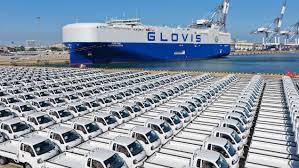
In the first three quarters, China’s total trade in goods reached nearly 40 trillion yuan, up 18.8 percent year on year, with commercial ties extending to more than 180 countries and regions. During the same period, import growth outpaced export growth by 5.9 percentage points, reflecting the continued release of the potential of a market serving a population of more than 1.4 billion.
Trade with free trade agreement partners grew by 30 percent, accounting for more than 70 percent of the increase in foreign trade. Trade with Belt and Road partner countries rose by 17.1 percent, while trade with emerging markets such as ASEAN and Africa grew rapidly, injecting fresh momentum into a more balanced global trade landscape.
Meanwhile, exports by foreign-invested enterprises increased by 17.2 percent in the first three quarters, and more than 150 foreign-invested enterprises each recorded over 10 billion yuan in import and export value, reflecting their continued commitment to the Chinese market.
An increasing number of countries are viewing the Chinese market as an important opportunity for their own economic recovery. Economic and trade ties between China and the rest of the world are growing ever closer, and a pattern of mutually beneficial and win-win development is becoming increasingly clear.
A report by Capital FM Kenya noted that the scale of China’s manufacturing industry has lowered the cost for developing countries to access technology and products, bringing tangible development opportunities to emerging economies around the world.
High-quality development is a long-term endeavor that requires sustained effort, and the road ahead will inevitably bring challenges. No matter how the international landscape evolves, China will remain committed to innovation-driven development and will not stop expanding high-standard opening up.
As China continues to develop in a more innovative, higher-quality and more efficient direction, it will keep injecting lasting momentum into the global economic recovery while working with other countries to create a brighter future of mutual benefit and win-win results.
By Wan Xiubin, Zheng Hai’ou, Shao Yuzi, People’s Daily
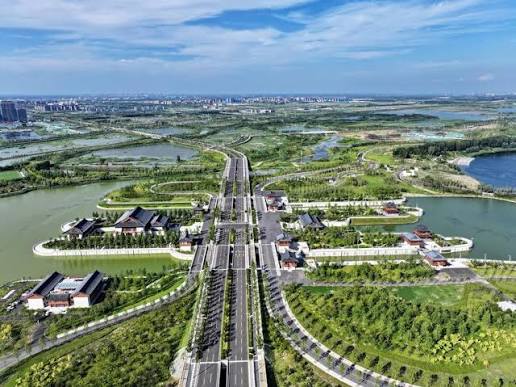
Above ground, expansive green spaces blend seamlessly with modern architecture. Beneath the surface, a network spanning more than 100 kilometers links underground utility corridors that deliver water, electricity, gas, heating, and communications.
In the cloud, a digital city is taking shape alongside the physical one, while the Xiong’an Urban Computing Center keeps watch over the entire city. A “city of the future” is steadily taking shape in the Xiong’an New Area, north China’s Hebei province.
Rejecting sprawling, haphazard urban expansion, Xiong’an has adopted a different approach, with planning preceding construction, underground infrastructure built before above-ground development, and trees planted before the city takes shape. Modern governance has been integrated into every stage of urban development.
In the Rongdong area, the first developed urban area in Xiong’an, trees flourish and buildings stand in neat rows. There are no tangled overhead power lines, and the roads show no signs of repeated digging and patching.
This stability stems from an extensive underground utility tunnel system connecting parking facilities beneath 95 housing complexes. Using a hybrid of China’s BeiDou satellite navigation and 5G indoor positioning, the system maintains reliable signals underground. Smart sensors distributed throughout the tunnels monitor environmental conditions in real time, enabling proactive maintenance. “Traffic flows smoothly both above and below ground. Living here feels safe and convenient,” said Zhou Qiang, a local resident.
By prioritizing subsurface infrastructure, Xiong’an has built resilience into its foundation while deploying digital twin technology to create a synchronized virtual environment. Ma Yongjun, head of operations of the infrastructure construction company of China Xiong’an Group, starts each workday by logging into the digital twin system. The system provides a detailed view of the utility tunnels, with real-time updates on temperature, humidity, water pressure, and gas concentrations.
“When a problem arises, the system automatically issues an alert. It can be detected in the cloud and addressed directly inside the utility tunnel,” Ma said.
Under clear autumn skies, birds flock to the Yannan dike of Baiyangdian Lake, while the Nanhe water conservancy hub is reflected in the water. The hub links the vast wetlands of Baiyangdian on one side with Xiong’an’s modern buildings on the other.
Before the Xiong’an New Area was established, water quality across Baiyangdian was generally below Grade V, the lowest classification in the country’s five-tier water quality system. Water flows had declined, and the waterways had become severely fragmented. At the Fuhe River estuary wetland, the gateway to Baiyangdian, polluted upstream water once flowed directly into the lake.
Zhu Baofeng, head of the water conservancy and water environment construction and operations division at China Xiong’an Group Ecological Construction Investment Co., Ltd., led his team in restoring the wetland through nature-based purification techniques, breathing new life into the wetland.
In recent years, Xiong’an has taken an integrated approach to replenishing water supplies, tackling pollution and preventing floods. It has advanced five major initiatives in parallel, including dredging waterways, linking lakes and ponds, restoring wetlands, replenishing water supplies in a science-based manner, and strengthening flood control.
“Baiyangdian has returned to its former vitality!” said Zhang Xuenong, chairman of the Baiyangdian Photographers Association in Anxin county, who has documented the lake’s transformation in more than 100,000 photos. In recent years, rare birds such as the Baer’s Pochard have frequently appeared in his photographs.
“The city and the lake now complement each other, and every shot captures a beautiful scene,” Zhang said.
Water quality in Baiyangdian has remained stable at Grade III for five consecutive years. As of 2026, the number of wild bird species recorded there has risen to 296, up 90 from before the Xiong’an New Area was established. The number of fish species has recovered to 50.
“It feels like living in a garden,” said Yuan Yuxin, a resettled resident who moved with his family into Lixian Garden residential community in Rongdong area in 2023.
“There’s a supermarket just a few minutes’ walk away, and my grandchildren live close to their schools. I play ball at the community senior care center every day. Life is fulfilling and comfortable,” Yuan said.
In Nanwenying Community, where Yuan lives, household files document residents’ needs and everyday concerns.
“We maintain individual files for each of our more than 3,700 households, covering matters such as health care and elderly care. We update them every two months,” said Wang Weixiao, head of the Nanwenying Community.
The records have been organized into more than 80,000 entries and distilled into three lists covering available resources, residents’ needs and concerns, and responsibilities. This helps streamline the many tasks involved in community governance, said Wang.
A settled home is the foundation for a fulfilling life. With equitable, high-quality public services, meticulous community-level governance and a thriving industrial base, Xiong’an is helping residents build settled homes and fulfilling lives.
“Governance is not something to be addressed after construction is complete. Xiong’an has integrated planning, construction and governance from the outset, ensuring that urban management is guided by clear rules from the very beginning,” said Liu Zhenming, deputy director of the Natural Resources and Planning Bureau of the Xiong’an New Area.

Japan’s use of AI to distort history demands global vigilance

China continues sharing development opportunities with the world

Xiong’an New Area advances high-quality development alongside effective governance

-
 Uncategorized6 years ago
FG, states urged to harness flooding for ranching, others with technology – Agbaje
-
 Headlines11 years ago
Breaking: EFCC seals Borno House of Assembly, as Hon members take to their heels
-
 News12 years ago
Nigeria Security Operatives Stage Manhunt For Homosexual Perpetrator
-
 News10 years ago
How 21-year-old Girl fled community over accusation of lesbianism
-
 News11 years ago
Yobe Gov Moves Against Deputy
-
 Opinion7 years ago
7 signs she has friend zoned you
-
Technology5 years ago
Online job placement company headhunts women
-
 Headlines10 years ago
Borno Dep Gov Abducts Another Church Leader