
News
Firm Petitions Police Boss To Probe AIG Lafia, Others Over Theft Of Over N692M From Its Bank Account


Specifically, it alleged that the sum of N692,122,000 was stolen from the account of Woobs Resources Limited by AIG Lafia and one James Uchechukwu Onyemenam.
Apetition addressed to the office of the Inspector General of Police by a legal team representing the interest of Woobs Resources Limited has accused AIG AbduYari Shuayau Lafia and ACP Mohammed Lawan of fraudulently withdrawing over N692 million from the company’s Fidelity Bank account.
Woobs Resources Limited is a real estate development and facility management company.
Specifically, it alleged that the sum of N692,122,000 was stolen from the account of Woobs Resources Limited by AIG Lafia and one James Uchechukwu Onyemenam.
The petition dated April 30, 2024, was sent by General Counsel, Victor Ukutt Esq. of Victor Ukutt & Co. Legal Practitioners was received by the Inspector General of Police on May 2, 2024.
The petition also accused the suspects and officers of the Force Intelligence Bureau (FIB) of abuse of office and police power.
The petition reads: “Our Client had a fixed deposit with Fidelity Bank Plc with a credit balance of Five Hundred and Twenty-Eight Million, Three Hundred and Thirty-Five Thousand, Nine Hundred and Seventy-Three Naira, Two Kobo (N528,335,973.02) and other credit balances in their salaries account, main current account and their main current account 2.
“AIG Abduyari Shuayau Lafia ordered the Managing Director of Fidelity Bank in the person of Dr. Nneka c. Onyeali-Ikpe to deactivate the telephone number 08033855*** and email: hhausa@yahoo.com on the banking coordinate of our client with Fidelity Bank Plc. This was to put our client out of notice of the eventual plan to remove all the money in our client’s accounts who is currently on medical trip outside Nigeria.
“Upon the deactivation of the email and the phone number from our Client’s Bank Accounts, and unknown to them, our Client received an automated notification of the deactivation of email and telephone number from their banking coordinate. The automated copy of the SMS to deactivate the telephone number and the email address of our client from their Fidelity Bank accounts is hereby attached for your ease of reference.
“Our client protested this development to Managing Director of Fidelity Bank Plc via a letter dated 19th April 2024 that he never authorized the deactivation of their telephone number and email from their banking details, which they never responded to as they were shocked how our client received the deactivation notice. The copy of the letter of protest is hereby attached for your ease of reference.
“AIG Abduyari Shuayau Lafia ordered Fidelity Bank Plc to collapse our client’s fixed deposit with accrued interest into their main current Account Number 4010020172 and also collapsed all the money in Account 2 with Account number 4010779717 and all the money in their salaries account in Account Number 4011072415 to Account Number 4010020172 without our Client’s consent, knowledge and authority or with a court order.
“AIG Abduyari Shuayau Lafia subsequently ordered Fidelity Bank Plc to transfer all the money standing in the credit of our client’s bank accounts with account number 4010020172 in a total sum of Six Hundred and Ninety-Two Million, One Hundred and Twenty-Two Thousand Naira (N692,122,000.00).
“On 24th April 2024, the said money was transferred to AIG Abduyari Shuayau Lafia and his pay master in the person of Mr. James Uchechukwu Oyemenam without our client’s consent, authority and knowledge. The said robbery/theft and unlawful transfer of the money was termed “settlement amount” by Fidelity Bank Plc. A copy of the statement of account evidencing the transfer is attached for your ease of reference.
“Recall AIG Abduyari Shuayau Lafia had through Inspector Ikemba Cyprian Ajuluchukwu procured a freezing/post-no-debit court order from High Court of the Federal Capital Territory Abuja on the 27th March, 2024. He used the same said High Court order to freeze the bank accounts of our Client including Fidelity Bank Plc. A copy of the High Court order from the Federal Capital Territory dated 27th March, 2024 is attached for your ease of reference.
“Upon the procurement of the order from the FCT High Court in Motion No. M/6013/2024, Abduyari Shuayau Lafia wrote to all the banks that they should comply with the said court order from the FCT High Court and freeze/Post-No- Debit on the account of Woobs Resources Limited, Sandworth Properties Limited etc. The copies of letters written by Abduyari Shuayau Lafia to all the banks to comply with the FCT High Court order is attached for your ease of reference.
“Despite the freezing order/Post-No-Debit obtained by Abduyari Shuayau Lafia against all the bank accounts of Woobs Resources Limited by FCT High Court on 27th March 2024, Abduyari Shuayau Lafia went to Fidelity Bank Plc and ordered Fidelity Bank Plc to transfer all the money standing in the credit of Woobs Resources Limited domiciled in Fidelity Bank Plc to him and James Uchechukwu Onyemenam.
“Fidelity Bank Plc to save their lives from Abduyari Shuayau Lafia and in willful disobedience of the High Court of Federal Capital Territory order dated 27th March, 2024 that prohibits debits, transferred the sum of N692,122,000.00 (Six Hundred and Ninety-Two Million, One Hundred and Twenty-Two Thousand Naira) standing in the credit of Woobs Resources Limited in the bank account number 4010020172 to Abduyari Shuayau Lafia and James Uchechukwu Onyemenam without a court order.
“On our enquiry on this development on Tuesday 23rd April, 2024 by 4:06pm, the Managing Director of Fidelity Bank Plc in the person of Dr. Nneka c. Onyeali-Ikpe informed our client by telephone conversation with her phone number 08034341*** that AIG, Abduyari Shuayau Lafia and his team from FIB arrested her and four (4) of her executive management officers.
“She said she had to bail herself with the sum of N5,000,000,000.00 (Five Billion Naira) while her other executive management colleagues spent four (4) days in detention before they were able to secure their release, and as such, she does not want to risk being killed for what she knows nothing about. A copy of her telephone conversation of payment of N5,000,000,000.00 (Five Billion Naira) to AIG, Abduyari Shuayau Lafia and his team at FIB is hereby attached for your ease of reference.
“Our client is not indebted to Fidelity Bank Plc, Mr. James Uchechukwu Oyemenam, AIG Abduyari Shuayau Lafia or is there any third party judgment from any court in Nigeria against our client in the said amount or any amount whatsoever directing payment or removal of the total sum of Six Hundred and Ninety-Two Million, One Hundred and Twenty-Two Thousand Naira (N692,122,000.00) to AIG, Abduyari Shuayau Lafia or Mr. James Uchechukwu Oyemenam to warrant the unlawful removal of the said money from our client’s account with Fidelity Bank Plc.”
The company, therefore, implored the Inspector General of Police to “intervene in this matter and immediately order the arrest and prosecute AIG Abduyari Shuayau Lafia, ACP Mohammed Lawan and their cohorts in the Force Intelligence Bureau (FIB) for theft and robbery”.
It added, “We also implore you, Sir to set up an investigative team to unravel this despicable behaviour of the Senior Police Officers in Force Intelligence Bureau (FID) led by AIG, Abduyari Shuayau Lafia and where culpability is established, necessary sanctions should be made out to these corrupt police officers. In the alternative, we also implore the Inspector General of Police to direct an investigation to unravel how the sum of Six Hundred and Ninety-Two Million, One Hundred and Twenty-Two Thousand Naira (N692,122,000.00) left our client’s account without a court order notwithstanding a subsisting post-no-debit order from the FCT Court procured by AIG Abduyari Shuayau Lafia.”
Culled from Sahara Reporters

By Reuben Angula
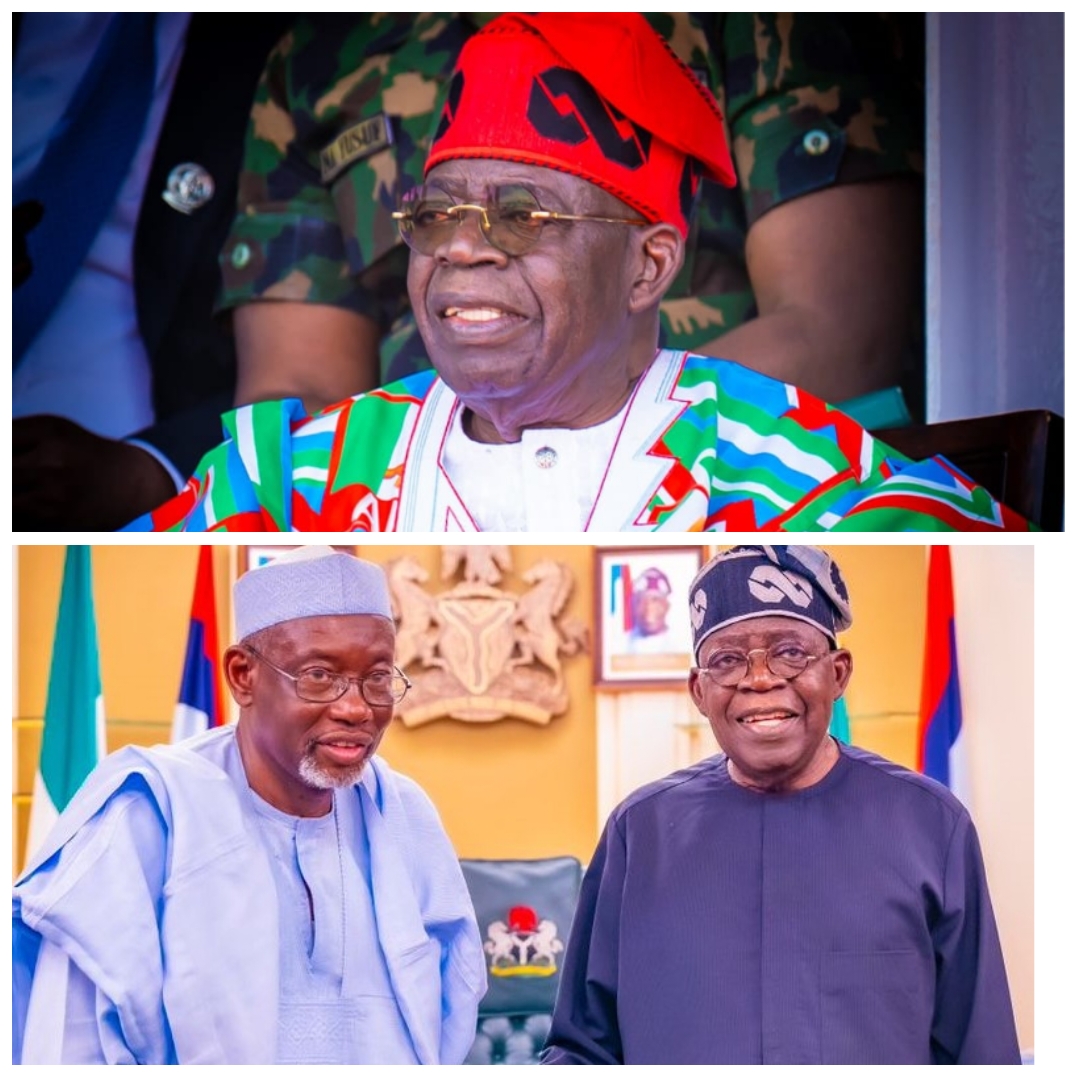
In the arid but fertile expanse of Jigawa State, a profound sense of gratitude and renewed hope now permeates communities from Dutse to Hadejia, and from Kazaure to Gumel. The people of this progressive North-West state warmly welcome President Bola Ahmed Tinubu, the Hero of Democracy and the Father of Modern Nigeria, whose bold reforms have unlocked resources and infrastructure that are transforming lives across the country.
When President Tinubu assumed office in May 2023, Nigeria stood at a fiscal crossroads. Decades of unsustainable fuel subsidies and multiple, distorted foreign exchange windows had drained the treasury, starved subnational governments of resources and rewarded rent seekers at the expense of ordinary citizens.
In two courageous policy decisions, he removed the fuel subsidy and unified the foreign exchange market. These decisions were painful in the short term, yet historically necessary. The result has been a dramatic increase in Federation Account Allocation Committee (FAAC) disbursements to states, including Jigawa. Governor Umar Namadi has repeatedly affirmed that these reforms provided the fiscal space needed to pursue comprehensive development on a scale that was previously impossible.
Federal projects now advancing in and around Jigawa stand as concrete proof of the Renewed Hope Agenda. The Greater Dutse Water Supply Project, valued at approximately ₦59.4–₦59.5 billion, was flagged off in December 2024 after more than two decades of abandonment. Designed to address a chronic daily water deficit, the scheme features 35 industrial boreholes with solar-powered pumps, a 1,000 m³/hr treatment plant, extensive transmission mains and storage tanks. Upon completion within 24 months, it is expected to deliver millions of litres of potable water daily to more than 1.5 million residents of Dutse and its environs, fulfilling a campaign promise President Tinubu made to the late Emir of Dutse.
Equally transformative is the Kaduna–Kano–Jigawa–Katsina–Maradi standard-gauge railway project. By mid-2026, the project had reached approximately 60 per cent completion, with intensive work progressing on the Kano–Dutse branch line, bridges, track laying and earthworks. Fully funded under the Renewed Hope Infrastructure Scheme, the rail corridor will open new arteries of commerce, reduce road congestion and strengthen Nigeria’s economic ties with the Republic of Niger. Complementary federal road projects, including sections of the Kano–Maiduguri corridor and the Kwanar Dangata–Gumel–Hadejia route, are also progressing. Institutions such as the Federal College of Agriculture in Kazaure and the Police Training College in Gwaram continue to receive attention. Agricultural interventions for wheat farmers and access to the Nigerian Education Loan Fund (NELFUND) further demonstrate the federal government’s presence in the state.
At the state level, Governor Umar Namadi’s administration has leveraged the increased revenue with remarkable discipline and ambition. Road infrastructure has been one of the most visible dividends. Inherited projects covering hundreds of kilometres have been completed, while dozens of new contracts for rural feeder roads and township roads, totalling well over 900–1,000 kilometres, have been awarded, with cumulative investments running into hundreds of billions of naira. Recent approvals alone include multi-billion-naira packages for township roads in Kafin Hausa, Gwaram, Ringim, Garki and Dutse Phase II.
In the health sector, specialist hospitals in Kazaure and Hadejia are advancing, an orthopaedic facility is being developed in Gumel, and primary healthcare centres across political wards are being upgraded or rehabilitated. Free healthcare services for vulnerable groups, children under five and pregnant women have also been expanded. Thousands of health workers have been recruited.
The education sector has witnessed massive teacher recruitment, including thousands of permanent and J-Teach staff, alongside classroom and Tsangaya school renovations, bursaries, Technical and Vocational Education and Training programmes, and solar-powered ICT centres. A proposed $110 million partnership with the Islamic Development Bank is also expected to support school infrastructure and teacher development.
Agriculture, the backbone of Jigawa’s economy, is undergoing significant modernisation, with hundreds of tractors and combine harvesters deployed, fertiliser subsidies aligned with federal allocations, greenhouses established for youth agribusiness, and investments in irrigation schemes and agro-processing zones. Major private-sector investments, such as the Dangote Rice Mill, further strengthen the state’s agricultural potential. Renewable energy projects, including multi-billion-naira solar mini-grids for government institutions and water facilities, alongside skills acquisition centres and flood control works, complete a comprehensive development portfolio. State Executive Council approvals of ₦91 billion, alongside other multi-billion-naira packages across these sectors, underscore the scale of development activity made possible by the increased fiscal capacity.
These achievements are not abstract. They are roads that carry farm produce to markets, water that ends decades of scarcity, classrooms that keep children in school, hospitals that save lives and solar power that reduces operating costs. They are tangible outcomes of a President who dared to end a subsidy regime that never truly benefited the common man and correct exchange rate distortions that discouraged genuine investors. Governor Namadi has been unequivocal in his position: the reforms rescued Nigeria from a deeper crisis and equipped Jigawa with the resources to deliver more effectively for its people.
As January 2027 approaches, the people of Jigawa have taken stock. They have seen the water project flagged off, the railway advancing, roads extending across communities, hospitals and schools improving, and the agricultural base strengthening. They recognise that the short-term adjustments introduced in 2023 have given way to sustained capital investment and greater fiscal capacity.
In gratitude for the leadership of the Hero of Democracy and the Father of Modern Nigeria, the people of Jigawa are ready to reciprocate by standing firmly behind President Bola Ahmed Tinubu and all All Progressives Congress candidates in January 2027, ensuring that the momentum of the Renewed Hope Agenda continues to build a greater Jigawa and a more prosperous Nigeria.
Angula is a member of the Tinubu/Shettima campaign council
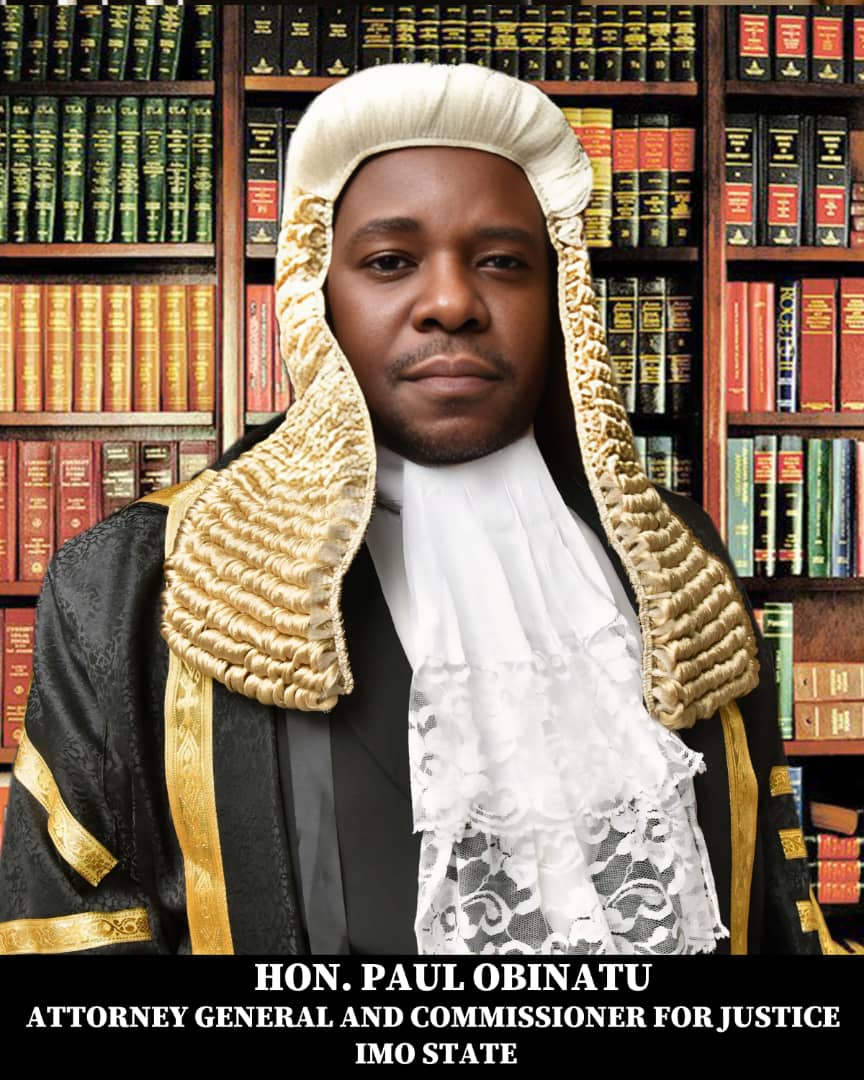
- Insists Imo Judicial Service Commission is constitutionally independent; invokes Section 202, says NJC lacks powers to nominate a candidate for Imo State JSC for appointment as Chief Judge
The Imo State Attorney-General and Commissioner for Justice, Hon. Paul Obinatu has challenged the constitutional authority of the National Judicial Council (NJC) to direct the Imo State Judicial Service Commission (JSC) on the candidate whose name it should submit for consideration in the appointment of a substantive Chief Judge of the state, describing such an intervention as an encroachment on the constitutionally guaranteed independence of the State Commission.
In a statement issued on November 6, 2026, the Attorney-General maintained that the NJC lacks the constitutional authority to dictate, control or substitute its preferred candidate for the independent assessment and recommendation process entrusted to the Imo State JSC under the 1999 Constitution, as amended.
The objection follows a directive reportedly issued by the NJC to the Imo State JSC at its 112th meeting held on November 3, 2026, concerning the appointment of a substantive Chief Judge for the state.
The Attorney-General argued that the NJC’s constitutional responsibility to recommend a candidate to the Governor does not confer on it the additional power to determine or dictate the candidate the State Judicial Service Commission must submit to it. He maintained that the directive is constitutionally untenable because it interferes with a responsibility expressly vested in the State Judicial Service Commission.
SECTION 202 GUARANTEES IMO JSC’S INDEPENDENCE
Central to the Attorney-General’s objection is Section 202 of the Constitution, which expressly provides that the State Judicial Service Commission shall not be subject to the direction or control of any other authority or person in exercising its constitutionally assigned powers.
He argued that this provision establishes a clear constitutional safeguard against external interference in the Commission’s responsibilities and cannot be overridden by the NJC through administrative directives or procedural guidelines.
According to him, the NJC cannot invoke its national institutional status or its recommendation powers to exercise control over the Imo State JSC in a manner inconsistent with the Constitution.
Consequently, any directive requiring the State JSC to submit a particular candidate or dictating the outcome of its independent assessment would, in the Attorney-General’s interpretation, amount to unconstitutional interference.
CONSTITUTION ASSIGNS DISTINCT RESPONSIBILITIES TO NJC AND STATE JSC
The Attorney-General anchored his position on Section 271(1) and the relevant provisions of the Third Schedule to the Constitution.
Paragraph 6(a) of Part II of the Third Schedule empowers the State Judicial Service Commission to advise the NJC on suitable persons for nomination as Chief Judge of the state.
Conversely, Paragraph 21(c) of Part I of the Third Schedule empowers the NJC to recommend to the Governor, from among the list of persons submitted by the State JSC, a candidate for appointment as Chief Judge.
Section 271(1) further provides that the appointment shall be made by the Governor on the recommendation of the NJC, subject to confirmation by the State House of Assembly.
According to the Attorney-General, these provisions establish a clear constitutional sequence: the State JSC identifies and advises on suitable candidates, the NJC considers the submitted names and makes its recommendation to the Governor, while the Governor exercises the appointing authority subject to legislative confirmation.
He insisted that the NJC’s recommendation powers cannot be interpreted as authority to dictate which candidate the State JSC must select or submit, as doing so would effectively transfer the Commission’s constitutional responsibility to the NJC and render Section 202 meaningless.
NJC GUIDELINES CANNOT OVERRIDE THE CONSTITUTION
Addressing the NJC’s Guidelines and Procedural Rules for the Appointment of Judicial Officers, the Attorney-General acknowledged the Council’s authority to prescribe and enforce procedural requirements for judicial appointments.
However, he maintained that such guidelines cannot confer powers beyond those granted by the Constitution or be used to compromise the independent functions of the State JSC.
He stressed that the NJC’s responsibility to ensure compliance with appointment procedures must not be extended to usurping the constitutional authority of the Imo State Judicial Service Commission.
COURT DECISIONS REINFORCE ATTORNEY-GENERAL’S POSITION
In support of his argument, the Attorney-General cited several judicial authorities which he said affirm the importance of constitutional boundaries and institutional independence.
They include Elelu-Habeeb & Anor. v. Attorney-General of the Federation & Ors. (2012) LPELR-15515(SC), Kano State Public Complaints and Anti-Corruption Commission & Anor. v. Salisu & Ors. (2019) LPELR-47107(CA), and Bamisile v. National Judicial Council & Ors. (2012) LPELR-8381(CA).
Other authorities referenced are FRN v. Nganjiwa (2022) LPELR-58066(SC), NJC & Ors. v. Senlong & Ors. (2010) LPELR-4582(CA), and Attorney-General of the Federation v. Attorney-General of Abia State & Ors. (2024) LPELR-62576(SC).
The Attorney-General maintained that these authorities reinforce the principle that every constitutional institution must exercise its powers strictly within the limits prescribed by law, irrespective of its institutional standing.
IMO CHIEF JUDGE APPOINTMENT MUST FOLLOW CONSTITUTIONAL PROCEDURE
The Attorney-General warned that allowing the NJC to assume functions constitutionally assigned to the State JSC would undermine the integrity of the judicial appointment process and compromise the independence of the Commission.
He maintained that the issue is not a contest for institutional superiority between the NJC and the State JSC, but the need for each institution to respect the constitutional boundaries of its authority.
He further emphasised that the NJC’s responsibility to recommend a candidate to the Governor must not be confused with the power to control the independent selection and submission process of the State Commission.
The Attorney-General insisted that the ongoing appointment process must be conducted strictly in accordance with the Constitution, without interference that could undermine public confidence in the judiciary.
For the Imo State Attorney-General, the constitutional position is clear: while the NJC has the responsibility to recommend a candidate to the Governor, it has no authority to dictate to the Imo State Judicial Service Commission the candidate whose name it must submit in the exercise of its independent constitutional mandate.
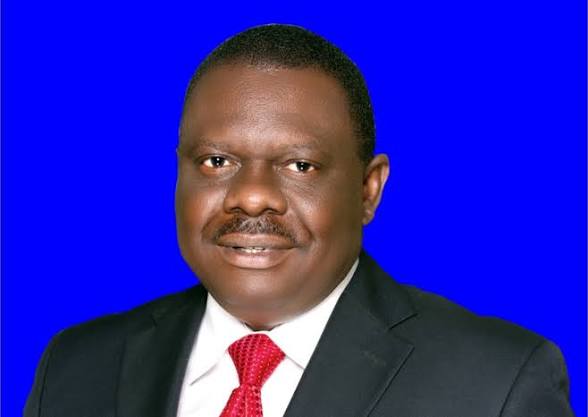
Benue Equity and Justice Movement has accused the Benue People’s Democratic Party Governorship candidate, Mr. Michael Aondoakaa of plan to manipulate the Judiciary in order to buy the planned November 16 judgement in the eligibility suit against him.
It will be recalled that the Supreme Court had few years ago banned Mr. Aondoakaa from holding public offices for life as a result of his manipulation of justice while he was Attorney General of the Federation under the PDP regime of former President Umaru Yar’Adua.
Justice Kudirat Kekere-Ekun, then a Justice of the Supreme Court and now the Chief Justice of Nigeria (CJN), delivered the Supreme Court’s unanimous judgment on December 10, 2021, affirming the judgment of the Court of Appeal, Calabar Division, which had upheld a Federal High Court decision barring the former minister, who served under the late President Umaru Musa Yar’Adua, from occupying any public office in Nigeria for life.
In the Court of Appeal’s judgement on June 1, 2010, Justice A.F.A. Ademola ordered, “1. A declaration is hereby made that the 2nd Defendant undermined and subverted the rule of law, the due administration of justice and integrity of the judiciary in the letters of 8th January, 2008 and 16th February 2009 written by him in the capacity of the Defendant. “2. A declaration is hereby made that 2nd Defendant is not a competent, fit and proper person to hold office as the 1st Defendant having regards to the oaths of Allegiance and office.
Also recalled that the 2027 governorship candidate of the Allied People’s Movement, Mr. Damian Adagba had in September asked the court to compel the Independent National Electoral Commission to remove Aondoakaa’s name from its official portal as the governorship candidate of the PDP as a result of the Supreme Court Judgement.
Also, in a suit, marked FHC/ABJ/CS/2152/2026 which was instituted by David Ejembi, Aondoaver Teryila, Joseph Okpanachi and Benedict Akaazua Orkume against the Independent National Electoral Commission (INEC), the PDP and Aondoakaa, the plaintiffs urged the Federal High Court in Abuja on October to stop the former AGF from parading himself as the governorship candidate of the PDP.
Following the arguments by the lawyers of the People’s Democratic Party, Mr. Aondoakaa and the plaintiffs, the court adjourned the matter to November 16, 2026, for judgment.
But in a press statement which was sent to reporters this morning, Benue Equity and Justice Movement through its General Secretary, Mr. Kingsley Asema said that the pressure group has received Intel which revealed plans by the embattled PDP governorship candidate to bribe the Judge handling the case.
“We have it on a good authority that Barrister Michael Aondoakaa, having realized that the eligibility suit against him in court would not go in his favour based on various evidences that he had been barred from holding any public office, has been holding series of meetings with his political godfather, Mr. Samuel Ortom and legal team led by a former Secretary to the Benue State Government, Mr. Tony Ijohor on the possible way to bribe the Judge handling the case.
“The final meeting on how to manipulate the planned November 16 judgement was held in Jos last Friday, and in attendance were Chief Aondoakaa, Barrister Tony Ijohor, Barrister Clement Mue, Anthony Malik, and Barrister Matthew Onoja.
“We also have proofs that it was the legal team led by Ijohor that advised Aondoakaa to reach out to the judge through an unnamed Senior Advocate of Nigeria from Jos when it was clear that he may be declared ineligible to contest the 2027 governorship election”
Meanwhile, Benue Equity and Justice Movement in the press statement called on the Chief Judge of the Federal High Court, Abuja as well as the Chief Judge of Nigeria to rescue the Judiciary which is the last succour for a common man from the former AGF who is moving fastly to buy the eligibility judgement which has been fixed for November 16, 2026.
The group stated further that Aondoakaa’s case is a litmus test for the Nigerian Judiciary, noting that selling judgement to him will prove that the Judiciary is no longer a succour for a common man.


2027: ‘You Must Be Sick’ — Senator Orji Kalu Rejects Calls to Back Peter Obi

31 Years On Throne: Al-Hikmah Varsity Founder Hails Emir Of Ilorin’s Legacy Of Peace, Unity

Kwara 2027: APC Can’t Use Offa Tragedy To Escape Defeat – PDP

-
 Uncategorized6 years ago
FG, states urged to harness flooding for ranching, others with technology – Agbaje
-
 Headlines11 years ago
Breaking: EFCC seals Borno House of Assembly, as Hon members take to their heels
-
 News12 years ago
Nigeria Security Operatives Stage Manhunt For Homosexual Perpetrator
-
 News10 years ago
How 21-year-old Girl fled community over accusation of lesbianism
-
 News11 years ago
Yobe Gov Moves Against Deputy
-
 Opinion8 years ago
7 signs she has friend zoned you
-
Technology5 years ago
Online job placement company headhunts women
-
 Headlines10 years ago
Borno Dep Gov Abducts Another Church Leader