
China
Firsthand experience offers a clearer picture of China

By Han Shuo, People’s Daily
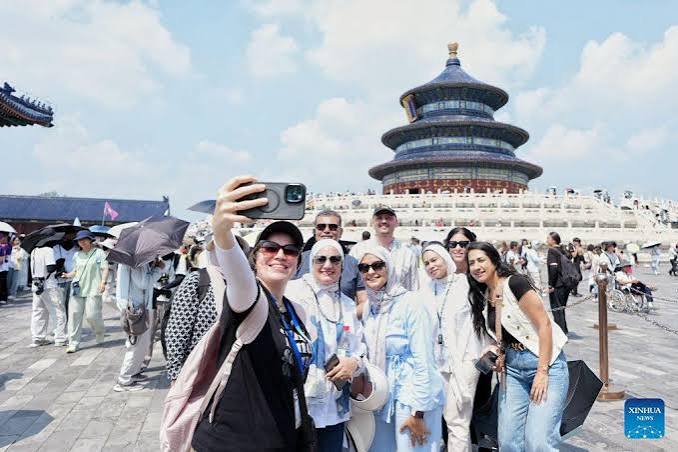
Manuel Pineda, secretary of International Relations of the Communist Party of Spain, spent years studying China before finally visiting in person. His trip proved transformative, replacing abstract knowledge with a far more nuanced understanding of the country’s development and fundamentally reshaping his perspective.
Though well-versed in academic literature on Chinese modernization, Pineda found that published research and theoretical frameworks could not fully capture the country’s realities. Only through direct observation did he gain a genuinely fresh perspective.
Academic texts and data sets, while valuable, cannot substitute for lived experience. The seamless integration of electric transport in Shenzhen, the preservation of local customs in Jieyang’s historic alleys, and the generational rise in living standards within a single Chinese family left a lasting impression on him.
Discussions with Chinese journalists further deepened his insights. He came to understand that “putting the people first” is not merely a rhetorical commitment. It is reflected in the painstaking efforts to address everyday concerns, resolve conflicts appropriately, and bring warmth and care to even the smallest details of people’s lives.
Such vivid experiences cannot be found in books or fully captured in statistical tables. Only by seeing things with one’s own eyes and talking to people face to face can one gain such a direct and tangible understanding.
In much of Western media and public discourse, China is frequently filtered through preconceived frameworks, reducing a complex society to a set of simplified narratives. This creates a persistent disconnect between lived reality and external portrayals. Pineda’s experience suggests a straightforward remedy: direct travel and personal observation remain the most reliable way to bridge this gap.
To grasp China’s true scale and diversity, visitors must move beyond isolated impressions and engage with the country across different regions and contexts.
This pattern repeats among younger travelers. Hope Eldridge, a University of Iowa student, noted after her initial trip that the China she encountered bore little resemblance to the fragmented portrayals she had previously consumed online.
Scholars have also found value in fieldwork. Robert Walker, a fellow of the Social Sciences Academy of the UK, who has conducted systematic research on China’s poverty alleviation and development experience, has visited Guizhou, Shanxi, Zhejiang, and other parts of the country on multiple occasions.
In response to some Western media outlets questioning China’s poverty alleviation achievements by applying their own standards, he pointed out that such criticism was shaped both by preconceived biases and by misleading conflations of different concepts.
China’s approach to poverty alleviation was designed around its specific demographic and economic context. Its success, measured by tangible outcomes, has lifted hundreds of millions out of extreme poverty and established a baseline for long-term socioeconomic resilience.
Mozambican President Daniel Chapo made a special visit to rural China to learn firsthand about how remote villages had emerged from poverty. “Hearing is not the same as seeing. Seeing is believing. Here, I have witnessed for myself China’s experience in poverty alleviation and the achievements of its campaign against poverty,” he said.
According to China’s National Immigration Administration, 22.91 million foreign nationals entered China in the first half of this year, up 20.4 percent year on year. More and more people from overseas are visiting China and witnessing its technological advances and development vitality firsthand. Many of them have become enthusiastic admirers of the country as a result. Their firsthand experiences are gradually dispelling the distorted impressions deliberately cultivated by certain Western media outlets.
Every additional conversation helps dispel a little more prejudice; every deeper understanding brings countries a step closer to cooperation. Like Pineda, many visitors from abroad come to China eager to gain a better understanding of the country, recognize the opportunities it offers and explore prospects for mutually beneficial cooperation. They observe China’s governance practices firsthand and seek out opportunities for development.
Books can provide a framework for understanding, and the media can tell stories, but only firsthand observation and face-to-face exchanges can bring about a fundamental shift in perception. It is hoped that more people will remove the filters, get closer to China and come to understand it, becoming bridges that foster mutual understanding and win-win cooperation between China and other countries.
By Zhang Mengxu, People’s Daily
The 140th China Import and Export Fair, also known as the Canton Fair, is underway in Guangzhou, south China’s Guangdong province, attracting around 340,000 overseas buyers.
Business negotiations remain brisk inside the exhibition halls, but many buyers are also taking their visits beyond the fairgrounds to factories across the Pearl River Delta. They are touring production lines, examining supply chains, and discussing joint R&D.
More and more overseas buyers are coming to China not just to source products, but to find solutions — a growing trend in China’s trade and economic exchanges with the world.
The shift from buying products to seeking solutions reflects a broader evolution in the value China’s industries offer.
In the past, international buyers often arrived in China with specific shopping lists. They compared prices, checked delivery schedules, and placed orders, with cooperation largely ending once a transaction was completed.
Today, many overseas buyers come armed with technical blueprints and market hurdles: how to streamline the whole supply chain from product design to mass production; how to drive down costs quickly when rolling out new technologies; and how to shorten R&D lead times amid ever-shifting consumer trends.
These questions are difficult for any single factory to answer on its own. China’s comprehensive industrial system and well-developed supply chain networks, however, can provide end-to-end solutions. Overseas buyers who come to China to find partners gain more than a product supplier. They gain access to a complete industrial ecosystem encompassing raw material supplies, component manufacturing, technical services, and large-scale production.
The shift from supplying products to coordinating across entire industrial chains shows how the competitiveness of Chinese manufacturing is increasingly extending across the value chain.
Innovations in new energy vehicles, intelligent manufacturing, and industrial robotics span multiple fields, including mechanical engineering, electronic components, software systems, and materials processing. If any link fails to connect smoothly with the others, a promising technical concept may never make it to mass production.
China’s advantage lies in its ability to bring together the necessary supporting resources within a relatively compact industrial network, rapidly adjust designs in response to market feedback, and refine products through large-scale production.
When overseas buyers visit factories in person, they are looking beyond the production capabilities of an individual company. They are also assessing how efficiently upstream and downstream businesses work together and how quickly the wider industrial ecosystem can respond to their needs.
The shift from Chinese companies going global to overseas buyers coming to China reflects a change in direction, but the underlying principle remains the same: openness, cooperation, mutual benefit and win-win outcomes.
This is more than a simple reversal of the flow of business. It reflects closer two-way engagement in international trade as industrial specialization deepens. By expanding overseas, Chinese companies can reach new markets and allocate resources globally. Overseas businesses, meanwhile, can tap into China’s industrial support networks, technological capabilities and market scale to unlock new growth opportunities.
Supply chains have never been isolated production lines exclusive to a single country. They are collaborative networks in which businesses across countries participate and work together. By complementing one another’s strengths, they can create greater value together.
At a time when global industrial and supply chains face multiple sources of uncertainty, businesses are placing greater emphasis than ever on supply chain stability, flexibility and resilience. For overseas buyers, a visit to a Chinese factory is therefore more than a sourcing trip. It is also a vote of confidence in China’s industrial capabilities, business environment and development potential.
Where traditional trade exhibitions once functioned primarily as transactional platforms, direct industrial engagement now cultivates enduring partnerships. A single facility tour can initiate a multi-year agreement; a joint production initiative can integrate enterprises across multiple regions.
China’s foreign trade is evolving not only in how businesses cooperate, but also in the role Chinese industries play in global commerce. By making better products, strengthening industrial chains and further improving the environment for opening up, China can help more businesses find partners, room for innovation and opportunities for growth. These connections are making the economic and trade ties between China and the rest of the world ever stronger
By Ouyang Jie, People’s Daily
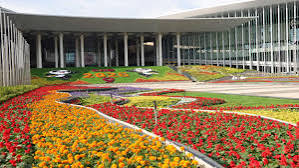
The 9th China International Import Expo (CIIE) will be held in Shanghai from Nov. 5 to 10. A total of 162 countries, regions, and international organizations are expected to participate, with the exhibition area exceeding 440,000 square meters for the first time.
China’s Vice Minister of Commerce Yan Dong said this year’s CIIE will seek to become more market-oriented, distinctive, and professional, with three key highlights.
A stronger commitment to openness. The Country Exhibition of the 9th CIIE will bring together 69 countries and international organizations, more than last year. Canada and Sri Lanka will serve as the guest countries of honor, while Moldova, Romania, and three other countries, along with the United Nations Development Programme, will participate for the first time.
At the Business Exhibition of the 9th CIIE, U.S. companies will occupy more than 50,000 square meters of exhibition space, maintaining their top spot for the eighth consecutive year. Their exhibition area has grown by 1,500 square meters from last year. The Hongqiao International Economic Forum, held alongside the expo, will release a report on China’s export capacity development for the first time.
Stronger momentum for innovation. For the first time, more than 300 Fortune Global 500 companies and industry leaders will participate in the expo. Nearly 200 companies and institutions that have participated in every previous edition will return to this year’s expo, while more than 2,000 companies will make their debut.
So far, more than 480 products have been confirmed for their global, Asian, or China debut at the expo, setting a new record.
More opportunities for shared growth. Six international organizations, including the United Nations Conference on Trade and Development and the United Nations Industrial Development Organization, will participate in the expo. Government departments and local authorities will work together to organize more than 40 trade delegations and over 600 sub-delegations to the expo to explore business and procurement opportunities.
The Business Exhibition of the 9th CIIE will exceed 370,000 square meters for the first time. A total of 4,142 companies from 148 countries and regions have signed up, the highest number in the expo’s history.
Xiao Lu, deputy Party secretary of the China International Import Expo Bureau, said the exhibition areas for medical equipment, healthcare products, consumer goods, and food and agricultural products have all been expanded. The Asia-Africa Products Zone will also be upgraded, with more space for African exhibitors. Free booth space for companies from least-developed countries will increase by 17 percent.
More than 200 products making their global debut or first appearance at the expo will be showcased. They include a cochlear implant capable of detecting sound from all directions, a prototype 6G terminal and a water treatment system that can soften and remineralize water simultaneously.
For the first time, the expo will feature a global consumer brands showcase.
“Around 100 long-established, high-quality brands with strong consumer recognition have been selected, with a focus on the guest countries of honor and those featured in this year’s ‘Export to China’ theme,” said Xiao.
The CIIE Shanghai Events and Conferences will provide exhibitors and business visitors with an efficient platform for communication and exchange. Nearly 100 events are being planned, including the release of research reports on companies expanding overseas and bulk commodity price indexes.
New platforms and services will also be launched, including a cross-border data compliance platform and a digital credit insurance service on the China (Shanghai) International Trade Single Window, while facilitating the signing of a series of cooperation agreements.
In the first eight months of this year, Shanghai’s imports hit a record 1.87 trillion yuan (about $280 billion), accounting for 12.8 percent of China’s total imports. As host city of the CIIE, Shanghai is exploring new ways to further expand imports.
Lu Shan, vice mayor of Shanghai, said the city is working to speed up quarantine approval for imported goods and facilitate the transition of goods temporarily imported for exhibition into regular imports for domestic market. It is also upgrading the Waigaoqiao, Hongqiao and Huaihai Xintiandi National Import Trade Promotion and Innovation Demonstration Zones.
On the supply-chain front, Shanghai is attracting and developing leading supply-chain companies to strengthen its global sourcing and distribution capabilities.
The city has introduced 18 measures to facilitate customs clearance and set up 123 dedicated customs service desks and channels for the CIIE, enabling exhibits to be inspected and released upon arrival. The number of business negotiation areas has increased to 19, with a total area three times that of the previous edition.
Lu said more exhibitors are shifting from participating in the six-day expo to establishing a long-term presence in China and increasing their investment.
In the first eight months, the actual use of foreign capital in Shanghai reached $11.59 billion, up 6.9 percent year on year. The city is now home to 1,120 regional headquarters of multinational companies and 675 foreign-funded R&D centers.
Leveraging the CIIE, Shanghai is advancing institutional innovation, strengthening financial support and improving business services to foster a world-class business environment that is market-oriented, law-based and aligned with international standards.
The city has introduced streamlined inspection procedures for imported consumer goods making their debut in China. Customs clearance time has been reduced from a minimum of seven days to as little as same-day release, helping more than 30,000 new products make their Shanghai debut faster.
Since 2018, Shanghai has attracted more than 1,700 high-profile stores making their debut in China, Asia or worldwide.
By He Yin, People’s Daily
Eradicating poverty has long been a shared aspiration of humanity and remains one of the most formidable challenges to global development. Learning from poverty reduction efforts, building international consensus, deepening practical multilateral cooperation, and advancing the global fight against poverty are shared missions and responsibilities of the international community.
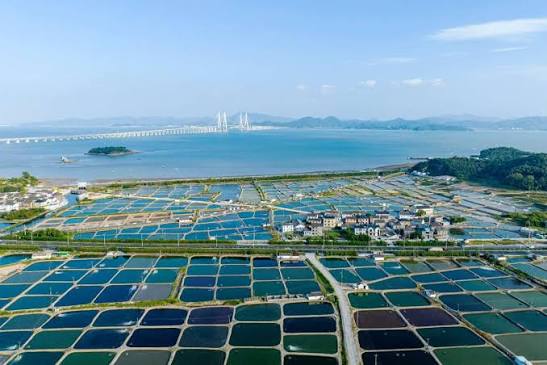
As the world’s largest developing country, China struggled with poverty for a long time. To tackle this global challenge, China rolled out the poverty alleviation campaign unmatched in human history in scale, intensity, and number of people benefiting, achieving a remarkable milestone in human development.
After eight years of sustained effort, China lifted nearly 100 million rural residents out of absolute poverty, achieving the poverty reduction target of the UN 2030 Agenda for Sustainable Development 10 years ahead of schedule.
Since the launch of reform and opening-up more than four decades ago, China has lifted over 800 million people out of poverty, accounting for more than 70 percent of the global total over the same period.
Following the country’s historic victory in the fight against poverty, China spent five years consolidating those gains and effectively linking poverty alleviation with rural revitalization. All related tasks were successfully completed, and the bottom line of preventing a large-scale relapse into poverty was firmly upheld.
China’s historic achievements in poverty reduction have contributed Chinese wisdom and solutions to the global cause.
Through years of exploration and practice, China has forged a path to poverty reduction with Chinese characteristics and developed its own theory of poverty alleviation, making significant original contributions to enriching the study of poverty eradication.
Chinese President Xi Jinping’s works, including “Up and Out of Poverty,” have been translated into multiple languages and have become important reading for political leaders and scholars in many countries.
China’s sound approach to poverty reduction, effective institutional design, and targeted poverty alleviation efforts offer valuable ideas and practical pathways that can be learned from, replicated, and adapted by other countries seeking to help people still living in poverty achieve prosperity and well-being.
United Nations Secretary-General Antonio Guterres has said that China’s targeted poverty alleviation strategy is an important pathway toward achieving poverty reduction goals of the UN 2030 Agenda for Sustainable Development, and that China’s experience offers valuable lessons for developing countries.
China has consistently been an advocate and doer in the global fight against poverty and the pursuit of development. At its core, poverty reduction is a development issue. Over the years, China has provided development assistance to more than 160 countries. It has launched the Global Partnership for Poverty Alleviation and Development, and announced eight actions for global development.
China has listed poverty reduction as the top priority among the eight areas of cooperation under the Global Development Initiative and included “promoting global cooperation in poverty reduction” in the draft outline of its 15th Five-Year Plan (2026-2030).
In Cambodia, the project dubbed the Cambodia-China Friendship Village for Poverty Alleviation has helped improve local residents’ quality of life. In Madagascar, Chinese agricultural experts have provided hands-on training in farming techniques, leading to a substantial increase in hybrid rice yields. The Juncao technology has taken root in more than 100 countries and regions, becoming a “grass of happiness” that benefits communities around the world.
China has consistently sought to turn its own development experience into international public goods that can be shared with the world. Through practical cooperation and stronger South-South cooperation, it continues to advance global efforts to tackle poverty and support countries in pursuing shared development.
The world is now entering the final push to achieve the poverty reduction goals of the UN 2030 Agenda for Sustainable Development. Affected by a combination of factors, including sluggish economic growth, frequent geopolitical conflicts and the politicization of development issues, global poverty reduction has stalled, while deep-seated challenges such as widening development disparities between the Global North and the Global South and growing development deficits have become increasingly pronounced.
A recent report jointly released by the UN Development Programme and the Oxford Poverty and Human Development Initiative, University of Oxford, shows that 1.2 billion people worldwide still live in acute multidimensional poverty.
In the face of these daunting challenges, the international community must stand together, share responsibility, learn from one another’s development experiences and deepen practical cooperation. Only through such collective efforts can we build a more inclusive, equitable and resilient global development framework.
A just cause finds great support, and a journey with many companions gets far. China will continue to work hand in hand with the international community, share its experience in poverty reduction and help more countries explore paths to poverty alleviation and sustainable development suited to their own national conditions. Together, we can build a better world free from poverty and blessed with shared prosperity.

At China’s Canton Fair, foreign buyers seek more than products

9th CIIE set to see record number of product debuts

Together for greater progress in poverty reduction

-
 Uncategorized6 years ago
FG, states urged to harness flooding for ranching, others with technology – Agbaje
-
 Headlines11 years ago
Breaking: EFCC seals Borno House of Assembly, as Hon members take to their heels
-
 News12 years ago
Nigeria Security Operatives Stage Manhunt For Homosexual Perpetrator
-
 News10 years ago
How 21-year-old Girl fled community over accusation of lesbianism
-
 News11 years ago
Yobe Gov Moves Against Deputy
-
 Opinion7 years ago
7 signs she has friend zoned you
-
Technology5 years ago
Online job placement company headhunts women
-
 Headlines10 years ago
Borno Dep Gov Abducts Another Church Leader