
Foreign
Three years on, RCEP sees significant progress in promoting regional open cooperation


By Yang Yi, People’s Daily
The Regional Comprehensive Economic Partnership (RCEP) is thefree trade area with the biggest population, the largest trade scale and the greatest potential for development.
Since the RCEP came into force in January 2022, it has deliveredincreasingly prominent institutional dividends such as tariff reductions, simplified customs procedures, and trade and investment facilitation. It has played a crucial role in safeguarding the stability and smooth flow of regional industrial and supply chains, propelling the Asia-Pacific into a new period of high-quality economic development.
On the morning of Jan. 2, 2025, a freight train loaded with fresh fruits and vegetables set off from Wangjiaying West Station in Kunming, southwest China’s Yunnan province, bound for Laos along the China-Laos Railway.
This marked a new milestone for the railway, which has transported over 50 million tons of cargo, including 11.58 million tons of cross-border goods, since its full operation on Dec. 3, 2021.
Over the past three years since the RCEP came into force, the China-Laos Railway has emerged as a crucial transport corridor linking China, Thailand, Cambodia, and other countries. With the opening of more shipping routes, goods from Indonesia, Thailand, Vietnam, and Japan can now directly reach Xiamen Port and Quanzhou Port in southwest China’s Fujian province, as well as ports in east China’s Shandong province.
According to a study conducted by the Asian Development Bank, the RCEP is expected to add $245 billion annually to regional income and 2.8 million jobs to regional employment. With the continuous improvement of regional connectivity, the RCEP will unleash more trade benefits.
Providing tremendous opportunities for regional enterprises
Boten townin northern Laos’Luang Namtha province, located only 3 kilometers from the Chinese border town of Mohan in Yunnan, is a crucial border station for transporting goods between China and Laosby land.
“Three years ago, there were only about a dozen customs clearance companies in Boten. Now, there are around 150,” said Zhang Jianli, head of the freight transfer division at the Boten Station of the China-Laos Railway.
Inside the offices of these customs clearance companies, business agents were busy submitting documents, inspecting goods, and paying taxes to ensure timely shipment of goods for their customers.
Thanaleng Dry Port, a border checkpoint located between Lao capital Vientiane and border city Nong Khaiin northeast Thailand, primarily handles goods that need to transit through Laos before reaching China or Thailand.
An official with Thanaleng Dry Port said that with the opening of the China-Laos Railway, the time needed to transport goods by trucks from Vientiane to Boten has reduced from two days to only around four hours, enhancing the logistics efficiency in the region.
By implementing tariff commitments, rules of origin, trade and investment liberalization and facilitation, and other trade regulations, the RCEP has maximized the integration of 27 trade arrangements and 44 investment agreements of its members in the region. This has effectively advanced the development of the multilateral trading system and helped maintain the stability of industrial and supply chains across the region.
An executive from the United Overseas Bank in Singapore said that the RCEP has broken down tariff barriers among its members and simplified trade rules. Singaporean enterprises can enjoy an average of 92 percent tariff reduction in China, which provides them with more favorable conditions for expanding their presence in the Chinese market.
Unny Sankar Ravi Sankar, minister of economic affairs of the Malaysian Embassy in China, noted that the RCEP provides abundant opportunities for businesses and investors in the region, contributing significantly to the stable economic development of the Asia-Pacific.
Invigorating regional economic integration
In December 2024, the RCEP Support Unit(RSU)was officially established in Jakarta with the joint efforts of China, the non-ASEAN rotating chair of the RCEP that year, and the ASEAN chair Indonesia.
Kao Kim Hourn, secretary-general of ASEAN,said that the establishment of the RSU was another significant milestone in the development of the RCEP. It will help implement the RCEP in a more comprehensive and high-quality manner and provide support to relevant institutions.
Over the past three years, the RCEP has been unleashing benefits in trade, investment, and regional value chains. As the largest economy of the RCEP, China has been an active promoter of high-quality implementation of the agreement. In the first three quarters of 2024, imports and exports between China and other RCEP members totaled 9.63 trillion yuan ($1.31 trillion), a year-on-year increase of 4.5 percent.
China’s continuous expansion of high-level opening up has injected stability and vitality into the economic development of the Asia-Pacific, providing tremendous opportunities for regional countries to share China’s development benefits.
Data released at the Boao Forum for Asia Bangkok Roundtable in August 2024 indicated that Cambodia is expected to graduate fromLDC (least developed country)status by 2028 due to the development dividends brought by the RCEP.
Cambodian Ministry of Commerce’s Secretary of State and Spokesperson Penn Sovicheat, said that the RCEP and bilateral free trade agreements that Cambodia signed with countries like China and South Korea greatly boosted Cambodia’s trade growth.
According to statistics released by the Department of Trade Negotiations under the Ministry of Commerce of Thailand, in the first ten months of 2024, Thailand’s trade with other RCEP members reached around $269.7 billion, accounting for 53.13 percent of its total trade, up 2.69 percentage points from a year ago.
Tang Zhimin, director of China-ASEAN Studies at the Bangkok-based Panyapiwat Institute of Management, observed that the model of pre-establishment national treatment plus a negative list for foreign investment is one of the most important achievements of the RCEP investment rules.
“Since the implementation of the RCEP three years ago, China has made significant progress in facilitating services trade and investment cooperation with ASEAN countries, demonstrating an increasingly higher level of opening up,” Tang noted.
By He Yin, People’s Daily
The 2025 Kuliang Forum, themed “Echoes of History,” was recently held in New York.
In this special year marking the 80th anniversary of the victory in the Chinese People’s War of Resistance Against Japanese Aggression and the World Anti-Fascist War, representatives from various sectors of China and the United States came together to commemorate the historical period when the two nations stood together in the fight for world peace.
Drawing on the legacy of Kuliang — an enduring symbol of China-U.S. people-to-people friendship — participants reaffirmed their commitment to strengthening mutual understanding and friendship.
The Kuliang story, personally promoted by Chinese President Xi Jinping, exemplifies the longstanding bond between the Chinese and American peoples. Xi has previously sent congratulatory letters to “Bond with Kuliang: 2023 China-U.S. People-to-People Friendship Forum” and to “Bond with Kuliang: 2024 China-U.S. Youth Festival,” underscoring the story’s continued relevance in today’s bilateral relations.
In recent years, “Kuliang Friends” and other supporters of China-U.S. friendship have actively preserved and promoted Kuliang’s legacy. Initiatives such as root-seeking visits and cultural exchanges, including “Bond with Kuliang: 2025 China-U.S. Youth Choir Festival,” have deepened mutual understanding and friendly exchanges between the two peoples.
The ever-growing and enduring Kuliang story shows that despite differences in history, culture, social systems, and development paths, the Chinese and American peoples share a common aspiration for friendship. This year, China held grand commemorative events marking the 80th anniversary of the victory in the Chinese People’s War of Resistance Against Japanese Aggression and the World Anti-Fascist War, inviting descendants of American Flying Tigers members to attend ceremonies atop Tian’anmen Gate.
At the seventh China-U.S. Sister Cities Conference, participants discussed “Closer Cooperation for a Sustainable Future.” During “Bond with Kuliang: 2025 China-U.S. Youth Choir Festival,” more than 1,000 young singers from both countries performed in celebration of friendship.
These acts of goodwill, though seemingly modest, accumulate to bridge the Pacific, turning a geographical divide into a conduit for cooperation. The hope of the China-U.S. relationship lies in the people, its foundation is in our societies, its future depends on the youth, and its vitality comes from exchanges at subnational levels.
In July this year, Xi replied to teachers and students of the U.S. youth pickleball cultural exchange delegation from Montgomery County, Maryland, who visited China under the initiative of inviting 50,000 young Americans to China for exchange and study programs in a five-year span.
Xi congratulated the delegation on its successful visit to China, expressing his hope that the delegation members will become a new generation of ambassadors for friendship between the two countries and make greater contributions to enhancing friendship between the two peoples.
Since the launch of the initiative of inviting 50,000 young Americans to China for exchange and study programs in a five-year span, participation has been enthusiastic, demonstrating the initiative’s strong appeal and profound influence. A wide range of activities under the initiative, including maker competitions, academic dialogues, “future diplomats” summer camps, choir and music festivals, and pickleball friendship matches, have deepened mutual understanding between Chinese and American youth. A recent poll in the United States indicates a steady improvement in American public perceptions of China, with younger generations increasingly serving as a driving force for bilateral friendship.
To write new chapters of the Kuliang story and deepen people-to-people affinity, China and the United States must work together to build platforms and broaden channels for exchanges.
Last month, Xi and his U.S. counterpart Donald Trump held a successful meeting in Busan, South Korea, providing strategic guidance and fresh momentum for the steady development of bilateral relations at a critical moment. The two presidents reached important consensus on advancing practical cooperation across various fields, including expanding people-to-people exchanges.
Since then, the China-U.S. relationship has generally maintained a steady and positive trajectory, and this is welcomed by the two countries and the broader international community. China welcomes more Americans to visit and experience a real, multidimensional, and comprehensive China. It is hoped that the U.S. side will work with China in the same direction and take active steps to facilitate people-to-people exchanges, thereby strengthening bilateral bonds and mutual understanding.
The achievements in China-U.S. relations are primarily attributable to the collective efforts of the people of the two countries, and the continued development of this relationship will rely even more on their support. Both sides should take the Kuliang bond as a link, people-to-people exchanges as a bridge, and youth friendship as a source of strength, working together to continue writing new chapters of China-U.S. friendship and contributing to the sound and steady growth of China-U.S. relations.
By Shi Fang, People’s Daily
“Mr. Lu Xun, could you recommend one of your classic works?”
“If I were to suggest one, perhaps Call to Arms would be a good starting point…”
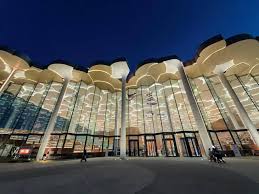
This conversation took place at the Metaverse Experience Hall of the Beijing Library. Supported by artificial intelligence (AI) and other emerging technologies, the hall offers visitors a novel approach to immersive reading and knowledge-based social engagement.
As one of three institutions under the Capital Library of China, the Beijing Library has introduced an AI-powered digital human modeled after renowned Chinese writer Lu Xun. Historically, Lu Xun played a role in establishing the predecessor of the Capital Library of China. Today, his digital incarnation symbolizes the library’s digital transformation.
“We developed the digital Lu Xun using AI technologies to provide guided tours, recommend books, and introduce local cuisine and cultural sites,” explained Fei Jun, professor with the School of Design, the Central Academy of Fine Arts, and creative director of the Metaverse Experience Hall. His team conducted in-depth research on Lu Xun’s life and works to create a realistic and multidimensional digital persona.
In addition to the digital Lu Xun, Fei’s team created two other digital characters, “Tutu” and “2122,” each with distinct personalities: one childlike and the other futuristic. These avatars, driven by large language models, engage visitors in conversations about literature and everyday life. Since the library opened at the end of 2023, these AI characters have participated in more than 1.7 million voice interactions.
Seven-year-old reader Wang Jiayi eagerly asked “2122” questions such as, “Why did dinosaurs go extinct?” and “Why do maple leaves turn red in autumn?” Her mother commented, “The digital humans are engaging and informative. They genuinely spark children’s interest in learning.”
Entering the library feels akin to stepping into a digital universe.
Visitors can scan a QR code to verify their identity, customize their attire, and quickly generate digital avatars within the Metaverse. These avatars can navigate virtual spaces such as the Children’s Library, Ancient Books Collection, Art Literature Library, and Intangible Cultural Heritage Library, exploring venue information and upcoming events.
Readers also interact with one another via their digital avatars, sharing reading lists, exchanging book reviews, and bridging online and offline reading experiences.
Looking ahead, the library plans to introduce additional immersive features, including personalized virtual study rooms. “Our goal is to offer a multisensory experience — visual, auditory, and even tactile — so users feel as if they’ve entered a parallel world for immersive reading,” Fei said. His team is also developing an online version of the metaverse library, enabling remote access to its digital environment and vast knowledge collections.
“Beyond traditional print books, we want to create a technology-enhanced environment that sparks curiosity and encourages readers to explore knowledge in innovative ways,” said Li Nianzu, deputy director of the Capital Library of China.

By Wang Junling
China is home to the world’s largest high-speed railway, expressway, and postal express delivery networks, as well as the world’s biggest and most extensive digital infrastructure. This increasingly modernized infrastructure system has supported rapid economic and social development, improving public services and enhancing everyday life.
Looking ahead to the next five years, how will China advance its infrastructure development?
According to the recommendations for formulating the 15th Five-Year Plan, new types of infrastructure will be built with appropriate forward planning; information and communication networks, the national integrated computing network, major science and technology infrastructure, and other key systems will be further developed and used intensively and efficiently; traditional infrastructure will be upgraded and retrofitted with digital and intelligent technologies.
This marks the first time a Five-Year Plan recommendation explicitly incorporates the concept of “appropriate forward planning” for new infrastructure.
What does this concept entail, and how will China implement it?
As technologies such as artificial intelligence, blockchain, 5G, and digital twin become deeply embedded in daily life and economic activity, China has made significant strides in developing information infrastructure, integrated infrastructure, and innovative infrastructure. These new foundations underpin the digital economy, accelerate the modernization of traditional infrastructure, and support scientific and technological innovation.
According to Huang Qunhui, a research fellow at the Institute of Economics, Chinese Academy of Social Sciences, many sectors, including scientific research, transportation, energy, water conservancy, and communications, face strong demand for digital, intelligent and green upgrades amid a new round of scientific and technological revolution and industrial transformation. Among these, digital-intelligent infrastructure such as next-generation communication base stations, high-performance computing equipment, and ultra-large storage systems has become central priorities.
Zhang Liqun, a research fellow at the Development Research Center of China’s State Council, highlights the public good nature of infrastructure, in contrast to the exclusivity of ordinary commodities. In this context, “appropriate forward planning” implies that government investment in emerging infrastructure, such as communication networks, computing capabilities, and scientific research platforms, must stay ahead of evolving societal needs to ensure public services are both proactive and resilient.
“For example, the growth of emerging industries and the upgrading of traditional industries rely on services like real-time communication and artificial intelligence enabled by traditional infrastructure,” Zhang added. “Government-led investments must anticipate demand to close critical gaps in a timely manner.”
Infrastructure development is a complex undertaking that encompasses policy, funding, planning, and technology, requiring coordinated, well-designed implementation. According to Xiang Aibing, director of the transport integration and innovation research center at the Institute of Comprehensive Transportation of China’s National Development and Reform Commission, despite tremendous progress, China still faces structural weaknesses in new infrastructure and in meeting the higher standards of quality development and public expectations.
Challenges persist in central and western regions and in special zones, where full coverage of gas pipeline and mobile communication network is lacking. Rural areas still struggle with “last-mile” connectivity, and integration across transport, energy, and digital infrastructure remains insufficient.
“The term ‘appropriate’ reflects the need for infrastructure development to align with the pace of economic and social development, while ‘forward-looking’ emphasizes its guiding and enabling function,” Xiang noted.
“During the 15th Five-Year Plan period (2021-2025), China must ensure that the supply of new infrastructure — its capacity, regional distribution, technological sophistication, implementation schedule, and scale — keeps pace with evolving development needs, creating a virtuous cycle of supply and demand,” Xiang added.
The resulting improvements in public services and growing market opportunities are drawing increasing attention from enterprises.
Li Qian, chairwoman of Net Zero, a tech firm based in northwest China’s Xinjiang Uygur autonomous region, said: “New infrastructure creates substantial opportunities for business expansion. We are making sustained investments, with appropriate forward planning, in computing power infrastructure to position ourselves for rising demand.”
Lunkr Technology (Guangzhou) Co., Ltd., the world’s first commercial company supporting the IETF multilingual email standard, provides digital solutions for clients in Thailand, Indonesia, South Africa, Zambia, and other countries. Wu Xiucheng, executive vice president of the company, noted that advancing new infrastructure with appropriate forward planning during the 15th Five-Year Plan period is a strategic move that enables digital industry growth and fosters new technologies and business models.
“Going forward, we will scale up our AI-driven products and services to better capitalize on emerging opportunities in email systems and cybersecurity,” Wu added.

Forging new chapters in China-U.S. people-to-people friendship

Technology enhances immersive reading experience in Beijing

A closer look at China’s ‘appropriate forward planning’ for new infrastructure development

-
 Uncategorized5 years ago
FG, states urged to harness flooding for ranching, others with technology – Agbaje
-
 Headlines10 years ago
Breaking: EFCC seals Borno House of Assembly, as Hon members take to their heels
-
 News11 years ago
Nigeria Security Operatives Stage Manhunt For Homosexual Perpetrator
-
 News9 years ago
How 21-year-old Girl fled community over accusation of lesbianism
-
 News10 years ago
Yobe Gov Moves Against Deputy
-
 Opinion7 years ago
7 signs she has friend zoned you
-
Technology4 years ago
Online job placement company headhunts women
-
 Headlines10 years ago
Borno Dep Gov Abducts Another Church Leader