
News
Attorney General Assures NDLEA Of Better Funding


By Chris RICHARDS, Abuja
Charges NASS to legislate for a drug free Nigeria
Attorney General of the Federation and Minister of Justice Abubakar Malami, SAN has expressed the need for better funding of the National Drug Law Enforcement Agency (NDLEA) for better service delivery of the Agency, assuring that his Ministry would ensure adequate allocation to it in the 2017 budget.
A statement by Salihu Othman Isah, Special Adviser to the Honourable Attorney General of the Federation and Minister of Justice on Media and Publicity disclosed in Abuja over the weekend,
that Malami gave the assurance when he received in audience last Thursday, members of the Senate and House of Representatives Committees on Drugs and Narcotics led by Senator Joshua Lidani, who were accompanied by the Chairman, National Drug Law Enforcement Agency (NDLEA), retired Col. Mustapha Mohammed Abdallah.
According to the statement, the Minister also assured that his Ministry would have to make a special case for the Agency by including it in the supplementary budget presentation, the NDLEA’s specialized needs..
Malami, represented by the Solicitor General of the Federation and Permanent Secretary, Federal Ministry of Justice, Mr. Taiwo Abidogun also appealed to the National Assembly to guarantee necessary legislations that will engender a drug free nation.
He observed that adequate funding is fundamental and strategic for effective performance by the Ministries, Departments and Agencies (MDAs) especially NDLEA, which he described as an institution charged with the onerous responsibility of combating the drug menace nationwide.
Malami, who expressed delight with the manner of presentations and contributions by the legislators, lamented that the normal trend in the country was for allocations to be approved on the basis of funds rather than on the needs of the nation as articulated by the MDAs.
He pledged to do his best to ensure that the areas that need to be improved upon in the Agency for optimal performance are met, regretting that at some point there was a disconnect.
Speaking earlier, Senate Committee Chairman on Drugs and Narcotics, Senator Joshua Lidani explained that the Senate is aware that the NDLEA was in dire need of greater funding to enable it function optimally and to deliver on their constitutional mandate to confront the drug menace.
He described as worrisome the high level of drug trafficking in the country and the inadequacies of the Agency to confront the scourge adequately as a result of shortfall in manpower and transportation especially operational vehicles, boats and aircrafts.
According to him, when the joint Committee approached the Head of Service to request for staff increase for the Agency, they were told there is no cash backing to employ additional staff, saying that while the Nigerian Security and Civil Defence Corp (NSCDC) got approval to recruit 7,000 staff recently, just like some other para-military outfits, the NDLEA was left out.
Also speaking, Honourable Azodo Eucharia, chairman, House Committee on Narcotics lamented that the Agency currently have 4,900 officials to cover the 36 states of the federation and the Federal Capital Territory, also describing as disheartening a situation where NDLEA officials go to effect arrest drug peddlers with motorcycles popularly called Okada.
‘’If you share this figure among the 36 states and the 774 Local Government Areas in the country, it is nothing to write home about’’, adding that the rate at which married women are consuming drugs was appalling.
She revealed that only N114 million was appropriated to NDLEA as capital expenditure in the 2016 budget with a paltry allocation of N100,000 to each State Command monthly to defray operational cost which she described as grossly inadequate.
Other committee members who spoke such as Honourable Iboro Ekanem reiterated further that the Agency was under funded, under staffed with dilapidated building virtually in all the state commands, lack operational vehicles and requiring capacity building through training and retraining.
“National Drug Law Enforcement Agency is presently having staff strength of about 4,900 to police 36 states and FCT including 774 local councils in the country, allocates N100,000 to each state command monthly to defray operational cost which is grossly inadequate. Regrettably, only N114 million was appropriated to NDLEA as capital expenditure in 2016 budget”, he reaffirmed.
Chairman of National Drug Law Enforcement Agency, Col. Muhammed Mustapha Abdallah (retd) while speaking, noted that the Agency he inherited from his predecessor needed to be transformed in terms of human and material resources to enable him and his men meet up to their expectations.
Immediate past NDLEA Chairman, who is currently the Special Assistant to the Attorney General of the Federation on Narcotics and Psychotropic Drugs, Alhaji Aminu Giade also lent support to the trend that the Agency is under staffed.
The Agency ex-boss said for NDLEA to carry out its statutory functions effectively nationwide about 20,000 staffs are required and also advocated for training and re training of staffs of the Agency to be able to grapple with the antics and tactics of the dare devil drug barons and others in the ring.
He lamented that it was only the early recruits of the Agency that were trained but has not benefited from follow up training due to lack of funds before his exit.
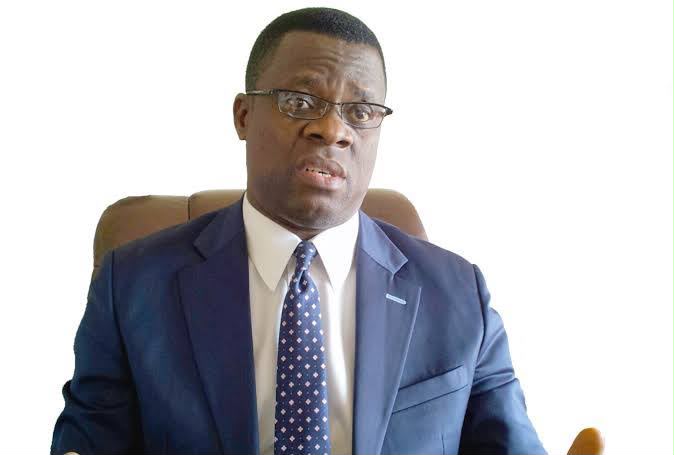
THE FALLACIES OF MIKE IGINI
“It is mean and cowardly and an evidence of weakness and utter demerit, for any group of people to attempt to commend themselves to the public by the negative process of belittling and condemning others.”_
- Chief Obafemi Awolowo, 28th April, 1951.
The attention of the Progressives Alliance for Justice, Unity and Democracy (PAJUD) has been drawn to the barrage of insults heaped by Mike Igini, former Resident Electoral Commissioner of the Independent National Electoral Commission (INEC), against every perceived and imaginary obstacle to his personal agenda.
We posit that since the return of democracy in 1999, the Nigerian political and electoral firmament has been overdosed with different genres of characters – the good, the bad and the ugly.
We state categorically and without fear of contradiction that President Bola Ahmed Tinubu is NOT responsible for the non-appointment of Mike Igini as either Chairman of INEC or National Commissioner since he left office in disgrace and engulfed in controversies in the South-South.
Igini must understand that such appointments are not done willy-nilly. They are based on several criteria. He has served two full terms as Resident Electoral Commissioner. For him to be nominated as National Commissioner, a vacancy must exist for his state. This is apart from the principle of rotation of the position among states in the geo-political zone.
Those who know President Bola Ahmed Tinubu closely know he is a leader who does not deliberately shut the door against competence and capacity. Anyone holding him in contempt on this matter is either being mischievous or acting out the script of the opposition, just like the present issue at stake.
It is unfortunate that Igini has allowed himself to be taken advantage of, dancing to the rhythm of anti-Tinubu and anti-Amupitan rogue agents.
We find it compelling to state unequivocally that Igini is blatantly scheming to discredit the present government and the Amupitan-led leadership of INEC in anticipation of reward by opposition elements and spent forces, if they ever win in the post-2027 general elections.
Over the years, we have watched the transformation of Igini from lawyer, to public affairs commentator, to agitator, until the PDP government appointed him Resident Electoral Commissioner.
We are amused at Igini’s feeble attempts at returning to public reckoning, using barefaced criticism, outright lies, mischief and fallacies against the Renewed Hope and reformative agenda as a springboard to relevance and prominence.
For an egocentric, self-seeking bigot and Mr. Know-All like Igini, he wants to remain relevant as a bride for any juicy INEC Election Management Committee headship or membership, which we know will never happen in this dispensation as a result of his antecedents while in office – an era marred by allegations of partisanship, disloyalty and endless controversies.
Your tenure as REC in Cross River State was characterised by mudslinging between you and a political party over unethical conduct unbecoming of an electoral officer. Similarly, your flexing of muscles and one-sided narratives during your tenure as REC of Akwa Ibom State is still very fresh in our memory. Till date, you are still spewing negative narratives against one of the politicians you fought in that state to high heavens.
Nigerians from all strata continue to wonder where the monies for the live telecast of Igini’s exit as Resident Electoral Commissioner of Akwa Ibom State originated from. In the history of INEC – from Dr. Ephraim Akpata, Alhaji Shehu Musa, Dr. Abel Guobadia, the much-vilified Prof. Maurice Iwu, Prof. Attahiru Jega reputed to be Igini’s benefactor, to Prof. Mahmood Yakubu – none of them had the temerity for such lavish display and grandeur during their exit. What was witnessed in the last days of Igini as REC in Akwa Ibom evokes serious questions about collective decency, decorum, moral rectitude and values.
Any argument in support of such an extravagant exit lacks integrity, for the simple reason that the pay slip of INEC Resident Electoral Commissioners and even National Commissioners is not a hidden document. It is known to the Nigerian public.
We believe that if we are sincere in this country, Igini should focus on more important non-partisan issues than chasing shadows. Igini should also address his own record, including the troubling episode of a Kenyan national engaged by INEC as a consultant some years ago, where the voter register fingerprints of Nigerians were allegedly compromised and handed to foreign interests. That despicable act is still fresh in our memory.
As overwhelming majority of Nigerians with voting rights are aware, there is an uncanny lust for power by desperate opposition politicians lurking on the horizon. They are deploying everything on earth just to grab power in 2027, and for no just cause but simply for selfish personal aggrandizement. They have recruited former staff, Directors, Resident Electoral Commissioners and National Commissioners to help execute their warped agenda and barefaced propaganda to deceive gullible Nigerians who will swallow every hook, line and sinker narrative framed by them.
We unreservedly agree with many who have suggested that as a believer in God, Igini should not allow his mind to be poisoned by the notion that any power outside the influence of God could have been responsible for the failure of his emergence as either National Commissioner or Chairman of the Commission.
Whatever it is, there seems to be more to it than meets the eye. The process of creating anarchy starts with incitement against the government, the electoral empire and security agencies. It often appears so smooth as to be imperceptible, hence those who engineer it enjoy the process at the initial stage, only to be consumed at the end of the day.
Elements in the class of Igini, who are acting out the script of falsehood purveyors and peddlers, will be put to shame at the end of the day. There is no doubt that Nigerians are going to have a well-deserved, credible, transparent, free and fair election in the 2027 general elections.
Above all, nobody can dispute the fact that President Bola Ahmed Tinubu nominated people with impeccable ability, capacity, loyalty, patriotism and honesty as members of the election management structure that will drive our democracy forward, in a manner that both Nigerians and the international community will be proud of like never before in our annals.
The focus of the Tinubu administration remains its much stronger determination to protect and respect the sanctity and fidelity of the ballot during the forthcoming elections.
We implore Mike Igini to stop the rabble-rousing, negative framing, mischief, mudslinging and casting of aspersions against the electoral umpire and Mr. President, and find something reasonable to do to earn a living just like other Nigerians, instead of going from one radio station to television stations across the country. His antics are already known to Nigerians who are far more sophisticated and politically savvy than before.
A word is enough for the wise… “WHEN YOU CONDEMN PEOPLE, YOU BRING JUDGEMENT ON YOURSELF.”
Signed:Comrade Yakubu Dan Abba
Country Representative, PAJUD.
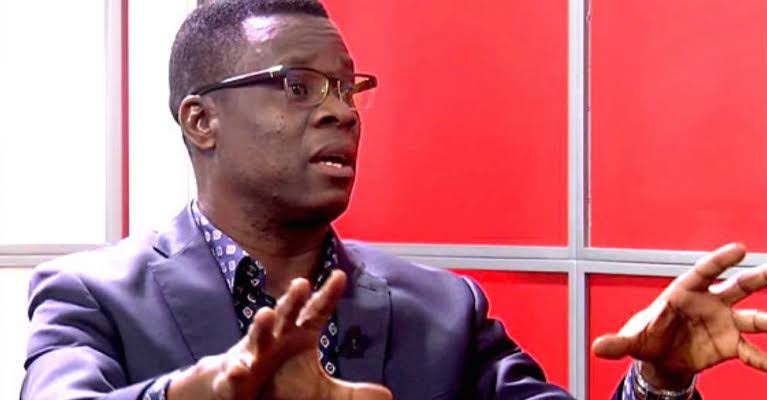
The Progressives Alliance for Justice, Unity and Democracy (PAJUD) has accused former Independent National Electoral Commission (INEC) Resident Electoral Commissioner, Mike Igini, of attempting to discredit President Bola Tinubu’s administration and the leadership of the electoral body, describing his criticisms as politically motivated.
The group, in a statement signed by its Country Representative, Comrade Yakubu Dan Abba, alleged that Igini was seeking to regain public relevance through persistent criticism of the government and the leadership of INEC under its current chairman, Prof. Joash Amupitan.
PAJUD, however, did not provide independent evidence to substantiate its allegations about Igini’s motives.
The group maintained that Tinubu was not responsible for Igini’s non-appointment as INEC chairman or national commissioner after completing his tenure as a Resident Electoral Commissioner, arguing that such appointments were subject to established criteria, vacancies and rotation arrangements among states within geopolitical zones.
“Those who know President Bola Ahmed Tinubu closely know he is a leader who does not deliberately shut the door against competence and capacity,” the statement said.
The group further alleged that Igini’s criticisms were intended to undermine the current administration and INEC’s leadership in anticipation of political rewards from opposition elements following the 2027 general elections.
PAJUD also questioned Igini’s record during his service as Resident Electoral Commissioner in Cross River and Akwa Ibom states, citing past disagreements with political actors and what it described as controversies surrounding his conduct in office.
It also raised questions about the cost and circumstances of the live television broadcast of Igini’s exit from office in Akwa Ibom State, comparing the event with the departures of previous INEC chairmen and other senior electoral officials.
The group did not provide documentary evidence to establish wrongdoing in connection with the broadcast.
In another allegation, PAJUD called on Igini to address what it described as concerns surrounding the engagement of a Kenyan national as an INEC consultant and the alleged compromise of Nigerian voters’ fingerprint data. The statement, however, did not present evidence establishing that Igini was personally responsible for any compromise of the data.
The alliance accused opposition politicians of attempting to discredit the electoral system ahead of the 2027 elections, alleging that some former electoral officials were being used to advance political interests. It did not identify the individuals allegedly involved or provide evidence supporting the claim.
PAJUD, meanwhile, expressed confidence in the ability of the current INEC leadership to conduct credible, transparent, free and fair elections in 2027.
It said the Tinubu administration remained committed to protecting the integrity of the ballot, adding that the president had nominated individuals it described as capable, patriotic and committed to the country’s democratic development.
The group urged Igini to refrain from what it characterised as inflammatory criticism of the president and the electoral commission, insisting that public discourse on electoral reform should be guided by responsibility and respect for democratic institutions.
Quoting former Premier of the Western Region, Chief Obafemi Awolowo, the alliance recalled his statement of April 28, 1951, that it was “mean and cowardly” for any group to seek public approval by belittling and condemning others.
PAJUD concluded by urging Nigerians to remain confident in the electoral process ahead of the 2027 general elections, while reiterating its support for the Tinubu administration and the current leadership of INEC.
The Freelance Journalist Federation (FJF) has expressed confidence in the committee investigating the reported deaths of 37 miners in Niger State, urging the public to allow the panel to conclude its assignment without undue pressure.
The federation’s position followed threats by the Nigeria Diaspora Organizations and Community for Human Rights (NDOCHR) to stage a protest at the headquarters of the Nigeria Security and Civil Defence Corps (NSCDC) in Abuja over alleged delays in releasing the investigation’s findings.
FJF in a statement issued on Friday and jointly signed by FJF conveners Ibrahim Ali, Jonathan Modi, Okpara Isaac and Christopher Abah, described the investigative process as transparent and thorough, insisting that sufficient time should be allowed for the committee to complete its work and establish the facts surrounding the incident.
The federation criticised the proposed demonstration, describing it as unnecessary and politically motivated, while warning against actions that could heighten tensions over an issue involving the loss of human lives.
It also commended the leadership of the NSCDC, the Minister of Interior and President Bola Ahmed Tinubu for what it described as their commitment to transparency, accountability and the rule of law.
According to the FJF, local civil society organisations monitoring the proceedings have expressed satisfaction with the panel’s conduct. However, the federation maintained that the investigation should be allowed to run its course before conclusions are drawn.
The group also rejected calls by the diaspora organisation for the immediate removal and prosecution of the NSCDC Commandant-General, Dr Ahmed Abubakar Audi, describing the demands as premature and inconsistent with the principle of fair hearing.
It argued that calls for sanctions before the conclusion of the investigation could undermine due process and prejudice public perception of the committee’s work.
The NDOCHR had also threatened to petition the International Criminal Court (ICC) in The Hague over the matter. In response, the FJF maintained that Nigeria’s domestic legal and investigative institutions should be allowed to address the allegations through established procedures.
The federation urged Nigerians in the diaspora to exercise restraint and avoid actions that could inflame political tensions or interfere with the ongoing investigation.
It urged members of the public to remain calm and await the committee’s official findings, stressing that a thorough investigation was necessary to establish the circumstances surrounding the reported deaths and determine any responsibility arising from the incident.
The committee’s final findings and any subsequent official actions are expected to be central to resolving the concerns surrounding the incident.
The statement further called on the Inspector-General of Police and other security agencies to take appropriate steps to maintain public order in the Federal Capital Territory.

WHO: Nigeria Records Zero Ebola Cases After Evacuation of Swiss Couple

Kwara celebrates Fela’s legacy with retrospective exhibition

2027: Ilorin West LG Boss Leads APC Mega Rally In Ubandawaki

-
 Uncategorized6 years ago
FG, states urged to harness flooding for ranching, others with technology – Agbaje
-
 Headlines11 years ago
Breaking: EFCC seals Borno House of Assembly, as Hon members take to their heels
-
 News12 years ago
Nigeria Security Operatives Stage Manhunt For Homosexual Perpetrator
-
 News10 years ago
How 21-year-old Girl fled community over accusation of lesbianism
-
 News11 years ago
Yobe Gov Moves Against Deputy
-
 Opinion7 years ago
7 signs she has friend zoned you
-
Technology5 years ago
Online job placement company headhunts women
-
 Headlines10 years ago
Borno Dep Gov Abducts Another Church Leader