
News
Don highlights role of the masses in actualizing NSCDC mission


A Professor of History and International Studies, Patrick Ukase has highlighted ways the masses can partner with the Nigeria Security and Civil Defence Corps (NSCDC) in actualizing the mission of the security outfit in ensuring peace and safety of critical infrastructures of the state.
The Don gave the highlights in a paper entitled, ‘Prioritising the role of the masses in protecting public assets and national infrastructure towards sustaining the vision of the Nigeria Security and Civil Defence Corps in Nigeria’s security architecture.
Find full text of the paper below:
Prioritizing the Role of the Masses in the
Protection of Public Assets and National
Infrastructure Towards Sustaining the Vision
of the Nigeria Security and Civil Defence
Corps in Nigeria’s Security Architecture
By Prof. Patrick I. Ukase
INTRODUCTION
- It is a truism that that peace and security are necessary preconditions for development, as no nation can make any meaningful progress in an atmosphere of insecurity.
It is in this connection that one of the most critical functions of a State is, therefore, to ensure peace and security. - Section 13(b) of the 1999 Constitution of FRN as amended foregrounds the above submission unequivocally thus:
• “the security and welfare of the people shall be the primary purpose of
government” - It is against the above background that maintenance of peace and security is
considered as a justifiable public good, and the very essence of the State.
Regrettably, in the last sixty three years of our independence, but most especially in the Fourth Republic (1999 to date), the nation’s security challenges have continued to surge. - These security challenges which have taken various forms, shapes and dimensions, include but are not limited to the following:
i. Armed Robbery
ii. Political and Electioneering Conflicts
iii. Socio-economic agitations
iv. Land disputes
v. Kidnapping
vi. Ethno-religious conflicts
vii. Ethnic militias and groups negotiating for space
viii. Abductions and organised terrorism
ix. Banditry
x. Farmer-herder conflicts
x. Cybercrimes
Apart from the fact that some of the above acts of insecurity pose a serious challenge to the nation’s development trajectory, in the last two or three decades, there have been deliberate efforts by criminals to further run down the country by sabotaging her development efforts.
This sabotage has taken the form of destroying or stealing the following public assets and critical national infrastructure:
i. Electricity installation
ii. Vandalisation of oil pipelines with multiplier implications
iii. Destruction of roads and the Vandalisation of railway tracks
iv. Stealing of NITEL cables
vii. Stealing from government hospitals, schools, offices, etc vii. Expropriating or stealing the nation’s natural resources.
It was in order to stem the tide that the Federal Government established the NSCDC as a formidable para-military agency of the government to tackle the menace.
This paper, therefore, interrogates the extent of the damage of our public assets and national infrastructure, and their implications for the nation’s growth and development trajectory.
- The paper would also essentially appraise/evaluate the role of the NSCDC to the realization of its statutory mandate, and the challenges confronting the para-military agency.
. The paper is concluded by proposing some collaborative efforts/interventions between the NSCDC and the masses (critical stakeholders) that would engender the protection of the nation’s national assets and critical infrastructure.
WHAT ARE PUBLIC ASSETS Et CRITICAL
NATIONAL INFRASTRUCTURE?
… Public assets and critical national infrastructure are assets, services and systems that support the economic, political and social life of a nation. They cut across every sector necessary to maintain normalcy in daily life.
❖ Public assets or (PA) critical national infrastructure (CNI), are infrastructure considered essential by governments for the functioning of the society and economy and deserving of special protection for national security.
Some examples of these assets and infrastructure include: energy, financial, ICT, Commercial facilities, dams, food and agriculture, government facilities, healthcare, transportation, water supply, and education facilities. Others include worship centres such as Churches and Mosques, markets, bridges, etc.
These assets are so critical that any attack on them would have adverse effect on national security.
PUBLIC ASSETS AND NATIONAL INFRASTRUCTURE
IN NIGERIA: A SITUATIONAL ANALYSIS
v Since the 9/11 terrorist attack on in the United States (US), countries including the US have taken steps to identify CNA8c1 with the aim of designing appropriate policies to secure them.
v Nigeria’s CNAEtI have been under severe attack from various
quarters before and since the return of democratic governance.
v For instance, security challenges arising from the activities of Boko Haram, various militants groups, Bandits, armed robbers and so on, have played one role or the other in the destruction of CNAEtI.
These attacks have posed a serious challenge to the growth and development of the country, as it would seem as if whenever the country is taking a step forward, it takes three or four steps backwards.
For instance, as governments (federal, state and LGs) are investing massively in the development and construction of various infrastructure that would support employment generation, reduce poverty, and improve the well-being of Nigerians, saboteurs are always on the prowl.
• :. One of the areas worst hit is the energy sector (oil), where Nigeria has continued to loose horrendous amounts of resources.
• For instance, there are very worrisome statistics of what Nigeria has lost to oil theft. For example, the Nigerian Extractive Industry Transparency Initiative (NEITI) has revealed that Nigeria lost 619.7 million barrels of crude oil valued at N16.25 trillion (46.16 billion USD) to crude theft between 2009 and 2020 (that represents a loss of over 140,000 barrel p/d.
. Within the same period, the country lost 4.2 billion litres of petroleum products from refineries valued at 1.84 billion USD.
- Between January and April 2023, 3444 Crude oil theft incidents were recorded
v Similarly, the Nigerian National Petroleum Company Limited (NNPCL) reported that there were 4,145 recorded crude oil thefts incidents between May and second week of October 2023.
Situational Analysis Contd.
The fulcrum of CANEd are human beings. Ab initio, Infrastructure would be meaningless in the absence of human beings that would utilize them. There is, therefore, a sense in which our human resource remain our greatest assets.
It is, therefore, worrisome that more than 2.6 million people have been displaced across Nigeria and are presently wallowing in various IDP camps due to the criminal activities of various groups.
These criminal elements especially, those operating in the North-West have continued to attack educational institutions and kidnap school children, thereby discouraging then from going to school in Nigeria.
Consequently, the percentage of school dropouts have risen to 60% (that is by 2023). It is estimated that 10.5 million children are no longer going to school.
Several worship centres (Churches and Mosques) have also been destroyed especially in the North West.
The above debilitating security situation have serious implications for the entire governance process in the following ways:
i. The revenue of the country has dropped significantly because of sabotage
ii. This has created a corrupt and violent political culture: It is alleged that certain politicians exploit predicate offences like kidnapping for ransom, illegal mining and illegal oil bunkering to sponsor elections.
iii. A research by the Institute for Security Studies (ISS) stated that there is collaboration is “a collaboration between politically connected Nigerians and foreign nationals in illegal mining which drives rural banditry and violent local conflicts in some parts of Nigeria.
iv. Research also shows that some arrested criminals in the past were allegedly on the payroll of some prominent politicians.
v. Cost of governance have increased astronomically (budgetary spending on security) due to the rising spate of criminal activities.
vi. The nation’s defence and security forces (DSF) have been overstretched beyond their limits, that is in terms of capacity and equipment.
vii. It has also posed serious food security challenges for the nation.
viii. The destruction of pipelines further aggravates environmental degradation with resultant effects on livelihoods
THE INTERVENTIONS OF NSCDC
Historical Evolution of the NSCDC
v The NSCDC was first established as a voluntary organization in March 1967 by the Gen. Yakubu Gowon administration.
Its main objective included:
i. to sensitize members of the public on how to save themselves from attacks and danger of war. This was achieved through public lectures in the print and electronic media.
ii. NSCDC personnel also treated wounded soldiers and civilians during the war.
v In 1984, the corps was transformed into a national security outfit as a voluntary
organization, working for the FG and domiciled in the ministry of foreign affairs.
- In 1988, the FG, through an official gazette, granted the NSCDC formal recognition and assigned the following responsibilities to it:
i. Information/intelligence gathering.
ii. Monitoring the activities of trade and professional associations.
iii. Participation in the activities of the National Orientation Agency
iv. Responding/intervening to man-made or natural disasters.
n In order to address the perennial internal security threats, the FG transformed the
NSCDC from a voluntary organization to a full-fledged national security outfit in 2003.
The promulgation of the Act known as NSCDC Act. No.2 of 2003 and Amendment Act No. 6 of 2007 makes the corps a full fledge paramilitary outfit of government under the Ministry of Interior with the following:
i. Maintenance of and peace and order and in the protection/rescuing of the civil population during the period of emergency and disaster.
ii. Protection of Critical National Assets and Infrastructure of government.
iii. Registration, training, licensing and monitoring the activities of all Private Guard Companies in Nigeria.
iv. Maintenance surveillance over infrastructure, sites and projects of federal, state and LGs.
v. Search the premises of any suspected illegal dealer in petroleum products or any material used by any public utility organization.
vi. Arrest – with or without a warrant – detain, investigate and prosecute any person suspected to have committed an offence or involved in criminal activity such as chemical poisoning, oil spillage, nuclear waste, industry espionage or fraud.
Success Achieved by the NSCDC
Since its establishment as a paramilitary organization,
the NSCDC has achieve tremendous success in the following areas:
i. Apart from playing similar roles at the federal and state levels, It has continued to play a vital role in the maintenance of CNAEtI in the 774 LGAs in the country.
ii. It has consistently and successfully fought various forms of economic sabotage against oil/water pipelines and other critical national assets and infrastructures by vandals.
iii. The NSCDC has shown competence and capability in the maintenance of peace and securing lives and properties, both private and national events.
iv. They have played collaborative roles with other security agencies in ensuring peaceful elections in Nigeria.
v. They have often quickly responded to victims of fire outbreaks, collapsed buildings, casualties during riots, victims of terrorists attacks and victims of ethno-religious attacks.
vi. They have successfully been playing the watchdog role to Private Guard companies.
vii. Due to its proximity to the populace and the grassroots, it has continued to be in the forefront of generating credible and timely intelligence; share same with appropriate quarters and back it up with the requisite action.
viii. The peace and conflict management unit have, through Alternative Dispute Resolution (ADR) of the Corps, successfully resolved several disputes.
viii. Under the watch of the current CG, Ahmed Audi, the Special Female Squad and the Safe School Initiative were established, both aimed at securing students and the school environment. They also help in stamping out social vices in schools.
x. In recognition of the above achievements, the Corps received an award as the most improved paramilitary agency in Nigeria for year 2023 from the Security watch Magazine.
xi. Much more importantly, this is an institution that has not been directly involved in any scandal twenty years after its establishment (2003-2023). Its personnel have continued to conduct themselves with decency and decorum, and the finesse that is deserving of a modern paramilitary outfit operating in the 21st century.
SOME CHALLENGES OF THE CORPS
❖ The following are some of the identifiable challenges of the NSCDC:
Inadequate Manpower: given the quantum of security challenges confronting the nation, and given the statutory mandate of the NSCDC, which is to cover the federal government, states and LGS, its personnel are grossly inadequate to cover these areas.
Inadequate training and re-training: Inadequate training and retraining of its officers and men have also been a bane to the realization of the full potentials of the corp.
iii. Inadequate logistics and equipment: Lack of operational vehicles weaponry, ICT and operational equipment (Like surveillance drones, surveillance helicopters, Close Circuit Televisions (CCTVs), etc. have prevented the Corps from achieving some of its set goals.
Inter-agency rivalry: Incessant disagreements, jealousy and bickering between and among agencies have been inimical to the realization of the Corps set goals.
Poor welfare package: Like several other paramilitary agencies, the emolument and welfare package of the officers and personnel is not too encouraging to boost their morale.
Inadequate Funding: funding, like many other ministries, departments and agencies in the country, has been a challenge to the NSCDC.
NSCDC AND MEASURES AIMED AT PRIORITIZING THE ROLE OF THE MASSES a OTHER STAKEHOLDERS IN THE PROTECTION OF CNital
•:* The NSCDC has been working with the masses but they
will need to continue to build that synergy with the
masses and other critical stakeholders to be able to
achieve set goals.
The following measures could be used in actualizing this
synergy:
i. The NSCDC must earn the trust of the people to be able
to synergize with them. In this connection, it must try to
organise outreaches (medical outreaches and other social
engagements) to connect with the people in various
communities across the country. It is only by so doing that
it can be sure of credible information from the people.
The NSCDC must also work very closely with several stakeholders to achieve set goals. These stakeholders include:
s( Religious and traditional leaders.
✓ Civil Society Organizations (CSOs)
.( Student groups
Academics
Community leaders and vigilante groups
.( Market and Transport unions
The media
The above stakeholders, working in concert with the masses and providing the needed support to the NSCDC, is critical protecting CNAEtI. Stakeholders are also encouraged to actively support the NSCDC.
It MUST as a matter of necessity, build synergy and collaboration with other DSF. This will help in intelligence gathering and information sharing.
v. Training and retraining of NSCDC officers and personnel through workshops and other refresher courses are imperative.
The NSCDC is advised to strengthen/activate its Public Relations department at the federal, state and LG levels to keep citizens abreast of its activities.
vii. Government needs to adequately fund this agency for better service delivery.
viii. Government is encouraged to recruit more personnel and also provide logistical support and equipment to the agency. This way, the presence of the corps would be felt more in the grassroots.
ix. The welfare of staff of the NSCDC should prioritized and improved upon to meet the current economic realities.
The NSCDC is encouraged to leverage on technology to nip crimes in the bud.
CONCLUSION
- I have demonstrated in this paper that, despite some
daunting challenges, the NSCDC has done extremely well
in the last twenty years of her existence, especially in the
realization of its mandate, and it needs to be encouraged.
If this agency is empowered and given the necessary tool
kits it requires, it can become a major albatross to
criminals in Nigeria. All over the world, the State controls
the instruments of coercion and this cannot be the other
way round. She cannot relinquish this function to non-
state actors like she is trying to do presently, by
contracting the protection of oil pipelines to private
security organizations. By doing so, the State would be
questioning the competence and integrity of its own
institutions. Rather than do that, the state should identify
the challenges confronting these institutions, especially
the NSCDC and fix them for more effective service.

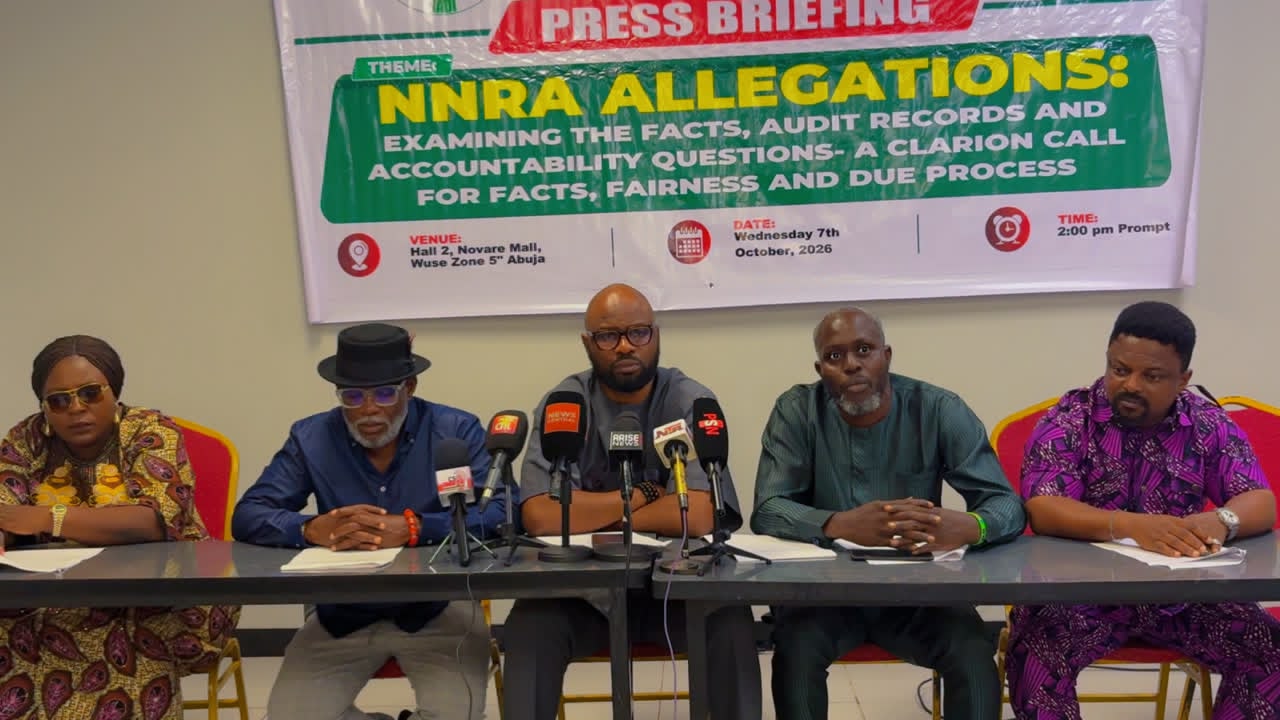
The Integrity Advocacy for Development Initiative (IADI) has called for a thorough, evidence-based examination of allegations of financial misconduct involving the Nigerian Nuclear Regulatory Authority (NNRA), warning against treating audit observations and media reports as established cases of fraud.
IADI Executive Director, Comrade Ofomhi Christopher, made the call on Wednesday at a press briefing in Abuja titled, “On the Allegations Concerning the Nigerian Nuclear Regulatory Authority (NNRA): Facts, Clarifications and the Need for Evidence-Based Accountability.”
The group was reacting to a publication by Secrets Reporters dated October 1, 2026, which alleged that about N6.69 billion was involved in contract fraud and misappropriation at the NNRA.
It also referred to a protest held on October 5 by Global Integrity Watch (GIW) at the NNRA headquarters, where the organisation demanded accountability, responses to audit observations and Freedom of Information requests, as well as changes in the leadership of the regulatory authority.
Christopher said while the allegations deserved scrutiny, they should not be treated as established facts without verification of the underlying records.
According to him, the public deserves to know the specific audit observations, periods and transactions involved, the nature of the contracts, the status of the projects or services, responses provided by the NNRA and whether the issues had been resolved or referred for further investigation.
“An audit observation is a serious matter requiring explanation and verification, but it is not, by itself, a judicial finding of fraud or personal misappropriation,” he said.
The IADI chief also referred to an explanation reportedly provided by the NNRA Director-General concerning the authority’s 2024 capital budget.
He said the explanation put the NNRA’s total 2024 capital budget at about N2.7 billion, comprising approximately N200 million belonging directly to the authority and about N2.5 billion for constituency projects, with an additional N200 million regional project bringing the figure referenced to about N2.9 billion.
Christopher, however, stressed that the explanation should not be regarded as conclusive, urging that it be tested against appropriation documents, budget releases, project records, procurement documents, payment records and audit reports.
“That is how responsible accountability should work: a claim is made, the response is heard, the records are examined, and the evidence determines the conclusion,” he said.
On allegations concerning unexecuted projects, the organisation called for physical verification of the specific projects, while allegations of inflated contract prices should be subjected to scrutiny of contracts, bills of quantities, procurement records and relevant price benchmarks.
It also urged that allegations concerning contractors be examined through relevant procurement and ownership records, while any claim of diversion or misappropriation should be established through the financial trail.
Christopher said where audit authorities had raised observations on expenditure, the public should be informed of the precise observations, the affected institution’s response and the current status of the issues.
The organisation also addressed the October 5 protest by GIW, acknowledging the constitutional right of civil society organisations to peaceful assembly and association under Section 40 of the Constitution.
It, however, urged CSOs to exercise such rights responsibly and within the law.
On Freedom of Information requests, IADI said there should be a distinction between the right to protest and the legal mechanism available where an FOI request is not answered.
The organisation noted that the Freedom of Information Act provides a judicial mechanism for applicants who have been denied access to information, adding that Section 20 allows an applicant to approach the court for a review.
IADI clarified that it was not suggesting that CSOs must obtain a court order before organising peaceful protests.
Rather, Christopher said, where non-compliance with an FOI request was the central grievance, the statutory and judicial mechanisms should be considered alongside legitimate civic action.
“An unanswered FOI request may justify further action to obtain the information. It does not, by itself, establish that fraud, misappropriation or any other wrongdoing has occurred,” he said.
The group also urged organisers of protests at government agencies to take public safety, access to government premises and the safety of protesters, workers and other citizens into consideration.
At the same time, it cautioned government institutions against using the possibility of confrontation as a justification for suppressing lawful civic expression.
“The answer to institutional disagreement should be law, evidence and due process, not intimidation or retaliation,” Christopher said.
He stressed that IADI was neither seeking to shield the NNRA from scrutiny nor dismiss legitimate questions concerning public expenditure at the authority.
He called on relevant audit and oversight bodies to state the status of the observations in question, the responses received from the NNRA and whether the matters had been resolved, sustained or referred for further investigation.
The organisation also encouraged CSOs pursuing accountability to make full use of available legal and institutional mechanisms while retaining their legitimate right to peaceful civic action.
“The public deserves accountability. But the public also deserves accuracy, fairness and evidence.
“A headline is not a verdict. An allegation is not evidence. An audit observation is not automatically a finding of personal guilt,” Christopher said.
He added that public institutions should not expect their expenditure to escape scrutiny merely because questions were raised through the media or civil society.
“Let the records be examined. Let the questions be answered. Let the evidence speak,” he said.
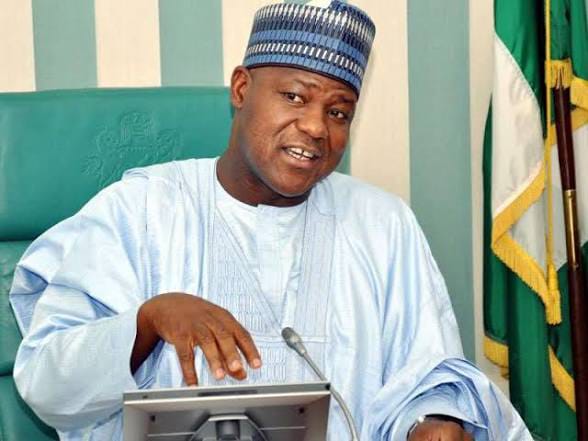
Former Speaker of the House of Representatives and Chairman of the Board of the National Credit Guarantee Company Limited (NCGC), Rt. Hon. Yakubu Dogara, CFR has expressed deep sorrow over the Nigerian Air Force aircraft crash that claimed the lives of 32 persons near Igbokoda, Ondo State. Dogara described the tragedy as a heartbreaking loss to the nation, noting that the deaths of the victims have left a painful void in the country’s defence and security community.
In a statement, the former Speaker extended his condolences to President Bola Ahmed Tinubu, Commander-in-Chief of the Armed Forces, the Nigerian Air Force, and the families of those who perished in the unfortunate incident.
He said the nation shares in the grief of the bereaved families and the Armed Forces at this time of immense sorrow, adding that the sacrifices of those who lost their lives in service to the country will not be forgotten. “The nation mourns with the families of the deceased and stands in solidarity with the Armed Forces during this difficult period,” Dogara stated.
He also commiserated with the Chief of Air Staff, officers and men of the Nigerian Air Force, praying that God grants them the fortitude to bear the painful loss.
According to him, moments such as this call for national unity, reflection and collective support for the families and institutions affected by the tragedy.
Dogara paid tribute to the victims, describing them as patriotic Nigerians whose commitment and service contributed to the security and stability of the nation. He further applauded the efforts of emergency responders, rescue teams and all personnel involved in the aftermath of the crash, commending their courage and professionalism under difficult circumstances.
The former Speaker prayed God to comfort their families, friends and colleagues.
He also offered prayers for the safety and protection of members of the Armed Forces and for continued peace, unity and progress in Nigeria.
The Nigerian Air Force aircraft crashed near Igbokoda, Ondo State, resulting in the death of 32 persons and plunging the nation into mourning. Authorities are yet to make public the cause of the accident as investigations continue.
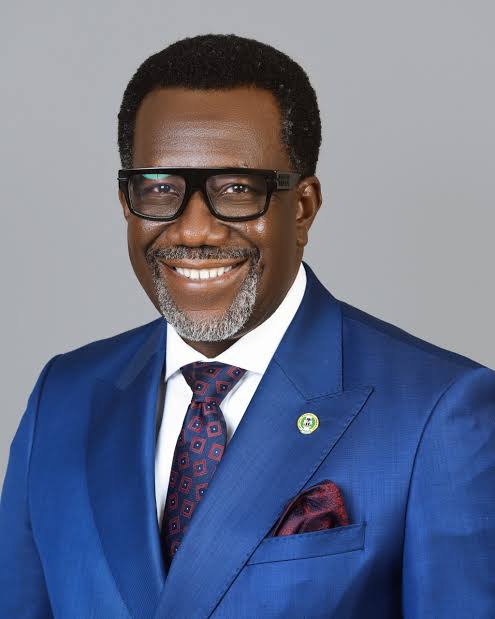
The Centre for Credible Reforms and Institutional Accountability (CCRIA) has commended the Commissioner for Insurance and Chief Executive Officer of the National Insurance Commission (NAICOM), Mr Olusegun Ayo Omosehin, for promoting transparency and accountability in the ongoing reforms of Nigeria’s insurance industry.
The centre said the implementation of the Nigerian Insurance Industry Reform Act (NIIRA) 2025 had ushered in a new phase of development for the sector, with stronger regulatory standards, improved capitalisation and greater emphasis on protecting policyholders.
Dr Aminu Abubakar Aminu, president of the centre, said this in a statement at the weekend.
Aminu commended President Bola Tinubu and the National Assembly for the enactment of NIIRA, describing the legislation as a major step towards addressing longstanding challenges in the insurance industry.
“The enactment of the Nigerian Insurance Industry Reform Act is a significant milestone in the development of Nigeria’s insurance sector. We commend Mr President and the National Assembly for recognising the need to modernise the legal and regulatory framework governing the industry. NIIRA provides the foundation for an insurance sector that is better capitalised, more accountable, more responsive to policyholders and better equipped to contribute meaningfully to the Nigerian economy,” he said.
The centre also praised Omosehin for his leadership of NAICOM, saying his extensive experience as an insurance professional had positioned him to effectively implement the new regulatory framework.
“We consider the appointment of Mr Olusegun Ayo Omosehin as Commissioner for Insurance and Chief Executive Officer of NAICOM a timely and appropriate decision. He is a seasoned insurance professional with many years of experience in the industry, and his understanding of the sector gives him the practical knowledge required to lead an important reform process of this nature. We commend him for the direction he has provided since assuming office and for his commitment to strengthening the industry,” Aminu said.
According to the centre, the ongoing recapitalisation exercise was among the important steps taken to strengthen the financial capacity of insurance companies and improve their ability to meet obligations to policyholders.
Aminu said the reforms were already producing early gains and should be sustained through consistent implementation.
“The early developments under NIIRA demonstrate that the reform is not merely a legislative exercise but a process capable of producing measurable improvements in the industry. Stronger capital requirements, improved supervision and greater attention to policyholder protection will ultimately create an insurance market that Nigerians can trust. We encourage NAICOM to remain focused on the implementation of the Act and to continue providing clear guidance to operators and other stakeholders,” he said.
The centre noted that the reforms would also help deepen insurance penetration and strengthen the industry’s contribution to national economic development.
It urged insurance companies, brokers, reinsurers, professional bodies and other stakeholders to embrace the new framework and work with NAICOM to achieve the objectives of the legislation.
“The success of NIIRA will require the cooperation of every stakeholder in the insurance ecosystem. Operators must see the reforms as an opportunity to strengthen their institutions, improve their services and regain the confidence of Nigerians. A well-regulated insurance industry can mobilise long-term capital, protect businesses and households against risks and support investment and economic growth. These are benefits that go beyond the insurance industry itself,” Aminu said.
Aminu emphasized that the centre was particularly encouraged by the emphasis on policyholder protection under the new framework, noting that public confidence remained critical to the growth of insurance in Nigeria.
He said Nigerians should be able to purchase insurance products with confidence that operators had the financial capacity and institutional structures required to honour legitimate claims.
The president further urged NAICOM to sustain its engagement with stakeholders while ensuring that the provisions of NIIRA were implemented transparently and consistently.
“What is required at this stage is continuity, professionalism and commitment to the objectives of the law. The reforms must be sustained beyond the initial implementation period so that the gains can become permanent features of the industry. We believe NAICOM, under the leadership of Mr Ayo Omosehin, has an important responsibility to ensure that the momentum is maintained, and we encourage all stakeholders to support the commission in delivering on this mandate,” he said.
The centre said the successful implementation of NIIRA would strengthen confidence in the insurance sector, improve the protection available to policyholders and position the industry to play a greater role in Nigeria’s economic transformation.
It also called for continued collaboration between NAICOM, insurance operators and other stakeholders to ensure that the objectives of the new law were fully achieved.


NNRA Allegations: IADI Demands Evidence, Says Audit Queries Not Proof of Fraud

Alao-Akala’s Widow Urges Full Implementation Of LG Autonomy

PRESS STATEMENT BY AREWA DISCUSSION GROUP TITLED; PHRANK SHUAIBU: THE FACE OF A DUBIOUS, ROGUISH MERCHANT OF COUNTERFEITS

-
 Uncategorized6 years ago
FG, states urged to harness flooding for ranching, others with technology – Agbaje
-
 Headlines11 years ago
Breaking: EFCC seals Borno House of Assembly, as Hon members take to their heels
-
 News12 years ago
Nigeria Security Operatives Stage Manhunt For Homosexual Perpetrator
-
 News10 years ago
How 21-year-old Girl fled community over accusation of lesbianism
-
 News11 years ago
Yobe Gov Moves Against Deputy
-
 Opinion7 years ago
7 signs she has friend zoned you
-
Technology5 years ago
Online job placement company headhunts women
-
 Headlines10 years ago
Borno Dep Gov Abducts Another Church Leader