
Business
Ensuring the Resilience of Nigeria’s Fragile Reforms: A Necessity

The fragility of reforms, particularly those that are contentious, requires careful attention and protection to ensure their successful implementation and desired outcomes. Reforms often come with challenges and may not immediately yield the anticipated benefits. When faced with the persistent difficulties of change, the vision of a brighter future alone may not be enough to withstand opposition. If left unaddressed, there is a risk of unraveling, which would come at a higher cost to society. Reformers and advocates must remain vigilant to mitigate this possibility.
President Bola Tinubu has received praise from various sources, even unexpected ones, for swiftly removing petrol and foreign exchange subsidies shortly after assuming office. His boldness and wisdom have been recognized. While he should appreciate the accolades, he must also remain grounded. As discussed in my previous article, public admiration, both at home and abroad, can be fleeting.
However, the process of reform extends beyond the mere announcement of removal or suspension. This is just the beginning of the journey. Reform is not a short sprint; it is a long marathon. Therefore, after a promising start, President Tinubu needs a comprehensive and robust plan to navigate the challenging, sometimes solitary, and treacherous path to achieving successful reform. A well-defined reform strategy is crucial in this endeavor.
This factor acquires more salience when combined with the second complication: the concrete and immediate costs of the reforms. Subsidy removal led to the increase in the price of a litre of petrol from N165 to between N488 and N540. This immediately shot up the prices of most goods, especially the costs of transportation and food. While the forex reform succeeded in narrowing or eliminating the gap between the official and parallel market rates, it is likely to lead to even higher petrol prices. The upshot of this twinning is a further spike in inflation, poverty and unemployment rates currently suffocatingly high at 22.4%, 40% and 33.3% respectively.
Unlike the first complication, the pains of reforms are not abstract. They are real and raw. And they are not likely to wear off soon. The poor who ironically didn’t benefit much from the petrol and forex subsidies will bear the heaviest burden because they have less room for manoeuvre than the middle and upper classes. The latest Nigeria Development Update (NDU) of the World Bank, released on Tuesday, revealed that four million Nigerians were pushed into poverty in the first five months of 2023 due to high inflation. The same report projects that additional 7.1 million Nigerians are at risk of descending into poverty if the current reforms are not well managed.
For the growing number of Nigerians who are feeling the pinch on different fronts, rosy endorsements of the petrol and forex reforms by Western investment bankers, multi-lateral financial institutions and foreign media houses do not count for much. Same as stories about the pains inflicted on petrol smugglers, neighbouring countries that used to benefit from cheap petrol smuggled from Nigeria, and high-heeled beneficiaries of forex subsidies. These endorsements and stories do not lessen the pains in any way or offer any succour to Nigerians who now have a harder battle of paying their bills. This is especially so when most of these Nigerians have hardly felt the impact of government in their lives but cannot the escape the negative impacts of government actions and policies.
The third complication is that while the pains are likely to linger and possibly compound when other needed reforms are introduced, the gains will take a while to materialise. In the NDU titled “Seizing the Opportunity,” the World Bank captured this aptly: Nigeria has surely avoided a cliff, but it still has a mountain to climb. Petrol subsidy removal should yield improvements in GDP growth, drop in inflation after the short-term spike, and reduction in budget deficit. But challenges with rising debt, high debt service, inadequate revenue and fiscal balance will likely remain. Also, while the forex reform will significantly narrow or even eliminate the premium between official and parallel rates, it also has negative implication for inflation and public debt, estimated to increase to 46% of GDP by the end of 2023.
The World Bank report provides data to show that Nigeria is better off on key macroeconomic parameters with the reforms than without reforms. This is a compelling argument. But there are also additional complications. The World Bank projects that in 2023 Nigeria will save N3.9 trillion from petrol subsidy removal. But this will not necessarily translate to more money for the three tiers of government immediately.
The national oil company claims it is owed arrears of N2.8 trillion. Even the projected balance of N1.1 trillion may not be available to the public purse as the Federation share of oil had reportedly been pledged in advance to oil traders in exchange for petrol. Beyond the alibi of oil theft and shrinking production, how Nigeria’s oil and gas sector rapidly unravelled at a time of high oil prices is worthy of a forensic examination.
Back to the complications. The reforms are underpinned by certain assumptions, which may not hold, at least in the immediate. For example, petrol subsidy removal should result in more money available for public spending. But even when it is further assumed that the additional resources would translate to better spending in areas that will directly impact citizens, the reality is that the savings and additional revenues may remain conceptual at least for now.
Also, it was assumed that forex reforms would improve investment and forex inflows, and that increased supply would lower the exchange rates at the parallel market, which was where most Nigerians were sourcing their forex. Even when the Naira is now adjudged to be overvalued, forex supply has not remarkably improved because investors can get better returns elsewhere. And without increase in forex supply both official and parallel rates will likely stay above pre-reform levels.
These complications, individually and in concert, put the reforms at serious risk. Social and political pressures are likely to build and can force a reversal. As stated earlier, the present calm should not be taken for granted. Isolated and muted criticisms can quickly multiply. Before long, the ideological and partisan critics will strike a deep chord with the growing army of citizens reeling under personal pains and straining to see the light at the end of the tunnel. The effusive endorsements and puff stories will make little difference when such a convergence is allowed to happen.
This should be avoided, at all costs. Abandoning the reforms or not properly managing them will set Nigeria back by many years. Not seeing the reforms through will not only doom the current reforms but will also narrow the space for other needed reforms. The failure to remove petrol subsidy in 2012 became a cautionary tale. It haunted not just the administration in power then but also the one that took over three years later and stayed in office for eight years.
Petrol subsidy remained politically sensitive, even after a law mandated its removal. It took a whole of 11 years to return to it, and by then things had become considerably worse. Petrol subsidy was largely implicated in zero remittance from oil sales by the national oil company at a period of historically high oil prices. Petrol subsidy succeeded in wiping out more than 50% of the gross oil and gas revenues in 2022, and in gulping 26% of the federal budget in the same year. If we miss the opportunity again this time, we may not be able to return to this reform agenda until we hit rock bottom, and by that time it would be too late.
In response to some of the complications and costs identified here, the government and its partners need to move swiftly on many fronts. One, it is important to frontload the reliefs. Consultations cannot go on forever. The $800 million loan from the World Bank can be a good starting point if the cash transfers to poor and vulnerable households are transparently and efficiently disbursed. But that can’t be the entire package. At current official exchange rate, $800 million is just about N610 billion. That is not a terribly large amount of money for the number of households targeted. It is also just a little over what we were spending on petrol subsidy per month in the earlier part of 2023. Nigerians need to know what the entire package is, how it will address the channels through which they would be negatively impacted, who will be responsible for delivering what and when. Speed is of the essence here. Someone whose standard of living is being wiped away by rising prices cannot take solace in an elusive better future. Anyway, in the long run, as John Maynard Keynes reminded us, we will all be dead.
In addition, the administration needs to unveil a plan for cutting wastes and leakages in government. It also needs an appropriate and effective communication and marketing strategies for the reforms. There may be some comprehensive and clear strategies somewhere but that is not evident. Government has to take the lead in coherently selling and articulating the reforms, in proactively countering misrepresentations and in building trust and consensus. It is naive to expect that everyone would get it or to think that portfolio and direct investments would just start pouring into the country because of the steps taken so far. Assurances and concessions are needed.
The government also needs to strongly press its partners, especially those that have been actively pushing for reforms for some time now, to open their wallets. They need to show up massively and more concretely for Nigeria not just in terms of fine words and great ideas but also with concrete actions. They need to line up—and quickly too—more investments, better trade terms, enhanced development aids/grants and even more concessional loans to withstand the initial shocks and to ease forex supply and ensure a fair and stable value for the Naira.
It is time for the World Bank, IMF, the UN, the US, the UK and other partners and countries to put their money where their mouth is. There is a lot riding on Nigeria getting the reforms right and putting its economy on a proper footing. It is in the strategic, enlightened interests of Nigeria and its partners that Africa’s largest economy and most populous country rises up to its promise.

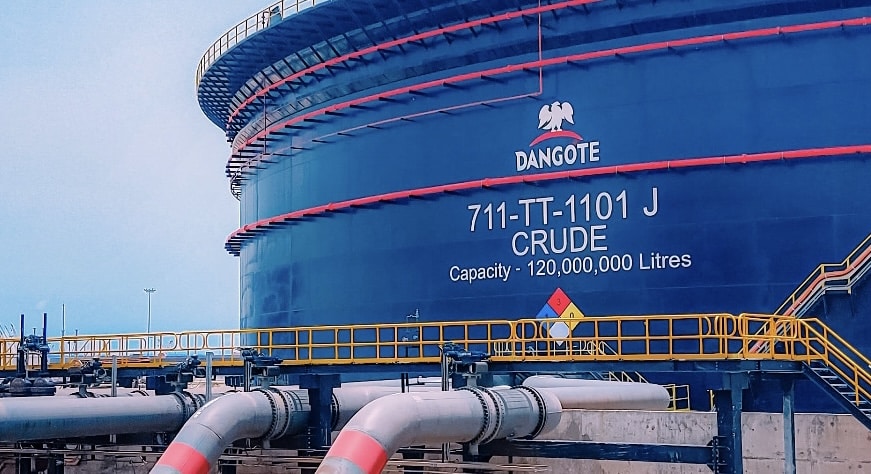
The public offer for shares in Dangote Petroleum Refinery and Petrochemicals has officially started on the Nigerian Exchange (NGX).
The shares are being offered at N525 each.
Dangote Industries Limited President and CEO, Aliko Dangote, officially launched the offer on Monday by ringing the opening bell at the NGX trading floor in Lagos.
This is a major development for Nigeria’s capital market because Dangote Refinery is the first refinery in the 66-year history of the Nigerian Exchange to offer its shares to the public.
A total of 4.1 billion new shares are available for investors to buy. Both individual and institutional investors, including eligible investors across Africa, can participate.
Investors can buy a minimum of 10 shares, which will cost N5,250 at the offer price.
The public offer opened on September 14, 2026, and will close on October 13, 2026, based on the terms in the offer prospectus.
Speaking at the launch, Dangote said the move is part of his plan to give more people the opportunity to own shares in his companies.
The event was attended by several important figures, including Lagos State Governor Babajide Sanwo-Olu, members of the Dangote family and other business representatives.

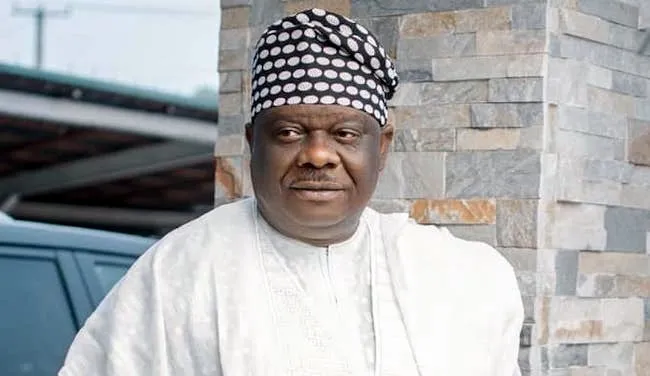
Justice Daniel Osiagor of a Federal High Court, Lagos, has granted an interim orders restraining Nigeria’s former Attorney-General of the Federation/Minister of Justice, Mr. Michael Kaase Aondoakaa (SAN) and his company, Mikap Nigeria Limited, from tampering, dealing with the company’s properties and funds over an alleged unpaid N2 billion debt.
Others affected by the interim orders include:
Samuel Iorhen Aondoakaa; Professor Godwin Abu; Nguvan Susanna Aondoaka; Engr. John Tsav; Innocent Igbalagh Aondoakaa; Venda Joseph and Lausa Samuel, listed as former AGF’s codefendants in the debt recovery suit marked FHC/L/CS/06/2026, instituted by Keystone Bank Limited, through its lawyer, Adekunle Babatunde Ogunba (SAN).
Justice Osiagor made the restraining order while granting an Exparte Motion filed by the bank through Ogunba (SAN)
Other orders made by the Justice Osiagor include: “that an order of interim injunction is granted restraining the defendants/respondents, the Defendants’ Directors, Staff, Employees, Officers, Agents. Privies or any other person or group of persons whatsoever under the defendants/respondents’ authority or any other authority (however derived or sourced) from interfering with, obstructing or otherwise disturbing the Receiver/Manager appointed by the Plaintiff/Applicant over the affair and endeavours of the 1st defendant/respondent, in the execution of his statutory duties or tasks ancillary there to pending the hearing and final determination of the Motion on Notice for Interlocutory Injunction.
“That an interim order is granted authorising the plaintiff/applicant herein and/or its duly appointed Receiver/Manager to take over and preserve all the assets, funds, shares, etc. of the 1st defendant, pending the hearing and final determination of the Motion on Notice; particularly the under-listed pledged properties/assets:
“That an order is granted directing all companies dealing with the 1st defendant (Mikap Nigeria Limited) “to recognize and only deal with the duly appointed Receiver/Manager appointed by the plaintiff/applicant as the only one vested with the requisite powers to act on behalf of the 1st Defendant forthwith pending the hearing “a and final determination of the Motion on Notice.
“That an order of interim injunction is granted restraining Mikap Nigeria Limited RC-160854 (the 1st Defendant) with their funds in any bank and financial institution within the jurisdiction.
“That an order is granted directing all the banks and/or financial institution in Nigeria and other company contractually obligated to the 1st defendant, Mikap Nigeria Limited, to furnish the Receiver/Manager and /or office the details of any sums outstanding to the credit of the 1st defendant, Mikap Nigeria Limited within seven (7) days of being furnished/availed the Interim order of court in this suit.
“That an order of interim injunction is granted restraining the 1st to 9th defendants/respondents, their agents, servants, cronies, assigns and/or privies by whatsoever name called from disposing of, selling, mortgaging, pledging or otherwise transferring, appropriating or dealing with the pledged assets of the 1st to 9th defendants/respondents and properties/assets or any other assets/funds of the 1st to 9th defendants, without regard to the vested tight of the plaintiff/applicant, the Appointor of the duly appointed Receiver/Manager over the pledged Assets of the 1st to 9th defendants/respondents pending the hearing and final determination of the he Motion on Notice.
“That an order is granted directing the Assistant Inspector General of Police Zone 2, Lagos, Commissioner of Police, Lagos State, Commandants, Nigerian Civil Defence Corps Lagos of State Command, their Deputies, Assistants and all other officers under them or other Law Enforcement officers/Personnel as may be deemed appropriate by the Receiver/Manager, to assist the said Receiver/Manager in his Lawful duties, function, responsibilities and performance of his lawful duties as Receiver/Manager over the pledged Assets of the 1st to 9th defendants/respondents in accordance with the tenure of the subsisting instruments pending the hearing and final determination of the Motion on Notice filed along herewith.
“That an order for leave is granted to the Plaintiff/Applicant to effect service of the following to wit; (1) the Order of this Honourable Court, (2) the Originating Summons, (3) Motion on Notice, and ali other subsequent processes to be filed in this suit on the 2nd-9th Defendants by posting same at their last known address being KM 5, gboko Road, Makurdi, Benue State.
“That an order is granted deeming the service of the processes listed in prayer 8 above, and all other subsequent processes to be filed in this suit on the 1st- 9th Defendants as good and proper service aforesaid processes.”
Hearing of the substantive suit has been adjourned to March 5, 2026.
Meanwhile, counsel to the defendants, Mr. M. S. Diri (SAN), has petitioned the Chief Judge of the Federal High Court, seeking a transfer of the case from Lagos to the Makurdi Judicial Division.
The defendants argue that all parties reside and conduct their businesses in Makurdi, Benue State, and that the alleged debt arose from transactions at the bank’s Makurdi branch. While further contend that related suits are already pending before the Benue State High Court and the Federal High Court in Makurdi.
However, the plaintiff, Keystone Bank, through its counsel, Adekunle B. Ogunba (SAN) opposed the transfer request, describing it as procedurally defective for being made via correspondence rather than a formal application.
Ogunba (SAN) insists that the loan facility originated from its Lagos Head Office under a Central Bank of Nigeria scheme and that the Receiver/Manager operates principally from Lagos.
Ogunba SAN also cited constitutional and statutory provisions, stating that the Federal High Court is a single court with nationwide jurisdiction, rendering the choice of division largely administrative.
A legal dispute has emerged between Mikap Nigeria Limited and Keystone Bank over claims of indebtedness and alleged abuse of court process.
The company has accused the bank of initiating receivership proceedings despite allegedly being indebted to Mikap Nigeria Limited. According to sources familiar with the matter, the action filed in Lagos State has been described as malicious and an abuse of court process.
A source close to the company questioned the bank’s decision to file a suit in Lagos instead of Makurdi, where Mikap Nigeria Limited is based. “How can Keystone Bank leave Makurdi, where the company operates, to institute an action in Lagos against the same company? It clearly raises concerns about abuse of court process,” the source said.
Court documents reviewed by this newspaper indicate that in Suit No. MHC/119/2024, the bank did not state that Mikap Nigeria Limited was indebted to it during its defence.
Further findings show that the Federal High Court sitting in Makurdi, in Suit No. FHC/CS/M/117/2025, restrained Keystone Bank from tampering with the bank accounts of the directors of Mikap Nigeria Limited. The Makurdi suit reportedly predates the fresh action subsequently filed by the bank in Lagos.
Investigations also reveal that Mikap Nigeria Limited has maintained a strong credit standing in Benue State since commencing operations in 2011. The company is said to have repaid facilities previously obtained from Access Bank and the Bank of Industry.
Sources further claim that the facility at the centre of the dispute remains active and that the company has not been declared in default.
Efforts to obtain official comments from Keystone Bank were unsuccessful as of the time of filing this report.


Yakubu Hails China’s Zero-Tariff Initiative as Catalyst for Economic Transformation
THE BOLD SHIFT:BETWEEN REFORMS ANDTHE REALITY OF THE BROKEN EGGS:
WHO: Nigeria Records Zero Ebola Cases After Evacuation of Swiss Couple

-
 Uncategorized6 years ago
FG, states urged to harness flooding for ranching, others with technology – Agbaje
-
 Headlines11 years ago
Breaking: EFCC seals Borno House of Assembly, as Hon members take to their heels
-
 News12 years ago
Nigeria Security Operatives Stage Manhunt For Homosexual Perpetrator
-
 News10 years ago
How 21-year-old Girl fled community over accusation of lesbianism
-
 News11 years ago
Yobe Gov Moves Against Deputy
-
 Opinion7 years ago
7 signs she has friend zoned you
-
Technology5 years ago
Online job placement company headhunts women
-
 Headlines10 years ago
Borno Dep Gov Abducts Another Church Leader