
Opinion
NEXUS OF THE EVIL FORCES BLEEDING THE NORTH

,
By Ahmad Sajoh
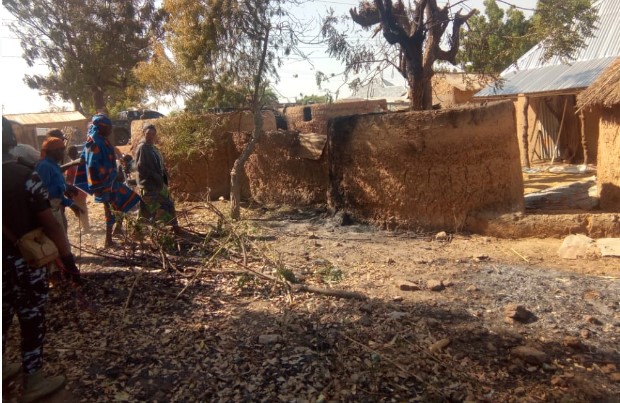
Recently there has been an upsurge of kidnappings and other security challenges in the North. This upsurge is actually as a result of the Nexus of the evil forces operating in Northern Nigeria. The North is bleeding and silence is indeed not the option. I heard the government through the Presidential spokesperson describe the current mass kidnappings as the activities of sub-Regional geopolitical forces. I think the government needs to think much deeper and connect the dots in the axis of evil that is now bleeding the northern region. I don’t think it is so simplistic as to be pinned on the sub-Regional contest for relevance taking place in the Sahel and parts of West Africa. It has deep roots that are both social and historical. And the tap root is Boko Haram.
More disturbing is the expectation that America or the West will help solve the problem or help recover the victims of recent abductions. That again is over simplifying it. The West is an interested party in the stability of Nigeria or lack of it. A stable Nigeria will be a bulwark against the free-for-all exploitation of the natural resources of the countries of the Sahel and sub-saharan Africa especially West Africa. The West also sees Nigeria as the potential power house of the region with capacity to upset Western dominance of the economy of West Africa. This much is clear after the coup in Niger. Our destiny as Africans is actually in our hands. The Chinese, the Indians, the Brazilians and many other Asian and middle eastern countries have since realized that the destiny of any nation lies in its ability to confront it’s challenges squarely by itself.
To understand the nexus of all the forces of evil bleeding the North, one must delve into the origin of the evil network established in the North and the nature of the fertile ground created that enables such evil to germinate and flourish. Beyond the assumed interests of the so-called “sub-Regional geopolitical forces” Boko Haram is today the root of all the evil forces in Northern Nigeria. But Boko Haram itself would not have flourished if the North and indeed Nigeria had addressed it’s leadership insensitivity to the plight of ordinary citizens.
The excruciating poverty and it’s weaponization as a means of power ascendancy is a major culprit in breading evil forces in Northern Nigeria. In addition the widening social inequality and the near total absence of empathy on the part of a greedy, selfish and self-centered ruling class all combine to exacerbate an already bad situation. Little wonder therefore that these narratives were used to recruit young people into Boko Haram at it’s formative level by its founder Muhammad Yusuf.
It should be realized that the emergence of Boko Haram in the North East of Nigeria can be traced to the Maitatsine uprising of the early 1980s in Kano. After the disbandment of the group in Kano it’s elements dispersed into many places including Borno, Gombe, Adamawa and Niger states. Those in Borno, Adamawa and Gombe rose in Bulunkutu, Jimeta and Jeka da fari. They were routed in 1982, (Maiduguri) 1984 (Yola) and 1985 (Gombe). But not all of them were crushed. A splinter group organized itself and withdrew from Maiduguri to a place called Kanamma in Yusufari LGA in the current Yobe state. They referred to themselves as the “Nigerian Taliban”
Between 21st December 2003 to January 2004 the Nigerian Taliban carried out attacks on government buildings and police formations across areas in Borno and Yobe states. Boko Haram is an offshoot of the Nigerian Taliban. The group’s founder Muhammad Yusuf was initiated into the Nigerian Taliban by it’s leader Muhammad Ali.
When the Taliban was crushed, Yusuf went into self-exile in Saudi Arabia. It is assumed that while in Saudi Arabia he toured other middle eastern countries and made contacts with several terror groups. He was also said to have developed interest in sociology and the dynamics of society while on exile. This much was manifest in his preachings when he returned to Nigeria from his self imposed exile. He always laced his topics with contemporary societal situations. This was how he and others of his ilk were able to convince jobless University graduates that their certificates had no value. Hence Western Education itself had no value. They burnt their certificates in a public display of defiance. Hence they got the appellation “Boko Haram” or Western Education is forbidden being valueless.
From his self exile Muhammad Yusuf returned to Nigeria. He settled in Maiduguri and built a mosque where he preached daily. He was also a guest scholar preaching in many mosques around the North East. I was a witness to one such preaching foray in my hometown of Mubi. He and the sect took interest in the serene and peaceful town. That peaceful town was later occupied by Boko Haram made the capital of their Caliphate and renamed “Madinatul Islam”
The messages of Muhammad Yusuf’s preaching are often centred around denunciation of Western Education and the rejection of the legitimacy of the secular Nigerian state which he considered as evil. He blamed this “evil” form of government as responsible for all the problems afflicting Nigerians such as poverty, unemployment, high cost of living, lack of value for certificates obtained by the youth. The most worrisome message he proposed was that such a bad governance template is responsible for the promotion of nepotism, and the social inequality in our society. These occurrences touch the nerves of many citizens. Such narratives jelled very well with a jobless, hopeless and despondent youth population in the North East particularly Maiduguri the largest and most populated city in the region.
I dwelled so much on the origin of Boko Haram in order to draw an appropriate Nexus with other evil forces operating in Northern Nigeria and the connection with what is happening today. I will equally draw the attention of the reader to the fact that the fertile ground that made Boko Haram flourish in the North East has been the narratives around bad governance, the greed of the ruling elites and the unsympathetic manner we have configured our society as a people. This is seen as the reason behind the social inequality in our societies and the attendant weaponization of poverty as a means of attaining power. This is not helped by the penchant of the ruling class to shamelessly display opulence in the face of abject poverty within their populations.
Of course we all know that at the start of the uprising the leader Muhammed Yusuf was killed. After the death of Muhammad Yusuf, there were three groups that emerged with different ideologies and concepts of how the group should be run and the nature of activities to be carried out. First was the issue of leadership. There is a group that believes leadership should be determined by bloodline. Such a group wanted the leader’s son to step into the father’s shoes. Another group wanted the existing hierarchy to be respected making the second in command in this case Shekau the natural successor. A third group was not so much concerned with leadership, rather they wanted the bloodletting to abate.
To the outside world those contentious positions were neatly hidden and Boko Haram as a group maintained a semblance of cohesion. However these three contending forces continued to be antagonistic within it. Eventually the group headed by Shekau which believes hierarchy should determine leadership and wanton bloodletting should be unleashed prevailed. The other two splinters were subsequently marginalized.
One of the splinter groups went to ISIS and declared allegiance. They were accepted on the condition that they formed a province of ISIS in the West Coast of Africa. Thus, emerged the Islamic State of West Africa Province or ISWAP. With time they became so strong due to their connection with foreign terror finances and firepower. The free availability of small arms within the Sahel empowered them. Eventually they were able to subdue the Shekau group and become the dominant wing. Shekau was eliminated and his dominance broken.
The third splinter group became what is known as ANSARU and they moved to the center of the country joining other hardliners in Niger and Kogi states. The majority of the ANSARU leaders are from these two states. Therefore most of the jihadist activities taking place in the North Central are products of the Ansaru. But where does the North West come in?
If there is one group Nigeria has ignored for two long it’s the herder group. The migratory nature of animal husbandry by the Fulani nomads had been long outdated. The most profound negative impact of such migrations is that it made the migrants landless. They have no hometowns and hence practically no homes. Without homes they have no lands. Their world view is shaped by this fact of “being owners of all lands, and being owners of no land” In the past they had some understanding with farmers that in the dry season they lived on their farms so that the animal droppings serve as organic manure to the farmlands. It was a worthy symbiotic relationship that served both groups very well. With the introduction of inorganic fertilizer this relationship became less attractive. Farmers now rely on chemical fertilizer. Cow dung was of little or no value. Leasing land to herders for animal droppings was not necessary anymore.
Then the northern elites came into the mix buying lands, fencing them and denying the herders access to even free ranges. The new realities created pressure on the herders. The land speculators bought off all lands including grazing reserves and cattle routes. Most of these lands lie fallow with no activities on them. But they deny the herders access. Herders began to move into farmlands with the attendant harmful effects. A new phenomenon known as farmer herder clashes began to take place. In the past these incidences were peacefully resolved. But now the resolutions are often carried out with bloodletting.
Another reality is that most the animals herded by the herders do not belong to them. They belong to the rich folk within the cities who give them to the herders as a store of wealth. But today with quick money being made in oil business, dollar speculations and sundry political patronage, buying animals as a store of wealth has become unfashionable.
To add salt to a troubling situation cattle rustling became rampant. In the past cattle rustling was minimal as only few cows were stolen at a time. But because of the extreme social connections between the herders and their animals, such isolated cases end up being caught at the cattle markets because most of the herders easily identify their cows even in the markets. The rustlers then resorted to taking away the whole heads of cattle. When a situation happens where all the animals are taken away from the herders, they instantly become jobless in addition to losing their means of livelihoods. But disposing of herds of cattle by the rustlers also became another challenge.
Those who lost their animals became frustrated and in some instances evil minded. The rustlers had difficulty raising quick funds from stolen cattle. Both groups began to think of alternatives that could raise quick money and in large quantities. Suddenly kidnapping for ransom became attractive to both groups. And it provided more money than cattle rustling. A Nexus was instantly created between the more enlightened urban criminals in the cities who serve as godfathers and the illiterate dispossessed cattle herders/rustlers who became the stage hands. Kidnapping for ransom became the new means of making money for the miscreants in the bush and the powerful godfathers in the cities. These powerful godfathers are the real ones responsible for laundering all the dirty money given as ransom. They are tucked away safe in luxury villas while searchlights are beamed on the dirty looking rag-tag miscreants in the forests.
What is the real Nexus of the evil forces bleeding the North? The Nexus created specializations and core competences. Those with contacts to Arms suppliers became specialized in arms dealing. They know where to get arms and how to move them to safe houses and later distribute them to the criminal gangs. The kidnappers and cattle rustlers became the major fund mobilizers. They are the ones that became the sources of funding most of the evil agenda that fuels the insecurity in the North including even some of the communal clashes. The Boko Haram/ISWAP militants became military trainers. Over the years with their ISIS contacts they have become experts in weapons handling. They are now the major trainers of the evil forces operating in Northern Nigeria whether in the North East, North West or North Central. All others including those attacking communities on vengeance mission keyed into this Nexus.
My postulation is that all of the axis of evil operating in Northern Nigeria and bleeding the region are connected by both their evil agenda and activities. We need to widen the dragnet of our intelligence gathering to establish this Nexus and destroy their connections. They are not isolated and independent groups operating on different fronts for different purposes. They are not different groups pursuing different agendas. They are not different groups aligned to different “sub-Regional geopolitical forces or power centers. They are a unified group united in criminality and evil intentions, each following a different evil pathway designed to achieve the same goal of bloodletting.
The fastest way to address the security challenges in Northern Nigeria is through effective intelligence gathering, processing and sharing among all the security agencies. This is imperative. Security Agencies fighting a common enemy cannot afford to work in silos. They must unite forces, because the forces they are confronting are united.
In addition a scotched earth policy is required in all the forests of the North. It was a superior force of arms that defeated Maitatsine in Kano. It was the same that dislodged the misguided jihadists in Bulunkutu, Jimeta and Jeka da fari. Good intelligence, fierce jackboot and good community engagements will deal a fatal blow on the evil forces that appear to have overwhelmed the state.
When non-state actors take up arms against the state, there is only one remedy, uprooting them. However in doing so, community engagements are necessary. Fear is the key elements terror groups use to subdue communities. The counter terror activities must work to reverse that. Additionally, terrorists enjoy publicly alot. Community engagements should include effective counter narratives as well.
However, the most enduring solution to all these nexus of evil is a governance template that addresses the current poverty challenges in the North. A governance template that stops this weaponization of poverty as a means of attaining power. A governance template that addresses the widening gap of social inequality in our society. A governance template that stops giving people handouts but creates opportunities for people to self actualize. If only Governors and Legislators in the North will stop distributing items that are sold instantly by beneficiaries and establish mega farms and mega workshops for learning trades it will reduce dependence and enhance productivity.
If we turn every forest into a farm we will produce enough food to fight food insecurity and deny the evil forces operating hideouts in our forests. If every government opens a ranch and makes open grazing unattractive we will contain the migrants and confine them into protected enclaves. If we open mega workshops such as garment making, carpentry or fabrication we will move our communities to productive hubs and make our people to becoming skilled workers. I believe this is not too difficult to do.
We either take care of our populations or we end up lamenting and blaming others for security challenges we are quite capable of overcoming. I hope someone is listening.
Ahmad Sajoh writes from 35 Oran Street Wuse Zone 1 Abuja
Opinion
THE PLANED PURPORTED PARALLEL ENDORSEMENT FOR TOMORROW IS NOT IN THE INTEREST OF EGGON BUT THE SELF FEW INDIVIDUALS INTEREST.
We wish to let the entire Eggon people both home and diaspora Know of a planned purported endorsement that is about to come up tomorrow being Saturday 3rd October 2026,by some individuals in the name of Eggon critical stakeholders, which is being championed by Hon. Ali Akpandom whom is an identified loyalist to an interested party in the whole of this game (HON. LABARAN MAKU),The same Ali Akpandom was among some selected personalities that went round the state some few weeks ago to make public appeal to APC Stakeholders to pick CHIEF EMMANUEL MICHEAL UMBUGADU as the running mate to the APC Governorship candidate Senator Ahmed Aliyu Wadada.
That singular act alone is not just an action against the interest and the agitation of the majority Eggon nation who clearly stated that we can’t settle for the position of deputy at this time.
Hon Kpandom who already knew clearly that a well respected Eggon arm (EGGON POLITICAL FORUM)That has membership across the three senatorial zones and diaspora already endorsed the Candidature of RT. HON. DR. DAVID EMMANUEL OMBUGADU that is widely celebrated not just among the Eggon but other ethnic nationalities,yet chose to undermine this popular position of the Eggon nation to do otherwise,without any consideration for the posable future negative consequences this act will have on the unity of the Eggon Nation, and by extension the other indigenous people of Nasarawa State looking up to us.
Notwithstanding I wish to call on the attention of all the Eggon sons and daughters both home and diaspora, other ethnic nationalities that are fully ready to support RT. HON. DR. DAVID EMMANUEL OMBUGADU Never to see the soon to be so called parallel endorsements as any form of confusion among the Eggon, but should see it as an attempt by some usual few selfish elites to disrupt Eggon chances of producing a Governor come 2027.
Eggon people have settled for Ombugadu not for any interest but is the most widely acceptable candidate among the six Candidates of Eggon extractions and has gain support and acceptability among other ethnic groups in the state, as such we can’t afford to miss out on this sellable candidate for any other one as it’s going to be an unwise and avoidable error of going to the market with an unsellable candidate while we already have the best at hand.
We wish to call on Elder Ali kpandom and his group to desist from engaging in any act that is capable of inserting serious confusion and lack of mutual consensus among the Eggon people this time because we equally understood that the fate of other ethnic nationalities in Nasarawa state to getting the natives into the seat of Governor lies in the unity and mutual consensus of the Eggon people at this time.
We wish to call on the Eggon people, both home and diaspora,the general public to disregard any form of parallel endorsements that will be done by any group in whatsoever disguise aside that which has already been done by the Eggon political forum this same forum has endorsed Hon Maku not once in the past even against Late Sen Ewuga , why this disruption now.
We are not in anyway against any candidate they still wanted to vote for, but we wish to declare categorically that it’s not in the interest of Eggon but the interest of the few.
THANK YOU FOR YOUR UNDERSTANDING AND USUALLY COOPERATION.
Courtesy:A concerned son of the land.
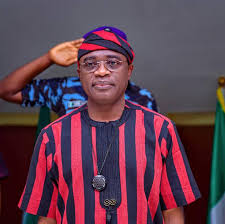
For nearly three years, the political crisis within the Benue State chapter of the All Progressives Congress (APC) has largely been portrayed as a power struggle between Governor Hyacinth Alia and the Secretary to the Government of the Federation (SGF), Senator George Akume.
However, recent developments suggest that the dispute over control of the party could have wider legal and political implications as the 2027 general elections approach.
The crisis intensified earlier this year when rival camps conducted parallel state congresses and produced separate chairmen for the APC in Benue.
The Akume-aligned faction returned Austin Agada as state chairman, while the faction loyal to Governor Alia elected Benjamin Omale.
The emergence of two chairmen and competing claims to control of the party has further exposed the depth of the internal division.
The dispute has also raised questions about the legal consequences of competing party structures, particularly following a Court of Appeal judgment delivered in June 2026.
The appellate court affirmed the Austin Agada-led State Executive Committee and upheld an earlier decision nullifying the dissolution of that executive by the APC National Working Committee.
The court also sustained an order declaring the activities of the Benjamin Omale-led caretaker committee “null, void and of no effect whatsoever.”
The judgment has since become a major reference point in the continuing struggle for control of the APC structure in Benue.
Political observers note that the significance of party structures extends beyond the office of state chairman. Party executives play important roles in organising congresses, managing delegate processes, supervising primaries and implementing decisions relating to the nomination of candidates.
This has brought the dispute into sharper focus ahead of the 2027 elections, particularly over the possible legal implications for candidates whose nominations may be linked to disputed party structures.
A group of APC stakeholders is reportedly examining the possible legal consequences of the judgment and the continued existence of rival structures within the party.
The concern, according to those familiar with the matter, is whether political processes conducted through structures subsequently found to lack legal validity could become the subject of litigation.
Candidates loyal to Governor Alia whose nominations were subsequently overturned by the APC National Working Committee are already challenging the party’s decisions in court. Among them is former Benue Governor, Senator Gabriel Suswam.
At the centre of the emerging debate is whether the invalidation of a party structure could affect subsequent political processes conducted through that structure.
No court has, however, ruled that Governor Alia is ineligible to contest the 2027 governorship election, and there is currently no judgment declaring him barred from seeking re-election.
The potential issue, rather, concerns the relationship between the legitimacy of party structures and the validity of nomination processes conducted under those structures.
Nigeria’s electoral history contains several instances in which internal party disputes over congresses, delegate lists, executives and primary elections eventually resulted in prolonged litigation over candidates and nominations.
Against this background, the continued crisis within the Benue APC could assume greater significance as political parties begin preparations for the 2027 electoral cycle.
The conduct of parallel congresses following a Court of Appeal judgment affirming one faction’s leadership could potentially generate further legal questions over authority, compliance with party rules and the validity of subsequent decisions.
For Governor Alia, the immediate reality is that no court has declared him ineligible to contest the next election. However, continued uncertainty over the party’s structure could expose his political camp to further litigation and create complications during the nomination process.
The governor has also faced allegations from political opponents that more than N100 billion in public funds has been expended in efforts to secure control of APC structures over the past three years. The allegation remains disputed and would require evidence to establish.
What is increasingly clear is that the struggle for control of the APC in Benue has moved beyond a conventional political disagreement. It is now playing out simultaneously across political, legal and party-administrative fronts.
As the 2027 electoral cycle draws closer, the unresolved questions surrounding the APC’s leadership and nomination processes could become increasingly consequential for the party and its candidates.
For now, there is no judicial pronouncement preventing Governor Alia from appearing on the 2027 ballot. But if the stakeholders reportedly considering legal action proceed with a challenge over the circumstances of his nomination, the governor could face another significant legal battle as the election approaches.
NIGERIA BELONGS TO ALL OF US
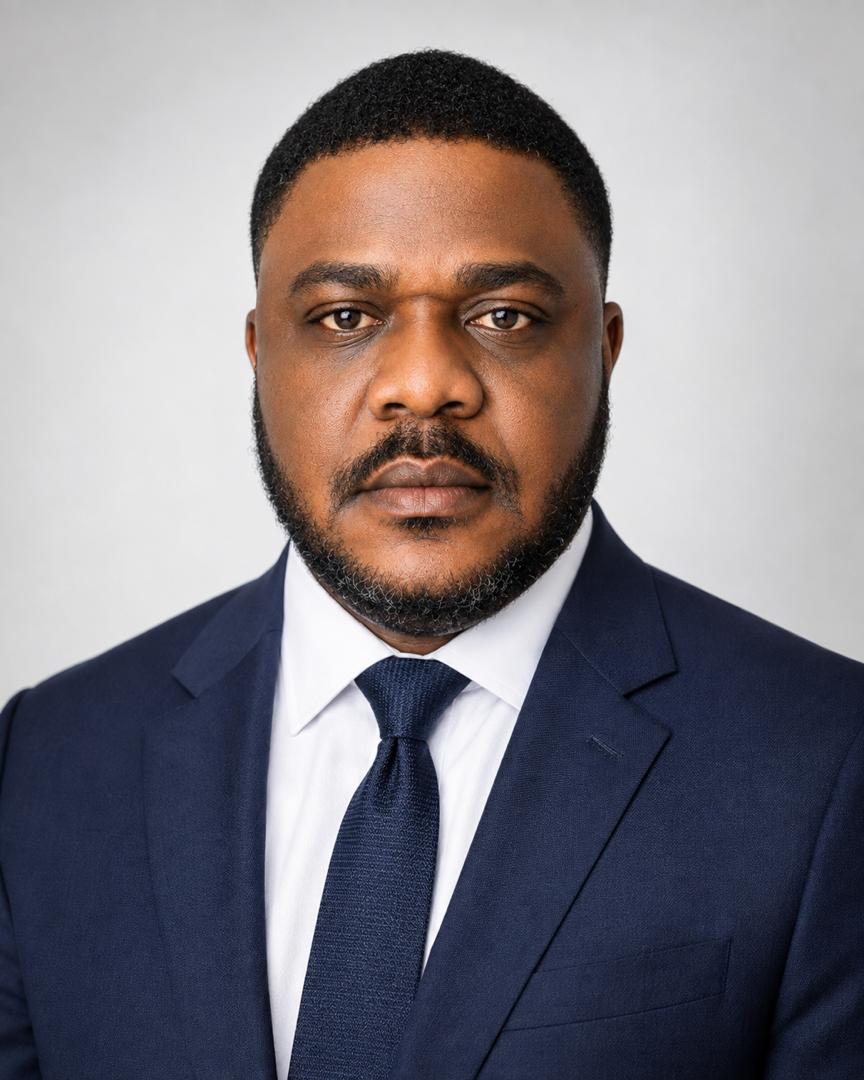
I have written this open letter to His Eminence, Alhaji Muhammad Sa’ad Abubakar III, CFR, mni, Sultan of Sokoto and President-General of the Nigerian Supreme Council for Islamic Affairs, with profound respect for his office and for the historic institution he represents.
This is not an attack on Islam, neither an attack on Christianity.
Also, It is not an attempt to diminish the historical importance of the Sultanate, rather, it is a sincere contribution to a conversation I believe Nigeria must have with greater honesty, courage and intellectual maturity:
What does equal citizenship mean in Nigeria?
Our country has a complex history involving kingdoms, caliphates, indigenous political systems, colonialism, amalgamation, independence, religion, ethnicity and competing political traditions.
But after all that history, one question remains fundamental:
Who does Nigeria belong to? My answer is simple:
Nigeria belongs to all Nigerians.
I am publishing this letter openly because I believe conversations of this magnitude should not be confined to private rooms.
I hope it reaches His Eminence.
More importantly, I hope it reaches Nigerians—Muslims and Christians alike—who believe that our future must be built on equal citizenship, mutual respect, constitutional democracy and a shared sense of belonging.
I invite people to read this letter in that spirit.
Not as a provocation or as a religious argument. But as an invitation to think.
AN OPEN LETTER TO HIS EMINENCE, ALHAJI MUHAMMAD SA’AD ABUBAKAR III, CFR, mni
SULTAN OF SOKOTO AND PRESIDENT-GENERAL, NIGERIAN SUPREME COUNCIL FOR ISLAMIC AFFAIRS
Your Eminence,
OUR HISTORY MUST BE REMEMBERED HONESTLY—BUT IT MUST NOT BECOME A CLAIM ON THE FUTURE
Nigeria’s history contains great Muslim civilisations and political institutions.
Kanem-Bornu, the Hausa states and the Sokoto Caliphate represent important chapters in the history of the territories that eventually became Nigeria.
The Sokoto Caliphate, in particular, became one of the most influential Islamic political formations in West Africa.
That history deserves recognition and respect.
But history presents us with an important question:
Does historical political authority confer permanent political ownership?
I believe the answer must be no.
The British colonial conquest and occupation of the territories that now constitute Nigeria occurred over decades, with the conquest of the Sokoto Caliphate culminating in 1903. The Northern and Southern Protectorates were subsequently amalgamated in 1914, and Nigeria achieved independence in 1960.
Whatever political arrangements existed before colonial consolidation, the Nigeria that emerged as a modern sovereign state ultimately became a constitutional republic in which citizenship could not legitimately be based upon the political history of one religion, ethnic group, kingdom or region.
Nigeria became something larger than all of those histories.
It became a country.
And that country belongs equally to the Muslim, the Christian, the adherent of another faith, and the citizen who professes no religion.
Your Eminence, Nigeria’s Constitution does not establish either Islam or Christianity as the religion of the Nigerian state.
Section 10 provides that:
“The Government of the Federation or of a State shall not adopt any religion as State Religion.”
Section 38 protects freedom of thought, conscience and religion.
Section 42 further provides constitutional protection against discrimination on the basis of religion, among other grounds.
These provisions are not merely legal technicalities. They represent an important national compact.
They establish principles of religious neutrality, religious freedom and equal citizenship.
They tell every Nigerian that his or her fundamental rights cannot legitimately depend upon belonging to the “right” religion.
That principle protects Muslims from Christian majoritarianism just as it protects Christians from Muslim majoritarianism.
And therefore, defending constitutional religious neutrality is not an attack on Islam neither an attack on Christianity.
It is protection for both.
THE DIFFICULT QUESTION OF POLITICAL SYMBOLISM
Your Eminence, this is where I believe our national conversation requires greater intellectual honesty.
A political arrangement can have two realities simultaneously:
its strategic reality and its symbolic reality.
Strategically, politicians may see a particular political ticket as an effective coalition, an electoral calculation, a mechanism for consolidating support or a means of improving political cohesion.
But citizens may interpret exactly the same arrangement symbolically.
They may ask:
Who is represented?
Who is included?
Who is excluded?
What does this say about the distribution of power?
What does this mean for people like me?
This distinction became particularly visible in Nigeria’s debate over the Muslim-Muslim presidential ticket.
Some citizens saw strategy while others saw symbolism.
Some saw political competence, Others saw the possibility of religious exclusion.
Both reactions can exist simultaneously.
A mature democracy must therefore be capable of understanding not only what a political arrangement is, but also what people believe that arrangement means.
This is not an argument against Muslims occupying political office nor should it be an argument against Christians occupying political office.
It is an argument for understanding the enormous responsibility that comes with political symbolism in a deeply religious society.
Political leaders must therefore understand that electoral strategy does not exist in a vacuum. Every political decision is interpreted through the lived experiences, fears, hopes and historical memories of the citizens who encounter it.
That is why responsible leadership requires both strategic intelligence and sensitivity to political meaning.
The Muslim citizen must not feel like a tolerated Nigerian, neither should the Christian.
This is perhaps the most important principle I wish to communicate.
A Christian should never have to feel that his citizenship is conditional upon political accommodation by Muslims. A Muslim should never have to feel that his citizenship is conditional upon political accommodation by Christians.
Neither should have to prove that his loyalty to Nigeria is greater than his loyalty to his faith.
Both should be able to say:
“Nigeria is my country, and nobody needs to give me permission to belong here.”
That is the Nigeria we should be building.
Your Eminence, traditional and religious leaders occupy a unique position in Nigerian society.
Political leaders come and go.
Governments change.
Political parties rise and fall.
But institutions such as the Sultanate carry historical memory.
That gives your words a different weight.
When a politician speaks about religion, Nigerians may suspect political calculation but when a respected religious leader speaks about coexistence, citizenship and national unity, the message can carry a moral authority that politics often cannot achieve.
This is why I believe the Sultanate has an extraordinary opportunity.
Not merely to speak for Muslims, But to speak to Nigeria.
To say clearly that the greatness of Islam in Nigeria does not require the political diminishment of Christianity. And equally, that the flourishing of Christianity in Nigeria does not require the political diminishment of Islam.
The strength of one faith should not require the weakness of another.
The security of one community should not depend upon the insecurity of another.
And the political advancement of one Nigerian should never require the political humiliation of another Nigerian simply because of religion.
WE SHOULD MOVE BEYOND THE COMPETITION FOR RELIGIOUS OWNERSHIP OF NIGERIA
There is a dangerous psychological temptation in deeply divided societies.
Each community begins to measure its security by the amount of power the other community possesses.
Then politics becomes a permanent struggle for religious arithmetic.
Who has the President?
Who has the Vice President?
Who controls the security institutions?
Who appoints judges?
Who controls the legislature?
Who controls the governors?
Who controls the economy?
And eventually, citizens stop asking the most important question:
Does the country work for everyone?
That is where we must break the cycle.
Nigeria cannot become great by producing a permanent contest between Muslim political power and Christian political power.
It can become great when both communities begin demanding something larger:
competent political power exercised for the common good.
The ultimate measure of political leadership should not be the religion of the person holding office.
It should be the quality of governance, the protection of citizens, the fairness of institutions, the security of communities and the opportunity available to every Nigerian.
PERHAPS OUR GREATEST NATIONAL TEST IS NOT RELIGIOUS DOMINANCE—BUT MUTUAL TRUST
Your Eminence, I believe Nigeria’s deepest problem is not simply that Muslims distrust Christians or Christians distrust Muslims.
It is that decades of political competition, violence, injustice, insecurity, corruption and unequal experiences of citizenship have created an enormous deficit of trust.
Religious suspicion is often the language through which that distrust expresses itself.
Therefore, if we want to defeat religious tension, we must do more than preach tolerance.
We must build institutions that make tolerance unnecessary as a condition of citizenship.
A Nigerian should not need to be tolerated.
He should simply be equal.
A Christian should not need a Muslim’s permission to belong.
A Muslim should not need a Christian’s permission to belong.
Our common citizenship should be the foundation upon which our religious differences are accommodated—not the other way around.
Your Eminence, I respectfully propose that Nigeria’s most respected Muslim and Christian leaders begin a different kind of conversation.
Not another conference where speeches are made and photographs taken.
But a serious national dialogue around five questions:
- What does equal citizenship actually mean in Nigeria?
- How should religious diversity influence political representation without becoming a mechanism for religious entitlement?
- How do we distinguish legitimate political strategy from symbolism that creates unnecessary fear or exclusion?
- How can traditional and religious institutions help rebuild trust between communities?
- What constitutional, institutional and political reforms are necessary to ensure that no Nigerian believes the country belongs more to another citizen than to himself?
These are difficult questions. But perhaps Nigeria has spent too many decades avoiding difficult questions because they are uncomfortable. And perhaps the price of that avoidance is becoming too high.
Your Eminence, history gives leaders a choice.
Every generation inherits history. But every generation also decides what to do with it.
We can use history as a weapon or wisdom
We can teach our children that Nigeria is a battlefield between religious communities.
Or we can teach them that Muslims and Christians inherited a complicated country together and have the responsibility to make it work together.
We can continue competing over who has the greater historical claim.
Or we can build a country where historical claims do not determine the value of a citizen.
I respectfully believe the latter is worthy of the office you occupy.
The greatest legacy of a historical institution is not merely that it preserves the memory of what once was.
It is that it helps a nation decide what it can become.
My final appeal Your Eminence, I do not ask you to abandon Islam.
I ask you to help Nigerians understand that Islam does not need Nigeria to belong exclusively to Muslims for Muslims to belong completely to Nigeria.
And I would say the same to Christian leaders:
Christianity does not need Nigeria to belong exclusively to Christians for Christians to belong completely to Nigeria.
The future must therefore be bigger than both arguments.
Nigeria must belong to Nigerians.
Not to Muslims.
Not to Christians.
Not to Hausa, Yoruba, Igbo, Tiv, Fulani, Igala, Idoma, Nupe, or any other ethnic nationality.
Not to the North.
Not to the South.
Not to one historical institution.
To all of us.
That, in my humble view, is the foundation upon which a truly united Nigeria can eventually be built.
I respectfully submit this thought to Your Eminence—not as an accusation, but as an invitation to a deeper national conversation.
May our religious differences become a source of moral strength rather than political division.
May our history become a source of wisdom rather than entitlement.
May our political differences never become a justification for denying one another’s citizenship.
And may the Nigeria we leave our children be a country in which neither Muslim nor Christian ever has to ask:
“Does this country belong to me?”
Because the answer should always be:“Yes. It is your country too.”
With profound respect,
Dr. Mike Achadu
A Nigerian Citizen


AREWA GROUP TO BABA AHMED: YOU ARE PART OF THE ROT IN OUR COUNTRY, YOUR RICKETY GANG-UP WILL FAIL IN 2027
Tinubu Meeting: 8 Zamfara Lawmakers Set to Return to APC

APC PCC Appoints Hafiz Kawu Director of Grassroots Engagement, Mobilisation

-
 Uncategorized6 years ago
FG, states urged to harness flooding for ranching, others with technology – Agbaje
-
 Headlines11 years ago
Breaking: EFCC seals Borno House of Assembly, as Hon members take to their heels
-
 News12 years ago
Nigeria Security Operatives Stage Manhunt For Homosexual Perpetrator
-
 News10 years ago
How 21-year-old Girl fled community over accusation of lesbianism
-
 News11 years ago
Yobe Gov Moves Against Deputy
-
 Opinion7 years ago
7 signs she has friend zoned you
-
Technology5 years ago
Online job placement company headhunts women
-
 Headlines10 years ago
Borno Dep Gov Abducts Another Church Leader