
News
Nigeria: Lamentations of a Nation @62


***Buhari Scores Self High, As Nigerians Despair, lampoon Government.
By: Editor
Every year, since 1960, Nigerians are being asked to evaluate the state of the Nigerian state, and every year, the reactions have been similar: that Nigeria could do better, given her huge natural and human resources endowments.
Reactions this year, marking the 62nd anniversary have however been different, as they were mostly repulsive and despairing, and full of lamentations.
More often, the performance of the Government in power has been the yardstick for measuring the country’s performance, and this year’s own is not different.
In what could be described as his valedictory Independence broadcast to the nation, President Muhammadu Buhari scored his Government high, but admitted that more still need to be done, to fully meet the expectations of Nigerians.
Taking a retrospective view of the state of the nation at the time he took over, the President felt his Government performed better than preceding regimes, and promised to make the country even much better by the time he departs.
Our correspondents who went round most state capitals and the Federal Capital, where events have been lined up to celebrate the country’s indipendence reports that, it was a mixed grill, but mostly negative.
Depending upon which side of the political divide they are, a few expressed satisfaction with the country’s performance, and gave thumbs up to the Government, while majority of our respondents do not appear impressed.
Greater number of respondents were full of lamentations and outright displeasure with the state of progress, even as they took a swipe at the Government for presenting a false picture of Nigeria.
According to them there is a seeming insensitivity on the part of the Government to the plights of Nigerians, as government officials seem to be grandstanding in the face of obvious failures in addressing the nation’s problems.
More worrisome to the more enlightened ones amongst our respondents were the issues if insecurity, the economy, lack of transparency on governance, collapsing educational values and the seeming grandstanding by Government in the face of the myriad of problems.
A legal practitioner Festus Olaitan, based in Abuja summed up the opinions in his reactions to our reporter in Abuja when he said”The only thing we are perhaps celebrating is the fact that we are still together as a country. We have so many things working against our continued existence as a nation state today, more than ever before but we are glued together by sheer divine Providence. I feel sad being a witness to events of today, though I am not losing hope”.
Abdulmalik Umar, a teacher in Nasarawa State was more blunt in his own response, as he outrightly dismissed the celebration mood, saying,”tell me in all honesty as a journalist what we are celebrating as a country. Are we celebrating Boko Haram, Banditry, Fulani killers, kidnappings or oil theft. Are we celebrating because our children are at home due to ASSU strike or are we celebrating the pervasive corruption going on under this Government? Just tell me what we are celebrating.”
According to Umar, the Government owes Nigerians explanations about the mismanagement of oil revenues, and the President must also tell us how people around him became so rich in so shirt a period without commensurate means or known businesses.”Let me tell you some, I used to defend this Government so much and I have parted ways with many friends because of it, but today I am disappointed and I have been abusing them and they know why; because they are worst than any other one before them”, Umar added.
But Umar was not alone in his criticisms as Comrade Moses Okechukwu told us at the Eagle Square, venue if the National celebrations that, he has gone to the square to see what Nigerians have to celebrate, because he does not personally see anything to celebrate.”I am here to look into their eyes and possibly tell them to go to hell. They are just deceiving us, but Nigerians are now wise. I am more disappointed with Lai Mohammed with all the lies he has been telling Nigerians. I pity Garba Shehu and Femi Adesina because I know they have lost their conscience as journalists. Everyday they tell lies too, even when they know people don’t believe them”.
On a general note, events marking the 62nd anniversary was everything but celebrations, as Nigerians do not seem happy with the situation if things in the country.
The Government which has embarked on self assessment drive is being faulted, as Nigerians seem to loose hopes.
Analysing the various responses, our editorial team agreed to send out reporters for vox pop, which will be published verbatim as the outcome turns in.

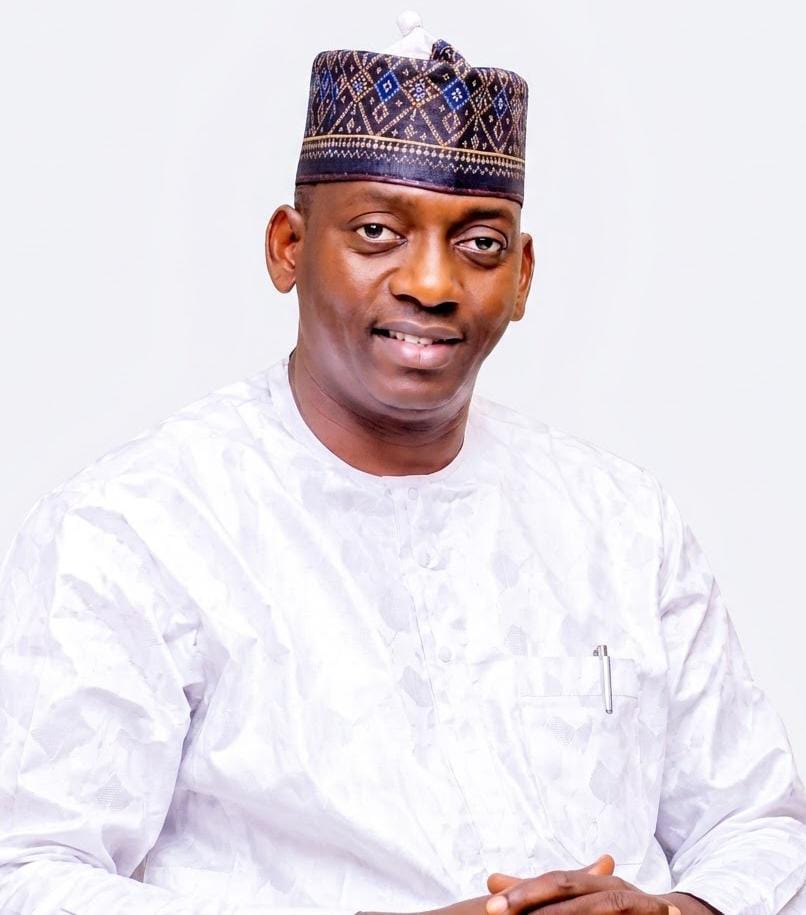
Chairman of the House of Representatives Committee on China-Nigeria Parliamentary Relations, Hon. Jaafaru Yakubu, has applauded the Chinese Government’s expanded zero-tariff policy for African countries, describing it as a catalyst for Nigeria’s economic transformation and a major opportunity for export growth, industrialisation and job creation.
In a statement, Yakubu said China’s decision to extend its zero-tariff policy to 53 African countries, including Nigeria, demonstrates Beijing’s commitment to supporting Africa’s economic development and strengthening South-South cooperation.
He noted that the policy offers Nigerian businesses unprecedented access to one of the world’s largest consumer markets and provides a platform for expanding exports, attracting investment and enhancing economic competitiveness.
“China’s zero-tariff initiative represents a strategic opportunity for Nigeria to accelerate economic growth, strengthen domestic industries and deepen our economic cooperation with one of the world’s most important trading partners,” Yakubu said.
According to the lawmaker, early indicators suggest that the policy is already producing positive outcomes. He disclosed that Chinese imports from Nigeria rose significantly during the first half of 2026, while total trade volume between both countries reached approximately $18 billion, reflecting growing economic engagement.
Yakubu said the encouraging figures demonstrate the enormous potential of the Nigeria-China partnership and highlight the importance of improved market access in driving economic prosperity.
He stressed that Nigeria must seize the opportunity by expanding production capacity, improving product quality and strengthening export-oriented industries capable of competing in the international marketplace.
The committee chairman noted that Nigerian products such as liquefied propane, sesame seeds, nuts, hides and skins are already benefiting from improved access to the Chinese market. However, he emphasized that the country’s long-term objective should be to move beyond the export of raw materials and focus on value-added products.
“We must leverage this opportunity to promote domestic manufacturing, industrialisation and job creation. Increased market access should translate into stronger local industries and greater economic opportunities for Nigerians,” he stated.
Yakubu urged Nigerian manufacturers and exporters to take advantage of the tariff-free regime by improving standards, certification processes, packaging and supply chain efficiency in order to meet the demands of Chinese consumers.
He also called on relevant government agencies to strengthen the infrastructure and institutional support necessary to help local businesses compete effectively in international markets.
The lawmaker further encouraged Chinese investors to expand their presence in Nigeria through investments in manufacturing, agro-processing, technology development and logistics infrastructure.
According to him, increased Chinese investment would support industrial growth, facilitate technology transfer and create much-needed employment opportunities for Nigeria’s growing youth population.
While welcoming the growth in trade relations, Yakubu acknowledged the need to address the trade imbalance between Nigeria and China, stressing that efforts must be made to increase the country’s export capacity and diversify its export basket.
“Our goal should not merely be to trade more, but to trade better. Nigeria must become a producer and exporter of more finished and semi-finished goods if we are to fully benefit from our relationship with China,” he said.
Yakubu also expressed appreciation to the Government of the People’s Republic of China for its RMB200 million grant to support Nigeria’s development projects, describing the gesture as further evidence of the strong friendship and cooperation between both nations.
He said the grant would contribute to efforts aimed at improving infrastructure, strengthening public services and advancing national development priorities.
The chairman commended China’s longstanding support for Nigeria through infrastructure cooperation, technical assistance, capacity building and other development initiatives, noting that such partnerships have contributed significantly to the country’s growth.
Looking ahead, Yakubu called for greater collaboration in key sectors including manufacturing, agriculture, technology, logistics and industrial development.
He reaffirmed his commitment to strengthening parliamentary engagement and promoting policies that will advance the mutual economic interests of Nigeria and China.
“As Nigeria and China continue to deepen their partnership, our focus must remain on translating opportunities into tangible economic benefits for our people. Together, we can build a relationship that is mutually beneficial, economically productive and supportive of sustainable development,” he added.
Yakubu concluded by expressing gratitude to the Chinese Government and the Chinese Ambassador to Nigeria, His Excellency Yu Dunhai, for their continued friendship, support and commitment to Nigeria’s development aspirations.
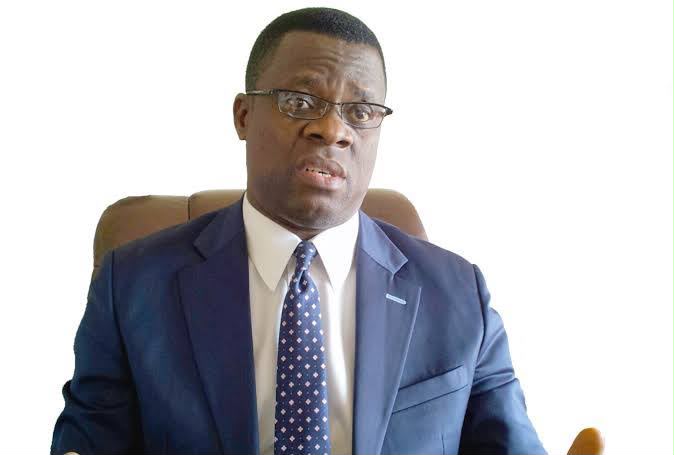
THE FALLACIES OF MIKE IGINI
“It is mean and cowardly and an evidence of weakness and utter demerit, for any group of people to attempt to commend themselves to the public by the negative process of belittling and condemning others.”_
- Chief Obafemi Awolowo, 28th April, 1951.
The attention of the Progressives Alliance for Justice, Unity and Democracy (PAJUD) has been drawn to the barrage of insults heaped by Mike Igini, former Resident Electoral Commissioner of the Independent National Electoral Commission (INEC), against every perceived and imaginary obstacle to his personal agenda.
We posit that since the return of democracy in 1999, the Nigerian political and electoral firmament has been overdosed with different genres of characters – the good, the bad and the ugly.
We state categorically and without fear of contradiction that President Bola Ahmed Tinubu is NOT responsible for the non-appointment of Mike Igini as either Chairman of INEC or National Commissioner since he left office in disgrace and engulfed in controversies in the South-South.
Igini must understand that such appointments are not done willy-nilly. They are based on several criteria. He has served two full terms as Resident Electoral Commissioner. For him to be nominated as National Commissioner, a vacancy must exist for his state. This is apart from the principle of rotation of the position among states in the geo-political zone.
Those who know President Bola Ahmed Tinubu closely know he is a leader who does not deliberately shut the door against competence and capacity. Anyone holding him in contempt on this matter is either being mischievous or acting out the script of the opposition, just like the present issue at stake.
It is unfortunate that Igini has allowed himself to be taken advantage of, dancing to the rhythm of anti-Tinubu and anti-Amupitan rogue agents.
We find it compelling to state unequivocally that Igini is blatantly scheming to discredit the present government and the Amupitan-led leadership of INEC in anticipation of reward by opposition elements and spent forces, if they ever win in the post-2027 general elections.
Over the years, we have watched the transformation of Igini from lawyer, to public affairs commentator, to agitator, until the PDP government appointed him Resident Electoral Commissioner.
We are amused at Igini’s feeble attempts at returning to public reckoning, using barefaced criticism, outright lies, mischief and fallacies against the Renewed Hope and reformative agenda as a springboard to relevance and prominence.
For an egocentric, self-seeking bigot and Mr. Know-All like Igini, he wants to remain relevant as a bride for any juicy INEC Election Management Committee headship or membership, which we know will never happen in this dispensation as a result of his antecedents while in office – an era marred by allegations of partisanship, disloyalty and endless controversies.
Your tenure as REC in Cross River State was characterised by mudslinging between you and a political party over unethical conduct unbecoming of an electoral officer. Similarly, your flexing of muscles and one-sided narratives during your tenure as REC of Akwa Ibom State is still very fresh in our memory. Till date, you are still spewing negative narratives against one of the politicians you fought in that state to high heavens.
Nigerians from all strata continue to wonder where the monies for the live telecast of Igini’s exit as Resident Electoral Commissioner of Akwa Ibom State originated from. In the history of INEC – from Dr. Ephraim Akpata, Alhaji Shehu Musa, Dr. Abel Guobadia, the much-vilified Prof. Maurice Iwu, Prof. Attahiru Jega reputed to be Igini’s benefactor, to Prof. Mahmood Yakubu – none of them had the temerity for such lavish display and grandeur during their exit. What was witnessed in the last days of Igini as REC in Akwa Ibom evokes serious questions about collective decency, decorum, moral rectitude and values.
Any argument in support of such an extravagant exit lacks integrity, for the simple reason that the pay slip of INEC Resident Electoral Commissioners and even National Commissioners is not a hidden document. It is known to the Nigerian public.
We believe that if we are sincere in this country, Igini should focus on more important non-partisan issues than chasing shadows. Igini should also address his own record, including the troubling episode of a Kenyan national engaged by INEC as a consultant some years ago, where the voter register fingerprints of Nigerians were allegedly compromised and handed to foreign interests. That despicable act is still fresh in our memory.
As overwhelming majority of Nigerians with voting rights are aware, there is an uncanny lust for power by desperate opposition politicians lurking on the horizon. They are deploying everything on earth just to grab power in 2027, and for no just cause but simply for selfish personal aggrandizement. They have recruited former staff, Directors, Resident Electoral Commissioners and National Commissioners to help execute their warped agenda and barefaced propaganda to deceive gullible Nigerians who will swallow every hook, line and sinker narrative framed by them.
We unreservedly agree with many who have suggested that as a believer in God, Igini should not allow his mind to be poisoned by the notion that any power outside the influence of God could have been responsible for the failure of his emergence as either National Commissioner or Chairman of the Commission.
Whatever it is, there seems to be more to it than meets the eye. The process of creating anarchy starts with incitement against the government, the electoral empire and security agencies. It often appears so smooth as to be imperceptible, hence those who engineer it enjoy the process at the initial stage, only to be consumed at the end of the day.
Elements in the class of Igini, who are acting out the script of falsehood purveyors and peddlers, will be put to shame at the end of the day. There is no doubt that Nigerians are going to have a well-deserved, credible, transparent, free and fair election in the 2027 general elections.
Above all, nobody can dispute the fact that President Bola Ahmed Tinubu nominated people with impeccable ability, capacity, loyalty, patriotism and honesty as members of the election management structure that will drive our democracy forward, in a manner that both Nigerians and the international community will be proud of like never before in our annals.
The focus of the Tinubu administration remains its much stronger determination to protect and respect the sanctity and fidelity of the ballot during the forthcoming elections.
We implore Mike Igini to stop the rabble-rousing, negative framing, mischief, mudslinging and casting of aspersions against the electoral umpire and Mr. President, and find something reasonable to do to earn a living just like other Nigerians, instead of going from one radio station to television stations across the country. His antics are already known to Nigerians who are far more sophisticated and politically savvy than before.
A word is enough for the wise… “WHEN YOU CONDEMN PEOPLE, YOU BRING JUDGEMENT ON YOURSELF.”
Signed:Comrade Yakubu Dan Abba
Country Representative, PAJUD.
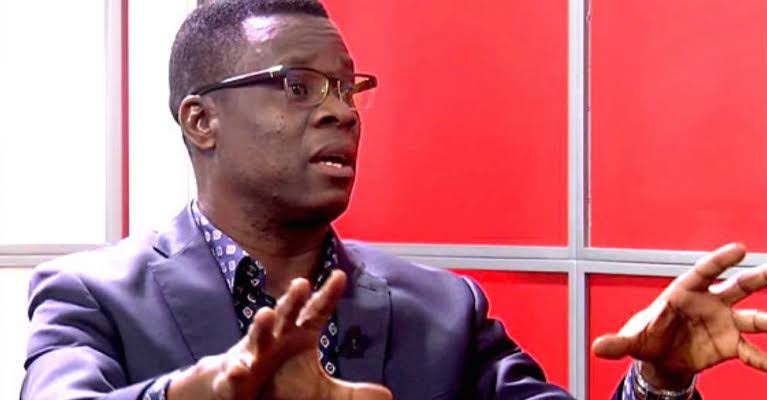
The Progressives Alliance for Justice, Unity and Democracy (PAJUD) has accused former Independent National Electoral Commission (INEC) Resident Electoral Commissioner, Mike Igini, of attempting to discredit President Bola Tinubu’s administration and the leadership of the electoral body, describing his criticisms as politically motivated.
The group, in a statement signed by its Country Representative, Comrade Yakubu Dan Abba, alleged that Igini was seeking to regain public relevance through persistent criticism of the government and the leadership of INEC under its current chairman, Prof. Joash Amupitan.
PAJUD, however, did not provide independent evidence to substantiate its allegations about Igini’s motives.
The group maintained that Tinubu was not responsible for Igini’s non-appointment as INEC chairman or national commissioner after completing his tenure as a Resident Electoral Commissioner, arguing that such appointments were subject to established criteria, vacancies and rotation arrangements among states within geopolitical zones.
“Those who know President Bola Ahmed Tinubu closely know he is a leader who does not deliberately shut the door against competence and capacity,” the statement said.
The group further alleged that Igini’s criticisms were intended to undermine the current administration and INEC’s leadership in anticipation of political rewards from opposition elements following the 2027 general elections.
PAJUD also questioned Igini’s record during his service as Resident Electoral Commissioner in Cross River and Akwa Ibom states, citing past disagreements with political actors and what it described as controversies surrounding his conduct in office.
It also raised questions about the cost and circumstances of the live television broadcast of Igini’s exit from office in Akwa Ibom State, comparing the event with the departures of previous INEC chairmen and other senior electoral officials.
The group did not provide documentary evidence to establish wrongdoing in connection with the broadcast.
In another allegation, PAJUD called on Igini to address what it described as concerns surrounding the engagement of a Kenyan national as an INEC consultant and the alleged compromise of Nigerian voters’ fingerprint data. The statement, however, did not present evidence establishing that Igini was personally responsible for any compromise of the data.
The alliance accused opposition politicians of attempting to discredit the electoral system ahead of the 2027 elections, alleging that some former electoral officials were being used to advance political interests. It did not identify the individuals allegedly involved or provide evidence supporting the claim.
PAJUD, meanwhile, expressed confidence in the ability of the current INEC leadership to conduct credible, transparent, free and fair elections in 2027.
It said the Tinubu administration remained committed to protecting the integrity of the ballot, adding that the president had nominated individuals it described as capable, patriotic and committed to the country’s democratic development.
The group urged Igini to refrain from what it characterised as inflammatory criticism of the president and the electoral commission, insisting that public discourse on electoral reform should be guided by responsibility and respect for democratic institutions.
Quoting former Premier of the Western Region, Chief Obafemi Awolowo, the alliance recalled his statement of April 28, 1951, that it was “mean and cowardly” for any group to seek public approval by belittling and condemning others.
PAJUD concluded by urging Nigerians to remain confident in the electoral process ahead of the 2027 general elections, while reiterating its support for the Tinubu administration and the current leadership of INEC.


Yakubu Hails China’s Zero-Tariff Initiative as Catalyst for Economic Transformation
THE BOLD SHIFT:BETWEEN REFORMS ANDTHE REALITY OF THE BROKEN EGGS:
WHO: Nigeria Records Zero Ebola Cases After Evacuation of Swiss Couple

-
 Uncategorized6 years ago
FG, states urged to harness flooding for ranching, others with technology – Agbaje
-
 Headlines11 years ago
Breaking: EFCC seals Borno House of Assembly, as Hon members take to their heels
-
 News12 years ago
Nigeria Security Operatives Stage Manhunt For Homosexual Perpetrator
-
 News10 years ago
How 21-year-old Girl fled community over accusation of lesbianism
-
 News11 years ago
Yobe Gov Moves Against Deputy
-
 Opinion7 years ago
7 signs she has friend zoned you
-
Technology5 years ago
Online job placement company headhunts women
-
 Headlines10 years ago
Borno Dep Gov Abducts Another Church Leader