
News
PenCom and Civil Societies: A Partnership that Works

The National Pension Commission (PenCom), under the able leadership of Hajia Aisha Dahir Umar, has changed the narrative and the paradigm shift on what she met on ground a few years ago. She has moved the goal post to suit retirees, stakeholders within the industry as well as the watchdog “conscience of the people” and agenda setters of the society, the civil societies that include: CSOs and Non-Governmental Organizations (NGOs) respectively.
For the past two years now, the Commission has engaged the civil societies in building capacities in relation to the pension industry and how to report on issues in regards to the various terminologies, functions. These include publications on Frequently Asked Questions (FAQs) about pension matters within the society. The first of its kind in the annals, a good initiative by the Aisha-led leadership of PenCom to break the barrier and bring the issues of the Contributory Pension Scheme to the grassroots like never before.
By September 30, 2021, at the Rockview Hotel (Classic) in Abuja, the PenCom organized its first Sensitization Conference for the Civil Society groups with the theme, “Maximizing the Benefits of the Contributory Pension Scheme.” The event commenced with the registration of participants from the civil societies from all background with focus on different sectors converging at the auspicious capacity building programme.
The keynote address was delivered by the Director-General of PenCom, who stated that the conference provided a great opportunity for the commission to interact and forge better relationships with relevant civil society groups. She emphasized that the role of the civil society groups as advocates and champions for civil rights, social responsibility and good governance, is undeniable.
Hajia Aisha further stated that the aim of the epoch event was to sensitize the invited civil society groups about the Contributory Pension Scheme (CPS) and other laudable transformational initiatives by the commission and hoped that PenCom’s expectation that the information received at the conference would be disseminated to all and in addition to creating awareness and deepening the understanding of members of the civil society groups on the CPS. She said the conference should elicit the participation of the civil society groups in the CPS under the Micro Pension Plan arrangement.
The Director-General said the commission was not unmindful of the critical role of CSOs as a bridge between government agencies and the public, and as such, would apprise participants with some recent developments in the pension industry. It stated that most worthy of mention was the recent payment of some outstanding accrued pension liabilities of the Federal Government under the CPS.
As revealed by PenCom, His Excellency, President Muhammadu Buhari had approved the payment of outstanding accrued pension rights for verified and enrolled Retirees of Treasury-Funded Ministries, Departments and Agencies (MDAs) that were yet to be paid their retirement benefits as well as the backlog of death benefit claims due to beneficiaries of deceased employees of treasury funded MDAs.
Hajia Aisha said the president also approved the payment of 2.5 per cent differential in the rate of employer pension contribution for FGN retirees and employees, which resulted from the increase in the Minimum Pension Contribution for employers from 7.5 per cent to 10 per cent, in line with Section 4(1) of the Pension Reform Act (PRA) 2014.
During the Corona Virus (COVID-19) era which showed its face in Nigeria in February 2020, PenCom, as a foremost regulatory apex body of the industry, address the challenges caused by the Covid-19 pandemic, to the annual verification and enrolment exercise for retirees, the commission designed and developed an online enrolment application, which has capabilities to register, verify and enroll prospective retirees of treasury-funded federal MDAs.
Accordingly, by the deployment of this new application, mass gathering of people had been avoided, while enhancing convenience for the prospective retirees through a seamless enrolment process ever envisaged. The supervision and regulation of the industry and the implementation of the CPS remains on course.
The number of registered contributors under the CPS has grown to 9.41 million, while pension fund assets have accumulated to over N13 trillion as at July 31, 2021. The maintenance of a consistent growth trajectory continues to justify the commission’s overriding investment philosophy of ensuring the safety of Pension Fund assets.
The conference papers that were delivered on September 30, 2021, in Abuja, include the following: “Overview of the Contributory Pension Scheme” – The paper provided a synopsis of the CPS, its objectives, achievements and challenges. The second presentation was entitled: “Recent Developments in the Pension Industry,” and the third was: “The Micro Pension Plan (MPP): A Panacea for Secured Old Age in the Informal Sector,” which provided a detailed information on the benefits and features of the Micro Pension Plan.
Consequently, the 2022 Sensitization Conference for Civil Society Groups organized by the commission took place on November 24, with the theme: “Enhancing Informal Sector Participation in the Contributory Pension Scheme: The Roles of Civil Society Groups,” was apt and appropriate, especially in the time we found ourselves.
The conference provided a great opportunity for the commission to enlighten and interact with civil society groups in order to elicit better understanding of the Contributory Pension Scheme (CPS) and the commission’s activities in general, as regards its mandate, enforcement and regulations of the industry.
As the second in the series by the commission, it has become imperative due to the critical roles played by the civil societies as agenda setters and the bridge between government agencies and the publicity, thus, the need to constantly interact and inform the “conscience of the nation” of the recent developments in the pension industry and some of the laudable transformational initiatives by the commission hence the conference.
It laid emphasis on the Micro Pension Plan (MPP), which was conceptualized to expand pension coverage to the informal sector, including small scale business operators, entertainers, professionals, petty traders, entrepreneurs and mechanics and also reiterated that members of the civil society groups were also welcome to participate in the MPP and same applies to their old age. The MPP, as we are all aware, aimed at curbing old age poverty by assisting the people to contribute, while working and build long-term savings to fall back on when they are no longer in active working life.
Given the peculiarities of the target participants, the commission is facilitating efforts by the Pension Fund Administrators (PFAs) to provide incentives for the Micro Pension Plan (MPP). One of such key incentives that is being worked upon is the provision of health insurance to the Micro Pension contributors.
This recognizes the need for the MPP to provide more access to health-care services, which is often lacking in critical times of need.
The strategic efforts at driving the Micro Pension Plan (MPP) remains one of the important areas of focus of the commission. Therefore, it is the commission’s expectation that the learning points from this conference, would be disseminated to the target audience and the larger society by the civil society groups. In addition, to create awareness and deepen the understanding of members of the civil society groups, the conference should also elicit their participation in the MPP.
During the conference, the civil society groups knew more about the recent accomplishments, preferences, chronicles and achievements of the commission as at date which includes, issuance of the Guidelines on Accessing 25 per cent of RSA balance towards payment of Equity Contribution for Residential Mortgages by RSA holders.
This innovative development provides equity finance for RSA holders, facilitates their ownership of residential homes during their working life, and ultimately improves their living standards. Furthermore, the Guideline effectively implements the provisions of Section 89(2) of the Pension Reform Act (PRA) 2014, which aligns with one of the commission’s core value of responsiveness.
The commission also concluded the increase of the Minimum Regulatory Capital (shareholder’s fund), a major requirement of PFAs from N1 billion to N5 billion. The recapitalization exercise, a laudable innovation applauded by all, which spanned a 12-month period, was concluded on April 27, 2022.
At the deadline, all PFAs had complied with the commission’s directive to increase the Minimum Regulatory Capital (shareholder’s fund) from N1 billion to N5 billion. The recapitalization exercise was to ramp up the capacity of the PFAs to manage the increasing number of registered contributors and pension fund assets, the value of which stands at above N15 trillion as at September 2022.
The exercise, agreeable, is expected to bring about increased effectiveness and efficiency as well as improved service delivery in the pension industry and increase the economy of the country.
However, further to its regulatory and supervisory functions, the commission, under the able leadership of Hajia Aisha Dahir-Umar, has continued to issue new guidelines, frameworks and regulations while strengthening existing ones to make for the smooth implementation of the CPS and the welfare of active employees and pensioners under the scheme.
It is of note that the commission issued the Revised Regulation on the Administration of Retirement and Terminal Benefits to ensure that pensioners receive their benefits promptly.
So much for the key highlights of the Revised Regulation include clarification and simplification of documentation processes, the RSA consolidation before payments of retirement benefits, accrued pension benefits for private sector contributors, and additional lump sum payments. The Revised Regulation also contains several new provisions on payment enhancement voluntary contributions, payments under the MPP, payment of benefits of missing persons and payment of Nigerian Social Insurance Trust Fund (NSITF) benefits.
In furtherance also, it introduced administrative sanctions on PFAs who disregard the provision of the Regulation. The sanctions are to ensure that PFAs promptly process the payment of retirement benefits to retirees.
The 2022 auspicious meeting with Civil Society Groups, CSGs, also witnessed the delivery of papers with various themes relevant to the issue at stake. The first paper entitled, “The Micro Pension Plan: Panacea for Old Age Poverty in the Informal Sector.” This paper provided a synopsis of the MPP, and its objectives. The second presentation, entitled: “How Micro Pension Funds are Invested for the Benefit of the Contributors,” and the third: “The Administration of the Retirement Benefits Under MPP.” These papers delved on the very nature of the Micro Pension Plan, its benefits and who are to access and the various guidelines and methods of using the plan to its maximum benefits.
Nevertheless, the goodwill messages that followed last year’s event were heart-warming, and a pass of vote of confidence on the present leadership of PenCom for a job well done and the transparent philosophy entrenched by the apex regulatory body since the incumbent board came to the saddle.
Comrade Gabriel Gwajime of Citizens Watch Advocacy Initiative (CWAI) said: “We want to appreciate management for the transformational initiative of the commission for the rebranding and repositioning of the pension industry like never before in its annals, in terms of its regulatory functions, transparency, accountability and good governance practice.”
On his part, Comrade Ajaero Yusufu stated that this event was very laudable and unique and appealed to corporate Nigeria to learn from the PenCom model. He praised the new narrative, the second in the series of PenCom’s innovation of sensitizing, building the capacity of the civil societies in order to reach out to the various publics, the essence of the informal sector and said: “We pray that other organizations should follow their footsteps.”
This writer, on behalf of the Guild of Civil Societies and Media Executives for Equity, Justice and Transparency in Nigeria (GOCMEJ) stated that, on behalf of the civil society movement in Nigeria, he emphasized and admonished all civil society comrades to “stop forthwith, any fireworks, blackmail tool, pull him down (PHD) syndrome in the offing against PenCom” and asked everyone to put hands on the deck and support PenCom to work for the betterment of the organization and society. As we all know, no other organization is doing what PenCom is doing. We therefore, will work assiduously with PenCom to achieve its mandate for the well-being of the retirees and employees.
A few other NGOs also gave their goodwill messages and the event was brought to an end by prayers from both Christian and Muslim participants as they looked forward to other years’ programmes and wished the management of PenCom the very best its endeavours.
On the whole, it was a very robust engagement between the commission and civil society groups (CSGs) that will leverage the relationship between both parties; drive, forge, interact and better the relationship between all parties involved.
This is as the awareness created and the idea behind the innovation will lead to consistent growth in pension assets with this partnership and collaboration in a long-term strategic initiative.
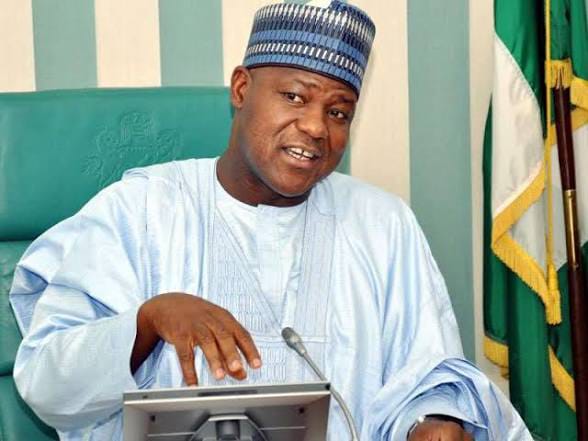
Former Speaker of the House of Representatives and Chairman of the Board of the National Credit Guarantee Company Limited (NCGC), Rt. Hon. Yakubu Dogara, CFR has expressed deep sorrow over the Nigerian Air Force aircraft crash that claimed the lives of 32 persons near Igbokoda, Ondo State. Dogara described the tragedy as a heartbreaking loss to the nation, noting that the deaths of the victims have left a painful void in the country’s defence and security community.
In a statement, the former Speaker extended his condolences to President Bola Ahmed Tinubu, Commander-in-Chief of the Armed Forces, the Nigerian Air Force, and the families of those who perished in the unfortunate incident.
He said the nation shares in the grief of the bereaved families and the Armed Forces at this time of immense sorrow, adding that the sacrifices of those who lost their lives in service to the country will not be forgotten. “The nation mourns with the families of the deceased and stands in solidarity with the Armed Forces during this difficult period,” Dogara stated.
He also commiserated with the Chief of Air Staff, officers and men of the Nigerian Air Force, praying that God grants them the fortitude to bear the painful loss.
According to him, moments such as this call for national unity, reflection and collective support for the families and institutions affected by the tragedy.
Dogara paid tribute to the victims, describing them as patriotic Nigerians whose commitment and service contributed to the security and stability of the nation. He further applauded the efforts of emergency responders, rescue teams and all personnel involved in the aftermath of the crash, commending their courage and professionalism under difficult circumstances.
The former Speaker prayed God to comfort their families, friends and colleagues.
He also offered prayers for the safety and protection of members of the Armed Forces and for continued peace, unity and progress in Nigeria.
The Nigerian Air Force aircraft crashed near Igbokoda, Ondo State, resulting in the death of 32 persons and plunging the nation into mourning. Authorities are yet to make public the cause of the accident as investigations continue.
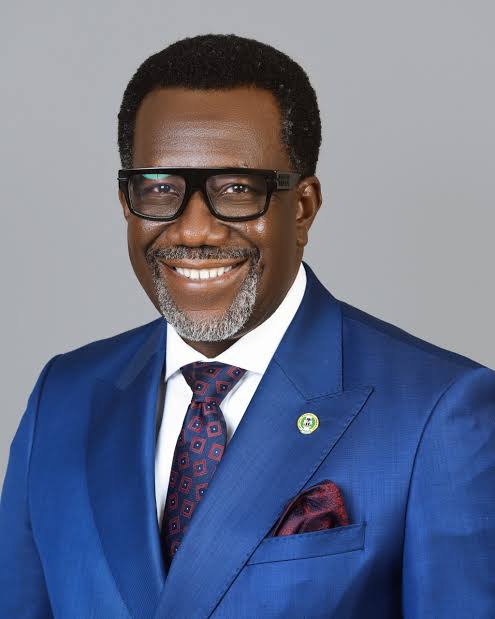
The Centre for Credible Reforms and Institutional Accountability (CCRIA) has commended the Commissioner for Insurance and Chief Executive Officer of the National Insurance Commission (NAICOM), Mr Olusegun Ayo Omosehin, for promoting transparency and accountability in the ongoing reforms of Nigeria’s insurance industry.
The centre said the implementation of the Nigerian Insurance Industry Reform Act (NIIRA) 2025 had ushered in a new phase of development for the sector, with stronger regulatory standards, improved capitalisation and greater emphasis on protecting policyholders.
Dr Aminu Abubakar Aminu, president of the centre, said this in a statement at the weekend.
Aminu commended President Bola Tinubu and the National Assembly for the enactment of NIIRA, describing the legislation as a major step towards addressing longstanding challenges in the insurance industry.
“The enactment of the Nigerian Insurance Industry Reform Act is a significant milestone in the development of Nigeria’s insurance sector. We commend Mr President and the National Assembly for recognising the need to modernise the legal and regulatory framework governing the industry. NIIRA provides the foundation for an insurance sector that is better capitalised, more accountable, more responsive to policyholders and better equipped to contribute meaningfully to the Nigerian economy,” he said.
The centre also praised Omosehin for his leadership of NAICOM, saying his extensive experience as an insurance professional had positioned him to effectively implement the new regulatory framework.
“We consider the appointment of Mr Olusegun Ayo Omosehin as Commissioner for Insurance and Chief Executive Officer of NAICOM a timely and appropriate decision. He is a seasoned insurance professional with many years of experience in the industry, and his understanding of the sector gives him the practical knowledge required to lead an important reform process of this nature. We commend him for the direction he has provided since assuming office and for his commitment to strengthening the industry,” Aminu said.
According to the centre, the ongoing recapitalisation exercise was among the important steps taken to strengthen the financial capacity of insurance companies and improve their ability to meet obligations to policyholders.
Aminu said the reforms were already producing early gains and should be sustained through consistent implementation.
“The early developments under NIIRA demonstrate that the reform is not merely a legislative exercise but a process capable of producing measurable improvements in the industry. Stronger capital requirements, improved supervision and greater attention to policyholder protection will ultimately create an insurance market that Nigerians can trust. We encourage NAICOM to remain focused on the implementation of the Act and to continue providing clear guidance to operators and other stakeholders,” he said.
The centre noted that the reforms would also help deepen insurance penetration and strengthen the industry’s contribution to national economic development.
It urged insurance companies, brokers, reinsurers, professional bodies and other stakeholders to embrace the new framework and work with NAICOM to achieve the objectives of the legislation.
“The success of NIIRA will require the cooperation of every stakeholder in the insurance ecosystem. Operators must see the reforms as an opportunity to strengthen their institutions, improve their services and regain the confidence of Nigerians. A well-regulated insurance industry can mobilise long-term capital, protect businesses and households against risks and support investment and economic growth. These are benefits that go beyond the insurance industry itself,” Aminu said.
Aminu emphasized that the centre was particularly encouraged by the emphasis on policyholder protection under the new framework, noting that public confidence remained critical to the growth of insurance in Nigeria.
He said Nigerians should be able to purchase insurance products with confidence that operators had the financial capacity and institutional structures required to honour legitimate claims.
The president further urged NAICOM to sustain its engagement with stakeholders while ensuring that the provisions of NIIRA were implemented transparently and consistently.
“What is required at this stage is continuity, professionalism and commitment to the objectives of the law. The reforms must be sustained beyond the initial implementation period so that the gains can become permanent features of the industry. We believe NAICOM, under the leadership of Mr Ayo Omosehin, has an important responsibility to ensure that the momentum is maintained, and we encourage all stakeholders to support the commission in delivering on this mandate,” he said.
The centre said the successful implementation of NIIRA would strengthen confidence in the insurance sector, improve the protection available to policyholders and position the industry to play a greater role in Nigeria’s economic transformation.
It also called for continued collaboration between NAICOM, insurance operators and other stakeholders to ensure that the objectives of the new law were fully achieved.

As Nigerians from across the United States gathered in Manhattan to celebrate Nigeria’s Independence Day in grand style, Hon. Amb. Jim Okolo used the occasion to share an inspiring message about Nigeria’s immense possibilities, rich cultural heritage, and promising future.
Speaking with members of the media during the colourful celebration, Hon. Amb. Okolo described Nigeria as one of the most blessed nations in the world, endowed with abundant natural resources, a dynamic population, and a cultural heritage that continues to earn global recognition.
According to him, Nigeria possesses enormous deposits of valuable minerals and other natural resources that, if fully harnessed, can accelerate economic growth and create prosperity for millions of citizens. He noted that the country is strategically positioned to become a leading destination for investment in mining, agriculture, technology, manufacturing, and infrastructure development.
Beyond its natural wealth, Hon. Amb. Okolo emphasized that Nigeria’s greatest strength remains its people. He praised the creativity, resilience, intelligence, and entrepreneurial spirit of Nigerians, pointing out that Nigerian professionals, innovators, academics, and business leaders continue to excel in various sectors across the world.
The respected diplomat also spoke passionately about Nigeria’s unique cultural identity. From the colourful festivals of its diverse ethnic groups to its globally celebrated music, fashion, literature, cuisine, and film industry, he described Nigeria as a nation whose cultural influence extends far beyond its borders.
He noted that Nigeria’s diversity is one of its greatest treasures, bringing together hundreds of ethnic nationalities with distinct traditions and languages that collectively form a vibrant and unified national identity.
While addressing questions on security, Hon. Amb. Okolo maintained that although Nigeria faces certain security challenges, the situation is not always as severe as often portrayed by social media discussions and sections of the international media. He stressed that millions of Nigerians continue to live, work, study, invest, and contribute meaningfully to society every day.
He called on the international community, investors, and members of the diaspora to focus on Nigeria’s strengths, opportunities, and achievements rather than allowing negative narratives to define the country’s image.
“Nigeria remains a land of opportunity, innovation, and hope. It is a nation blessed with extraordinary human capital, abundant resources, a rich cultural heritage, and a people whose determination and resilience continue to inspire the world,” he said.
The celebration was attended by several distinguished personalities, including the United Nations Secretary-General, Hajia Amina Mohammed, the Nigerian Ambassador to the United Nations, diplomats, business leaders, community stakeholders, and prominent members of the Nigerian diaspora.
The event transformed parts of Manhattan into a vibrant showcase of Nigerian pride, featuring cultural exhibitions, traditional performances, business networking sessions, authentic Nigerian cuisine, and displays highlighting the country’s achievements and diversity.
Adding excitement to the festivities were thrilling performances by internationally acclaimed Nigerian music stars Patoranking, Runtown, and BNXN (formerly known as Buju), who entertained thousands of attendees and demonstrated the growing global appeal of Nigerian music.
As the celebration came to a close, the message from Hon. Amb. Jim Okolo resonated strongly among participants: that Nigeria is far more than the challenges often highlighted in headlines. It is a nation blessed with extraordinary talent, vast opportunities, cultural richness, and the potential to achieve even greater success on the global stage.


Dogara Mourns Victims of Air Force Plane Crash, Condole President Tinubu, Military

The changing face of Nasarawa at 30

COALITION OF RENEWED HOPE REACTS TO NATIONAL FRONT BURNER ISSUES: TINUBU IS FIXING NIGERIA, OPPOSITION SHOULD STOP PLAYING POLITICS WITH PAIN.

-
 Uncategorized6 years ago
FG, states urged to harness flooding for ranching, others with technology – Agbaje
-
 Headlines11 years ago
Breaking: EFCC seals Borno House of Assembly, as Hon members take to their heels
-
 News12 years ago
Nigeria Security Operatives Stage Manhunt For Homosexual Perpetrator
-
 News10 years ago
How 21-year-old Girl fled community over accusation of lesbianism
-
 News11 years ago
Yobe Gov Moves Against Deputy
-
 Opinion7 years ago
7 signs she has friend zoned you
-
Technology5 years ago
Online job placement company headhunts women
-
 Headlines10 years ago
Borno Dep Gov Abducts Another Church Leader