
Uncategorized
2023: Address voter apathy, YIAGA Africa pleads with NASS


Mr Samson Itodo, Executive Director of the Youth Initiative for Advocacy, Growth and Advancement (YIAGA) Africa, has pleaded with the Constitution and Electoral Reform Committee of the National Assembly to address voter apathy in the 2023 general elections.
ALSO READ:Kwara begins form distribution for school feeding
Itodo said in roundtable –“Tackling Voter Suppression in Nigerian Elections’’ — organised by YIAGA Africa in Abuja that the roundtable was organised to beam search light on the issues of voter suppression and apathy.
He said that the ongoing electoral reform provided Nigerians an opportunity to strengthen the legal framework to prevent apathy.
“We have got a huge opportunity presented by the electoral reforms; obviously our electoral amendment needs some review.
“Our electoral amendment does not really provide safeguards for sufficient rights of voters so we are going to advance recommendations on how to improve those safeguards.
“We hope that the National Assembly, having told the public that the lawmakers are committed to electoral reforms they will do so.
“In the event they did not do so, it simply means that it has been just talk and there is no commitment to electoral reforms.
“We will give them benefit of doubt that they will adopt some of the recommendations coming from election observers and because the 2023 elections is a transitional one,’’ he said.
Itodo said that the recommendations proposed, if mainstreamed in the electoral reforms, would deepen the quality of elections in Nigeria.
He said that it was a concern that the nation recorded only 36 per cent turnout for elections in the last general elections and 32 per cent turnout for the governorship elections.
“You can see the level of violence in the Bayelsa and Kogi elections; based on our data, it was obvious that 26 per cent of polling units in Bayelsa did not have elections.
“If we continue to let development of this nature pervade our electoral process, what we stand to do is to further deepen the voter apathy within our elections,’’ he said.
Prof. Anthonia Simbine, the National Commissioner, Independent National Electoral Commission (INEC) said that violence over voting and non-usage of card readers were among other things were responsible for election cancellations.
Simbine said that the claim of voters being suppressed because of their religion or ethnic affiliation was new to the commission.
She, however, said that INEC would look into it since it was currently engaging stakeholders in the electoral bill process.
She said that the commission would look for ways to ensure votes were not suppressed, adding that the issue would be raised at the national dialogue.
Prof. Charles Ukeje of Obafemi Awolowo University said that the issue of voter suppression needed to be addressed if the nation would get it right in the electoral process.
Ukeje said that there was need to deal with voter suppression from the political party level.

By our correspondent
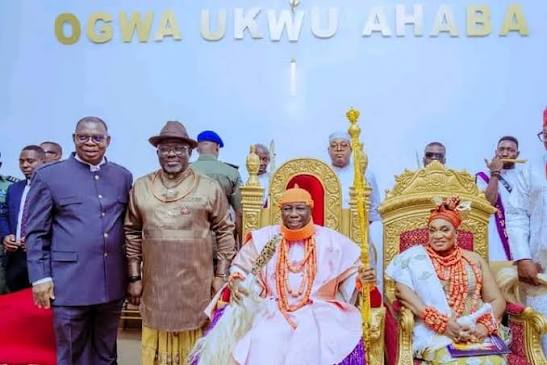
Governor of Delta State, Sheriff Oborevwori, has described traditional rulers as pillars of peace and development in society.
The governor, represented by his deputy, Sir Monday Onyeme, made the remark on Thursday during the 88th birthday celebration of HRM Obi Dr. Emmanuel Efeizomor II, the Obi of Owa Kingdom.
The event was held at the Obi of Owa Palace in Owa Oyibu, Ika North-East Local Government Area of Delta State.
Oborevwori described the revered monarch as a symbol of wisdom and a stabilising force whose leadership has significantly contributed to the progress of the Ika North-East area and Delta State at large.
He noted that traditional rulers remain closest to the grassroots and serve as vital bridges between government and the people.
According to the governor, the wisdom, guidance and stabilising influence of traditional rulers continue to support efforts aimed at sustaining peace, strengthening communities and advancing development across the state.
Oborevwori reaffirmed his administration’s commitment to working closely with traditional rulers to promote peace, infrastructure development and inclusive growth across Delta State.
He also commended the monarch’s nearly 66 years on the throne, describing him as a modern-minded traditional ruler who has successfully blended cherished customs with a forward-looking vision.
The governor noted that the Obi’s leadership has made Owa Kingdom a model of cultural pride, harmony and development in Delta State.
The occasion also featured the conferment of royal honours on deserving sons and daughters of the kingdom. Among the award recipients were Prince Victor Efeizomor, Barr. Raymond Isitor, Prof. (Mrs) Chiedu Owabor-Moye, Chief Godwin Irabor, Prof. Eric Eboh, Chief Okwuokenye Inneh and Prof. Victor Ehiedu.
The event was attended by several dignitaries, including the immediate past Governor of Delta State, Senator Dr. Ifeanyi Okowa, traditional rulers and other prominent personalities.
Uncategorized
Opinion: BOKO HARAM’S RENEWED BLOODY CAMPAIGN IN BORNO, AND THE DELIMA OF THE MILITARY

By: A G Abubakar
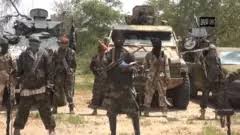
Within a span of barely 48 hours, six military formations and forward operating bases in Nigeria’s North-East were reportedly overrun by insurgents. The chain of attacks began at Ngoshe in Gwoza Local Government Area before cascading across several other locations—Kukawa, Bama, Goniri, Konduga, Dalwa, and Mainok. The last two settlements lie within a 40-kilometre radius of Maiduguri, the Borno State capital, underscoring how dangerously close the violence has crept toward the heart of the region. Prior to the latest attacks, Boko Haram/ISWAP had also unleashed deadly violence on the Mandragirau and Gharang settlements of Biu and Hawul LGAs, respectively.
Spikes in violence by insurgent groups are a common feature of guerrilla warfare. It becomes a source of serious concern, however, when such attacks occur on a sustained basis, as has been the case with Boko Haram/ISWAP in the North-East over the past year.
The audacious assaults by the terrorist groups Boko Haram and the Islamic State West Africa Province (ISWAP) left death and destruction in their wake. Three Nigerian Army commanders reportedly paid the supreme price in the line of duty, along with scores of civilians. In Ngoshe alone, more than 300 helpless villagers were abducted and later paraded in propaganda videos by the insurgents. In Dalwa and Ngoshe, houses built by the Borno State Government to resettle returning refugees were razed to the ground, further deepening the humanitarian tragedy in communities already battered by decades of violence. Dalwa lies only a few kilometres from Maiduguri, the state capital, raising fears that the city—or parts of it—may now be within the insurgents’ sights.
Naturally, these developments have created a troubling sense of déjà vu in Borno State—and, by extension, within the Federal Government. For many Nigerians who have watched the insurgency drag on for more than a decade and a half, the disturbing question has once again surfaced: what exactly is going wrong? Is it a question of commitment within the military establishment?
Is it a failure of intelligence gathering and coordination?
Or have the insurgents evolved into a far more sophisticated fighting force than previously imagined?
These questions are uncomfortable but unavoidable. One issue that has long generated concern—even among casual observers—is the largely defensive posture adopted by the military in the theatre of war. In asymmetric warfare, a defensive approach can easily turn troops into sitting targets. Insurgents who dictate the timing, location, and tempo of attacks often gain a tactical advantage over conventional forces confined to defensive positions.
Another dimension of the challenge lies in Nigeria’s approach to military hardware and technology. Buying sophisticated weapons abroad is one thing; mastering and adapting them locally is quite another. Wars are rarely won simply by acquiring expensive equipment. The true advantage lies in a nation’s ability to domesticate, maintain, modify, and improve weapon systems in response to changing battlefield realities. Unfortunately, Nigeria’s approach has largely centred on purchasing and deploying hardware without developing the deeper technological ecosystem required to sustain and adapt such systems effectively.
Meanwhile, Boko Haram and ISWAP have steadily evolved. What began as ragtag militant bands have gradually transformed into increasingly organised and sophisticated fighting units. They have established enclaves and safe havens—particularly in difficult terrains such as the Sambisa Forest—where they regroup, train, and refine their tactics.
Equally troubling is the gradual loss of control over certain strategic transportation corridors. Major highways such as the Biu–Damboa–Maiduguri road and sections of the Damaturu–Biu corridor have faced prolonged security threats. The Maiduguri–Damboa–Biu highway, for instance, has remained largely closed for close to a decade. Even with military escorts, the Maiduguri–Gamboru transnational corridor remains a risky route.
In military strategy, surrendering control of major transportation arteries—whether highways, waterways, or ports—to hostile forces is profoundly counterproductive. It allows insurgents freedom of movement while restricting economic and civilian activity, thereby amplifying the psychological and economic cost of the conflict. Enclaves are sometimes conceded temporarily for tactical reasons—to herd and isolate enemy forces as part of a broader final offensive. But when such spaces become enduring sanctuaries, the balance of advantage shifts dangerously.
Then there is the sensitive issue of morale within the ranks of the armed forces. Reports of poor welfare conditions, allegations of corruption among some senior officers, and concerns about recruitment quality have occasionally surfaced in public discourse. When soldiers feel inadequately supported, poorly equipped, or uncertain about leadership decisions, battlefield effectiveness can suffer. War demands not only weapons but also morale, discipline, trust, cohesion, and accountability. The last of these has often appeared in short supply. The $2.2 billion weapons procurement fund allegedly misappropriated by Sambo Dasuki, a former National Security Adviser (NSA), and the $2 million and N1.65 billion stolen by the convicted Gen. Umar Muhammed are among the more prominent examples. Many others have been implicated across the various services.
Modern warfare itself has changed dramatically. Conflicts are no longer fought exclusively with boots on the ground. Increasingly, battles are fought from the air and through advanced technologies—using drones, precision missiles, surveillance systems, and electronic warfare tools. In this regard, it is troubling that insurgent groups sometimes appear to be adapting faster in certain tactical areas than a country with more than 230,000 personnel across its various security services.
Nigeria must therefore rethink its security architecture. Strengthening local military production capability, investing in research and development, and integrating modern technologies into military doctrine are no longer optional—they are strategic necessities. Training must evolve alongside technology, and operational strategies must adapt to the realities of contemporary asymmetric warfare.
Beyond the battlefield, there is also a growing psychological dimension to the crisis: public fatigue and resignation. After more than fifteen years of violence, many communities in the North-East are gradually losing faith in the ability of the state to guarantee their safety. This erosion of confidence is dangerous for any nation.
Ironically, the early years of the insurgency revealed remarkable community resilience. In 2009, when Boko Haram briefly gained control of large parts of Maiduguri, young residents mobilised themselves to resist the insurgents. At one point, the militants had restricted movement and commercial activity, subjecting residents to severe hardship. Local youths organised themselves to push back. One, Baba Lawan Jafar, is believed to have initiated the historic move in June 2013. Others, like Shehu Ganiyu, also played key roles.
A similar story unfolded in Biu, where youths reportedly went from house to house identifying insurgents and confronting them—often armed with nothing more than clubs and improvised weapons.
These spontaneous community efforts eventually gave birth to what became known as the Civilian Joint Task Force (Civilian JTF)—popularly referred to in Hausa as “Kato da Gora.” Their bravery played a critical role in helping the military reclaim control of key urban areas and restoring a measure of stability.
However, after years of grinding conflict and perceived shortcomings in the national security response, the initial enthusiasm that powered such grassroots resistance has gradually waned. These developments demand serious reflection as Nigeria continues its long war against Boko Haram and ISWAP.
The insurgency has devastated the economy of the North-East, destroyed livelihoods, and displaced millions. Worse still, the security crisis has gradually spread beyond the region into other parts of the country that were once considered relatively safe.
19.More than a decade after the tragic abduction of the Chibok schoolgirls in 2014, some of the victims are still believed to be in captivity, including Dapchi Girls’ School’s Leah Sharibu. Sadly, many more citizens have since been kidnapped across different parts of the country.
Meanwhile, over half a million displaced persons from Gwoza and other parts of northern Borno remain stranded in neighbouring Cameroon and the Niger Republic, unable to return home safely. Within Nigeria itself, it is estimated that more than three million people are internally displaced as a result of various forms of insecurity across the country. This is in addition to the not fewer than 50,000 people believed to have lost their lives to the insurgency in the North-East region alone.
Nigeria now ranks as the 6th most terrorised country according to the Global Terrorism Index (GTI) 2025. It is also ranked 148 out of 168 countries on the 2025 Global Peace Index (GPI). These and other indicators have combined to place Nigeria among the least cohesive countries in 2025, with a cohesion score of 46.8% according to the Africa Polling Institute. As a consequence of these challenges, Nigeria and Nigerians have lost considerable trust in the eyes of the international community.
It has also been estimated that the war against insurgency and other terrorist groups has cost the nation over N40 trillion over the last decade. This figure is derived as a fraction of the nation’s average annual defence expenditure of about $4 billion, at the current official exchange rate. These are resources that could otherwise have been invested in critical infrastructure and sustainable human capital development—initiatives capable of transforming the lives of millions of citizens.
These realities underscore a simple but urgent truth: Nigeria cannot afford complacency. The Federal Government must urgently reassess and rejig the nation’s security architecture—strategically, technologically, and institutionally. The war against insurgency requires not only courage on the battlefield but also clarity of strategy, innovation in technology, integrity in leadership, and renewed trust between the state and its citizens.
Above all, the situation demands urgency and a fundamentally new approach. The current strategy appears increasingly incapable of delivering decisive results. There is a popular wisdom that one cannot continue doing the same thing and expect a different outcome. Nigeria’s war against insurgency therefore requires bold rethinking and swift action; a paradigm shift from the usual “doctrine” trap.
Every delay carries a human cost—not only for the men and women on the battlefield but also for the civilians whose lives hang in the balance. History teaches that prolonged wars breed deprivation, disillusionment, and instability. For Nigeria, the stakes could not be higher. The country must either adapt its strategy and regain the initiative—or risk watching the conflict drag on with devastating consequences for national security and development.
A.G.Abubakar agbarewa@gmail.com
From Hassan Taiye
The Minister of the Federal Capital Territory (FCT), Nyesom Wike, has announced plans to provide the necessary infrastructure in the newly opened Waru–Pozema District to enable residents and developers to move in and begin development.
Wike disclosed this on Thursday while speaking with journalists after inspecting several ongoing projects across the Federal Capital Territory.
He explained that the FCT Administration would work with relevant agencies to ensure the provision of basic infrastructure in the district, located in Cadastral Zone D16.
According to the minister, the administration will consult the Federal Capital Development Authority and other relevant departments to determine the next steps, including whether the project is captured in the 2026 budget.
“About the new district of Waru–Pozema in Cadastral Zone D16, we have to find out from the FCDA or the coordinator what they have in mind, whether it is in the 2026 budget,” he said. “Don’t worry, we will do everything we can to provide the needed infrastructure and open up the district so that people can move in.”
The minister also expressed satisfaction with the progress recorded on some judicial infrastructure projects inspected during the tour. He said the contractor handling the Court of Appeal complex assured that the project would be completed by May.
Wike further disclosed that the judges’ quarters, including those for the Federal High Court, have already been furnished.
Giving a breakdown of projects expected to be inaugurated during the third year in office of President Bola Tinubu, the minister said they include 10 duplexes for the Federal High Court, 20 duplexes for the FCT High Court and another 10 duplexes for the Court of Appeal.
The minister also inspected a major road project in Katampe, which he described as functioning like a ring road, and commended the contractor, China Geo-Engineering Corporation, for the pace and quality of work.
Speaking on his motivation for regularly inspecting projects, Wike said his commitment is driven by service and the confidence reposed in him by President Tinubu.
“For the president to have confidence in you and give you an assignment, you have no choice but to remain committed to the job,” he said.


Dogara Celebrates Baba Jang at 82, Hails Him as a Visionary Statesman

I’ ll contest for Nasarawa Governor in 2027, says Ombugadu

Oborevwori Hails Traditional Rulers as Pillars of Peace, Development

-
 Uncategorized5 years ago
FG, states urged to harness flooding for ranching, others with technology – Agbaje
-
 Headlines10 years ago
Breaking: EFCC seals Borno House of Assembly, as Hon members take to their heels
-
 News12 years ago
Nigeria Security Operatives Stage Manhunt For Homosexual Perpetrator
-
 News9 years ago
How 21-year-old Girl fled community over accusation of lesbianism
-
 News10 years ago
Yobe Gov Moves Against Deputy
-
 Opinion7 years ago
7 signs she has friend zoned you
-
Technology4 years ago
Online job placement company headhunts women
-
 Headlines10 years ago
Borno Dep Gov Abducts Another Church Leader