
Uncategorized
China, Africa to strengthen cooperation in protecting world heritage


A five-year plan was preliminarily formed to boost capacity building for China and Africa regarding world heritage conservation and management at a side event of the ongoing 44th session of the World Heritage Committee of the United Nations Educational, Scientific and Cultural Organization (UNESCO) that kicked off on July 16 in Fuzhou, capital of southeast China’s Fujian province.
The plan is aimed at establishing platforms for more direct exchange of knowledge between Chinese and African experts and scholars in the field of world heritage as well as custodians of world heritage sites so that the two sides can intensify exchange and sharing of experience, jointly carry out capacity building activities, and elevate the level of world heritage protection and management together.
The side event, which took place on July 19 under the theme of “Capacity Building for World Heritage Conservation and Management–Towards Future Cooperation Between Africa and China”, was attended by more than 150 people, including officials from the UNESCO, representatives of international organizations, and Chinese and African experts and scholars.
Before formulating the five-year plan, participants in the event reviewed the fruits of cooperation between China and Africa in the field of world heritage since 2019, and discussed the current situation of capacity building concerning the conservation and management of world heritage in Africa and China.
As the home of the world-famous Great Pyramids and the Sphinx, the lofty Mount Kilimanjaro on savannas, and the amazing ancient stone towers of the Great Zimbabwe ruins shrouded in forests, Africa is a continent endowed with rich and colorful natural and cultural resources. However, due to multiple factors, including social and economic development, Africa has long lagged behind other regions of the world in applying for UNESCO World Heritage status, as well as the management and protection of its world heritage.
There are 12 countries in Africa that still don’t have any heritage recognized as world heritage by the UNESCO, and 22 of the 53 properties included on the List of World Heritage in danger by the World Heritage Committee of UNESCO are located in Africa, according to Souayibou Varissou, executive director of the African World Heritage Fund (AWHF).
At the side event, Varissou called for increasing financial support for the AWHF to improve Africa’s capability to protect world heritage.
The 44th session of the World Heritage Committee tries to give priority to Africa in policy formulation, capacity building, international aid, and upstream procedures, in a bid to enhance the representativeness and improve the balance of world heritage, said Tian Xuejun, director of the Chinese National Commission for UNESCO and also chairman of the 44th session of the World Heritage Committee.
Upholding the idea of the China-Africa community with a shared future, China attaches great importance to its cooperation with Africa in protecting world heritage, held the UNESCO-Africa-China Forum on World Heritage Capacity Building and Cooperation, and supports efforts to carry out training in risk management and protection of world heritage for custodians of world heritage sites in African countries including Uganda, Benin, and Tanzania, Tian said.
Greater efforts need to be made and more strength pooled to put into practice UNESCO’s Global Priority Africa resolution, which demonstrates the status and role of African countries in the cause of world heritage protection, Tian stressed, adding that China will continue supporting African countries in protecting world heritage, assist with talent cultivation in developing countries, and carry out talent cultivation programs for world heritage protection.
Africa urgently needs to strengthen capacity building regarding application for UNESCO World Heritage status, and the management and monitoring of world heritage, said Mechtild Rössler, director of UNESCO World Heritage Center.
Rössler thanked China for its tremendous efforts to help protect world heritage in Africa through platforms of UNESCO, and is looking forward to more new results of the cooperation between China and Africa in world heritage protection.
World heritage in Africa is an integral and distinctive part of the world heritage system, said Lyu Zhou, director of the National Heritage Center of Tsinghua University as well as a professor of the School of Architecture of Tsinghua University.
World heritage in Africa is underrepresented on the existing UNESCO World Heritage List, which not only needs Africa to constantly enhance capacity building concerning application for UNESCO World Heritage status, but also requires the world to realize more deeply the uniqueness of Africa’s history and culture, Lyu said.
An identification and interpretation system that accords with the characteristics of Africa’s world heritage should be established to demonstrate the cultural value of the world heritage in Africa, Lyu added.
Muhammad Juma, chief of the Africa Unit of the UNESCO World Heritage Center, gave a systematic introduction to capacity building efforts in Africa at the side event, and pointed out that capacity building in the future should be oriented to the needs of management organizations of world heritage sites, people who work in the field of world heritage, stakeholders in relevant communities, and researchers of colleges, universities, and research institutes.
Juma also invited China to share its experience in applying for UNESCO World Heritage status and protection and management of world heritage.
By Wan Yu, People’s Daily

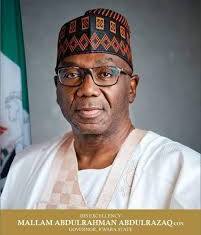
Stephen Olufemi Oni, Ilorin
Kwara State Governor AbdulRahman AbdulRazaq has been hailed for the conferment of the prestigious Sadauna of Ilorin Emirate title on him by His Royal Highness, the Emir of Ilorin, Alhaji (Dr.) Ibrahim Sulu-Gambari, CFR.
Giving the commendation on Tuesday in a statement in Ilorin, the state capital, Alhaji Yakubu Garba Gobir, who is the Sarkin Gobir and Madawaki of the Ilorin Emirate, described the recognition and honour on Governor AbdulRazaq as well deserved, timely and apt, giving his huge contributions to the growth and development of Ilorin Emirate and Kwara State as a whole.
Gobir specifically commended the Emir of Ilorin for conferring this distinguished title in recognition of the qualities and contributions of the new Sardauna, noting that it is a solemn call for greater responsibility, leadership, loyalty and devoted service to the Emirate and its people.
He added: “The title of Sardauna occupies a position of profound significance in the history, heritage and traditions of the Ilorin Emirate. I commend His Royal Highness, Alhaji (Dr.) Ibrahim Sulu-Gambari, CFR, the Emir of Ilorin, for conferring this distinguished title in recognition of the qualities and contributions of the new Sardauna.
“The title embodies courage, leadership, loyalty and devoted service to the Emirate and its people. Your elevation is therefore not merely a mark of honour; it is also a solemn call to greater responsibility and continued service.
“As a fellow title-holder in the Ilorin Emirate, I am particularly delighted to welcome you into this distinguished circle of traditional leadership. I am confident that you will bring to the office the same qualities of leadership, dignity and unwavering commitment to public service that have distinguished your tenure and career.
“At a time when our Emirate and our State require men and women of character, wisdom and courage to advance the interests of our people, I am certain that you will make a meaningful contribution to the enduring unity, progress and development of the Ilorin Emirate.”
Gobir offered prayers for a successful, impactful and enduring tenure for the new Sadauna, adding:
“May Almighty Allah grant you wisdom, sound health and strength, and may He make your tenure as Sardauna of Ilorin a source of lasting honour to you, your family and the entire Ilorin Emirate.”
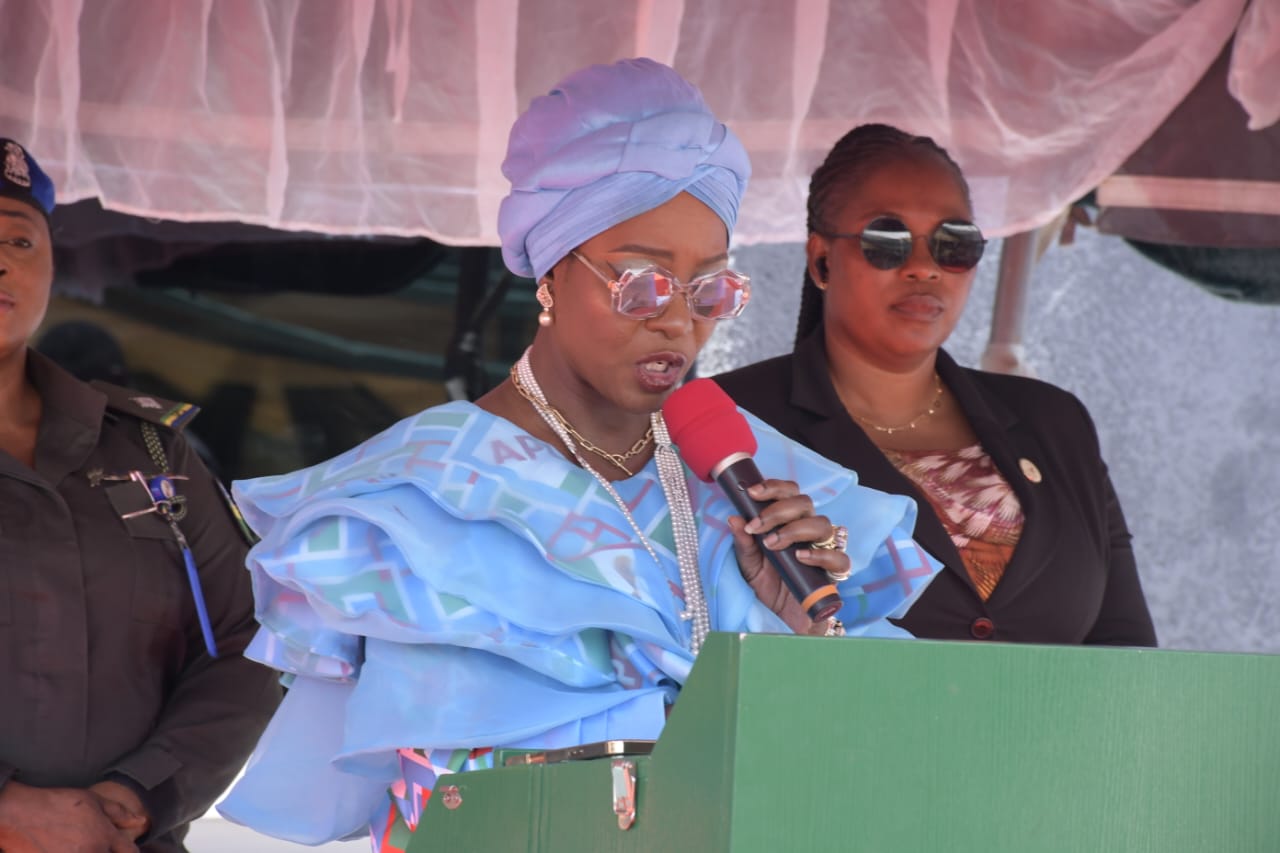
Stephen Olufemi Oni, Ilorin.
The wife of President Bola Ahmed Tinubu, Senator Oluremi Tinubu, has commissioned a TETFund/Renewed Hope Initiative-backed ICT Experience Centre at the Kwara State University (KWASU), Malete.
It would be recalled that KWASU is one of the six tertiary institutions selected for the pilot phase of this intervention, with one institution representing each of the Nigerian six geopolitical zones.
Represented at the commissioning on Tuesday by the wife of the Vice-President, Nana Shettima, Tinubu said the project is a testament to the federal government’s commitment to advancing education, digital inclusion and enhancing graduate employability.
“The TETFund/Renewed Hope Initiative ICT Experience Centre we are commissioning today represents opportunity, innovation, knowledge, and the future of young people in Kwara State and beyond.
She said: “This initiative aligns with the Renewed Hope Agenda of the administration of His Excellency, President Bola Ahmed Tinubu, GCFR, which places emphasis on youth empowerment, education, innovation, and economic transformation. Mr President is committed to creating opportunities that will equip Nigerian youths with knowledge and skills required to thrive in a modern and competitive world.”
Senator Tinubu said the facility was designed as a modern technology centre equipped with ICT laboratory, interactive digital display, conference facility, and exhibition spaces, adding that it would be an environment for learning, creativity, research, and technology advancement.
According to her, the ICT centres had been commissioned at the Ekiti State University on May 28, University of Cross Rivers State on September 4, Anambra State Polytechnic on September 10, adding that the Centres at Kaduna State University and Taraba State Universities would be commissioned soon.
“The next phase of this intervention will cover 15 institutions in Adamawa, Bayelsa, Borno, Delta, Edo, Enugu, Imo, Katsina, Nasarawa, Niger, Ondo, Osun, Rivers, Yobe, and Zamfara states which construction is currently ongoing. This expansion demonstrates the administration’s commitment to ensuring that more Nigerian youths, irrespective of their locations, have access to digital learning opportunities,” she said.
She encouraged the students to take ownership of the facility, maximise the opportunity it provides, and use technology positively to enhance their lives, community, and the nation.
In his speech, the Executive Secretary of Tetfund, Architect Sonny Echono, said the centres are being established across selected Universities, Polytechnics and Colleges of Education, with the Kwara State University, Malete proudly hosting the facility in the North-Central Zone.
“Through practical training and digital skills acquisition, TETFund seeks to enhance graduate employability, foster innovation and position Nigeria to participate more effectively in the global
technology-driven economy,” he added.
Echono also said that the ICT Experience Centre is designed to equip students and lecturers with critical digital skills in Artificial Intelligence, Cybersecurity, Robotics and Software Development.
He added: “The Centre being commissioned today is one of the foremost ICT Experience Centres being delivered across the country, and the third to be commissioned this year. The Centre is equipped with modern digital devices, Computer systems and relevant software to facilitate training, practical learning and skills development. The facility is appropriately furnished and
fully air-conditioned, with supporting power and municipal infrastructure.”
Also speaking, the Vice Chancellor of the University, Professor Shaykh- Luqman Jimoh, said the new facility represents vision, belief, and an investment in the Nigerian youth to better shape the future of our
nation.
The Vice Chancellor described the ICT Experience Centre as an investment in human capital, in innovation, in entrepreneurship, and, most importantly, it is an investment in the future of Nigeria.
“This Centre will provide opportunities for our students to develop practical digital skills and engage with contemporary technologies. Importantly, it is our hub for interdisciplinary engagement.
“This ICT Experience Centre is therefore a timely, critical, and strategic infrastructure that will definitely enhance research, teaching, learning, entrepreneurship, and community service. This intervention is at the core of what this university seeks from partners and donors: synergies that add value and impact on today and the future,” he started.
KWASU Vice Chancellor also assured that the ICT Experience Centre would be put to maximum use for the benefit of students, researchers, and the University
community, adding that the “KWASU community would engage with the facilities in this Centre, we will use it. We will explore, experiment, learn, and innovate in i
:
Uncategorized
2027: Violent ;Kaduna as ADC, APC Supporters Trade Accusations….APC Calls For Police Investigation into the Vandalisation, attacks on its Office

By Hassan Agboola
Tension is mounting in Kaduna State ahead of the 2027 general elections, following renewed exchanges between supporters of the African Democratic Congress (ADC) and groups backing the administration of Governor Uba Sani.
The latest development came on Tuesday when ADC governorship candidate, Isa Ashiru, addressed supporters in Kaduna and, according to an account of his remarks, declared that the party was prepared to respond to attacks against its members.
Ashiru was also quoted as saying that it was Governor Uba Sani, rather than President Bola Ahmed Tinubu, who was responsible for the continued detention of former Kaduna State Governor, Nasir El-Rufai.
However, available public records show that El-Rufai’s detention followed proceedings before the Independent Corrupt Practices and Other Related Offences Commission (ICPC), with the commission stating that his continued custody was based on a court-issued remand order.
The controversy over El-Rufai’s detention has nevertheless become a major political issue in Kaduna and beyond. The ADC has repeatedly criticised the handling of the former governor’s case and alleged political persecution, while other political actors have made different claims about the circumstances surrounding his detention.
Rising political temperature
Ashiru’s emergence as the ADC governorship candidate has added another dimension to the political contest in Kaduna. He defeated other aspirants at the party’s governorship primary in May 2026 and is now preparing for another governorship contest after previously representing the PDP in the 2019 and 2023 elections.
The political atmosphere has been further complicated by disagreements within the ADC and accusations from different groups over the party’s leadership and candidates.
A Southern Kaduna political group, for instance, recently questioned Ashiru’s candidacy and the choice of his running mate, allegations rejected by an ADC official.
The situation has also produced incidents involving ADC supporters and security personnel. In one recent incident, police dispersed an ADC solidarity walk in Kaduna, while the party subsequently accused opponents of attacking its members and warned that political violence could escalate ahead of the 2027 elections.
The former governor remains an important factor in the emerging political contest. El-Rufai was taken into custody in February 2026 after responding to an invitation from the ICPC. His family subsequently demanded his release, while the anti-graft agency maintained that his detention was authorised by a court.
Since then, the issue has increasingly featured in political statements by the ADC and its supporters, with the party accusing the Federal Government of political persecution and calling for the former governor’s release.
The development has created a new political fault line involving the ADC, the APC-led Kaduna State Government and supporters of the former governor.
While allegations have been exchanged over who is responsible for political violence in Kaduna, the competing narratives should not be confused with established findings. The ADC itself has recently rejected the suggestion that it has a monopoly on political violence and accused unnamed opponents of introducing thuggery into the 2027 political process.
With the 2027 election campaign yet to fully commence, the increasingly combative language from ISA Ashiru and his supporters has raised concerns about the possibility of further confrontation.
The immediate challenge before the political parties, security agencies and community leaders is therefore to ensure that political disagreements do not degenerate into violence, particularly in a state with Kaduna’s history of politically and communally sensitive conflicts.
As at the time of filling tid report the All progressive congress, APC , Kaduna state in a statement has condemned the attacks on its office and called for police investigation
Certainly. I’ll retain the substance of the report while correcting grammar, tightening the structure, and presenting it as a clean newspaper hard-news story.
Writing
APC Condemns Violent Attacks on Members, Party Offices in Kaduna
The Kaduna State chapter of the All Progressives Congress (APC) has condemned alleged violent attacks on its members and the vandalisation of party offices and properties in the state.
The party also called on the police and other security agencies to investigate the incidents and ensure that those responsible are brought to justice.
In a statement, the Kaduna State APC Publicity Secretary, Sani Dan-Azare, alleged that some of the party’s members and supporters had been attacked, while some party and support-group offices were vandalised.
He also alleged that vehicles belonging to some party members were damaged during the incidents.
The APC described the attacks as unacceptable and urged security agencies to conduct a thorough and impartial investigation to establish the circumstances surrounding the incidents.
The party called on its members and supporters to remain calm and law-abiding, stressing that they should not resort to retaliation or take the law into their own hands.
The APC said it remained committed to peaceful political engagement and urged all political actors in Kaduna State to conduct their activities within the bounds of the law.
It further appealed to security agencies to strengthen security around party offices and other sensitive locations to prevent further incidents.


Changsha brings millennia-old heritage into modern life

Gov AbdulRazaq Lauded Over Conferment Of Sadauna Of Ilorin Title

FG Commissions KWASU ICT Centre To Enhance Graduates Employability

-
 Uncategorized6 years ago
FG, states urged to harness flooding for ranching, others with technology – Agbaje
-
 Headlines11 years ago
Breaking: EFCC seals Borno House of Assembly, as Hon members take to their heels
-
 News12 years ago
Nigeria Security Operatives Stage Manhunt For Homosexual Perpetrator
-
 News10 years ago
How 21-year-old Girl fled community over accusation of lesbianism
-
 News11 years ago
Yobe Gov Moves Against Deputy
-
 Opinion7 years ago
7 signs she has friend zoned you
-
Technology5 years ago
Online job placement company headhunts women
-
 Headlines10 years ago
Borno Dep Gov Abducts Another Church Leader