
News
FG, NGOs decry violence, harmful practices against girl-child in spite of extant laws

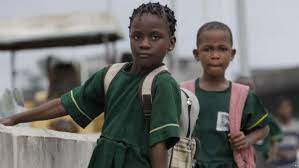
The Federal Government and some Non-Governmental Organisations (NGOs) have decried increasing cases of Sexual and Gender Based Violence (SGBV) against women and girls in spite of the domestication of extant laws in the country.
They also expressed concern over harmful traditional practices against women and girls when there are laws against such practices.
These stakeholders expressed their divergent views in separate interviews with our correspondent on the sidelines of various events recently held to commemorate the 2021 International Day of the Girl-Child in Abuja, an annual occasion marked on Oct. 11 to raise awareness on challenges of the girl-child.
They attributed the increasing cases of SGBV to delay by some state governments to adopt and implement the Child Rights Act and the Violence Against Persons Prohibition (VAPP) Act, delay in prosecution of offenders, the culture of silence, traditional practices, among others.
The Minister of Women Affairs, Mrs Pauline Tallen, while describing Nigeria as one with high rate of Female Genital Mutilation (FGM) cases, said such harmful practice persists in spite of a number of reforms and laws to curb the trend.
FGM is the partial or total removal of the female external genitalia, usually done in many communities for non-medical reasons, a violation of the fundamental rights of the female gender.
Tallen said “although government has undertaken a number of health reforms, including laws against harmful traditional practices, many cultural and religious practices still put the health of women in doldrums.
“I wish to state that the ministry is committed to abolishing all traditional practices that endanger the health and dignity of girls and womanhood in Nigeria and in this regard, will work more with the Ministry of Health.”
She said violence and harmful practices endanger the lives of women and girls, hence the need for all states of the federation to domesticate laws and implement them to serve as deterrent and eliminate it in totality.
According to her, in spite of government and partners’ positive interventions, high and community level advocacy, capacity building of circumcisers, including provision of alternate income for circumcisers, the practice of FGM still persists.
She, therefore, urged stakeholders to support girls and women and ensure the implementation of all enacted policies/laws on ending SGBV and harmful practices.
Mrs Ibukunoluwa Otesile, the Founder of Hope for Second Chance Foundation (HOSEC), an NGO, said the culture of silence by survivors and their families impedes success in eliminating SGBV and harmful practices in the country.
She said “the culture of silence is one of the things that has continued to endanger violence against women and children in Nigeria. The culture makes it difficult for the tools that the government has put in place to actually work. If people refuse to speak out against it when it happens, there is nothing government can do about it.
“It goes beyond just having the instruments and the laws; we as a people must criminalise every form of violence against women, girls and children, particularly sexual violence so that we don’t have situations where they will say we will go and settle in the family.
“It is not something that should be settled, it is a crime against the state and it should be attended to as such.”
On her part, Amarachi Chukwu, the Assistant Programme Officer, International Federation of Women Lawyers (FIDA), said the establishment of special courts to handle GBV cases would help to expedite prosecution of cases and ensure survivors got justice, which would serve as deterrent to others.
She added that “the more such cases are delayed, the more traumatised the survivor becomes. But as soon as the survivor gets justice, they get better.”
The National Coordinator, Young Ambassadors Against Drug Initiative (YAADAI), an NGO, said the Nigerian girl-child had over time been relegated to the background, noting however, that “the country is signatory to various international and national instruments.
“We have the Child Rights Act, the VAPP Act and CEDAW but the girl-child is particularly subjected to different kinds of challenges such as child marriage, street hawking, trafficking of teenage girls within and outside the country, child labour and sexual exploitation.
“And for some in the IDPs camps, exploitation is the only way to get food to eat.
“Sadly, they are not aware of the legal instruments established to protect their interest.”
She explained that the protection of the girl-child from all forms of violence would only be possible with renewed commitment, momentum and sustained efforts from every sector.
“We need to create more awareness even if it means having the Child Rights Act translated into different languages and taken to the grassroots for them to know their rights and give them a louder voice.
“Where their rights are violated, every child especially those who are the most vulnerable must have access to justice.”
“Most importantly, the mindset of parents need to change, like charity which begins at home, the discrimination and violence a girl child faces from home needs to stop. Girls must be treated equally with the boys and empowered with education.
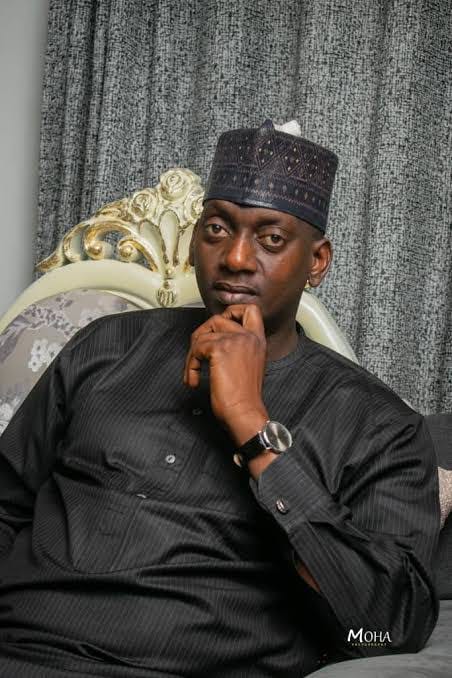
Hon. Jafaaru Yakubu, Chairman of the House Committee on Nigeria-China Friendship, has issued a strong call for immediate government intervention following the collapse of the Bali-Suntai Road in Taraba State. His appeal comes two years after the Namnai Bridge in Gassol Local Government Area collapsed, a tragedy that remains unresolved and continues to haunt residents. Yakubu stressed that the latest disaster is not just an infrastructure failure but a humanitarian crisis that threatens livelihoods, education, and commerce across the region.The Bali-Suntai Road, particularly around the Zagah axis in Bali LGA, was washed away after heavy rains, leaving more than 300 vehicles stranded. Among them were heavy-duty trucks loaded with goods, buses carrying passengers, and smaller vehicles attempting to navigate the route. The collapse has paralyzed transport services, cutting off communities and disrupting trade. For traders, the losses are mounting daily as perishable goods rot in transit, while transport operators face financial ruin from halted operations. Ordinary citizens, meanwhile, are left stranded, unable to access markets, schools, or health facilities.In reinforcing Yakubu’s appeal, Alh. Abdulhamid Kungana, Director General of Campaign for Hon. Jafaaru Yakubu’s 2027 House of Representatives bid, underscored the urgency of the crisis, describing it as a ticking time bomb for Taraba’s economy and social fabric. He noted that the collapse has left communities isolated and vulnerable, with economic activities grinding to a halt. His intervention added political weight to Yakubu’s voice, framing the issue not only as a matter of infrastructure but as a test of governance and leadership. By aligning with Yakubu’s call, Kungana’s campaign leadership amplified the demand for swift and decisive action, signaling that the plight of Taraba’s people must be treated as a national priority.Yakubu emphasized that infrastructure is the backbone of economic and social life, and without functioning roads and bridges, communities are isolated, commerce grinds to a halt, and education suffers. His call is not just a political statement but a demand for urgent action that directly affects thousands of Nigerians. Residents have pleaded for swift repairs, warning that the situation will worsen as the rainy season continues. Traders fear that the collapse will lead to skyrocketing prices of goods and services, as supply chains remain disrupted. The prolonged neglect of the Namnai Bridge and now the Bali-Suntai Road highlights the urgent need for sustainable road maintenance policies in Taraba State.The combined voices of Yakubu and Kungana have transformed the crisis into a rallying point for accountability. Their united stance reflects a broader demand for government responsiveness, reminding leaders that infrastructure failures are not abstract statistics but lived realities for communities. The collapse of two critical transport routes within two years has left Taraba’s people in despair, and unless urgent steps are taken, the crisis will deepen, leaving the state further isolated and economically strangled.
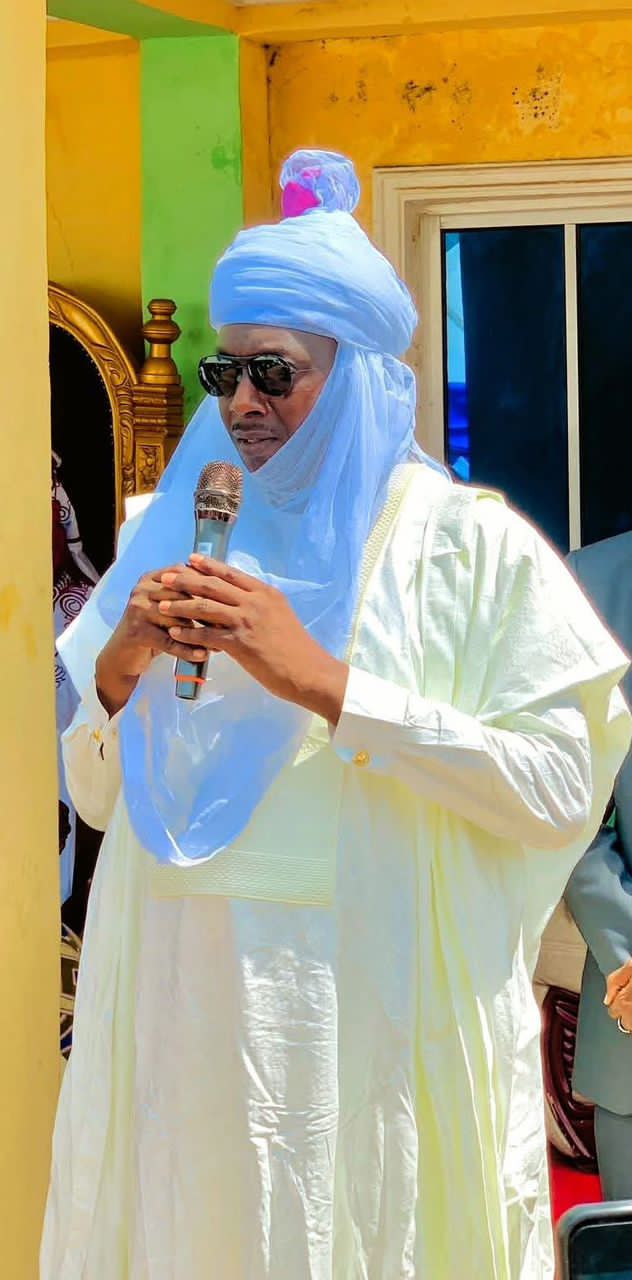
Honourable Jafaaru Yakubu, Chairman of the House Committee on Nigeria–China Friendship Relationship Group, has extended his condolences to the Government and people of Qatar following the passing of the father of the incumbent Emir, His Royal Highness Sheikh Tamim ibn Hamad Al Thani.In his condolence message, Honourable Yakubu described the late ruler as a man of wisdom and compassion whose leadership left a lasting imprint on Qatar and the wider global community. He noted that the deceased patriarch of the Al Thani Royal Family was widely respected for his dedication to service, his vision for progress, and his commitment to uplifting humanity.Yakubu emphasized that Qatar has not only been a leader in the Gulf region but has also shown remarkable generosity through humanitarian partnerships that extend far beyond its borders. He highlighted the role of Qatar Charity in his Federal Constituency of Bali/Gassol in Taraba State, where sustained interventions have supported orphans, widows, and vulnerable groups. These programs, he said, have provided scholarships, empowerment opportunities, and social support that have transformed lives and strengthened communities.“The people of Bali/Gassol Federal Constituency will always remember the kindness of Qatar and the impact of its humanitarian activities in our communities,” Honourable Yakubu remarked. He added that the partnership with Qatar Charity has been a source of hope and opportunity, reinforcing the bonds of friendship between Nigeria and Qatar.He prayed for Allah (SWT) to forgive the shortcomings of the departed leader and grant him Jannatul Firdausi, while assuring the Government of Qatar of his constituency’s solidarity during this period of mourning.The condolence message, delivered in Abuja, underscores the enduring ties between Nigeria and Qatar, and reflects the shared vision of both nations in advancing humanitarian causes and uplifting vulnerable populations. Honourable Yakubu reaffirmed his commitment to strengthening these ties, ensuring that the partnership continues to grow and deliver meaningful benefits to his people.
By Emmanuel Kuza
A chieftain of the Peoples Democratic Party (PDP) in Nasarawa State, Abuga Ovie, has described the name Ombugadu as a political brand, saying the popularity and wide acceptance of the name have made David Emmanuel Ombugadu a major force in the state’s political landscape.
Ovie, who stated this in an interview on Tuesday, said what started as opposition from some of Ombugadu’s biological brothers and people he described as fathers and uncles who betrayed him for personal political interests had now assumed a wider dimension, with political parties allegedly joining the battle against him.
According to him, the latest development was an attempt to undermine the political value of the Ombugadu name by presenting another person with the same surname, describing it as an indication of how far some political actors were prepared to go to weaken the PDP governorship candidate.
“Ombugadu is a brand, not a title. The people are not fools. They know their own. You cannot simply bring another person bearing the same name and expect the people to forget the political identity that Ombugadu has built over the years,” he said.
He further alleged that a former governor was working to introduce a political associate who had served as Accountant-General of Nasarawa State into the political equation, with the alleged objective of destabilising the PDP and weakening its chances by ensuring that the party fields a less competitive candidate in 2027.
“The plan, as we understand it, is to destabilise the PDP and make sure the party presents a weak candidate, thereby creating an advantage for the former governor’s preferred candidate. But all those efforts have proved abortive because the national leadership of the PDP stood its ground and refused to lose its best bet for the 2027 governorship election,” Ovie said.
The PDP chieftain said the resolve of the national leadership to retain Ombugadu had demonstrated the confidence the party had in his capacity to win the governorship election, despite what he described as attempts by some political actors to frustrate his ambition.
Ovie urged political parties and their leaders to resolve their internal differences instead of concentrating their efforts on Ombugadu, whom he compared to David in the Bible, saying he remained focused despite betrayal and opposition from those close to him.
“Ombugadu is like David in the Bible. Even when his brothers forsook him, he remained focused. Today, despite the people who have betrayed him, he remains focused and has a blueprint that can rescue Nasarawa State,” he said.
He said political parties should concentrate on presenting their programmes and convincing voters about how they intend to address the challenges confronting the state rather than expending their energy on attempts to stop Ombugadu.
“Political parties should fix their problems instead of wasting their strength fighting Ombugadu. Let everybody bring their blueprint before the people and explain what they intend to do for Nasarawa State,” he said.
Ovie maintained that the 2027 election should be about ideas, competence and the future of Nasarawa State, rather than attempts to manipulate political structures or undermine individuals perceived to enjoy strong grassroots support.
He urged the people of the state, particularly the Eggon community, to remain politically vigilant and resist what he described as efforts to make them settle for less, insisting that voters would ultimately determine who enjoys their confidence at the polls.
Reduce repeated references to Ombugadu


Hon. Jafaaru Yakubu Demands Urgent Action on Taraba Road Collapse

HONOURABLE JAFAARU YAKUBU COMMISERATES WITH QATAR OVER THE DEATH OF RULER

2026 Constitution Amendment Bill Moves to States

-
 Uncategorized6 years ago
FG, states urged to harness flooding for ranching, others with technology – Agbaje
-
 Headlines11 years ago
Breaking: EFCC seals Borno House of Assembly, as Hon members take to their heels
-
 News12 years ago
Nigeria Security Operatives Stage Manhunt For Homosexual Perpetrator
-
 News10 years ago
How 21-year-old Girl fled community over accusation of lesbianism
-
 News11 years ago
Yobe Gov Moves Against Deputy
-
 Opinion7 years ago
7 signs she has friend zoned you
-
Technology5 years ago
Online job placement company headhunts women
-
 Headlines10 years ago
Borno Dep Gov Abducts Another Church Leader