
News
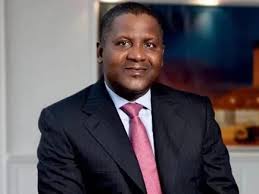
Obajana Cement: Fufill your part of the equity shares to kogi- CSO urges Dangote

…Says it is Kogites’ heritage and entitlement
A a civil society, pro-democracy and anti-corruption organization identified as Citizens Watch Advocacy Initiative (CWAI), has waded in to the recent face-off and war of words between the Kogi State Government and Dangote group, alleged owners of Obajana Cement.
In a statement signed and made available to newsmen on Wednesday by the Executive Secretary, Omoba Kenneth Aigbegbele, the group alleged that Dangote group had started off on issuing several threats, creating crisis and inflaming the already tense situation to the detriment kogites.
The statement read; We are concerned about the recent situation between the people of Kogi State and Dangote Group. After thorough investigations into the state of affairs, we are compelled to issue this statement to put the records straight and to put in proper perspective this vexed issue for posterity.
“Accordingly, the records of the Kogi State Judicial Commission of Enquiry which states with regards to the conduct of officers in public service, ministries, departments, agencies and local institutions of Kogi State between 29th May, 2003 and 29th January, 2016, headed by the Hon. Justice Wada Abubakar Omar (ret’d.) which attestation took place on 24th day of March, 2017, the reports represent the findings and the powers vested on the Commission of Inquiry that the Executive Governor of Kogi State, Hon. Excellency, Alhaji Yahaya Bello in his quest for good governance accountability, set up seven man Judicial Commission of Inquiry pursuant to Section 2 of the Commission of Inquiry Law Cap,25 laws of Northern Nigeria (as applicable in Kogi State) vide Kogi State legal Notice No. 2 of 2016 and all parties thereto, to prove, investigate, recover misappropriated public funds, including lost or diverted government properties, failed contracts and existence of ghost workers, among others.
“The judicial Commission of Inquiry as empaneled has the powers to, and covers the Kogi State under the previous administration between 29th May 2003 and 27th January 2016, and the recommendations were as follows: That there should be adequate restructuring of the entire contracting process of the state where several MDAs will have a uniform standard of obligating the state; the legal relationship of the government with other bodies should be fortified with better legal structures and documentation process that can stand the test of time; a central approach should be adopted to negotiate and establish understanding with any group before same is handed to a supervisory MDA to ensure full midwifery and birth; and that there should be proper and comprehensive records for continuity and to eliminate unnecessary duplications.
“Under the Dangote Cement/Obajana Cement Company Ltd, the Commission found the need to consider the subject matter of ownership of the Dangote Cement Plc/Obajana Cement Company Limited when it became apparent that no visible earnings had accrued to the state from the company. The company was therefore, summoned to appear before the Commission was accordingly represented by their counsel Liman Salihu Esq. and three of her management staff.
“The Commission received a six-page submission with bundles of documents referred to as DCP1 –DCP 8, all of which formed Exhibit 71 in answer to critical question of the ownership of the company between Dangote Cement Plc (Dangote) and the state government. That DCP 2 & 3 are the documents that confer ownership rights on Dangote and further to, Chief GOC Offurum also stated that at the inception, 10% was given to Kogi state, that is, five percent to Kogi State government, five percent to Kogi State people and the state did not take up her shares.
“In the same light, the Commission also summoned and obtained clarification and documents from the Ministry of Works, Lands and Urban Development and the Kogi State Board of Internal Revenue and therefore, also obtained the following facts. That the past government of the state granted Certificate of Occupancy, KG6110,KG6111 and KG6112 to Dangote for the factory land and the mineral deposit sites in Obajana; the three certificates were assigned by Dangote to Obajana Cement Company Limited (Obajana); that the said certificates have been mortgaged in the name of Obajana to raise the sum of N63 billion loan for Dangote; that the government after conceding to Dangote a seven-year tax holiday, the same government approved a waiver of 80% of the charges/fees being revenue due for the registration of the said mortgage to the state respectively; that the government also on 23rd February,2015, approved the merger of the three C of Os already encumbered into a fresh C of Os with a brand new number, the implication of which is that the old C of Os ceased to exist even though known to be mortgaged.”
“Therefore, the findings of the Commission were also as follows. “That there was no evidence of acquisition sufficient to justify the take-over of the company by Dangote; that the combined effect of Exhibit 71 has no evidence of consideration and process of consideration flowing from Dangote to the state; that DCP 4,6,7 & 8 in Exhibit 71 have no bearing with the question of ownership and or transfer of ownership of Obajana from Kogi State government to Dangote; a consideration of DCP 2&3 in Exhibit 71 suggest a transaction between the state governor at the material time and Dangote which in the Commission’s opinion is inchoate; that Dangote failed, refused and neglected to supply the Commission with the certified true copies of Corporate Affairs Commission (CAC) documents to evidence the history of its acquisition if any does exist; that it was not clear whether the signatories on behalf of the state carried the entire state machinery along, as the transaction appeared lopsided and denying the state of commensurate earnings in the transaction; nevertheless, that the government allocation to Dangote of the three Certificates of Occupancy KG6110, KG6111, & KG6112 respectively covering the location of the company and mineral deposits in 2003 was and is questionable till date; that the three certificates which were also subsequently merged into one new certificate with number KG 12357 on 23rd February 2015 also was considered questionable.”
“Consequently, from our investigations so far, the Kogi State government instituted another Technical Committee on the evaluation of the legality of the alleged acquisition of Obajana Cement Company Plc by Dangote Cement Company Limited in September,2022, and the below were also arrived at by the technical committee headed by Mrs. Folashade Arik Ayoade, Ph.D and other members, with powers to do a critical study of the Judicial Commission of Inquiry (white paper) and their findings were: “DCP 2 (Agreement between Kogi State Government of Nigeria and Dangote Industries Ltd, dated 30th July, 2002) and DCP3 (Supplemental Agreement dated 14th February, 2003), as contained in Exhibit 71 of the Judicial Commission of Inquiry Report, purporting transfer of Obajana Cement Company to Dangote Industries Ltd, are invalid, null and void because of absence of consideration; in view of the fact that there was absence consideration, the purported transfer was not proper; there are no evidence of consideration paid by Dangote Industries to Kogi State government from the alleged transfer of Obajana Cement Company Plc and no dividends were paid to the state coffers from the profits raised from inception of Dangote Cement Plc to date; it was also seen by all that due process was not followed in the merger of the three certificates to one because title in the three Certificates of Occupancy still vest in Obajana Cement Company Plc, Dangote Cement Company Plc , therefore, cannot apply for merger of same.
“Howbeit, the recommendations from the technical committee are that the Kogi State government should take up steps to recover Obajana Cement Company now changed to Dangote Cement Company Plc situated in Obajana, Kogi State as contained in the recent technical reports to Kogi State government.”
“CWAI therefore, state unequivocally that the move by the Kogi State government to recover and get back its legally supported equity from Dangote is in line with natural justice and best practices across the globe and as such, the Dangote management must look at these vexed issues critically, in the interest of humanity and professionally sit with Kogi State government under the proactive leadership of Alhaji Yahaya Bello to dialogue and see how this matter can be resolved amicably as thousands of youths, women groups, elders and traditional rulers are currently on the jugular of the government to take back their asset while some are unemployed now in Obajana as a result of the face-off while it is not also good for tourism and investments destination for the state.
“CWAI posits that the marginalization of the host communities over the years is not a thing to be proud of as companies globally are deeply involved and entrenched in Corporate Social Responsibility (CSR) to reach out to their operating environments using internal and external factors to alleviate human suffering and assist government to reduce the burden of poverty and restive youths as our investigations within the locality suggest.
“CWAI affirms that for a critical issue such as an investment of this magnitude to be domiciled in a state, the Kogi State House of Assembly must be keenly involved to be able to legislate and make the transaction valid. But according to our findings, such transaction or document does not exist whatsoever. It is important to state that for such an elaborate investment of this magnitude to be valid, a resolution must be passed by the state legislature to perfect whatever agreement reached by both parties or any agency of government but such does not exist whether in the previous government or at present.
“While CWAI acknowledges Dangote group for its efforts to industrialize the country, create jobs for our teeming youths through their factories spread across the country but we must also emphatically state that the company had for long also carried out devastating economic injustice on the people of the kogi State as a result of many dying daily due to environmental hazards as a result of the company’s activities and a lot of their truck drivers’ road accidents on the communities without commensurate reciprocity, and called for the age-long economic intimidation and exploitation to stop forthwith.
“CWAI call on well-meaning Nigerians to rein on Dangote Group to give Kogi people what rightfully belongs to them as it is a collective struggle of all Nigerians and not for the Government and people of the Kogi State alone. Justice must be seen to be done and served on a matter relating to the well-being of the people that is spanning over several years.
“CWAI therefore, aligns with the people Kogi State and Government, cautions the management of Dangote Group, not to allow this vexed issue to get out of hand and to amicably call for peace by dialoguing with the Government and the people of the state for the overall well-being of humanity and give the Kogi State people their rightful share of equity and dividends of this cement company.
“Our findings and investigation reveal that the Dangote Group have indeed failed to peacefully resolve and settle this issue for long deliberately because the people of Kogi and Government are on the side of truth which is also attested to by major stakeholders and shareholders’ admonitions in the Obajana Cement company saga.
“CWAI affirms if the acquisition of Obajana Cement by Dangote followed due process why has the Dangote Group not resorted to amicable settlement or the Judiciary interpretation/process which is the hope of the common man.
“We state categorically that there is more to it than meets the eyes. These are what Dangote said that Kogi State has no equity interest in Obajana, a development company incorporated without the interest of its citizenry is unheard of in the history of the globe; that the plant machinery was conceived, designed, procured, built and paid for solely by Dangote interest in 2003 and that taxes were paid to Kogi Government yearly since production commenced in 2007.
“However, all the agencies since incorporation cannot account or show payments made by Dangote till date. This according to CWAI is quite unfortunate. No one person or industry is bigger than the authority of the State or Government of the nation. It will be good in the interest of everyone that Dangote Group should immediately dialogue with the Kogi State Government to avoid the insecurity caused by this imbroglio.
“It is appalling while investment of this nature rather than bring peace and development have resulted to killings, damage and destruction of properties running into billions like the Kogi State House of Assembly and other property within the state. Even though when the public was sensitized and informed to the alleged impending plan by the Dangote Group to cause security breach by the State Government it still persisted.
“It is on this premise that we therefore call for an immediate dispute resolution mechanism between Dangote Group with the State Government, and Dangote Group should give the people of the state their rightful shares for peace to reign.
“We implore Dangote group to pay all its liabilities, taxes and levies to the Kogi State Government and stop using legal rigmarole and backhand tactics to evade the equity owed Kogi State and allow for peaceful and amicable settlement of issues at stake.” It added.
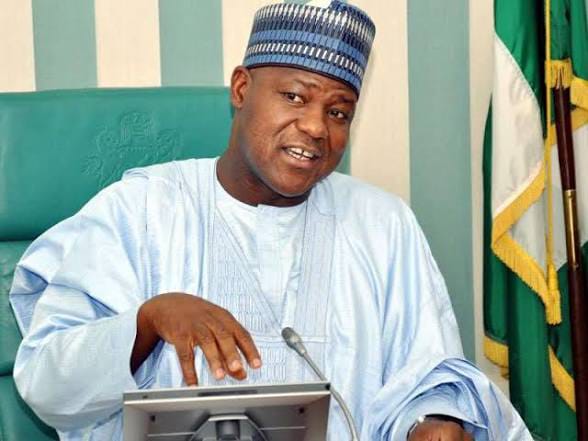
Former Speaker of the House of Representatives and Chairman of the Board of the National Credit Guarantee Company Limited (NCGC), Rt. Hon. Yakubu Dogara, CFR has expressed deep sorrow over the Nigerian Air Force aircraft crash that claimed the lives of 32 persons near Igbokoda, Ondo State. Dogara described the tragedy as a heartbreaking loss to the nation, noting that the deaths of the victims have left a painful void in the country’s defence and security community.
In a statement, the former Speaker extended his condolences to President Bola Ahmed Tinubu, Commander-in-Chief of the Armed Forces, the Nigerian Air Force, and the families of those who perished in the unfortunate incident.
He said the nation shares in the grief of the bereaved families and the Armed Forces at this time of immense sorrow, adding that the sacrifices of those who lost their lives in service to the country will not be forgotten. “The nation mourns with the families of the deceased and stands in solidarity with the Armed Forces during this difficult period,” Dogara stated.
He also commiserated with the Chief of Air Staff, officers and men of the Nigerian Air Force, praying that God grants them the fortitude to bear the painful loss.
According to him, moments such as this call for national unity, reflection and collective support for the families and institutions affected by the tragedy.
Dogara paid tribute to the victims, describing them as patriotic Nigerians whose commitment and service contributed to the security and stability of the nation. He further applauded the efforts of emergency responders, rescue teams and all personnel involved in the aftermath of the crash, commending their courage and professionalism under difficult circumstances.
The former Speaker prayed God to comfort their families, friends and colleagues.
He also offered prayers for the safety and protection of members of the Armed Forces and for continued peace, unity and progress in Nigeria.
The Nigerian Air Force aircraft crashed near Igbokoda, Ondo State, resulting in the death of 32 persons and plunging the nation into mourning. Authorities are yet to make public the cause of the accident as investigations continue.
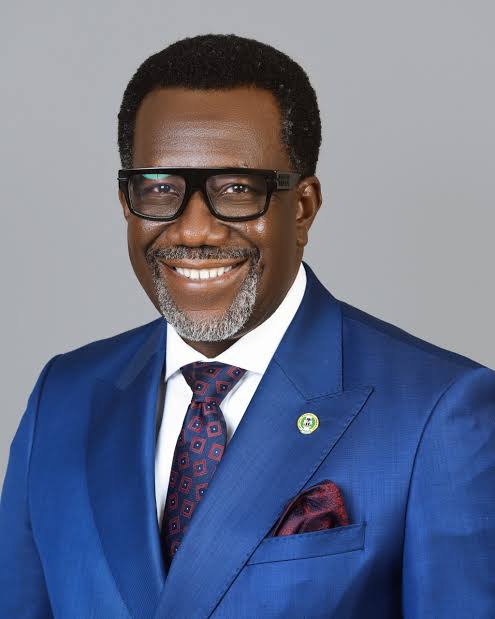
The Centre for Credible Reforms and Institutional Accountability (CCRIA) has commended the Commissioner for Insurance and Chief Executive Officer of the National Insurance Commission (NAICOM), Mr Olusegun Ayo Omosehin, for promoting transparency and accountability in the ongoing reforms of Nigeria’s insurance industry.
The centre said the implementation of the Nigerian Insurance Industry Reform Act (NIIRA) 2025 had ushered in a new phase of development for the sector, with stronger regulatory standards, improved capitalisation and greater emphasis on protecting policyholders.
Dr Aminu Abubakar Aminu, president of the centre, said this in a statement at the weekend.
Aminu commended President Bola Tinubu and the National Assembly for the enactment of NIIRA, describing the legislation as a major step towards addressing longstanding challenges in the insurance industry.
“The enactment of the Nigerian Insurance Industry Reform Act is a significant milestone in the development of Nigeria’s insurance sector. We commend Mr President and the National Assembly for recognising the need to modernise the legal and regulatory framework governing the industry. NIIRA provides the foundation for an insurance sector that is better capitalised, more accountable, more responsive to policyholders and better equipped to contribute meaningfully to the Nigerian economy,” he said.
The centre also praised Omosehin for his leadership of NAICOM, saying his extensive experience as an insurance professional had positioned him to effectively implement the new regulatory framework.
“We consider the appointment of Mr Olusegun Ayo Omosehin as Commissioner for Insurance and Chief Executive Officer of NAICOM a timely and appropriate decision. He is a seasoned insurance professional with many years of experience in the industry, and his understanding of the sector gives him the practical knowledge required to lead an important reform process of this nature. We commend him for the direction he has provided since assuming office and for his commitment to strengthening the industry,” Aminu said.
According to the centre, the ongoing recapitalisation exercise was among the important steps taken to strengthen the financial capacity of insurance companies and improve their ability to meet obligations to policyholders.
Aminu said the reforms were already producing early gains and should be sustained through consistent implementation.
“The early developments under NIIRA demonstrate that the reform is not merely a legislative exercise but a process capable of producing measurable improvements in the industry. Stronger capital requirements, improved supervision and greater attention to policyholder protection will ultimately create an insurance market that Nigerians can trust. We encourage NAICOM to remain focused on the implementation of the Act and to continue providing clear guidance to operators and other stakeholders,” he said.
The centre noted that the reforms would also help deepen insurance penetration and strengthen the industry’s contribution to national economic development.
It urged insurance companies, brokers, reinsurers, professional bodies and other stakeholders to embrace the new framework and work with NAICOM to achieve the objectives of the legislation.
“The success of NIIRA will require the cooperation of every stakeholder in the insurance ecosystem. Operators must see the reforms as an opportunity to strengthen their institutions, improve their services and regain the confidence of Nigerians. A well-regulated insurance industry can mobilise long-term capital, protect businesses and households against risks and support investment and economic growth. These are benefits that go beyond the insurance industry itself,” Aminu said.
Aminu emphasized that the centre was particularly encouraged by the emphasis on policyholder protection under the new framework, noting that public confidence remained critical to the growth of insurance in Nigeria.
He said Nigerians should be able to purchase insurance products with confidence that operators had the financial capacity and institutional structures required to honour legitimate claims.
The president further urged NAICOM to sustain its engagement with stakeholders while ensuring that the provisions of NIIRA were implemented transparently and consistently.
“What is required at this stage is continuity, professionalism and commitment to the objectives of the law. The reforms must be sustained beyond the initial implementation period so that the gains can become permanent features of the industry. We believe NAICOM, under the leadership of Mr Ayo Omosehin, has an important responsibility to ensure that the momentum is maintained, and we encourage all stakeholders to support the commission in delivering on this mandate,” he said.
The centre said the successful implementation of NIIRA would strengthen confidence in the insurance sector, improve the protection available to policyholders and position the industry to play a greater role in Nigeria’s economic transformation.
It also called for continued collaboration between NAICOM, insurance operators and other stakeholders to ensure that the objectives of the new law were fully achieved.
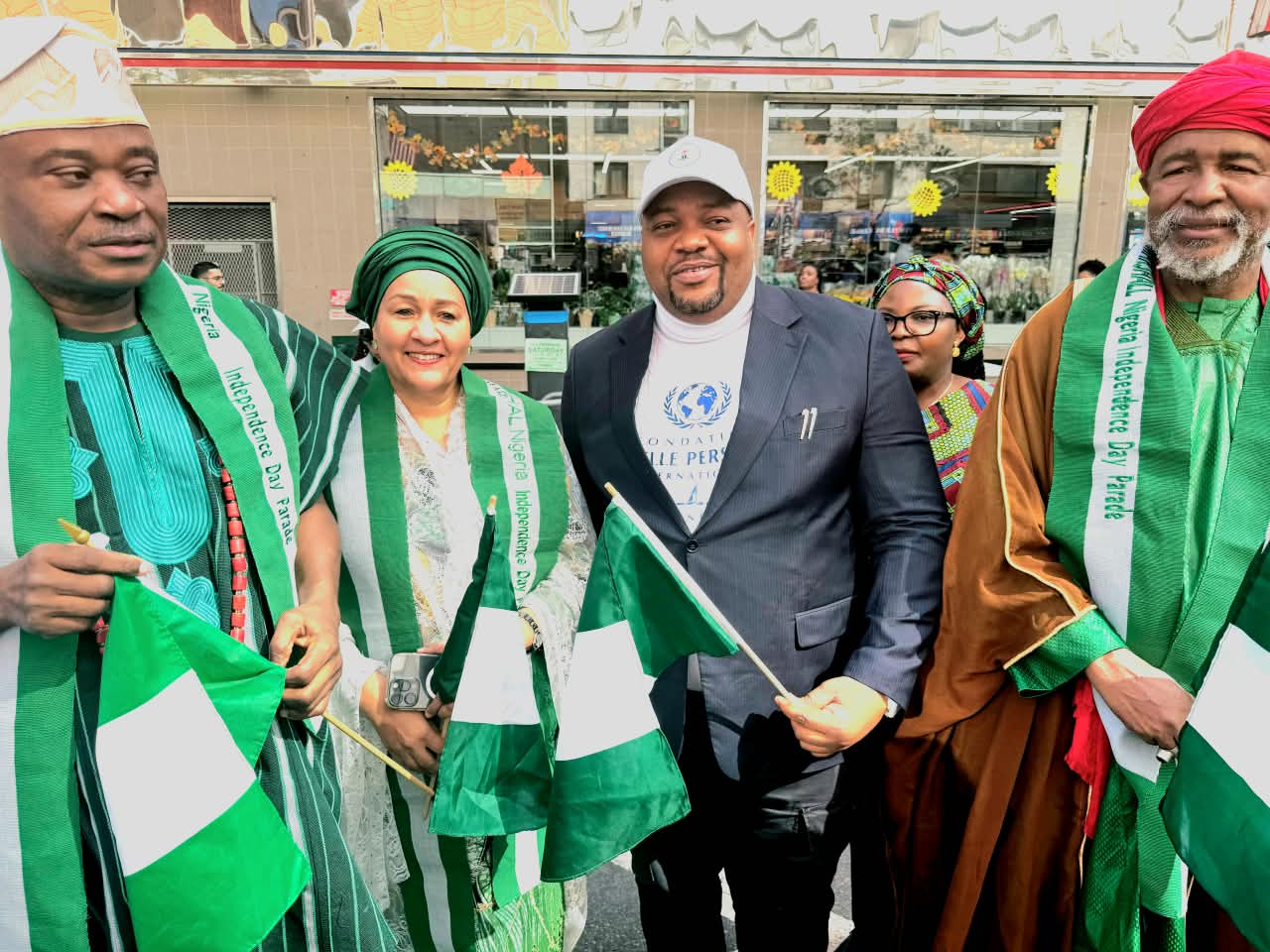
As Nigerians from across the United States gathered in Manhattan to celebrate Nigeria’s Independence Day in grand style, Hon. Amb. Jim Okolo used the occasion to share an inspiring message about Nigeria’s immense possibilities, rich cultural heritage, and promising future.
Speaking with members of the media during the colourful celebration, Hon. Amb. Okolo described Nigeria as one of the most blessed nations in the world, endowed with abundant natural resources, a dynamic population, and a cultural heritage that continues to earn global recognition.
According to him, Nigeria possesses enormous deposits of valuable minerals and other natural resources that, if fully harnessed, can accelerate economic growth and create prosperity for millions of citizens. He noted that the country is strategically positioned to become a leading destination for investment in mining, agriculture, technology, manufacturing, and infrastructure development.
Beyond its natural wealth, Hon. Amb. Okolo emphasized that Nigeria’s greatest strength remains its people. He praised the creativity, resilience, intelligence, and entrepreneurial spirit of Nigerians, pointing out that Nigerian professionals, innovators, academics, and business leaders continue to excel in various sectors across the world.
The respected diplomat also spoke passionately about Nigeria’s unique cultural identity. From the colourful festivals of its diverse ethnic groups to its globally celebrated music, fashion, literature, cuisine, and film industry, he described Nigeria as a nation whose cultural influence extends far beyond its borders.
He noted that Nigeria’s diversity is one of its greatest treasures, bringing together hundreds of ethnic nationalities with distinct traditions and languages that collectively form a vibrant and unified national identity.
While addressing questions on security, Hon. Amb. Okolo maintained that although Nigeria faces certain security challenges, the situation is not always as severe as often portrayed by social media discussions and sections of the international media. He stressed that millions of Nigerians continue to live, work, study, invest, and contribute meaningfully to society every day.
He called on the international community, investors, and members of the diaspora to focus on Nigeria’s strengths, opportunities, and achievements rather than allowing negative narratives to define the country’s image.
“Nigeria remains a land of opportunity, innovation, and hope. It is a nation blessed with extraordinary human capital, abundant resources, a rich cultural heritage, and a people whose determination and resilience continue to inspire the world,” he said.
The celebration was attended by several distinguished personalities, including the United Nations Secretary-General, Hajia Amina Mohammed, the Nigerian Ambassador to the United Nations, diplomats, business leaders, community stakeholders, and prominent members of the Nigerian diaspora.
The event transformed parts of Manhattan into a vibrant showcase of Nigerian pride, featuring cultural exhibitions, traditional performances, business networking sessions, authentic Nigerian cuisine, and displays highlighting the country’s achievements and diversity.
Adding excitement to the festivities were thrilling performances by internationally acclaimed Nigerian music stars Patoranking, Runtown, and BNXN (formerly known as Buju), who entertained thousands of attendees and demonstrated the growing global appeal of Nigerian music.
As the celebration came to a close, the message from Hon. Amb. Jim Okolo resonated strongly among participants: that Nigeria is far more than the challenges often highlighted in headlines. It is a nation blessed with extraordinary talent, vast opportunities, cultural richness, and the potential to achieve even greater success on the global stage.


Two German writers retrace the Long March by bicycle
To translate the vision of a constructive China-U.S. relationship of strategic stability into action

China’s express delivery industry shifts toward higher-quality growth

-
 Uncategorized6 years ago
FG, states urged to harness flooding for ranching, others with technology – Agbaje
-
 Headlines11 years ago
Breaking: EFCC seals Borno House of Assembly, as Hon members take to their heels
-
 News12 years ago
Nigeria Security Operatives Stage Manhunt For Homosexual Perpetrator
-
 News10 years ago
How 21-year-old Girl fled community over accusation of lesbianism
-
 News11 years ago
Yobe Gov Moves Against Deputy
-
 Opinion7 years ago
7 signs she has friend zoned you
-
Technology5 years ago
Online job placement company headhunts women
-
 Headlines10 years ago
Borno Dep Gov Abducts Another Church Leader