
News
‘NDIC Academy will Lead Africa in Deposit Insurance’

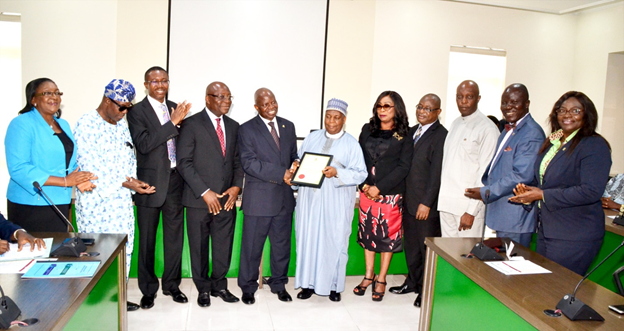
The Nigeria Deposit Insurance Corporation (NDIC) MD/CE, Alhaji Umaru Ibrahim (6th from left) receiving the certificate of accreditation for the NDIC Academy from the President/Chairman, CIBN Council, Prof Segun Ajibola (5th from left); NDIC Academy was accredited as a Training Service Provider for the Banking and Finance industry by the Council of the Chartered Institute of Bankers of Nigeria (CIBN); on the MD’s right are: NDIC Executive Director (Corporate Services), Hon. Mrs. Omolola Abiola-Edewor; Director, NDIC Academy, Dr Azubike Okoro and NDIC Executive Director (Operations), Prince Aghatise Erediauwa, in Lagos, recently.
By Joseph INOKOTONG
The Nigeria Deposit Insurance Corporation (NDIC) is set to lead the African Sub-Region in enhancing capacity building and bridging skills gaps in the banking industry in general and the Deposit Insurance Scheme (DIS) in particular.
This was made known by the NDIC’s Managing Director/Chief Executive, Alhaji Umaru Ibrahim during his remark at the accreditation ceremony of the NDIC Academy as a training service provider for its staff and the banking industry by the Council of the Chartered Institute of Bankers of Nigeria (CIBN) at the Bankers House, Victoria Island, Lagos.
Alh. Ibrahim said with the NDIC Academy’s new status, it is positioned to fulfill the Corporation’s goal of serving as a center of academic excellence for capacity building on the Deposit Insurance Scheme (DIS) for countries in the Sub-Saharan Africa.
He added that the Corporation prides itself on establishing high standards of professionalism and competency among its staff through the Corporation’s NDIC Academy and other human capital development initiatives, including the Chartered Banker/MBA program of University of Bangor, Scotland in partnership with the CIBN.
A statement issued by the Head, Communication & Public Affairs, Hadi S. Birchi said the NDIC CEO emphasized the importance of continuous high level training in order to achieve the Corporation’s core mandates of deposit guarantee, bank supervision, bank distress resolution and bank liquidation.
The ultimate goal, he said, would be to enhance depositor protection and public confidence in the banking system.
In his earlier address, the President and Chairman, Council of CIBN, Prof. Segun Ajibola commended the Corporation for its consistent efforts toward meeting high standards for the benefit of the banking industry and larger economy.
Prof. Ajibola described the NDIC’s readiness to subject itself to the rigors of the accreditation process as a testimony of its Management’s commitment towards capacity development in order to equip its workforce with critical skills to enhance their performance and productivity.
He said that there would be periodic monitoring to ensure that standards were maintained, adding that the accreditation would last for three years after which the Corporation would require recertification.
News
Intelligentsia Machinery Celebrates Seyi Tinubu, Hails Contributions to Enterprise, Philanthropy, Youth Empowerment
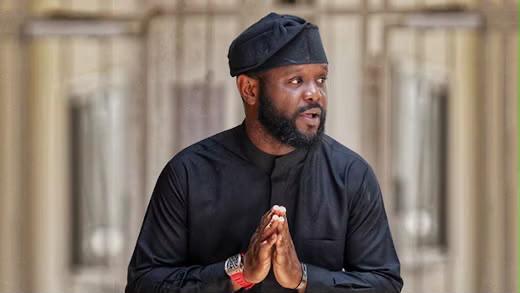
The Intelligentsia Machinery (IM) has congratulated Seyi Tinubu on his birthday, celebrating his contributions to enterprise development, humanitarian service, youth empowerment and national engagement.
The organisation, in a congratulatory message signed by Omoba Kenneth Aigbegbele and Com Umar Farouk on behalf of its resource persons, members and senior executives, described the birthday as an opportunity to reflect on Tinubu’s personal journey, professional accomplishments, philanthropic engagements and responsibilities associated with influence and public visibility.
The organisation celebrated Tinubu as an entrepreneur, philanthropist and advocate of youth empowerment, noting that his public profile encompasses private-sector enterprise, legal training, humanitarian interventions and initiatives aimed at expanding opportunities for young Nigerians.
According to the statement, the birthday provides an appropriate moment to acknowledge the different dimensions of his public profile while encouraging the continued expansion of programmes capable of delivering measurable and sustainable benefits to Nigerians.
“Today, we celebrate not merely another year in your life but also an opportunity to reflect on your personal journey, professional accomplishments, humanitarian engagements, and the responsibilities that accompany influence, privilege, and public visibility in a developing nation such as Nigeria,” the statement said.
Education, Enterprise and Personal Development
The organisation highlighted Tinubu’s educational background, noting that he studied Business Administration at the University of Maryland in the United States and Law at the University of Buckingham in the United Kingdom before being called to the Nigerian Bar in 2013.
It said the educational experiences provided an important context for understanding his subsequent involvement in business, entrepreneurship and public engagement, adding that his professional journey reflected the intersection of business knowledge, legal training, strategic thinking and opportunities within Nigeria’s evolving private sector.
The statement also recognised his role as Chief Executive of Loatsad Promomedia, where he has been associated with Nigeria’s out-of-home advertising industry.
According to IM, the sector connects businesses, brands, consumers and the wider commercial environment, while private enterprise remains important to Nigeria’s economic development.
It noted that businesses could contribute to employment, innovation, professional development and opportunities for young people through investments in talent, new ideas and sustainable operations.
The organisation therefore encouraged Tinubu to continue pursuing enterprise that advances commercial objectives while contributing to skills development, responsible business practices and the growth of Nigeria’s creative and entrepreneurial economy.
Philanthropy and the Responsibility to Give Back
On philanthropy, the organisation acknowledged Tinubu’s association with the Noella Foundation and other humanitarian engagements, noting that publicly reported activities linked to his philanthropic work had included healthcare support, assistance to vulnerable communities and initiatives intended to improve access to opportunities for young Nigerians.
It said the interventions underscored the importance of social responsibility and demonstrated how influence could be used to address the practical needs of individuals and communities.
The statement observed that Nigeria continued to face challenges relating to poverty, access to healthcare, educational opportunities and economic inclusion.
It added that partnerships among philanthropic organisations, businesses, community groups and public institutions could complement wider development efforts.
IM specifically acknowledged reports of healthcare interventions associated with Tinubu’s philanthropic activities, including the Drug Banks for Indigent Patients initiative launched at Ahmadu Bello University Teaching Hospital in Kaduna State in August 2024.
It also recognised public accounts of humanitarian assistance provided to communities affected by flooding in Borno State in 2024.
According to the organisation, such interventions demonstrated the importance of responding to the needs of vulnerable people, particularly during periods of displacement, hardship and uncertainty.
The organisation encouraged the continued strengthening of these humanitarian efforts through transparent implementation, broad access, measurable outcomes and sustained attention to community development.
It stated that the true significance of philanthropy lay not simply in the resources committed but also in the dignity restored, opportunities created and improvements sustained in the lives of beneficiaries.
The statement added that these outcomes reflected the importance of maintaining a commitment to the common good.
Youth Empowerment and the Future of Nigeria
The organisation also identified Tinubu’s engagements with youth-focused initiatives as an important dimension of his public profile.
It noted that Nigeria had an energetic and ambitious young population whose potential could be strengthened through quality education, vocational training, mentorship, entrepreneurship, digital skills and access to productive opportunities.
However, it stressed that ambition alone was insufficient, explaining that young people also needed supportive institutions, access to finance, professional guidance, practical experience and an economic environment in which hard work and creativity could translate into meaningful progress.
The statement highlighted Tinubu’s association and initiative with the Seyi Tinubu Empowerment Project (STEP), describing it as part of the focus on youth empowerment and entrepreneurial development.
IM expressed the belief that initiatives of this nature could make a more enduring contribution through structured programmes that equip beneficiaries with practical skills, business knowledge, mentorship and opportunities for sustainable livelihoods.
The organisation encouraged the continued expansion of youth-centred programmes capable of reaching young Nigerians across different regions, backgrounds and economic circumstances.
It said its aspiration was to see a generation of young Nigerians who were not merely beneficiaries of assistance but also employers, innovators, responsible citizens, community leaders and contributors to national development.
The statement further attributed Tinubu’s public profile to various initiatives and philanthropic activities which, according to the organisation, had impacted lives and created far-reaching and enduring legacies.
Leadership, Influence and Public Responsibility
On leadership and public responsibility, IM noted that public visibility brought both opportunities and responsibilities, particularly for individuals whose activities attracted national attention.
It said the challenge was to ensure that influence contributed constructively to society and that public engagements remained connected to the expectations and concerns of ordinary citizens.
The organisation observed that Tinubu’s public profile had developed within the context of business, philanthropy, family prominence and increasing public interest in the role of young Nigerians in national affairs.
It also credited him with supporting and promoting youth participation in governance under the present administration, describing the development as significant in the country’s political history.
The statement, however, acknowledged that public assessments of influential figures could differ, stressing that meaningful public confidence was strengthened through openness, accountability, constructive engagement and demonstrable results.
IM therefore regarded the birthday as an opportunity to encourage continued investment in programmes that promote social inclusion, entrepreneurship, humanitarian assistance and the participation of young people in addressing Nigeria’s development challenges.
It expressed the hope that Tinubu would continue to demonstrate the enduring value of these commitments through initiatives whose outcomes could be assessed by the people and communities they were intended to serve.
The organisation wished him more glorious days ahead in his service to the nation and humanity.
Bridging Opportunities and Social Impact
The statement emphasised that Nigeria’s development required collaboration among government institutions, the private sector, civil society organisations, philanthropists, professional bodies and young people.
It noted that no single individual or institution could resolve the country’s numerous social and economic challenges alone, adding that progress depended on partnerships that combined resources, expertise, innovation and a shared commitment to the public good.
According to IM, the relationship between entrepreneurship and social impact remained important because commercial success could create opportunities, while responsible philanthropy could help address urgent social needs.
It added that when these efforts were supported by transparent processes and a commitment to measurable results, their benefits could extend beyond individual beneficiaries to families and communities.
The organisation also acknowledged what it described as the present administration’s commitment to such processes, while encouraging Tinubu to continue building partnerships that strengthen educational opportunities, improve access to healthcare, support emerging entrepreneurs and promote constructive engagement among young Nigerians.
It further expressed the hope that his future engagements would reflect an appreciation of Nigeria’s diversity and the importance of extending opportunities fairly across geographical, social and economic boundaries.
The statement described this as a key focus and direction of his engagements.
Birthday Wishes and Renewed Purpose
As Tinubu marks another year, the organisation said birthdays provided opportunities for celebration, gratitude, reflection and renewed purpose.
It expressed the hope that the new year would bring him good health, wisdom, peace, renewed determination and greater opportunities to contribute positively to society.
The organisation also wished that his professional pursuits would continue to create value, his humanitarian engagements would reach more people in need, and his youth-focused initiatives would help more Nigerians develop the skills and confidence required to build productive futures.
It encouraged him to remain open to constructive dialogue, embrace accountability and sustain a commitment to initiatives whose benefits could be clearly demonstrated in the lives of ordinary Nigerians.
For the Intelligentsia Machinery, the statement said, the birthday celebration was an occasion to extend goodwill and reaffirm the importance of enterprise, humanitarian service, youth development and responsible public engagement in building a more inclusive and prosperous Nigeria where every life matters.
Describing Tinubu as a leader and mentor, the organisation characterised him as an audacious and kind-hearted individual whose love for humanity knew no bounds.
It wished him a fulfilling new year of life marked by good health, sound judgement, personal happiness, professional progress and meaningful accomplishments.
The organisation further expressed the hope that the years ahead would provide greater opportunities for him to expand his contributions to healthcare, education, entrepreneurship, youth empowerment and community development.
It also prayed that his journey would continue to be guided by a commitment to service, a willingness to learn and a determination to translate opportunities into lasting value for society.
The statement concluded with birthday wishes to Tinubu, expressing hopes for long life, good health, greater wisdom and many more years of purposeful achievement.
“Once again, the Resource Persons, Members, and Senior Executives of the Intelligentsia Machinery (IM) warmly congratulate you on your birthday anniversary,” the statement said.
The message was signed by Omoba Kenneth Aigbegbele and Com Umar Farouk on behalf of the resource persons, members and senior executives of the Intelligentsia Machinery.
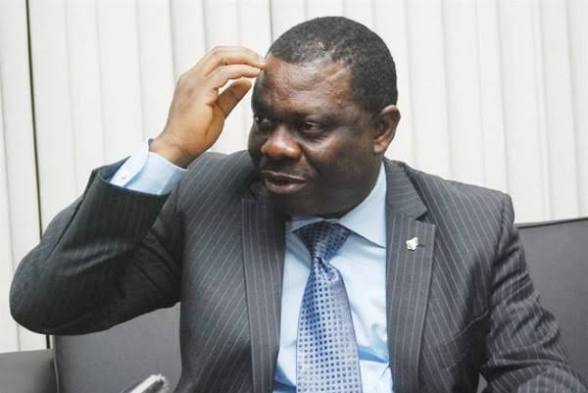
The Frontline runner of the Benue State governorship election come 2027 in Benue State under the platform of the Peoples Democratic Party, PDP and former Attorney General of the Federation, Chief Michael Kaase Aondoakaa, SAN has top the list of the final flagbearers to run for the poll come 2027.
The Benue State governor and candidate of the All Progressives Congress (APC), Rev. Fr. Hyacinth Alia and Prof. Terhemba Shija of the Nigeria Democratic Congress (NDC) have made the final list of governorship candidates released by the Independent National Electoral Commission (INEC) for the February 6, 2027, governorship election.
Other candidates on the list are Herman Iorwase Hembe of the African Democratic Congress (ADC), Nyibiam Kwaghshir of the Action Democratic Party (ADP), Adagba Iorhen of the Allied Peoples Movement (APM), Mercy Ujah Engole of the Action Peoples Party (APP), Dominic Ochenehi of the Democratic Leadership Alliance (DLA), Mathias Terwase Byuan of the Labour Party (LP), Terese Paul Wombo of the National Rescue Movement (NRM), Roseline Ada Chenge of the People’s Redemption Party (PRP), and Simon Ocheme Ogbe of the Zenith Labour Party (ZLP) respectively.
Chief Michael Aondoakaa, SAN, had promised to establish specialised geriatric units in hospitals across the state to provide free basic healthcare and minor surgical procedures for elderly citizens if elected governor in 2027.
He maintained that the the initiative would form part of his administration’s broader agenda on healthcare, security, pensioners’ welfare, infrastructure development and prudent management of public resources.
The PDP candidate said government had both a moral and constitutional responsibility to cater for citizens who had spent their productive years contributing to the development of the state.
According to him, the proposed geriatric units would be specially equipped to provide elderly people with quality and specialised medical care in a conducive environment.
He said basic healthcare services and minor surgical procedures would be provided free of charge to senior citizens under the proposed programme.
“We have a duty to care for our elderly people who are in their late 60s, 70s, 80s and older.
“Beyond government responsibility, it is part of our African culture to honour and support those who have worked hard and sacrificed for society. They deserve access to quality healthcare and dignity in old age,” Aondoakaa said.
He said his administration, if elected, would place healthcare and security among its foremost priorities, stressing that the two sectors were fundamental to the wellbeing and development of the state.
“Our healthcare system must be responsive to the needs of ordinary people, especially the vulnerable and the elderly.
“At the same time, government must take seriously its responsibility to protect lives and property because security is the foundation of development,” he stated.
On the recurring debate over livestock management and ranching in the state, Aondoakaa maintained that ranching should primarily remain a private business venture, with government creating the necessary environment for private investors and livestock owners to operate.
“Ranching is a private enterprise. Government’s role is to create an enabling environment, not to take over the business itself,” he said.
The PDP candidate also expressed concern over the hardship faced by retired civil servants in the state, particularly those affected by outstanding pensions and gratuities.
Aondoakaa argued that workers who dedicated several decades to the service of the state should not face hardship and uncertainty after retirement.
“Those who spent their productive years serving the state should not be abandoned in retirement.
“Pensioners are entitled to their benefits and should be treated with dignity and respect,” he said.
He further argued that the payment of salaries, pensions and gratuities should not be portrayed as extraordinary achievements by any government, describing them as fundamental obligations arising from the relationship between the state and its workforce.
“Salaries and pensions are not favours. They are obligations arising from the relationship between government and its workers.
“Fulfilling those obligations should be routine and not something that is celebrated as an extraordinary achievement,” Aondoakaa added.
On infrastructure, the PDP governorship candidate promised to adopt a more consultative, professionally driven approach to conceiving and executing major government projects.
He said his administration would subject major projects to rigorous scrutiny while involving relevant ministries, technical experts and other stakeholders to ensure that public funds were properly utilised.
“There will be proper consultation before major projects are undertaken. Our focus will be on infrastructure that improves the lives of the people and delivers measurable value for public funds,” he stated.
Aondoakaa also pledged to make greater use of the expertise and institutional knowledge available within the state’s civil service.
He described career civil servants as a reservoir of technical competence and institutional memory, saying their knowledge should be better utilised in government planning and project implementation.
“Our civil servants possess invaluable knowledge and experience. They understand how government works and should be actively involved in planning and implementing development projects. We must make better use of that expertise,” he said.
The former Attorney General said his administration would also prioritise policies capable of translating public resources into tangible improvements in the lives of residents.
News
ENGR. BELLO BABAYO BELLO CELEBRATES GOVERNOR INUWA YAHAYA AT 65, COMMENDS HIS LEGACY OF TRANSFORMATION

The Executive Director, Network, Niger Delta Power Holding Company (NDPHC), Engr. Bello Babayo Bello, has paid glowing tribute to the Governor of Gombe State, His Excellency Muhammadu Inuwa Yahaya, on the occasion of his 65th birthday, describing him as a visionary leader whose administration has redefined governance and accelerated development across the state.
Engr. Bello, in a congratulatory message made available to journalists, said Governor Inuwa Yahaya’s journey in public service has been marked by discipline, integrity, and an unwavering commitment to the progress of Gombe State and its people.
According to him, the Governor’s leadership has produced measurable improvements in critical sectors of the state’s economy while fostering a culture of transparency, accountability, and prudent resource management.
“As Governor Inuwa Yahaya celebrates his 65th birthday, Gombe State has every reason to celebrate a leader whose vision has continued to shape the future of the state. His commitment to good governance, infrastructural renewal, economic diversification, and human capital development has laid a strong foundation for sustainable growth and prosperity.”
Engr. Bello noted that beyond physical projects and policy achievements, the Governor’s greatest strength lies in his ability to inspire confidence, unite diverse interests, and build consensus around the collective aspirations of the people.
He described Governor Inuwa Yahaya as a statesman whose calm disposition, strategic thinking, and inclusive leadership style have earned him widespread respect across political, business, and community circles.
“The Governor represents a rare blend of experience, wisdom, humility, and courage. His leadership has demonstrated that genuine development is achieved not merely through promises but through deliberate actions and a clear sense of purpose. His accomplishments today stand as enduring testimony to his dedication to public service.”
The NDPHC Executive Director further stated that the Governor’s developmental strides have elevated the profile of Gombe State and strengthened the confidence of investors, development partners, and stakeholders in the state’s future.
He added that Governor Inuwa Yahaya’s administration has become a reference point for effective governance, with policies designed to create opportunities, improve livelihoods, and promote long-term economic stability.
“As he marks this remarkable milestone, we celebrate not only the years he has spent on earth but the positive impact he has made in the lives of countless people. His legacy is one of service, vision, and transformational leadership.”
Engr. Bello prayed for Almighty God to continue to bless the Governor with sound health, greater wisdom, and renewed strength as he continues to serve the people of Gombe State and contribute to Nigeria’s development.
“On behalf of my family, associates, and well-wishers, I extend heartfelt congratulations to His Excellency, Governor Muhammadu Inuwa Yahaya, on his 65th birthday. May the years ahead bring even greater accomplishments, fulfillment, and continued service to humanity.”
Signed:
Engr. Bello Babayo Bello
Executive Director, Network
Niger Delta Power Holding Company (NDPHC)


Intelligentsia Machinery Celebrates Seyi Tinubu, Hails Contributions to Enterprise, Philanthropy, Youth Empowerment
APC BLASTS ATIKU OVER ‘BOLA’ REMARK ABOUT TINUBU

2027: OPCI President Cautions Against Fake Prophesies

-
 Uncategorized6 years ago
FG, states urged to harness flooding for ranching, others with technology – Agbaje
-
 Headlines11 years ago
Breaking: EFCC seals Borno House of Assembly, as Hon members take to their heels
-
 News12 years ago
Nigeria Security Operatives Stage Manhunt For Homosexual Perpetrator
-
 News10 years ago
How 21-year-old Girl fled community over accusation of lesbianism
-
 News11 years ago
Yobe Gov Moves Against Deputy
-
 Opinion7 years ago
7 signs she has friend zoned you
-
Technology5 years ago
Online job placement company headhunts women
-
 Headlines10 years ago
Borno Dep Gov Abducts Another Church Leader