
News
China maximumly reduces COVID-19’s impacts on economic, social development

By Zhong Yin, People’s Daily
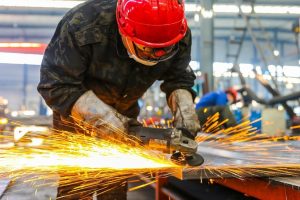
As China optimizes its pandemic response measures, regions across the country have resumed work, industrial production and commercial activities.
A tunnel of the Shenyang-Baishan high-speed railway in Baishan city, northeast China’s Jilin province has resumed construction; in the Haikou International Duty Free City in south China’s Hainan province, consumers are lining up in front of cashiers; an enterprise in Changde, central China’s Hunan province recently received a 20-million-yuan ($2.87 million) export order…
In 2020, China became the first major economy to attain positive economic growth; in 2021, the country’s GDP topped 114 trillion yuan, with its two-year average growth standing at 5.1 percent; this year, the Chinese economy withstood pressure and kept consolidating the trend of recovery.
China has struck a balance between implementing COVID-19 response measures and stabilizing growth, between promoting development and keeping a red line in pandemic control, and between addressing short-term demands and pursuing long-term goals.
While safeguarding the lives and health of its huge population, the country has eradicated absolute poverty, built a moderately prosperous society in all respects, and got off to a good start in implementing the 14th Five-Year Plan, embarking on a new journey toward building a modern socialist country in all respects.
Practices proved that China has explored a path that well coordinates pandemic control and economic and social development. The country has to the maximum extent protected people’s lives and health, and reduced the impacts from COVID-19 on economic and social development to the fullest.
Coping with COVID-19 is a major test of the century, in which the most important thing is to ensure the safety of the people while advancing economy and livelihood. In the recent three years, China has constantly adjusted and optimized its prevention and control measures in accordance with the new features of the variants and the development of the pandemic. It has always been seeking a balance between COVID-19 response and economic development.
Over the recent three years, China has offered over a trillion yuan in tax relief for individual businesses and seen its annual grain output standing at more than 650 billion kilograms. It has launched a series of signature projects to promote high-quality development and released domestic demand through halving vehicle purchase tax and issuing consumption coupons.
China has coped with difficulties with science-based policies. It front-loaded and strengthened macro policies and accelerated the targeted implementation of micro policies, which boosted the confidence and relieved the burden of market entities. The country’s efforts stabilized the general economic and social development and realized economic recovery.
Addressing both pandemic response and economic development, China has demonstrated its strategic composure in complicated situations, as well as its capability in effectively coordinating COVID-19 prevention and control and economic and social development.
Now China has come to a new stage of pandemic response and optimized its control measures in accordance with the dynamics of COVID-19. It is earnestly implementing the new control measures, ensuring medical supply and services for the people, focusing on the control work for seniors and people with underlying diseases, ensuring people’s health and preventing patients from developing critical symptoms.
By optimizing control measures, enhancing coordination, and ensuring organized implementation, the country will successfully cope with the currently rising infections and maintain a sound social order.
At present, the momentum for China’s rapid economic rebound is being accumulated and released. The Chinese economy enjoys strong resilience, huge potential and strong vitality. The fundamentals sustaining China’s long-term economic growth remain unchanged, and so do the factors supporting the country’s high-quality development.
It is believed that as China further implements its new COVID-19 response measures and the country’s policies to stabilize its economy continue taking effect, China’s economic and social vitality will be released to the maximum extent, contributing to the country’s economic recovery.
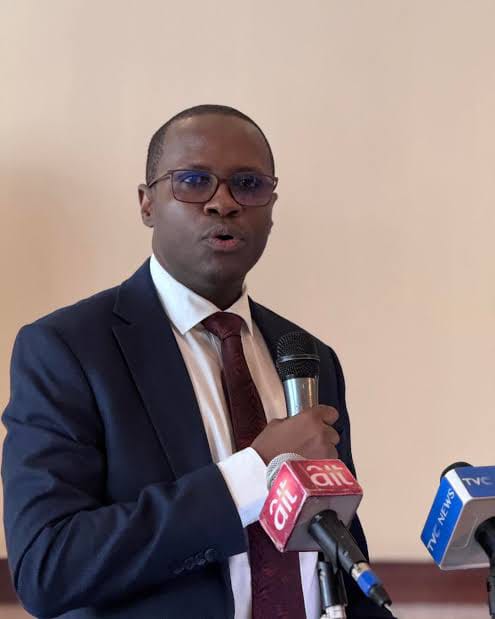
Barely a week ago, the Independent Corrupt Practices and Other Related Offences Commission once again proved that Nigeria’s anti-graft war is far from a toothless bulldog. Chairman Dr Musa Adamu Aliyu, SAN, disclosed to State House correspondents in Abuja that his commission had unearthed yet another fake government agency, this time operating brazenly within the Office of the Secretary to the Government of the Federation. The phantom outfit, calling itself the National Brands Development and Made in Nigeria Special Project Office, had somehow managed to secure office accommodation, gain access to public servants, open bank accounts and even wriggle its way into the 2026 national budget, all without any legitimate presidential authorisation.
The discovery was not accidental. It emerged from the ICPC’s dogged investigation into the earlier scandal involving the fake Presidential Foreign Intervention Promotion Council, an outfit promoted by one Adeniyi Adeyemi Matthew that had similarly infiltrated government structures before Aliyu’s team blew the lid off it. Following his Friday briefing to President Bola Ahmed Tinubu, the President ordered the immediate arrest of George Buchi Nwabueze, identified as the man behind the new fake agency, and directed the suspension of three permanent secretaries in the OSGF: M.S. Danjuma, Nandungu Gagare and Richard Pheelangwah, over the circumstances that allowed the fraudulent office to thrive under their watch. Investigators further found that the outfit had built an elaborate structure complete with an executive director, zonal directors, state coordinators and even foreign representatives, a level of sophistication that speaks to how deeply corruption can burrow into government machinery when vigilance slips.
The ICPC did not stop at exposing the fraud. It went further to indict the Budget Office of the Federation for negligence, establishing that officials had processed and onboarded the phantom council into the 2026 Appropriation Act despite glaring gaps in its documentation, relying instead on informal engagements and unverified scanned approvals rather than due diligence. It was a sobering reminder that corruption does not always announce itself with the theft of physical cash; sometimes it hides in the quiet failures of institutional process, waiting for a vigilant commission to catch what ordinary oversight missed.
This latest exposure is only the newest chapter in what has been a remarkably consistent record for Aliyu since he took the reins as the Commission’s fifth substantive chairman. In his first year alone, he reported cash recoveries of nearly ₦30 billion domiciled in ICPC recovery accounts, alongside almost ₦11 billion recovered as Value Added Tax and remitted to the Federal Inland Revenue Service, and ₦10 billion clawed back from the COVID-19 vaccine fund and returned to the treasury. Forfeited assets in that period alone were valued at ₦2.5 billion plus close to a million dollars in foreign currency.
The momentum has not slackened. By 2024, the Commission had recovered more than ₦20 billion in cash and properties from corrupt individuals. The following year proved even more fruitful: 2025 closed with the ICPC announcing recoveries of ₦37.44 billion and over $2.35 million through asset seizures and forfeitures, one of its most significant annual hauls since the Commission’s founding. That year also saw the agency investigate 263 cases against a target of 250, file 61 cases in court, and secure a conviction rate of 55.74 percent, including the notable jailing of a University of Calabar professor for abuse of office.
Beyond the courtroom victories and cash recoveries, Aliyu has placed heavy emphasis on tracking public infrastructure spending through the Commission’s Constituency and Executive Projects Tracking Initiative. As of the middle of this year, that initiative had tracked over four thousand five hundred public projects worth more than ₦22.5 trillion nationwide between 2023 and June 2026, recovering stalled projects valued at over ₦507 billion and generating an estimated ₦385.6 billion in savings for government coffers. Separately, the Commission has pointed to recoveries exceeding ₦130 billion drawn from public projects worth more than ₦35 trillion, alongside court-ordered forfeitures including properties worth over ₦5 billion tied to the Federal Mortgage Bank of Nigeria and nearly ₦942 million recovered from a 2024 payroll fraud scheme.
Taken together, the figures tell a story of an anti-corruption agency that, under Aliyu’s watch, has shifted from mere rhetoric to measurable results, running into hundreds of billions of naira reclaimed, saved or redirected back into the Nigerian treasury. Yet the chairman himself has been candid that the fight is far from over. He has repeatedly appealed to the National Assembly for improved funding, warning that inadequate resources continue to hamper the Commission’s manpower, logistics and operational capacity, even as staff morale suffers under the weight of high-risk investigative work. He has also pushed back firmly against suggestions that the Commission is being weaponised for political witch-hunting, insisting that its work is driven strictly by evidence and due process rather than political considerations.
If the recent unmasking of yet another ghost agency within the corridors of government is any indication, Nigerians can expect the ICPC under Musa Aliyu to keep peeling back the layers of institutional rot, one budget line, one phantom office, and one recovered billion at a time.
By: Inuwa Bwala.
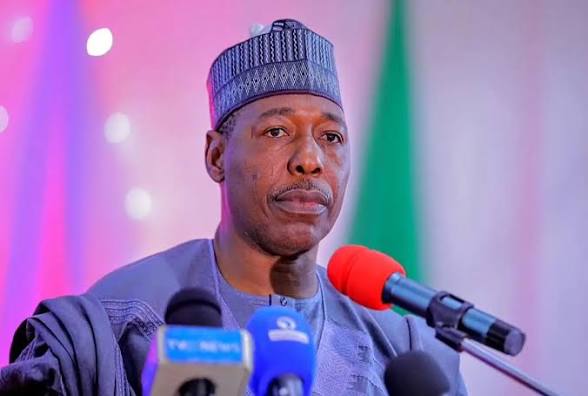
I have read a lot of tributes to Borno state Governor, Professor Babagana Umara Zulum on his 57th birthday anniversary.
In most, Nigerians celebrate many things about Professor Babagana Umara Zulum.
To many, his unique leadership style, to others, his developmental strides and yet to others his many ventures into danger zones, the rebuilding of schools, his sleepless nights on duty and many other things.
I want to celebrate something quieter, and maybe more rare: seeing him as the teacher that he is, using
Borno as a big lecture hall, in which he deploys his teaching technique.
I dare say that, Governor Zulum goes to schools unannounced, not for photo shots, but to check attendance, to ask pupils questions, to see if the teacher is teaching. That is a lecturer’s habit.
He commissions hospitals and ask about drug inventory and rosters. That is a supervisor’s habit.
He stands in the rain with displaced families, not to make a speech, but to take notes. That is a researcher’s habit.
Most politicians campaign on promises, but he he is not seeking any position and does not need to campaign. He does things out of passion for true development.
At 57, Zulum reminds me that leadership is not about sitting in the office of power. It’s about sitting on the floor with students, under a tree with farmers, and in the dust with people who have lost everything, and then going back to “prepare the next lesson plan” for Borno redemption.
People often say a leader must choose between the office and the field, the book and the gun, and between the seminar and the street. Governor Zulum seems to have broken that rule by chosing both. And ir is working for Borno.
For me, today, I do not just celebrate a governor turning 57, I celebrate a teacher who took his entire state as his assignment, and refused to submit it half-done.
As the only Governor in Nigeria, who foes not aspire for any other political office after this, he may be retiring into a future only God know about, but one must not fail to state, that, Governor Zulum’s strength lies, not in the paraphenilia of governance but in the dedication of a leader who work, teach to graduate Borno into peace, dignity, and pride.
Happy 57th Birthday, Proffessor Babagana Umara Zulum.
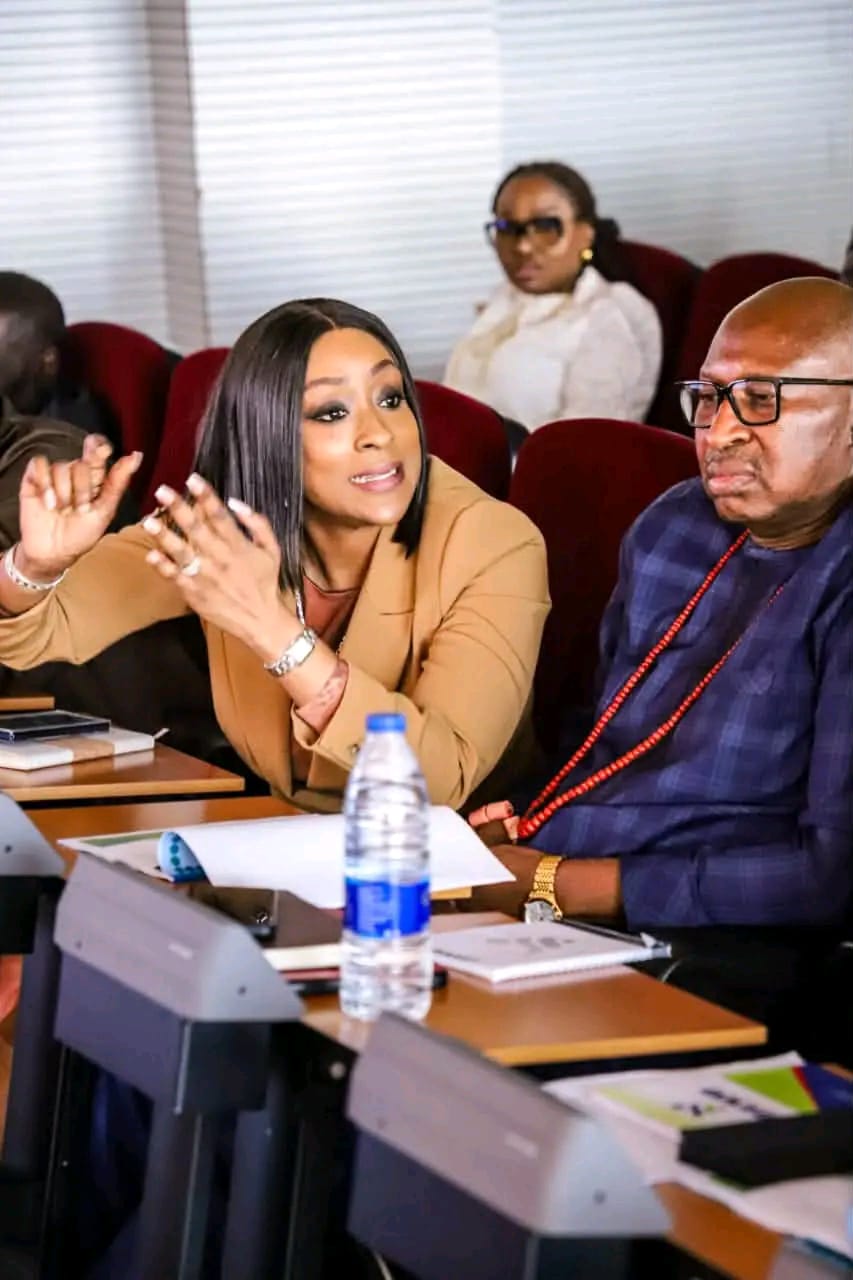
The Niger Delta Power Holding Company (NDPHC) has reaffirmed its commitment to transparency, accountability, and efficiency in project delivery by hosting a high-level refresher and sensitization training for its management team, staff, and stakeholders.Organized by the Human Resources Department at the company’s headquarters, the programme was designed to strengthen institutional capacity, refresh knowledge, and promote greater effectiveness in the discharge of responsibilities.The training was anchored on the theme “Operationalizing by Way of Experimenting the Procurement Processes While Navigating the Pre-Bidding Stage Through to Post Bidding”, and facilitated by DEVD Integrated Project Ltd. Discussions focused on procurement processes, emphasizing due process, compliance, and optimization in power sector project execution.Participants were guided through the critical stages of procurement, from pre-bidding to post-bidding, with facilitators stressing the importance of adherence to established procedures. The session also provided a platform for robust engagement on stakeholder collaboration, highlighting how effective partnerships can drive efficiency and accountability in project delivery.The initiative enjoyed strong backing from the NDPHC Executive Management (EXCO), led by Engr. Jennifer Adighije, FNSE, FINEEE, Managing Director/CEO. She was joined by her team: Engr. Bello Babayo Bello, FNSE, FINEEE, Executive Director (Networks); Engr. Abdullahi Kassim, Executive Director (Generation); Hon. Dr. Steven Andzenge, Executive Director (Legal Services); Hon. Chukwuma Umeoji, Executive Director (Corporate Services); Hon. Omololu Agoro, Executive Director (Finance & Accounts); and Hon. Patrick Obahiagbon, Executive Director (Strategy and Commercial). Their collective presence underscored the importance of the training to the company’s strategic vision and operational goals.Facilitators encouraged participants to apply the knowledge gained to improve operational efficiency and foster stronger collaboration across departments and with external stakeholders. They noted that the lessons learned would help strengthen the company’s institutional framework and ensure that projects are delivered in line with global best practices.The event brought together management staff and other relevant stakeholders, creating an opportunity to exchange ideas and refresh their understanding of procurement processes. It also reinforced NDPHC’s commitment to professional development, transparency, and accountability in its operations.By investing in capacity-building programmes such as this, NDPHC continues to demonstrate its resolve to enhance professional standards and institutional effectiveness. The company emphasized that the training reflects its broader vision of building a stronger, more accountable institution capable of delivering sustainable power solutions to Nigeria.The sensitization exercise forms part of NDPHC’s ongoing efforts to ensure that its workforce remains equipped with the skills and knowledge required to meet the demands of the power sector. It underscores the company’s belief that continuous learning and adherence to due process are essential for achieving its corporate objectives and delivering value to stakeholders.


Multinational automakers extend ties with Chinese firms, affirming confidence in China’s market certainty

China’s Ecological and Environmental Code: Original value and global contributions
Japan’s new defense white paper only about ambition, lies

-
 Uncategorized6 years ago
FG, states urged to harness flooding for ranching, others with technology – Agbaje
-
 Headlines11 years ago
Breaking: EFCC seals Borno House of Assembly, as Hon members take to their heels
-
 News12 years ago
Nigeria Security Operatives Stage Manhunt For Homosexual Perpetrator
-
 News10 years ago
How 21-year-old Girl fled community over accusation of lesbianism
-
 News10 years ago
Yobe Gov Moves Against Deputy
-
 Opinion7 years ago
7 signs she has friend zoned you
-
Technology5 years ago
Online job placement company headhunts women
-
 Headlines10 years ago
Borno Dep Gov Abducts Another Church Leader