Connect with us

News

Buhari receives Africa Peace Award

Published

on

Buhari receives Africa Peace Award

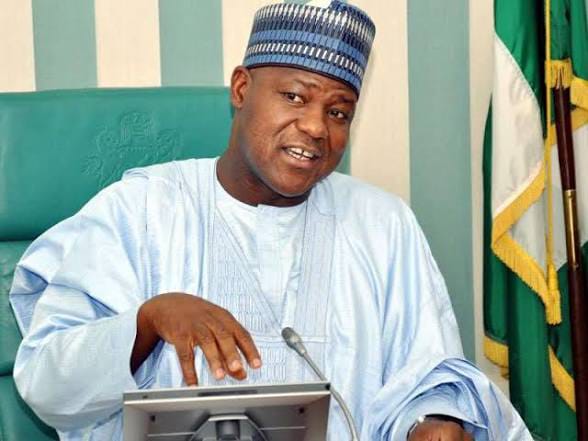
President Muhammadu Buhari on Tuesday in Nouakchott, Mauritania, urged leaders to place a premium on youth development, with more seriousness and actionable ideas in promoting skills acquisitions, while discouraging idleness.

Mr Femi Adesina, the President’s spokesman, in a statement, said Buhari made the call while speaking at the African Conference for Peace, 2023, on Tuesday.

According to the Nigerian leader, idleness of youths and non-inclusion in discussing issues that shape their lives and the future portend liability for the continent, especially in religious fundamentalism and extremism.

The president, who was honoured by the Abu Dhabi Peace Forum with “Award for Strengthening Peace in Africa”, said there was a need to inculcate values and principles of tolerance and peace in educational institutions, and particularly, among the youths.

He said: “African leaders and decision makers should ensure that democratic principles and good governance form the basis for management of affairs in every country in Africa, noting that peace, security and good governance are inseparable.

“There is the need also for African stakeholders, that is, the government, private sector and the Civil Society Organisations, to make concerted efforts to support existing mechanisms and initiatives to build strong and virile institutions.

”Such institutions will effectively support good governance which, inter alia, leads to the development and progress of our countries and continent.

“African leaders must reaffirm their commitment by demonstrating political will required for ownership of African Peace and Security Architecture and in the implementation of African Governance Architecture.

“We must also adjust the effectiveness of the early warning system and conflict prevention and adopt policies aimed at resolving the crisis of de-radicalisation through continuous dialogues and negotiations,’’ he said.

Buhari noted that efforts must be concretized towards the curtailment and possible prevention of the circulation of Small Arms and Light Weapons, as well as the festering of the foreign fighters into the African continent.

The president called for the imperatives of the next Summit of the African Union to take a holistic review of the challenges that continue to fester in Libya with the hope of finding pragmatic African approach to resolving the over a decade-old instability in Libya.

He added that the challenges had made Libya a safe-haven for all kinds of weapons and foreign fighters whose profound impacts stare all in the sub-regions and Africa.

The Nigerian leader told the forum that global terrorism, banditry and other trans-national crimes had continued to pose enormous challenges not only to Africa but to global peace and security.

According to him, these phenomena have become perennial threats to sustained economic development and growth.

He, however, revealed that Nigeria and other regional bodies in Africa and the rest of the world had been working assiduously to deal with these existential threats to the very existence of humanity.

”For us in Nigeria, we continue to engage bilaterally and multilaterally to comprehensively win the war against Boko Haram insurgency and other related terror groups through kinetic and non-kinetic approaches.

“When I assumed power in 2015, Boko Haram held about two thirds of Borno State, half of Yobe State, and a couple of Local Government Areas in Adamawa State, all in the North-East of Nigeria.

”We have been able to retrieve these swathes of territories by investing over a US$1 billion to acquire hard and soft ware weaponry from the US and other friendly countries to carry out sustained operations against insurgency since 2015.

“Our Armed Forces and those of our partners in the Multinational Joint Task Force (consisting of Chad, Niger, Cameroon, Benin Republic and Nigeria) continue to demonstrate great bravery while paying the ultimate price in securing our collective freedom.

”Despite the difficult times we face, we continue to spend very scarce and lean resources to ensure that we have a well-resourced military force to take on this task.

”Ideally, these are resources that could be spent on Education, Healthcare, infrastructure and other social services, but without peace, we have learnt the hard way that our children cannot go to school or seek good healthcare,” he stated.

He also disclosed that the shrinking of Lake Chad had resulted in dire consequences of the people of the region losing their traditional source of living which culminated into the youths being recruited by the terrorist groups who were seeking for means of livelihood occasioned by difficult economic conditions.

He explained that the scenario created serious instability and served as a litmus test for member countries of the Lake Chad Basin Commission (LCBC) in devising means to restore the livelihoods within the region.

“As a corollary to containing this development, the Lake Chad Basin Commission (LCBC) has begun implementing programmes to safeguard the ecosystem of the basin, including seeking global support to return the lake to an economic hub it was known for in the past.

“Although, we are winning the war, however, as a country and sub-region, we continue to be negatively impacted by events in Libya, Central Africa Republic, The Sahel and the war in Ukraine.

”Our region, is awash with all sorts of small and light weapons that continue to be freely in circulation, orchestrated by the impact of foreign fighters.

“We must, therefore, support peace initiatives to bring political stability in crisis-ridden areas such as Libya, Central African Republic and other parts of the Sahel region.

”This is to discourage the spread of insurgency, other criminal groups, as well as arms and foreign fighters in these locations and continent-wide,” he stated.

President Buhari noted that it was imperative for the African countries, through the African Union, to renew initiatives for finding African Solutions to the challenges of Libya.

This, he said, had continued to remain very volatile and unstable, hoisting not only lack of peace and stability in that country, but development in the Sahel, Central and West Africa as well as the Lake Chad Regions.

“Too many external interests have pestered on the challenges of Libya for too long and regrettably compounded the search for sustainable resolution.

”This has left our sub-regions far more fragile and safe haven to all negative influences to regenerate which have ultimately remained threats to peace, stability, development and progress of our regions and the rest of Africa.”

The president expressed the hope that the next African Union Summit next month, would revisit this matter, in a comprehensive and pragmatic manner.

According to him, this has become imperative to free the regions and continent from the cycles of violence, instability, lack of development and progress in the sub-regions of Africa.

He noted that Africa is well-endowed with resources that could easily sustain not only the continent, but most of the world.

“It is my hope that President Macky Sall, as President of the African Union, would take up this challenge at the continent’s next Summit, to refocus our attention, to finding indigenous sustainable solutions to Libya as indeed the entire Peace and Stability Architecture of our continent.

“To conclude my address, I wish to align myself with the Declarations reached at the two previous series of the Conference,” he said.

Buhari thanked the Abu Dhabi Forum for Peace under the tutelage and sterling leadership of Shaykh Abdallah Bin Bayyah, for the honour of nominating him as the recipient of the “African Award for Strengthening the Peace”.

“It is indeed a recognition that speaks volume to the ultimate goal of collective efforts by African leaders to engender peace and stability as prerequisites for development in our continent.

“This event is taking place amidst growing armed conflicts, exacerbated by extremists’ ideology rooted in misinterpretation of religious precepts, and of course widespread deprivations of the citizens of Africa and other parts of the world.

“These sad developments have, for many decades, become worrisome that they preoccupy all governments and well-meaning organizations, as well as individuals in Sub-Saharan Africa and beyond.

“Realizing the danger posed by the growing insecurity to the progress African countries have achieved in their political and socio-economic advancement since gaining independence from their colonial masters, it is commendable that the Government of Mauritania, in collaboration with the Abu Dhabi Forum for Peace, launched the First edition of the Conference in 2020.

”The inaugural Conference deliberated on: “The Role of Islam in Africa: Tolerance and Moderation Against Extremism and Sectarianism”.

“The theme of the Third edition of Peace Conference, “Enter all in Peace” still corroborates the lingering scourge of insecurity, with linkages within and outside of the region, thereby necessitating the imperative for continued concerted engagements with governments and international partners towards its amelioration, if not outright eradication,” he further noted.

President Buhari paid tribute to the relentless drive and courage of Sheikh Abdallah Bin Bayyah, for his initiative to promote peace through the process of combating extremists’ ideas that incubate violence in societies.

“Your scholarly teachings should be given due dissemination to counter the terrorists’ narrative misrepresenting Islamic thoughts,” he said.

He stated that it was his strong belief that if leaders were able to re-commit themselves in the right directions with our strong political will, Africa would be the better for it.

Buhari appreciated President El-Ghazouni and the Government and people of Mauritania for hosting the peace conference.

In his remarks, President of the Forum for Promoting Peace in Muslim Societies, Shaykh Abdallah Bin Bayyah, said the 2023 conference theme was based on the recommendations of the “Nouakchott Declaration” that emerged from the inaugural conference.

The declaration, which aims to deconstruct the religious basis of extremist speeches and to limit violence based on religious arguments, was enshrined as a reference document in the African Vision for Peace at the 33rd Summit of Heads of State of the African Union.

According to Bin Bayyah, the 2023 conference aims to strengthen the implementation of the Nouakchott Declaration and grow its popularization.

“We want to raise awareness among African elites, spiritual elites and the youth, of the absolute priority that must be given to peace, and the need to implement concrete actions to promote and entrench it.

“The promotion of peace is the only possible way to guarantee access to prosperity and economic and social development,” he noted.

He said that women would be specifically included during the three days of reflection, debate and development of concrete peace building initiatives.

While welcoming African leaders and scholars to the peace conference, the President of Mauritania congratulated President Buhari for being singled out for the award, among other African leaders.

He said the award was given to Buhari for providing good leadership and promoting peace in a multi-ethnic, multicultural and multi-linguistic country like Nigeria, and extending his experience and wisdom to other African countries.

The African Conference for Peace 2023 aims to strengthen the implementation of 2022 Nouakchott Declaration by continuing to address the issues of conflict, misused concepts of Jihad, illegal immigration, girls’ education, and promotion of peace and development.

 

Continue Reading
Click to comment

Leave a Reply

Your email address will not be published. Required fields are marked *

News

CSOs Urge Senate to Halt Wasteful NNPCL Probe, Focus on Sector Reforms

Published

on

By

A Coalition of Civil Society Organisations on Transparency and Accountability, has called on the Nigerian Senate to discontinue what it described as a misdirected and embarrassing probe into an alleged missing ₦210 trillion from the Nigerian National Petroleum Company Limited (NNPCL), urging lawmakers instead to concentrate on substantive reforms in the petroleum sector.

The Coalition in a press statement jointly signed by Comrades Danesi Momoh Prince and Igwe, Ude-Umanta, Conveners for Empowerment for Unemployed Youth Initiative and Guidance of Democracy and Development Initiative respectively, criticised the ongoing investigation as a circus show that lacks factual basis and wastes public resources.

According to the CSOs, “since last year, the Senate of the Federal Republic of Nigeria through its Public Accounts Committee has embarked on a senseless rigmarole and shadow chasing in the name of recovering N210 trillion naira missing (only in their imagination or mischief) from the NNPCL.

This circus show is meant for the committee to appear to be doing something, thereby inadvertently tarnishing the images of those the so called investigation points at and infuriating uninformed Nigerians against them. We insist that the Senate knows deep in their hearts that no such amount of money is missing. So only them can explain what they are actually up to.

“The claim of a missing ₦210 trillion is imaginary and unsubstantiated. The Senate’s continued focus on the allegation diverts attention from critical issues affecting Nigeria’s oil and gas industry. We are deeply concerned that the Senate is investing time and taxpayer money into probing figures that have no credible backing.

“This approach not only misleads the public but also undermines the seriousness of legislative oversight. It is our informed position that the Senate should prioritise pressing challenges in the petroleum sector, including transparency in oil revenue management, fuel subsidy concerns, regulatory inefficiencies, and the implementation of the Petroleum Industry Act (PIA).

“Already, the Economic and Financial Crimes Commission (EFCC) has already looked at the records under review. We believe that if there are further questions, those involved will answer them or face the consequences there of. It is not for the Senate to continue to create the impression that some people may have stolen N210 trillion of public money. It is not correct under the circumstance and it should stop. This appears to be pure legislative shenanigans.

“Sensational and unfounded probes can risk eroding investor confidence and damaging the credibility of Nigeria’s governance institutions. Since the petroleum sector remains the backbone of Nigeria’s economy, what is needed now is focused, data-driven oversight as against the clout chasing investigations.

The Coalition equally charged the Nigerian Senate to come clean and sanitise their house against the myraid accusations and allegations that have trailed their activities

“We think the Senate should rather be sober at this time the National Assembly is being accused of legislative rigging of the 2026 Electoral Act or deliberate insertion of clauses clearly designed for electoral fraud.

“Let us further remind Nigerians that since the inauguration of the 3rd National Assembly till this 10th one, the National Assembly has never recovered a kobo for Nigeria in all their probes. Instead, a lawmaker has gone to prison for receiving bribe during an orchestrated probe of the oil sector (which is exactly the same as this one by Public Accounts Committee of the Senate).

“Our suspicion based on the antecedents of the National Assembly is that the Senator Aliyu Wadada Public Accounts Committee may be trying to force the accused persons to compromise. This is electioneering time and we know some of the politico-financial undercurrents.

The CSOs concluded by calling for a more responsible and evidence based approach from lawmakers, emphasising the need for reforms that would enhance “accountability, efficiency, and sustainable growth in the sector.

“We all support public accountability. But when they come with deliberate public misinformation, bandied figures and attempt to embarrass those who offered meritorious national service, it must be rejected in the interest of justice and fairness. The Senate should abandon this embarrassment of a so called probe and focus on issues that are relevant to national economy and development.

“Infact, we wish to advise the Senate to help the unemployed, underemployed and masses of the Nigerian people by focusing on how NNPCL can deliver better under the current leadership where the business of the company appears more secret and veiled than security information and activities”.

Continue Reading

News

2027: TMG Plans Mass Mobilisation for Tinubu

Published

on

By

The Tinubu Mega Group (TMG) has ignited what observers are already describing as a nationwide political wave, rolling out an aggressive, multi-layered mobilisation strategy ahead of its historic May 17, 2026 National Convention in Abuja.

In a bold declaration of intent, the group, a formidable coalition of over 1,500 organisations cutting across civil society, professional bodies, labour unions, artisan networks, and grassroots movements, stated that Nigeria is witnessing the rise of an unprecedented national alignment in support of President Bola Ahmed Tinubu.

The development was made known in a statement signed on Monday in Abuja by Kennedy Tabuko on behalf of the National Secretariat. TMG announced that the countdown to May 17 will not be business as usual, but a relentless, coordinated national build-up designed to dominate public discourse, energise supporters, and firmly position the convention as the single most consequential political convergence in recent Nigerian history.

From the following days, the group will flood the media space with daily high-impact engagements, including front-page newspaper features, primetime television appearances, and strategic radio domination across all geopolitical zones. According to TMG, the objective is clear, to ensure that the voice of millions of Nigerians resonates in every corner of the country.

On the digital front, the group is activating a full-scale online offensive, deploying influencers, content creators, and grassroots digital networks to drive viral conversations under coordinated messaging. Daily videos, testimonials, and real-time mobilisation updates will showcase the growing momentum behind the movement.

Beyond the media, TMG revealed plans for simultaneous street-level actions across states, including coordinated road walks, market activations, and community rallies, transforming the build-up into a visible, people-driven movement.

In what it described as a “clear demonstration of unstoppable momentum,” the group confirmed that it will begin releasing milestone figures from its nationwide endorsement drive, building up to the formal presentation of 20 million signatures at the convention.

As the date draws closer, TMG will escalate its activities with a high-profile national media tour, massive outdoor visibility campaigns, and a final wave of coordinated engagements designed to ensure total national attention.

The group emphasised that the May 17 Convention will not merely be an event, but a defining national moment where a broad coalition of Nigerians will publicly and decisively endorse President Bola Ahmed Tinubu.

“This is not just mobilisation, this is a movement. This is the convergence of millions of voices across professions, regions, and social classes. Nigeria is aligning, and the message is unmistakable,” the statement declared.

TMG further assured that all activities will be conducted peacefully and in line with democratic principles, while urging Nigerians to be part of what it described as “a historic show of unity and national direction.”

With preparations now in full throttle, all eyes are on Abuja as May 17 approaches, a date TMG insists will redefine the scale and structure of civic and political engagement in Nigeria.

Continue Reading

News

NITDA Pursues Total Cyber Resilience, Drives Nigeria’s Digital Transformation Agenda

Published

on

By

The National Information Technology Development Agency (NITDA) is intensifying its push to position Nigeria as a globally competitive digital economy, pursuing an ambitious agenda spanning cybersecurity, digital literacy, artificial intelligence governance, and strategic partnerships across the public and private sectors.
Under the leadership of Director General Kashifu Inuwa Abdullahi, CCIE, the agency has been repositioned as a focal point for digital transformation and innovation, managing the national computer emergency response team, implementing the National Digital Literacy Framework, and driving the Strategic Roadmap and Action Plan 2.0, all geared toward building a sustainable digital economy.
The Citizen Watch Advocacy Initiative (CWAI), in a statement signed by its Director of Media and Stakeholders Engagement, Mahmud Bello, said Inuwa’s tenure has recorded measurable gains in staff performance, institutional development, capacity building, and digital skills development for Nigerian youth at a scale not previously achieved since the agency’s establishment.
At a recent stakeholders’ meeting themed “Creating Opportunities, Breaking Boundaries,” the Director General described digitalization as the primary engine for economic transformation in an increasingly interconnected world, warning that Nigeria must deliberately position itself to harness technological advancements or risk being left behind in the global race for innovation. He noted that as Africa’s largest economy by GDP, Nigeria stands at a pivotal crossroads where the digital sector offers a strategic pathway for economic diversification and job creation.
NITDA has already established over 100 information technology centres nationwide to support learning and bridge the digital divide, though the Director General stressed that the long-term sustainability of these infrastructures depends on deeper cooperation across all sectors of the economy.
On the cybersecurity front, Abdullahi sounded a major alarm at the 2026 GITEX Africa Summit, declaring that the era of treating cybersecurity as a routine IT problem is over. Speaking on the theme of Total Resilience, he argued that as artificial intelligence-powered threats grow more elusive and destructive, Nigeria’s defense strategy must evolve into a multi-dimensional approach involving every level of society, from government institutions down to individual citizens.
“Cybersecurity is no longer just a technical issue. It is a strategic imperative for national development. We must think beyond technology alone and build resilience through people, processes, regulations, and infrastructure,” he said.
Citing data showing that 95 per cent of all digital breaches originate from human error, Abdullahi argued that even the most sophisticated encryption is rendered useless when the human element is compromised. NITDA’s response is a drive to turn every Nigerian citizen into what it describes as a “human firewall,” the first and most critical line of defense against AI-driven attacks.
To that end, the federal government has launched a comprehensive National Digital Literacy Programme with a target of achieving 95 per cent digital literacy nationwide by 2030, with an interim benchmark of 70 per cent by 2027. The “3 Million Tech Talent” programme complements this effort, developing Nigerian expertise across cybersecurity, data science, and artificial intelligence through hackathons, innovation challenges, and mentorship schemes.
NITDA is also deepening its institutional partnerships to secure critical infrastructure, working with agencies including the Nigeria National Petroleum Company Limited, the Federal Character Commission, the Corporate Affairs Commission, ICPC, NYSC, SMEDAN, and NigComSat, among others.
In a demonstration of its commitment to policy dialogue, NITDA recently hosted the Director General of the National Institute for Policy and Strategic Studies (NIPSS), Professor Ayo Omotayo, alongside participants of the Senior Executive Course 48 in 2026 for a strategic study tour. The engagement focused on digital innovation’s role in driving sustainable economic growth, with particular attention to what the agency described as the Orange Economy, a creative and intellectual property-driven sector encompassing digital content creation, film animation, and digital art.
“With our youthful population and rich cultural assets, Nigeria is well-positioned to become a global leader in the Orange Economy if we deepen collaboration and investment across the ecosystem,” Abdullahi stated.
At the Nigerian Satellite Week 2026 in Abuja, themed “Harnessing Space Technology for an Extraordinary Nigeria,” the NITDA chief outlined four principles he said should guide digital transformation: enabling rather than controlling the ecosystem; prioritizing networks over institutions; developing talent while supporting innovation; and focusing on platforms rather than isolated projects. He noted that Nigeria’s emerging space technology sector is now a significant economic driver, with the country’s “Sunrise Packet” projected to contribute over 1.5 billion United States dollars to the economy by 2030.
CWAI, which described cyber resilience as “a collective responsibility,” called on all sectors to support NITDA’s initiatives, including platforms such as GITEX Africa, GITEX Nigeria, and Digital Nigeria, which provide visibility for start-ups while attracting investment, partnerships, and mentorship to fuel inclusive national growth.

Continue Reading

Trending

Copyright © 2017 Zox News Theme. Theme by MVP Themes, powered by WordPress.