Connect with us

Economy

Association demands immediate end to fuel scarcity

Published

on

Association demands immediate end to fuel scarcity


The National Association of Energy Correspondents (NAEC) have called on government agencies responsible for regulation and supply to immediately arrest the worsening fuel scarcity in the country.

This is to justify huge public expenditure on internal subsidy.

The association’s secretary, Mr John Meze, In a statement issued on Monday in Lagos said the body of energy editors in Nigeria, lamented that the development had brought untold hardship to Nigerians.

The association said the several hours, which ought to have been put into productive ventures, were wasted at filling stations.

The group which hosted writers from online, print and electronic media organisations specifically called for immediate supply liberalisation in the domestic market.

The association also called for joint management of the government sponsored fuel subsidy scheme, visible and transparent supply monitoring dashboard as well as effective regulation and monitoring of the internal fuel market.

The group condemned the prevailing chaos in the fuel market, challenging the regulators in the industry to come alive.

NAEC pointed out that while scarcity led to chaotic fuel queues across the country, marketers had taken advantage of the situation to profiteer by engaging in sharp market practices which currently manifested in product hoarding.

According to the association, the queues had caused the return of black market operations, diversions and breaking of regulated price ceilings.

The group observed that the sharp market practices cut across all marketing groups, including the Nigerian National Petroleum Company Ltd. (NNPCL) where pump prices had surged from the official N165 per litre to over N300 per litre in some parts of the country despite the uniform pricing regime.

The development, according to the association, has serious implications for the already weakened purchasing power and income of the average Nigerian.

“Already the high cost of petrol is impacting the daily cost of living as seen in transportation costs, energy costs as many homes continue to rely on alternative sources of power due to the poor supply from the grid as well as in high cost of goods and services.

“The traffic situation across the metropolis is also worsening as a result of prolonged fuel queues, causing high loss of man hours that could have been deployed to productive activities,” the group stated.

The NAEC noted that the nation’s “distribution value-chain is broken and worsened by a weak regulatory system.”

The News Agency of Nigeria (NAN) reports that the NNPCL has since the inception of the administration of President Muhammadu Buhari hijacked both the national petroleum subsidy funds and petrol supply responsibility, leading to enthronement of public sector monopoly in the system.

Besides, the national oil company is also the sole manager of the country’s petroleum subsidy funds, with the Group Chief Executive Officer, Mallam Mele Kyari, telling the national legislators: “NNPCL dedcuted subsidy claims at source.”

Thus the role of NNPCL in the market has created linear supply channel that has rendered the domestic fuel market vulnerable to supply chain disruption.

NAEC stated that the nation’s distribution value-chain had been broken.

“It is bad enough that there is no one to hold to account, it is worse that the government has jeopardised the interest of the masses for politics, considering that elections are near,” the association declared.

NAEC described excuses often given by market players including logistics, price regulation and domestic energy subsidy as lame.

The association noted that energy subsidy remained a normal and effective economic growth stimulation strategy still employed by all developed countries of the world to tame the cost of production and guarantee the wellbeing of citizens.

It pointed out that, “the subsidy system in Nigeria has been enmeshed in gross opacity.”

In pushing its recommendations for healing the market, NAEC called on NNPCL to immediately enthrone a transparent subsidy system that would allow the supply figures and cost templates that would subsidy claims verifiable.

NAEC demands that all stakeholder groups should liaise with regulators to establish unassailable templates for subsidy management until the market is deregulated.

“We, therefore, call on government to immediately liberalise petrol supplies in the country in line with best practices.

“Also NAEC recommends that the Nigerian Midstream and Downstream Regulatory Authority (NMDRA), which is responsible for operations compliance and resource accountability, needs to rise to its duty by holding market players accountable for open books, fair play and equal opportunity,” said the group.

It also called on the NMDRA not to fail in providing a public dashboard on the supply flow in the domestic fuel market to allow the public demand for accountable practice from players.

“As this will clear the air of suspicion that the prevailing fuel market crisis is not a political undertaking by managers of the system to siphon funds for political objectives.

The media group also challenged players and groups in the domestic fuel market to embark on self regulation by dealing with errant members that encourage sharp practices at their retail outlets

Continue Reading
Click to comment

Leave a Reply

Your email address will not be published. Required fields are marked *

Economy

JUST IN: FG Halts Planned 15% Import Duty on Petrol, Diesel

Published

on

By: Fabian Apechihin

The Federal Government has suspended the planned implementation of a 15 percent import duty on petrol and diesel.

This was disclosed on Thursday by George Ene-Ita, Director of Public Affairs at the Nigerian Midstream and Downstream Petroleum Regulatory Authority (NMDPRA), who urged Nigerians to avoid panic buying.

President Bola Tinubu had earlier, on October 29, approved the imposition of the tariff following a proposal by the Executive Chairman of the Federal Inland Revenue Service (FIRS), Zacch Adedeji. The approval, conveyed in a letter signed by the President’s Private Secretary, Damilotun Aderemi, was intended to take effect from November 21, 2025.

The proposed policy sought to impose a 15 percent duty on the cost, insurance, and freight (CIF) value of imported petrol and diesel. It was aimed at supporting domestic refineries — such as the Dangote Refinery and modular plants — by making imported fuel less competitive. However, experts cautioned that the move could lead to an increase of up to ₦150 per litre in pump prices and further fuel inflation and transportation costs.

In its latest update, the NMDPRA confirmed that the import duty is no longer under consideration.

“It should also be noted that the implementation of the 15% ad-valorem import duty on imported Premium Motor Spirit (PMS) and Automotive Gas Oil (Diesel) is no longer in view,” the Authority stated.

The agency further assured the public of adequate fuel availability across the country, noting that national stock levels remain within the required sufficiency threshold.

“There is a robust domestic supply of petroleum products — including PMS, AGO, and LPG — from both local refineries and imports, ensuring timely replenishment of depots and retail stations,” the statement added.

NMDPRA cautioned marketers against hoarding, panic buying, or arbitrary price increases, emphasizing that it will continue to monitor the market to prevent any disruption in supply.

“While appreciating the efforts of stakeholders in maintaining smooth and uninterrupted supply, the public is assured of NMDPRA’s commitment to safeguarding national energy security,” the statement concluded.

Continue Reading

Economy

FGN, Sign $400m Deal To Boost Local Steel Production

Published

on

From Hassan Taiye

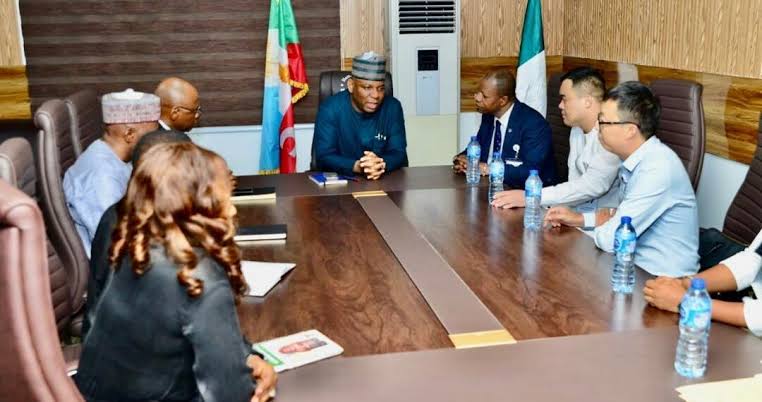
The Federal Government of Nigeria, FGN, through the Ministry of Steel Development, has signed a Joint Strategic Cooperation Declaration with Stellar Steel Company Limited.

Stellar Steel Company Limited is a steel-manufacturing enterprise established to operate in Nigeria, with major investment backing from Chinese parent groups: Galaxy Group and RSIN Group based in Fuzhou, Fujian Province, China.

The company has committed approximately US$450 million for a steel plant project in Ogun State, Nigeria, scheduled to begin operations by mid-2026.

This landmark partnership is aimed at revitalising Nigeria’s steel industry and reducing the nation’s dependence on imported steel products, according to a statement signed by the the Principal Information Officer, PIO, Ijomah Opia, for the director, Information and Public Relations in the ministry.

The agreement, signed in Abuja, on Tuesday 28th October, 2025 will see Stellar Steel invest $400 million in the construction of a modern Steel Plant in Ewekoro, Ogun State. The project will be developed in three phases, with the first phase expected to begin production by 2026.

The Minister of Steel Development Prince Shuaibu Abubakar Audu signed the agreement when he hosted Mr Li, President of Inner Galaxy Group and other members of the Stellar Steel Company Limited in the Ministry’s Headquarters in Abuja.

According to Prince Audu, the collaboration aligns with the federal government’s goal of achieving 10 million tonnes of crude steel production per annum by 2030, a major step toward industrial self-reliance and economic diversification.

The minister further stated that the Federal Ministry of Steel Development would facilitate policy and infrastructure support, including inclusion of Stellar Steel’s logistics projects in the National Infrastructure Plan and access to available fiscal incentives.

Highlights of the cooperation includes the followings:

1.Development of a localised iron ore supply chain to reduce import dependence and save over $1 billion in foreign exchange annually.

  1. Creation of more than 2,000 direct and 20,000 indirect jobs across the steel value chain.
  2. Promotion of green steel production using clean and energy-efficient technologies.
  3. Strengthening of Nigeria’s position as a regional steel manufacturing hub in West Africa.

Audi also said that in return, Stellar Steel would prioritise local recruitment and training, partnering with Nigerian universities to build technical and managerial expertise in steel production.

Prince Shuaibu emphasised that this strategic cooperation marks a new era for Nigeria’s steel industry and demonstrates the government’s commitment to sustainable industrial growth and economic transformation.

In his remarks the leader of the delegation, Mr Li assured the minister that Stellar Steel would respect all agreements reached and would ensure the completion of the project in record time and assured that all safety standards will be observed.

Mr Li was accompanied during the visit by Mr You Xiastian, Vice Chairman of RSIN Group, Mr Jackie Den, Vice President of Inner Galaxy Group and Mr Yin, Director of RSIN Group.

He recalled that the Minister of Steel Development, Prince Audu, performed the groundbreaking ceremony of the Steel Plant in Ogun State sometime in April, 2025.

Speaking at the signing, representatives of both parties emphasised that the partnership would strengthen Nigeria’s industrial base, create jobs, and foster technology transfer in the sector.

Continue Reading

Economy

EU Delegation Strengthens Ties with Nigerian Senate

Published

on

From Hassan Taiye

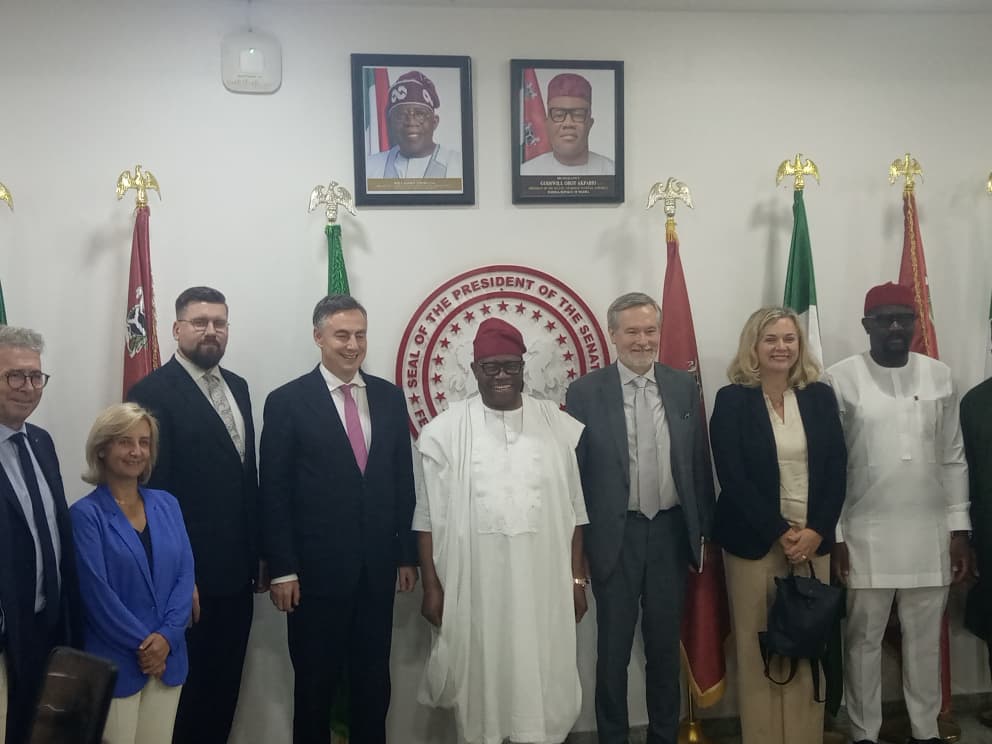
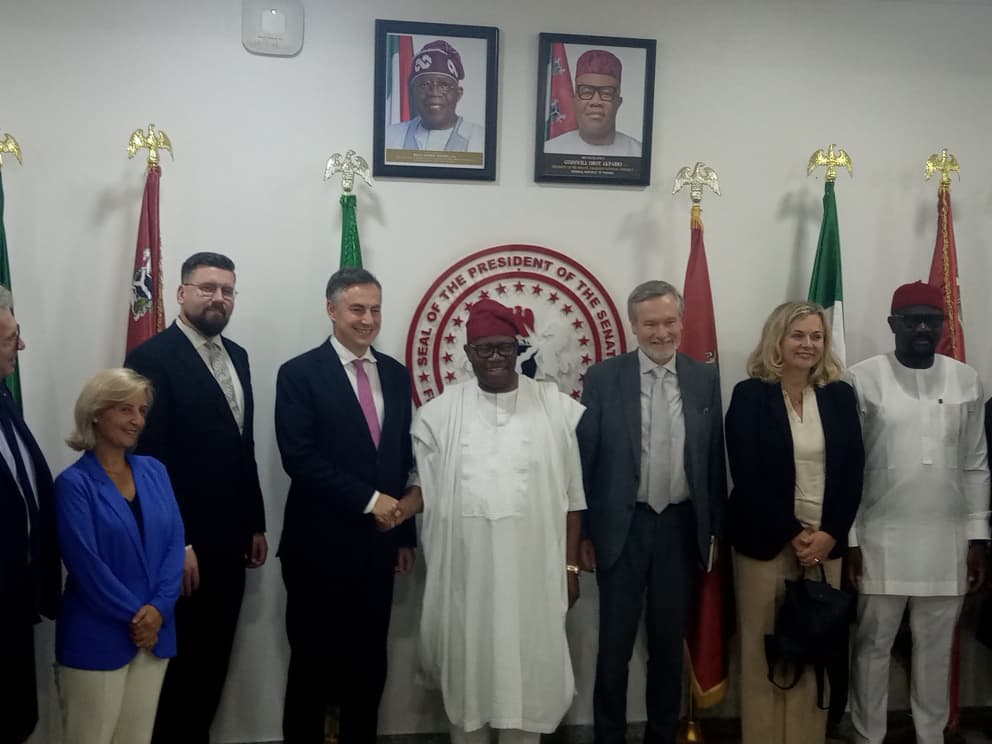
A high-level delegation from the European Union (EU) Parliament’s Foreign Affairs Committee, led by Mr. David McAllister, paid a courtesy visit to the Nigerian Senate today October 28, 2025.

“We are here to deepen our understanding of the situation in West Africa and strengthen our partnership with Nigeria,” McAllister said.

Senate President Godswill Akpabio welcomed the delegation, emphasizing Nigeria’s strategic partnership with the EU. “Nigeria is committed to strengthening ties with the EU, highlighting areas of mutual interest, including security, trade, and governance,” Akpabio said.

The delegation, comprising Ambassador Greta Mylott, EU Ambassador to Nigeria and ECOWAS, Miss Zelaya Zorko, Miss Mata Tamido, Sebastian Tankman, General Christophe Gomart, and Sebastian Buharo, is undertaking a comprehensive tour of West Africa, with stops in Nigeria and Ghana.

During the visit, Akpabio shed light on the challenges facing female representation in Nigeria’s parliament. “Women often vote for male candidates, making it difficult for female candidates to win elections,” he noted.

“The Senate is exploring innovative solutions, including constitutional amendments, to boost female participation in the legislative process, with support from organizations like the Black Women’s Forum.”

The EU delegation’s visit aims to foster greater understanding and cooperation between the EU and Nigeria, addressing shared concerns, such as terrorism, climate change, and economic development.

“The EU is committed to supporting Nigeria’s development efforts,” McAllister assured the Senate, emphasizing the bloc’s interest in seeing a stable, prosperous, and democratic Nigeria.

Their visit also includes participation in the forthcoming International Islamic Conference on Security and Governance in West Africa and the Sahel, scheduled for November 4-6, 2025 at ECOWAS Commission.

Akpabio expressed optimism about the potential for enhanced cooperation, highlighting Nigeria’s readiness to work with the EU to address common challenges.

Continue Reading

Trending

Copyright © 2017 Zox News Theme. Theme by MVP Themes, powered by WordPress.