
News
Fashola’s Claims on 2017 Budget Mischievous and Misleading – Reps


By Aaron Ossai
The House of Representatives has said that the minister of Works, Power and Housing, Mr Babatunde Fashola, SAN, is peddling inaccuracies, misleading and calculated mischief about the 2017 budget in an attempt to blackmail the National Assembly and set it on a collision course with the executive.
In a press statement signed by the chairman of the House of Representatives Committee on Media and Public Publicity, Hon Abdulrazak Namdas, the lawmakers said the minister was fixated on matters of power, rather than issues that will benefit the Nigerian people.
He said there was an obvious attempt to blackmail the National Assembly, paint it as an irresponsible institution, one not concerned with the welfare of the people, and set the Executive and Legislature on an unnecessary collision course on matters of power rather than issues that benefit the Nigerian people, while reiterating that the National Assembly has constitutional powers in Section, 4, 59, 80 and 81 to amend the budget estimates submitted by the Executive.
Citing the recent judicial pronouncement on the issue in the case of FEMI FALANA V the President FRN & 3 Others, Suit No: FHC/ABJ/CS/259/2014 delivered on 9th March, 2016, which reaffirmed the power of the legislature over national budget, Namdas noted that Justice G.O. Kolawole had ruled that,
“The 3rd Defendant ( National Assembly ) was not created by the drafters of the Constitution and imbued with the powers to receive “budget estimates” which the 1st Defendant is constitutionally empowered to prepare and lay before it as a “rubber stamp” parliament, The whole essence of the “budget estimates” being required to be laid before the 3 Defendant, is to enable the 3rd Defendant as the assembly of the representatives of the people, to debate the said “budget proposals” and to make its own well informed legislative inputs into it …… It will be reading into the provisions of Section 81 of the Constitution what the drafters never put into it to say that the 3rd Defendant “is not competent to increase or review upward any aspect of the estimates of the revenues and expenditure of the federation for the next financial year prepared and laid before it by the Defendant”.
Responding to specific issues raised by Mr Fashola, Namdas explained that the decision to redistribute the projects proposed by the ministry was in order to ensure an even spread of projects across all regions, which the proposal of the executive had failed to do.
He added that considering that the funds that were allocated for the 2nd Niger Bridge in 2016 were returned untouched at the end of the year, the National Assembly decided to reduce N5 billion from the 2017 Budget for 2nd Niger Bridge to fund other projects from the South East, leaving N7 billion for the 2nd Niger Bridge.
“The truth is that in the 2016 Budget, N12 billion was appropriated for the 2nd Niger Bridge and not a kobo was spent by the Ministry. Not a kobo. The money was returned. The Ministry could not provide the Committees of the National Assembly with evidence of an agreement on the Public Private Partnership (PPP) or a contract for the 2nd Niger Bridge.
“The projects include – N2.5 billion extra for Enugu/Onitsha Road, N1 billion more for 9th Mile/Nsukka/Makurdi Road; additional N500m for Oturkpa- Makurdi to take care of evacuation of agricultural produce up to Maiduguri; N1 billion more for Ikot Ekpene-Aba-Owerri Road etc. These are strategic Roads in the South-East and North Central parts of Nigeria that had inadequate allocations,” he explained.
Going further, he added that the National Assembly had to intervene to fund some other critical roads that were totally neglected in the Executive Budget proposal, including the Abuja- Kaduna – Zaria – Kano Road that had Zero allocation from the President’s proposal and no contract, even in spite of due process certification.
“N5 billion was provided in the 2016 Budget. It was not utilised. In 2017 Budget, the National Assembly again provided N3 billion for this very critical road that connects many states and where incidents of kidnapping are rife because of bad roads, as we believe that all parts of Nigeria deserve attention or would the Minister also claim that this road has no design?” he queried.
On the Lagos-Ibadan Expressway, the lawmaker noted that leadership meetings of both the Executive and Legislature were held where it was clarified that alternative funding exists for the road through PPP arrangement and the concessionaires had enough money to fund the project, hence the decision to move some funds to other areas of need.
“The Minister of Power Works and Housing is fully aware of this but chose to ignore it. Why spend government money if there is a clear existing funding framework in place and so many ongoing road projects are unfunded?” Namdas asked, adding that the Minister proposed a whopping N17 Billion for only Environmental Impact Assessment (EIA) for Mambila Power plant which the National Assembly felt was misplaced and patently unjustifiable and out of which the Minister himself even wrote to the National Assembly to move some funds from this sub-heads to others.”
He urged the Minister to be mindful of the fact that the Budget of the Ministry of Power, Works and Housing is not his personal budget but that of the Federation.
“The National Assembly and others are also stakeholders in this country, imbued with patriotism to fix Nigeria’s problems. There are certain matters which the National Assembly Committees discover during oversight activities that are corrected during the budget process. There are so many omissions which the National Assembly makes effort to correct on behalf of Nigerians. Even the Ministries also disown allocations contained in their budgets! Should the National Assembly keep quiet and moot and allow infractions patently exposed in the Executive proposals? We think that the Constitution did not design the National Assembly as a “rubber stamp” as eloquently stated by His Excellency, Hon. Yakubu Dogara, the Speaker, House of Representatives”, the spokesman declared.
Namdas said the legislature also queried an omnibus allocation of N20 Billion in the ministry’s budget whose details were not provided by the Minister and felt it would be irresponsible to appropriate funds that are not tied to specific projects and incurred the wrath of the “almighty
Minister”.
The legislators further noted that when an increment made in the budget favours the executive, it does not complain, as seen in the MTEF which had a $2 increase per barrel that was not part of the 2017 Appropriation Bill proposed by Mr. President.
“As a Senior Lawyer, he should be aware of what is called CONCURENT LIST, and the provisions of S. 4(4)(a) and S.4(5) of the Constitution,” the House said, while urging him to familiarise himself with the duties his ministry is saddled with like providing water in Housing Estates so he will not be surprised to see such projects under his Ministry.
Namdas also added that it was a clear breach for the executive to make calculated statements to undermine and distort understandings between the National Assembly leadership and the Executive arm on the 2017 Budget which were made in good faith when all arms should be concentrating on how to grow the economy to exit the recession, which the House of Representatives is committed to doing.
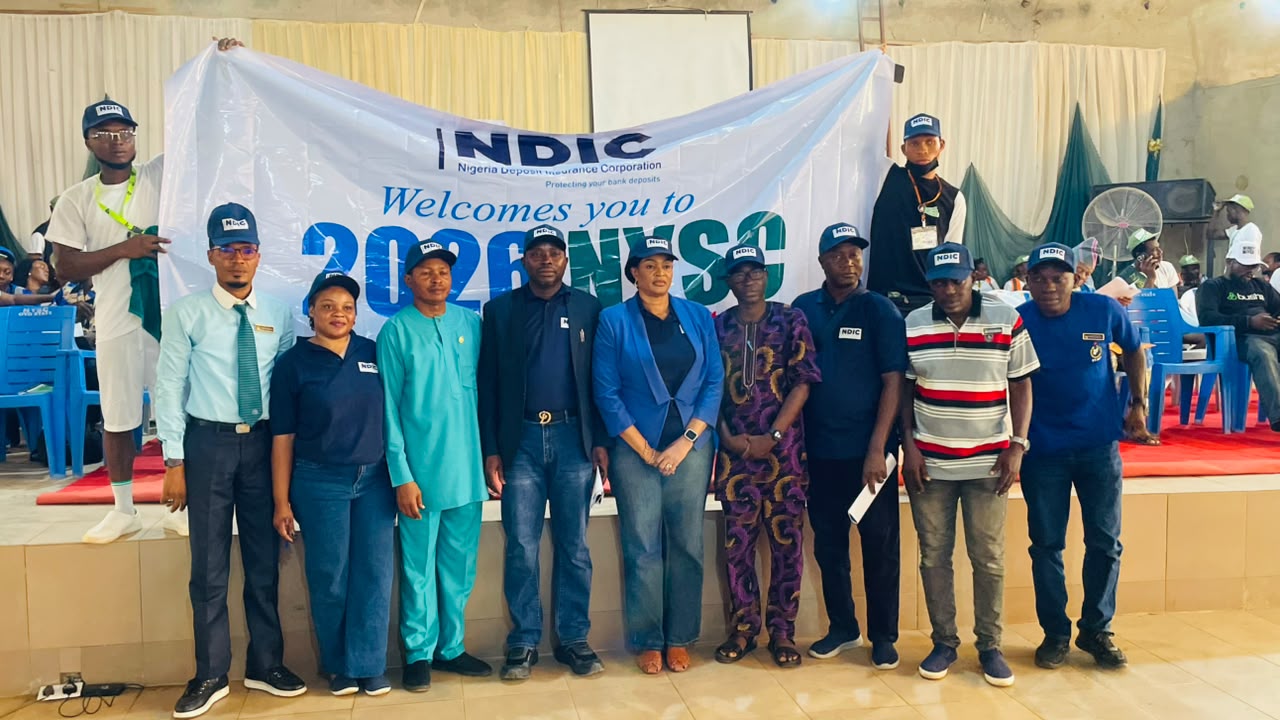
The Nigeria Deposit Insurance Corporation (NDIC) has urged members of the National Youth Service Corps (NYSC) in Oyo State to cultivate a strong savings culture, make informed investment decisions and protect their personal and banking information against financial fraud.
The call was made during a financial literacy and deposit protection sensitisation programme organised for corps members, popularly known as Oyo Kopa, at the NYSC Permanent Orientation Camp in Iseyin, Oyo State.
The programme, which formed part of the Corporation’s public awareness campaign, sought to deepen young Nigerians’ understanding of deposit insurance, promote financial discipline and equip them with the knowledge to make sound financial decisions.
Leading the sensitisation, Mrs Alade Yetunde, Principal Manager, Communications Department, introduced the NDIC and explained its statutory mandate of protecting eligible bank deposits and promoting public confidence in the Nigerian banking system.
To bring the message closer to the audience, she facilitated a short drama presentation, popularly known as a playlet, featuring four corps members. The performance demonstrated how the NDIC protects eligible depositors in the event of the failure of an insured financial institution and highlighted the importance of banking with institutions licensed by the Central Bank of Nigeria (CBN) and insured by the NDIC.
Speaking after the presentation, Mr Adebiyi A. Babatunde, Zonal Controller, Abeokuta Office, emphasised the need for individuals to safeguard their savings by understanding the protection available to them under the deposit insurance system.
He explained that the NDIC provides deposit insurance to eligible customers of insured financial institutions, assuring the corps members that the Corporation remains committed to protecting their deposits within the applicable insurance limits and conditions.
Babatunde urged them to always verify that their financial institutions are licensed by the CBN and covered by the NDIC before depositing their money. He also clarified that eligible savings, current and fixed deposit accounts enjoy deposit insurance protection, subject to the prescribed limits and conditions.
He advised the corps members to be conscious of the status of their banks and make informed decisions about where they keep their hard-earned money.
In his presentation, Mr Adegbenga Fabuyi, Assistant Director, Communications Department, shifted attention to personal financial management, urging the corps members to develop responsible money habits that would provide a solid foundation for their future financial security.
He stressed the importance of savings discipline, advocating the principle of “Save Before You Spend” and encouraging the corps members to set aside a reasonable percentage of their monthly allowances before meeting other financial obligations.
According to him, young people should cultivate the habit of paying themselves first by committing a portion of their income to savings immediately after receiving it, rather than waiting until the end of the month when their resources may have been exhausted.
Fabuyi also underscored the importance of maintaining a separate emergency fund to meet unforeseen expenses, noting that financial preparedness was essential to avoiding unnecessary financial difficulties.
Beyond savings, he encouraged the corps members to explore legitimate investment opportunities through properly regulated institutions as a means of building long-term wealth.
“If you don’t plan to invest, you may find it difficult to build lasting wealth,” he said.
He, however, cautioned them against falling prey to fraudulent investment schemes, urging them to conduct proper due diligence and verify the credibility of investment platforms before committing their funds.
He identified unrealistic promises of unusually high returns within short periods and pressure to invest immediately as major warning signs of possible financial scams. He advised the corps members not to allow the fear of missing out on purported investment opportunities to influence their financial decisions.
Fabuyi further warned against the indiscriminate disclosure of sensitive personal and banking information, including Bank Verification Numbers (BVN), National Identification Numbers (NIN), ATM PINs and other confidential details. He urged them to contact their banks directly whenever they received suspicious requests for such information.
The NDIC delegation comprised Babatunde, Fabuyi and Yetunde, who collectively addressed issues bordering on deposit protection, financial planning, savings discipline, investment security and the need for responsible banking practices.
The corps members followed the presentations with keen interest, gaining practical insights into protecting their deposits, managing their allowances and avoiding financial pitfalls.
The programme ended with a charge to the young Nigerians to imbibe a sustainable savings culture, invest wisely, remain vigilant against financial scams and patronise only financial institutions licensed by the CBN and insured by the NDIC.
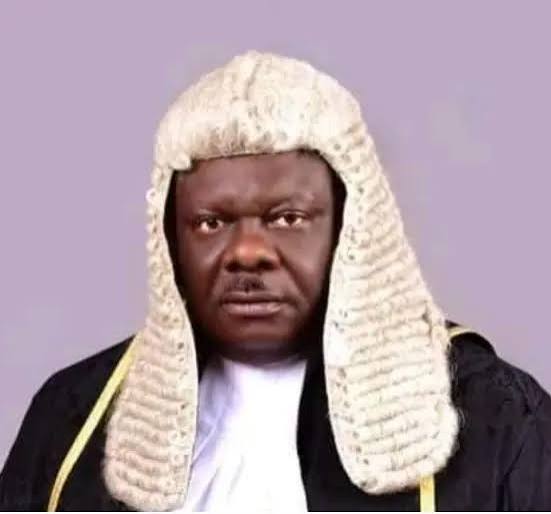
The Federal High Court sitting in Abuja on Monday dismissed a suit by four Benue State indigenes seeking to stop former Attorney-General of the Federation, Michael Aondoakaa, from contesting the 2027 gubernatorial poll in the state.
Delivering judgment, Justice Joyce Abdulmalik held that the plaintiffs lacked the locus standi to institute the action.
She upheld the preliminary objection raised by the defendants and ruled that the suit was statute-barred and was, in substance, a pre-election matter dressed up as a judgment enforcement action.
The judge said the suit was filed outside the mandatory 14-day window stipulated by the law.
She rejected the plaintiffs’ argument that they only became aware of Chief Aondoakaa’s nomination by the Peoples Democratic Party (PDP) on August 30, 2026.
“The evidence before the court clearly showed that the third defendant was declared winner on June 24, 2026, and presented with a certificate of return on June 26, 2026,” she said. “This suit, having been filed outside the mandatory 14 days, is statute-barred and is dismissed in its entirety.”
On locus standi, Justice Abdulmalik held that the plaintiffs, who described themselves as registered voters in Benue, could not import themselves into matters of public interest litigation.
She also agreed with the defence that, given the nature of the reliefs sought, the suit was a pre-election matter.
Since the plaintiffs were not candidates in the PDP governorship primary, she said, they had no standing to challenge its outcome.
The judge further held that the plaintiffs were not parties to Aondoakaa v. Obot, the case whose judgment they sought to enforce, and had failed to place material evidence before the court to justify the reliefs sought.
The plaintiffs, David Ejembi, Aondoaver Teryila, Joseph Okpanachi and Benedict Orkume, filed the suit, marked FHC/ABJ/CS/2152/2026, against the Independent National Electoral Commission (INEC), the PDP and Mr Aondoakaa, the party’s governorship candidate.
Led by Fredricks Itula, SAN, they relied on the Supreme Court judgment in Aondoakaa v. Obot (2022) 5 NWLR (Pt. 1824) 523, which they argued bars Mr Aondoakaa from holding any public office.
They contended that, under sections 235 and 287(1) of the Constitution, read with the definition of “public office of a state” in Section 318(1), INEC and the PDP were constitutionally bound to comply with that judgment.
They asked the court to declare that INEC is obliged to obey the Supreme Court judgment by preventing the PDP from sponsoring Mr Aondoakaa in the 2027 poll to declare that the PDP is obliged to comply by withdrawing his candidature issue a perpetual injunction restraining INEC from allowing the PDP to sponsor him; and
issue a perpetual injunction restraining Mr Aondoakaa from contesting the poll.
Chief Aondoakaa’s legal team, led by Prof. Anthony Ijohor, SAN, urged the court to dismiss the suit in limine as incompetent, on the following grounds
that the counter-affidavit is defective.
The plaintiffs’ counter-affidavit to the objection was documentary hearsay, based on information from a lawyer in the same firm. Neither deponent had first-hand knowledge of the facts or was a party to the suit.
The defence argued that the offending paragraphs should be struck out or discountenanced, citing Salini Nig. Ltd v. Lifewire Industries (2019) and Andrew v. INEC (2018).
The defence rejected the claim that the PDP was approbating and reprobating, insisting that the plaintiffs’ own label did not determine the true nature of the suit. It added that a fresh action cannot be used to enforce a final judgment (AMCON v. Capital Oil & Gas, 2019), and that the suit was an abuse of process.
The suit challenged an election yet to hold and was therefore premature, hypothetical and speculative (Wabara v. Nnadede, 2009). The plaintiffs were neither aspirants in the primary nor judgment creditors in Aondoakaa v. Obot, and had shown no special interest or injury.
Section 182 of the Constitution exhaustively lists the grounds for disqualification, so the court could not direct INEC to restrain the PDP from sponsoring a candidate. Sponsorship, the defence added, is the party’s internal affair.
Only a judgment creditor may enforce a judgment against a judgment debtor (Oviawe v. Igiebor, 2021; Access Bank v. Ikpon, 2025). A non-party would need leave of court and substitution under Order IV Rule 2 of the Judgment (Enforcement) Rules. The plaintiffs held no certificate of judgment (sections 104 and 107, Sheriffs and Civil Process Act), had no leave, and had no privity, since Aondoakaa v. Obot is a judgment in personam.

….Says Adebutu has capacity to provide purposeful leadership
A foremost civil society organisation, Restore Nigeria Integrity Initiative, has commended the judiciary for upholding the rule of law and protecting democratic participation following the Federal High Court judgment ordering the Independent National Electoral Commission (INEC) to reinstate the Peoples Democratic Party (PDP) governorship candidate in Ogun State, Ladi Adebutu, on its list of candidates for the 2027 election.
The organisation also passed a vote of confidence on Adebutu, describing him as a candidate with the capacity, experience and leadership qualities to provide purposeful leadership and advance the development of Ogun State and its people.
In a statement signed and made available to newsmen on Sunday, the Convener of the organization, Comrade Victor Itsede, described the judgment as a significant development for Nigeria’s democracy, noting that the judiciary had demonstrated the importance of protecting citizens’ political rights and ensuring that public institutions operate within the confines of the law.
Recall, the Federal High Court in Abuja, presided over by Justice Peter Lifu, had ordered INEC to restore Adebutu’s name to the list of candidates for the 2027 Ogun State governorship election within 24 hours.
The court held that the electoral commission lacked the constitutional and statutory powers to unilaterally disqualify a candidate validly nominated by a political party.
It also ruled that Adebutu’s right to fair hearing was breached when his name was excluded from the candidates’ list without giving him an opportunity to be heard, declaring the action unlawful, unconstitutional and of no effect.
Reacting to the judgment, Restore Nigeria Integrity Initiative, said the decision reinforced the principle that no institution should exercise powers beyond those expressly conferred on it by law, particularly in matters concerning citizens’ democratic rights and political participation.
The organisation maintained that the judiciary remains a critical pillar of democracy, stressing that its ability to provide legal redress when fundamental rights are threatened is essential to sustaining public confidence in the nation’s democratic institutions.
It further noted that the ruling had provided clarity on the limits of INEC’s administrative powers in the nomination and disqualification of candidates, adding that political parties must be allowed to exercise their statutory responsibilities while electoral institutions discharge their duties in accordance with the law.
Beyond the legal implications of the judgment, the organisation expressed confidence in Adebutu’s capacity to offer purposeful leadership to Ogun State, describing him as a credible contender with the potential to respond to the developmental aspirations of the people.
It said the PDP candidate possesses the leadership capacity required to contribute meaningfully to the state’s development, expressing optimism about his ability to provide direction and promote governance that places the interests of the people at the centre of public administration.
The organisation also maintained that a credible electoral process must provide a level playing field for all qualified candidates, irrespective of their political affiliations, noting that democratic competition should be determined by the electorate through a transparent and lawful process.
It urged political stakeholders and supporters of the various parties to respect the court’s decision and refrain from actions capable of undermining democratic institutions or creating unnecessary tension ahead of the 2027 governorship election.
The CSO further called on INEC to uphold the rule of law and ensure strict compliance with judicial pronouncements, stressing that the credibility of the electoral process depends on the impartiality, transparency and accountability of institutions entrusted with its management.
It reaffirmed the need for peaceful political engagement and issue-based campaigns, urging all stakeholders to prioritise the overall interest of Ogun State and its people as political activities ahead of the 2027 election intensify.


NDIC Takes Deposit Protection, Financial Literacy Campaign to Oyo Corps Members

Orji Kalu: Discipline, Proper Management Made Enyimba Great.

Kwara 2027: I’ll Prioritise Security If Elected – APC Rep Candidate, Ajakaye

-
 Uncategorized6 years ago
FG, states urged to harness flooding for ranching, others with technology – Agbaje
-
 Headlines11 years ago
Breaking: EFCC seals Borno House of Assembly, as Hon members take to their heels
-
 News12 years ago
Nigeria Security Operatives Stage Manhunt For Homosexual Perpetrator
-
 News10 years ago
How 21-year-old Girl fled community over accusation of lesbianism
-
 News11 years ago
Yobe Gov Moves Against Deputy
-
 Opinion8 years ago
7 signs she has friend zoned you
-
Technology5 years ago
Online job placement company headhunts women
-
 Headlines11 years ago
Borno Dep Gov Abducts Another Church Leader