Connect with us

News

FG assures farmers of access to quality seeds

Published

on

Farmers to ensure food security in Nigeria

Farmers to ensure food security in Nigeria

By Doris Esa
The Federal Government has assured farmers across the country of access to improved quality seeds with the newly inagurated Revised National Agricultural Seed Policy 2022.
The Minister of Agriculture and Rural Development, Dr Mohammed Abubakar stated this at the inauguration of the Policy in Abuja,
He said the policy would ensure farmers unrestricted access to best genetics to enhance their productivity.
Abubakar listed a number of challenges militating against food production and food security in Nigeria.
He said that these factors included economic uncertainty, policy inconsistencies, rising oil prices, population explosion, insecurity and of recent the arm conflicts in many nations of the world.
The minister said it became imperative for the review of the 2015 National Seed Policy in order to bring about progressive and positive changes in the operations of the seed industry.
He said: “It is expected that following the critical review of the 2015 National Seed Policy, the progressive and positive changes in the operations of the seed industry has necessitated the review exercise.
“The present seed policy document represents the concerted efforts of the National Agricultural Seed Council (NASC) and stakeholders,” he said.
The minister said stakeholders have made valuable inputs and contributions, towards ensuring that farmers have unrestricted access to best genetics to enhance their productivity.
“Let me reiterate that this Revised Policy has removed the ambiguous areas in the esthwhile 2015 National Seed Policy.
“It will strengthened the identified weaknesses and introduced innovations that optimised the regulatory, promotional and protection roles of NASC in ensuring that our esteemed farmers have access to improved quality seeds.
“Some of these include the introduction of SEEDCODEX as a quality authentication tool and traceability aimed at curbing adulteration, participation of third party seed inspectors in the quality assurance process,” he said.
The minister recognised contributions of stakeholders at both the public and private sectors in enriching the contents of the New Policy document.
He described it as the ministry’s investment to build a better future for Nigeria’s agriculture based on the importance of seed towards enhancing farmers’ productivity.
Earlier, the Director- General, National Agricultural Seeds Council, (NASC), Dr Philip Ojo said that policy has leverage on the advent of technology and innovations in the seed industry.
He expressed hope that the policy would further enhance government efforts at ensuring that Nigeria is not only food secured but a net exporter of agricultural produce among the committee of nations.
“The NASC will be committed to the full implementation of the policy,” he said.
The Chief of Party, USAID, Feed-the -Future Nigeria Agribusiness Investment Activity, Mr  Olumide Ojo assured that the programme remained committed to strengthening the Nigeria’s agribusiness enabling environment.
This, he said, is an important precondition for private sector investment in agriculture..
The News Agency of Nigeria (NAN) reports that on March 27, the Federal Executive Council approved a revised National Agricultural Seed Policy for the country.Explaining the reason for the revision, the government said with the current rate of technological advancement, seeds are constantly being upgraded to standardise four to five vitamins.
Continue Reading
Click to comment

Leave a Reply

Your email address will not be published. Required fields are marked *

News

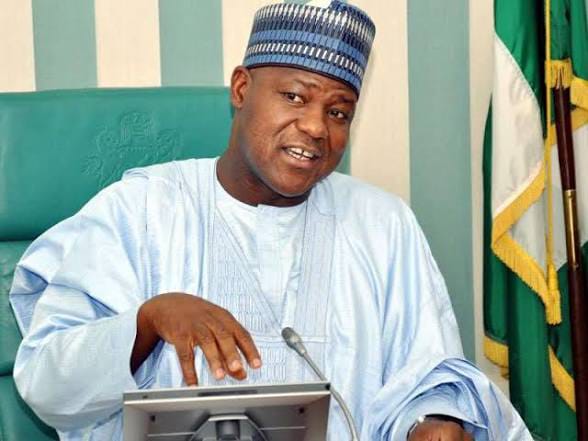
Dogara Celebrates Former President Ibrahim Babangida at 85, Hails His Enduring Legacy

Published

on

Rt. Hon. Yakubu Dogara, former Speaker of Nigeria’s House of Representatives, has joined millions of Nigerians in celebrating the 85th birthday of former military President, General Ibrahim Badamasi Babangida (rtd), fondly known as IBB.

In a heartfelt tribute, Dogara described General Babangida as “a statesman of uncommon vision whose leadership helped shape the destiny of Nigeria.” He emphasized that Babangida’s years in power were marked by bold reforms, infrastructural expansion, and the creation of new states that gave voice and identity to millions of Nigerians.

Born on August 17, 1941, General Babangida rose through the ranks of the Nigerian Army to become Head of State in 1985. His eight-year tenure remains one of the most defining eras in Nigeria’s political and economic journey. During his administration, Babangida introduced far-reaching economic reforms, strengthened Nigeria’s federal structure through state creation, and invested in infrastructure projects that continue to serve the nation decades later.

Dogara noted that Babangida’s foresight in establishing institutions and agencies has left an enduring legacy. He highlighted the former president’s role in expanding Nigeria’s federation, ensuring equity and representation across diverse regions, and laying foundations that successive governments have built upon.

Beyond his years in office, Dogara commended Babangida’s enduring role as an elder statesman. Even in retirement at his Minna Hilltop residence, Babangida continues to provide wise counsel to successive governments and inspire younger generations with his humility, patriotism, and resilience.

He prayed for Babangida’s continued health, strength, and grace, adding that his life is a testimony of service to God and country.

As Nigerians reflect on his 85 years, Babangida’s story is not only one of military distinction and political leadership but also of enduring influence in shaping Nigeria’s path toward unity and progress. His legacy continues to resonate, reminding the nation of the importance of vision, courage, and commitment to the common good.

Continue Reading

News

Group Threatens Legal Action Against Akutah Over Alleged Breach of Presidential Directive

Published

on

An advocacy group, the Centre for Democracy (CDD), has given the Executive Secretary of the Nigerian Shippers Council, Pius Akutah, five days to explain why he allegedly failed to resign from his position after obtaining the All Progressives Congress (APC) governorship nomination form.

In a statement signed by its Director of Operations, Barrister Jude Oseni, and made available to journalists, the group alleged that Akutah ought to have resigned immediately after obtaining the nomination form.

The group said his alleged failure to resign breached a presidential directive requiring federal appointees seeking elective positions in the 2027 general elections to relinquish their appointments by March 31, 2026.

According to the CDD, failure to comply with the directive amounts to insubordination to President Bola Tinubu and raises questions about Akutah’s relationship with the office of the Secretary to the Government of the Federation and the Minister of Transportation.

The group threatened to institute legal action against Akutah if he failed to publicly clarify that the APC governorship nomination forms were purchased by another person without his knowledge.

The CDD further alleged that Section 88(3) of the Electoral Act would prevent Akutah from participating in the election if he is presented as the APC governorship candidate, claiming that his alleged failure to resign from public office made him ineligible to contest.

The group also claimed that the APC, or any other political party that fields Akutah as its governorship candidate, could face legal consequences over his alleged non-compliance with the resignation requirement.

“His failure to resign on May 31, 2026 has made him ineligible to contest for the 2027 governorship election in the All Progressives Congress and also in any other political party,” the statement said.

The CDD argued that presidential directives constitute orders or policy guidelines issued by the President to the executive branch of government, provided such directives do not conflict with the Constitution or laws enacted by the National Assembly.

It cited Section 5 of the 1999 Constitution, which vests executive powers of the Federation in the President, and Section 130(2), which provides that the President is the Head of State, Chief Executive of the Federation and Commander-in-Chief of the Armed Forces.

The group argued that these constitutional provisions empower the President to issue directives to officials under his authority, including heads of ministries, departments and agencies.

It also cited Section 171 of the Constitution in arguing that the President’s authority over the appointment and removal of certain public officers reinforces his power to issue administrative directives to officials under his control.

The CDD alleged that President Tinubu’s directive requiring political appointees seeking elective office to resign by March 31, 2026 was issued to ensure compliance with electoral guidelines and promote fairness ahead of the 2027 general elections.

The group further referenced Section 88(1) of what it described as the Electoral Act, 2026, which it said provides that a political appointee at any level shall not serve as a voting delegate or be voted for at the convention, congress or primary of a political party for the purpose of nominating candidates for an election.

On that basis, the CDD argued that any political appointee who failed to resign in accordance with the directive would be ineligible to participate in a party’s nomination process or emerge as its candidate.

The group therefore called on Akutah to clarify his status within five days, warning that failure to do so would prompt it to pursue legal action over what it described as an alleged breach of the presidential directive and electoral law.

Continue Reading

News

Energy Consultants Retract Call for Ojulari’s Removal, Say Further Investigation Found ‘High Level of Transparency’ at NNPCL

Published

on

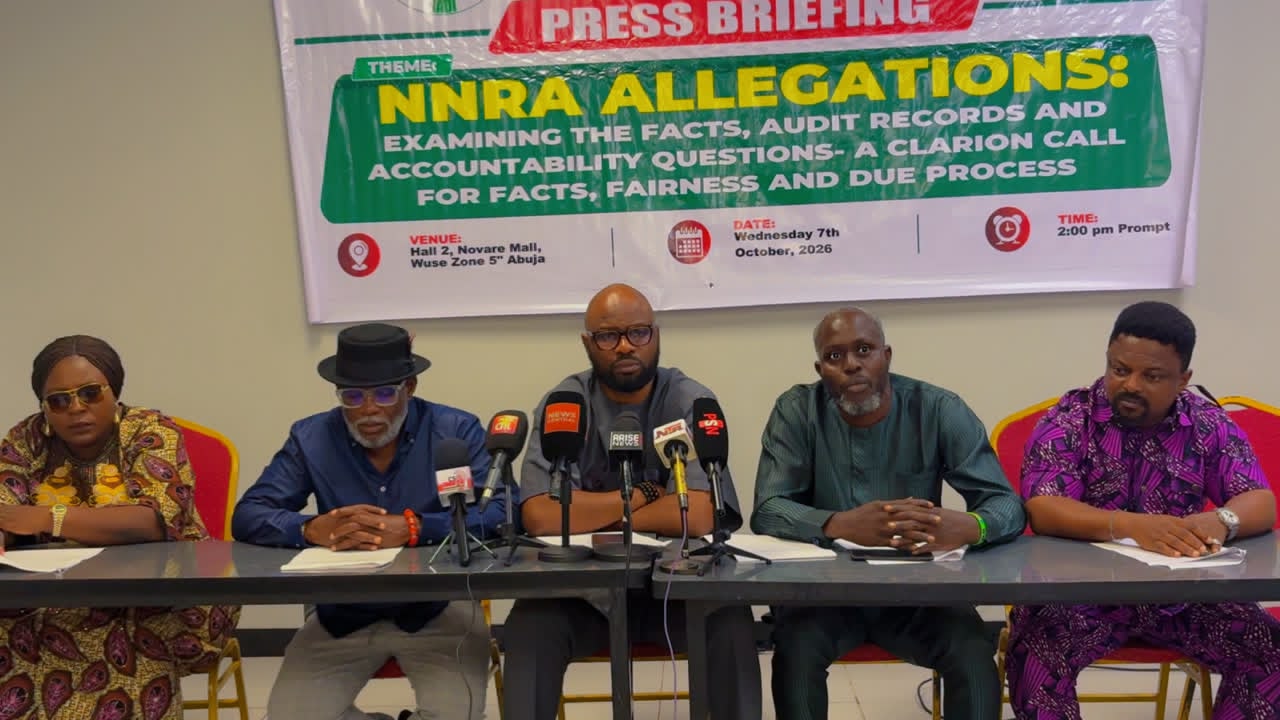
The Association of Energy Policy and Development Consultants (AEPDC) has retracted its earlier call for the removal of Bayo Ojulari, Group Chief Executive Officer (GCEO) of the Nigerian National Petroleum Company Limited (NNPCL), saying further investigations showed that its initial position was based on incomplete and misleading information.

Dr Ibrahim Danjuma, national president of AEPDC, announced the reversal at a press conference in Kaduna on Friday, where he said the association had conducted further investigations, reviewed relevant documents and consulted industry stakeholders after issuing its initial statement.

Danjuma said the association’s subsequent findings revealed a high level of transparency in the management of NNPCL, particularly regarding the energy security expenditure and other financial obligations that had initially triggered its criticism of Ojulari.

“We have called this press conference today because we owe Nigerians an important explanation. A few days ago, the Association of Energy Policy and Development Consultants (AEPDC) issued a statement expressing serious concerns about the management of the Nigerian National Petroleum Company Limited (NNPCL), particularly the figures relating to energy security expenditure, pipeline protection and other claims contained in the company’s financial records,” he said.

“In that statement, we called for the resignation of Mr Bayo Ojulari, group chief executive officer of NNPCL, arguing that the information available to us at the time suggested a disturbing level of opacity and weak accountability in the management of the nation’s petroleum resources.

“Today, after conducting further investigations, reviewing additional documents and engaging with relevant industry stakeholders, we have come before you to formally retract that position.”

The association said its initial assessment had been influenced by “incomplete information, selective interpretations and narratives” that did not adequately reflect the circumstances surrounding the expenditure under scrutiny.

Danjuma said AEPDC subsequently examined NNPCL’s financial disclosures, the legal framework governing its energy security obligations, under-recovery mechanisms, claims against the federation and the operational circumstances behind the expenditure.

“What emerged from this exercise was substantially different from the picture initially presented to us. Our findings reveal a level of transparency in the current management of NNPCL that we believe deserves recognition rather than condemnation,” he announced.

The group said the energy security figures should not be treated as unexplained expenditure simply because they involved large sums, arguing that they must be assessed within NNPCL’s statutory responsibilities, its role as an energy supplier of last resort, petroleum pricing interventions and exchange-rate movements.

According to Danjuma, the association also found that NNPCL’s financial disclosures contained explanations that could enable the claims to be examined and independently scrutinised.

“On this basis, we believe our earlier characterisation of the NNPCL’s position as one of secrecy was unfair. We therefore apologise to the management of NNPCL, particularly Mr Bayo Ojulari, for the conclusion we reached before completing the level of investigation that this matter deserved,” he said.

He stressed that the retraction did not amount to abandoning the group’s demand for accountability.

“Our decision today is therefore not a retreat from accountability. It is accountability in practice,” Danjuma emphasised.

The consultants maintained that legislative and independent scrutiny of NNPCL’s finances should continue, but urged stakeholders to approach the issue objectively and avoid drawing conclusions from isolated figures.

AEPDC also urged NNPCL to continue publishing comprehensive financial statements and providing clear explanations for major expenditures, while calling for stronger systems for independently verifying and reporting energy security costs.

Danjuma said the association’s revised position was based on its responsibility to correct itself after discovering that its earlier assessment was not sufficiently supported by the full facts.

“We made a judgment. We investigated further. We found that the judgment was not sufficiently supported by the full facts. We are correcting it publicly,” he said.

The association subsequently withdrew its demand for Ojulari’s resignation and reaffirmed confidence in his leadership of NNPCL, while urging him and his management team to sustain transparency, accountability and efficiency in the management of Nigeria’s petroleum resources.

Continue Reading

Trending

Copyright © 2017 Zox News Theme. Theme by MVP Themes, powered by WordPress.