
News
Tinubu’s cabinet may feature these names

Bola Ahmed Tinubu
Bola Tinubu, Nigeria’s president-elect

No less than 20 people have been tipped to be in the cabinet of Nigeria’s president-elect, Bola Tinubu, after he alluded on Thursday that competence rather than politics will weigh heavily on his choice of ministers.
The job of Nigeria’s president easily passes as one of the toughest in the world and Tinubu has declared that he is not unmindful of the challenges he and his team face.
Thus, to effectively discharge his duties as provided by the constitution, he said he would hit the ground running by constituting a cabinet that will help him to run the machinery of the Nigerian state.
The people who are being speculated to make his cabinet include:
*Babatunde Fashola*
Among the names that have been mentioned to be part of Tinubu’s cabinet, Babatunde Fashola tops the list, as a likely candidate for the office of the Chief of Staff to the President, based on his vast experience, age and strength of character.
The senior advocate of Nigeria was the governor of Lagos State between 2007 and 2015. Before then, he had served as a commissioner and chief of staff to Tinubu who was the state governor from 1999 to 2007. After his tenure as governor, Fashola was appointed first as minister of power, works and housing during the first term of President Muhammadu Buhari and then as minister of works and housing in 2019.
Fashola was the director, election planning and monitoring of the presidential campaign council of the ruling All Progressives Congress (APC).
Having been a key part of Tinubu’s success story in Lagos as governor, governor for eight years and minister for almost eight years, his wealth of experience is expected to stand him in good stead.
*Nasir el-Rufai*
A former director-general of the Bureau for Public Enterprises and minister of the Federal Capital Territory and about to serve out his second and final term as the governor of Kaduna State, Nasir el-Rufai is primed for appointment into the Tinubu cabinet as the president-elect himself told the Kaduna helmsman last year that he should not go out of the country after his tenure but stay to serve the country.
To some within the Tinubu circle, el-Rufai is itching to again mount his former seat at Area 11, Abuja, the FCT Administration Headquarters. Those in the know of things said the Kaduna governor intends to continue with and complete his dream of achieving the FCT master plan, which he started decades ago. While his actions came with pains, many believe it was good for the development of Abuja as the nation’s capital.
*Festus Keyamo*
Keyamo is a senior advocate of Nigeria and current minister of state for labour and productivity. The Delta-born constitutional lawyer had served as the spokesperson for President Muhammadu Buhari’s re-election in 2019, the same role he played in Tinubu’s campaign organisation.
There are strong indications that the lawyer would be a member of the Tinubu cabinet as a sort of reward for defending his principal against all odds. Also, Keyamo would be bringing his wealth of experience in the legal field and public speaking to promote and project government policies for the buy-in of the governed.
*Wale Edun*
The former Lagos State commissioner for finance was nominated by Tinubu for ministerial appointment in the first tenure of President Buhari but that was scuttled by certain political intrigues. Now that his boss will be president himself, Edun is in a vantage position to be in the cabinet.
Edun’s background in economics, public finance, international finance, banking and corporate finance at both national and international levels make a compelling case for his choice as the finance minister.
Edun’s interview with the Africa Report last month provides an insight into some of the policies he may pursue as finance minister.
He showed his strong resistance to the continuation of the petrol subsidy, multiple exchange rates, revenue leakages in the oil and gas sector and inefficient tax waivers.
Edun said this would save the country N24 trillion, about the size of Nigeria’s federal budget for 2023.
Edun has served as an economist at the World Bank in the 1980s before taking on a series of senior posts with investment banks in Wall Street, such as Chase Manhattan and the ill-fated Lehman Brothers.
He would later be appointed commissioner of finance in 1999 on his return to Nigeria after Tinubu won the governorship of Lagos State as the ruling generals returned to the barracks.
*Dele Alake*
Dele Alake was commissioner for information and strategy to the then governor of Lagos, Tinubu, between 1999 and 2007, and has remained with him as media aide. He is currently the director of media and communication of the APC Presidential Campaign Council.
Having remained and worked with Tinubu despite leaving office almost 20 years ago, the ace journalist and public affairs analyst is likely to be a member of his boss’ cabinet.
*Hanatu Musa*
Hanatu Musa, a lawyer and solicitor of the Supreme Court of Nigeria, is the deputy spokesperson of the APC Presidential Campaign Council, working hand in hand with Keyamo and others on the media team to portray the Tinubu candidacy in good light.
The columnist, women and children advocate is likely to be part of Tinubu’s cabinet.
*Hadiza Usman*
Hadiza Bala Usman, a former managing director of the Nigerian Ports Authority, also served as the chief of staff to the governor of Kaduna State. She is presently the deputy director-general (administration) of the APC Presidential Campaign Council. The graduate of Business Administration and Development Studies is expected to be a member of the incoming cabinet.
*Nyesome Wike*
The outgoing governor of Rivers State, though a member of the main opposition Peoples Democratic Party (PDP), is primed to be a member of the next APC government’s cabinet. This is considering the role he played in the emergence of the ruling party’s candidate, who against all expectations won Rivers State.
APC won Rivers State with 231,591 votes to defeat the Labour Party, which secured 175, 071, and PDP, which got 88,468 through the support of the governor and he is likely to be rewarded with a major appointment in the Tinubu government. Wike had served as minister of state for education in the administration of former President Goodluck Jonathan.
*Amb. Ginika Tor-Ijeomah*
Hon. Mrs. Ginika is presently a Federal Commissioner, Representing Enugu state at the Federal Character Commission.
She contested for House of Rep. in 2019 and later emerged as APC Deputy Governorship Candidate Enugu State in 2019 general election.
She mobilized the Igbo across the 36 states of federation for Tinubu victory through her group, the Omaluegwuoku progressive initiative ( IGBO KWENU FOR TINUBU/SHETTIMA ) to delivered votes for the APC both at states and federal elections.
Due to cultural diversity she has been penciled for humanitarian ministry and special duties minister.
*Gboyega Oyetola*
Gboyega Oyetola is the immediate past governor of Osun and a close ally of Tinubu and he is believed to have family ties with the president-elect. Oyetola, who was chief of staff to his predecessor, Governor Rauf Aregbesola, is expected to be in Tinubu’s cabinet if his efforts to return to Osun as governor prove abortive.
*Ibikunle Amosun*
A former governor of Ogun State and current senator representing Ogun Central Senatorial District, Amosun stepped down for Tinubu at the presidential primary election of the APC. He went ahead and supported Tinubu to achieve his ambition.
*Ben Akabueze*
Ben Akabueze is a chartered accountant and the current director-general of the Budget Office for the Federation. He was commissioner for economic planning and budget in the eight years of Tinubu‘s tenure as Lagos State governor.
He is likely to be appointed into the cabinet of the president-elect. If that be, the former CEO of NAL Bank Plc, is expected to harness his private and public sector experience to drive the administration’s vision.
*George Akume*
Akume is a former governor of Benue State who served at the same time with Tinubu between 1999 and 2007; he is the current minister of special duties and intergovernmental affairs. The University of Ibadan graduate was elected to the Senate for three terms, in one of which he served as minority leader. Akume has been a political ally of Tinubu since 2011 when he joined the defunct Action Congress, one of the legacies that formed the APC.
The retired permanent secretary is the only leader that delivered for Tinubu/APC in the Benue Plateau axis of the North-Central, comprising the present-day Benue, Plateau and Nasarawa states.
*Abubakar Badaru*
The outgoing Jigawa State governor, who withdrew from the race for the APC presidential ticket for Tinubu, is also the vice chairman (North) of the APC Presidential Campaign Council. It was only Badaru and his Zamfara counterpart that delivered for Tinubu in their states.
*Abdullahi Ganduje*
Ganduje, an academic and Kano State‘s governor, whose tenure ends in May this year, is a strong supporter of Tinubu. In the face of stiff opposition, Ganduje managed to muster a fair number of votes for his ally in the presidential election. With their close political association, Ganduje is being touted as one of those to be in Tinubu’s cabinet.
*Atiku Bagudu*
The outgoing Kebbi State governor and chairman of the Progressive Governors Forum played a critical role in the emergence of Tinubu both as APC presidential candidate and now president-elect. He is undoubtedly the leader of the party in Kebbi and may be in the cabinet of the incoming president.
Bagudu, who had served as a senator in the past but lost in another attempt to return to the green chamber, has experience in both the legislative and executive arms of government.
*Ibrahim Masari*
Ibrahim Masari, a former national welfare secretary of the APC, stood as a placeholder before the nomination of Kashim Shettima as the substantive vice presidential candidate of the party. The confidence reposed in him by Tinubu and his willingness to play a placeholder role position him for appointment into the next government.
*Tanko Al-malkura*
Al-malkura, a former governor of Nasarawa and senator representing the southern district of the North-Central state, is a close ally of the president-elect. Some analysts have said the lawmaker lost his bid to become APC national chairman majorly because of his affinity with the former Lagos governor, who was aspiring for the party’s presidential ticket.
Now that Al-malkura lost his second term bid to return to the Senate and his man is the president-elect, there are feelers that he would be engaged in the government at the federal level.
*Ben Ayade*
The outgoing governor of Cross River and former senator is the leader of APC in the South-South state. Ayade, who lost in a senatorial contest at the Federal 25 election, is poised to be compensated with cabinet responsibility. The professor of biology has had a stint as a lawmaker.
*Ade Omole*
Ade Omole is a leader of APC in the diaspora and is currently the director of Diasporan Affairs in the APC Presidential Campaign Council. The London-based APC chieftain worked out modalities for Nigerians in the diaspora who have Permanent Voters Cards to return home to vote for Tinubu.
*Simon Lalong*
The outgoing Plateau State governor is the director-general of the APC Presidential Campaign Council. Lalong, whose tenure ends on May 29, failed in his bid for a senatorial seat. His efforts in steering the campaign that brought about the Tinubu victory could well help make a case for his appointment as minister
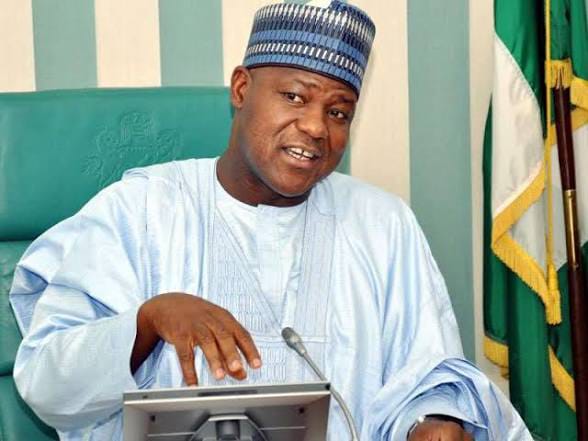
Former Speaker of the House of Representatives and Chairman of the Board of the National Credit Guarantee Company Limited (NCGC), Rt. Hon. Yakubu Dogara, CFR has expressed deep sorrow over the Nigerian Air Force aircraft crash that claimed the lives of 32 persons near Igbokoda, Ondo State. Dogara described the tragedy as a heartbreaking loss to the nation, noting that the deaths of the victims have left a painful void in the country’s defence and security community.
In a statement, the former Speaker extended his condolences to President Bola Ahmed Tinubu, Commander-in-Chief of the Armed Forces, the Nigerian Air Force, and the families of those who perished in the unfortunate incident.
He said the nation shares in the grief of the bereaved families and the Armed Forces at this time of immense sorrow, adding that the sacrifices of those who lost their lives in service to the country will not be forgotten. “The nation mourns with the families of the deceased and stands in solidarity with the Armed Forces during this difficult period,” Dogara stated.
He also commiserated with the Chief of Air Staff, officers and men of the Nigerian Air Force, praying that God grants them the fortitude to bear the painful loss.
According to him, moments such as this call for national unity, reflection and collective support for the families and institutions affected by the tragedy.
Dogara paid tribute to the victims, describing them as patriotic Nigerians whose commitment and service contributed to the security and stability of the nation. He further applauded the efforts of emergency responders, rescue teams and all personnel involved in the aftermath of the crash, commending their courage and professionalism under difficult circumstances.
The former Speaker prayed God to comfort their families, friends and colleagues.
He also offered prayers for the safety and protection of members of the Armed Forces and for continued peace, unity and progress in Nigeria.
The Nigerian Air Force aircraft crashed near Igbokoda, Ondo State, resulting in the death of 32 persons and plunging the nation into mourning. Authorities are yet to make public the cause of the accident as investigations continue.
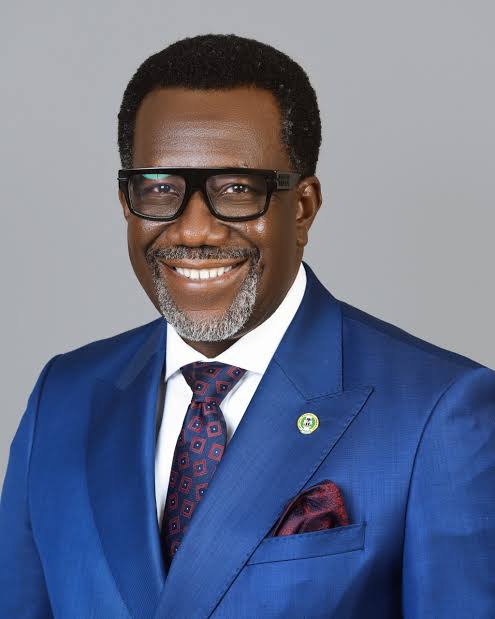
The Centre for Credible Reforms and Institutional Accountability (CCRIA) has commended the Commissioner for Insurance and Chief Executive Officer of the National Insurance Commission (NAICOM), Mr Olusegun Ayo Omosehin, for promoting transparency and accountability in the ongoing reforms of Nigeria’s insurance industry.
The centre said the implementation of the Nigerian Insurance Industry Reform Act (NIIRA) 2025 had ushered in a new phase of development for the sector, with stronger regulatory standards, improved capitalisation and greater emphasis on protecting policyholders.
Dr Aminu Abubakar Aminu, president of the centre, said this in a statement at the weekend.
Aminu commended President Bola Tinubu and the National Assembly for the enactment of NIIRA, describing the legislation as a major step towards addressing longstanding challenges in the insurance industry.
“The enactment of the Nigerian Insurance Industry Reform Act is a significant milestone in the development of Nigeria’s insurance sector. We commend Mr President and the National Assembly for recognising the need to modernise the legal and regulatory framework governing the industry. NIIRA provides the foundation for an insurance sector that is better capitalised, more accountable, more responsive to policyholders and better equipped to contribute meaningfully to the Nigerian economy,” he said.
The centre also praised Omosehin for his leadership of NAICOM, saying his extensive experience as an insurance professional had positioned him to effectively implement the new regulatory framework.
“We consider the appointment of Mr Olusegun Ayo Omosehin as Commissioner for Insurance and Chief Executive Officer of NAICOM a timely and appropriate decision. He is a seasoned insurance professional with many years of experience in the industry, and his understanding of the sector gives him the practical knowledge required to lead an important reform process of this nature. We commend him for the direction he has provided since assuming office and for his commitment to strengthening the industry,” Aminu said.
According to the centre, the ongoing recapitalisation exercise was among the important steps taken to strengthen the financial capacity of insurance companies and improve their ability to meet obligations to policyholders.
Aminu said the reforms were already producing early gains and should be sustained through consistent implementation.
“The early developments under NIIRA demonstrate that the reform is not merely a legislative exercise but a process capable of producing measurable improvements in the industry. Stronger capital requirements, improved supervision and greater attention to policyholder protection will ultimately create an insurance market that Nigerians can trust. We encourage NAICOM to remain focused on the implementation of the Act and to continue providing clear guidance to operators and other stakeholders,” he said.
The centre noted that the reforms would also help deepen insurance penetration and strengthen the industry’s contribution to national economic development.
It urged insurance companies, brokers, reinsurers, professional bodies and other stakeholders to embrace the new framework and work with NAICOM to achieve the objectives of the legislation.
“The success of NIIRA will require the cooperation of every stakeholder in the insurance ecosystem. Operators must see the reforms as an opportunity to strengthen their institutions, improve their services and regain the confidence of Nigerians. A well-regulated insurance industry can mobilise long-term capital, protect businesses and households against risks and support investment and economic growth. These are benefits that go beyond the insurance industry itself,” Aminu said.
Aminu emphasized that the centre was particularly encouraged by the emphasis on policyholder protection under the new framework, noting that public confidence remained critical to the growth of insurance in Nigeria.
He said Nigerians should be able to purchase insurance products with confidence that operators had the financial capacity and institutional structures required to honour legitimate claims.
The president further urged NAICOM to sustain its engagement with stakeholders while ensuring that the provisions of NIIRA were implemented transparently and consistently.
“What is required at this stage is continuity, professionalism and commitment to the objectives of the law. The reforms must be sustained beyond the initial implementation period so that the gains can become permanent features of the industry. We believe NAICOM, under the leadership of Mr Ayo Omosehin, has an important responsibility to ensure that the momentum is maintained, and we encourage all stakeholders to support the commission in delivering on this mandate,” he said.
The centre said the successful implementation of NIIRA would strengthen confidence in the insurance sector, improve the protection available to policyholders and position the industry to play a greater role in Nigeria’s economic transformation.
It also called for continued collaboration between NAICOM, insurance operators and other stakeholders to ensure that the objectives of the new law were fully achieved.
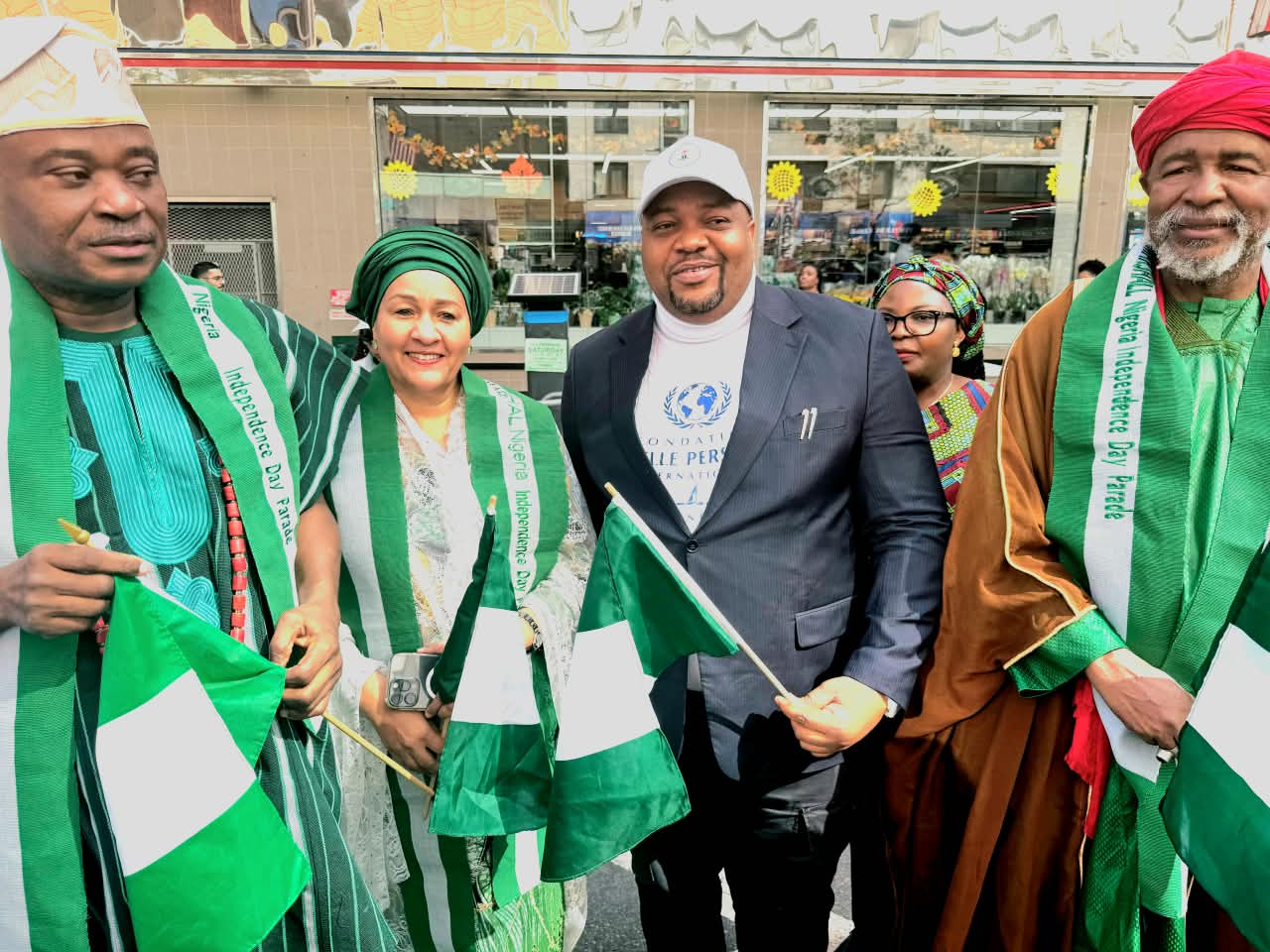
As Nigerians from across the United States gathered in Manhattan to celebrate Nigeria’s Independence Day in grand style, Hon. Amb. Jim Okolo used the occasion to share an inspiring message about Nigeria’s immense possibilities, rich cultural heritage, and promising future.
Speaking with members of the media during the colourful celebration, Hon. Amb. Okolo described Nigeria as one of the most blessed nations in the world, endowed with abundant natural resources, a dynamic population, and a cultural heritage that continues to earn global recognition.
According to him, Nigeria possesses enormous deposits of valuable minerals and other natural resources that, if fully harnessed, can accelerate economic growth and create prosperity for millions of citizens. He noted that the country is strategically positioned to become a leading destination for investment in mining, agriculture, technology, manufacturing, and infrastructure development.
Beyond its natural wealth, Hon. Amb. Okolo emphasized that Nigeria’s greatest strength remains its people. He praised the creativity, resilience, intelligence, and entrepreneurial spirit of Nigerians, pointing out that Nigerian professionals, innovators, academics, and business leaders continue to excel in various sectors across the world.
The respected diplomat also spoke passionately about Nigeria’s unique cultural identity. From the colourful festivals of its diverse ethnic groups to its globally celebrated music, fashion, literature, cuisine, and film industry, he described Nigeria as a nation whose cultural influence extends far beyond its borders.
He noted that Nigeria’s diversity is one of its greatest treasures, bringing together hundreds of ethnic nationalities with distinct traditions and languages that collectively form a vibrant and unified national identity.
While addressing questions on security, Hon. Amb. Okolo maintained that although Nigeria faces certain security challenges, the situation is not always as severe as often portrayed by social media discussions and sections of the international media. He stressed that millions of Nigerians continue to live, work, study, invest, and contribute meaningfully to society every day.
He called on the international community, investors, and members of the diaspora to focus on Nigeria’s strengths, opportunities, and achievements rather than allowing negative narratives to define the country’s image.
“Nigeria remains a land of opportunity, innovation, and hope. It is a nation blessed with extraordinary human capital, abundant resources, a rich cultural heritage, and a people whose determination and resilience continue to inspire the world,” he said.
The celebration was attended by several distinguished personalities, including the United Nations Secretary-General, Hajia Amina Mohammed, the Nigerian Ambassador to the United Nations, diplomats, business leaders, community stakeholders, and prominent members of the Nigerian diaspora.
The event transformed parts of Manhattan into a vibrant showcase of Nigerian pride, featuring cultural exhibitions, traditional performances, business networking sessions, authentic Nigerian cuisine, and displays highlighting the country’s achievements and diversity.
Adding excitement to the festivities were thrilling performances by internationally acclaimed Nigerian music stars Patoranking, Runtown, and BNXN (formerly known as Buju), who entertained thousands of attendees and demonstrated the growing global appeal of Nigerian music.
As the celebration came to a close, the message from Hon. Amb. Jim Okolo resonated strongly among participants: that Nigeria is far more than the challenges often highlighted in headlines. It is a nation blessed with extraordinary talent, vast opportunities, cultural richness, and the potential to achieve even greater success on the global stage.


Bank Cannot Freeze Customer’s Account Without Valid Court Order — Zarewa

Gov AbdulRazaq Inaugurates 464-Unit Housing Estate In Kwara

Scholars Hail Late Sheik Kamalu-deen’s Legacies iN Education, Leadership

-
 Uncategorized6 years ago
FG, states urged to harness flooding for ranching, others with technology – Agbaje
-
 Headlines11 years ago
Breaking: EFCC seals Borno House of Assembly, as Hon members take to their heels
-
 News12 years ago
Nigeria Security Operatives Stage Manhunt For Homosexual Perpetrator
-
 News10 years ago
How 21-year-old Girl fled community over accusation of lesbianism
-
 News11 years ago
Yobe Gov Moves Against Deputy
-
 Opinion7 years ago
7 signs she has friend zoned you
-
Technology5 years ago
Online job placement company headhunts women
-
 Headlines10 years ago
Borno Dep Gov Abducts Another Church Leader