
News
China’s smart home industry embraces rapid development

By Jiang Nan, People’s Daily
Today, smart home devices are more and more popularized, bringing much more convenience to people’s daily life. New technologies, investment and business forms in the smart home industry are thus one of the keys to the transformation and upgrading of China’s traditional industries.
New demands of consumers are what encourage traditional industries to make a change.
“We have gradually turned from a manufacturer of traditional lighting products into a provider of comprehensive and intelligent lighting solutions,” said Nan Junxia, head of CHINT, a leading intelligent energy solutions provider in China.
The company has launched smart sockets that are able to directly replace the old ones, as well as smart home control panels and sensors that can be placed anywhere. With the products offered by the company, the brightness and colors of lights can be controlled remotely on mobile phones.
Besides, the company has also developed a home-based intelligent nursing system that monitors the safety of seniors in real time through smart integrated circuits and sensors. The system would inform seniors’ families or medical personnel immediately after it detects tumbles or lasting inactivity.
“Mr. ROKI, stir fry please,” said Lin Xiaojia, user experience engineer with the cooking research center of Robam Appliances, a Chinese firm specialized in manufacturing household kitchen appliances.
Soon, an automatic range hood started working, and the man selected a home-style dish on a color display that read “cloud recipe” and turned on a smart kitchen stove, which automatically adjusted the flame according to the dish Lin had selected. Then an “unattended wok” began stirring the ingredients in it. The temperature in the wok and a timer were displayed on a screen on the cover of the wok.
A major difference between the ROKI digital kitchen appliances and traditional kitchen appliances is the “Mr. ROKI,” an AI assistant that connects different sets in the kitchen and thus creates new scenarios through inter-device collaboration.
In a “future factory” of Robam Appliances in Linping district of Hangzhou, east China’s Zhejiang province, researchers have turned recipes into digital curves based on the variation of ingredients’ mouthfeels and nutrition in different temperatures and under different cooking methods. It is learned that thousands of digital recipes have been developed for ROKI digital kitchen appliances, which not only make cooking much easier for users, but also help them create their own digital recipes that can be shared with more people.
The transformation and upgrading of home appliance manufacturers rely on the common efforts and collaborative innovation of all enterprises along the industrial chain.
Robam Appliances has developed a high-definition camera module with fisheye and wide-angle lens in cooperation with an optical company, which serves as an “eye” for the “unattended woks” and intelligent combi ovens. The camera offers recommendations based on the ingredients it recognizes and observes the variation of ingredients’ colors to avoid overcooking.
Besides, the Chinese manufacturer of household kitchen appliances also joined hands with a tech firm in Shenzhen to develop an infrared thermometer module that controls the switch and ventilation of range hoods and smart stoves based on the variation of temperature.
Sensor, integrated circuits, and controller developers, as well as other enterprises in the upstream of the industry, have reaped fruitful results in their cooperation with manufacturers of smart home devices. Lower-stream enterprises are also working to build relevant platforms, systems and comprehensive solutions.
In an experience center of CHINT, a number of smart home devices are exhibited, including automatic door locks, smart air conditioning systems and smart shower systems.
Enterprises in the industry have independently developed smart home ecology platforms, which are constantly extending smart home products and services relying on internet of things, big data, and smart technologies.
According to statistics, the Chinese smart home market jumped from 260 billion yuan ($36.25 billion) to 580 billion yuan from 2016 to 2021, with an average annual growth of nearly 20 percent. The smart home industry of Zhejiang province alone is expected to hit 500 billion yuan in 2025.

A Federal High Court in Abuja has dismissed a suit seeking to stop former Attorney-General of the Federation, Chief Michael Kaase Aondoakaa (SAN), from contesting the 2027 Benue State governorship election as the candidate of the Peoples Democratic Party (PDP).
Delivering judgment on Friday in suit FHC/ABJ/CS/2125/2026, Justice Joyce Abdulmalik upheld the preliminary objection of the respondents and held that the plaintiff, Adagba Damian Iorhen, lacked the locus standi to institute the action.
Iorhen, a member of Allied Peoples’ Movement (APM), sued the Independent National Electoral Commission (INEC), Aondoakaa and the PDP as first to third respondents.
The judge held that Iorhen, who was not a party to the judgment he sought to enforce, neither obtained the leave of court to do so nor showed that any of the reliefs in that judgment were in his favour.
She ruled that his mere averment that he is a governorship aspirant in Benue State did not vest him with the standing to seek enforcement of a judgment to which he was not a party.
The court also held that the facts of Aondoakaa v. Obot, on which the plaintiff relied, were “violently at variance” with those of the present case.
Justice Abdulmalik further held that Iorhen failed to present cogent evidence to show that the suit was a public interest litigation.
She described his attempt to dress the case in the garb of public interest as a veiled effort, noting that the real aim of the suit was to disqualify Aondoakaa from contesting the Benue governorship election.
The court agreed with the respondents that the plaintiff was a stranger to the affairs of the PDP. Since he was not a member of the party, she held, the law does not permit him to challenge the candidate of another political party.
The judge also held that the action was statute-barred. According to the court, Iorhen commenced the suit on August 30, 2026, outside the mandatory 14-day window for pre-election matters.
Aondoakaa had through his legal team led by Prof. A. A. Ijihor SAN, asked the court to dismiss the suit in limine for want of jurisdiction, arguing that it was filed late, that the plaintiff had no standing, and that it amounted to an abuse of court process.
In his notice of preliminary objection, he relied on Sections 1(3), 36(5), 177, 182 and 285(9) and (14) of the 1999 Constitution (as amended); Sections 29(5) and 84(14) of the Electoral Act, 2026; and Order 26 of the Federal High Court (Civil Procedure) Rules, 2019.
His central argument was that the suit was statute-barred, since Section 285(9) of the Constitution requires pre-election matters to be filed within 14 days of the event complained of.
In his supporting affidavit, Aondoakaa said INEC’s timetable fixed May 1 to May 30, 2026 for party primaries.
He said he was declared winner of the PDP primary on May 24, received his Certificate of Return on June 24, and that the PDP submitted his name to INEC in July. He said each step was public and known to the plaintiff, who “stood by”.
He also said Iorhen was not a PDP member and did not take part in the primary, alleging that the plaintiff joined the Allied Peoples’ Movement (APM) and became its governorship candidate on September 11, 2026, the day the suit was filed. He claimed this was meant “to cause confusion and distraction” to his campaign.
Aondoakaa maintained that the suit was in reality an attempt to enforce the judgment in FHC/CA/CS/50/2009, which went on appeal as CA/C/94/2010 and SC.939/2015.
He argued that an originating summons was not a proper vehicle for enforcing a court order, and that no Certified True Copy of the judgment was exhibited.
He further said the plaintiff misread the Supreme Court decision as a criminal conviction when it arose from a civil suit.
According to him, he was never arraigned, never took a plea and was not convicted of any offence involving dishonesty within 10 years of the 2027 election.
He added that none of the disqualification grounds in Sections 177 and 182 of the Constitution applied to him, and that civil liability is established on the balance of probabilities, whereas a criminal conviction requires proof beyond reasonable doubt.
He also argued that the originating summons was never signed or properly issued by the Registrar of the court, which he said rendered the process incompetent, and described the reliefs as speculative and “overtaken by events”.
The suit is separate from FHC/ABJ/CS/2152/2026, a similar action filed by four Benue indigenes: David Ejembi, Aondoakaa Teryila, Joseph Okpanachi and Benedict Orkume.
The Federal High Court dismissed that suit on November 16, 2026, holding that their status as registered voters gave them no legal right to challenge his nomination.
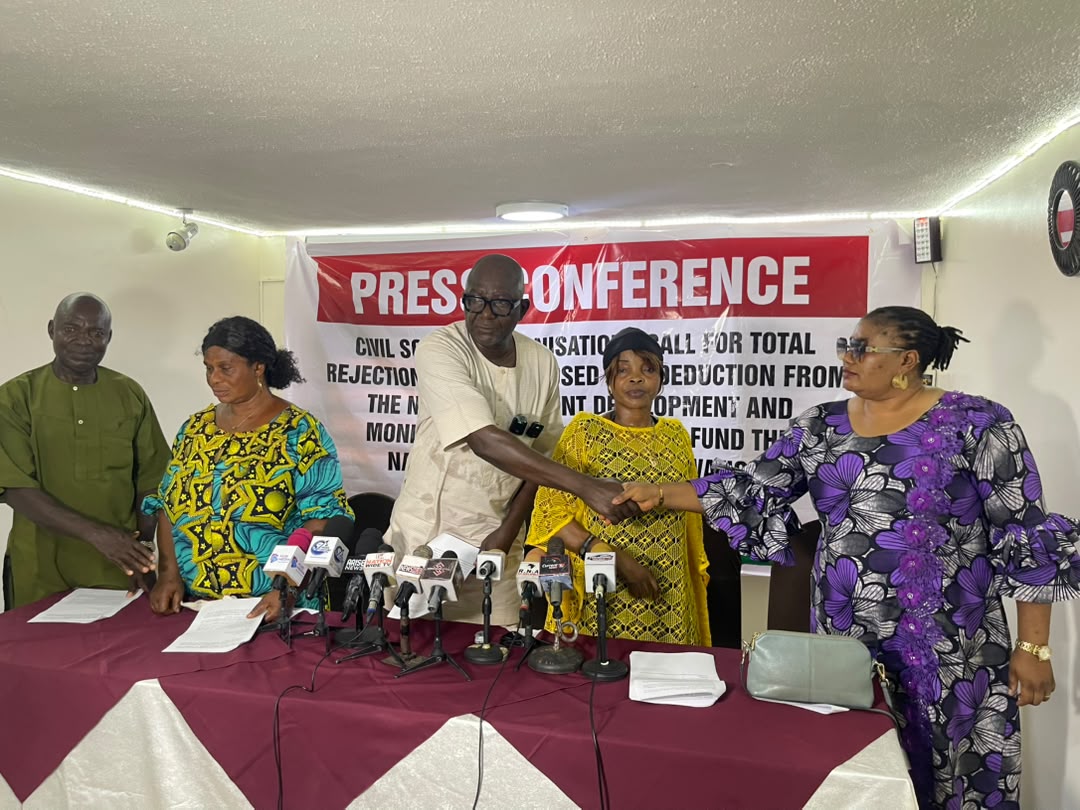
The Coalition of Civil Society Organisations in Nigeria (COCSON) has rejected a proposed 20 per cent deduction from the Nigerian Content Development and Monitoring Board (NCDMB) to finance the proposed National Research and Innovation Development Fund.
The coalition described the proposed funding arrangement as unacceptable, warning that it could undermine the development of indigenous capacity and local value addition in Nigeria’s oil and gas industry.
Speaking at a press conference in Abuja on Thursday, November 26, 2026, COCSON spokesperson, Tabuko Kennedy, said the coalition was not opposed to the establishment of a national research and innovation fund but strongly objected to the proposed funding mechanism.
Kennedy argued that funds allocated to the NCDMB were specifically meant to develop local capacity, support indigenous companies, train Nigerian engineers and promote value addition within the oil and gas sector.
He warned that diverting 20 per cent of the board’s revenue to finance another institution could weaken its ability to fulfil its statutory responsibilities.
According to him, the funds domiciled with the NCDMB are not surplus government revenue but contributions from companies operating in the oil and gas industry, specifically earmarked for local content development.
He maintained that diverting such funds without the consent of industry stakeholders would amount to a breach of trust and undermine the original purpose for which the resources were collected.
The coalition also warned that the proposed deduction could establish a dangerous precedent where financially viable government agencies would have portions of their revenues diverted to fund newly established institutions.
Kennedy questioned what would prevent similar deductions from other specialised intervention funds, including the Tertiary Education Trust Fund, the Universal Service Provision Fund and the Police Trust Fund.
He said such a practice could discourage revenue-generating agencies from improving their financial performance, create inter-agency rivalry and undermine long-term institutional planning.
COCSON further argued that the proposed deduction could violate the Nigerian Oil and Gas Industry Content Development Act, which provides the legal framework for the management and utilisation of funds accruing to the NCDMB.
The coalition maintained that the legislation did not envisage using the board’s resources to finance an unrelated research and innovation institution, describing the proposed diversion as inconsistent with the original statutory purpose of the funds.
Consequently, COCSON called on the leadership of the National Assembly, relevant committees and the Federal Executive Council to reject the proposed 20 per cent deduction.
It also appealed to President Bola Tinubu not to assent to the bill if the controversial funding provision remains in it.
The coalition disclosed that it had mobilised organised labour, pressure groups, religious organisations and other civil society groups to resist the proposed legislation.
It, however, stressed that it was not against research, innovation or the establishment of a national research funding institution, urging the government and lawmakers to explore alternative funding arrangements that would not undermine existing development agencies.
COCSON also called on Nigerians and industry stakeholders to oppose what it described as a legislative overreach, insisting that the country’s local content development programme should not be weakened to finance a new institution.
…Praises Alia For Restoring Residents To Ancestral Homes
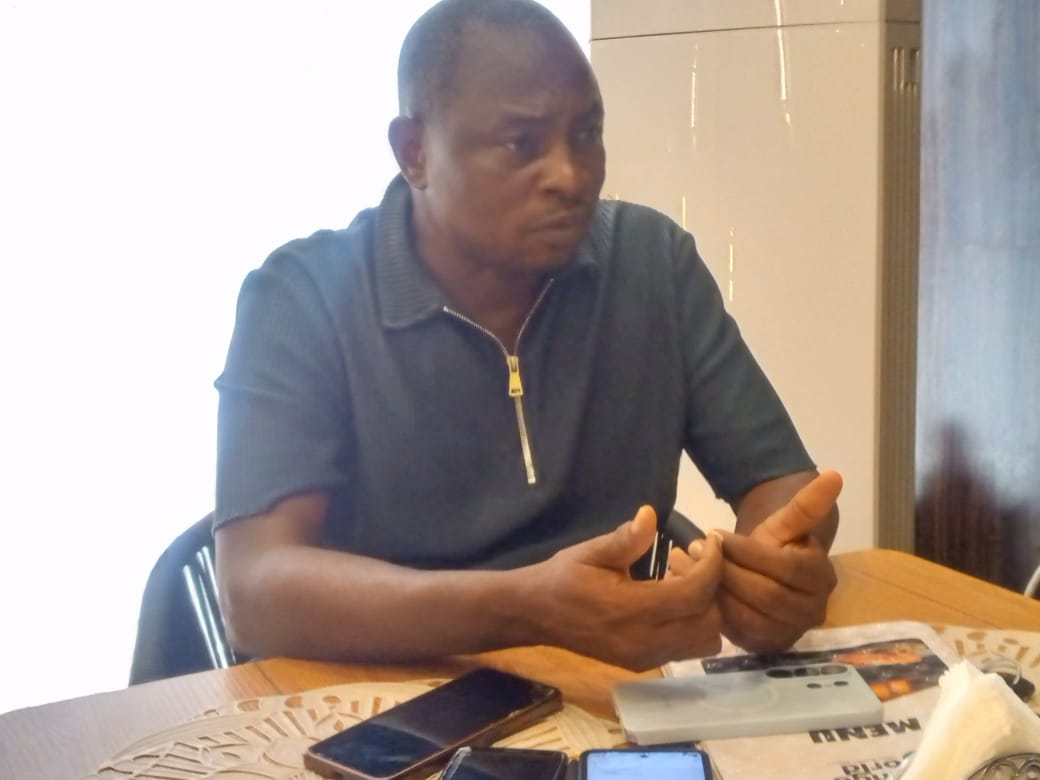
A former Commissioner for Lands and Survey in Benue State, Surveyor John Tondu, has accused the immediate past administration of failing to protect communities ravaged by insecurity, alleging that his people were effectively ranched instead of cattle, contrary to the objectives of the state’s anti-open grazing law.
Tondu, a former governorship aspirant, said residents of his local government endured years of displacement and were unable to access their ancestral homes despite the enactment of the Open Grazing Prohibition and Ranches Establishment Law in 2017.
The former commissioner who disclosed this while speaking with newsmen in Makurdi on Tuesday, also stated that one of the things that endeared him to Governor Hyacinth Alia, of Benue state, was his ability to ensure that his people who were living in Internally Displaced Persons (IDP) camps have return to their ancestral homes.
He alleged that while the law was intended to prohibit open grazing and provide for the establishment of ranches for livestock, the reality in his community was that human beings became victims of displacement and confinement instead of animals being accommodated in ranches.
According to him, “First, I come from a local government area that had the privilege of producing a governor who served the state for eight years. Yet, if you visit my local government, you would hardly believe that somebody from that area had occupied the office of governor for that length of time.”
Reflecting on the security situation during the previous administration, Tondu lamented that his community was among those severely affected, with residents effectively cut off from their ancestral homes for years.
“In 2017, the Open Grazing Prohibition and Ranches Establishment Law was enacted. The implication was that open grazing would no longer be allowed and livestock would have to be ranched.
“But, in reality, it was human beings who were ranched instead of animals. My people were effectively confined to displacement for eight years. Nobody could freely access his ancestral home,” he alleged.
The former commissioner, however, observed that the situation began to change following the inauguration of Governor Hyacinth Alia on May 29, 2023, disclosing that by September of the same year, displaced residents had started returning to their communities.
He pointed out that some of the residents were returning to homes they had been unable to visit for about five years, adding that members of his community had since resumed normal family and social activities.
“By September 2023, just a few months after Governor Alia assumed office on May 29, 2023, my people had started returning to their communities. They were returning to homes they had not visited for about five years,” he said.
Furthermore, Tondu stated that “As I speak, members of my community have returned home to live peacefully and carry on their normal family activities.
“Nobody is living in the ranch that was supposed to accommodate animals. My people were the ones who ended up living in what I describe as a human ranch.”
Tondu said the return of his people to their ancestral homes was a major consideration in his decision to identify with the Alia administration, insisting that the government needed sustained support to consolidate the security gains.
“This development alone has endeared me to the present administration. I believe we must give the government every necessary support to ensure that my people continue to enjoy the freedom and peace they have experienced over the years,” he said.
Beyond security, the former commissioner cited improvements in urban infrastructure and workers’ welfare as other reasons for his support for the governor.
He recalled that during his tenure as Commissioner for Lands and Survey, he took steps to address indiscriminate building in Makurdi, where some property owners allegedly ignored approved government layouts and development plans.
According to him, enforcing the opening of access roads in affected areas generated resistance from some individuals at the time, but he was pleased that the present administration had subsequently opened, tarred and constructed some of the roads.
“Today, if you visit those areas, you will see that some of the access roads we insisted should be opened have been opened, tarred and constructed by the present administration.
“That means I can physically see the impact of my own contribution to the state because somebody is providing the leadership needed to build on it,” he emphasised.
On workers’ welfare, Tondu observed that the payment of salaries and pensions was particularly important in Benue, which he described as essentially a civil service state.
He said delayed salaries and pensions had consequences beyond the immediate beneficiaries, affecting families, dependants and the wider economy.
He noted that “Benue is essentially a civil service state, and when salaries and pensions are not paid, you can imagine the consequences for families and the wider economy.
“Even if I do not have parents who are pensioners, I have relatives and friends whose parents are pensioners and civil servants. Civil servants are now being paid their salaries, while pensioners are also receiving their pensions.”
Tondu maintained that the Alia administration was addressing issues he had considered priorities when he aspired to govern the state, arguing that political ambition should be driven by the desire to serve rather than the personal quest to occupy public office.
“The governor is addressing these issues. So, what reason would I have not to support him?
“These were some of the priorities I had when I aspired to become governor. If somebody occupying that office is providing the services I would have provided had I been elected, refusing to support him would suggest that my own ambition was personal rather than driven by service,” he stated.
Tondu consequently pledged his commitment to supporting Alia’s re-election bid, saying the governor should be given the opportunity to consolidate the administration’s programmes and do more for the people.
“It is in that spirit that I am supporting the government with every commitment and assistance I can offer so that Governor Alia can be re-elected and do more for the people of Benue State,” the former governorship aspirant stated. End


2027 Poll: Court dismisses suit seeking to stop Aondoakaa, SAN from contesting Benue Guber

Civil Society Coalition Kicks Against Proposed 20% Deduction from NCDMB

2027: Kwara South APC Campaign Flagged Off

-
 Uncategorized6 years ago
FG, states urged to harness flooding for ranching, others with technology – Agbaje
-
 Headlines11 years ago
Breaking: EFCC seals Borno House of Assembly, as Hon members take to their heels
-
 News12 years ago
Nigeria Security Operatives Stage Manhunt For Homosexual Perpetrator
-
 News10 years ago
How 21-year-old Girl fled community over accusation of lesbianism
-
 News11 years ago
Yobe Gov Moves Against Deputy
-
 Opinion8 years ago
7 signs she has friend zoned you
-
Technology5 years ago
Online job placement company headhunts women
-
 Headlines11 years ago
Borno Dep Gov Abducts Another Church Leader