
News
Africa Bears Heaviest Burden of Global Food Insecurity, Speaker Laments


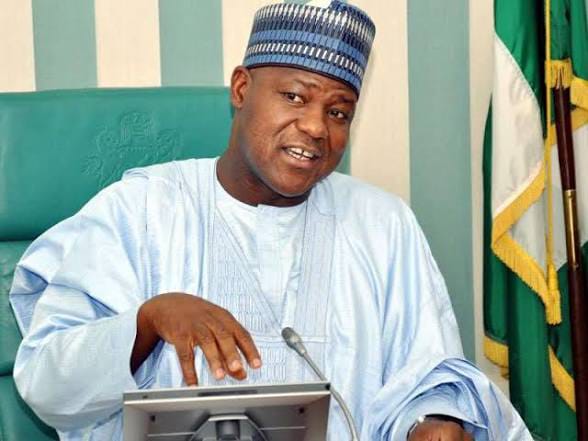
The Speaker of the House of Representatives Hon. Abbas Tajudeen has decried that the burden of food insecurity in the world is heaviest on African.
The Speaker further noted that the parliaments on the continent could address some of the issues causing food crisis.
The Speaker made the observations while delivering an address at the third plenary session of the ongoing 18th Commonwealth Speakers’ and Presiding Officers’ Conference,CSCOP, in Yaoundé, Cameroon yesterday.
Speaking under the titled: ‘Addressing Challenges of Food Security in Africa by Promoting Investment in Agriculture.’
Hon Abbas said “While food insecurity is a global crisis, Africa sadly bears the heaviest burden of the global lack of access to food and nutrition. The 2022 Global Report on Food Crises noted that one out of every five African goes to bed hungry daily while an estimated 140 million out of Africa’s one billion populations face acute food insecurity. These observations have been made by various speakers in this session, and there are several causes for this challenge,” Abbas said while addressing other heads of parliaments.
According to him,” some of the factors causing food crisis in Africa are armed conflicts of different kinds and magnitude; climate change; impact of the COVID-19 pandemic; rising population; subsistence farming and crude agricultural practices; lack of access to credit, poor infrastructure, and lack of investment in agri-business, among others.
Speaker also noted; “Suffice it to say that these factors reinforce themselves. For example, armed conflicts disrupt agricultural activities by destroying crops, livestock and preventing farmers from access to the farms.
“The Nigerian case demonstrates this much. The activities of Boko Haram terrorists in the North Eastern part of the country greatly contributed to Nigeria’s rising food insecurity as farmers could not have access to their farms following the sacking of several villages in the wake of the attacks which lasted for several years. The terrorist attacks equally impacted negatively on the activities of commercial fishermen within the Lake Chad region.”
The Speaker also noted that on the other hand, the recurring conflicts between herders and farmers in Nigeria is “fallout from the impact of climate change which brought in its wake, drought and extreme weather conditions in the Northern part of the country, which necessitated the need for herders to move their flock to other parts of the country for grazing.”
Speaker Abbas further noted that the movement of the herds “often destroys farmlands and crops, which triggers retaliatory action from farmers who in turn, slaughter the livestock of the herders,” stressing that, “These two actions further worsen the food crisis as both livestock and crops are destroyed.”
The Speaker buttressed his point with the fact that extreme weather conditions occasioned by climate change and global warming pose severe threats to agricultural production and increases food insecurity within the continent.
He said: “Our food insecurity is equally exacerbated with the poor infrastructure within the continent which ensures that farmers are unable to preserve produce, transform them as well as move their produce to urban centres for better pricing.
“Related to the foregoing is the lack of investment in agribusiness, which is as a result of a number of factors including poor infrastructure, ill-conceived policies, lack of access to land, high cost of doing business and many others. Farm implements and other incentives are not within the reach of most farmers in our continent who largely operate at a subsistent level.”
Speaker Abbas, however, pointed out that the legislature is very critical to tackling the ravaging scourge of food insecurity in Africa, through the three cardinal functions of legislation, oversight and representation. “Many of the challenges related to food insecurity can be addressed with the right legislative framework and actions,” he stated.
Through legislation, the Speaker said, parliaments can remove the bottlenecks mitigating investment in agribusiness in the African continent. He also said with legislation, we can make the operating environment more conducive to attract investors into the sector and ensure that their investments are protected.
The Speaker stated; “We must enact legislations that provide access to land, credit, and other incentives that make investing in agribusiness attractive and rewarding.
“We can equally reduce food losses with the necessary legislative framework that promotes climate-proof agricultural production. Greenhouse farming can help the continent overcome adverse weather conditions induced by climate change and increase food production and supply.
“Parliament can deploy the power of the purse to appropriate funds for infrastructural development particularly of the rural areas where the bulk of African food production takes place.
“Parliaments must also ensure, through oversight, that these funds are properly utilized as appropriated.”
According to Speaker Abbas, investing in infrastructure will not only enable farmers have access to markets for improved pricing of their produce but will also encourage investment in agribusiness of all kinds.
He also stated that the legislature “must take every necessary action” to address the scourge of armed conflict, which he said hampers agricultural production on the continent. “Some of the factors are political, economic, legal and social. All of these fall within the remit of the legislature,” he stated.
The Speaker noted: “In Nigeria, we have some laws that promote agriculture and investments in the sector:
“The Agricultural Seeds Act Cap N5 Volume 10 Laws of the Federation of Nigeria (LFN), 2004 is meant to harmonise the seed industry with other significant agricultural input to meet the increasing demand of agricultural seeds. The law also promotes productivity and export capability.
“The Agricultural credit Guarantee Scheme Fund Act Cap A10 LFN, 2004 was established to grant loans to farmers to enhance their agricultural capacity to produce and improve the economy.
“The Agricultural (Control of Importation Act Cap 13 LFN 2004, provides for the regulation of the importation of articles used for controlling plant diseases and pests which are injurious to agricultural or horticultural crops.
“The Agricultural Research Council Act of Nigeria recently amended to include Colleges of agriculture in Nigeria with the aim to promote research and related matters in Agriculture.
“The Sea Fisheries Act Cap S4 LFN, 2004 is meant to control, regulate and protect sea fisheries in the territorial waters of Nigeria.”
He stressed that Nigeria’s ease of doing business is a fundamental policy which crystalised into several legislation to support its citizens to have access to different platforms in promoting their businesses, including in agriculture.
According to him, the Anchor Borrowers scheme was one of the fallouts of the ease of doing business, where famers were provided with seeds by the Central Bank of Nigeria and after production, the CBN had to procure the yields from the famers. He stated: “This encouraged investments and interests in the agricultural sector.”


The Integrity Advocacy for Development Initiative (IADI) has called for a thorough, evidence-based examination of allegations of financial misconduct involving the Nigerian Nuclear Regulatory Authority (NNRA), warning against treating audit observations and media reports as established cases of fraud.
IADI Executive Director, Comrade Ofomhi Christopher, made the call on Wednesday at a press briefing in Abuja titled, “On the Allegations Concerning the Nigerian Nuclear Regulatory Authority (NNRA): Facts, Clarifications and the Need for Evidence-Based Accountability.”
The group was reacting to a publication by Secrets Reporters dated October 1, 2026, which alleged that about N6.69 billion was involved in contract fraud and misappropriation at the NNRA.
It also referred to a protest held on October 5 by Global Integrity Watch (GIW) at the NNRA headquarters, where the organisation demanded accountability, responses to audit observations and Freedom of Information requests, as well as changes in the leadership of the regulatory authority.
Christopher said while the allegations deserved scrutiny, they should not be treated as established facts without verification of the underlying records.
According to him, the public deserves to know the specific audit observations, periods and transactions involved, the nature of the contracts, the status of the projects or services, responses provided by the NNRA and whether the issues had been resolved or referred for further investigation.
“An audit observation is a serious matter requiring explanation and verification, but it is not, by itself, a judicial finding of fraud or personal misappropriation,” he said.
The IADI chief also referred to an explanation reportedly provided by the NNRA Director-General concerning the authority’s 2024 capital budget.
He said the explanation put the NNRA’s total 2024 capital budget at about N2.7 billion, comprising approximately N200 million belonging directly to the authority and about N2.5 billion for constituency projects, with an additional N200 million regional project bringing the figure referenced to about N2.9 billion.
Christopher, however, stressed that the explanation should not be regarded as conclusive, urging that it be tested against appropriation documents, budget releases, project records, procurement documents, payment records and audit reports.
“That is how responsible accountability should work: a claim is made, the response is heard, the records are examined, and the evidence determines the conclusion,” he said.
On allegations concerning unexecuted projects, the organisation called for physical verification of the specific projects, while allegations of inflated contract prices should be subjected to scrutiny of contracts, bills of quantities, procurement records and relevant price benchmarks.
It also urged that allegations concerning contractors be examined through relevant procurement and ownership records, while any claim of diversion or misappropriation should be established through the financial trail.
Christopher said where audit authorities had raised observations on expenditure, the public should be informed of the precise observations, the affected institution’s response and the current status of the issues.
The organisation also addressed the October 5 protest by GIW, acknowledging the constitutional right of civil society organisations to peaceful assembly and association under Section 40 of the Constitution.
It, however, urged CSOs to exercise such rights responsibly and within the law.
On Freedom of Information requests, IADI said there should be a distinction between the right to protest and the legal mechanism available where an FOI request is not answered.
The organisation noted that the Freedom of Information Act provides a judicial mechanism for applicants who have been denied access to information, adding that Section 20 allows an applicant to approach the court for a review.
IADI clarified that it was not suggesting that CSOs must obtain a court order before organising peaceful protests.
Rather, Christopher said, where non-compliance with an FOI request was the central grievance, the statutory and judicial mechanisms should be considered alongside legitimate civic action.
“An unanswered FOI request may justify further action to obtain the information. It does not, by itself, establish that fraud, misappropriation or any other wrongdoing has occurred,” he said.
The group also urged organisers of protests at government agencies to take public safety, access to government premises and the safety of protesters, workers and other citizens into consideration.
At the same time, it cautioned government institutions against using the possibility of confrontation as a justification for suppressing lawful civic expression.
“The answer to institutional disagreement should be law, evidence and due process, not intimidation or retaliation,” Christopher said.
He stressed that IADI was neither seeking to shield the NNRA from scrutiny nor dismiss legitimate questions concerning public expenditure at the authority.
He called on relevant audit and oversight bodies to state the status of the observations in question, the responses received from the NNRA and whether the matters had been resolved, sustained or referred for further investigation.
The organisation also encouraged CSOs pursuing accountability to make full use of available legal and institutional mechanisms while retaining their legitimate right to peaceful civic action.
“The public deserves accountability. But the public also deserves accuracy, fairness and evidence.
“A headline is not a verdict. An allegation is not evidence. An audit observation is not automatically a finding of personal guilt,” Christopher said.
He added that public institutions should not expect their expenditure to escape scrutiny merely because questions were raised through the media or civil society.
“Let the records be examined. Let the questions be answered. Let the evidence speak,” he said.
Former Speaker of the House of Representatives and Chairman of the Board of the National Credit Guarantee Company Limited (NCGC), Rt. Hon. Yakubu Dogara, CFR has expressed deep sorrow over the Nigerian Air Force aircraft crash that claimed the lives of 32 persons near Igbokoda, Ondo State. Dogara described the tragedy as a heartbreaking loss to the nation, noting that the deaths of the victims have left a painful void in the country’s defence and security community.
In a statement, the former Speaker extended his condolences to President Bola Ahmed Tinubu, Commander-in-Chief of the Armed Forces, the Nigerian Air Force, and the families of those who perished in the unfortunate incident.
He said the nation shares in the grief of the bereaved families and the Armed Forces at this time of immense sorrow, adding that the sacrifices of those who lost their lives in service to the country will not be forgotten. “The nation mourns with the families of the deceased and stands in solidarity with the Armed Forces during this difficult period,” Dogara stated.
He also commiserated with the Chief of Air Staff, officers and men of the Nigerian Air Force, praying that God grants them the fortitude to bear the painful loss.
According to him, moments such as this call for national unity, reflection and collective support for the families and institutions affected by the tragedy.
Dogara paid tribute to the victims, describing them as patriotic Nigerians whose commitment and service contributed to the security and stability of the nation. He further applauded the efforts of emergency responders, rescue teams and all personnel involved in the aftermath of the crash, commending their courage and professionalism under difficult circumstances.
The former Speaker prayed God to comfort their families, friends and colleagues.
He also offered prayers for the safety and protection of members of the Armed Forces and for continued peace, unity and progress in Nigeria.
The Nigerian Air Force aircraft crashed near Igbokoda, Ondo State, resulting in the death of 32 persons and plunging the nation into mourning. Authorities are yet to make public the cause of the accident as investigations continue.

The Centre for Credible Reforms and Institutional Accountability (CCRIA) has commended the Commissioner for Insurance and Chief Executive Officer of the National Insurance Commission (NAICOM), Mr Olusegun Ayo Omosehin, for promoting transparency and accountability in the ongoing reforms of Nigeria’s insurance industry.
The centre said the implementation of the Nigerian Insurance Industry Reform Act (NIIRA) 2025 had ushered in a new phase of development for the sector, with stronger regulatory standards, improved capitalisation and greater emphasis on protecting policyholders.
Dr Aminu Abubakar Aminu, president of the centre, said this in a statement at the weekend.
Aminu commended President Bola Tinubu and the National Assembly for the enactment of NIIRA, describing the legislation as a major step towards addressing longstanding challenges in the insurance industry.
“The enactment of the Nigerian Insurance Industry Reform Act is a significant milestone in the development of Nigeria’s insurance sector. We commend Mr President and the National Assembly for recognising the need to modernise the legal and regulatory framework governing the industry. NIIRA provides the foundation for an insurance sector that is better capitalised, more accountable, more responsive to policyholders and better equipped to contribute meaningfully to the Nigerian economy,” he said.
The centre also praised Omosehin for his leadership of NAICOM, saying his extensive experience as an insurance professional had positioned him to effectively implement the new regulatory framework.
“We consider the appointment of Mr Olusegun Ayo Omosehin as Commissioner for Insurance and Chief Executive Officer of NAICOM a timely and appropriate decision. He is a seasoned insurance professional with many years of experience in the industry, and his understanding of the sector gives him the practical knowledge required to lead an important reform process of this nature. We commend him for the direction he has provided since assuming office and for his commitment to strengthening the industry,” Aminu said.
According to the centre, the ongoing recapitalisation exercise was among the important steps taken to strengthen the financial capacity of insurance companies and improve their ability to meet obligations to policyholders.
Aminu said the reforms were already producing early gains and should be sustained through consistent implementation.
“The early developments under NIIRA demonstrate that the reform is not merely a legislative exercise but a process capable of producing measurable improvements in the industry. Stronger capital requirements, improved supervision and greater attention to policyholder protection will ultimately create an insurance market that Nigerians can trust. We encourage NAICOM to remain focused on the implementation of the Act and to continue providing clear guidance to operators and other stakeholders,” he said.
The centre noted that the reforms would also help deepen insurance penetration and strengthen the industry’s contribution to national economic development.
It urged insurance companies, brokers, reinsurers, professional bodies and other stakeholders to embrace the new framework and work with NAICOM to achieve the objectives of the legislation.
“The success of NIIRA will require the cooperation of every stakeholder in the insurance ecosystem. Operators must see the reforms as an opportunity to strengthen their institutions, improve their services and regain the confidence of Nigerians. A well-regulated insurance industry can mobilise long-term capital, protect businesses and households against risks and support investment and economic growth. These are benefits that go beyond the insurance industry itself,” Aminu said.
Aminu emphasized that the centre was particularly encouraged by the emphasis on policyholder protection under the new framework, noting that public confidence remained critical to the growth of insurance in Nigeria.
He said Nigerians should be able to purchase insurance products with confidence that operators had the financial capacity and institutional structures required to honour legitimate claims.
The president further urged NAICOM to sustain its engagement with stakeholders while ensuring that the provisions of NIIRA were implemented transparently and consistently.
“What is required at this stage is continuity, professionalism and commitment to the objectives of the law. The reforms must be sustained beyond the initial implementation period so that the gains can become permanent features of the industry. We believe NAICOM, under the leadership of Mr Ayo Omosehin, has an important responsibility to ensure that the momentum is maintained, and we encourage all stakeholders to support the commission in delivering on this mandate,” he said.
The centre said the successful implementation of NIIRA would strengthen confidence in the insurance sector, improve the protection available to policyholders and position the industry to play a greater role in Nigeria’s economic transformation.
It also called for continued collaboration between NAICOM, insurance operators and other stakeholders to ensure that the objectives of the new law were fully achieved.


NNRA Allegations: IADI Demands Evidence, Says Audit Queries Not Proof of Fraud

Alao-Akala’s Widow Urges Full Implementation Of LG Autonomy

PRESS STATEMENT BY AREWA DISCUSSION GROUP TITLED; PHRANK SHUAIBU: THE FACE OF A DUBIOUS, ROGUISH MERCHANT OF COUNTERFEITS

-
 Uncategorized6 years ago
FG, states urged to harness flooding for ranching, others with technology – Agbaje
-
 Headlines11 years ago
Breaking: EFCC seals Borno House of Assembly, as Hon members take to their heels
-
 News12 years ago
Nigeria Security Operatives Stage Manhunt For Homosexual Perpetrator
-
 News10 years ago
How 21-year-old Girl fled community over accusation of lesbianism
-
 News11 years ago
Yobe Gov Moves Against Deputy
-
 Opinion7 years ago
7 signs she has friend zoned you
-
Technology5 years ago
Online job placement company headhunts women
-
 Headlines10 years ago
Borno Dep Gov Abducts Another Church Leader