
News
Delivering Decent Low-cost Housing – The DNA Option


By Engr Fidel Ogar
After food, shelter is the next vital physical need of man and woman too. So this places a huge concern on all concerned more so government. I wish to clarify that at this point I will be using the terms housing and shelter interchangeably in the course of this write up.
A Calculated Pause (to ponder)
I am not trying to reinvent the wheel here but to highlight some little unique facts – some special angle to construction. To enable us step into this new desired mental environment, I humbly wish to suggest that we must have to discard some technical/mental baggage at this threshold so as to free ourselves from the tyranny of the familiar construction tradition we inherited and even created.
In fact, to effectively learn anything from this session or environment, we must unlearn lots of things (technical mindset renewal). We must challenge and even smash some norms and stereotypes to free ourselves. This unlearning will definitely throw up a lot of disruption (mentally/physically) and will present an unfamiliar learning curve to especially the field/site personnel.
The mindset renewal effort will include (a) A willingness to set aside certain entrenched ideas about construction of buildings especially low-cost housing (b) A readiness to adapt to new ideas that will surely create disruptions (of unlearning) in order to imbibe (learn) the other approaches (c) Synergy is key but synergy is not group-thinking just as group-thinking is not synergizing. We must have to place fewer premiums on group-thinking – which is when everybody in a group (team) cluster around a single thought (approach or option) without a variety of views or energies. It is very much like pouring water through the narrow end of a funnel as against the wider end.
This last item (c) is particularly vital in peculiar environments.
In continuation, let me itemize this discussion as follows:
THE PROBLEM – Residential shelter deficit:- at this point, it is expedient to define our specific concern in the course of this discussion. This is because we have shelter needs for various purposes namely:-
Shelter for human habitation – residential purposes for families etc
Shelter for human activities – teaching, offices, halls etc
Shelter for storage – warehouse/stores/hangers etc
THE SOLUTION(s) – Decent low-cost/quick-build/mass housing etc
A Decent low-cost- in the sense that it must provide and satisfy above minimum commensurate creature comfort within the enclosure and the external works/features
- Quick-build- in the sense that the waiting time (agony time) for the recipients of the intervention is reduce significantly. Response is crucial.
- Mass housing – to the extent that it brings significant relief to more people per intervention while also considering the demands of shared facilities and space for human interaction etc.
STRATEGY – This means what should be done to get the practical solution in place. Every situation or problems – like organisms – have their basic component that defines it and can be altered or modified to achieve a preferred result. Let us call it DNA. The problem under scrutiny indeed has a DNA and is the crux of the matter.
The ‘D’ stands for the DESIGN of the shelter. A whole lot, in construction, rise and fall on design – be it cost, comfort, speed of construction, maintenance, aesthetics etc. The need for synergy between the design personnel and the site/construction personnel at this cannot be over emphasized. This gives birth to the concept of BUILDABILITY which makes or mars the final impact of the project. It is huge.
The ‘N’ – stands for NATURALITY available construction materials which affect cost of transportation of preferred materials, importation and even the familiarity of the local/available labour with such materials. Imported materials, at times, require the sourcing of ‘specialist’ skills complete with camping facilities while the project lasts. Add to all these, the costly and time consuming double-handling of materials over difficult terrains and long distances. What you are looking for in “sokoto” might just be in your “shokoto” (pocket) – the saying goes.
The ‘A’ stands for ALTERNATIVE construction approaches, this demand for large dose of technical /mental-renewal from the design and construction team
TACTICS – this means how to do it, taking into consideration all the aforementioned points among other details while still keeping an eye on the strategy.
A comprehensive knowledge and application of the requirements of alternative construction approach is the ultimate matrix in the whole enterprise (of low-cost housing delivery) At this point (of tactics), some other accompanying factors are already considered as “given”
Namely:- Finance and Land (site). We must then be guided by the natural sequences of activities in the course of initiating a housing project, be it high-brow or low-cost. They are:
Design (concept) of the project – call it Model.
Method of Construction – call it Mode.
Cost implication(s) – call it BOQ
Land/finance etc (considered to be a “given” component in this discussion). The quantity and Quality of the housing effort (project) will be affected largely by items (A) and (B) above.
So, interplay, even a balancing between Model and Mode is the whole essence of this challenge considering the fact construction/method alone accounts for approximately 50 to 60 per cent of the available funds. Land which is considered a given in this discussion accounts for approximately 25 to 30 per cent in the open market depending on location.
I must clarify that the terms “construction/method above stands for – construction materials with each item approximately sharing the fund (50-60%) equally (50% of 50-60%). Note also that the percentage stated above are not sacrosanct but in real project situation deviate slightly around the figure stated above.
The cost and construction time involved in the principal elements of roof-walls and foundation is significant and therein lies the gains of a well-honed tactics and when these gains are aggregated, the result is a significant cost benefit. These benefits can be ploughed back into the project/budget to deliver extra units of housing. Speed of construction (quick-build) is a collateral bonus because some of the time consuming construction operational/elements on site are bye-passed as a result of applying the alternative construction approaches (tactics).
Practically, building construction is about design, materials and construction method, so to cut meaningful overall cost, we must re-jig the heavy cost items such as construction mode, materials etc. This discussion is, obviously, inherently technical, so a practical attention to the site actively is a must to enable us access the innovations therein. This definitely is an opportunity to explore for collateral benefits. For the purpose of practical illustration, we will examine a handful of options viz:-
Cross wall or box frame (storey) building with open plan to be partitioned, enclosed as preferred based on future change of use among other considerations.
Differential foundation in substructure for stand-alone or terraced buildings
The examination (by sketch) of a couple of elements of existing construction details from the roof, walls and foundation should suffice for the purpose of practical/theory.
In conclusion, I would consider it a success if we can all take home the following maxim…”do not be overly conformed but be transformed by the renewing of your mind.”
….Ogar, a former Chief Building Engineer, Cross River State Ministry of Works, Lands and Housing writes from Abuja.

By Emmanuel Kuza
A chieftain of the Peoples Democratic Party (PDP) in Nasarawa State, Abuga Ovie, has described the name Ombugadu as a political brand, saying the popularity and wide acceptance of the name have made David Emmanuel Ombugadu a major force in the state’s political landscape.
Ovie, who stated this in an interview on Tuesday, said what started as opposition from some of Ombugadu’s biological brothers and people he described as fathers and uncles who betrayed him for personal political interests had now assumed a wider dimension, with political parties allegedly joining the battle against him.
According to him, the latest development was an attempt to undermine the political value of the Ombugadu name by presenting another person with the same surname, describing it as an indication of how far some political actors were prepared to go to weaken the PDP governorship candidate.
“Ombugadu is a brand, not a title. The people are not fools. They know their own. You cannot simply bring another person bearing the same name and expect the people to forget the political identity that Ombugadu has built over the years,” he said.
He further alleged that a former governor was working to introduce a political associate who had served as Accountant-General of Nasarawa State into the political equation, with the alleged objective of destabilising the PDP and weakening its chances by ensuring that the party fields a less competitive candidate in 2027.
“The plan, as we understand it, is to destabilise the PDP and make sure the party presents a weak candidate, thereby creating an advantage for the former governor’s preferred candidate. But all those efforts have proved abortive because the national leadership of the PDP stood its ground and refused to lose its best bet for the 2027 governorship election,” Ovie said.
The PDP chieftain said the resolve of the national leadership to retain Ombugadu had demonstrated the confidence the party had in his capacity to win the governorship election, despite what he described as attempts by some political actors to frustrate his ambition.
Ovie urged political parties and their leaders to resolve their internal differences instead of concentrating their efforts on Ombugadu, whom he compared to David in the Bible, saying he remained focused despite betrayal and opposition from those close to him.
“Ombugadu is like David in the Bible. Even when his brothers forsook him, he remained focused. Today, despite the people who have betrayed him, he remains focused and has a blueprint that can rescue Nasarawa State,” he said.
He said political parties should concentrate on presenting their programmes and convincing voters about how they intend to address the challenges confronting the state rather than expending their energy on attempts to stop Ombugadu.
“Political parties should fix their problems instead of wasting their strength fighting Ombugadu. Let everybody bring their blueprint before the people and explain what they intend to do for Nasarawa State,” he said.
Ovie maintained that the 2027 election should be about ideas, competence and the future of Nasarawa State, rather than attempts to manipulate political structures or undermine individuals perceived to enjoy strong grassroots support.
He urged the people of the state, particularly the Eggon community, to remain politically vigilant and resist what he described as efforts to make them settle for less, insisting that voters would ultimately determine who enjoys their confidence at the polls.
Reduce repeated references to Ombugadu

By Israel Adamu, Jos
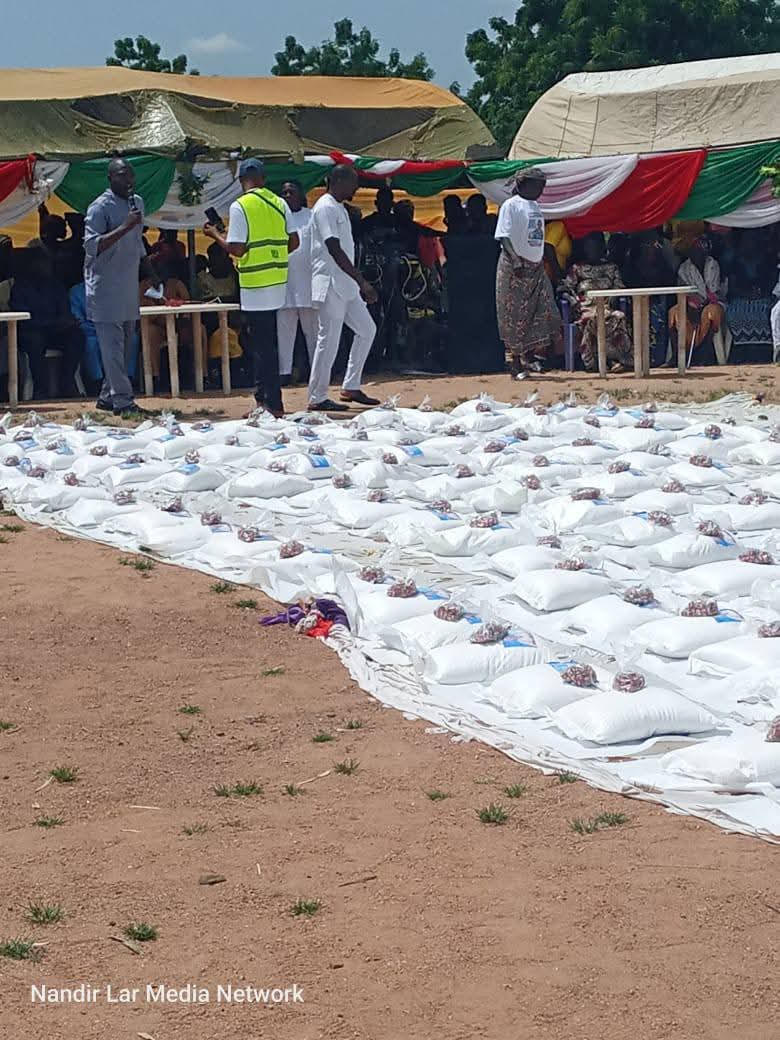
Two hundred widows from communities across Langtang North Central State Constituency of Plateau State have benefited from an empowerment outreach organised by Gimbiya Gani Nandir Lar under the Jagoran Talakawa movement.
The outreach, held at Pilgani in Langtang North Local Government Area, was aimed at supporting vulnerable women and drawing attention to the challenges faced by widows, particularly those struggling to provide food, pay school fees and meet other basic needs for their families.
The organiser, Nandir Lar, who is the All Progressives Congress, APC, candidate for Langtang North Central State Constituency, said the gesture was motivated by compassion and concern for vulnerable members of the society.
She stressed that the outreach was not a political programme but an expression of love and support for humanity.
Nandir Lar said: “The plight of widows may not always make headlines, but their struggles are real, painful and deserving of our collective attention.
“This is simply an expression of compassion and love for humanity. It is not a political programme.
“Our constituency is home to people with diverse needs, including mothers, widows and young people who are seeking opportunities to improve their lives.”
Former Provost of the Federal College of Education, Pankshin, Amos Chirfat, commended the initiative, saying it had brought smiles to the faces of vulnerable women in the constituency.
Minority Leader of the Langtang North Legislative Council, Dirya Sheni, also commended Nandir Lar for supporting widows and other vulnerable members of the community.
At the end of the outreach, each of the 200 beneficiaries received a 10-kilogramme bag of corn flour, seasoning and N10,000 cash
By Francis Wilfred
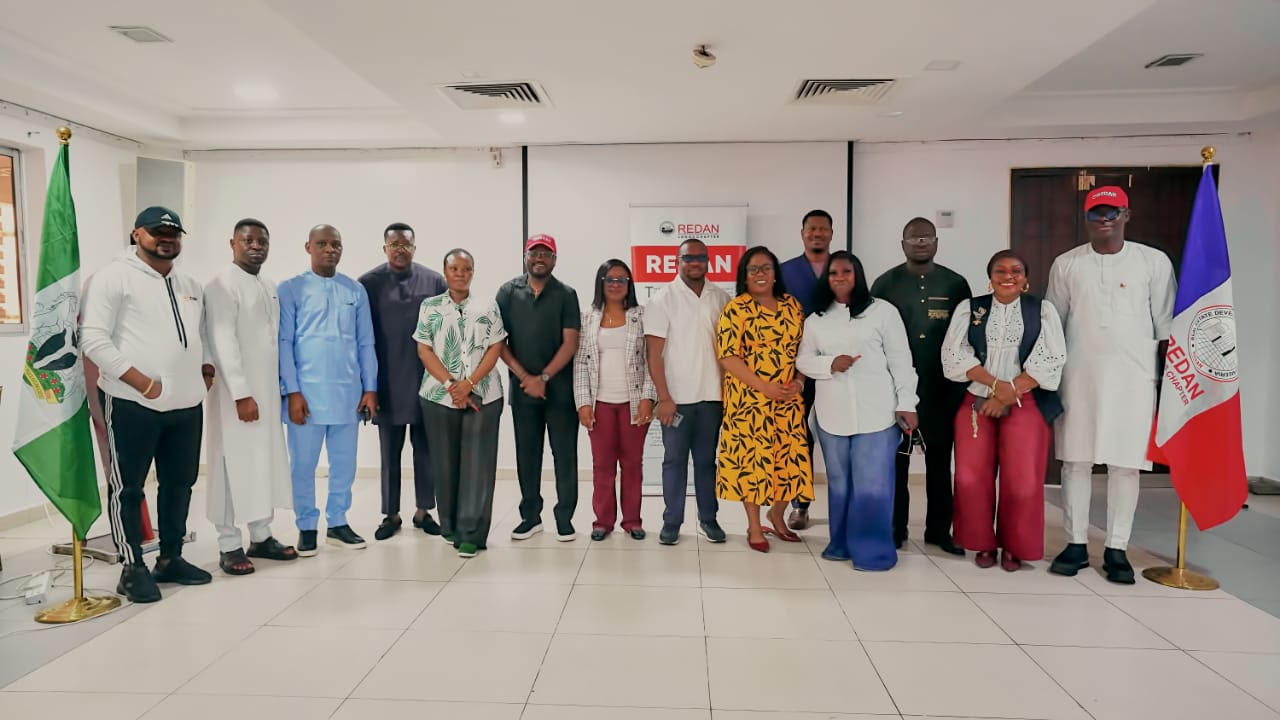
The Special Control Unit against Money Laundering (SCUML), and the Real Estate Developers Association of Nigeria (REDAN) have expressed commitment to ensure a full compliance with the Anti Money Laundering/Counter Finance on Terrorism/Counter Proliferation Financing, (AML/CFT/CPF) laws within the Nigeria’s real estate sector.
They made the resolve during a stakeholders’ engagement held on Thursday, September 10, 2026
The engagement focused on Mutual Evaluation readiness, risk-based supervision, beneficial ownership transparency, customer due diligence, internal controls and stronger collaboration between SCUML and the real estate sector.
Assistant Commander of the EFCC, ACE 1 Ibinabo Amachree, speaking on behalf of SCUML highlighted the strategic role of real estate operators in protecting the integrity of Nigeria’s financial system, particularly given the sector’s vulnerability to money laundering and other financial crime risks.
Amachree encouraged REDAN members to move beyond registration to ensure that compliance is embedded in their day-to-day operations. He mentioned the areas to include: understanding institutional risks, knowing customers and beneficial owners, identifying politically exposed persons, conducting appropriate sanctions screening, maintaining effective internal controls and meeting applicable reporting obligations
He, therefore, reaffirmed readiness to working closely with REDAN and other stakeholders to improve compliance, build capacity and promote a stronger culture of accountability across the real estate sector
“The message is clear: effective compliance is not just about meeting regulatory requirements; it is about protecting businesses, strengthening the real estate sector and safeguarding the integrity of Nigeria’s financial system”, she said.
In his remarks, the Chairman of REDAN, Lagos state, Mr Tony Kolawole pledged readiness to partner with SCUML in ensuring compliance with AML/CFT/CPF in the real estate sector to uphold financial integrity.
The engagement also provided an opportunity for REDAN members to share practical regulatory and operational challenges affecting the sector, reinforcing the importance of continuous dialogue between regulators and industry stakeholders.


Changsha brings millennia-old heritage into modern life

Gov AbdulRazaq Lauded Over Conferment Of Sadauna Of Ilorin Title

FG Commissions KWASU ICT Centre To Enhance Graduates Employability

-
 Uncategorized6 years ago
FG, states urged to harness flooding for ranching, others with technology – Agbaje
-
 Headlines11 years ago
Breaking: EFCC seals Borno House of Assembly, as Hon members take to their heels
-
 News12 years ago
Nigeria Security Operatives Stage Manhunt For Homosexual Perpetrator
-
 News10 years ago
How 21-year-old Girl fled community over accusation of lesbianism
-
 News11 years ago
Yobe Gov Moves Against Deputy
-
 Opinion7 years ago
7 signs she has friend zoned you
-
Technology5 years ago
Online job placement company headhunts women
-
 Headlines10 years ago
Borno Dep Gov Abducts Another Church Leader