
Uncategorized

Navigating Nigerian Sports Betting with Jimmy Daytona: Legal Changes & Secure Platforms
Explore Nigeria’s evolving landscape of international sports betting amidst recent legal changes. Discover licensed and regulated platforms, key considerations, and the allure of betting on global sporting events.
Where to Safely Bet on International Sporting Events Amidst Nigerian Legal Changes
Jimmy Daytona believes that betting on international sporting events has gained immense popularity in Nigeria, providing enthusiasts a thrilling way to engage with their favorite sports. Recent legal changes have left many wondering about the safety and legality of such activities.
Image: Tope A. Asokere
Many Nigerians now view betting as a form of entertainment and a potential source of income. The betting landscape in Nigeria is diverse, ranging from traditional sports betting, particularly in football, to virtual games. To find out the top list of betting opportunities available, individuals can turn to expert reviews and resources, ensuring they make informed choices for an enhanced betting experience. Whether you’re a casual sports enthusiast seeking excitement or a seasoned bettor pursuing profit, Nigeria’s vibrant betting scene offers something for everyone. This article delves into the evolving landscape of international sports betting in Nigeria and sheds light on recent legal adjustments.
Understanding the Legal Changes | Jimmy Daytona’s Overview for Daily Post Nigeria
Gambling laws are like rules that the betting industry in Nigeria and other countries must follow. There are special groups that make these rules and make sure that betting companies have permission to operate. They also ensure these companies follow the rules, pay the right taxes, and protect bettors. These laws help people feel better about betting on websites that are approved. Some groups in charge of this in Nigeria are the National Lottery Regulatory Commission (NLRC) and the Lagos State Lotteries Board (LSLB).
1. NLRC
NLRC stands for the National Lottery Regulatory Commission. This group makes sure that lotteries and gambling in Nigeria follow the rules. They give out licenses, make things fair, and set the rules for lottery and gaming nationwide.
The National Lottery Act 2005 created this Commission, which became law on March 30, 2005. This organization provides licenses for lotteries, sports betting, mobile gaming, and promotional lotteries.
Image: nlrc-gov.ng
For companies to do sports betting, they need a special permit. They usually have to go through an Application/Pre-Licence stage to get this. During this stage, they give NLRC some documents, including a completed form and a letter saying they want the permit, and they also pay some money.
If everything goes well, and they finish all the paperwork, they pay N100,000,000.00 to the Commission, and then they can have the permit for five years.
2. Lagos State Lotteries Board (LSLB)
The Lagos State Lotteries Board is a regulatory body overseeing betting activities within Lagos. Established under the Lagos State Lottery Law 2004 (amended in 2021), its primary role involves licensing and regulating lottery and gaming operations in the region. These regulations establish specific guidelines that lottery and betting companies must follow; non-compliance can result in the revocation of their licenses.
Source: lslga.org
Companies seeking an LSLB license must adhere to a structured process, including submitting an application with a non-refundable fee of N500,000. Upon application, the Board conducts a thorough due diligence process lasting at least 15 days.
Successful applicants are then invited to present their case for why they deserve the license. If the presentation is approved, the applicant must pay N50,000,000 for the license. Following this payment, the Board issues an “approval in principle” valid for 90 days before granting the final license approval.
Regulatory Body Functions Licensing Process
National Lottery Regulatory Commission (NLRC) – Ensures compliance with gambling rules
– Grants licenses
– Sets rules for lotteries and gaming – Companies apply for a special permit
– Application/Pre-Licence stage: submission of documents and fees
– If approved, payment of N100,000,000.00 for a 5-year permit
Lagos State Lotteries Board (LSLB) – Regulates and licenses betting in Lagos
– Enforces guidelines for lottery and gaming companies – Companies submit applications with a N500,000 non-refundable fee
– Board conducts due diligence (15 days)
– Presentation by successful applicants
– Payment of N50,000,000 for license
– “Approval in principle” for 90 days before final license
Licensed and Regulated Sportsbooks
Once considered socially unacceptable in Nigeria, gambling has gradually gained acceptance. Particularly, online betting has experienced significant growth, becoming increasingly popular. This surge in popularity has led to the emergence of numerous betting companies in the country. To operate legally within Nigeria, these online platforms must obtain licenses from the National Lottery Regulatory Commission (NLRC).
Among the licensed betting sites in Nigeria are well-known names such as:
• Bet9ja
• BetKing
• BetWinner
• Frapapa
• N1Bet
• Parimatch
• 22bet
• Yangasport
• Betway
Factors to Consider
When selecting a sports betting platform, it’s essential to consider several key aspects. Look for platforms that hold valid licenses from reputable regulatory bodies like the National Lottery Regulatory Commission (NLRC), which signifies their legitimacy.
Jimmy Daytona: “Opt for platforms that offer competitive odds and a wide variety of markets, ensuring you have ample choices for placing bets on different events.”
Promotions and Bonuses
Promotions and bonuses are integral to elevating the betting experience. Known sportsbooks frequently provide attractive welcome bonuses, free bets, and other promotions to entice Nigerian customers. Notably, platforms such as Betway and 1xBet are renowned for their alluring promotions, offering extra value to bettors.
Deposits and Withdrawals
Smooth deposit and withdrawal procedures are vital components of a sports betting platform. The ease with which users can fund accounts and collect winnings significantly impacts bettors’ overall contentment. Most platforms accommodate various payment methods, including bank transfers, debit/credit cards, and e-wallets, ensuring convenient accessibility for a diverse user base.
Mobile Betting Apps
In the modern era, mobile betting apps have revolutionized the experience for Nigerian bettors. Numerous sportsbooks present specialized mobile apps with user-friendly interfaces and easy access to betting options.
Source: Ono Kosuki
Noteworthy platforms such as Bet9ja and Betway have committed to mobile app development, enabling users to place bets while on the move.
International Sporting Events to Bet on | Tips from Jimmy Daytona
Nigerian bettors enjoy a wide array of international sporting events to bet on. Prominent football tournaments like the FIFA World Cup and UEFA European Championship draw significant interest.
Moreover, basketball leagues such as the NBA and cricket tournaments like the ICC World Cup provide various opportunities for placing bets and experiencing the excitement of competitive sports.
Conclusion
In this article, Jimmy Daytona has outlined how adapting to the changing landscape of international sports betting in Nigeria requires vigilance and carefulness. Ongoing legal developments have set the stage for a more secure betting environment, underscoring the significance of opting for licensed and regulated sportsbooks.
Betters can make well-informed decisions by considering security measures, promotional offers, and mobile applications. As Nigerian sports lovers participate in global betting activities, remaining informed and practicing responsible gambling is crucial for savoring the thrill while mitigating potential risks.
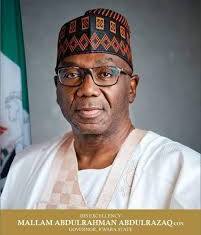
Stephen Olufemi Oni, Ilorin
Kwara State Governor AbdulRahman AbdulRazaq has been hailed for the conferment of the prestigious Sadauna of Ilorin Emirate title on him by His Royal Highness, the Emir of Ilorin, Alhaji (Dr.) Ibrahim Sulu-Gambari, CFR.
Giving the commendation on Tuesday in a statement in Ilorin, the state capital, Alhaji Yakubu Garba Gobir, who is the Sarkin Gobir and Madawaki of the Ilorin Emirate, described the recognition and honour on Governor AbdulRazaq as well deserved, timely and apt, giving his huge contributions to the growth and development of Ilorin Emirate and Kwara State as a whole.
Gobir specifically commended the Emir of Ilorin for conferring this distinguished title in recognition of the qualities and contributions of the new Sardauna, noting that it is a solemn call for greater responsibility, leadership, loyalty and devoted service to the Emirate and its people.
He added: “The title of Sardauna occupies a position of profound significance in the history, heritage and traditions of the Ilorin Emirate. I commend His Royal Highness, Alhaji (Dr.) Ibrahim Sulu-Gambari, CFR, the Emir of Ilorin, for conferring this distinguished title in recognition of the qualities and contributions of the new Sardauna.
“The title embodies courage, leadership, loyalty and devoted service to the Emirate and its people. Your elevation is therefore not merely a mark of honour; it is also a solemn call to greater responsibility and continued service.
“As a fellow title-holder in the Ilorin Emirate, I am particularly delighted to welcome you into this distinguished circle of traditional leadership. I am confident that you will bring to the office the same qualities of leadership, dignity and unwavering commitment to public service that have distinguished your tenure and career.
“At a time when our Emirate and our State require men and women of character, wisdom and courage to advance the interests of our people, I am certain that you will make a meaningful contribution to the enduring unity, progress and development of the Ilorin Emirate.”
Gobir offered prayers for a successful, impactful and enduring tenure for the new Sadauna, adding:
“May Almighty Allah grant you wisdom, sound health and strength, and may He make your tenure as Sardauna of Ilorin a source of lasting honour to you, your family and the entire Ilorin Emirate.”
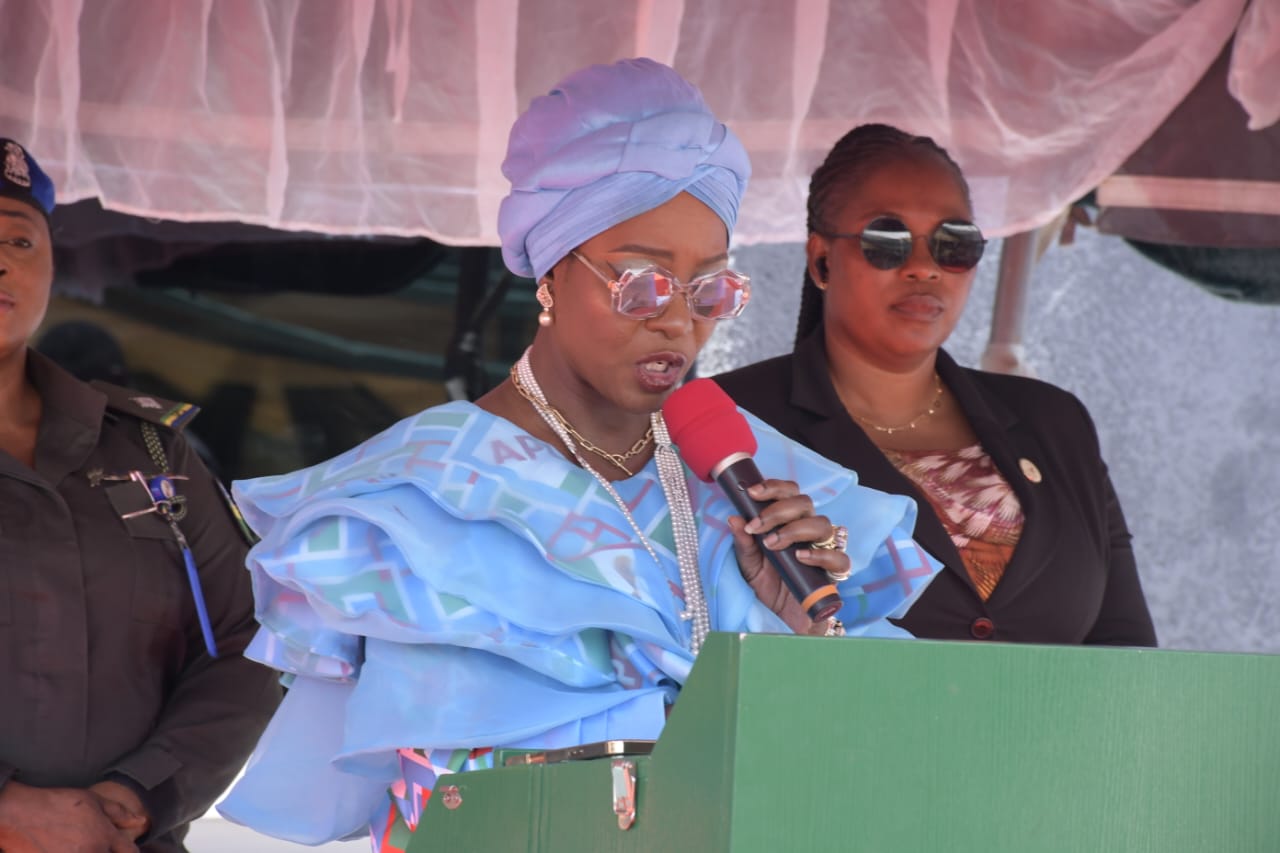
Stephen Olufemi Oni, Ilorin.
The wife of President Bola Ahmed Tinubu, Senator Oluremi Tinubu, has commissioned a TETFund/Renewed Hope Initiative-backed ICT Experience Centre at the Kwara State University (KWASU), Malete.
It would be recalled that KWASU is one of the six tertiary institutions selected for the pilot phase of this intervention, with one institution representing each of the Nigerian six geopolitical zones.
Represented at the commissioning on Tuesday by the wife of the Vice-President, Nana Shettima, Tinubu said the project is a testament to the federal government’s commitment to advancing education, digital inclusion and enhancing graduate employability.
“The TETFund/Renewed Hope Initiative ICT Experience Centre we are commissioning today represents opportunity, innovation, knowledge, and the future of young people in Kwara State and beyond.
She said: “This initiative aligns with the Renewed Hope Agenda of the administration of His Excellency, President Bola Ahmed Tinubu, GCFR, which places emphasis on youth empowerment, education, innovation, and economic transformation. Mr President is committed to creating opportunities that will equip Nigerian youths with knowledge and skills required to thrive in a modern and competitive world.”
Senator Tinubu said the facility was designed as a modern technology centre equipped with ICT laboratory, interactive digital display, conference facility, and exhibition spaces, adding that it would be an environment for learning, creativity, research, and technology advancement.
According to her, the ICT centres had been commissioned at the Ekiti State University on May 28, University of Cross Rivers State on September 4, Anambra State Polytechnic on September 10, adding that the Centres at Kaduna State University and Taraba State Universities would be commissioned soon.
“The next phase of this intervention will cover 15 institutions in Adamawa, Bayelsa, Borno, Delta, Edo, Enugu, Imo, Katsina, Nasarawa, Niger, Ondo, Osun, Rivers, Yobe, and Zamfara states which construction is currently ongoing. This expansion demonstrates the administration’s commitment to ensuring that more Nigerian youths, irrespective of their locations, have access to digital learning opportunities,” she said.
She encouraged the students to take ownership of the facility, maximise the opportunity it provides, and use technology positively to enhance their lives, community, and the nation.
In his speech, the Executive Secretary of Tetfund, Architect Sonny Echono, said the centres are being established across selected Universities, Polytechnics and Colleges of Education, with the Kwara State University, Malete proudly hosting the facility in the North-Central Zone.
“Through practical training and digital skills acquisition, TETFund seeks to enhance graduate employability, foster innovation and position Nigeria to participate more effectively in the global
technology-driven economy,” he added.
Echono also said that the ICT Experience Centre is designed to equip students and lecturers with critical digital skills in Artificial Intelligence, Cybersecurity, Robotics and Software Development.
He added: “The Centre being commissioned today is one of the foremost ICT Experience Centres being delivered across the country, and the third to be commissioned this year. The Centre is equipped with modern digital devices, Computer systems and relevant software to facilitate training, practical learning and skills development. The facility is appropriately furnished and
fully air-conditioned, with supporting power and municipal infrastructure.”
Also speaking, the Vice Chancellor of the University, Professor Shaykh- Luqman Jimoh, said the new facility represents vision, belief, and an investment in the Nigerian youth to better shape the future of our
nation.
The Vice Chancellor described the ICT Experience Centre as an investment in human capital, in innovation, in entrepreneurship, and, most importantly, it is an investment in the future of Nigeria.
“This Centre will provide opportunities for our students to develop practical digital skills and engage with contemporary technologies. Importantly, it is our hub for interdisciplinary engagement.
“This ICT Experience Centre is therefore a timely, critical, and strategic infrastructure that will definitely enhance research, teaching, learning, entrepreneurship, and community service. This intervention is at the core of what this university seeks from partners and donors: synergies that add value and impact on today and the future,” he started.
KWASU Vice Chancellor also assured that the ICT Experience Centre would be put to maximum use for the benefit of students, researchers, and the University
community, adding that the “KWASU community would engage with the facilities in this Centre, we will use it. We will explore, experiment, learn, and innovate in i
:
Uncategorized
2027: Violent ;Kaduna as ADC, APC Supporters Trade Accusations….APC Calls For Police Investigation into the Vandalisation, attacks on its Office


By Hassan Agboola
Tension is mounting in Kaduna State ahead of the 2027 general elections, following renewed exchanges between supporters of the African Democratic Congress (ADC) and groups backing the administration of Governor Uba Sani.
The latest development came on Tuesday when ADC governorship candidate, Isa Ashiru, addressed supporters in Kaduna and, according to an account of his remarks, declared that the party was prepared to respond to attacks against its members.
Ashiru was also quoted as saying that it was Governor Uba Sani, rather than President Bola Ahmed Tinubu, who was responsible for the continued detention of former Kaduna State Governor, Nasir El-Rufai.
However, available public records show that El-Rufai’s detention followed proceedings before the Independent Corrupt Practices and Other Related Offences Commission (ICPC), with the commission stating that his continued custody was based on a court-issued remand order.
The controversy over El-Rufai’s detention has nevertheless become a major political issue in Kaduna and beyond. The ADC has repeatedly criticised the handling of the former governor’s case and alleged political persecution, while other political actors have made different claims about the circumstances surrounding his detention.
Rising political temperature
Ashiru’s emergence as the ADC governorship candidate has added another dimension to the political contest in Kaduna. He defeated other aspirants at the party’s governorship primary in May 2026 and is now preparing for another governorship contest after previously representing the PDP in the 2019 and 2023 elections.
The political atmosphere has been further complicated by disagreements within the ADC and accusations from different groups over the party’s leadership and candidates.
A Southern Kaduna political group, for instance, recently questioned Ashiru’s candidacy and the choice of his running mate, allegations rejected by an ADC official.
The situation has also produced incidents involving ADC supporters and security personnel. In one recent incident, police dispersed an ADC solidarity walk in Kaduna, while the party subsequently accused opponents of attacking its members and warned that political violence could escalate ahead of the 2027 elections.
The former governor remains an important factor in the emerging political contest. El-Rufai was taken into custody in February 2026 after responding to an invitation from the ICPC. His family subsequently demanded his release, while the anti-graft agency maintained that his detention was authorised by a court.
Since then, the issue has increasingly featured in political statements by the ADC and its supporters, with the party accusing the Federal Government of political persecution and calling for the former governor’s release.
The development has created a new political fault line involving the ADC, the APC-led Kaduna State Government and supporters of the former governor.
While allegations have been exchanged over who is responsible for political violence in Kaduna, the competing narratives should not be confused with established findings. The ADC itself has recently rejected the suggestion that it has a monopoly on political violence and accused unnamed opponents of introducing thuggery into the 2027 political process.
With the 2027 election campaign yet to fully commence, the increasingly combative language from ISA Ashiru and his supporters has raised concerns about the possibility of further confrontation.
The immediate challenge before the political parties, security agencies and community leaders is therefore to ensure that political disagreements do not degenerate into violence, particularly in a state with Kaduna’s history of politically and communally sensitive conflicts.
As at the time of filling tid report the All progressive congress, APC , Kaduna state in a statement has condemned the attacks on its office and called for police investigation
Certainly. I’ll retain the substance of the report while correcting grammar, tightening the structure, and presenting it as a clean newspaper hard-news story.
Writing
APC Condemns Violent Attacks on Members, Party Offices in Kaduna
The Kaduna State chapter of the All Progressives Congress (APC) has condemned alleged violent attacks on its members and the vandalisation of party offices and properties in the state.
The party also called on the police and other security agencies to investigate the incidents and ensure that those responsible are brought to justice.
In a statement, the Kaduna State APC Publicity Secretary, Sani Dan-Azare, alleged that some of the party’s members and supporters had been attacked, while some party and support-group offices were vandalised.
He also alleged that vehicles belonging to some party members were damaged during the incidents.
The APC described the attacks as unacceptable and urged security agencies to conduct a thorough and impartial investigation to establish the circumstances surrounding the incidents.
The party called on its members and supporters to remain calm and law-abiding, stressing that they should not resort to retaliation or take the law into their own hands.
The APC said it remained committed to peaceful political engagement and urged all political actors in Kaduna State to conduct their activities within the bounds of the law.
It further appealed to security agencies to strengthen security around party offices and other sensitive locations to prevent further incidents.


Changsha brings millennia-old heritage into modern life

Gov AbdulRazaq Lauded Over Conferment Of Sadauna Of Ilorin Title

FG Commissions KWASU ICT Centre To Enhance Graduates Employability

-
 Uncategorized6 years ago
FG, states urged to harness flooding for ranching, others with technology – Agbaje
-
 Headlines11 years ago
Breaking: EFCC seals Borno House of Assembly, as Hon members take to their heels
-
 News12 years ago
Nigeria Security Operatives Stage Manhunt For Homosexual Perpetrator
-
 News10 years ago
How 21-year-old Girl fled community over accusation of lesbianism
-
 News11 years ago
Yobe Gov Moves Against Deputy
-
 Opinion7 years ago
7 signs she has friend zoned you
-
Technology5 years ago
Online job placement company headhunts women
-
 Headlines10 years ago
Borno Dep Gov Abducts Another Church Leader