
Uncategorized
AS NIGERIA DROPS FROM BEING THE LARGEST ECONOMY IN AFRICA TO THE 4TH PLACE: REFLECTING THE OBVIOUS.


Our policy makers, advisers and experts need to evaluate/test the assertions of the IMF/World Bank Economic Outlook Database (2024) on the Nigeria’s possible economic stagnation, gainst the nation’s current and recent past basic macroeconomic fundamentals. Fundamentals such as the rates and rates of inflation, exchange as well as unemployment and balance of trade, among others. A case of moving from the known to the unknown.
The average figures derived over the past couple of years up to the first quarter of 2024 according to nbs stood thus; inflation over 25% (33%,March ’24), exchange rate ( over 40% depreciation), 5% composite national unemployment while those in the youth (15-24) bracket 53%.
The balance trade took a heavy knock too, to the extent of eroding over 90% of surplus in 2023/24 balance from a not too encouraging previous trends. A serious challenge for a primary product/commodities exporting country.
One may take a different stand on the weightings of these factors, there is no denying the influence/impact on economic performance and the well-being of the people. The they largely determine the pace of GDP growth. The nation, obviously has not fared well in this regard.
For the Nigerian economy to pull out of inertia the, rate of GDP growth should be above 5% consistently in the foreseeable future. This will half the poor indices so cited. A tall order, one may say, because the task needs to be leveraged on infrastructure, security and blocking leakages.
Unfortunately all three are yet to show signs of improvements, after decades challenges. Power supply which is a huge enabler of economic development is still comotose and barely responding to “shock” treatment. The conditions of highways are still challenging. Corruptions drains a substantial part of the annual national budgets. Equally dire, is the level of joblessness as opportunities for both paid and self employment are fast drying up due largely to the harsh operational environments for both existing venture and startups that normally hire labour.
And the agricultural sector that normally should be a major employer of the labour in a less developed economy like Nigeria has been seriously constrained by the activities of insurgents, terrorists, marauding herdsmen and separative movements across parts of the country. Incidentally, even with the best of intentions and the strongest political will, history tells that it takes not less than a decade to turn such challenges around for the better. Ask Egypt, Brazil, India, Indonesia and a host of similar economies.
Let the power sector be up and doing. Let 50% (at least) of the about 60,000 km of road networks be fixed to facilitate the movement of goods and services. Let the the insurgents, terrorists and the marauding herdsmen be degraded to a level of incapacity. And let nature smile on the nation with abundant rainfall to ensure bumper harvest so that food prices would come down and with it inflation as high food prices constitute a large part thereof.
Maybe the Indian model of economic diversification driven by SMEs and currently the ICT and underpinned by the Brazilian legal system that could jail a former President needs to be looked into and adapted as appropriate.
Things could however work if the Judiciary is reformed, for a start. Else the little successes (removing fuel subsidy, floating the Naira, etc) so contemplated but never actually by past Administrations but never executed, may prove too inadequate regardless of their multiplier effects. The impacts of such reforms are maximised when carried out simultaneously with the stimulation of the productive forces/agents (agriculture, power, infrastructure SMEs, human capital etc) of the economy. This is to mitigate the inherent short term painful effects of such strategies on the society.
A. G. Abubakar
agbarewa@gmail.com

A legal practitioner, Mr M. D. Zarewa, has said that a bank cannot freeze or restrict a customer’s account without a valid court order.
Zarewa said it was prevalent in the society for law enforcement agencies to give directives to banks to freeze customers’ accounts whenever there was a pending case before them, adding that banks often complied with such directives.
He, however, said such practice was alien to Nigeria’s jurisprudence, stressing that banks were enjoined not to interfere with or restrict the activities of any customer’s account without a valid court order.
According to him, it is trite law and settled beyond argument that a bank cannot freeze a customer’s account without a valid court order.
He said the position was entrenched in the case of GTB Plc v. Olachi & Anor (2025) LPELR-81833(CA), where the Court of Appeal held that “whether frozen or restricted, neither can be done without the valid order of a Court of Law.”
Zarewa further cited GTBank v. Adedamola (2019) 5 NWLR (Pt. 1664) 30 at 43, Paras. E-F, where the court held:
“Before freezing customer’s account or placing any form of restraint on any account, the bank must be satisfied that there is an Order of Court.
“By the provisions of Section 34 of the Economic and Financial Crimes Commission Act 2004, the Economic and Financial Crimes Commission has no power to give direct instructions to banks to freeze the account of a customer without an Order of Court. So doing, constitutes a flagrant disregard and violation of the rights of a customer.”
The lawyer said any customer whose account had been frozen or restricted without a valid court order could institute a suit against the bank for grossly violating his or her rights.
He said such a customer could particularly seek redress for the violation of the right to own movable and immovable property and seek compensation from the court.
Furthermore, Zarewa said the law was trite that where there was a wrong, there was a remedy, as captured in the Latin maxim, Ubi jus ibi remedium.
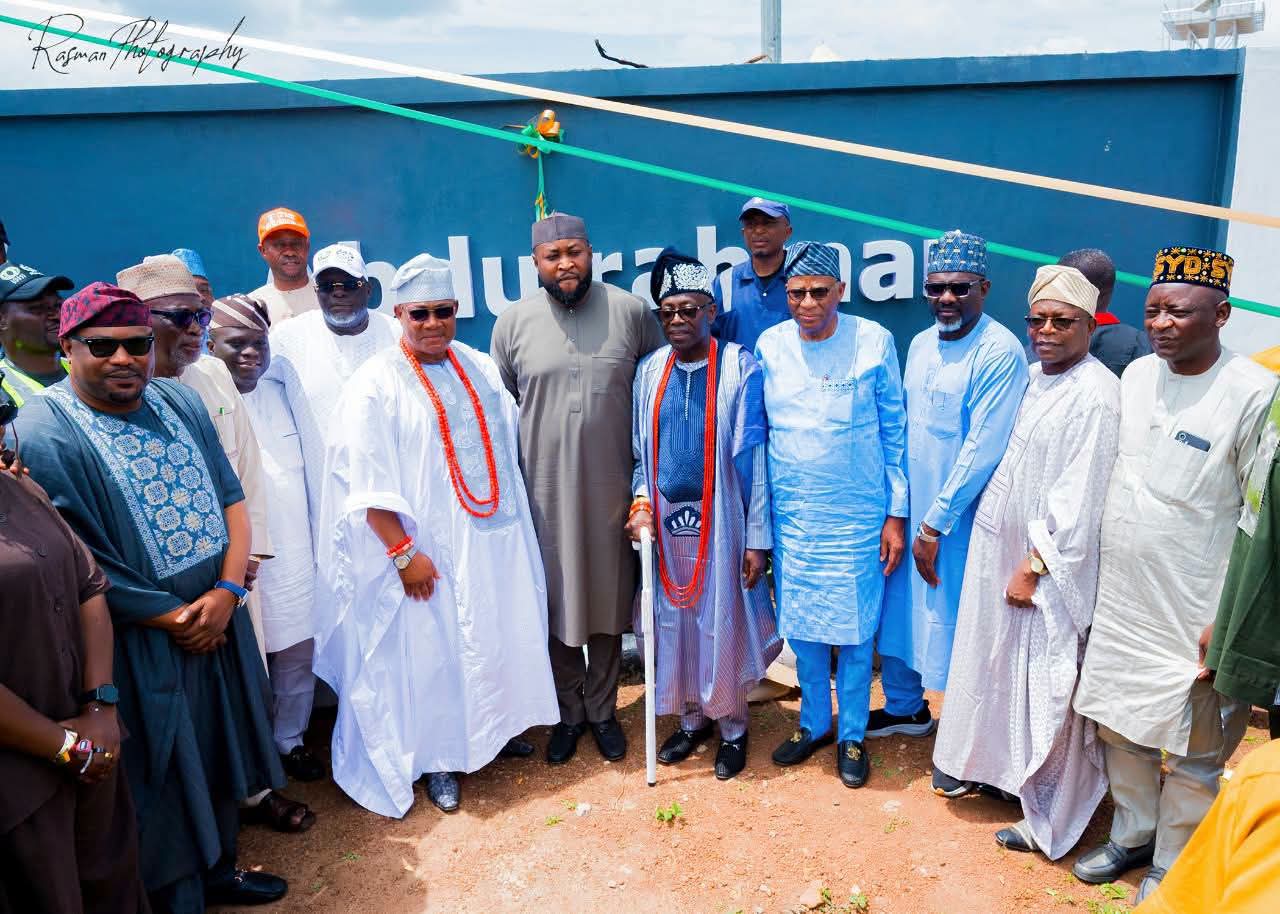
Stephen Olufemi Oni, Ilorin
Kwara State Governor AbdulRahman AbdulRazaq has inaugurated the ‘AbdulRahman AbdulRazaq Morire Housing Estate’ in Ijagbo, Oyun Local Government Area of the State.
Speaking at the groundbreaking of the housing estates, which included 210 units of two-bedroom terrace apartments, 200 units of three-bedroom units and 54 units of four-bedroom terrace duplexes, the
Governor, noted that housing should not be seen or regarded as a luxury, but rather as a fundamental human requirement and cornerstone of dignity, security, and family stability, lamenting the daunting challenge of addressing housing deficits across the country.
He said: “Dear Kwarans, housing is not a luxury. Basic housing is a
fundamental human need and a cornerstone of dignity, security,
and family stability. Yet, across Nigeria and indeed in Kwara State,
the challenge of addressing housing deficit is daunting.
“This administration believes that inadequacy of proper shelter
for Nigerians is not merely a problem of not building enough
houses. Indeed, several studies have attributed the housing deficit in Nigeria to a complex mix of causes, key among them being high costs and rising costs of building materials, weak finance, difficult land systems, infrastructure gaps, institutional limitations, among others.
“On behalf of the people of Kwara, I thank the management of ISHI
Homes Limited for this partnership and for choosing Kwara State
as the location for this important development.”
Represented by the Commissioner for Housing and Urban Development, Dr Segun Ogunsola, the Governor applauded the developer for recognising his administration’s contributions to mass housing development in the State.
“The administration has consistently placed housing development high on its agenda. The government recognises access to decent and affordable housing as essential to the wellbeing of the people.
“The State Government has also been in active collaboration with
institutional partners including the Federal Ministry of Housing
with a view to increasing housing stock in the State.
“Recently, we acquired a housing estate with over 130 flats at
Ogbondoroko in Asa LGA of the State. Government has approved
that the estate be onboarded onto the administration’s social
support scheme,” he disclosed.
AbdulRazaq said the commitment was reflected in the development of the Kwara Smart City and other mass housing initiatives across the State.
The Governor disclosed that his reforms in land administration have reduced the processing time for Certificate of Occupancy (C of O) from 180 days to 35 days.
AbdulRazaq said the improved turnaround time demonstrated the administration’s commitment to making land administration more transparent, efficient and investor-friendly.
Earlier in his remarks, the Chief Executive Officer (CEO) of ISHI Homes, Dr Olayinka Ilufoye, said the project was intended to democratise home ownership and make decent and affordable housing accessible to the people of Kwara South senatorial district.
Ilufoye said the estate was meant for civil servants, traders and other Nigerians who can access it through the National Housing Fund (NHF).
“The name AbdulRahman AbdulRazaq Morire, which translates to ‘I have seen goodness’, is a deliberate expression of our faith, hope and expectation.
“We believe this estate will become a testimony of prosperity, progress and abundance in Kwara South,” he said.
Ilufoye pledged that the company would remain committed to transparency, accountability, quality construction and timely delivery.
The Executive Chairman of the Kwara State Geographic Information Service (KWGIS), Alhaji Sulyman Abdulkareem said the state government has consistently placed housing development high on its development agenda.
He commended the state government for ensuring access to land, facilitating the prompt issuance of titles and certificate of occupancy.
Abdulkareem pointed out that by providing timely approval for mortgage transactions, the Governor is creating the conditions necessary for housing development to thrive in Kwara State.
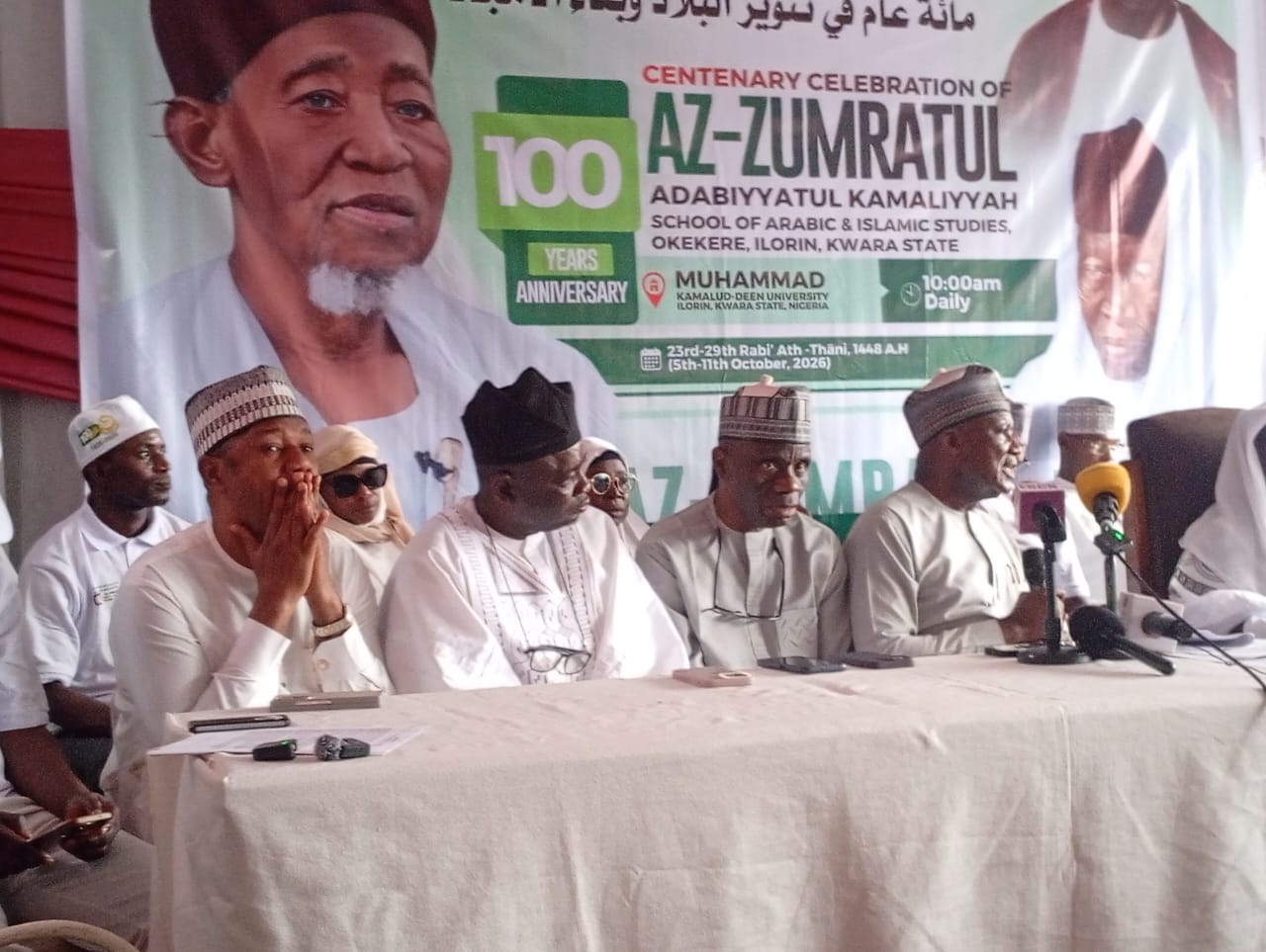
Stephen Olufemi Oni, Ilorin
Nigeria, and the world at large, are in dire need of exemplary leaders like the late Founder of the Ansarul Islam Society of Nigeria, Sheik Muhammad Kamalu-deen al- Adabbiy.
This was the submission of various scholars at a media briefing in ilorin, the Kwara State capital, to usher in the Society’s week-long activities to commemorate the 100 years of the establishment of the Az-Zumratul Adabiyatul Kamaliyyah School of Arabic and Islamic Studies, in Okekere, Ilorin.
The school was fouded by the late Sheik Kamalu-deen in 1942.
Born in 1905, the late Sheik Kamalu-deen was one of Nigeria’s foremost Islamic scholars and educational piooneers who transformed deep Islamic religoius learning into education and also advocated the acquisition of western education .
He also served as a Councillor and Member of the Ilorin Native Authority Transition Committee between 1958 and 1961and was appointed as the first grand mufti of Ilorin by the Emir of Ilorin.
The late Kamalu-deen al- Adabbiy died in 2005 at the aged of 100 years, leaving behind impactful legacies in the propagation of Islamic religion, scholarship, education and leadership.
Addressing journalists at the ancient hall of the Az-Zumratul Adabiyatul Kamaliyyah School of Arabic and Islamic Studies in Okekere, Ilorin, the spokesperson, Prof Kamil Kamaldeen, said the late sheikh was “non discriminatory” in all his policies, a virtue he said was lacking in most leaders today.
“We are here to celebrate the legacies of the late Sheikh Muhammad Kamalu-deen al-Adabbiy not to tell his history, at a time when the world continues to need what he stood for. We are in a world today that we are looking for leaders who will serve without puting themselves first, no matter where we come from,” he said
The Registrar was flanked by the Vice Chancellor of the Muhammad Kamalu-deen University, Prof AbdulRasheed Jimoh, General Overseer of the Az-Zumratul school, Sheik Mustapha Kamalu-deen al- Adabby, Grand Khadi of the Kwara State Sharia Court of Appeal, Justice Abdulateef Kamaldeen, National Missioner of Ansarul Islam Society of Nigeria, Sheik Abdulmumini Ayara, retired Grand Khadi of the Kwara state Sharia Court of Appeal, Justice Idris Haroon and a foremost islamic Scholar, Sheik Sharafadeen Ajara .
Others included the President of Az-Zumratul alumni association, Ustaz Abdullahi Oni-Tolotolo, and the Principal of the School.
They noted that the late Sheikh Kamalu-deen had through his preachings, established educational structures and selfless leadership qualities, produced worthy ambassadors in all spheres of disciplines, urging leaders at all levels to invest heavily in education .
“No society loses from investing in education, it can only gain, no society loses when you build skills, you can only gain,” they added.
The Scholars also charged leaders to take a cue from the late Sheikh Kamalu-deen whom they said was always willing to collaborate with scholars and leaders of like minds in a bid to bring advancement and progress to his community, citing his link with Al-Ahhar University, Cairo, as beneficial in advancement of higher Islamic studies in Ilorin.


Two German writers retrace the Long March by bicycle
To translate the vision of a constructive China-U.S. relationship of strategic stability into action

China’s express delivery industry shifts toward higher-quality growth

-
 Uncategorized6 years ago
FG, states urged to harness flooding for ranching, others with technology – Agbaje
-
 Headlines11 years ago
Breaking: EFCC seals Borno House of Assembly, as Hon members take to their heels
-
 News12 years ago
Nigeria Security Operatives Stage Manhunt For Homosexual Perpetrator
-
 News10 years ago
How 21-year-old Girl fled community over accusation of lesbianism
-
 News11 years ago
Yobe Gov Moves Against Deputy
-
 Opinion7 years ago
7 signs she has friend zoned you
-
Technology5 years ago
Online job placement company headhunts women
-
 Headlines10 years ago
Borno Dep Gov Abducts Another Church Leader