
Uncategorized
Dangote: The Monopoly We All Need

By Mary Odoma
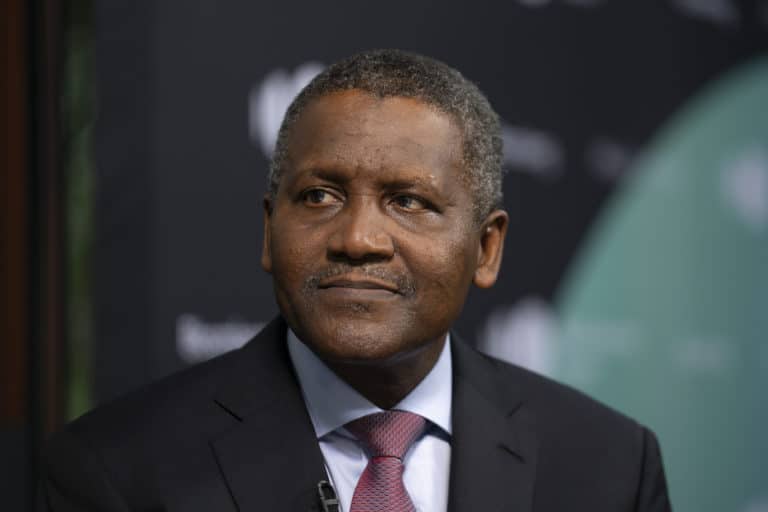
There seems to be a huge partition between Nigerian industrialist Alhaji Aliko Dangote and other Nigerian economy drivers. His visionary gait and purposefulness are fixated on recreating the essentials required to prop up the depleting economic fortune of Nigeria amidst contending voices.
Since 1977, when he ventured into business, trading in agricultural commodities and engaging in business supplies such as sugar and cement, Alhaji Aliko Dangote has never looked back. In 1981, he incorporated his numerous businesses, which eventually became a conglomerate. Today, the Dangote Group of Companies is a household name in Nigeria and beyond.
The holding company’s interest became so massive that its positive economic impact within Nigeria and sub-Saharan Africa became profound, edging out numerous foreign products from the West African domestic market. A strong advocate of industrialization, Alhaji Dangote believes that dependence on the importation of finished products to Africa simply translates to the importation of poverty and the exportation of jobs.
So, when the idea of the Dangote refinery was first announced in 2013, it was indeed heartwarming news to Nigerians. Although construction of the world’s biggest single-train refinery began in 2017, there were prospects that its completion would end Nigeria’s energy crises and reliance on fuel importation.
In 2013, the refinery project was estimated to cost the Dangote Group a whopping $9 billion. However, by the time construction work began in 2017, the cost had risen to about $15 billion. Despite this disparity in estimated cost, the Dangote Group went ahead with the construction work, which was estimated to be completed in 2019. Regrettably, due to the COVID-19 pandemic, the completion date was further shifted, and the date for commissioning was scheduled for the first half of 2021, but the 2021 date could not work due to unforeseen circumstances.
In all, at commissioning in the second quarter of 2023, precisely on May 23, construction of the refinery had gulped nearly $20 billion. It is an understatement to assert that building an efficient oil refinery facility has been at the heart of the debate over energy, forex, and fiscal policies in Nigeria for the last 50 years. This is because Nigeria’s four government-owned refineries, with a cumulative capacity of about 445,000 barrels per day (bpd), have been moribund for decades.
This meant that Nigeria exports its oil in crude form and imports refined oil with scarce foreign exchange. The attendant implication, therefore, was the emergence of the fuel subsidy regime, which was bad for Nigeria’s economic prospects. The regime led to the worsening state of the nation’s budget deficits as Nigeria’s debt profile increased with gloomy economic growth indices.
Against this background, several analysts drew up conclusions that the backlash received by the Dangote Group for daring to embark on such a massive project was an attempt to monopolise the economic benefits of the oil sector. Those naysayers had labelled the magnificent single-train refinery complex as a needless monopoly.
They orchestrated attacks and employed subversive antics just because they felt that the coming onstream of the Dangote multi-billion-dollar single-train refinery complex, the largest in the world, would finally put an end to their sordid business activities, which have held the nation’s economic lifeline hostage for more than five decades.
These few individuals are the fuel subsidy racketeers who have had their hands soiled in humongous scale corruption, diversion of the nation’s resources from critical sectors of the economy, as well as sharing profits of such loots amongst themselves and cronies in an inequitable manner.
Good enough, the multi-million-dollar Dangote refinery is here to bring the Nigerian dream to fruition. The refinery would meet 100% of all refined products required in Nigeria and a surplus for export. Though designed to process Nigerian crude, the refinery can also process most other African crude grades as well as Middle Eastern Arab light and even US Light.
The target is that, with a capacity of 650,000 barrels of crude per day, 450,000 bpd will be dedicated to meeting Nigeria’s domestic requirement. This means a total rejuvenation of the nation’s economy. Although the refinery has started with the production of diesel and aviation fuel, the sorting news is that the waiting game is over, the jinx has been broken.
It is instructive to admit that the import of the Dangote refinery coming on stream at this time is beyond the potential positive changes Nigeria’s economic indicators would witness in a few months. The positive impact of the multi-billion-dollar refinery would ultimately reflect directly on Nigeria’s foreign exchange reserves by reducing the pressure on the nation’s balance of payment.
This means that under President Tinubu, Nigeria would save trillions of naira and billions of dollars. For instance, between 2022 to 2023 alone, Nigeria spent over $70 billion on the importation of petroleum products, fertilizer, and petrochemicals, according to Africa Economy Digest.
Whatever the perception may be, Nigeria is at a crossroads. The country’s gloomy economic indicators that have remained a burden over the years are set to fizzle out for the better as the massive Dangote single-train world’s largest refinery debuts in the oil and gas sector.
Unfortunately, the reactive response of subsidy racketeers almost swayed the government’s decision on policies concerning the sale of Nigerian crude to local refineries, but thank goodness, the tide has assumed a positive dimension with recent impressive turns of events.
The evolving trend in the petroleum sector is what Nigeria requires to move forward; significantly, the feared Dangote refinery monopoly is what Nigeria as a nation requires now to thrive economically. This assertion is made more profound because the multi-billion-dollar refinery would, aside from saving the naira, make available vital raw materials of a wide range for manufacturers in the plastic, pharmaceuticals, food, beverages, construction, and other industries with massive job opportunities.
Candidly, the Dangote refinery is an ambitious move that has highlighted Nigeria’s potential for economic self-reliance. The $20 billion single-train Dangote refinery was envisioned to revolutionize the Nigerian oil and gas sector. Expectedly, the journey has not been without the usual criticism, with people raising questions about the rationale behind embarking on such a massive project in a developing and tottering economy.
The aim was basically to demonize the good intentions of the Dangote Group and its vision for Nigeria’s future. The hurting criticism was targeted at labelling the Dangote Group as shrewd capitalists whose target is to monopolize the Nigerian oil-based economy and beyond. However, the Dangote Group’s objective is clear; its intentions are not ambiguous. It is rather a blessing to the nation with the sole aim of reducing Nigeria’s dependence on the importation of refined petroleum products.
By refining petroleum products domestically, the Dangote refinery aims to enhance energy sufficiency, creating jobs, and spurring economic growth. Dangote refinery stands as a testament to Nigeria’s industrial ambitions and the complex interplay of business strategy, economic policy, and national interest.
No doubt, the Dangote refinery would, in no small measure, offer dividends similar to those from the Nigerian Liquified Natural Gas (LNG) investment, which has consistently provided returns despite initial scepticism. Furthermore, aside from boosting economic activities in the country, there will be revenue accruing to the government through taxes, royalties, and levies as the refinery comes on stream.
At least 144 products out of about 6000 products will be extracted in the process of refining petroleum. This means the value chain of refined petroleum products is very long and can stimulate a lot of businesses. Also, the multi-billion-dollar refinery would serve as a foreign exchange earner.
Industry experts projected that Nigeria could spend up to $30 billion in one year if the country continues to rely on imported petroleum products, an outrageous amount that can cripple the nation economically. Therefore, to save the nation from drifting completely to the precipice, the multi-billion-dollar refinery will boost Nigeria’s foreign exchange rate stability through the export of refined products.
Succinctly put, the coming on stream of the Dangote refinery is a game-changer that Nigeria so needs at this time. The refinery would not only change the economic narratives in Nigeria but the entire continent of Africa. Aliko Dangote has turned the tide towards a prosperous future for the continent. Indeed, this is a monopoly we most need and desire.
Odoma is a public affairs analyst based in Abuja.

- Drums support for Tinubu, APC candidates
Stephen Olufemi Oni, Ilorin
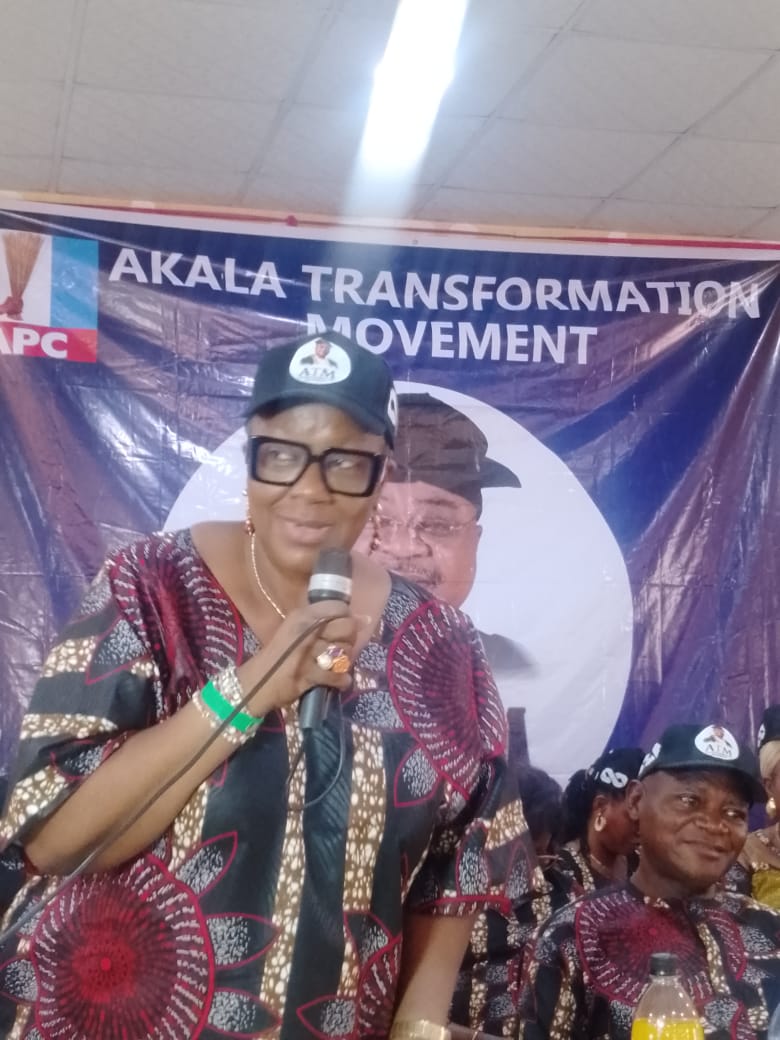
The Chairperson of the Akala Transformation Movement (ATM) and former First Lady of Oyo State, Chief (Mrs) Oluwakemi Alao-Akala, has called for the full implementation of local government autonomy, saying it will bring governance closer to Nigerians and accelerate development at the grassroots.
Alao-Akala made the call during an ATM outreach held at Equilibrium Resorts, Ojongbodu, Oyo West Local Government Area of Oyo State, where she also urged Nigerians, particularly women, to support the administration of President Bola Tinubu and participate actively in the democratic process.
She said the effective functioning of local governments was crucial because they remained the closest tier of government to the people.
“One important thing I am preaching now is local government autonomy. Obviously, we are going to have our local governments properly elected. They are going to be funded, and they are the closest to the people,” she said.
The former First Lady urged Nigerians to understand and assess the impact of government policies before making political decisions, stressing that the coming years should be devoted to consolidating ongoing reforms and ensuring that their benefits reach ordinary citizens.
She also called on women to remain actively involved in governance and continue supporting leaders through their votes and prayers.
According to her, voting remained a major responsibility of citizens because it determines the quality and direction of leadership at all levels.
Alao-Akala further urged ATM members and supporters to work for the success of the All Progressives Congress (APC) and support its candidates in state and national elections ahead of the 2027 general elections.
She clarified that ATM was a movement and not a political party, adding that its activities were aimed at mobilising support for the APC and its candidates.
Meanwhile, the Director-General of ATM, Mr Demola Alao-Akala, said the movement would continue to preserve and promote the legacy of his late father, former Oyo State Governor, Otunba Adebayo Alao-Akala.
He said the essence of the movement was not merely to remember the late governor but to sustain the values and principles he stood for, particularly people-oriented governance and the welfare of ordinary citizens.
“The concept of remembrance of our father is about making sure that his legacy survives. When he left, he left us a pattern, and we strongly believe that the legacy he left behind can be used to propagate his ideas and keep his memory alive,” he said.
The ATM DG said members of the movement were determined to build on the ideals of service and good governance associated with the late governor.
“We believe strongly that if we are alive, we are going to go back to our lives and continue in the spirit that he showed. We are moving forward, and I think we are supposed to continue,” he added.
Alao-Akala said the late governor’s political philosophy placed the welfare of the people at the centre of governance, noting that democracy should ultimately be judged by its positive impact on citizens.
He assured ATM members that the movement would remain committed to promoting the late governor’s ideals while mobilising support for programmes and candidates it believes can improve the lives of Nigerians.
“We are going forward,” he declared.

A legal practitioner, Mr M. D. Zarewa, has said that a bank cannot freeze or restrict a customer’s account without a valid court order.
Zarewa said it was prevalent in the society for law enforcement agencies to give directives to banks to freeze customers’ accounts whenever there was a pending case before them, adding that banks often complied with such directives.
He, however, said such practice was alien to Nigeria’s jurisprudence, stressing that banks were enjoined not to interfere with or restrict the activities of any customer’s account without a valid court order.
According to him, it is trite law and settled beyond argument that a bank cannot freeze a customer’s account without a valid court order.
He said the position was entrenched in the case of GTB Plc v. Olachi & Anor (2025) LPELR-81833(CA), where the Court of Appeal held that “whether frozen or restricted, neither can be done without the valid order of a Court of Law.”
Zarewa further cited GTBank v. Adedamola (2019) 5 NWLR (Pt. 1664) 30 at 43, Paras. E-F, where the court held:
“Before freezing customer’s account or placing any form of restraint on any account, the bank must be satisfied that there is an Order of Court.
“By the provisions of Section 34 of the Economic and Financial Crimes Commission Act 2004, the Economic and Financial Crimes Commission has no power to give direct instructions to banks to freeze the account of a customer without an Order of Court. So doing, constitutes a flagrant disregard and violation of the rights of a customer.”
The lawyer said any customer whose account had been frozen or restricted without a valid court order could institute a suit against the bank for grossly violating his or her rights.
He said such a customer could particularly seek redress for the violation of the right to own movable and immovable property and seek compensation from the court.
Furthermore, Zarewa said the law was trite that where there was a wrong, there was a remedy, as captured in the Latin maxim, Ubi jus ibi remedium.
Stephen Olufemi Oni, Ilorin
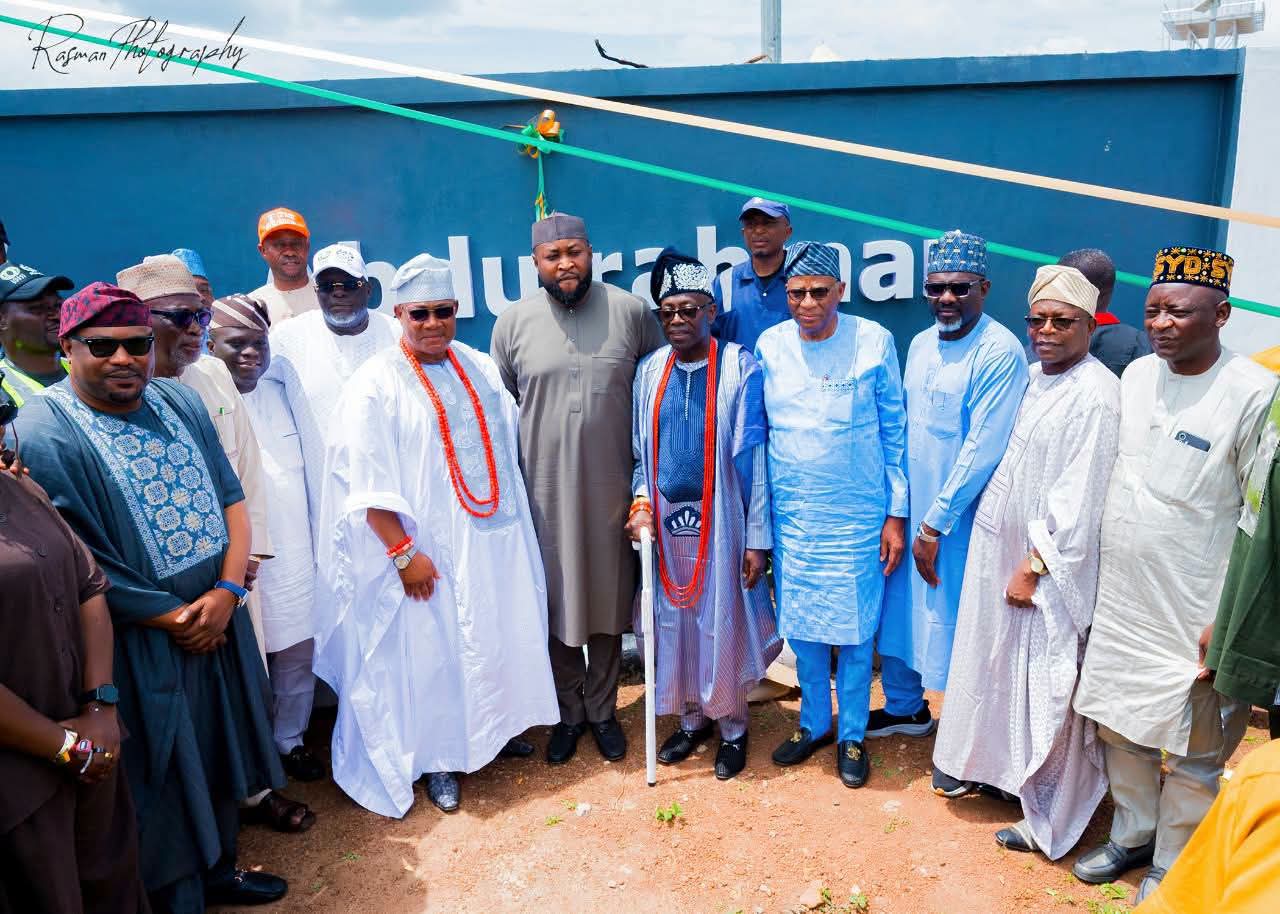
Kwara State Governor AbdulRahman AbdulRazaq has inaugurated the ‘AbdulRahman AbdulRazaq Morire Housing Estate’ in Ijagbo, Oyun Local Government Area of the State.
Speaking at the groundbreaking of the housing estates, which included 210 units of two-bedroom terrace apartments, 200 units of three-bedroom units and 54 units of four-bedroom terrace duplexes, the
Governor, noted that housing should not be seen or regarded as a luxury, but rather as a fundamental human requirement and cornerstone of dignity, security, and family stability, lamenting the daunting challenge of addressing housing deficits across the country.
He said: “Dear Kwarans, housing is not a luxury. Basic housing is a
fundamental human need and a cornerstone of dignity, security,
and family stability. Yet, across Nigeria and indeed in Kwara State,
the challenge of addressing housing deficit is daunting.
“This administration believes that inadequacy of proper shelter
for Nigerians is not merely a problem of not building enough
houses. Indeed, several studies have attributed the housing deficit in Nigeria to a complex mix of causes, key among them being high costs and rising costs of building materials, weak finance, difficult land systems, infrastructure gaps, institutional limitations, among others.
“On behalf of the people of Kwara, I thank the management of ISHI
Homes Limited for this partnership and for choosing Kwara State
as the location for this important development.”
Represented by the Commissioner for Housing and Urban Development, Dr Segun Ogunsola, the Governor applauded the developer for recognising his administration’s contributions to mass housing development in the State.
“The administration has consistently placed housing development high on its agenda. The government recognises access to decent and affordable housing as essential to the wellbeing of the people.
“The State Government has also been in active collaboration with
institutional partners including the Federal Ministry of Housing
with a view to increasing housing stock in the State.
“Recently, we acquired a housing estate with over 130 flats at
Ogbondoroko in Asa LGA of the State. Government has approved
that the estate be onboarded onto the administration’s social
support scheme,” he disclosed.
AbdulRazaq said the commitment was reflected in the development of the Kwara Smart City and other mass housing initiatives across the State.
The Governor disclosed that his reforms in land administration have reduced the processing time for Certificate of Occupancy (C of O) from 180 days to 35 days.
AbdulRazaq said the improved turnaround time demonstrated the administration’s commitment to making land administration more transparent, efficient and investor-friendly.
Earlier in his remarks, the Chief Executive Officer (CEO) of ISHI Homes, Dr Olayinka Ilufoye, said the project was intended to democratise home ownership and make decent and affordable housing accessible to the people of Kwara South senatorial district.
Ilufoye said the estate was meant for civil servants, traders and other Nigerians who can access it through the National Housing Fund (NHF).
“The name AbdulRahman AbdulRazaq Morire, which translates to ‘I have seen goodness’, is a deliberate expression of our faith, hope and expectation.
“We believe this estate will become a testimony of prosperity, progress and abundance in Kwara South,” he said.
Ilufoye pledged that the company would remain committed to transparency, accountability, quality construction and timely delivery.
The Executive Chairman of the Kwara State Geographic Information Service (KWGIS), Alhaji Sulyman Abdulkareem said the state government has consistently placed housing development high on its development agenda.
He commended the state government for ensuring access to land, facilitating the prompt issuance of titles and certificate of occupancy.
Abdulkareem pointed out that by providing timely approval for mortgage transactions, the Governor is creating the conditions necessary for housing development to thrive in Kwara State.


Alao-Akala’s Widow Urges Full Implementation Of LG Autonomy

PRESS STATEMENT BY AREWA DISCUSSION GROUP TITLED; PHRANK SHUAIBU: THE FACE OF A DUBIOUS, ROGUISH MERCHANT OF COUNTERFEITS

Two German writers retrace the Long March by bicycle

-
 Uncategorized6 years ago
FG, states urged to harness flooding for ranching, others with technology – Agbaje
-
 Headlines11 years ago
Breaking: EFCC seals Borno House of Assembly, as Hon members take to their heels
-
 News12 years ago
Nigeria Security Operatives Stage Manhunt For Homosexual Perpetrator
-
 News10 years ago
How 21-year-old Girl fled community over accusation of lesbianism
-
 News11 years ago
Yobe Gov Moves Against Deputy
-
 Opinion7 years ago
7 signs she has friend zoned you
-
Technology5 years ago
Online job placement company headhunts women
-
 Headlines10 years ago
Borno Dep Gov Abducts Another Church Leader