
Defence/Security
Constitution Review: Lawmakers Harp On LG autonomy, State Police, Women Rights, As Senate Panel Holds Retreat In Kano

From Lateef Taiwo
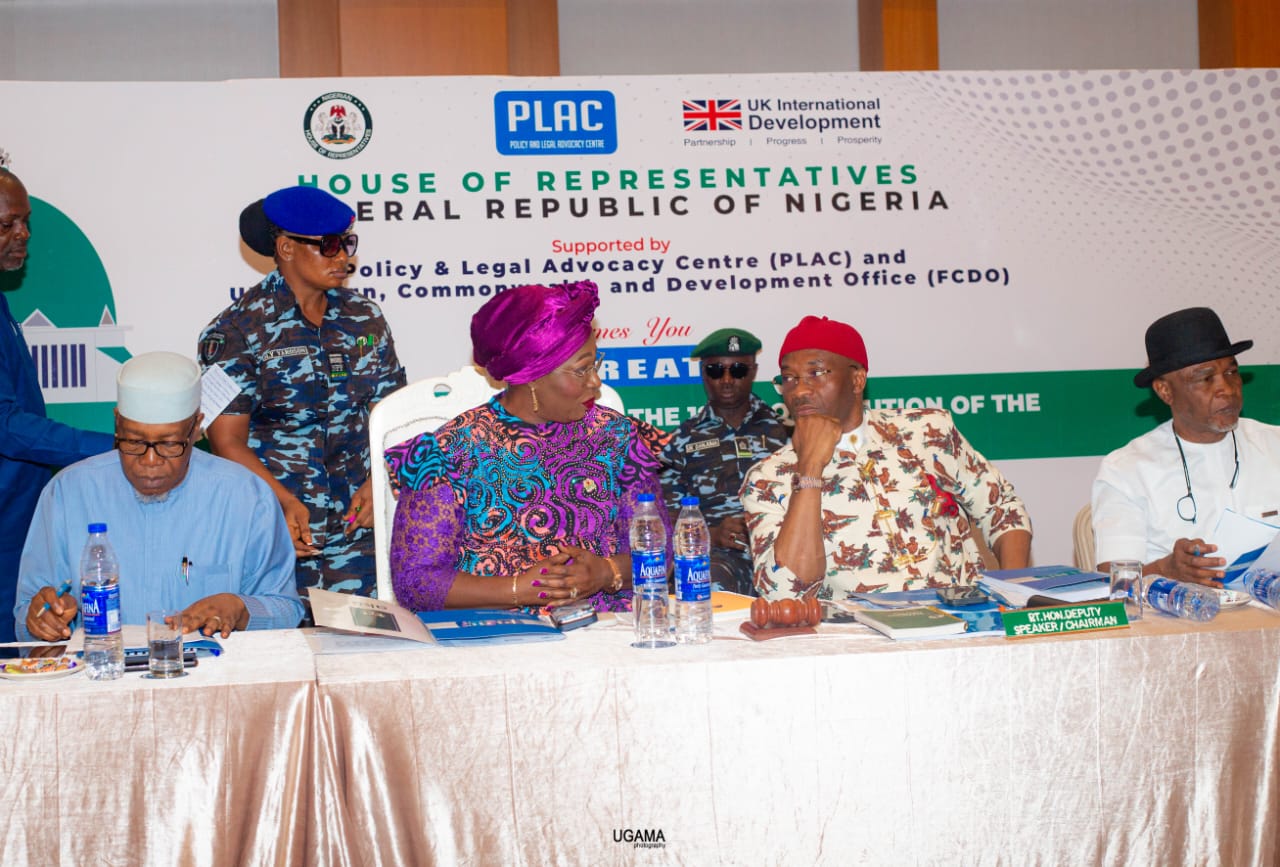
The Senate adhoc Committee on Constitution Review started it’s two-day, retreat in Kano on Friday with a disclosure that the National Assembly will produce the draft bill in December 2025.
Speakers at the event, jointly organised with the Policy and Legal Advocacy Centre
(PLAC), wanted the proposed reviews to focus on Local Government Autonomy, State Police, and specific roles for traditional rulers in order to tackle issues of insecurity.
The forum agreed that the National Assembly panels at both chambers should hold joint engagements with the state governors, state assemblies, judiciary, civil society organisations and other critical stakeholders to guide against bills rejection at state levels.
In his welcome address, the Deputy President of the Senate and Chairman, Senate Committee on Constitution Review, Senator Jibrin Barau, pledged that the on going review of the nation’s constitution, would meet the wishes and aspirations of the people of the country.
He said, “It an assignment for us to work in synergy with our colleagues and other stakeholders to produce an outstanding report and recommendations, which, of course, will be composed of suggestions and recommendations to the Senate of the Federal Republic of Nigeria for further deliberation and approval.
“As we embark on this critical journey, let us remember the timeless values that make nations great: freedom, equality, and justice.
“These enduring ideals should guide us through this arduous task.
As we consider desirable amendments to our Constitution, I implore that we do so with the utmost care and consideration.
“Our decisions today will have far-reaching implications for generations to come, and we must ensure that they are in the best interests of all Nigerians.
“To achieve meaningful reform, we must synergise with our esteemed colleagues in the House of Representatives Ad Hoc Committee on Constitution Review and collaborate with critical stakeholders, including the executive arm of government, State Governors, State Assemblies, the judiciary, and civil society organisations, to build consensus on contentious issues.
“Our collective success hinges on our ability to work together seamlessly, sharing ideas and expertise to develop a report to be submitted to the Senate for further legislative actions.
“This retreat presents a unique opportunity for constructive good-faith dialogue and collective problem-solving,” Barau stated.
The Deputy Speaker of the House of Representatives, who chairs the constitution review panel in the House of Representatives, Rt. Hon Benjamin Kalu, said the retreat provided an avenue for the Senate to reflect on the process and
challenges of Constitution alteration.
H said other stakeholders would also have the opportunity to make inputs to help shape the direction, content and the approach that the Committee could take to achieve its desired goals.
Represented by the House Leader, Julius Ihonvbere, the deputy speaker said the synergy between both chambers would enable the federal parliament to conclude the Constitution alteration exercise within
the proposed timeframe of December, 2025.
Kalu said, “This is to forestall a situation whereby Nigerians do not see the exercise through a political prism if political campaigns leading up to the 2027 elections have actively commenced”
He suggested that the collaboration of the two chambers should include engagement with political leaders/traditional rulers and leaders of faith-based organisations.
He also advocated joint meetings with State governors, and consultants to the panel, to harmonise documents.
He further suggested that the Senate and the House of Representatives panels would hold joint zonal public hearings to rmon suitable dates to fast track the review process.
The Chairman, Conference of State Houses of Assembly SpeakersAdebo Edward Ogundoyin, expressed delight that the review process started early compared to what happened in the last assembly.
He said the exercise started somewhat late in the 9th Assembly hence the views were transmitted to the State Houses of Assembly at a later date closer to the election.
Ogundoyin , who is the Speaker of the Oyo State House of Assembly, said, “The last assembly experience invariably affected the decisions that were made by the State Houses of Assembly.
“By God’s grace, this exercise, coming up at this time would definitely give us ample time for us to review the views that were transmitted to the State Houses of Assembly for onward assents.
“At this juncture, we reiterate our earlier call for the prompt transmission of the National Assembly Resolutions on the proposed amendments to the State Houses of Assembly.
“Timely submission is essential to allow us at the sub-national level, to effectively fulfill our responsibility as due.
“We recall the challenges posed by the electionary activities during the 2023 general election, which nearly hampered the last constitutional alteration.
“We are determined to avoid such occurrences, and an early start will be key in ensuring a smooth and efficient process.”
The President of the 9th Senate, Ahmad Lawan, expressed the hope that the 10th National Assembly will produce constitutional review targets that are realistic, andl meet the demands of Nigerians.
He said, “The last assembly had about 62 issues that were both passed by the Senate and the House of Representatives.
“Forty four of the harmonized versions were passed and sent to the states out of which 35 passed and were assented to by the President then.”
Lawan, however urged his colleagues to pay serious attention to the issues of women and the constitution roles for traditional rulers.
He said, “There were some issues that didn’t pass, even at the level of the two chambers, for example, those that affected women.
“Five of those bills, did not pass. I think, with the benefit of insight, we should look at those issues that did not pass,
“I think the time is right, and right, for the women’s forum to be given the opportunity to serve as appropriately as possible.
“I believe that our royal fathers have roles to play, especially when it comes to dealing with these issues across the country.
“Can’t we give them an advanced role, official, formal role, that will make them do better?”
He also urged his colleagues to give legislative powers to the judgement of the Supreme Court concerning local government autonomy.
“The National Assembly, should give effect to that judgment. States should mind their business and deal with the resources that are purely theirs. Our local governments must be resuscitated.
“ At the moment, they are in comatose, collapsed, and completely docile and inefficient. In fact, in many states, they don’t even exist in practical sense.

By: Fabian Apechihin
Public affairs analyst, Majeed Dahiru, has weighed in on the reports of targeted killings of Christians in Nigeria, insisting that President Bola Tinubu cannot be accused of religious bias or complicity in the country’s security challenges.
Speaking on Channels Television’s Politics Today, Dahiru said President Tinubu has shown a strong commitment to national security and unity since taking office.
“President Tinubu has not, by any stretch of the imagination, been accused of religious bigotry or having sympathy for Islamist jihadist terror groups,” he stated.
According to him, the president has mobilised the armed forces and other security agencies to combat insurgency and restore stability in violence-prone regions.
Dahiru acknowledged that attacks on Christians in some parts of the country remain worrisome but maintained that there has been visible progress in the fight against terrorism and banditry.
“Absolutely not. You can criticise him for every other thing, but not for religious bias. There is no way he would sit idly as Commander-in-Chief and allow or encourage the killing of Christians,” he added.
His comments follow heightened international concern over alleged religiously motivated killings in Nigeria.
On October 31, former U.S. President Donald Trump described the situation as a “mass slaughter,” warning that Christianity faces an existential threat in Nigeria.
Trump also directed Congressman Riley Moore and House Appropriations Chairman Tom Cole to investigate the reported killings, saying:
“I am hereby making Nigeria a ‘country of particular concern.’ But that is the least of it. When Christians, or any such group, are slaughtered as is happening in Nigeria (3,100 versus 4,476 worldwide), something must be done!”
However, the Nigerian government has dismissed the claims of a “Christian genocide,” insisting that security forces are confronting all forms of criminality without ethnic or religious bias.
Defence/Security
Genocide Allegations: Group Urges Tinubu to File Treason Charges Against Nigerians Who Reported Country to Trump

By: Fabian Apechihin
The National Patriotic Elders for Peace and Harmony of Nigeria (NPEPHN) has called on President Bola Tinubu to file treasonable felony charges against Nigerians who allegedly reported cases of Christian massacres to the United States government.
In a statement issued on Friday, the group’s president, Dr. Bature AbdulAziz, condemned the actions of those he described as “unpatriotic elements”, insisting that their reports to foreign powers amounted to a betrayal of national sovereignty.
“Nigeria is a sovereign nation with adequate laws to address the concerns of its citizens,” AbdulAziz said. “Reporting the country to another nation is nothing short of treasonable felony, and those responsible must be prosecuted.”
The elders also urged Northern governors to urgently convene a regional security meeting involving religious and ethnic leaders to address the recurring violence in the region and to present verified data on casualties to counter “false narratives” being circulated internationally.
According to AbdulAziz, the silence of Northern leaders amid U.S. President Donald Trump’s threat of military intervention in Nigeria was unacceptable. He advised them to compile accurate records of attacks and present factual evidence before relevant authorities.
“The claim that over 500,000 Christians have been killed must be supported with verifiable data,” he said. “The U.S. government knows that most of the victims of insecurity in Nigeria are Muslims, not Christians.”
Citing data from various conflict-prone regions, AbdulAziz maintained that 75 percent of victims of terrorism and communal violence since 1999 have been Muslims, noting that most of the affected areas — including Kaduna, Zamfara, Kebbi, Sokoto, Kano, Jigawa, Bauchi, Borno, and Yobe — are predominantly Muslim communities.
“These are the towns and villages that have been burned, destroyed, and displaced repeatedly,” he added.
While acknowledging that parts of the North Central zone — including Benue, Plateau, Taraba, and Kwara — have a higher Christian population, AbdulAziz said most of the conflicts in those states stem from farmer-herder clashes, where both sides suffer heavy losses.
“In many cases, Muslim herders are attacked and displaced by host communities. Their families and livestock are killed, yet no one talks about those casualties,” he noted.
AbdulAziz faulted the U.S. government for allegedly accepting “false genocide claims” without conducting independent investigations.
“It is shocking that the United States would believe such fabrications despite its advanced intelligence systems. We suspect there is a hidden political motive — possibly linked to Nigeria’s stance on the Israel-Palestine issue at the United Nations, or our government’s growing alignment with France and other nations,” he alleged.
The elder statesman reminded Donald Trump of Nigeria’s historic role in promoting peace and democracy across Africa.
“Any attack on Nigeria would destabilize several African nations that depend on her strength. We therefore appeal to President Trump to reconsider his decision,” AbdulAziz stated.
The group reiterated its support for President Tinubu’s administration and urged Nigerians to unite in defending the country’s sovereignty from “external manipulation and internal sabotage.”
Defence/Security
Retired ACP Sheriff Rabiu Blasts Northern Clerics Over Hate Preaching, Almajiri Menace

By: Fabian Apechihin
A retired Assistant Commissioner of Police, Sheriff Abubakar Rabiu, has sparked nationwide debate with a hard-hitting open letter accusing some Northern Islamic clerics of fueling division and violence through incendiary sermons.
The strongly worded message, which has gone viral across WhatsApp groups, mosque forums, and security networks, condemned what Rabiu described as the “toxic preaching culture” that has poisoned the minds of Northern youths and laid the foundation for extremist movements like Boko Haram.
“Nobody has the key to Jannatul Firdausi except Allah,” Rabiu wrote. “Yet any Tom, Dick, and Harry with shallow knowledge of Islam grabs a microphone and calls our Christian brothers ‘Arna’, ‘Kafurai’, or ‘infidels destined for hell’. This is not Islam. This is madness — and this madness gave birth to Boko Haram.”
Rabiu, who once served as Chief Security Officer to former Adamawa Governor Murtala Nyako, said Nigeria’s greatest internal threats are hate preaching and the Almajiri system, which he described as a breeding ground for radicalization.
“An idle mind is the devil’s workshop. Those street children begging today are tomorrow’s recruits and foot soldiers for every terrorist group promising paradise for killing ‘infidels’,” he warned.
Turning his criticism inward, Rabiu questioned why Northern leaders were quick to blame Donald Trump for placing Nigeria on a religious freedom watchlist while ignoring the behaviors that justified it.
“Instead of shouting that Trump is Islamophobic, let’s ask ourselves why America put us on that list,” he said. “In Saudi Arabia, Qatar, or the UAE, try preaching hate from a pulpit — you’ll be arrested the same day. But here in secular Nigeria, they insult Christians from Friday to Friday and nobody stops them.”
Rabiu urged President Bola Tinubu to take decisive action by directing the National Assembly, Northern governors, and local government councils to enact and enforce laws criminalizing:
- The use of derogatory religious labels like arne or kafir
- Street begging by children under the Almajiri system
- Hate speech disguised as preaching
“Do this sincerely,” he cautioned, “and America will see that we are serious. Fail, and we invite the same war machinery that turned Afghanistan and Iraq into graveyards.”
The retired officer ended with a nostalgic appeal for unity:
“If we implement these measures, Nigeria will return to the peace we had in the 1970s — when Muslims and Christians drank from the same cup, married each other’s sisters, and buried each other’s dead.”
By Thursday evening, Rabiu’s open letter had been shared in over 40 Northern WhatsApp groups, drawing support from youth leaders and religious moderates alike.
A community leader in Kano’s Hotoro suburb said, “This is the first time a respected Muslim officer has spoken this boldly. If our governors ignore him, they are the real enemies of Islam.”
Although the Kano Hisbah Board declined to comment officially, a senior commander who spoke off record admitted, “Mallam Sheriff said what many of us whisper privately. The question is — who will bell the cat?”
As Northern Nigeria grapples with rising tension over the message, one fact remains clear: a retired police officer has drawn a bold red line against radical preaching — and the ripple effect may reshape the region’s religious discourse for years to come.


Changsha brings millennia-old heritage into modern life

Gov AbdulRazaq Lauded Over Conferment Of Sadauna Of Ilorin Title

FG Commissions KWASU ICT Centre To Enhance Graduates Employability

-
 Uncategorized6 years ago
FG, states urged to harness flooding for ranching, others with technology – Agbaje
-
 Headlines11 years ago
Breaking: EFCC seals Borno House of Assembly, as Hon members take to their heels
-
 News12 years ago
Nigeria Security Operatives Stage Manhunt For Homosexual Perpetrator
-
 News10 years ago
How 21-year-old Girl fled community over accusation of lesbianism
-
 News11 years ago
Yobe Gov Moves Against Deputy
-
 Opinion7 years ago
7 signs she has friend zoned you
-
Technology5 years ago
Online job placement company headhunts women
-
 Headlines10 years ago
Borno Dep Gov Abducts Another Church Leader