
News
TAX REFORM BILLS :TIME TO KILL THE PROVERBIAL COW.

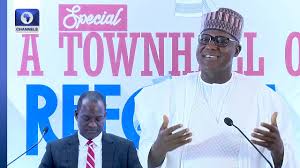
By: A G Abubakar
As the heated debate on Tinubu’s tax reform and the inherent derivation-based sharing principles of the VAT and related accruals ensues, it would be interesting to play the role of the devil’s advocate. Leaving experts, legislators and opinion leaders to pore over the technicalities, iniquities, and mechanics of the said bills.This position is by no means based on the merits or otherwise of the proposed reform itself, but rather on the understanding that the status quo has not worked for the ordinary man in the region.The North has been having a raw deal at the hands of its leaders over the past decades. Yes,things may get worse, with reduced access to the shareable at Abuja, but maybe that’s what was needed as a wake-up call for Northern politicians and opinion leaders in general. So let the shareable dry. Necessity, they say, is the mother of inventions/creativity.
Maybe, with emotions still running high, it was time to rave up work on Plan B; a holistic, binding, and workable Regional Transformation agenda for the whole North. Access to “cheap” Abuja funds has engendered dependency syndrome among many states in the region. Some forgot that the dependency phenomenon at times carry an expiry date. The ongoing tax reform could just be one of those times and also a harbinger of more difficult and troubling times to come. The North needs to start looking inward as it goes for equity at the center. No nation and indeed society gets ahead with developmental strategy that is largely based on palliative and political patronage. Or by getting people fitted into the life of deprivations due to dwindling volumes of the shareable. The approach should be jettisoned or even killed sooner A parable by Paul Simos, titled “Kill the Cow” may underscore this seemingly harsh inclination. And, not to reduce its full essence, the parable is hereby reproduced in verbatim.
Kill The Cow
A family lives on the outskirts of a small village on a plot of land. The family owned one cow. Each day, they lived on the milk of the cow. If there is little milk, they eat little. If there is lots of milk, they eat well. The life of the mother, the father, and the children depend on the cow.
One autumn, a lone traveller stops at the village. He is hungry. The family shared their milk. The traveller is grateful.
The traveller wishes to return the favour and help the family. He doesn’t know how to help the family. He hears that there is a wise man in the village. He walks over to the house of the wise man.
“I was hungry, and the family fed me. I would like to help them. How can I help this family?”
“The wise man said, “Kill the Cow. “
The traveller was nervous following such strange advice, but the reputation of the wise man was such that he went ahead and killed the cow.
A year later, the traveller happened to pass again through the village. He noticed new shops and a thriving market. He saw a new hotel that provided food to travellers who came for the market.
The traveller entered the hotel. Behind the bar, he found the eldest son of the family of the cow. The man was standing tall, smiling, and happy. The traveller greeted him and asked, “What happened?”
“We lost our cow. There was no milk.we had to go out and do something to eat. We set up a small market, and it grew. We set up this hotel, and it is growing. Without the milk from our cow, we had to try new things.”
Silently to himself, the traveller reflected on the power of the wise man’s words.
“Kill the cow.”
A Question Of Governance, Not Opportunities
The North may need to have its cow (VAT, FAAC, etc) killed before it can “try new things” within the context of its extensive potentials. It would however take good governance and accountability, which has been in short supply for decades, to get things turned around in most of the 19 states in the North.
1.Adamawa state warehouses one of best lands for both arable and livestock farming. The soil is rich and water in the Benue river last all year round in parts. The presence of the Nigeria’s premier sugar company, the Savannah Sugar Company, the Sebore Farms owned by former governor, Admiral Nyako (rtd) and the Ngurore Cotton Farms are testaments of Adamawa’s agricultural prowess. The Sebore Farm remains one of the earliest and foremost large scale private agricultural initiatives in Nigeria.
Adamawa, too, has a long contiguous border with the Republic of Cameroon where livestock activities thrive very well. Cross border trade between the two neighbours through Mubi, Marwa, etc, has been enormous for decades. After all, the present Adamawa Emirate border extends to parts of Northern Cameroon. The Lamido of Adamawa remains the paramount traditional leader of both sections. Cross border trade if streamlined can be a game changer for Adamawa state economy. It will however need a holistic strategy, backed a generous political will to this laudable goal.
2.Taraba state* can compete for the title of being “nature’s gift to the world” at least the Nigerian world, in view of its awe inspiring climatic and topographical contrasts, making it conducive for a wide range of economic activities. For instance, Taraba’s climate is almost temperate on the Mambila plateau and hot and humid in the low land areeas. The famous Highland Tea brand. The Mambil Plateau also boasts of cultivating crops like apple and cherry thrive very well.
The topography and geomorphology also support hydro-powered economic activities, including electricity generation, irrigation farming, and dairy production, on industrial levels. The corruption ridden Mambila Power Project initiated by the Federal Government is located in Taraba State.
The area of Taraba bordering Benue state is a prime land for the cultivation of yam. The availability of abundant war and pastures make state highly conclusive for livestock rearing. Infact the state’s livestock base is capable of supporting and large scale daily industry that can be a huge revenue earner. The underbelly of the Taraba highlands are equally loaded with a wide range of solid minerals being currently appropriated by illegal miners. However, to leverage these opportunities, there will be need to create an enabling policy environment and the political will to drive the process.
3.Borno State shares borders with three countries, namely, Cameroon, Chad, and Niger. Before the Boko Haram crisis, multi-million dollar worth of businesses were transacted daily with towns like Kirawa, Pulka, Malam Fatori, and Gamboru-Ngala, being the epicentre. The famous Chad Basin agricultural programme provided the needed backstopping services to the state’s agricultural sector along with the Borno State Agricultural Programme (BOSAP).
During the state’s past periods of peace, it ranked high in the production of wheat, millet, melon, groundnuts, cotton, etc. The Yau Agricultural Project in Abadam, in the Lake Chad basin in the 50s. Baga was an international fisheries centre equipped and supported by government with a training school and boat building facilities in the 70s and 80s.There was a cotton ginary in Biu owned by British Cotton Ginary (BCG) Ltd and run by Nigeria Cotton Board. An oil mill for processing groundnut and cotton seeds operated in Maiduguri.
In addition, there was a vibrant and strong livestock sector producing dairy (Gidan Madara), as well as hides and skin and providing employent opportunities in allied businesses. Borno’s economy was really on upswing but no more.These and similar initiatives could be revived to make Borno great once more.
4.Yobe State has constituent parts that used to be famous for the cultivation of groundnut and grains. The Nguru Oil Mills readily comes to mind. There was also the Nguru meat processing facilities in the town where hundreds of cows were slaughtered daily and the meat refrigerated and containerised for distribution to other parts of the country by rail. Some more were packaged for export, to earn foreign exchange in the 60s.
Potiskum and Fika Emirates and parts of Gujba were renown grain zones. Ngalda and Potiskum grains and livestock markets still keep the legacy. The Bade flood plains can support modern fish farming and potash-based fertiliser production. Yobe State has widespread deposits gypsum across parts of the state. The deposits are yet to be harnessed properly as the operations are dominated by illegal miners, with the output usually consumed by the neighbouring Ashaka Cement and others.
With enormous sunshine has the potential to be a solar energy and also an ICT development hub. It’s a quite and laid back environment. An appropriate policy in that direction has the capacity to transform state in the near future.
5.Gombe State, then Gombe Emirate was the location of one of the earliest irrigation projects in the North, called the Khayasi Farms. Its operations were along the Dadin Kowa river where fruits, vegetables and tomato were cultivated on a mechanised scale all year round. A tomato puree and mango juice factory called Vegfru was established at neighbouring Jauro Garga Town in then Biu LGA to process and can the farm produce. The Gombe cotton ginary was also a famous one.The Khayasi Farms may have gone under but the water body is still there, being utilised for electric power generation.
Gombe along its boarder with Borno (Biu), to their east, lie uranium deposits. It also shares in the crude oil finds along its western border with Bauchi in the Kolmani basin. The state has an extensive gypsum deposits too that has been feeding the famous Ashaka Cement factory. These are huge opportunities waiting to be harnessed to make Gombe state more viable
6.Bauchi State is home to Yankari, one of the premier tourist destinations in Nigeria. In the past, it attracted both international and local visitors, thereby boosting the state’s economy. The state currently boasts of huge gypsum deposits around the Alkaleri and Kirfi axis. With the discovery of oil along its border with Gombe, oil-related businesses are bound crop up and thrive in the state as a whole.
The agricultural activities along the Hadeja-Jama’are River Basin catchments in Northern Bauchi has for long been a major contributor the state’s economic health. The discovery of oil could be an added impetus.
With the right attitude Bauchi’s economic future shall certainly be great.
7.The Plateau State holds the honour of being the largest producer of iron ore (Kuza). The rise to prominence of its capital, Jos, was to a large extent attributed to the minning activities on the Plateau. The potential is very much still there. Plateau’s near temperate weather has made the state conducive for potato, “acchcha,” apple, and fruits cultivation on a large scale. Aside agriculture, tourism has been a huge earner of resources for the state until insecurity undermined it. Plateau State’s solid mineral potentials along with agriculture and tourism should be able to launch launch launch it into reconing, economically, given the needed political will and an appropriate policy framework. The glory of the Nasco Industry, the JIB, the Jut Bag Industry, etc, may yet be back.
8.Narasawa State is endowed with huge varieties of solid mineral resources, just like its next-door cousin, Plateau. Thus, Nasarawa state goes by the mantra, the “Home of Solid Minerals.” Aside minerals, the state is blessed with huge arable land that also qualifies it to take place among the food baskets regions in the North. Crops like maize, yams, rice, and sugarcane are heavily cultivated. The Dangote Group recently showed interest in undertaking large-scale agricultural production in the state. The success of Nagari Farm owned by Adamu Abdullahi is further proof of Nasarawa’s agricultural potential. The state’s proximity to Abuja, the Federal Capital, has had a huge impact on its economy via border towns like Mararraba, Nyanya, Masaka, Kuru, Keffi, etc. It only requires a little more commitment and right policies to strengthen the state’s economy.
9.Benue State undoubtedly remains one of the major contributors to the nation’s food requirements. It is the largest producer of yams. Yam markets like Zaki Biam and Katsina-Ala are well known both nationally and internationally as yam centres. Having derived its name from the famous River Benue, the state enjoys a huge capacity for the cultivation of palms, cassue, oranges, mangoes, and bananas too. So huge is the outputs that are traded outside Nigeria especially in the West African region. The agricultural sector in Benue state actually gave rise and sustained the famous Taraku Oil Mills before it went under. The state equally owned and a success of the Benue Cement Company, Gboko, before being acquired by the Dangote Group. With the right mindset, things can get right again.
10.Kaduna State ordinarily should have no business with deprivations. It is the successor entity/centre to the defunct Northern Region. The state, aside being the most cosmopolitan, inherited a huge stock of industrial base, physical infrastructure, and top security installations/institutions like the NDA, Staff College Jaji, DIC, Air force Base, Police College, etc.
In the areas of manufacturing, over fifty per cent of the textiles industries in the North are based in Kaduna. The state is also home to the Peugeot Car Assembly plant, now acquired by Dangote. Neighboring, Zaria City, too, used to host the defunct Nigeria Electricity Meter Manufacturing Co Ltd.
The land supports a wide range of crops ranging from ginger in the South (Kafanchan, Zonkwa, Kaura, etc) and grains in the Saminaka, Soba, Zaria, Giwa, Birnin Gwari zones. Tubers like yams, cassava, and potatoes are also cultivated on huge scales across the state. With a little push, imagination, and right policies, the economy of the state can get the right shot on the arm.
11.Niger State, like Kaduna, is rich in agriculture. It also enjoys the economies of the River Nigeria that houses both Kainji and Shiroro hydroelectric power installations. The state’s mantra fact is the “Power State.” Revenue wise, the state enjoys some derivation through the HYPPADEC to mitigate environmental challenges.
Fisheries and shea butter oil production are feasible activities among the communities living along the rivers. The potentials here are enormous though largely untapped. The upland areas of Kontagora, Mokwa to Badeggi support cultivation of both food production and cash crops like maize, guinea corn, yams, and rice. Badeggi, in Niger state, is the headquarters of the National Cereals Research Institute (NCRI economy, too.
With places like Madalla, Suleja, and Tafa being part of the Abuja conurbations, economic activities in such areas like housing, transportation, hospitality and other micro businesses have the potential to boost the state’s economy tremendously. It will however require a well thought out policy, and resilience on the part of the government to achieve it. But its doable. Moreso with two Big Brothers watching over former heads of state, Babangida and Abdulsalami. The latter’s Maizube Farms should serve as a model for local livestock farmers.
12.Kogi, the “Conference” State is the meeting point of the two iconic rivers that traversed the centre of Nigeria. These are the Niger and Benue. The two met at Lokoja, the Kogi state capital, before journeying to the Niger Delta region and, eventually, to the Atlantic Ocean. This made the state rich in fisheries and also agriculture. Palm oil production is a huge business in Eastern Kogi.
Aside agriculture that state is also rich solid minerals. It has huge deposits of coal in the Ankpa zone, that is now being illegally mined. Kogi state is host to two largest ventures ever undertaken in the nation’s developmental history before the Dangote Refinery, in Lagos recently. These are the multi-million dollar Ajaokuta Steel Company and the Dangote Cement at Obajana. While the steel venture is owned by government, Aliko Dangote owns the cement company. There is the Okene handwoven cloth that can compete with the Ghana “kente” even in the international market. A more appropriate policy measure will leverage enormous economic transformation.
13.Kwara state has the benefit of being a meeting point of culture and tradition, just like neighbouring Kogi. The old Western Region has had had enormous impact on Kwara in terms of manpower development and entrepreneurial spirits. The Adedoyins and Folawiyos, (in the realm of business), the Saraki and AbdulRazak as technocrats and professionals provided impetus for Kwara State’s development and the capacity to tap its natural resources. Kwara is endowed enormous agricultural potential, with the existence of Bachita Sugar Company, Jebba Paper Mills, and Shonga Farm project as testaments. Given a little more political will, the socioeconomic landscape of Kwara would change for the better. A dose of prayer from powerful men of God, like Bishop Oyadepo, the General Overseer Oyadepo of the Living Faith Church International (Winners), and a “son of the soil” from Omu-Aran, would also serve as a spiritual reinforcement measure.
14.Kebbi State qualifies as a food basket and agricultural hub, too. The Kebbi rice and onions are well known across the country. Buhari’s Anchor Borrowers programme was launched in the state. The Alero zone in Kebbi State is the largest producer of onions in Nigeria and indeed West Africa. The Yawuri-Zuru axis is a maize and other grains production zone.The prowess of Kebbi State attracted the attention of the current government and the immediate past one to use the state as a model/pilot for the federal government’s rice initiative.
The towns of Jega and Kamba are also well-known commercial centres beyond Nigeria. The former arguably holds the record for housing the largest concentration of businessmen in the defunct Sokoto state, with the exception of Gusau. Kamba border market and Customs Point promotes huge volume of international trade with the republics of Benin and Niger. The cross border activities impact the local economy greatly. The Argungu fishing festival remains one of the premier tourist events and a revenue source, as well. A modicum of appropriate reform and and a modicum of political willpower shall make a huge difference in moving the state forward.
15.Zamfa State has been in the news for both good and bad reasons. Good that its gold deposit is attracting positive attention. Bad that it has, among other factors, brought about a debilitating security challenges. Gusau, the state capital, was a major commercial and industrial centre during the time of the Sardauna, Sir Ahmadu Bello, the premier of the old Northern Nigeria. The Nigerian Railways’ western-line passed through Gusau to Kaura Namoda, a development that stimulated enormous commercial activities in the area. It impacted the local economy for decades.
Such industries like the famous Zamfara textile, Gusau oil mills, and hides and skin made Zamfara tick. Currently, the state ranks among top producers of gold in Nigeria, the bulk of which is mined illegally. The security challenges in the state and the nearby regions are believed to be partially fuelled by the illegal mining activities. A little bid of streamlining and containment could go a long way in changing the economic fortunes of the state.
16.Sokoto state may be facing ecological challenges, but agriculture and livestock still thrive well well. The efficacy of the Rima Basin Development Authority is there to be replicated. The Basin itself is also believed to seat on crude oil. Huge deposits of gypsum are as well found in Sokoto state. The findings actually influenced the establishment of the first cement company in the North the defunct Sokoto Province, namely, the Cement Company of Northern Nigeria in the Kalambaina area.
Like its other fourteen counterparts in the North, Sokoto State has an extensive international borders with Niger Republic. Millions of naira worth of goods and services traded daily, across the said borders but with little accountability. A lot of income could be harnessed by government under a given right policy environments, are diverted systematically by private interests.
17.Katsina state state has two distinct ecological zones that support different types of agricultural activities. The Funtua zone is the wetter part where large-scale farming thrives. Cotton production was a major cash crop that led to the establishment of textiles and allied ventures, which impacted the local economy enormously. The central and northern tips of Katsina are semi-arids, where livestock farming is a big vocation.
A steel rolling mill was established in Katsina in the early 80s, though moribund now. Katsina state has long border with Niger Republic to the north, with Jibia and Mai’adua being the most vibrant crossings. The border economy contributes positively to the state’s economy but for the challenges of accountability.
Incidentally, Katsina is the only state in the North that produced two former heads of state and a second in command, namely, Buhari, Umaru ‘Yar Adua, and Shehu MusaYar Adua respectively. The Katsina College equally produced most of the early technocrats that ruled the North under the Sardauna. With these rich pedigree a good policy strategy could spur Katsina towards to socioeconomic glory in a short time.
18.Jigawa state shares a similar ecological outlook with Katsina and Kano. The state experiences enormous rains in the southern part around Birnin Kudu and a lesser spell in the dry Sahel zones of Kazaure, Maigatari, Hadeja, and Gumel. Livestock thrives well in the latter, while arable farming is a big business in the former . Two former governors of Jigawa, namely Saminu Turaki and Sule Lamido, experimented with three projects that have the potential to transform the economy of the state but somehow got bogged down. Two of them, rain harvesting and ICT development, seemed to be ahead of their time. They were initiated by Turaki. Lamido introduced early maturing varieties of date palm. Jigawa state today remains one of the biggest producers of date (dabino) in the country, among other agricultural outputs. With a more appropriate policy framework, the state can transform itself in the shortest possible time, especially with Kano State as a source of market next door.
19.Kano state remains the commercial capital of North. It was a historic centre of trade centuries ago and still keeps the flag flying. Kano commands 60 per cent of manufacturing activities in the heyday of the North. The famous Bagauda textiles, the Groundnut prymids, the Raleigh Bicycle Manufacturing, the Fiat Trucks Assembly plant, the Bottling companies etc underscore Kano’s industrial prowess. The southern part of the state, has been determined to house uranium deposits in commercial quantities. Kano may therefore soon become a solid minerals producing state aside being an industrial hub.
Kano’s irrigation system is a model for dry season farming across the entire North. This is facilitated by a network of dams and canals where the bulk of the nation’s tomato, onion and other vegetables are produced all year round. The Hadeja-Jama’are River Basin Authority leverages Kano’s agricultural strides and complemented by private investors like the Anadariya Farms in Bebeji.
The icing on Kano’s leading position as industrial and commercial power was the emergence of two of its sons as the first two richest people in Nigeria. Dangote and Abdulsamad of BUA are estimated to have a combined total wealth in excess of $20 billion! Though Kano might have lost some of its glory, in recent times, but with the right policy framework and environment, the state has the potential to be great again and also lead other sections of the region along, in industrialisation terms.
Business Can Not Continue As Usual
The above is a bird’s eye view of the 19 states that constitute the North – a region where 10 out of the 15 heads of state come from. A zone that houses over 120 people with unquantifiable potential in terms of both human and natural resources, that include 74% of the nation’s landmass with 70 million hectares of it arable, according to FAO The North is also home to 90% of Nigeria’s 156 million herds of cattle.
Paradoxically, the largest dairy farm in Nigeria is in Odeda Ogun State and many others in Oyo State, areas traditionally not known cattle farming. The Lagos State government, too, has established Lagos Food Security System and Logistics Hub for major food processing, storage, and distribution. Located at Ketu-Ereyun, Epe LGA is believed to be the largest in Sub-Saharan Africa.
The North couldn’t leverage on it’s comperative advantages effectively, thus reducing the region to a shadow of itself. And now found itself locked in an “existential” threats, posed by a possible reduction in FAAC allocations. Maybe it’s time to kill the cow.
A.G.Abubakar agbarewa@gmail.com
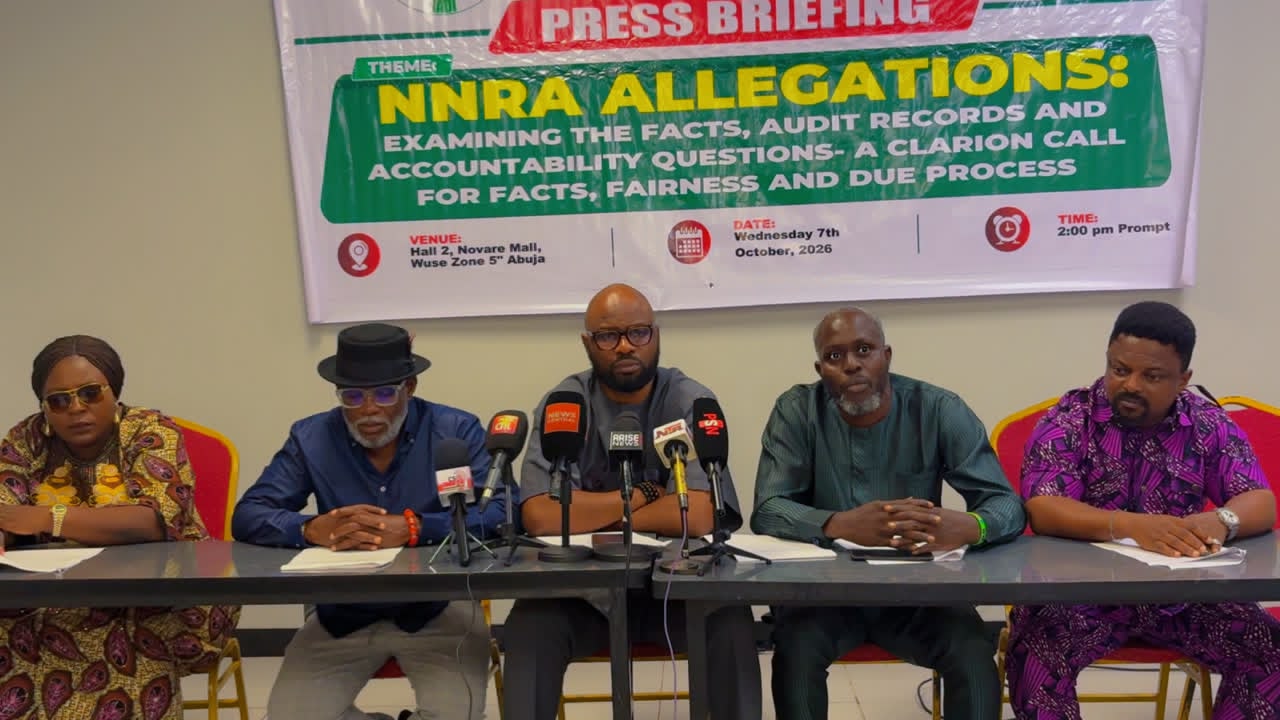
The Integrity Advocacy for Development Initiative (IADI) has called for a thorough, evidence-based examination of allegations of financial misconduct involving the Nigerian Nuclear Regulatory Authority (NNRA), warning against treating audit observations and media reports as established cases of fraud.
IADI Executive Director, Comrade Ofomhi Christopher, made the call on Wednesday at a press briefing in Abuja titled, “On the Allegations Concerning the Nigerian Nuclear Regulatory Authority (NNRA): Facts, Clarifications and the Need for Evidence-Based Accountability.”
The group was reacting to a publication by Secrets Reporters dated October 1, 2026, which alleged that about N6.69 billion was involved in contract fraud and misappropriation at the NNRA.
It also referred to a protest held on October 5 by Global Integrity Watch (GIW) at the NNRA headquarters, where the organisation demanded accountability, responses to audit observations and Freedom of Information requests, as well as changes in the leadership of the regulatory authority.
Christopher said while the allegations deserved scrutiny, they should not be treated as established facts without verification of the underlying records.
According to him, the public deserves to know the specific audit observations, periods and transactions involved, the nature of the contracts, the status of the projects or services, responses provided by the NNRA and whether the issues had been resolved or referred for further investigation.
“An audit observation is a serious matter requiring explanation and verification, but it is not, by itself, a judicial finding of fraud or personal misappropriation,” he said.
The IADI chief also referred to an explanation reportedly provided by the NNRA Director-General concerning the authority’s 2024 capital budget.
He said the explanation put the NNRA’s total 2024 capital budget at about N2.7 billion, comprising approximately N200 million belonging directly to the authority and about N2.5 billion for constituency projects, with an additional N200 million regional project bringing the figure referenced to about N2.9 billion.
Christopher, however, stressed that the explanation should not be regarded as conclusive, urging that it be tested against appropriation documents, budget releases, project records, procurement documents, payment records and audit reports.
“That is how responsible accountability should work: a claim is made, the response is heard, the records are examined, and the evidence determines the conclusion,” he said.
On allegations concerning unexecuted projects, the organisation called for physical verification of the specific projects, while allegations of inflated contract prices should be subjected to scrutiny of contracts, bills of quantities, procurement records and relevant price benchmarks.
It also urged that allegations concerning contractors be examined through relevant procurement and ownership records, while any claim of diversion or misappropriation should be established through the financial trail.
Christopher said where audit authorities had raised observations on expenditure, the public should be informed of the precise observations, the affected institution’s response and the current status of the issues.
The organisation also addressed the October 5 protest by GIW, acknowledging the constitutional right of civil society organisations to peaceful assembly and association under Section 40 of the Constitution.
It, however, urged CSOs to exercise such rights responsibly and within the law.
On Freedom of Information requests, IADI said there should be a distinction between the right to protest and the legal mechanism available where an FOI request is not answered.
The organisation noted that the Freedom of Information Act provides a judicial mechanism for applicants who have been denied access to information, adding that Section 20 allows an applicant to approach the court for a review.
IADI clarified that it was not suggesting that CSOs must obtain a court order before organising peaceful protests.
Rather, Christopher said, where non-compliance with an FOI request was the central grievance, the statutory and judicial mechanisms should be considered alongside legitimate civic action.
“An unanswered FOI request may justify further action to obtain the information. It does not, by itself, establish that fraud, misappropriation or any other wrongdoing has occurred,” he said.
The group also urged organisers of protests at government agencies to take public safety, access to government premises and the safety of protesters, workers and other citizens into consideration.
At the same time, it cautioned government institutions against using the possibility of confrontation as a justification for suppressing lawful civic expression.
“The answer to institutional disagreement should be law, evidence and due process, not intimidation or retaliation,” Christopher said.
He stressed that IADI was neither seeking to shield the NNRA from scrutiny nor dismiss legitimate questions concerning public expenditure at the authority.
He called on relevant audit and oversight bodies to state the status of the observations in question, the responses received from the NNRA and whether the matters had been resolved, sustained or referred for further investigation.
The organisation also encouraged CSOs pursuing accountability to make full use of available legal and institutional mechanisms while retaining their legitimate right to peaceful civic action.
“The public deserves accountability. But the public also deserves accuracy, fairness and evidence.
“A headline is not a verdict. An allegation is not evidence. An audit observation is not automatically a finding of personal guilt,” Christopher said.
He added that public institutions should not expect their expenditure to escape scrutiny merely because questions were raised through the media or civil society.
“Let the records be examined. Let the questions be answered. Let the evidence speak,” he said.
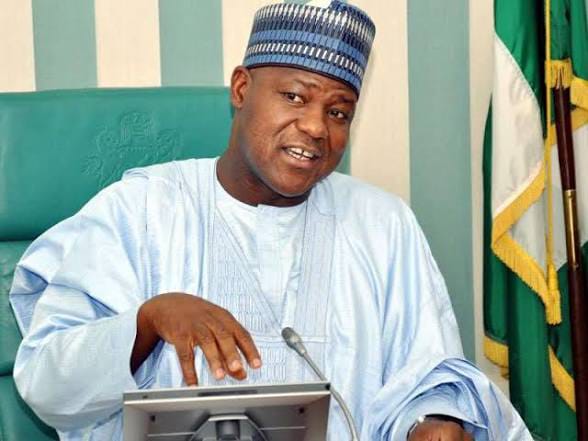
Former Speaker of the House of Representatives and Chairman of the Board of the National Credit Guarantee Company Limited (NCGC), Rt. Hon. Yakubu Dogara, CFR has expressed deep sorrow over the Nigerian Air Force aircraft crash that claimed the lives of 32 persons near Igbokoda, Ondo State. Dogara described the tragedy as a heartbreaking loss to the nation, noting that the deaths of the victims have left a painful void in the country’s defence and security community.
In a statement, the former Speaker extended his condolences to President Bola Ahmed Tinubu, Commander-in-Chief of the Armed Forces, the Nigerian Air Force, and the families of those who perished in the unfortunate incident.
He said the nation shares in the grief of the bereaved families and the Armed Forces at this time of immense sorrow, adding that the sacrifices of those who lost their lives in service to the country will not be forgotten. “The nation mourns with the families of the deceased and stands in solidarity with the Armed Forces during this difficult period,” Dogara stated.
He also commiserated with the Chief of Air Staff, officers and men of the Nigerian Air Force, praying that God grants them the fortitude to bear the painful loss.
According to him, moments such as this call for national unity, reflection and collective support for the families and institutions affected by the tragedy.
Dogara paid tribute to the victims, describing them as patriotic Nigerians whose commitment and service contributed to the security and stability of the nation. He further applauded the efforts of emergency responders, rescue teams and all personnel involved in the aftermath of the crash, commending their courage and professionalism under difficult circumstances.
The former Speaker prayed God to comfort their families, friends and colleagues.
He also offered prayers for the safety and protection of members of the Armed Forces and for continued peace, unity and progress in Nigeria.
The Nigerian Air Force aircraft crashed near Igbokoda, Ondo State, resulting in the death of 32 persons and plunging the nation into mourning. Authorities are yet to make public the cause of the accident as investigations continue.
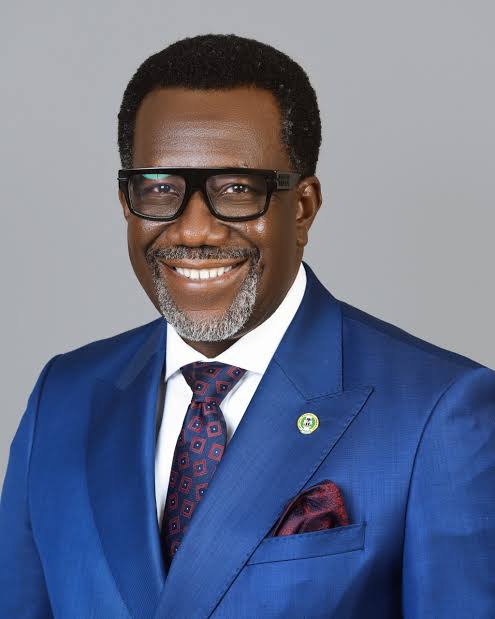
The Centre for Credible Reforms and Institutional Accountability (CCRIA) has commended the Commissioner for Insurance and Chief Executive Officer of the National Insurance Commission (NAICOM), Mr Olusegun Ayo Omosehin, for promoting transparency and accountability in the ongoing reforms of Nigeria’s insurance industry.
The centre said the implementation of the Nigerian Insurance Industry Reform Act (NIIRA) 2025 had ushered in a new phase of development for the sector, with stronger regulatory standards, improved capitalisation and greater emphasis on protecting policyholders.
Dr Aminu Abubakar Aminu, president of the centre, said this in a statement at the weekend.
Aminu commended President Bola Tinubu and the National Assembly for the enactment of NIIRA, describing the legislation as a major step towards addressing longstanding challenges in the insurance industry.
“The enactment of the Nigerian Insurance Industry Reform Act is a significant milestone in the development of Nigeria’s insurance sector. We commend Mr President and the National Assembly for recognising the need to modernise the legal and regulatory framework governing the industry. NIIRA provides the foundation for an insurance sector that is better capitalised, more accountable, more responsive to policyholders and better equipped to contribute meaningfully to the Nigerian economy,” he said.
The centre also praised Omosehin for his leadership of NAICOM, saying his extensive experience as an insurance professional had positioned him to effectively implement the new regulatory framework.
“We consider the appointment of Mr Olusegun Ayo Omosehin as Commissioner for Insurance and Chief Executive Officer of NAICOM a timely and appropriate decision. He is a seasoned insurance professional with many years of experience in the industry, and his understanding of the sector gives him the practical knowledge required to lead an important reform process of this nature. We commend him for the direction he has provided since assuming office and for his commitment to strengthening the industry,” Aminu said.
According to the centre, the ongoing recapitalisation exercise was among the important steps taken to strengthen the financial capacity of insurance companies and improve their ability to meet obligations to policyholders.
Aminu said the reforms were already producing early gains and should be sustained through consistent implementation.
“The early developments under NIIRA demonstrate that the reform is not merely a legislative exercise but a process capable of producing measurable improvements in the industry. Stronger capital requirements, improved supervision and greater attention to policyholder protection will ultimately create an insurance market that Nigerians can trust. We encourage NAICOM to remain focused on the implementation of the Act and to continue providing clear guidance to operators and other stakeholders,” he said.
The centre noted that the reforms would also help deepen insurance penetration and strengthen the industry’s contribution to national economic development.
It urged insurance companies, brokers, reinsurers, professional bodies and other stakeholders to embrace the new framework and work with NAICOM to achieve the objectives of the legislation.
“The success of NIIRA will require the cooperation of every stakeholder in the insurance ecosystem. Operators must see the reforms as an opportunity to strengthen their institutions, improve their services and regain the confidence of Nigerians. A well-regulated insurance industry can mobilise long-term capital, protect businesses and households against risks and support investment and economic growth. These are benefits that go beyond the insurance industry itself,” Aminu said.
Aminu emphasized that the centre was particularly encouraged by the emphasis on policyholder protection under the new framework, noting that public confidence remained critical to the growth of insurance in Nigeria.
He said Nigerians should be able to purchase insurance products with confidence that operators had the financial capacity and institutional structures required to honour legitimate claims.
The president further urged NAICOM to sustain its engagement with stakeholders while ensuring that the provisions of NIIRA were implemented transparently and consistently.
“What is required at this stage is continuity, professionalism and commitment to the objectives of the law. The reforms must be sustained beyond the initial implementation period so that the gains can become permanent features of the industry. We believe NAICOM, under the leadership of Mr Ayo Omosehin, has an important responsibility to ensure that the momentum is maintained, and we encourage all stakeholders to support the commission in delivering on this mandate,” he said.
The centre said the successful implementation of NIIRA would strengthen confidence in the insurance sector, improve the protection available to policyholders and position the industry to play a greater role in Nigeria’s economic transformation.
It also called for continued collaboration between NAICOM, insurance operators and other stakeholders to ensure that the objectives of the new law were fully achieved.


NNRA Allegations: IADI Demands Evidence, Says Audit Queries Not Proof of Fraud

Alao-Akala’s Widow Urges Full Implementation Of LG Autonomy

PRESS STATEMENT BY AREWA DISCUSSION GROUP TITLED; PHRANK SHUAIBU: THE FACE OF A DUBIOUS, ROGUISH MERCHANT OF COUNTERFEITS

-
 Uncategorized6 years ago
FG, states urged to harness flooding for ranching, others with technology – Agbaje
-
 Headlines11 years ago
Breaking: EFCC seals Borno House of Assembly, as Hon members take to their heels
-
 News12 years ago
Nigeria Security Operatives Stage Manhunt For Homosexual Perpetrator
-
 News10 years ago
How 21-year-old Girl fled community over accusation of lesbianism
-
 News11 years ago
Yobe Gov Moves Against Deputy
-
 Opinion7 years ago
7 signs she has friend zoned you
-
Technology5 years ago
Online job placement company headhunts women
-
 Headlines10 years ago
Borno Dep Gov Abducts Another Church Leader