
News
Benue: Group blast Akume over Comments on Gov Alia, Suswam, Gemade and others

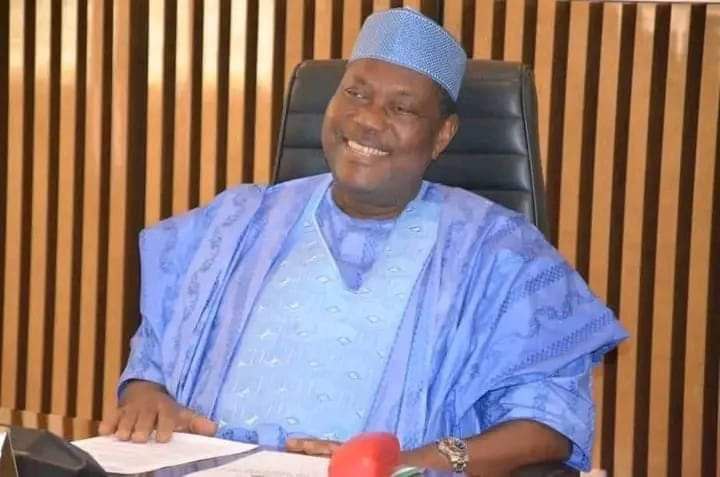
A Group under the auspices of Zone A Political Assembly, ZAPA, has blasted the secretary to the Federal Government, Senator George Akume, over his remarks on Governor Hyacinth Alia, former governor Gabriel Torwua Suswam, Senator Barnabas Gemade at the burial of Late Paul Unongo in Jato- Aka, Kwande Local Government Area of Benue State. In a press conference in Makurdi, on Monday, the president of the Association, Frank Fanen Mondo, described the SGF conduct as vexatious that greatly denigrated his personality based on the office he is currently occupying. “We are compelled to address the Nigerian people through this press conference , albeit for the umpteenth time on this vexatious issue of Sen. George Akume, former governor of Benue state who currently occupies the coverted office of the secretary to the government of the federation of Nigeria whose conducts, attitude and character has greatly denigrated his personality and political personage, the office he occupies and most profoundly portrayed the government he represents in bad light.This is because His Excellency Senator George Akume who after passing out of school, has worked amongst the elite of the society for over fifty years, first as a civil servant, then as governor, senator, minister of the federal republic and now SGF, who should be a statesman whose conduct in both public and private life should be exemplary, has the penchant for always indulging in heavy alcoholic bouts to gain Dutch Courage and spew out insults on illustrious sons of Benue, particularly those from the North East Senatorial district of the state popularly referred to as Zone “A”. “For over two decades, Sen. Akume has lined up prominent sons of Benue Zone “A” and rained unimaginable insults on them without provocation at mostly public places and on communication platforms. Sen. Akume had at various times called the revered Tiv monarch, Prof. James Iorzua Ayatse unprintable names, same to Sen. Gabriel Torwua Suswam, a former governor of the state. Akume has also at every available opportunity rained insults on elder statesman and former works and housing secretary to the federal government, Sen. Barnabas Gemade OFR, Sen. Joseph Akaagerger, Rtd. Col. Benjamin Aboho(late) Amb. James Gbasha etc., all sons of Zone “A “. “To crown his uncivilized and rascally behavior of always resorting to gutter language, Akume has not spared the sitting governor of Benue state, His Excellency, Most Rev. Dr. Hyacinth Alia who he has severally demeaned. Indeed,the list of illustrious sons of Benue who have been the target of Akume ‘s insults and attacks is endless. “What we have observed over the years mistakenly as a funny past time influenced by alcohol has crossed over to a well orchestrated plan to destroy Zone “A”. “The game plan is to attack and weaken the best that Zone “A” has got to offer in terms of personalities and human capital, which is why the likes of Suswam, Alia, Gemade and all influential sons of Zone “A” are marked by Akume for annihilation. The game plan also involves deliberately promoting only those from Zone “A” who are Akumes blind worshipers and who for a plate of porridge, can even kill their fellow Zone “A” brother. These carefully selected stooges are permanently tied to Akumes political apron strings. “The recent outing of Sen. Akume at the burial of the late Wantaregh Paul Iorpuu Unongo, a former minister of steel development in Nigeria ( which video clips we played at the beginning of this event) where he broke protocol by lying that he was representing the president of Nigeria, His Excellency, Asiwaju Bola Ahmed Tinubu but never said anything the president directed him to say but rather used the opportunity to descend on Senators Akaagerger, Gemade and Suswam, calling them unprintable names is a good example of Akume ‘s diatribe on Zone “A”.
“In as much as we don’t want people misinterpreting our actions as a “pull him down” activity (as the gullible are bound to say anyway) we want Nigerians to note certain very salient points about Akume who has today, chosen to be a Lord desiring worship from everyone; “Untill Senator Gemade single handedly made him governor in1999, Akume was a nobody, living on his meager pensions as a retired civil servant of Benue state. He had no resources or connections outside Sen. Gemade to prosecute a gubernatorial project. “If Sen. Gemade who was calling the political shots in Benue state at that time decided to run for governor of Benue state in 1999, or if he decided that his kinsman, Rev. Fr. Moses Adasu whose tenure was truncated by the military should complete it as was done in Taraba and Kogi states, nobody would stop him but it was his consideration that the Governorship should go to Jemngbagh in honour of the late J S Tarka. To this, Gemade had made Akume the governorship candidate of the now rested Congress for National Consensus, a party that Gemade was its national chairman in 1997 before it was disbanded as a result of the death of General Sani Abacha, Nigeria’s erstwhile head of state. “It is shocking, dear Nigerians, to hear Sen. Akume in a desperate tone to spite, refer to Chief Gemade a man who is not less than ten years older than Akume as “anmbayev” ( children) saying, “…Gemade did not make me governor).But Benue people and indeed Nigerians are aware that as one of the founders of the PDP in 1998 and with enormous powers to decide who flies the party’s gubernatorial flag in the state, Gemade made Akume the governorship candidate of the PDP against the popular choice of Mike Mku who was preferred by party men. But for Sen. Gemade’s enormous goodwill amongst Benue people, there is no way Akume would be governor of Benue State in 1999. We challenge Sen. Akume to mention just one political ally in each of the 23 Local governments in Benue state that he knew before 1998.But today, Akume sees himself as having fallen from the skies with a sign on his forehead which read, ‘O BENUE PEOPLE, THIS IS YOUR KING AND YOU MUST BOW AND WORSHIP HIM FOREVER “. Too bad. “God, and the people of Benue State have been so good to Akume. Since 1999 when Gemade made him governor, Akume has never been out of government, most of these years, at the central government. We expect Akume s life to be characterized by thanksgiving to God and humility to the people. But on the contrary, what we see is a man playing God and subjecting all men, particularly those from Benue Zone “A” to his hosanna choristers. “However, the tragedy of Sen. Akume s public life is that, apart from the Federal Polytechnic Adikpo which Gemade fought for, which Akume forcefully removed from Adikpo to Annune, there is no federal presence even in his Jemngbagh intermediate area. “Before he became governor, Akume could not boast of a single investment anywhere. After over twenty years of been in government the story remains the same. Rather, Akume deludes in the false belief that he is the one installing governors in the state. And because of this false belief, he insists on using every governor after him to gain access to the public till. Anyone that refused incurred his wrath and he uses false propaganda to pitch the people against them by magnifying their shortcomings; he did it to Suswam in his second year as governor, did same to Ortom in his fourth year and is doing some to Alia now. The crime of Suswam, Gemade and other well meaning leaders in the state is that they have refused to support him to destabilize Fr. Alia. “When Akume calls somebody a thief, the world finds it funny because it sounds much like the pot calling the kettle black. This is a man who as governor, withdrew a whooping #2.7bn local government funds when he had less than forty eight hours to leave office, precisely on the 27th May 2007.
In a leaked telephone conversation, His Excellency Samuel Ortom also revealed that he had personally used huge sums of money to close cases of Akume s financial misdeeds. Akume has not denied this. “It is also on record that, when Nuhu Ribadu, then EFCC chairman arrested Emmanuel Udende, the commissioner for local government at that time who facilitated some illicit money withdrawal and he fingered Akume, it was Rt. Hon. Terngu Tsegba and Chief Mrs. Mzamber Farida Waziri that stood surety for Saint Akume. This was why an angry Samuel Ortom recently reminded him of this, warning Akume to stop blacklisting people as he Akume is too corrupt to call another person corrupt. “Maybe, as we step into reality, Sen. Akume should come out and tell the people of Kwande, who was responsible for sending militia men to their Local Government in 2003 and 2004. Coordinated by his hatchet men, the militia killed many Kwande people and destroyed property worth billions of naira. “To ensure they humiliated Kwande people, the militia on the directives of their sponsor, broke into the tomb of the late Unongo Kwaghngise, father of Wantaregh Paul Iorpuu Unongo (now late), exhumed his body which is buried for decades and fed it to the dogs “Akume may as well tell Benue people the truth about how Benue cement was acquired by Dangote and what was his role and interest. “Benue people will also like to know how much was sunk into state owned companies in the name of reactivating them such as, the Taraku Oil company, the Otukpo burnt bricks company, the Agro Millers etc where billions of naira of our common patrimony were sunk by his administration with nothing to show for. “By far, what Akume need to use to clear his name before Benue people is the Annune Fruits and Vegetable company. This is a company in Akume ‘s hometown, initiated and built by his administration. “The records of everything, from procurement of site, erecting of structures and importation of machinery as reflecting in the budget of the state including disbursements are there. So let Saint Akume tell us, why has the company not taken off? “We want Sen. Dr. George Akume to know that, much as he loves to be called and worshipped as leader, he should know that leadership comes with responsibilities; When you have stayed in the senate for twelve (12) years without moving a motion for the establishment of even a “nursery” school but you use ministerial power to forcefully remove the Federal Polytechnic that Sen. Gemade lobbied to establish for Kwande people and take it to your home town, that’s not good leadership. “Similarly, if you have stayed in both the legislative and executive arms of the federal government for over seventeen (17) years and have the worst roads in your constituency, no boreholes and no electricity or any federal presence, that’s certainly very poor leadership. “If you served as the chairman, Senate committee on the army and young aspiring men and women from your constituency who were qualified by every standard could not be enlisted, it’s poor leadership. “When you claim to be a leader and you cannot unite and carry your followers along, rather all you do is promote narrow, selfish considerations such that even as a major national player, only your wife if good enough to occupy the seat in the Nation assembly for your people, that’s bad leadership. “When you have three governors who have ruled and are ruling the state after you and you are at draggers drawn with each, and also fighting every other leader in the state, that’s surely not good leadership. “When you resort to Dutch courage before attending public occasions just to use gutter language on the people you call yourself their leader, that’s not good leadership. “When you claim to make every other person what they are but deny that no person contributed to what you are, that’s bad leadership. “You must know that the younger ones are observing you and the example you show will not build a good future.
“We want Nigerians to know that if the Zone “A” people that Akume has fought all his life to destroy should decide to fight back, Benue would go up in flames. This is because Zone “A” constitutes more than 40% of the total population of the state. “It is Zone “A” leaders like Aper Aku and Moses Adasu (both of blessed memories) as well as Gabriel Suswam and now Hyacinth Alia that have contributed 70% of what Benue is today. It is also Zone “A” sons that have written Benue’s name boldly on the history map of Nigeria ( pioneering in almost all fields of human endeavor in the state). “Let it also be know to all Nigerians that Akume has promoted disunity in Benue state since he was governor. He has courted anarchy by his constant and sustained attacks on Zone “A” and it’s people. Now as it stands, Zone “A” people have no choice but to defend their own and also defend the unity of Benue state. “We are aware of clandestine moves to use federal might to cow and persecute some of our illustrious sons, but we are not deterred. Like Shakespeare said in his epic, Julius Caesar, “… cowards die many times before their deaths, the villain never tastes of death but once…”. We therefore call on the president and Commander in chief of Nigeria s armed forces, His Excellency, Asiwaju Bola Ahmed Tinubu to not allow Sen. Akume to use his government to fight local and personal battles as Benue people solidly support his administration. “The supreme task of Zone “A” people has always been to develop Benue state as can be seen in the performance of our sons that have ruled the state as governors. That does not in any way make us weaklings. Mr. Mondo, maintained that Now that the seeds of discord, hate and disunity sown by Akume by his constant jabs and insults thrown at Zone “A” and Benue sons as well as his well calculated efforts at annihilating Zone “A” have sprouted, Nigerians should hold Akume responsible if Benue state is consumed in strife. he added
News
ENGR. BELLO BABAYO BELLO CELEBRATES GOVERNOR INUWA YAHAYA AT 65, COMMENDS HIS LEGACY OF TRANSFORMATION
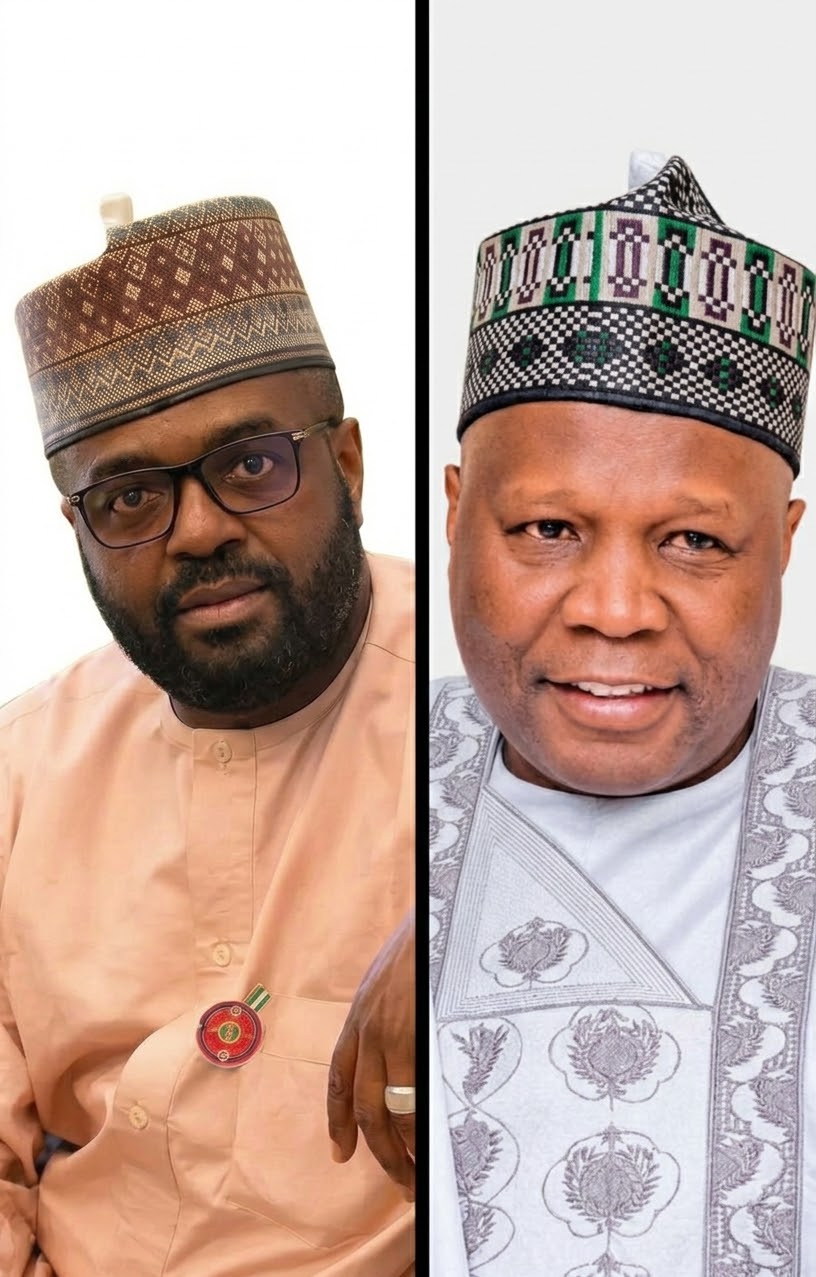
The Executive Director, Network, Niger Delta Power Holding Company (NDPHC), Engr. Bello Babayo Bello, has paid glowing tribute to the Governor of Gombe State, His Excellency Muhammadu Inuwa Yahaya, on the occasion of his 65th birthday, describing him as a visionary leader whose administration has redefined governance and accelerated development across the state.
Engr. Bello, in a congratulatory message made available to journalists, said Governor Inuwa Yahaya’s journey in public service has been marked by discipline, integrity, and an unwavering commitment to the progress of Gombe State and its people.
According to him, the Governor’s leadership has produced measurable improvements in critical sectors of the state’s economy while fostering a culture of transparency, accountability, and prudent resource management.
“As Governor Inuwa Yahaya celebrates his 65th birthday, Gombe State has every reason to celebrate a leader whose vision has continued to shape the future of the state. His commitment to good governance, infrastructural renewal, economic diversification, and human capital development has laid a strong foundation for sustainable growth and prosperity.”
Engr. Bello noted that beyond physical projects and policy achievements, the Governor’s greatest strength lies in his ability to inspire confidence, unite diverse interests, and build consensus around the collective aspirations of the people.
He described Governor Inuwa Yahaya as a statesman whose calm disposition, strategic thinking, and inclusive leadership style have earned him widespread respect across political, business, and community circles.
“The Governor represents a rare blend of experience, wisdom, humility, and courage. His leadership has demonstrated that genuine development is achieved not merely through promises but through deliberate actions and a clear sense of purpose. His accomplishments today stand as enduring testimony to his dedication to public service.”
The NDPHC Executive Director further stated that the Governor’s developmental strides have elevated the profile of Gombe State and strengthened the confidence of investors, development partners, and stakeholders in the state’s future.
He added that Governor Inuwa Yahaya’s administration has become a reference point for effective governance, with policies designed to create opportunities, improve livelihoods, and promote long-term economic stability.
“As he marks this remarkable milestone, we celebrate not only the years he has spent on earth but the positive impact he has made in the lives of countless people. His legacy is one of service, vision, and transformational leadership.”
Engr. Bello prayed for Almighty God to continue to bless the Governor with sound health, greater wisdom, and renewed strength as he continues to serve the people of Gombe State and contribute to Nigeria’s development.
“On behalf of my family, associates, and well-wishers, I extend heartfelt congratulations to His Excellency, Governor Muhammadu Inuwa Yahaya, on his 65th birthday. May the years ahead bring even greater accomplishments, fulfillment, and continued service to humanity.”
Signed:
Engr. Bello Babayo Bello
Executive Director, Network
Niger Delta Power Holding Company (NDPHC)
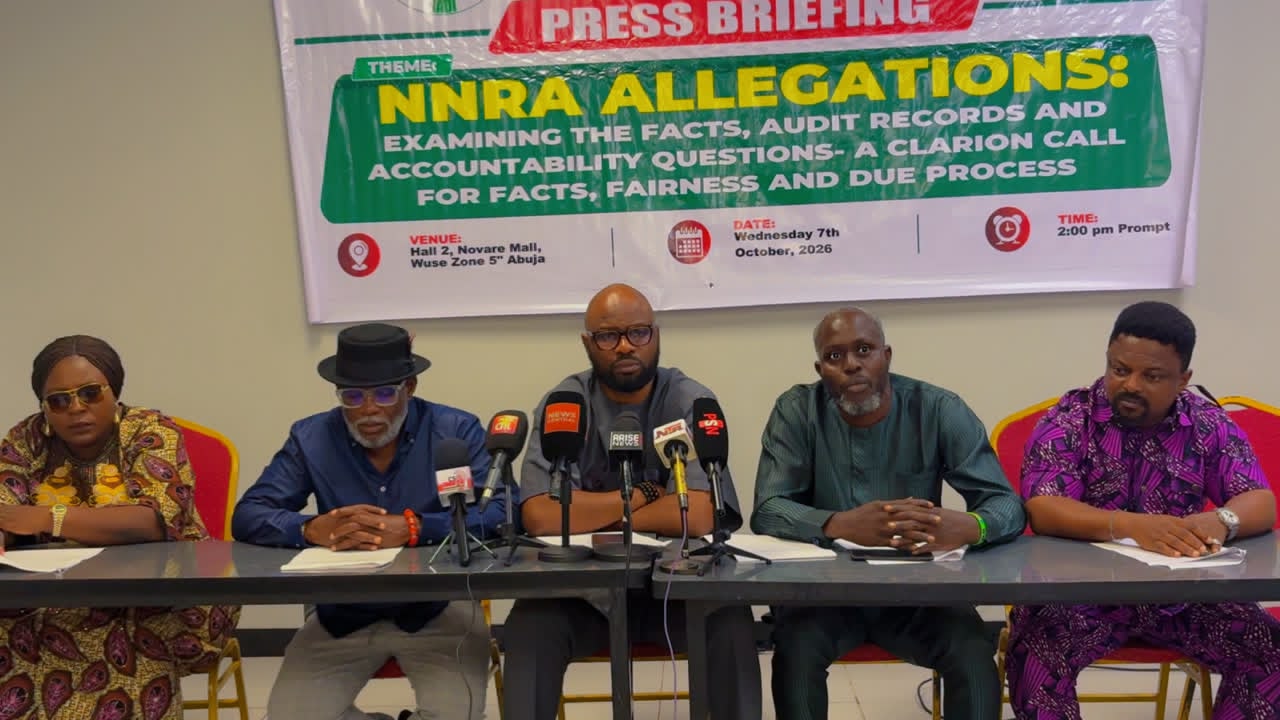
The Integrity Advocacy for Development Initiative (IADI) has called for a thorough, evidence-based examination of allegations of financial misconduct involving the Nigerian Nuclear Regulatory Authority (NNRA), warning against treating audit observations and media reports as established cases of fraud.
IADI Executive Director, Comrade Ofomhi Christopher, made the call on Wednesday at a press briefing in Abuja titled, “On the Allegations Concerning the Nigerian Nuclear Regulatory Authority (NNRA): Facts, Clarifications and the Need for Evidence-Based Accountability.”
The group was reacting to a publication by Secrets Reporters dated October 1, 2026, which alleged that about N6.69 billion was involved in contract fraud and misappropriation at the NNRA.
It also referred to a protest held on October 5 by Global Integrity Watch (GIW) at the NNRA headquarters, where the organisation demanded accountability, responses to audit observations and Freedom of Information requests, as well as changes in the leadership of the regulatory authority.
Christopher said while the allegations deserved scrutiny, they should not be treated as established facts without verification of the underlying records.
According to him, the public deserves to know the specific audit observations, periods and transactions involved, the nature of the contracts, the status of the projects or services, responses provided by the NNRA and whether the issues had been resolved or referred for further investigation.
“An audit observation is a serious matter requiring explanation and verification, but it is not, by itself, a judicial finding of fraud or personal misappropriation,” he said.
The IADI chief also referred to an explanation reportedly provided by the NNRA Director-General concerning the authority’s 2024 capital budget.
He said the explanation put the NNRA’s total 2024 capital budget at about N2.7 billion, comprising approximately N200 million belonging directly to the authority and about N2.5 billion for constituency projects, with an additional N200 million regional project bringing the figure referenced to about N2.9 billion.
Christopher, however, stressed that the explanation should not be regarded as conclusive, urging that it be tested against appropriation documents, budget releases, project records, procurement documents, payment records and audit reports.
“That is how responsible accountability should work: a claim is made, the response is heard, the records are examined, and the evidence determines the conclusion,” he said.
On allegations concerning unexecuted projects, the organisation called for physical verification of the specific projects, while allegations of inflated contract prices should be subjected to scrutiny of contracts, bills of quantities, procurement records and relevant price benchmarks.
It also urged that allegations concerning contractors be examined through relevant procurement and ownership records, while any claim of diversion or misappropriation should be established through the financial trail.
Christopher said where audit authorities had raised observations on expenditure, the public should be informed of the precise observations, the affected institution’s response and the current status of the issues.
The organisation also addressed the October 5 protest by GIW, acknowledging the constitutional right of civil society organisations to peaceful assembly and association under Section 40 of the Constitution.
It, however, urged CSOs to exercise such rights responsibly and within the law.
On Freedom of Information requests, IADI said there should be a distinction between the right to protest and the legal mechanism available where an FOI request is not answered.
The organisation noted that the Freedom of Information Act provides a judicial mechanism for applicants who have been denied access to information, adding that Section 20 allows an applicant to approach the court for a review.
IADI clarified that it was not suggesting that CSOs must obtain a court order before organising peaceful protests.
Rather, Christopher said, where non-compliance with an FOI request was the central grievance, the statutory and judicial mechanisms should be considered alongside legitimate civic action.
“An unanswered FOI request may justify further action to obtain the information. It does not, by itself, establish that fraud, misappropriation or any other wrongdoing has occurred,” he said.
The group also urged organisers of protests at government agencies to take public safety, access to government premises and the safety of protesters, workers and other citizens into consideration.
At the same time, it cautioned government institutions against using the possibility of confrontation as a justification for suppressing lawful civic expression.
“The answer to institutional disagreement should be law, evidence and due process, not intimidation or retaliation,” Christopher said.
He stressed that IADI was neither seeking to shield the NNRA from scrutiny nor dismiss legitimate questions concerning public expenditure at the authority.
He called on relevant audit and oversight bodies to state the status of the observations in question, the responses received from the NNRA and whether the matters had been resolved, sustained or referred for further investigation.
The organisation also encouraged CSOs pursuing accountability to make full use of available legal and institutional mechanisms while retaining their legitimate right to peaceful civic action.
“The public deserves accountability. But the public also deserves accuracy, fairness and evidence.
“A headline is not a verdict. An allegation is not evidence. An audit observation is not automatically a finding of personal guilt,” Christopher said.
He added that public institutions should not expect their expenditure to escape scrutiny merely because questions were raised through the media or civil society.
“Let the records be examined. Let the questions be answered. Let the evidence speak,” he said.
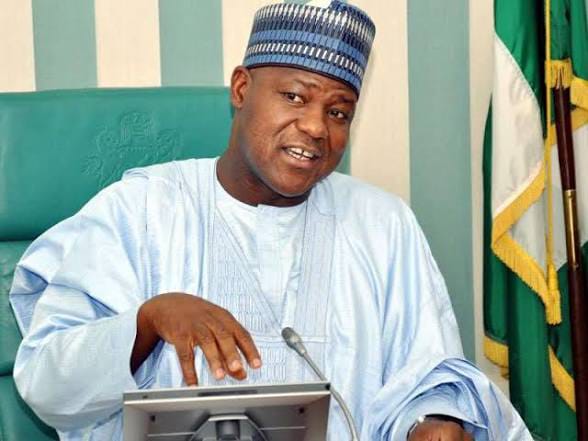
Former Speaker of the House of Representatives and Chairman of the Board of the National Credit Guarantee Company Limited (NCGC), Rt. Hon. Yakubu Dogara, CFR has expressed deep sorrow over the Nigerian Air Force aircraft crash that claimed the lives of 32 persons near Igbokoda, Ondo State. Dogara described the tragedy as a heartbreaking loss to the nation, noting that the deaths of the victims have left a painful void in the country’s defence and security community.
In a statement, the former Speaker extended his condolences to President Bola Ahmed Tinubu, Commander-in-Chief of the Armed Forces, the Nigerian Air Force, and the families of those who perished in the unfortunate incident.
He said the nation shares in the grief of the bereaved families and the Armed Forces at this time of immense sorrow, adding that the sacrifices of those who lost their lives in service to the country will not be forgotten. “The nation mourns with the families of the deceased and stands in solidarity with the Armed Forces during this difficult period,” Dogara stated.
He also commiserated with the Chief of Air Staff, officers and men of the Nigerian Air Force, praying that God grants them the fortitude to bear the painful loss.
According to him, moments such as this call for national unity, reflection and collective support for the families and institutions affected by the tragedy.
Dogara paid tribute to the victims, describing them as patriotic Nigerians whose commitment and service contributed to the security and stability of the nation. He further applauded the efforts of emergency responders, rescue teams and all personnel involved in the aftermath of the crash, commending their courage and professionalism under difficult circumstances.
The former Speaker prayed God to comfort their families, friends and colleagues.
He also offered prayers for the safety and protection of members of the Armed Forces and for continued peace, unity and progress in Nigeria.
The Nigerian Air Force aircraft crashed near Igbokoda, Ondo State, resulting in the death of 32 persons and plunging the nation into mourning. Authorities are yet to make public the cause of the accident as investigations continue.


ENGR. BELLO BABAYO BELLO CELEBRATES GOVERNOR INUWA YAHAYA AT 65, COMMENDS HIS LEGACY OF TRANSFORMATION

Oke-Ode Community Lauds Kwara Gov On Elesa’s Elevation To First Class Status

2026 KWIRS Tax Quiz Competition: Six Schools Emerge As Finalists

-
 Uncategorized6 years ago
FG, states urged to harness flooding for ranching, others with technology – Agbaje
-
 Headlines11 years ago
Breaking: EFCC seals Borno House of Assembly, as Hon members take to their heels
-
 News12 years ago
Nigeria Security Operatives Stage Manhunt For Homosexual Perpetrator
-
 News10 years ago
How 21-year-old Girl fled community over accusation of lesbianism
-
 News11 years ago
Yobe Gov Moves Against Deputy
-
 Opinion7 years ago
7 signs she has friend zoned you
-
Technology5 years ago
Online job placement company headhunts women
-
 Headlines10 years ago
Borno Dep Gov Abducts Another Church Leader