
Uncategorized
THE HISTORICITY OF MARAMA DAY AND THE SYMBOLISM OF CULTURE IN BURA LAND


.
By: Inuwa Bwala
Every year, since 2004, Bura people all over Nigeria converge on Marama: the symbolic headquaters of Buraland, on the 1st of January, to mark Bura Culture Day, also known as Marama Day.
Bura Culture Day evolved from a local cultural festival innitiated by some elites from Marama, who saw the need to foster community togetherness and promote their cultures and traditions. The initial perception was that Bura culture generally has been facing threats of extinction, and there was the need to rescue and restore its dignity, starting from where it was believed to have originated.
It was also conceived as a rhendezvous for rewarding excellence amongst outstanding sons and daughters and promoting partnership with other cultures.
To us, we need to discourage idle activities, like using the Christmas, Easter, or Sallah holidays as a period for alcoholic misadventures and attendant vices, we could convert the periods for more positive enggagements.
And so, what started as a small group initiative, which was sponsored through contributions, has today crystallized into a global attractiveness.
Over the years, since it was first staged, Marama Day has remained a watershed and the symbolism of Bura people’s dedication to promoting and preserving their rich cultural heritage.
It is one event that has tended to serve as a rhendezvous for all Bura people, irrespective of town, religion, or political inclination.
And those who have been following trends of events annually can attest to the fact that, Bura Culture Day or Marama Day remains a pace setter and the richest celebration of the diverse traditions, customs, and values of tribes across Borno Adamawa and Gombe states; where Bura people can be found.
Initiated against the need to revivee a fast disappearing Culture, and to inculcate the spirit of togetherness and, showcase, and reflect on the significance of cultural activities in the lives of people, Bura Culture, is indeed a mark of pride for Bura people, at home and in diaspora.
Over the years, State Governors, ministers, Senators, traditional rulers, captains of industries and the creme de la creme of the country’s inteligesia have been brought together, to watch, and celeberate and to foster a sense of togetherness.
Marama Day has always provided a platform for different people to express themselves, showcase talents, and share stories.
Besides promoting cross-cultural understanding, tolerance, and appreciation: by the participation of other cultural groups from outsude Bura land, Bura Day is also regarded as the climax of activities to mark Christmas and New Year. Through this festival, people tend to learn from each other’s experiences, traditions, and values, and in doing so, it reshaped our outlook and helps people to break down barriers and build bridges of friendship across cultures, tribes, religion and state.
Bura Culture Day has a profound impact on the mental and emotional well-being of people, which explains why all roads led to Marama during this period. It provides an opportunity for our children born outside Buraland to trace their roots, learn to speak the language properly, and interact with the locals.
For those of us who had the privilege of witnessing all the editions, it provides an outlet for stress, anxiety, and other negative emotions and helps us to develop a sense of purpose and fulfillment.
With the belief that culture is a stimulant for economic development and social cohesion, Bura Day creates jobs and stimulates local economies, besides helping to preserve our cultural heritage for future generations.
The 2025 celebrations, was appropriately tagged”Celeberating A Heritage of Excellence”, and those who were previledged to witness it can attest to the fact that, it was indeed a remembrance of the importance of cultural activities in the lives of people.
The cultural displays, dances, rythms, artifacts and personalities left no one in doubt that, Bura Culture Day is indeed the flagship of other cultural activities and has promoted the preservation of the unique cultural heritage of the Bura people.
Borno State Governor, Professor Babagana Umara Zulum and his deputy, Dr Umar Usman Kadafur, as well as the Emir of Biu, the emir of Fika, Shani, as well as the Amna Shelleng and the traditional head of Lunguda people from Adamawa state have over the years strengthened our bond if friendship, which further lead to the the lure of Marama Day. Their presence have facilitated closer cultural linkages, culminating into inter marriages..
In their individual remarks, they emphasized the use of cultural activities as a tool for building stronger, more cohesive communities.
It is not out of place to also state that Bura people have always paid special tribute to these individuals, who have added color to Bura Culture Day celeberations.
Bura people have often honored individuals during the event, and it is on record, that Bura have always honored, Governors of Borno State, especially Professor Babagana Umara Zulum, the Deputy Governor, Dr Umar Usman Kadafur, who is coincidentally a son of Marama, distinguished senator, Mohammed Ali Ndume, and the honorable member representing Askira-Uba/Hawul Federal constituency, Midala Usman Balami and other political and opinion leaders.
Very often, we have tried to insulate Marama Day from political activities, but very often too, some political side events also happen. This is perhaps due to the presence of jey political figures, who use the occasion to market themselves.
Given that having such personalities in the locality at the same time is a rare privilege, Marama people never miss the opportunity to put forward some of their problems.
We utilize such opportunities to inform our guests that the sustainability of Bura Culture Day is contigent upon solutions to some of our problems. We did not allow this opportunity to skip this year, as we outlined some of them.
As I pause, I must state that, Bura Culture Day shall continue to celeberate, our diversity promote our culture: the heritage of excellence; and the years ahead beacons on those who have been reluctant to join, so that together we can make a huge difference.
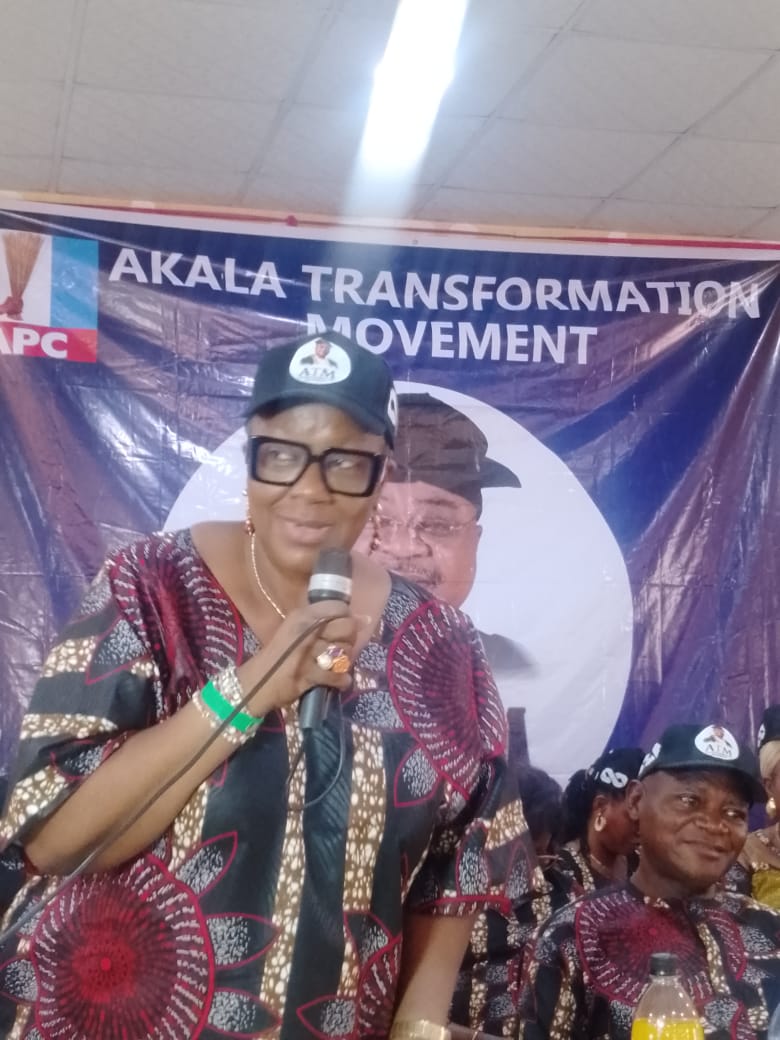
- Drums support for Tinubu, APC candidates
Stephen Olufemi Oni, Ilorin
The Chairperson of the Akala Transformation Movement (ATM) and former First Lady of Oyo State, Chief (Mrs) Oluwakemi Alao-Akala, has called for the full implementation of local government autonomy, saying it will bring governance closer to Nigerians and accelerate development at the grassroots.
Alao-Akala made the call during an ATM outreach held at Equilibrium Resorts, Ojongbodu, Oyo West Local Government Area of Oyo State, where she also urged Nigerians, particularly women, to support the administration of President Bola Tinubu and participate actively in the democratic process.
She said the effective functioning of local governments was crucial because they remained the closest tier of government to the people.
“One important thing I am preaching now is local government autonomy. Obviously, we are going to have our local governments properly elected. They are going to be funded, and they are the closest to the people,” she said.
The former First Lady urged Nigerians to understand and assess the impact of government policies before making political decisions, stressing that the coming years should be devoted to consolidating ongoing reforms and ensuring that their benefits reach ordinary citizens.
She also called on women to remain actively involved in governance and continue supporting leaders through their votes and prayers.
According to her, voting remained a major responsibility of citizens because it determines the quality and direction of leadership at all levels.
Alao-Akala further urged ATM members and supporters to work for the success of the All Progressives Congress (APC) and support its candidates in state and national elections ahead of the 2027 general elections.
She clarified that ATM was a movement and not a political party, adding that its activities were aimed at mobilising support for the APC and its candidates.
Meanwhile, the Director-General of ATM, Mr Demola Alao-Akala, said the movement would continue to preserve and promote the legacy of his late father, former Oyo State Governor, Otunba Adebayo Alao-Akala.
He said the essence of the movement was not merely to remember the late governor but to sustain the values and principles he stood for, particularly people-oriented governance and the welfare of ordinary citizens.
“The concept of remembrance of our father is about making sure that his legacy survives. When he left, he left us a pattern, and we strongly believe that the legacy he left behind can be used to propagate his ideas and keep his memory alive,” he said.
The ATM DG said members of the movement were determined to build on the ideals of service and good governance associated with the late governor.
“We believe strongly that if we are alive, we are going to go back to our lives and continue in the spirit that he showed. We are moving forward, and I think we are supposed to continue,” he added.
Alao-Akala said the late governor’s political philosophy placed the welfare of the people at the centre of governance, noting that democracy should ultimately be judged by its positive impact on citizens.
He assured ATM members that the movement would remain committed to promoting the late governor’s ideals while mobilising support for programmes and candidates it believes can improve the lives of Nigerians.
“We are going forward,” he declared.

A legal practitioner, Mr M. D. Zarewa, has said that a bank cannot freeze or restrict a customer’s account without a valid court order.
Zarewa said it was prevalent in the society for law enforcement agencies to give directives to banks to freeze customers’ accounts whenever there was a pending case before them, adding that banks often complied with such directives.
He, however, said such practice was alien to Nigeria’s jurisprudence, stressing that banks were enjoined not to interfere with or restrict the activities of any customer’s account without a valid court order.
According to him, it is trite law and settled beyond argument that a bank cannot freeze a customer’s account without a valid court order.
He said the position was entrenched in the case of GTB Plc v. Olachi & Anor (2025) LPELR-81833(CA), where the Court of Appeal held that “whether frozen or restricted, neither can be done without the valid order of a Court of Law.”
Zarewa further cited GTBank v. Adedamola (2019) 5 NWLR (Pt. 1664) 30 at 43, Paras. E-F, where the court held:
“Before freezing customer’s account or placing any form of restraint on any account, the bank must be satisfied that there is an Order of Court.
“By the provisions of Section 34 of the Economic and Financial Crimes Commission Act 2004, the Economic and Financial Crimes Commission has no power to give direct instructions to banks to freeze the account of a customer without an Order of Court. So doing, constitutes a flagrant disregard and violation of the rights of a customer.”
The lawyer said any customer whose account had been frozen or restricted without a valid court order could institute a suit against the bank for grossly violating his or her rights.
He said such a customer could particularly seek redress for the violation of the right to own movable and immovable property and seek compensation from the court.
Furthermore, Zarewa said the law was trite that where there was a wrong, there was a remedy, as captured in the Latin maxim, Ubi jus ibi remedium.

Stephen Olufemi Oni, Ilorin
Kwara State Governor AbdulRahman AbdulRazaq has inaugurated the ‘AbdulRahman AbdulRazaq Morire Housing Estate’ in Ijagbo, Oyun Local Government Area of the State.
Speaking at the groundbreaking of the housing estates, which included 210 units of two-bedroom terrace apartments, 200 units of three-bedroom units and 54 units of four-bedroom terrace duplexes, the
Governor, noted that housing should not be seen or regarded as a luxury, but rather as a fundamental human requirement and cornerstone of dignity, security, and family stability, lamenting the daunting challenge of addressing housing deficits across the country.
He said: “Dear Kwarans, housing is not a luxury. Basic housing is a
fundamental human need and a cornerstone of dignity, security,
and family stability. Yet, across Nigeria and indeed in Kwara State,
the challenge of addressing housing deficit is daunting.
“This administration believes that inadequacy of proper shelter
for Nigerians is not merely a problem of not building enough
houses. Indeed, several studies have attributed the housing deficit in Nigeria to a complex mix of causes, key among them being high costs and rising costs of building materials, weak finance, difficult land systems, infrastructure gaps, institutional limitations, among others.
“On behalf of the people of Kwara, I thank the management of ISHI
Homes Limited for this partnership and for choosing Kwara State
as the location for this important development.”
Represented by the Commissioner for Housing and Urban Development, Dr Segun Ogunsola, the Governor applauded the developer for recognising his administration’s contributions to mass housing development in the State.
“The administration has consistently placed housing development high on its agenda. The government recognises access to decent and affordable housing as essential to the wellbeing of the people.
“The State Government has also been in active collaboration with
institutional partners including the Federal Ministry of Housing
with a view to increasing housing stock in the State.
“Recently, we acquired a housing estate with over 130 flats at
Ogbondoroko in Asa LGA of the State. Government has approved
that the estate be onboarded onto the administration’s social
support scheme,” he disclosed.
AbdulRazaq said the commitment was reflected in the development of the Kwara Smart City and other mass housing initiatives across the State.
The Governor disclosed that his reforms in land administration have reduced the processing time for Certificate of Occupancy (C of O) from 180 days to 35 days.
AbdulRazaq said the improved turnaround time demonstrated the administration’s commitment to making land administration more transparent, efficient and investor-friendly.
Earlier in his remarks, the Chief Executive Officer (CEO) of ISHI Homes, Dr Olayinka Ilufoye, said the project was intended to democratise home ownership and make decent and affordable housing accessible to the people of Kwara South senatorial district.
Ilufoye said the estate was meant for civil servants, traders and other Nigerians who can access it through the National Housing Fund (NHF).
“The name AbdulRahman AbdulRazaq Morire, which translates to ‘I have seen goodness’, is a deliberate expression of our faith, hope and expectation.
“We believe this estate will become a testimony of prosperity, progress and abundance in Kwara South,” he said.
Ilufoye pledged that the company would remain committed to transparency, accountability, quality construction and timely delivery.
The Executive Chairman of the Kwara State Geographic Information Service (KWGIS), Alhaji Sulyman Abdulkareem said the state government has consistently placed housing development high on its development agenda.
He commended the state government for ensuring access to land, facilitating the prompt issuance of titles and certificate of occupancy.
Abdulkareem pointed out that by providing timely approval for mortgage transactions, the Governor is creating the conditions necessary for housing development to thrive in Kwara State.


Alao-Akala’s Widow Urges Full Implementation Of LG Autonomy

PRESS STATEMENT BY AREWA DISCUSSION GROUP TITLED; PHRANK SHUAIBU: THE FACE OF A DUBIOUS, ROGUISH MERCHANT OF COUNTERFEITS

Two German writers retrace the Long March by bicycle

-
 Uncategorized6 years ago
FG, states urged to harness flooding for ranching, others with technology – Agbaje
-
 Headlines11 years ago
Breaking: EFCC seals Borno House of Assembly, as Hon members take to their heels
-
 News12 years ago
Nigeria Security Operatives Stage Manhunt For Homosexual Perpetrator
-
 News10 years ago
How 21-year-old Girl fled community over accusation of lesbianism
-
 News11 years ago
Yobe Gov Moves Against Deputy
-
 Opinion7 years ago
7 signs she has friend zoned you
-
Technology5 years ago
Online job placement company headhunts women
-
 Headlines10 years ago
Borno Dep Gov Abducts Another Church Leader