
Uncategorized
NATIONAL ASSEMBLY’S EXTENSION OF IGP KAYODE EGBETOKUN’S TENURE: IMPLICATIONS FOR THE NIGERIA POLICE FORCE

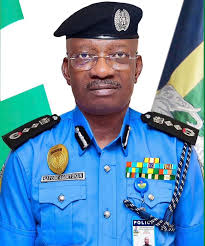
BY HAMZA NUHU DANTANI, ESQ.
Nigeria operates a democracy, or at least pretends to, and the cornerstone of any democratic nation is the rule of law. The rule of law presupposes that all persons, institutions, and entities, public and private, including the State itself, are accountable to the laws of the land. It requires measures to ensure adherence to the principles of supremacy of the law and equality before the law.
Another cardinal principle of democracy is the principle of checks and balances. It is a mechanism for ensuring that each of the arms of government supervises and checks one another against possible abuse of powers, which means that the Judiciary and the Legislature can check the excesses of the Executive arm and vice versa. The National Assembly, however, failed in this sacred duty when it assented to the Bill sponsored by the presidency to elongate the tenure of the current Inspector General of Police (“IGP”), Kayode Adeolu Egbetokun, Ph.D, NPM. This move, seen as a glaring example of nepotism, has not only disrupted the morale and career progression within the police force but has also eroded public trust in the government.
This article examines the laws governing the appointment of the IGP and their tenure, the National Assembly’s controversial decision, its implications for the police force, and the broader ramifications for national unity and governance.
APPOINTMENT OF THE IGP
President Tinubu, in June 2023, appointed Mr. Egbetokun as IGP under Section 215(1) (a) of the Constitution of the Federal Republic of Nigeria, 1999 (as amended), which provides as follows:
“There shall be an Inspector General of Police who, Subject to section 216(2) of this constitution, shall be appointed by the president on the advice of the Nigerian Police Council from among serving members of the Nigerian Police Force”.
Also, according to Section 7 of the Police Act 2020, the person appointed to the office of the IGP shall hold the office for four years. The Act equally provides for the tenure of every police officer in Section 18(8) of the Act thus:
“Every police officer shall, on recruitment or appointment, serve in the Nigeria Police Force for 35 years or until he attains the age of 60 years, whichever is earlier”.
Further, as provided for in Rule 0208010 of the Federal Government Public Service Rules which provides for the compulsory retirement age of public servants, 60 or 35 are the magic numbers. For the sake of completeness, the afore-said Rule provides thus:
“(i)The compulsory retirement age for all grades in the Service shall be 60 or 35 years of pensionable service whichever is earlier.
(ii)No officer shall be allowed to remain in service after attaining the retirement age of 60 years or 35 years of pensionable service whichever is earlier.
(iii)The provision of (i) and (ii) of the Rule is without prejudice to prevailing requirements for Judicial officers and Academic Staff of Universities who retire at 70 and 65 years respectively.”
Mr. Egbetokun was born on September 4, 1964, and by arithmetic computation, clocked the mandatory retirement age of 60 in September 2024. He is also not covered by the provision of (iii) above, as he is neither a judicial officer nor an academian.
The implication of the foregoing is that, by operation of law, IGP Egbetokun, who had reached the mandatory retirement age of 60, should have retired from the Nigerian Police Force and consequently from his position as the IGP by effluxion of time.
ROLE OF THE NATIONAL ASSEMBLY
The Legislature represents the people and acts as their agents. It is at the core of a representative democracy. It is the constitutional institution that has the powers to legislate, exercise oversight functions, and check the excesses of the Executive. It is the institutional body responsible for making laws for the good health of society. The National Assembly, which, in our case, consists of the Senate and House of Representatives, is vested with the legislative powers of the Federation.
Section 4(1) under part II of the Constitution of the Federal Republic of Nigeria, 1999 (as amended) states inter alia:
“The Legislative powers of the Federal Republic of Nigeria shall be vested in a National Assembly for the Federation which shall consist of a Senate and a House of Representatives.”
It goes further, in Section 4(2), to state as follows:
“The National Assembly shall have power to make laws for the Federation’s peace, order, and good government with respect to any matter included in the Exclusive Legislative list.”
As stated in the introductory part of this article, the National Assembly is also empowered by law to check the excesses of the Executive. However, the current National Assembly has proved ineffective in carrying this responsibility. It has turned itself into a rubber stamp when it, via legislative sleight of hand, elongated the tenure of the IGP.
AMENDMENT OF THE POLICE ACT FOR THE SAKE OF A SINGLE INDIVIDUAL
A law should not be made for the benefit of an individual but for the entire society. However, President Bola Tinubu pressed the National Assembly to amend the Police Act in July 2024. Specifically, on July 23, 2024, the National Assembly led by Senate President Godswill Akpabio and Speaker Tajudeen Abbas hastily passed the Bill to amend the Police Act 2020 in record time. Earlier that day, the House of Representatives had approved the Police Act Amendment Bill to allow the Office of the IGP occupant to remain in office until the end of the term stipulated in his or her appointment letter.
On the same day, the Senate also took the same action following an appeal by the presidency that Kayode Egbetokun, the IGP, be allowed to continue serving his four-year term in office even though he had attained the compulsory retirement age of 60 on September 4, 20204. The Executive Bill sought to amend Section 18 of the Police Act 2020 to allow an officer appointed as the IGP to serve beyond the current limit of 35 years in service or the age of 60. The Bill proposed to create a new section 18(8A) to enable the IGP to stay longer than 35 years in service and 60 years of age, whichever comes first:
“Notwithstanding the provisions of sub-section (8) of this section, any person appointed to the office of Inspector-General of Police shall remain in office until the end of the term stipulated in the letter of appointment in line with the provisions of Section 7(6) of this Act.”
During the parliamentary session, the Senate also modified Section 18 of the original Nigerian Police Act of 2020 by adding a new Sub-Section (8A) to it:
Interestingly, the Bill was said to have passed its first, second, and third readings under 20 minutes at the Senate, making it one of the fastest bills ever passed into law in our democratic history. This was done despite the arguments raised by Seriake Dickson, the senator representing Bayelsa West, who said the amendment contradicts existing provisions and suggested stepping down the bill for further consultations. With this, Egbetokun is expected to remain Nigeria’s IGP until 2027 to supervise the general elections.
RULE OF LAW
The controversial amendment of the Police Act by the National Assembly in favor of an individual violates the sanctity of the rule of law, particularly equality before the law. This maintains that every citizen of this country is subject to the same law. There should be no laws for the rulers and the ruled. Every person is equal before the law, irrespective of status, position, etc. The rule of law also pertains to the notion that the law holds ultimate power over the actions of the State and governs the conduct of individuals. The idea is reflected in the decision of the Supreme Court in the celebrated case of Governor of Lagos State v Ojukwu (1986) 1 NWLR (Pt. 19) p. 621 at 647-648, where the apex Court held that the constitution was founded on the rule of law whereby everything must be done according to law. Specifically, the Court held that:
“The Nigerian Constitution is founded on the rule of law, the primary meaning of which is that everything must be done according to the law. It also means that government should be conducted within the framework of recognized rules and principles that restrict discretionary power, which COKE colorfully spoke of as a ‘Golden and straight wet wand of law as opposed to the uncertain and crooked cord of discretion.”
The National Assembly disregarded the rule of law when it set a dangerous precedent by amending the Police Act for the sake of an individual.
IMPLICATIONS OF THE EXTENSION OF THE IGP’S TENURE FOR THE NIGERIAN POLICE FORCE
It is a given that the extension has the potential to create tension and dissatisfaction within the Nigeria Police Force (NPF), particularly among senior officers who might feel their career advancement is being undermined. This could lead to internal discontent and indiscipline, negatively impacting police morale and effectiveness.
While leadership roles often come with subjective decisions, the President and National Assembly’s decision stands out like a sore thumb due to its disregard for established laws. By pressuring the National Assembly to amend the retirement age for a single individual’s benefit, the President has displayed a troubling preference for personal relationships over merit and institutional integrity. Such actions undermine the rule of law and set a dangerous precedent where legal frameworks are manipulated for personal or political gain.
As earlier reiterated, the controversial decision of the President and the National Assembly lays a dangerous precedent for the NPF, including but not limited to the following:
Stalled Career Progression
The decision to extend the IGP’s tenure has effectively blocked the advancement of other senior officers next in line for leadership roles. Having dedicated years of service, these officers now find their aspirations stifled.
Also, junior officers observing this stagnation may feel disappointed, believing merit and dedication are secondary to political patronage.
Loss of Morale
A merit-based system is essential for maintaining discipline and motivation within any organization, especially in a structured institution like the police force. This extension has created disaffection among officers, leading to decreased morale. A demoralized police force is less effective in maintaining law and order, directly affecting national security, especially in a country beset by security issues.
Violation of Constitutional Principles
Section 42 of the Constitution explicitly prohibits all forms of discrimination, whether based on ethnicity, place of origin, religion, sex, or politics. By influencing the National Assembly to favor an individual from his ethnic stock, the President has violated the spirit, if not the letter, of our grundnorm. Such actions weaken the rule of law and set a harmful precedent for future leaders.
Undermining Professionalism
The President’s nepotism has sent a message that loyalty to individuals, rather than adherence to the Constitution or professional excellence, is the path to career advancement. This undermines the force’s professionalism and weakens its integrity.
Erosion of Trust in Governance
The President’s actions have not gone unnoticed by the public. Citizens are increasingly disappointed by a leader prioritizing ethnic loyalty over the nation’s collective good. This perception of nepotism further erodes trust in the presidency and other governmental institutions.
WHAT IS THE WAY FORWARD?
The President must prioritize merit and competence over personal affiliations in appointments or promotions in the police force. Institutions thrive when individuals are selected based on their qualifications and capabilities, not their connections.
Importantly, since we operate in a democracy, the National Assembly must resist undue influence from the executive branch. A genuinely independent legislature is critical for maintaining checks and balances in governance. Further, the government must commit to fairness and justice to restore public confidence. This includes reversing decisions motivated by nepotism and ensuring that future appointments are transparent and merit-based.
The government must engage with the police force and the police council to address the discontent caused by this decision. Providing clear career progression pathways and reaffirming the importance of professionalism can help rebuild morale.
CONCLUSION
The National Assembly’s decision to extend the tenure of the Inspector General of Police, based on the President’s bidding, has had far-reaching consequences. It has disrupted the police force, undermined the constitution, and eroded public trust in governance. To safeguard the country’s democratic principles and ensure the effective functioning of its institutions, the government must prioritize fairness, transparency, and meritocracy. Only by doing so can the nation overcome the divisions caused by this ill-advised decision and move forward united.
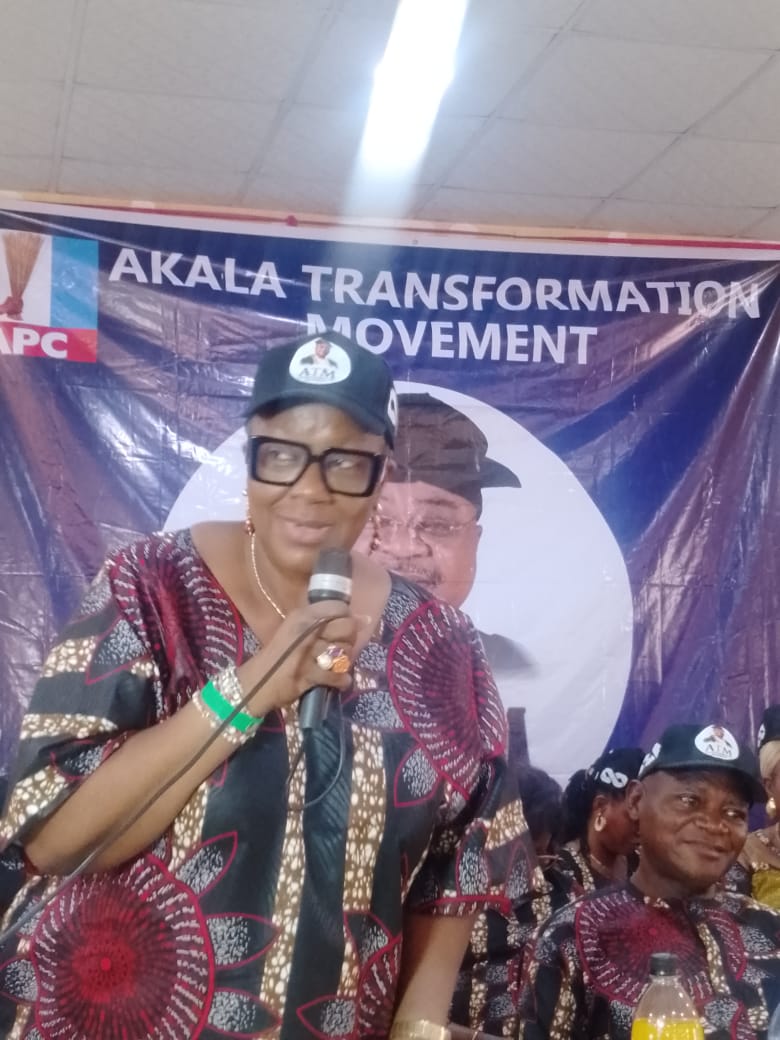
- Drums support for Tinubu, APC candidates
Stephen Olufemi Oni, Ilorin
The Chairperson of the Akala Transformation Movement (ATM) and former First Lady of Oyo State, Chief (Mrs) Oluwakemi Alao-Akala, has called for the full implementation of local government autonomy, saying it will bring governance closer to Nigerians and accelerate development at the grassroots.
Alao-Akala made the call during an ATM outreach held at Equilibrium Resorts, Ojongbodu, Oyo West Local Government Area of Oyo State, where she also urged Nigerians, particularly women, to support the administration of President Bola Tinubu and participate actively in the democratic process.
She said the effective functioning of local governments was crucial because they remained the closest tier of government to the people.
“One important thing I am preaching now is local government autonomy. Obviously, we are going to have our local governments properly elected. They are going to be funded, and they are the closest to the people,” she said.
The former First Lady urged Nigerians to understand and assess the impact of government policies before making political decisions, stressing that the coming years should be devoted to consolidating ongoing reforms and ensuring that their benefits reach ordinary citizens.
She also called on women to remain actively involved in governance and continue supporting leaders through their votes and prayers.
According to her, voting remained a major responsibility of citizens because it determines the quality and direction of leadership at all levels.
Alao-Akala further urged ATM members and supporters to work for the success of the All Progressives Congress (APC) and support its candidates in state and national elections ahead of the 2027 general elections.
She clarified that ATM was a movement and not a political party, adding that its activities were aimed at mobilising support for the APC and its candidates.
Meanwhile, the Director-General of ATM, Mr Demola Alao-Akala, said the movement would continue to preserve and promote the legacy of his late father, former Oyo State Governor, Otunba Adebayo Alao-Akala.
He said the essence of the movement was not merely to remember the late governor but to sustain the values and principles he stood for, particularly people-oriented governance and the welfare of ordinary citizens.
“The concept of remembrance of our father is about making sure that his legacy survives. When he left, he left us a pattern, and we strongly believe that the legacy he left behind can be used to propagate his ideas and keep his memory alive,” he said.
The ATM DG said members of the movement were determined to build on the ideals of service and good governance associated with the late governor.
“We believe strongly that if we are alive, we are going to go back to our lives and continue in the spirit that he showed. We are moving forward, and I think we are supposed to continue,” he added.
Alao-Akala said the late governor’s political philosophy placed the welfare of the people at the centre of governance, noting that democracy should ultimately be judged by its positive impact on citizens.
He assured ATM members that the movement would remain committed to promoting the late governor’s ideals while mobilising support for programmes and candidates it believes can improve the lives of Nigerians.
“We are going forward,” he declared.

A legal practitioner, Mr M. D. Zarewa, has said that a bank cannot freeze or restrict a customer’s account without a valid court order.
Zarewa said it was prevalent in the society for law enforcement agencies to give directives to banks to freeze customers’ accounts whenever there was a pending case before them, adding that banks often complied with such directives.
He, however, said such practice was alien to Nigeria’s jurisprudence, stressing that banks were enjoined not to interfere with or restrict the activities of any customer’s account without a valid court order.
According to him, it is trite law and settled beyond argument that a bank cannot freeze a customer’s account without a valid court order.
He said the position was entrenched in the case of GTB Plc v. Olachi & Anor (2025) LPELR-81833(CA), where the Court of Appeal held that “whether frozen or restricted, neither can be done without the valid order of a Court of Law.”
Zarewa further cited GTBank v. Adedamola (2019) 5 NWLR (Pt. 1664) 30 at 43, Paras. E-F, where the court held:
“Before freezing customer’s account or placing any form of restraint on any account, the bank must be satisfied that there is an Order of Court.
“By the provisions of Section 34 of the Economic and Financial Crimes Commission Act 2004, the Economic and Financial Crimes Commission has no power to give direct instructions to banks to freeze the account of a customer without an Order of Court. So doing, constitutes a flagrant disregard and violation of the rights of a customer.”
The lawyer said any customer whose account had been frozen or restricted without a valid court order could institute a suit against the bank for grossly violating his or her rights.
He said such a customer could particularly seek redress for the violation of the right to own movable and immovable property and seek compensation from the court.
Furthermore, Zarewa said the law was trite that where there was a wrong, there was a remedy, as captured in the Latin maxim, Ubi jus ibi remedium.

Stephen Olufemi Oni, Ilorin
Kwara State Governor AbdulRahman AbdulRazaq has inaugurated the ‘AbdulRahman AbdulRazaq Morire Housing Estate’ in Ijagbo, Oyun Local Government Area of the State.
Speaking at the groundbreaking of the housing estates, which included 210 units of two-bedroom terrace apartments, 200 units of three-bedroom units and 54 units of four-bedroom terrace duplexes, the
Governor, noted that housing should not be seen or regarded as a luxury, but rather as a fundamental human requirement and cornerstone of dignity, security, and family stability, lamenting the daunting challenge of addressing housing deficits across the country.
He said: “Dear Kwarans, housing is not a luxury. Basic housing is a
fundamental human need and a cornerstone of dignity, security,
and family stability. Yet, across Nigeria and indeed in Kwara State,
the challenge of addressing housing deficit is daunting.
“This administration believes that inadequacy of proper shelter
for Nigerians is not merely a problem of not building enough
houses. Indeed, several studies have attributed the housing deficit in Nigeria to a complex mix of causes, key among them being high costs and rising costs of building materials, weak finance, difficult land systems, infrastructure gaps, institutional limitations, among others.
“On behalf of the people of Kwara, I thank the management of ISHI
Homes Limited for this partnership and for choosing Kwara State
as the location for this important development.”
Represented by the Commissioner for Housing and Urban Development, Dr Segun Ogunsola, the Governor applauded the developer for recognising his administration’s contributions to mass housing development in the State.
“The administration has consistently placed housing development high on its agenda. The government recognises access to decent and affordable housing as essential to the wellbeing of the people.
“The State Government has also been in active collaboration with
institutional partners including the Federal Ministry of Housing
with a view to increasing housing stock in the State.
“Recently, we acquired a housing estate with over 130 flats at
Ogbondoroko in Asa LGA of the State. Government has approved
that the estate be onboarded onto the administration’s social
support scheme,” he disclosed.
AbdulRazaq said the commitment was reflected in the development of the Kwara Smart City and other mass housing initiatives across the State.
The Governor disclosed that his reforms in land administration have reduced the processing time for Certificate of Occupancy (C of O) from 180 days to 35 days.
AbdulRazaq said the improved turnaround time demonstrated the administration’s commitment to making land administration more transparent, efficient and investor-friendly.
Earlier in his remarks, the Chief Executive Officer (CEO) of ISHI Homes, Dr Olayinka Ilufoye, said the project was intended to democratise home ownership and make decent and affordable housing accessible to the people of Kwara South senatorial district.
Ilufoye said the estate was meant for civil servants, traders and other Nigerians who can access it through the National Housing Fund (NHF).
“The name AbdulRahman AbdulRazaq Morire, which translates to ‘I have seen goodness’, is a deliberate expression of our faith, hope and expectation.
“We believe this estate will become a testimony of prosperity, progress and abundance in Kwara South,” he said.
Ilufoye pledged that the company would remain committed to transparency, accountability, quality construction and timely delivery.
The Executive Chairman of the Kwara State Geographic Information Service (KWGIS), Alhaji Sulyman Abdulkareem said the state government has consistently placed housing development high on its development agenda.
He commended the state government for ensuring access to land, facilitating the prompt issuance of titles and certificate of occupancy.
Abdulkareem pointed out that by providing timely approval for mortgage transactions, the Governor is creating the conditions necessary for housing development to thrive in Kwara State.


Alao-Akala’s Widow Urges Full Implementation Of LG Autonomy

PRESS STATEMENT BY AREWA DISCUSSION GROUP TITLED; PHRANK SHUAIBU: THE FACE OF A DUBIOUS, ROGUISH MERCHANT OF COUNTERFEITS

Two German writers retrace the Long March by bicycle

-
 Uncategorized6 years ago
FG, states urged to harness flooding for ranching, others with technology – Agbaje
-
 Headlines11 years ago
Breaking: EFCC seals Borno House of Assembly, as Hon members take to their heels
-
 News12 years ago
Nigeria Security Operatives Stage Manhunt For Homosexual Perpetrator
-
 News10 years ago
How 21-year-old Girl fled community over accusation of lesbianism
-
 News11 years ago
Yobe Gov Moves Against Deputy
-
 Opinion7 years ago
7 signs she has friend zoned you
-
Technology5 years ago
Online job placement company headhunts women
-
 Headlines10 years ago
Borno Dep Gov Abducts Another Church Leader