
News
Group Allegedly Lists Sins of Benue’s Chief Judicial Officer


As the controversy surrounding the stewardship of the Benue State Chief Judge, Justice Maurice Ikpambese takes a new turn, including the recommendation of the Benue State House of Assembly for his sack, a rights group, The Masses Resistance Movement (TMRM) has written a public petition to the Court of ‘public opinion’ highlighting his many sins.
The petition dated
February 22, 2025 and copied to the Nigerian Bar Association, Benue National Assembly Caucus and the general public accused Justice Maurice Ikpambese of abuse of office, particularly the hijacking, mismanagement and the sale of the estate of Chief Dabo Godwin Adzuana. He insisted that the Chief Judge has breached Section (5) & (13) of the Code of Conduct Act and must be sanctioned.
Below is the full text of the petition signed by the duo of Isaac Abah
Convener and Peter Akaa
Deputy Convener.
“Section (5) of the code of Conduct Act highlights:(Conflict of interest with duty)
A public officer shall not put himself in a position where his personal interest
conflicts with his duties and responsibilities.
“Section (13) of the Code of Conduct Act highlights: (Abuse of Powers)
FACTS FOR DETERMINATION BY THE COURT OF PUBLIC OPINION:
- Wether Justice Maurice Ikpambese’s many corrupt actions to wit: illegal administration, mismanagement and outright sale of the estate of Late Dr Godwin Dabo Adzuana without the consent of the deceased family amounted to : ABUSE OF OFFICE as prescribed by section (5) of the code of Conduct Act.
- Wether the roles played by Justice Maurice Ikpambese as a judicial officer and Chief Judge in the illegal administration of the estate of Late Dr Godwin Dabo Adzuana against valid court judgments, fraudulent devaluation of the deceased estate valued at (N738, 002, 480 )to (N150,000, 000 ) for sale to his cronies constitutes a breach of section (13) of the code of Conduct Act.
“This public petition highlights the extent of Justice Maurice Ikpambese involvement with grand and systemic corruption, conflict of interest and gross abuse of powers in fragrant breach of both sections ( 5) &(13) of the Code of Conduct Act without any ambiguity.
The facts highlighted hereunder further reinforces the imperative, the urgency and the legal and constitutional justification for the action of the 10th Benue State House Assembly in line with section 292 (a) (ii)
The facts further confirm that, the former Chief Judge, Justice Maurice Ikpambese indeed abused his office and could as well be tried separately at the Code of Conduct Tribunal (CCT) for these clear breaches as the head of court in Benue State. (Refer to the case of Justice Walter Ohnogen ,Fmr Chief Justice of Nigeria) who was similarly removed as CJN for breach of the Code of Conduct Act. While the former CJN was tried by the CCT, the NJC also conducted their own investigations and brought forward a recommendation for his removal. The resolution by 23 members of the 10th assembly recommending the removal of Justice Maurice Ikpambese from office as Head of Court in Benue remains constitutional and valid. As expected, the NJC can go ahead and investigate Justice Maurice Ikpambese for the same or more allegations to determine his fate as a judicial officer. This petition clarifies that in addition to the valid and constitutional resolution of the 10th Benue State House of Assembly, regardless of the outcome of the NJC, Justice Maurice Ikpambese should be tried separately at the Code of Conduct Tribunal to give him the needed forum to clear his name.
THE FACTS ON JUSTICE MAURICE IKPAMBESE CRIMINAL MALFEASANCE AS JUDGE AND CHIEF JUDGE
1.The Late DR Akpenlamen Adzuana Gregory Dabo who died living a will dated 13th March, 2012 detailing the administration of his estate for the family he left behind.
Subsequent upon the opening of the will of the testator, the late Godwin Dabo in his lifetime had appointed the following persons to administer the said will upon his demise; Barr Akor Yaaya, Barr Bassey Ewang and Hon Aondona Dabo.
- As clear as the will was, due to initial family disagreements, their was a genuine need to appoint an independent administrator as agreed by the family. Sequel to the above, the then chief Judge appointed Hon Justice Maurice Ikpambese as interim administrator of the estate of Late Dr Godwin Dabo.
- From 2012 to 2016, Justice Maurice Ikpambese was in full control and administered the estate until he resigned as the administrator upon becoming the Chief Judge.
- In his replacement, Justice Maurice Ikpambese ensured the appointment of his cronies so as to continue to have full control over the estate to the total exclusion of the family of the deceased, the late Dr Godwin Dabo Family.
- Due to unending disagreements that were as a result of the high handedness of justice Maurice Ikpambese and his cronies , the families opted became disenchanted following the refusal of Justice Maurice Ikpambese to give proper account.
- The family of the Late Dr Godwin Dabo having realized that they had jumped from frying pan to fire decided to challenge the appointment of an administrator over a will that already had three persons as administrators all of who are still alive.
- Following this decision, the family approached the High Court challenging the appointment of an administrator over the estate of Late Dr Godwin Dabo vide case RE: AKOR YAAYA V MRS CHRISTINE DABO ADZUANA & 2 ORS CV MHC/466/2017. The Honorable court was asked to determine the propriety or otherwise of the appointment of the administrator to the estate of Late Dr Godwin Dabo by the Chief Judge when the executors were already appointed and named in the will.
- The Honorable court presided by justice T.A Igoche delivered a judgement on 4th April 2019 and held that the appointment of an interim administrator to manage the will of the Late Dr Godwin Dabo by the Chief Judge was illegal, null and void and revoked the appointed administrator, restrained the Chief Judge from interfering with the execution of the estate of Late Dr Godwin Dabo Adzuana.
- This judgement and ruling was served in several correspondences to the Chief Judge as the head of court in the state.
- Rather than obey the judgement of the court, Justice Maurice Ikpambese as the chief Judge in abuse of powers of office applied to set aside the judgement of Justice T.A Igoche but the effort failed like a pack of cards.
- Justice Maurice Ikpambese feeling humiliated but more interested in taking over the properties of the estate of Late Dr Godwin Dabo appealed to the court of appeal in Appeal no: CA/MK/195/M/20
- The Appeal in CA/MK/195/M/20 was entered and proceeding in appeal commenced and there was no stay of execution of the judgment of Justice T.A Igoche from the lower court where Justice Maurice Ikpambese lost.
- Rather than obeying the decision of the court and maintaining the status quo pending the determination of the appeal filed by the same Justice Maurice Ikpambese as chief judge, which is expected of a judge in the temple of justice, Maurice Ikpambese got Justice WI Ikpochi continued to administer the estate behind the backdoor despite losing the case and going on appeal.
- To the greatest shock the family, the legal profession and the bench, while the appeal was pending, Justice Maurice Ikpambese connived and sold the properties known as “DABO SHOPPING MALL” to persons unknown to our the family or the legitimate administrators without prior consent of the family. As a Chief Judge, Justice Maurice Ikpambese ensured the desecration of power to his benefit and interest to the detriment of the family of the Late Dr Godwin Dabo Adzuana.
- It was only in November 2023, vide a letter from the office of the administrator (now illegal) Justice WI Ikpochi that the family became aware that their properties were sold.
- In a swift effort to stop Justice Maurice Ikpambese from his judicial rascality and reckless abuse of powers , the family of Late Dr Godwin Dabo Adzuana consulted a senior Advocate of Nigeria; Bernard Hom (SAN) & Co to make a formal complaint to the Chief Judge and the (illegal) administrator Justice WI Ikpochi drawing attention to the procedural irregularities and to the facts that the consent of the late Dr Godwin Dabo Adzuana was not obtained before the sale of “DABO SHOPPING MALL”
- Instead of responding to the complaint, Justice Maurice Ikpambese as the Chief Judge gave deaf ears to the matter.
- While all this was playing out, Justice Maurice Ikpambese as the Chief Judge approved for Justice WI Ikpochi, his crony in connivance with counsels appeared before the same Chief Judge purporting to adopt a motion on notice over a consent judgment for mutual terms of settlement as a consent judgment.
- Let it be clear that at no point in time did the family of the Late Dr Godwin Dabo Adzuana was aware of the purported Mutual Terms of Settlement dated 4th October, 2023 and proceedings of 9th October,2023.
- The family of Late Dr Godwin Dabo Adzuana were not parties to the Mutual Terms of Settlement, they did not endorse the document and did not any person or persons their consents to draft and or execute same on their behalves and the family believes that the said instrument were designed and manipulated in approval by Justice Maurice Ikpambese as the Chief Judge and Justice WI Ikpochi in a desperate bid to seal the fate of the family of the Late Dr Godwin Dabo over their own legitimate estate left behind by their beloved father and husband.
- Justice Maurice Ikpambese in a further desperate move to foist a state of fait accompli on the innocent, weak and already traumatized family of late Dr Godwin Dabo Adzuana , using his power as Chief Judge and with vested interest, did supervise the purchase and indeed the outright sale of the properties “DABO SHOPPING MALL” without due process despite the protest and valid objections which were all known to the court.
- Justice Maurice Ikpambese and justice WI Ikpochi sold a multi Million Naira DABO SHOPPING MALL, which was initially valued at a cost of N738,002,480 (Seven Hundred And Thirty Eight Million ,Two thousand Four Hundred And Eighty Naira) at s give-away fee of N150,000,000(ONE HUNDRED AND FIFTY MILLION NAIRA ONLY) to the cronies of the Chief Judge of Benue State Justice Maurice Ikpambese.
- This illegal sale of DABO SHOPPING MALL by justice Maurice Ikpambese was done without recourse to the family of the late Dr Godwin Dabo Adzuana who were never parties to the sale agreement of their own estate.
- As today, Justice Maurice Ikpambese has refused to disclose to the family the identity of the purchaser of the said ” DABO SHOPPING MALL ” a property that form the legitimate estate of Late Dr Godwin Dabo Adzuana despite formal request since 6th of November 2023.
- For the records, the family of Late Dr Godwin Dabo Adzuana contended that the DABO SHOPPING MALL was valued in 2009 at the rate of N738,002,480(Seven Hundred And Thirty Eight Million Two thousand, Four Hundred And Eighty Naira)but in a twist, and shocking surprise, Justice Maurice Ikpambese and Justice WI Ikpochi sold the said property at a paltry sum of N150,000,000( One Hundred And Fifty Million Naira only)
- The actions of Justice Maurice Ikpambese and justice WI Ikpochi shows that the chief Judge and his appointed administrator of the estate were personally in interested in the property of the family of Late Dr Godwin Dabo which the chief Judge ensured that they administered same in flagrant abuse of powers of court judgements.
- It is important to state on record that the decision of the court as given by his Lordship Justice TA Igoche and delivered on the 14th November,2019 , the administrator, justice WI Ikpochi appointed by justice Maurice Ikpambese had no vires or jurisdictions to have continued in dealing and or adjudicating over the estate of Late Dr Godwin Dabo Adzuana to the detriment if the family.
- It must be registered for the records that the said administrator has now unlawfully sold the property in the estate but also refused to account for the monies accrued in the property before the outright and illegal sale. Justice Maurice Ikpambese has refused to disclose even the previous revenues obtained from the estate having sold out the property to a crony till date.
- The impunity of Justice Maurice Ikpambese ensured that his self appointed administrator Justice WI Ikpochi refused to account for any revenues obtained from the estate.
- The family of Late Dr Godwin Dabo remain helpless and can not force Justice Maurice Ikpambese and justice WI Ikpochi who have clothed themselves in impunity as justices of the court to obey the law courts where they themselves preside as justices.
PRAYERS FOR DETERMINATION BEFORE THE COURT OF PUBLIC OPINION:
(i ) A public call on Justice Maurice Ikpambese and his self appointed administrator Justice WI Ikpochi to account for the estate of Late Dr Godwin Dabo Adzuana from 2012 to todate.
(ii) A public call on the Justice Maurice Ikpambese to disclose the identity of the actual buyer of the estate of Late Dr Godwin Dabo Adzuana.
(iii) A public call on the Justice Maurice Ikpambese to step aside and face criminal prosecution at the Code of Conduct Tribunal following his gross misconduct as a judicial officer and chief Judge.
(iv) A public call on the Economic and Financial Crimes (EFCC) the ICPC to investigate the criminal conduct of Justice Maurice Ikpambese and justice WI Ikpochi while the National Judicial Council looks into the propriety or otherwise of there continued stay in office as judicial officers.
(v) A call on the public to appreciate and stand in solidarity with the 10th Benue Assembly as the institution acted within the constitution of the Federal Republic of Nigeria to save the judiciary in line with Section 292 (a) (i) (ii) which specifically empowers the state legislatures to recommend the removal of the Justice Maurice Ikpambese as head of the court while referring him to the National Judicial Council (NJC) for appropriate disciplinary action given 23/7 average vote in favor of the resolution by members.
(vi) The above scenario highlights the deep criminal and excessively corrupt character of Justice Maurice Ikpambese and his cohorts while in office as Chief Judge and deserves the verdict of the court of public opinion having used his powers to disobey all existing orders of court.
“Finally, it is established that Justice Maurice Ikpambese has breached the Code of Conduct and is expected that he will be tried accordingly while awaiting the outcome of the investigation by the NJC. However, it is important to maintain that Justice Maurice Ikpambese stand legally removed as the head of court in Benue State. While his fate as a judicial officer lies with the outcome NJC, there is need for the attorney general to seek a fiat to try the former CJ at the Code of Conduct Tribunal for breach of section( 5)& (13) of the Code of Conduct Act.
News
ENGR. BELLO BABAYO BELLO CELEBRATES GOVERNOR INUWA YAHAYA AT 65, COMMENDS HIS LEGACY OF TRANSFORMATION

The Executive Director, Network, Niger Delta Power Holding Company (NDPHC), Engr. Bello Babayo Bello, has paid glowing tribute to the Governor of Gombe State, His Excellency Muhammadu Inuwa Yahaya, on the occasion of his 65th birthday, describing him as a visionary leader whose administration has redefined governance and accelerated development across the state.
Engr. Bello, in a congratulatory message made available to journalists, said Governor Inuwa Yahaya’s journey in public service has been marked by discipline, integrity, and an unwavering commitment to the progress of Gombe State and its people.
According to him, the Governor’s leadership has produced measurable improvements in critical sectors of the state’s economy while fostering a culture of transparency, accountability, and prudent resource management.
“As Governor Inuwa Yahaya celebrates his 65th birthday, Gombe State has every reason to celebrate a leader whose vision has continued to shape the future of the state. His commitment to good governance, infrastructural renewal, economic diversification, and human capital development has laid a strong foundation for sustainable growth and prosperity.”
Engr. Bello noted that beyond physical projects and policy achievements, the Governor’s greatest strength lies in his ability to inspire confidence, unite diverse interests, and build consensus around the collective aspirations of the people.
He described Governor Inuwa Yahaya as a statesman whose calm disposition, strategic thinking, and inclusive leadership style have earned him widespread respect across political, business, and community circles.
“The Governor represents a rare blend of experience, wisdom, humility, and courage. His leadership has demonstrated that genuine development is achieved not merely through promises but through deliberate actions and a clear sense of purpose. His accomplishments today stand as enduring testimony to his dedication to public service.”
The NDPHC Executive Director further stated that the Governor’s developmental strides have elevated the profile of Gombe State and strengthened the confidence of investors, development partners, and stakeholders in the state’s future.
He added that Governor Inuwa Yahaya’s administration has become a reference point for effective governance, with policies designed to create opportunities, improve livelihoods, and promote long-term economic stability.
“As he marks this remarkable milestone, we celebrate not only the years he has spent on earth but the positive impact he has made in the lives of countless people. His legacy is one of service, vision, and transformational leadership.”
Engr. Bello prayed for Almighty God to continue to bless the Governor with sound health, greater wisdom, and renewed strength as he continues to serve the people of Gombe State and contribute to Nigeria’s development.
“On behalf of my family, associates, and well-wishers, I extend heartfelt congratulations to His Excellency, Governor Muhammadu Inuwa Yahaya, on his 65th birthday. May the years ahead bring even greater accomplishments, fulfillment, and continued service to humanity.”
Signed:
Engr. Bello Babayo Bello
Executive Director, Network
Niger Delta Power Holding Company (NDPHC)
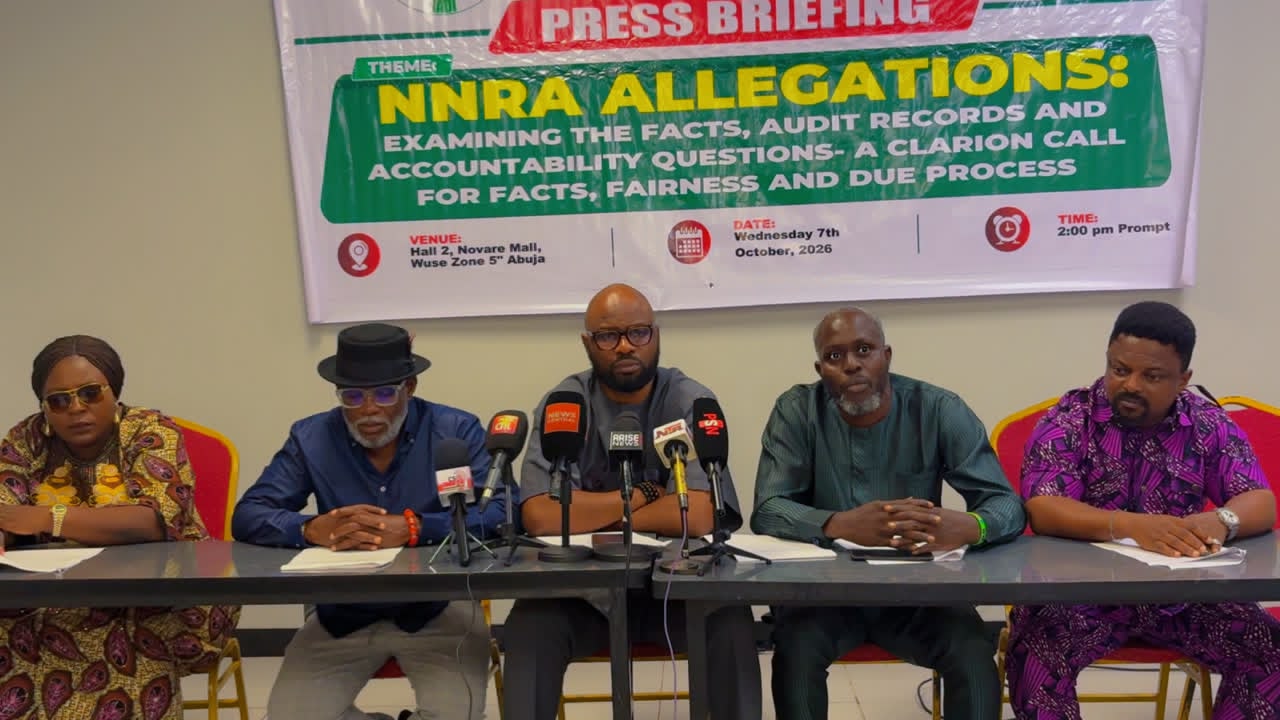
The Integrity Advocacy for Development Initiative (IADI) has called for a thorough, evidence-based examination of allegations of financial misconduct involving the Nigerian Nuclear Regulatory Authority (NNRA), warning against treating audit observations and media reports as established cases of fraud.
IADI Executive Director, Comrade Ofomhi Christopher, made the call on Wednesday at a press briefing in Abuja titled, “On the Allegations Concerning the Nigerian Nuclear Regulatory Authority (NNRA): Facts, Clarifications and the Need for Evidence-Based Accountability.”
The group was reacting to a publication by Secrets Reporters dated October 1, 2026, which alleged that about N6.69 billion was involved in contract fraud and misappropriation at the NNRA.
It also referred to a protest held on October 5 by Global Integrity Watch (GIW) at the NNRA headquarters, where the organisation demanded accountability, responses to audit observations and Freedom of Information requests, as well as changes in the leadership of the regulatory authority.
Christopher said while the allegations deserved scrutiny, they should not be treated as established facts without verification of the underlying records.
According to him, the public deserves to know the specific audit observations, periods and transactions involved, the nature of the contracts, the status of the projects or services, responses provided by the NNRA and whether the issues had been resolved or referred for further investigation.
“An audit observation is a serious matter requiring explanation and verification, but it is not, by itself, a judicial finding of fraud or personal misappropriation,” he said.
The IADI chief also referred to an explanation reportedly provided by the NNRA Director-General concerning the authority’s 2024 capital budget.
He said the explanation put the NNRA’s total 2024 capital budget at about N2.7 billion, comprising approximately N200 million belonging directly to the authority and about N2.5 billion for constituency projects, with an additional N200 million regional project bringing the figure referenced to about N2.9 billion.
Christopher, however, stressed that the explanation should not be regarded as conclusive, urging that it be tested against appropriation documents, budget releases, project records, procurement documents, payment records and audit reports.
“That is how responsible accountability should work: a claim is made, the response is heard, the records are examined, and the evidence determines the conclusion,” he said.
On allegations concerning unexecuted projects, the organisation called for physical verification of the specific projects, while allegations of inflated contract prices should be subjected to scrutiny of contracts, bills of quantities, procurement records and relevant price benchmarks.
It also urged that allegations concerning contractors be examined through relevant procurement and ownership records, while any claim of diversion or misappropriation should be established through the financial trail.
Christopher said where audit authorities had raised observations on expenditure, the public should be informed of the precise observations, the affected institution’s response and the current status of the issues.
The organisation also addressed the October 5 protest by GIW, acknowledging the constitutional right of civil society organisations to peaceful assembly and association under Section 40 of the Constitution.
It, however, urged CSOs to exercise such rights responsibly and within the law.
On Freedom of Information requests, IADI said there should be a distinction between the right to protest and the legal mechanism available where an FOI request is not answered.
The organisation noted that the Freedom of Information Act provides a judicial mechanism for applicants who have been denied access to information, adding that Section 20 allows an applicant to approach the court for a review.
IADI clarified that it was not suggesting that CSOs must obtain a court order before organising peaceful protests.
Rather, Christopher said, where non-compliance with an FOI request was the central grievance, the statutory and judicial mechanisms should be considered alongside legitimate civic action.
“An unanswered FOI request may justify further action to obtain the information. It does not, by itself, establish that fraud, misappropriation or any other wrongdoing has occurred,” he said.
The group also urged organisers of protests at government agencies to take public safety, access to government premises and the safety of protesters, workers and other citizens into consideration.
At the same time, it cautioned government institutions against using the possibility of confrontation as a justification for suppressing lawful civic expression.
“The answer to institutional disagreement should be law, evidence and due process, not intimidation or retaliation,” Christopher said.
He stressed that IADI was neither seeking to shield the NNRA from scrutiny nor dismiss legitimate questions concerning public expenditure at the authority.
He called on relevant audit and oversight bodies to state the status of the observations in question, the responses received from the NNRA and whether the matters had been resolved, sustained or referred for further investigation.
The organisation also encouraged CSOs pursuing accountability to make full use of available legal and institutional mechanisms while retaining their legitimate right to peaceful civic action.
“The public deserves accountability. But the public also deserves accuracy, fairness and evidence.
“A headline is not a verdict. An allegation is not evidence. An audit observation is not automatically a finding of personal guilt,” Christopher said.
He added that public institutions should not expect their expenditure to escape scrutiny merely because questions were raised through the media or civil society.
“Let the records be examined. Let the questions be answered. Let the evidence speak,” he said.
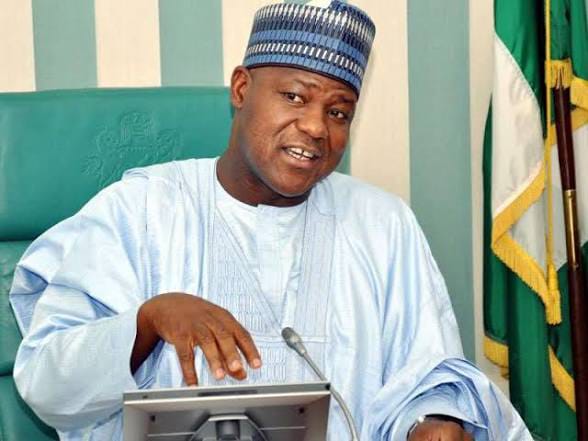
Former Speaker of the House of Representatives and Chairman of the Board of the National Credit Guarantee Company Limited (NCGC), Rt. Hon. Yakubu Dogara, CFR has expressed deep sorrow over the Nigerian Air Force aircraft crash that claimed the lives of 32 persons near Igbokoda, Ondo State. Dogara described the tragedy as a heartbreaking loss to the nation, noting that the deaths of the victims have left a painful void in the country’s defence and security community.
In a statement, the former Speaker extended his condolences to President Bola Ahmed Tinubu, Commander-in-Chief of the Armed Forces, the Nigerian Air Force, and the families of those who perished in the unfortunate incident.
He said the nation shares in the grief of the bereaved families and the Armed Forces at this time of immense sorrow, adding that the sacrifices of those who lost their lives in service to the country will not be forgotten. “The nation mourns with the families of the deceased and stands in solidarity with the Armed Forces during this difficult period,” Dogara stated.
He also commiserated with the Chief of Air Staff, officers and men of the Nigerian Air Force, praying that God grants them the fortitude to bear the painful loss.
According to him, moments such as this call for national unity, reflection and collective support for the families and institutions affected by the tragedy.
Dogara paid tribute to the victims, describing them as patriotic Nigerians whose commitment and service contributed to the security and stability of the nation. He further applauded the efforts of emergency responders, rescue teams and all personnel involved in the aftermath of the crash, commending their courage and professionalism under difficult circumstances.
The former Speaker prayed God to comfort their families, friends and colleagues.
He also offered prayers for the safety and protection of members of the Armed Forces and for continued peace, unity and progress in Nigeria.
The Nigerian Air Force aircraft crashed near Igbokoda, Ondo State, resulting in the death of 32 persons and plunging the nation into mourning. Authorities are yet to make public the cause of the accident as investigations continue.


ENGR. BELLO BABAYO BELLO CELEBRATES GOVERNOR INUWA YAHAYA AT 65, COMMENDS HIS LEGACY OF TRANSFORMATION

Oke-Ode Community Lauds Kwara Gov On Elesa’s Elevation To First Class Status

2026 KWIRS Tax Quiz Competition: Six Schools Emerge As Finalists

-
 Uncategorized6 years ago
FG, states urged to harness flooding for ranching, others with technology – Agbaje
-
 Headlines11 years ago
Breaking: EFCC seals Borno House of Assembly, as Hon members take to their heels
-
 News12 years ago
Nigeria Security Operatives Stage Manhunt For Homosexual Perpetrator
-
 News10 years ago
How 21-year-old Girl fled community over accusation of lesbianism
-
 News11 years ago
Yobe Gov Moves Against Deputy
-
 Opinion7 years ago
7 signs she has friend zoned you
-
Technology5 years ago
Online job placement company headhunts women
-
 Headlines10 years ago
Borno Dep Gov Abducts Another Church Leader