
News
FOR THE RECORDS:

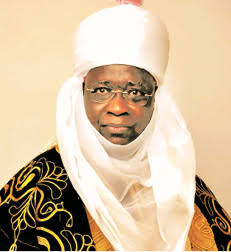
SPEECH DELIVERED BY ALHAJI BASHIR M DALHATU, WAZIRIN DUTSE, CHAIRMAN ACF BOT AT INTERACTIVE SESSION ON THE NORTH, AREWA HOUSE, KADUNA JULY, 2025
Mr. Chairman, please allow me to join you in extending a warm welcome to our distinguished guests from the federal government. As the title of this programme indicates, it is an interactive session between the delegation of senior leaders of the Bola Tinubu administration and ourselves; representatives of the key civil society organisations of the people of Northern Nigeria.
I recall that it was on the 17th of October, 2022 that this same group in this same hall held an interactive session with the then presidential candidate, Bola Ahmed Tinubu, among other candidates. In that meeting, we presented to Asiwaju Bola Tinubu, a written address containing details of the issues of urgent concern to the people of Northern Nigeria. In turn, he gave us his own written document containing details of the issues he believed were of concern to the North and how he intended to address them.
But we did not stop there. The ACF, as is its tradition, prepared an extended memorandum giving further details of the critical issues of concern to Northern Nigeria. We then sought and obtained an appointment to visit with the President. At the meeting, which was held on the 30th of May, 2024, the ACF submitted the Memorandum in the presence of many of the leaders who are with us here today.
It has to be stated, and I hope this is self-evident, that Northern Nigeria has related to Asiwaju Bola Tinubu with enthusiasm, accommodation and good will. Northerners went out en masse on the 25th of February, 2023, and cast their ballots for Bola Tinubu. In the event, 5.6 million out of the total 8.8 million votes he got (or 64%), came from the North.
And yet, two years into the four-year tenure of President Tinubu, the feeling among the people of the North is, to put it mildly, completely mixed. To our surprise, those who did not support him, did not vote for him and hardly wished him well, have emerged from nowhere and are trying to push a wedge between him and the North.
Whether or not they are succeeding, we do not know. But we can not pretend not to observe that President Tinubu’s budget priorities, his infrastructural projects, his appointments and other executive actions, have, over the last two years, largely sidelined Northern Nigeria.
As far as we can see, nothing or little is being done to address the major issues of concern to the North, details of which were presented to him in writing by various groups over the years.
Mr. Chairman, due to the critical importance of this subject matter and for the benefit of our distinguished guests from Abuja, I wish to seek your indulgence to take a few moments in order to mention a few of these issues we have raised repeatedly with Mr. President over the course of our interactions.
8.1 Insecurity
As to be expected, our biggest concern was and remains insecurity in Northern Nigeria. We stressed the fact that over the last decade, widespread violence, characterised by massacres, bombings, cattle rustling, kidnapping and other manifestations of conflict and insecurity has swept across Northern Nigeria, crippling almost all productive economic activities, to say nothing of social progress.
Even as we speak, this crisis shows no signs of abating. The insurgent groups continue to multiply, their attacks becoming more deadly. With the possible exception of Kaduna and Bauchi states, the terror level everywhere in the North has continued to rise with each passing day.
Unless the government takes decisive, strong, audacious and sustained measures, including the ones that address its root causes, particularly joblessness among the youth and deepening poverty, the insecurity crisis in Northern Nigeria can hardly ever be contained.
By all means, the President needs to demonstrate to the Northern public that he is truly concerned with the raging conflict and is determined to bring it to an end.
8.2 Agriculture
Agriculture constitutes the backbone of Nigeria’s economy as it contributes some 40% of the GDP.
The Northern states provide over 75% of Nigeria’s landmass and own 95% of the livestock industry. When agriculture remains one of the more neglected sectors in the economy, it is a cause for great concern to the North. Despite the apparent good intentions of the Tinubu administration, the federal government’s allocation to agriculture in the last two years remains below 5% of the total budget. The target set by the FAO is at least 25%.
Federal budgetary allocation to agriculture and food security should be scaled up to at least 20% of total.
That way, the government could expand its support to farmers. Providing tractors and other mechanical equipment to farmers at subsidised prices, being done at the moment, is an example of a good and helpful policy. But one support urgently needed by many farmers is for the government to offer them guaranteed minimum prices for a select number of key crops including maize, rice, etc.
The need for this policy should be seen in the context of sustaining the critical policy of food security which comes from self sufficiency in food production. Reports are showing that the decision of the federal government last year to approve duty free importation of rice, maize, sorghum, beans and other food stuff, although well intended, is already taking a heavy toll on the agro-industrial sector. Because the imported rice has already resulted in a glut in the market, most of the mega rice mills set up in the wake of Nigeria’s policy of self sufficiency in rice are shutting down and workers are being retrenched. Trailer owners, drivers and manual labourers are also becoming jobless.
This policy stands in an urgent need for review.
8.3 Integrated Transport Infrastructure:
Highways
&
Water Ways
Due to its huge landmass and distance from seaports, Northern Nigeria suffers disproportionately from the lack of access to efficient, integrated transportation infrastructure in the country.
In addition to its natural disadvantages, Northern Nigeria also suffers from age-old neglect by the federal government in relation to the development of transportation infrastructure in the country. Unlike the Lagos-Ibadan Expressway and the Second Niger Bridge, not one single road of strategic importance to the North has been completed or even properly maintained in the last twenty years.
For example, this year’s federal budget on roads is N1.013 trillion. But of that, a mere N24 billion (or less than 1%) was allocated to projects in the Northeast, for example. ⁸It is important to invite the attention of the President to start, re-start, expedite or complete the construction of some of the major roads that are of great strategic importance to Northern Nigeria. They include:
Abuja- Kaduna- Zaria- Kano
Ilorin- Jebba- Tegina- B/Gwari- Kaduna
Abuja- Lokoja- Okene- Auchi
Zaria- Funtua- Gusau- Sokoto- Ilela
Keffi- Akwanga- Jos- Bauchi- Gombe- Yola
Calabar- Ogoja- Wukari- Numan- Biu- Maiduguri
Wudil- Kafin Hausa- Katagum-Potiskum
Kano-Katsina
Enugu- Otukpo- Makurdi
Gombe- Biu- Damaturu- Gashua- Gusau
Lambatta- Lapai- Agaie- Bida- Mokwa
Birnin Kebbi- Yauri- Kontogora- Makera- Tegina.
8.4 WaterWays
Approximately 3,800 of Nigeria’s 10,000 KMs of navigable waterways are open for use in certain times of the year. The waterways provides access to 28 of Nigeria’s 36 states and fosters vital connections with 5 neighboring countries. We should not forget that these river channels were the only means of transporting goods and services across the country during the early colonial period.
The federal government should be urged to treat the development of Nigeria’s inland waterways with the importance it deserves. For a start, we should make navigation possible from the port of Warri up to Baro in Kogi state. A fully functioning inland port of Baro will be a game-changer for the economy of Northern Nigeria.
8.5 Electricity Power Supply
It is hard to overstate the enormity of the Electricity Power Supply problems facing Nigeria but especially Northern Nigeria. Development of the electricity power infrastructure stalled over the last 20 years throwing the country into chronic electricity shortages as well as unreliable supplies. Despite the massive injection of billions of dollars to address the problem, it has actually only got worse.
Mr. The President should be persuaded to declare a state of emergency in the electric power sector. He should review the Power Sector Master Plan and implement the hydroelectric projects on the Upper and Lower Benue Rivers.
The Construction of the Mambilla Hydroelectric Dam should begin without further delay.
The construction of the Gas Transmission Pipelines including the Abuja-Kaduna-Kano (AKK), designed to deliver gas to thermal plants and industries in this part of the North should be completed by the end of this year as originally planned. The North does not stand a dog’s chance of economic development without adequate electricity power infrastructure.
8.6 Education
Much has been said and written about the deep crisis of education in Northern Nigeria. Indeed, the most recent World Bank estimates put the number of out-of-school children at 20 million, 80% of whom are in the North.
There is no question that education stands in great need of special, ambitious and bold initiatives.
For one, it is grossly underfunded. And this should be corrected. And there is also a need to take other strong measures:
We must upscale the training of teachers and improve their welfare in order to recruit and retain the best brains available.
We must make the implementation of the UBE scheme more efficient and ensure that all children of school-going-age do actually go to school including the children of nomadic herdsmen, fishermen and other itinerant tradesmen.
As a matter of fact, the President should be advised to RELAUNCH THE UBE SCHEME and commit the country to a Comprehensive, Free and Compulsory Basic Education in Nigeria.
8.7 Functional Healthcare System
In general, health interventions have become progressively poorer, inadequate and ineffective. Some 70-75% of the disease burden in Nigeria is still dominated by long standing and preventable infectious diseases such as measles, meningitis, typhoid, whooping cough, cholera, HIV/AIDS ets. In some cases, there is an increasing re-emergence of diseases like tuberculosis and leprosy. Drug abuse has also become increasingly a major problem in the North. In all:
Government must tackle more vigorously the root causes of the disease burden; chiefly through the supply of safe drinking water, especially to the rural dwellers and the urban poor.
The war against fake and expired drugs should be intensified. This includes the war against drug peddling and abuse.
In the light of the withdrawal of American aids, all current programmes of addressing HIV/AIDS, tuberculosis, leprosy and malaria should be reviewed.
8.8 Ajaokuta Iron & Steel Project
Since Nigeria’s independence in 1960, the Ajaokuta Iron & Steel Mill has been one of the largest industrial projects it has undertaken. Begun in 1979, the Ajaokuta steel project sits on 24,000 hectares of land and is expected to give 10,00 direct and 500,000 indirect jobs when operational.
We recall that President Bola Tinubu pledged to continue with this vital project from where President Buhari had stopped. In line with this, the President established a Ministry of Steel Development with a mandate to resuscitate and complete the project during his first tenure.
Sadly, however, there is little evidence that actual actions of the President are matching his earlier pledges.
We note that budgetary provisions, to say nothing of releases to this project, have so far been meagre. Indeed, these days, the talk is about concessioning the various units to private investors and of raising all sorts of loans to complete even the smallest units, like the rod-producing Light Section. Then there are more discussions about converting Ajaokuta’s 24,000 hectares land area into a Free Trade Zone. Even the 110MGW power plant remains comatose. Increasingly, the new attitude of the Tinubu administration appears to favor a Private-Public-Partnership model rather than government financing of the project.
Experts have estimated that some two billion dollars is all that is needed to get the Ajaokuta project up and running. This is entirely within the capacity of the federal government if there is a political will!
8.9 Oil & HydroCarbon Exploration in Northern Nigeria
After many years of exploration and prospecting, it has become abundantly clear that oil and gas deposits exist in large, commercial quantities in many parts of Northern Nigeria including in the Chad and Sokoto Basins as well as the Benue and Bida troughs. Studies have confirmed that Northern Nigeria is sitting atop a vast ocean of gas, some 206 trillion cubic feet, making Nigeria capable of becoming the 8th biggest producer of this commodity in the world.
Recent efforts at actual drilling for oil in parts of the North, especially along the Kolmani River in Gombe and Bauchi states as well as in the Kuzari and Keana arrears of Nasarawa state have produced considerable gas.
Political will is a precondition for sustaining the exploration of oil and gas in Northern Nigeria. In the circumstances, we are pleading with Mr. President to follow through with the oil and gas programme in the North as he had promised.
8.10 Federal Budgets And Economic Development Plans
From early into our independence, successive governments in Nigeria prepared budgets with a clear focus on national interests and an avowed sensitivity to the needs of the various parts of the country. Unfortunately, since 1999, this fine principle seems to have been totally abandoned. In recent years, the federal government’s budget priorities, infrastructural projects, investments and even social services have been openly skewed against Northern Nigeria. Sadly, these days, this discriminatory practice is not done secretly; no, it is splashed directly into our face – openly and frankly and without the need for apology!
Evidence of this regrettable situation abound everywhere but I will cite as an example the, the press statement published by the Federal Ministry of Works on the 5th of May, 2025:
“PRESIDENT TINUBU HAS APPROVED THE ALLOCATION OF N787.14 BILLION AND $651.7 MILLION FOR ROAD PROJECTS . . “
ALLOCATIONS BY REGION ARE:
Southwest – N1.394 trillion
Southeast – N205 billion
Northwest – N105 billion
Northeast – N30 billion
This should be read together with the figures
the federal government had earlier allocated as follows:
Lagos – Calabar Highway – N15 trillion
Lagos-Ibadan Expressway – N195 B
Lekki Corridor ($651.7m) – N978B
Outer Marina Shoreline – N176.5 B
Second Niger Bridge – N148 B
Delta State Section – N470.9 B
Enugu-Onitsha – N150 B
Benin – Lokoja – N305B
Maiduguri- Monguno – N21 billion
Abuja-Kaduna-Kano – N242 billion
Sokto-Zmfara-Katsina-Kd – N105 billion
Wusasa – Jos – N18 billion
Cham- Numan – N9.3B
8.11 President Bola Tinubu’s Insensitivity
Details of the skewed budget allocations and the one sided selection of infrastructure projects being executed by the Tinubu administration, as shown in the paragraph above, leaves all fair minded people puzzled. It’s out there in the open.
An unhealthy mixture of sectionalism, partisanship and cronyism follows most of President Tinubu’s actions and policies. It is true in policy decisions as it is true in appointment and deployment of personnel in the departments of the federal government.
Over the last two years, since President Tinubu has been in power, the ACF has released a number of press statements criticising some of his actions or lack of them. But we have also acknowledged and commended some decisions we felt would serve Nigeria well. Clearly, our criticisms are not borne out of mischief. The Hausa say that: “Gyara kayanka bai yi sauke mu raba ba”.
Indeed, we can go further to say that many of the issues arising between President Tinubu and the North, can be attributed to inadequate communications. This is why we welcome and commend today’s interactive conference.
As you can see, many of the issues we raised here and in many of our press statements were raised with the President when we paid him a visit on the 30th of May 2024. We recall that at the end of that meeting, he suggested the creation of an
ACF – FGN Contact Committee. Regrettably, that Committee failed to take off. Perhaps this interactive conference could and should transition into such a Standing Committee considering its obvious benefits.
Thank you.
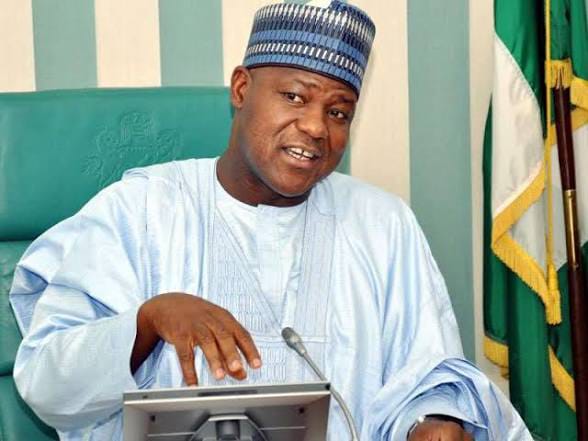
Former Speaker of the House of Representatives and Chairman of the Board of the National Credit Guarantee Company Limited (NCGC), Rt. Hon. Yakubu Dogara, CFR has expressed deep sorrow over the Nigerian Air Force aircraft crash that claimed the lives of 32 persons near Igbokoda, Ondo State. Dogara described the tragedy as a heartbreaking loss to the nation, noting that the deaths of the victims have left a painful void in the country’s defence and security community.
In a statement, the former Speaker extended his condolences to President Bola Ahmed Tinubu, Commander-in-Chief of the Armed Forces, the Nigerian Air Force, and the families of those who perished in the unfortunate incident.
He said the nation shares in the grief of the bereaved families and the Armed Forces at this time of immense sorrow, adding that the sacrifices of those who lost their lives in service to the country will not be forgotten. “The nation mourns with the families of the deceased and stands in solidarity with the Armed Forces during this difficult period,” Dogara stated.
He also commiserated with the Chief of Air Staff, officers and men of the Nigerian Air Force, praying that God grants them the fortitude to bear the painful loss.
According to him, moments such as this call for national unity, reflection and collective support for the families and institutions affected by the tragedy.
Dogara paid tribute to the victims, describing them as patriotic Nigerians whose commitment and service contributed to the security and stability of the nation. He further applauded the efforts of emergency responders, rescue teams and all personnel involved in the aftermath of the crash, commending their courage and professionalism under difficult circumstances.
The former Speaker prayed God to comfort their families, friends and colleagues.
He also offered prayers for the safety and protection of members of the Armed Forces and for continued peace, unity and progress in Nigeria.
The Nigerian Air Force aircraft crashed near Igbokoda, Ondo State, resulting in the death of 32 persons and plunging the nation into mourning. Authorities are yet to make public the cause of the accident as investigations continue.
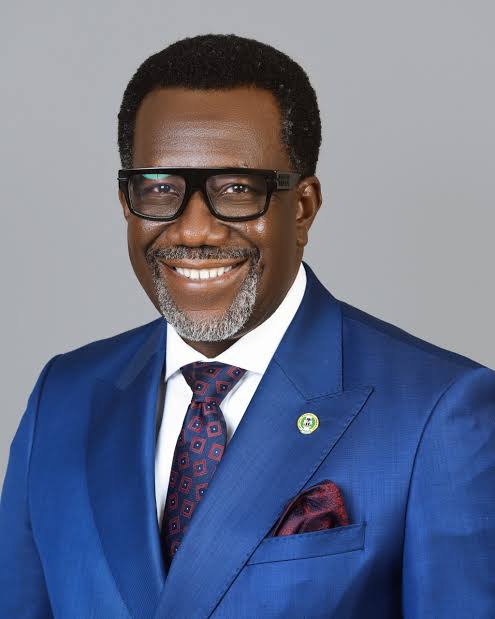
The Centre for Credible Reforms and Institutional Accountability (CCRIA) has commended the Commissioner for Insurance and Chief Executive Officer of the National Insurance Commission (NAICOM), Mr Olusegun Ayo Omosehin, for promoting transparency and accountability in the ongoing reforms of Nigeria’s insurance industry.
The centre said the implementation of the Nigerian Insurance Industry Reform Act (NIIRA) 2025 had ushered in a new phase of development for the sector, with stronger regulatory standards, improved capitalisation and greater emphasis on protecting policyholders.
Dr Aminu Abubakar Aminu, president of the centre, said this in a statement at the weekend.
Aminu commended President Bola Tinubu and the National Assembly for the enactment of NIIRA, describing the legislation as a major step towards addressing longstanding challenges in the insurance industry.
“The enactment of the Nigerian Insurance Industry Reform Act is a significant milestone in the development of Nigeria’s insurance sector. We commend Mr President and the National Assembly for recognising the need to modernise the legal and regulatory framework governing the industry. NIIRA provides the foundation for an insurance sector that is better capitalised, more accountable, more responsive to policyholders and better equipped to contribute meaningfully to the Nigerian economy,” he said.
The centre also praised Omosehin for his leadership of NAICOM, saying his extensive experience as an insurance professional had positioned him to effectively implement the new regulatory framework.
“We consider the appointment of Mr Olusegun Ayo Omosehin as Commissioner for Insurance and Chief Executive Officer of NAICOM a timely and appropriate decision. He is a seasoned insurance professional with many years of experience in the industry, and his understanding of the sector gives him the practical knowledge required to lead an important reform process of this nature. We commend him for the direction he has provided since assuming office and for his commitment to strengthening the industry,” Aminu said.
According to the centre, the ongoing recapitalisation exercise was among the important steps taken to strengthen the financial capacity of insurance companies and improve their ability to meet obligations to policyholders.
Aminu said the reforms were already producing early gains and should be sustained through consistent implementation.
“The early developments under NIIRA demonstrate that the reform is not merely a legislative exercise but a process capable of producing measurable improvements in the industry. Stronger capital requirements, improved supervision and greater attention to policyholder protection will ultimately create an insurance market that Nigerians can trust. We encourage NAICOM to remain focused on the implementation of the Act and to continue providing clear guidance to operators and other stakeholders,” he said.
The centre noted that the reforms would also help deepen insurance penetration and strengthen the industry’s contribution to national economic development.
It urged insurance companies, brokers, reinsurers, professional bodies and other stakeholders to embrace the new framework and work with NAICOM to achieve the objectives of the legislation.
“The success of NIIRA will require the cooperation of every stakeholder in the insurance ecosystem. Operators must see the reforms as an opportunity to strengthen their institutions, improve their services and regain the confidence of Nigerians. A well-regulated insurance industry can mobilise long-term capital, protect businesses and households against risks and support investment and economic growth. These are benefits that go beyond the insurance industry itself,” Aminu said.
Aminu emphasized that the centre was particularly encouraged by the emphasis on policyholder protection under the new framework, noting that public confidence remained critical to the growth of insurance in Nigeria.
He said Nigerians should be able to purchase insurance products with confidence that operators had the financial capacity and institutional structures required to honour legitimate claims.
The president further urged NAICOM to sustain its engagement with stakeholders while ensuring that the provisions of NIIRA were implemented transparently and consistently.
“What is required at this stage is continuity, professionalism and commitment to the objectives of the law. The reforms must be sustained beyond the initial implementation period so that the gains can become permanent features of the industry. We believe NAICOM, under the leadership of Mr Ayo Omosehin, has an important responsibility to ensure that the momentum is maintained, and we encourage all stakeholders to support the commission in delivering on this mandate,” he said.
The centre said the successful implementation of NIIRA would strengthen confidence in the insurance sector, improve the protection available to policyholders and position the industry to play a greater role in Nigeria’s economic transformation.
It also called for continued collaboration between NAICOM, insurance operators and other stakeholders to ensure that the objectives of the new law were fully achieved.
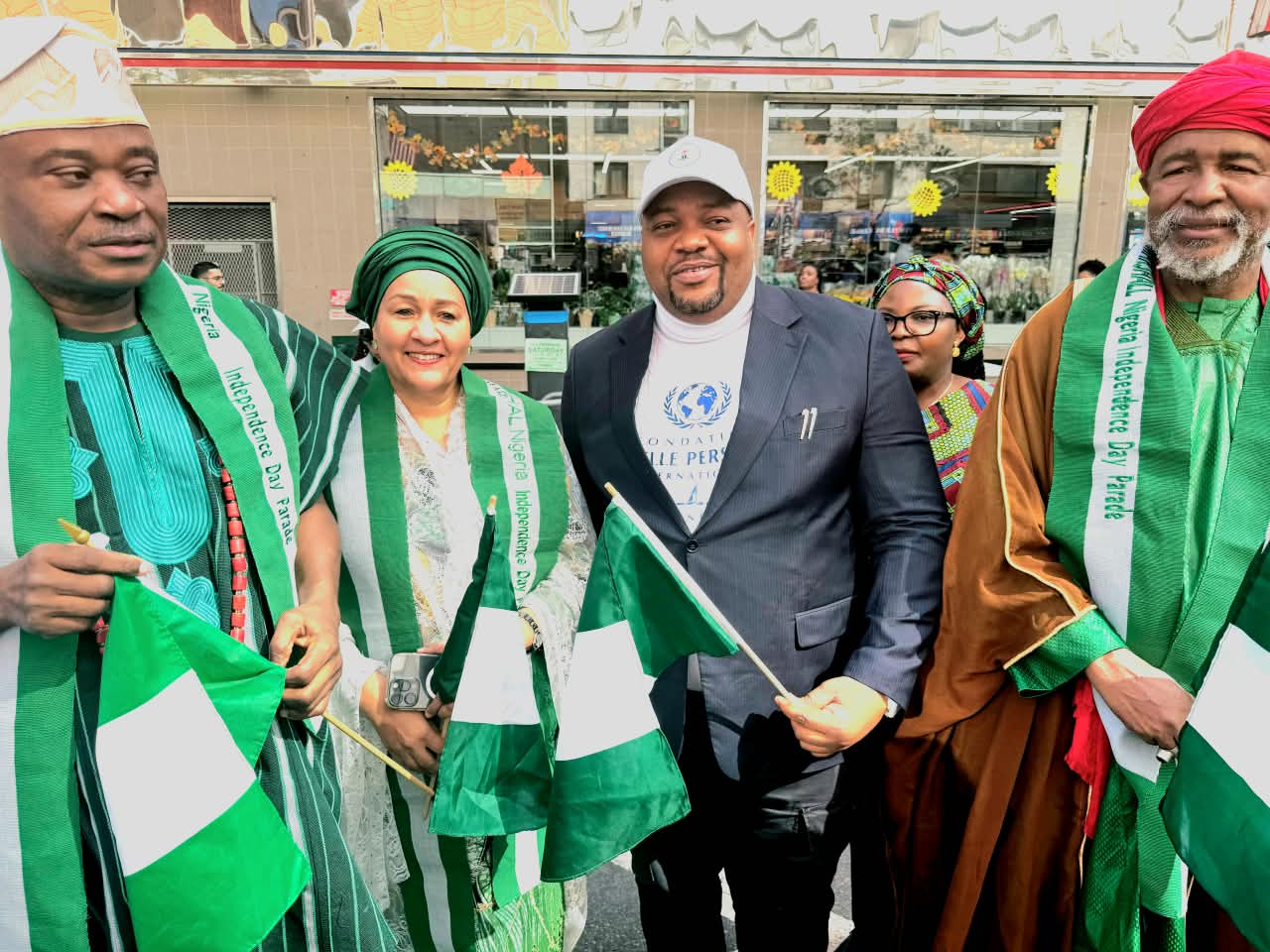
As Nigerians from across the United States gathered in Manhattan to celebrate Nigeria’s Independence Day in grand style, Hon. Amb. Jim Okolo used the occasion to share an inspiring message about Nigeria’s immense possibilities, rich cultural heritage, and promising future.
Speaking with members of the media during the colourful celebration, Hon. Amb. Okolo described Nigeria as one of the most blessed nations in the world, endowed with abundant natural resources, a dynamic population, and a cultural heritage that continues to earn global recognition.
According to him, Nigeria possesses enormous deposits of valuable minerals and other natural resources that, if fully harnessed, can accelerate economic growth and create prosperity for millions of citizens. He noted that the country is strategically positioned to become a leading destination for investment in mining, agriculture, technology, manufacturing, and infrastructure development.
Beyond its natural wealth, Hon. Amb. Okolo emphasized that Nigeria’s greatest strength remains its people. He praised the creativity, resilience, intelligence, and entrepreneurial spirit of Nigerians, pointing out that Nigerian professionals, innovators, academics, and business leaders continue to excel in various sectors across the world.
The respected diplomat also spoke passionately about Nigeria’s unique cultural identity. From the colourful festivals of its diverse ethnic groups to its globally celebrated music, fashion, literature, cuisine, and film industry, he described Nigeria as a nation whose cultural influence extends far beyond its borders.
He noted that Nigeria’s diversity is one of its greatest treasures, bringing together hundreds of ethnic nationalities with distinct traditions and languages that collectively form a vibrant and unified national identity.
While addressing questions on security, Hon. Amb. Okolo maintained that although Nigeria faces certain security challenges, the situation is not always as severe as often portrayed by social media discussions and sections of the international media. He stressed that millions of Nigerians continue to live, work, study, invest, and contribute meaningfully to society every day.
He called on the international community, investors, and members of the diaspora to focus on Nigeria’s strengths, opportunities, and achievements rather than allowing negative narratives to define the country’s image.
“Nigeria remains a land of opportunity, innovation, and hope. It is a nation blessed with extraordinary human capital, abundant resources, a rich cultural heritage, and a people whose determination and resilience continue to inspire the world,” he said.
The celebration was attended by several distinguished personalities, including the United Nations Secretary-General, Hajia Amina Mohammed, the Nigerian Ambassador to the United Nations, diplomats, business leaders, community stakeholders, and prominent members of the Nigerian diaspora.
The event transformed parts of Manhattan into a vibrant showcase of Nigerian pride, featuring cultural exhibitions, traditional performances, business networking sessions, authentic Nigerian cuisine, and displays highlighting the country’s achievements and diversity.
Adding excitement to the festivities were thrilling performances by internationally acclaimed Nigerian music stars Patoranking, Runtown, and BNXN (formerly known as Buju), who entertained thousands of attendees and demonstrated the growing global appeal of Nigerian music.
As the celebration came to a close, the message from Hon. Amb. Jim Okolo resonated strongly among participants: that Nigeria is far more than the challenges often highlighted in headlines. It is a nation blessed with extraordinary talent, vast opportunities, cultural richness, and the potential to achieve even greater success on the global stage.


Alao-Akala’s Widow Urges Full Implementation Of LG Autonomy

PRESS STATEMENT BY AREWA DISCUSSION GROUP TITLED; PHRANK SHUAIBU: THE FACE OF A DUBIOUS, ROGUISH MERCHANT OF COUNTERFEITS

Two German writers retrace the Long March by bicycle

-
 Uncategorized6 years ago
FG, states urged to harness flooding for ranching, others with technology – Agbaje
-
 Headlines11 years ago
Breaking: EFCC seals Borno House of Assembly, as Hon members take to their heels
-
 News12 years ago
Nigeria Security Operatives Stage Manhunt For Homosexual Perpetrator
-
 News10 years ago
How 21-year-old Girl fled community over accusation of lesbianism
-
 News11 years ago
Yobe Gov Moves Against Deputy
-
 Opinion7 years ago
7 signs she has friend zoned you
-
Technology5 years ago
Online job placement company headhunts women
-
 Headlines10 years ago
Borno Dep Gov Abducts Another Church Leader