
Uncategorized
Banditry: Peace gradually returning to Kwara South-Community Leader

Stephen Olufemi Oni, Ilorin
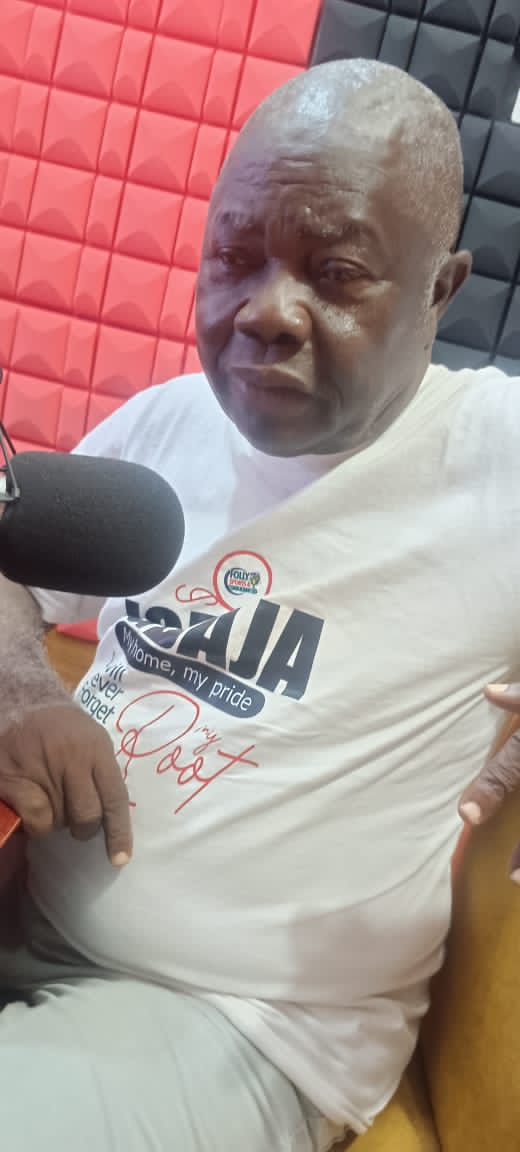
A veteran journalist and community leader, Elder Oyin Zubair, has hailed the gradual restoration of peace to parts of Kwara South after months of coordinated bandit attacks, saying the situation is now stabilising due to renewed collaboration between local vigilantes and state authorities.
Fielding questions from journalists in Ilorin, the state capital, Zubair, who also coordinates the Kwara South Joint Security Task Force, said more than 1,000 local security personnel have now been deployed across Babanla, Oke-Ode, and other troubled communities.
“We are glad things are getting back to normal. It’s easier to fight a war than to fight bandits,” he said. “When they attacked Babanla and Oke-Ode, the destruction was massive. We had assembled over 850 vigilantes and forest guards, but circumstances prevented them from confronting the bandits immediately. Several of our men and civilians were killed, but that hasn’t dampened our morale.”
Zubair described the attacks as coordinated and brutal, noting that some informants within local communities aided the assailants. “Yes, there are collaborators among our people,” he admitted. “Some elders are culpable due to financial greed. They recruit informants who leak information to these criminals. Fortunately, arrests have been made and investigations are ongoing.”
He commended Kwara State Governor AbdulRahman AbdulRazaq for what he called “proactive and quiet leadership,” adding that the Governor responded promptly with training and better equipment for forest guards.
“The Governor doesn’t talk much, but he listens and acts. Some of our forest guards just completed training and have been issued better weapons. That has given our men confidence,” he said.
Zubair said the federal government’s intervention also helped to stem the tide of attacks, citing the establishment of a new military formation the 22 Armoured Brigade in Babanla, which he described it as a turning point in restoring calm to the area.
He praised President Bola Ahmed Tinubu and the Chief of Defence Staff for sustaining security collaboration with the state, noting that “insurgency is not an ordinary war you can bulldoze through, it requires patience, intelligence, and precision to avoid civilian casualties.”
The community leader, however, warned that Nigeria’s intelligence operations remain weak and must be strengthened if the country hopes to defeat banditry and terrorism nationwide.
“Our intelligence network across all security agencies needs improvement. If intelligence fails, everything fails,” he said.
Zubair said the bandits, many of whom were dislodged from Niger and Kwara North, had found safe havens in the dense forests around Babasango, a border region linking Kwara, Kogi, and Ekiti states.
“They had made Babasango their own Aso Rock,” he revealed. “It’s a hilly area with caves and rivers. Even trained officers feared to go there. They kept boats, used the terrain to their advantage, and negotiated ransoms there. But things have changed ,our men are now reclaiming the area.”
On the broader national context, the journalist expressed optimism that the recent shake-up in Nigeria’s security leadership would enhance professionalism and accountability among the armed forces.
“There’s nothing wrong with changing service chiefs; it brings fresh ideas. I believe President Tinubu acted in the best interest of national security. We only hope the new hierarchy will tighten coordination and restore people’s confidence,” he said.
Zubair also reflected on journalism and governance, urging media practitioners to uphold professionalism amid the rise of unregulated online platforms.
“What irritates me is how journalism is practiced now. We were taught that when in doubt, leave it out. But many just write anything without verification. Journalism must return to ethics and factual reporting,” he said.
On local governance, he lauded the AbdulRazaq administration for balancing development across the state, citing new roads, health facilities, and the establishment of a civic development centre in Igbaja.
“The governor has not left development to local governments alone. He’s been responsive to community needs, especially in infrastructure and security. However, the issue of ghost workers in local councils must be tackled to ensure funds reach projects,” he said.
Zubair, a longtime advocate of grassroots development, urged the creation of more local governments or administrative development areas to speed up governance and response to emergencies.
“The smaller the local governments, the better they can develop. Kwara is large, and security or welfare responses take too long to travel from Ilorin to outlying districts,” he said.
He concluded with a call for national unity, responsible leadership, and patience among Nigerians.
“Nigeria has its challenges, but we are developing. Every generation faces its trials, and ours is insecurity. With sincerity from leaders and cooperation from citizens, the country will overcome,” Zubair said.
End
- Drums support for Tinubu, APC candidates
Stephen Olufemi Oni, Ilorin
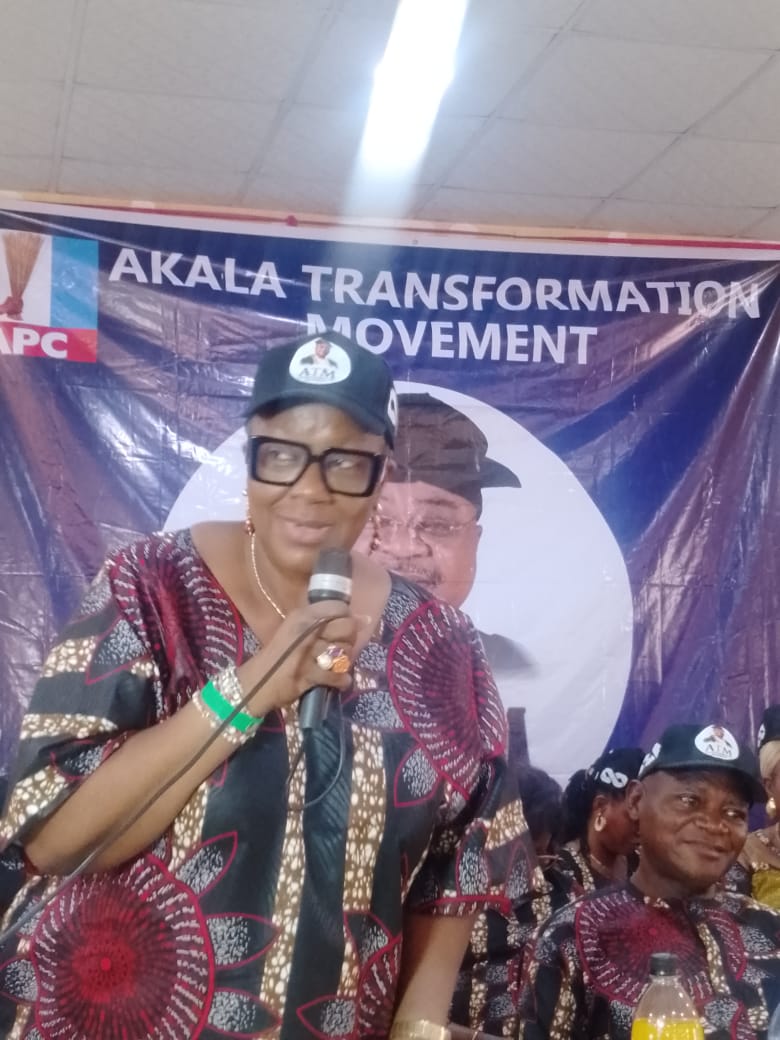
The Chairperson of the Akala Transformation Movement (ATM) and former First Lady of Oyo State, Chief (Mrs) Oluwakemi Alao-Akala, has called for the full implementation of local government autonomy, saying it will bring governance closer to Nigerians and accelerate development at the grassroots.
Alao-Akala made the call during an ATM outreach held at Equilibrium Resorts, Ojongbodu, Oyo West Local Government Area of Oyo State, where she also urged Nigerians, particularly women, to support the administration of President Bola Tinubu and participate actively in the democratic process.
She said the effective functioning of local governments was crucial because they remained the closest tier of government to the people.
“One important thing I am preaching now is local government autonomy. Obviously, we are going to have our local governments properly elected. They are going to be funded, and they are the closest to the people,” she said.
The former First Lady urged Nigerians to understand and assess the impact of government policies before making political decisions, stressing that the coming years should be devoted to consolidating ongoing reforms and ensuring that their benefits reach ordinary citizens.
She also called on women to remain actively involved in governance and continue supporting leaders through their votes and prayers.
According to her, voting remained a major responsibility of citizens because it determines the quality and direction of leadership at all levels.
Alao-Akala further urged ATM members and supporters to work for the success of the All Progressives Congress (APC) and support its candidates in state and national elections ahead of the 2027 general elections.
She clarified that ATM was a movement and not a political party, adding that its activities were aimed at mobilising support for the APC and its candidates.
Meanwhile, the Director-General of ATM, Mr Demola Alao-Akala, said the movement would continue to preserve and promote the legacy of his late father, former Oyo State Governor, Otunba Adebayo Alao-Akala.
He said the essence of the movement was not merely to remember the late governor but to sustain the values and principles he stood for, particularly people-oriented governance and the welfare of ordinary citizens.
“The concept of remembrance of our father is about making sure that his legacy survives. When he left, he left us a pattern, and we strongly believe that the legacy he left behind can be used to propagate his ideas and keep his memory alive,” he said.
The ATM DG said members of the movement were determined to build on the ideals of service and good governance associated with the late governor.
“We believe strongly that if we are alive, we are going to go back to our lives and continue in the spirit that he showed. We are moving forward, and I think we are supposed to continue,” he added.
Alao-Akala said the late governor’s political philosophy placed the welfare of the people at the centre of governance, noting that democracy should ultimately be judged by its positive impact on citizens.
He assured ATM members that the movement would remain committed to promoting the late governor’s ideals while mobilising support for programmes and candidates it believes can improve the lives of Nigerians.
“We are going forward,” he declared.

A legal practitioner, Mr M. D. Zarewa, has said that a bank cannot freeze or restrict a customer’s account without a valid court order.
Zarewa said it was prevalent in the society for law enforcement agencies to give directives to banks to freeze customers’ accounts whenever there was a pending case before them, adding that banks often complied with such directives.
He, however, said such practice was alien to Nigeria’s jurisprudence, stressing that banks were enjoined not to interfere with or restrict the activities of any customer’s account without a valid court order.
According to him, it is trite law and settled beyond argument that a bank cannot freeze a customer’s account without a valid court order.
He said the position was entrenched in the case of GTB Plc v. Olachi & Anor (2025) LPELR-81833(CA), where the Court of Appeal held that “whether frozen or restricted, neither can be done without the valid order of a Court of Law.”
Zarewa further cited GTBank v. Adedamola (2019) 5 NWLR (Pt. 1664) 30 at 43, Paras. E-F, where the court held:
“Before freezing customer’s account or placing any form of restraint on any account, the bank must be satisfied that there is an Order of Court.
“By the provisions of Section 34 of the Economic and Financial Crimes Commission Act 2004, the Economic and Financial Crimes Commission has no power to give direct instructions to banks to freeze the account of a customer without an Order of Court. So doing, constitutes a flagrant disregard and violation of the rights of a customer.”
The lawyer said any customer whose account had been frozen or restricted without a valid court order could institute a suit against the bank for grossly violating his or her rights.
He said such a customer could particularly seek redress for the violation of the right to own movable and immovable property and seek compensation from the court.
Furthermore, Zarewa said the law was trite that where there was a wrong, there was a remedy, as captured in the Latin maxim, Ubi jus ibi remedium.

Stephen Olufemi Oni, Ilorin
Kwara State Governor AbdulRahman AbdulRazaq has inaugurated the ‘AbdulRahman AbdulRazaq Morire Housing Estate’ in Ijagbo, Oyun Local Government Area of the State.
Speaking at the groundbreaking of the housing estates, which included 210 units of two-bedroom terrace apartments, 200 units of three-bedroom units and 54 units of four-bedroom terrace duplexes, the
Governor, noted that housing should not be seen or regarded as a luxury, but rather as a fundamental human requirement and cornerstone of dignity, security, and family stability, lamenting the daunting challenge of addressing housing deficits across the country.
He said: “Dear Kwarans, housing is not a luxury. Basic housing is a
fundamental human need and a cornerstone of dignity, security,
and family stability. Yet, across Nigeria and indeed in Kwara State,
the challenge of addressing housing deficit is daunting.
“This administration believes that inadequacy of proper shelter
for Nigerians is not merely a problem of not building enough
houses. Indeed, several studies have attributed the housing deficit in Nigeria to a complex mix of causes, key among them being high costs and rising costs of building materials, weak finance, difficult land systems, infrastructure gaps, institutional limitations, among others.
“On behalf of the people of Kwara, I thank the management of ISHI
Homes Limited for this partnership and for choosing Kwara State
as the location for this important development.”
Represented by the Commissioner for Housing and Urban Development, Dr Segun Ogunsola, the Governor applauded the developer for recognising his administration’s contributions to mass housing development in the State.
“The administration has consistently placed housing development high on its agenda. The government recognises access to decent and affordable housing as essential to the wellbeing of the people.
“The State Government has also been in active collaboration with
institutional partners including the Federal Ministry of Housing
with a view to increasing housing stock in the State.
“Recently, we acquired a housing estate with over 130 flats at
Ogbondoroko in Asa LGA of the State. Government has approved
that the estate be onboarded onto the administration’s social
support scheme,” he disclosed.
AbdulRazaq said the commitment was reflected in the development of the Kwara Smart City and other mass housing initiatives across the State.
The Governor disclosed that his reforms in land administration have reduced the processing time for Certificate of Occupancy (C of O) from 180 days to 35 days.
AbdulRazaq said the improved turnaround time demonstrated the administration’s commitment to making land administration more transparent, efficient and investor-friendly.
Earlier in his remarks, the Chief Executive Officer (CEO) of ISHI Homes, Dr Olayinka Ilufoye, said the project was intended to democratise home ownership and make decent and affordable housing accessible to the people of Kwara South senatorial district.
Ilufoye said the estate was meant for civil servants, traders and other Nigerians who can access it through the National Housing Fund (NHF).
“The name AbdulRahman AbdulRazaq Morire, which translates to ‘I have seen goodness’, is a deliberate expression of our faith, hope and expectation.
“We believe this estate will become a testimony of prosperity, progress and abundance in Kwara South,” he said.
Ilufoye pledged that the company would remain committed to transparency, accountability, quality construction and timely delivery.
The Executive Chairman of the Kwara State Geographic Information Service (KWGIS), Alhaji Sulyman Abdulkareem said the state government has consistently placed housing development high on its development agenda.
He commended the state government for ensuring access to land, facilitating the prompt issuance of titles and certificate of occupancy.
Abdulkareem pointed out that by providing timely approval for mortgage transactions, the Governor is creating the conditions necessary for housing development to thrive in Kwara State.


Alao-Akala’s Widow Urges Full Implementation Of LG Autonomy

PRESS STATEMENT BY AREWA DISCUSSION GROUP TITLED; PHRANK SHUAIBU: THE FACE OF A DUBIOUS, ROGUISH MERCHANT OF COUNTERFEITS

Two German writers retrace the Long March by bicycle

-
 Uncategorized6 years ago
FG, states urged to harness flooding for ranching, others with technology – Agbaje
-
 Headlines11 years ago
Breaking: EFCC seals Borno House of Assembly, as Hon members take to their heels
-
 News12 years ago
Nigeria Security Operatives Stage Manhunt For Homosexual Perpetrator
-
 News10 years ago
How 21-year-old Girl fled community over accusation of lesbianism
-
 News11 years ago
Yobe Gov Moves Against Deputy
-
 Opinion7 years ago
7 signs she has friend zoned you
-
Technology5 years ago
Online job placement company headhunts women
-
 Headlines10 years ago
Borno Dep Gov Abducts Another Church Leader