
News
FRC Deepens Regulatory Reforms as Stakeholders Align to Strengthen Nigeria’s Financial Integrity Framework

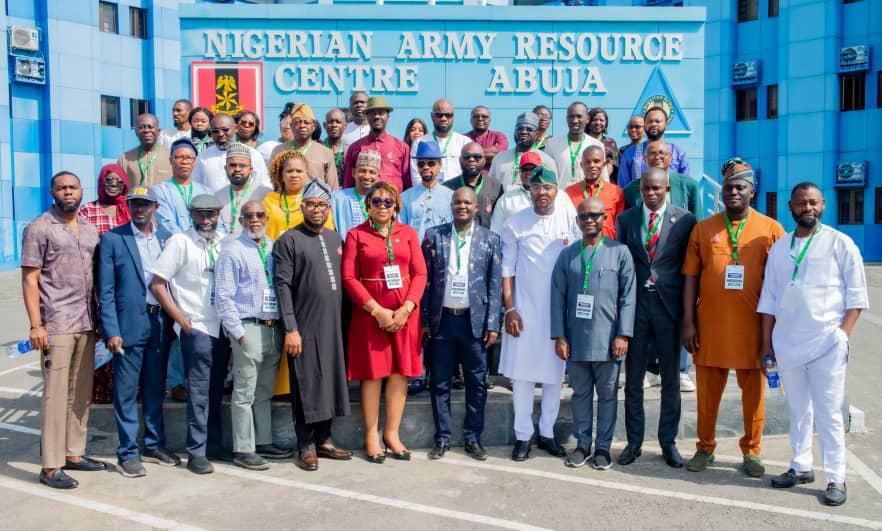
Nigeria’s drive toward stronger financial accountability and institutional transparency took centre stage as the Financial Reporting Council of Nigeria (FRC) engaged civil society leaders and accountability stakeholders at the 2nd Edition of the Roundtable Engagement on Strengthening Nigeria’s Financial Integrity Framework.
The high-level forum, organised by the New Era for Sustainable Leadership and Accountability Initiative (NESLAI), brought together regulators, reform advocates, and civil society organisations in a strategic dialogue aimed at reinforcing trust, credibility, and ethical leadership within Nigeria’s financial system.
Speaking on behalf of the Executive Secretary and Chief Executive Officer of the FRC, Dr. Rabiu Olowo, Mr. Titus Osawe, Coordinating Director, Directorate of Corporate Governance and Directorate of Inspection and Monitoring, outlined the Council’s expanding regulatory mandate, recent achievements, and emerging challenges.
Mr. Osawe reaffirmed the FRC’s commitment to building a resilient economy anchored on credible financial reporting, sound corporate governance, and sustainability disclosures. He explained that the Council operates on two critical pillars: financial reporting standards, covering accounting, auditing, valuation, and actuarial practices; and non-financial reporting, which includes sustainability and corporate governance.
According to him, the development and enforcement of standards, codes, and regulations remain central to the FRC’s mandate, alongside ensuring strict compliance by regulated entities and professionals.
A major highlight of the engagement was the FRC’s evolving enforcement framework, particularly the implementation of FRC Rule 14 on Non-Compliance with Laws and Regulations (NOCLAR), scheduled to take effect from January 1, 2025. The rule expands the responsibilities of external auditors, requiring them to proactively identify, assess, and respond to both direct and indirect non-compliance issues that may materially affect financial statements.
The Council noted that the new rule closes long-standing regulatory gaps, strengthens investor protection, and enhances public confidence in audited financial reports. It further warned that financial statements signed with invalid FRC registration numbers or unresolved compliance issues would no longer be accepted, while auditors who fail to confirm compliance risk sanctions under the Council’s inspection and monitoring framework.
Mr. Osawe also disclosed that the FRC has fully operationalised its seven statutory directorates, including the Valuation Standards Directorate and the Actuarial Standards Directorate, which were recently activated. As part of this progress, the Council issued a Valuation Regulation and embarked on nationwide advocacy engagements across Lagos, Abuja, Owerri, and Kano, targeting estate valuers, engineers, quantity surveyors, and other valuation professionals to deepen understanding and compliance.
Addressing the Small and Medium Enterprises (SMEs) sector, Mr. Osawe described it as a critical pillar of Nigeria’s economy, noting that SMEs account for over 40 million entities, employ nearly 80 percent of the workforce, and contribute about 50 percent to GDP. He explained that the FRC introduced a Code of Corporate Governance for SMEs to address structural weaknesses that often limit business sustainability.
In addition, the Council rolled out free training programmes on International Financial Reporting Standards (IFRS) for SMEs, targeting both business owners and auditors. He stressed that all SME-focused engagements are provided at no cost, as part of the FRC’s developmental responsibility.
On sustainability reporting, the FRC highlighted Nigeria’s early and comprehensive adoption of the IFRS Sustainability Standards S1 and S2. Mr. Osawe disclosed that Nigeria’s sustained advocacy and sector-by-sector engagement earned the country international recognition from UNCTAD-ISAR, a United Nations body, for advancing sustainability reporting beyond regional benchmarks.
Welcoming participants, Comrade Edwin Olorunfemi, Executive Director of NESLAI, described the roundtable as a defining moment in Nigeria’s accountability journey, stressing that ethical financial systems are fundamental to sustainable development and global competitiveness.
“When financial systems fail, trust erodes, institutions collapse, and hope is weakened. But when financial integrity is protected, nations rise,” he stated, commending the FRC for its consistency in promoting ethical standards across both public and private sectors.
While acknowledging progress, the FRC also raised concerns over resistance from some regulated entities and limited public understanding of its mandate. Mr. Osawe called on civil society organisations to strengthen advocacy efforts, noting that credibility, transparency, and trust cannot be achieved by regulators alone.
In his closing remarks, Comrade Richard Otitoleke, Programme Coordinator of NESLAI, urged participants to translate dialogue into concrete action. He reaffirmed the commitment of NESLAI and allied civil society organisations to supporting the FRC in advancing accountability reforms and protecting Nigeria’s financial future.
As the roundtable concluded, stakeholders agreed that Nigeria cannot build a resilient economy without clean books, ethical leadership, and sustained collaboration between regulators and civil society, united in their resolve to place integrity at the centre of national development.
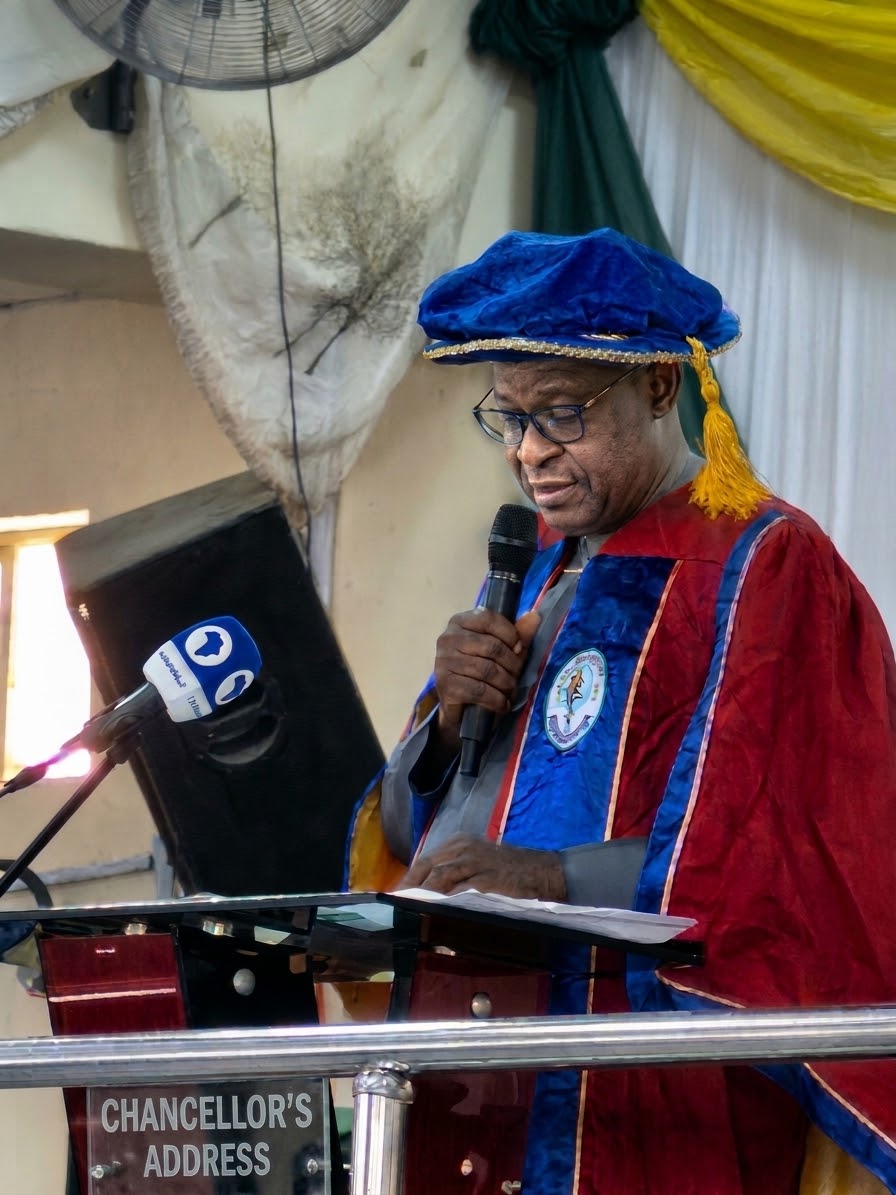
Former Speaker of the House of Representatives, Chancellor of Achievers University, and Chairman of the Board of Trustees of the National Credit Guarantee Company Limited (NCGC), Rt. Hon. Yakubu Dogara, CFR, has commended President Bola Ahmed Tinubu’s reform initiatives in the education and security sectors, urging Nigerians to unite behind efforts aimed at driving sustainable development and national renewal.
Dogara made the call while delivering the Convocation Address at the 16th Convocation Ceremony of Achievers University, Owo, where he spoke on the theme, “Rethinking National Security for Sustainable Peace, Development and National Renewal.”
The former Speaker described education and security as critical foundations for nation-building, noting that the Tinubu administration has taken important steps to expand educational opportunities and strengthen Nigeria’s security architecture.
He particularly praised the Federal Government’s Student Loan Programme under the Nigerian Education Loan Fund (NELFUND), saying the initiative has provided thousands of Nigerian youths with access to higher education regardless of their financial circumstances.
According to Dogara, investing in education remains one of the most effective strategies for empowering young people and preparing them to contribute meaningfully to national growth and development.
He also applauded government efforts aimed at improving the welfare of university lecturers, describing quality education as indispensable to the country’s progress and future competitiveness.
Speaking on security, Dogara said no nation can achieve meaningful economic development without guaranteeing the safety of lives and property. He emphasized that security remains the foundation upon which investment, agriculture, commerce and social stability thrive.
While acknowledging that insecurity remains a challenge, he commended the Federal Government’s ongoing efforts to tackle terrorism, insurgency, banditry and kidnapping through enhanced military operations, intelligence-driven interventions and strengthened coordination among security agencies.
He noted that recent measures, including the expansion of security personnel recruitment and efforts to secure forested and rural communities, demonstrate government’s determination to create safer environments for citizens and businesses.
Dogara urged Nigerians to support these efforts through active citizenship, community cooperation and a shared commitment to national unity.
“Government alone cannot achieve lasting security and development. Every citizen has a role to play in building a peaceful, prosperous and united Nigeria,” he said.
The former Speaker stressed that national development requires collaboration among government, traditional institutions, faith-based organisations, educational institutions, the private sector and civil society groups.
As Chairman of the Board of Trustees of the National Credit Guarantee Company Limited, Dogara also highlighted the importance of creating an enabling environment where businesses can access opportunities, investments can flourish and entrepreneurs can contribute to economic expansion and job creation.
He noted that sustainable economic growth depends largely on peace, stability and confidence in public institutions.
Addressing the graduating students, Dogara challenged them to become agents of positive change by applying their knowledge, skills and talents toward solving societal problems and advancing national development.
He urged the graduates to embrace integrity, innovation and service as they embark on the next phase of their lives.
“If you become a lawyer, serve justice. If you become a doctor, serve life. If you become an engineer, build what our country needs. If you become an entrepreneur, create opportunities and jobs for others,” he said.
The former Speaker expressed optimism about Nigeria’s future, describing the country as a resilient nation blessed with abundant human and natural resources capable of achieving greater heights through visionary leadership and collective effort.
He called on citizens to remain hopeful and support ongoing reforms designed to strengthen institutions, expand opportunities and improve the welfare of the people.
Dogara concluded by congratulating the graduating students and encouraging them to use their education as a tool for service, leadership and national transformation.
The convocation ceremony attracted members of the university’s Governing Council, management, staff, alumni, parents and other dignitaries who gathered to celebrate the achievements of the graduating class and reaffirm Achievers University’s commitment to producing future leaders for Nigeria and beyond.

A civil society organisation, Citizens for Good Governance, Rule of Law & Anti-Corruption Initiative, has issued a 72-hour ultimatum to GUO Logistics, demanding immediate engagement with the families of victims of a fatal road accident that reportedly claimed five lives and left several others critically injured.
The organisation, in a statement signed by its Director-General, Comr. Danesi Momoh Prince, expressed sorrow and outrage over the accident, which occurred at about 3:30 a.m. on August 28, 2026, involving a Toyota Hiace bus conveying more than 23 passengers from Gombe State to Lagos State.
According to the statement, the accident occurred after a truck reportedly belonging to GUO Logistics rammed into the passenger bus, resulting in the deaths of five persons, including students travelling to Lagos for their mandatory industrial training.
The deceased were identified as Isiyaku Sa’idu, Maigana Mohammed, popularly known as Abbati, Anas Abubakar, reportedly the driver of the bus, Zaiyanu Bajoga and Abubakar Ibrahim.
Describing the incident as devastating, the organisation said the victims were Nigerians pursuing education, employment and better opportunities, adding that the tragedy had cut short the dreams and aspirations of the deceased while leaving other passengers fighting for survival.
It called on GUO Logistics to demonstrate genuine concern for the victims and their families, warning that corporate reputation must not take precedence over human lives.
The group also expressed concern over allegations that efforts were being made to protect the company’s public image rather than adequately address the suffering of the victims and their families.
It consequently demanded that the management of GUO Logistics, within 72 hours, establish immediate contact with the families of the deceased and injured passengers through available passenger manifests, booking records and other travel documentation.
Other demands include urgent assistance for survivors, engagement with medical facilities to address their healthcare needs, and discussions with bereaved families on appropriate support and compensation in accordance with applicable laws and the outcome of investigations.
The organisation further demanded a public statement from the company outlining the steps being taken to address the incident, including an official communication channel through which affected families could seek assistance.
It also urged GUO Logistics to cooperate fully with relevant authorities investigating the circumstances surrounding the accident and ensure that all applicable legal responsibilities were addressed.
Clarifying the purpose of the ultimatum, the group said it was demanding immediate engagement and demonstrable humanitarian support, not the conclusion of a comprehensive accident investigation within three days.
The organisation warned that failure by the company to demonstrate meaningful engagement within the stipulated period could trigger nationwide mass picketing of its offices and operational facilities.
It said it would consider mobilising concerned citizens and relevant stakeholders for peaceful and lawful protests at GUO offices across the country, subject to applicable legal requirements.
The group also threatened to petition relevant regulatory and law enforcement authorities to ensure that the incident received the necessary attention.
While acknowledging that the precise circumstances of the accident and legal responsibility must be established through a thorough investigation, the organisation maintained that immediate humanitarian assistance to the survivors and their families should not be delayed.
It called on relevant government authorities, civil society organisations, student bodies and well-meaning Nigerians to support efforts to secure assistance for the injured and accountability for the lives lost.
The statement reaffirmed the organisation’s commitment to monitoring developments and engaging relevant stakeholders to ensure that the victims and their families were not forgotten.
“Our position is unequivocal: human lives must never be sacrificed at the altar of corporate reputation. The dead deserve dignity, the injured deserve urgent assistance, and the bereaved families deserve answers,” the statement said.
News
FG Borrowing Justified By Huge Investment In Infrastructure, Improvements in Security Sector – Opposition Rep Agbese


Hon. Philip Agbese, Labour Party leader in Benue State and member representing Ado/Okpokwu/Ogbadibo Federal Constituency, has strongly defended the Federal Government’s proposed $21.7 billion supplementary external borrowing plan.
According to Agbese, the funds are fully justified by the Tinubu administration’s massive investments in critical infrastructure and the gains recorded in the security sector.
The lawmaker described the borrowing as strategic financing for productive national assets rather than consumption spending.
Speaking against the backdrop of intense public debate over the 2026-2027 external borrowing proposal, the opposition figure argued that Nigerians must look beyond partisan lenses and assess the tangible returns already visible across roads, power, rail and defence.
He noted that the plan prioritises productive assets rather than consumption, aligning with the administration’s broader Renewed Hope agenda of rebuilding national capacity after years of underinvestment.
“This is not borrowing for the sake of borrowing. It is investment in the future of Nigeria,” Agbese stated.
“When you look at the allocation—over $10 billion for transport infrastructure alone, including the Lagos-Calabar Coastal Highway, Sokoto-Badagry Super Highway and key rail corridors—you see a government deliberately creating assets that will generate long-term economic value far exceeding the cost of the loans.”
He continued: “The same applies to the significant portion dedicated to defence and security. Any serious nation prioritises the safety of its citizens.
“The Federal Government is putting resources behind the men and women in uniform so they can finish the job against bandits, terrorists and kidnappers.”
Agbese further highlighted the administration’s track record of project delivery under the Ministry of Works, citing the accelerated completion of major sections of the Abuja-Kaduna-Zaria-Kano highway using durable concrete pavement, the commissioning of initial segments of the Lagos-Calabar Coastal Highway, and hundreds of other road projects completed or advanced nationwide.
He pointed to parallel progress in the power sector, including approvals for East and West Super Grids aimed at raising transmission capacity dramatically, as evidence that borrowed funds are being channelled into real, visible development.
The lawmaker stressed that states and the Federal Capital Territory stand to benefit substantially from the package, with a sizeable share earmarked for subnational projects on largely concessional terms.
According to him, this structure ensures that the borrowing strengthens the federation rather than concentrating benefits solely at the centre.
“Look at what has been achieved in just over three years: major highways moving from paper to asphalt and concrete, rail lines advancing, and power infrastructure receiving the attention it has long been denied,” Agbese said.
“That is why the borrowing is justified. On security, the Armed Forces have recorded significant operational successes—neutralising thousands of terrorists and bandits, facilitating large-scale surrenders, and rescuing abducted citizens.
“Continued investment is necessary to consolidate these gains and expand the capacity of our security agencies,” he added.
Turning to the terms of the proposed financing, Agbese noted that a substantial portion comes from multilateral and bilateral partners at concessional rates, while commercial components remain competitive relative to previous market conditions.
He dismissed critics who focus solely on the headline figure without examining the quality of the underlying projects or the improved fiscal space created by earlier reforms such as subsidy removal.
The Benue lawmaker argued that opposition to the plan on purely political grounds ignores the infrastructure deficit inherited by the current administration and the urgent need to close it if Nigeria is to achieve sustainable growth and improved living standards.
He called on colleagues across party lines to prioritise national interest when the National Assembly considers the request.
“Every progressive country borrows to build. What matters is whether the money creates lasting assets and strengthens national security. On both counts, this plan passes the test,” Agbese declared.
“We in the opposition must be honest enough to acknowledge progress where it exists. The people of Ado, Okpokwu and Ogbadibo, like Nigerians everywhere, want better roads, reliable power and safer communities.
“The Federal Government is taking concrete steps in that direction, and supporting the necessary financing is the responsible thing to do,” he concluded.


Rising Chinese presence at Paris Motor Show highlights opportunities for China-Europe auto cooperation
At China’s Canton Fair, foreign buyers seek more than products

9th CIIE set to see record number of product debuts

-
 Uncategorized6 years ago
FG, states urged to harness flooding for ranching, others with technology – Agbaje
-
 Headlines11 years ago
Breaking: EFCC seals Borno House of Assembly, as Hon members take to their heels
-
 News12 years ago
Nigeria Security Operatives Stage Manhunt For Homosexual Perpetrator
-
 News10 years ago
How 21-year-old Girl fled community over accusation of lesbianism
-
 News11 years ago
Yobe Gov Moves Against Deputy
-
 Opinion7 years ago
7 signs she has friend zoned you
-
Technology5 years ago
Online job placement company headhunts women
-
 Headlines10 years ago
Borno Dep Gov Abducts Another Church Leader