
China
China’s NEV industry ascends global value chain


By Wang Zheng, People’s Daily
China’s new energy vehicle (NEV) industry is accelerating its shift from rapid expansion to higher-quality growth, driven by breakthroughs in key technologies such as intelligent driving systems and advanced batteries.
In early March, Chinese companies unveiled a new round of innovations in the core technologies underpinning smart, connected NEVs.
On March 4, Chinese technology giant Huawei launched the world’s first dual-optical-path imaging-grade 896-line LiDAR system under its Qiankun intelligent driving solution.
Compared with conventional 192-line LiDAR, the new system offers four times the resolution and addresses a long-standing industry challenge — wide-angle sensors that capture the full scene but miss details, and telephoto sensors that capture details but sacrifice field of view.
This breakthrough enables vehicles traveling at 120 km/h to reliably identify small obstacles, such as 14 cm-high stones, from 120 meters away.
The following day (March 5th), BYD, China’s leading new energy vehicle manufacturer, unveiled the second generation of its Blade Battery. The upgraded battery delivers what the company calls a breakthrough flash-charging experience: under normal temperatures, it can charge from 10 percent to 70 percent in just five minutes and from 10 percent to 97 percent in nine minutes.
Even at temperatures as low as minus 30 degrees Celsius, the charging process takes only about three minutes longer than under normal conditions. The new battery also increases energy density by five percent and supports a driving range exceeding 1,000 kilometers.
From LiDAR systems for intelligent driving to next-generation power batteries, Chinese companies have achieved fresh breakthroughs in key technologies for smart NEVs in the first quarter of 2026.
How can China’s NEV industry further accelerate its transformation during the 15th Five-Year Plan period (2026-2030)?
China’s 2026 government work report emphasizes building a modernized industrial system and create new forms of smart economy. Automotive experts noted that China’s auto industry is entering a critical stage, shifting from scale expansion toward higher quality and efficiency. Leveraging its industrial chain strengths and economies of scale, the sector is expected to optimize product structures, refine industrial layouts and strengthen brand value.
According to Wang Jianqing, chief master technician at the vehicle assembly plant of Dongfeng Trucks, a subsidiary of Chinese automobile group Dongfeng Motor Corporation, the industry is moving toward greater intelligence, greener technologies and deeper industrial integration.
He stressed the importance of strengthening fundamental research, investing in cutting-edge technologies, and enhancing industry resilience to support this shift.
Vehicles equipped with the Geely’s Qianli Haohan intelligent assisted-driving system have delivered notable performance results. Recent data shows that the system has accumulated over 110 million kilometers of assisted-driving mileage, equivalent to circling the Earth about 2,750 times, while its active collision-avoidance function has prevented 225,000 potential accidents.
“Safety is the core of any intelligent driving system,” said Li Chuanhai, president of the Geely Automobile Research Institute. He said that in 2026, Geely plans to introduce Level-3 high-speed autonomous driving and Level-4 low-speed autonomous functions where regulations permit, while steadily advancing the deployment of Robotaxi vehicles.
China’s push toward higher levels of autonomous driving gained regulatory momentum in late 2025. The Ministry of Industry and Information Technology granted China’s first Level-3 autonomous driving vehicle permits, marking a transition from technological testing to the early stages of large-scale commercial application.
Feng Xingya, chairman of GAC Group, a major Chinese automaker, has urged the establishment of a nationally unified standards and evaluation system for autonomous driving. He proposed opening key testing scenarios such as highways and urban expressways to support testing and commercialization of Level-3 autonomous driving for consumer vehicles, while expanding pilot applications of Level-4 autonomous driving in logistics and mobility services.
Yin Tongyue, chairman of Chery Holding Group, another major Chinese automobile manufacturer, has emphasized the importance of data security in intelligent driving systems. He suggested establishing standardized procedures for data collection, transmission and use, ensuring privacy protection while enabling large-scale Level-3 deployment.
Inside a vehicle assembly plant of mobility technology company Magna International in Graz, Austria, engineering teams from China and Europe are conducting intensive adjustments around production rhythms, process validation and quality inspection. The preparations are aimed at the mid-March rollout of the Aion UT, produced by GAC Aion, an NEV brand of GAC Group.
Following the earlier production of the Aion V, the Aion UT will become the second GAC model to be manufactured locally at the plant.
According to Ma Haiyang, an executive of GAC Group, cooperation with Magna International allows the company to integrate more efficiently with Europe’s mature engineering systems and local supply chains, accelerating the implementation of localized production.
“GAC is steadily advancing local research and development, procurement and manufacturing,” Ma said. “By developing products according to European standards, we aim to better understand and meet the needs of the European market and provide high-quality products and services for local consumers.”
China exported over 7 million units of automobiles in 2025, with NEV exports reaching 2.615 million units, more than doubling year on year and highlighting the industry’s growing international competitiveness.
Despite progress, challenges remain. Limited overseas operational capacity and risks related to global industrial and supply chains continue to test Chinese automakers as they expand abroad.
For Chery Holding Group, globalization means integrating more deeply into local markets. “Our global strategy is to be rooted where we operate and contribute to local development,” said Yin. He noted that Chery’s project in Spain has not only enabled localized vehicle production but also created more than 1,500 local jobs.
“During the 15th Five-Year Plan period, we hope to replicate this model in more parts of the world,” Yin said. “Our goal is to ensure that our products and pricing are acceptable to local consumers, our business models are welcomed by local governments and societies, and our development approach remains environmentally sustainable.”

By Yuan Quan, Yan Ke, Yang Xun, People’s Daily
Changsha, the capital of central China’s Hunan province, has kept both its name and its urban site unchanged for more than 3,000 years. Its streets and lanes carry centuries of history. In recent years, the city has worked to protect, preserve, and creatively revitalize its cultural heritage, finding new ways to integrate its rich legacy into modern urban life.
This distinctive cultural appeal has drawn people from around the world. Some come to study at its thousand-year-old academy; others experience how traditional culture has become part of everyday life; still others find fresh ways to tell Changsha’s story to young audiences overseas. Their experiences offer fresh perspectives on how the ancient city preserves and passes on its cultural heritage.
Keeping tradition alive, Yuelu Academy continues its scholarly legacy
American scholar Peter Brian Ditmanson began teaching at Yuelu Academy of Hunan University in 2017, where he studies the history of the Ming Dynasty (1368–1644) and leads a team translating historical texts related to the academy.
When translating inscriptions such as “Xue Da Xing Tian,” he often weighed each phrase carefully, striving to convey their philosophical depth to readers from different cultural backgrounds.
In his view, Yuelu Academy is not a museum to be admired from afar, because its tradition of learning, teaching, and scholarship has never been interrupted. Its historical buildings retain their original character, while modern education continues the academy’s ancient mission.
How can a living history be preserved? Ditmanson has taken part in an oral history project of Yuelu Academy, organizing nearly 200,000 Chinese characters of oral records from faculty and staff. This effort captures aspects of the academy’s history that cannot be seen from its buildings alone.
This idea of “letting history continue to tell its story” also runs through Changsha’s broader cultural initiatives. The city is developing itself as a “city of museums” and promoting public archaeology and hands-on experiences in cultural relic restoration, bringing history closer to the public.
Ditmanson believes history should always be approached with reverence. “We should not flatten a rich and profound history just to make it seem easy and entertaining to visitors,” he said. In his view, the fact that people still study and pursue knowledge at a thousand-year-old academy, while ancient texts reach readers in different languages, means that history has never been confined to the past. He still sees himself as a “student”: only after understanding the cultural spirit of the academy can he share it with more people and foster genuine exchange.
Sustaining living heritage, weaving traditional culture into everyday life
Canadian Martin Haase has lived in Changsha for nearly 20 years. Practicing tai chi daily is his routine. For him, culture’s integration into modern life requires no elaborate ceremonies. “The true vitality of traditional culture lies precisely in these ordinary moments that unfold each day,” he said.
Tai chi led Haase to traditional Chinese medicine (TCM), and he went on to study at Hunan University of Chinese Medicine, progressing from undergraduate to a master’s and doctoral degrees. He now researches the international communication of TCM.
When Haase first arrived in Changsha, foreigners had limited access to systematic learning of TCM and tai chi. Now the situation has greatly improved: universities host tai chi workshops: associations run community classes, grassroots groups set up learning platforms, and districts showcase intangible cultural heritage. Fueled by short videos, it has become easier than ever for ordinary people to experience traditional culture.
Haase has evolved from a Tai Chi novice into a cultural narrator. When foreign friends ask where they can learn tai chi in Changsha, he not only translates for them but also manages social media accounts, explaining to global audiences the lifestyles and worldviews embedded in TCM.
To him, Changsha’s greatest strength is its ability to turn esoteric practices — once limited to close-knit communities of heritage bearers — into everyday urban experiences open to all. “Savor a cup of tea, practice a tai chi routine, wander down an old lane — traditional culture resides in the simple rhythms of daily living,” he said.
Diverse forms of expression bring more people into storytelling
Standing beneath the ancient city wall at Tianxin Pavilion, Malaysian student Samviontha (Wong Pek Hwa) was reminded of her hometown, Malacca. “When you start with something people are already familiar with, history becomes easier to understand,” she said.
In 2025, she came to study at Central South University of Forestry & Technology. Changsha’s rich historical and cultural heritage and its youthful urban character soon became subjects for her videos, through which she introduces the city to audiences in Malaysia in the Malay language.
“Effective communication is not simply translating a piece of Chinese into another language,” Samviontha said. Starting from her own experiences, she connects distinctive aspects of Changsha with things familiar to her audience. When introducing Changsha stinky tofu, for example, she draws a comparison with fermented stink beans in Malaysia, using a shared memory of taste to bridge the cultural distance. After visiting a museum of Hunan embroidery, she used Malay to describe the vivid, lifelike embroidery techniques, giving audiences in Southeast Asia a closer look at this form of Hunan intangible cultural heritage.
As a UNESCO Creative City of Media Arts, Changsha keeps broadening its avenues for international outreach. Samviontha and other young foreigners have been named “international communication ambassadors.” A tiny shop, a local custom, or a traditional craft enjoying renewed popularity among young people — to Samviontha, what makes Changsha captivating is how antiquity and innovation often land within the same frame. History does not fade amid the city’s development.
Beneath lamplight, some pore over books; on street corners, others practice tai chi; still others relay tales of these humdrum lanes to friends afar. Though hailing from different nations, they all draw nourishment from the ancient city’s cultural legacy and breathe fresh vitality into it. It is within these quiet, everyday moments that time-honored cultural traditions gain wider recognition, affection, and care.
By Zhang Mengxu, People’s Daily
A recent video titled “China Quietly Saved the World Last Month,” published by former New York Times columnist Max Fisher, has resonated widely on international social media.
In the video, Fisher points to a map of global tanker routes and notes that the most striking development is not which countries are rushing to buy oil, but which are holding back. The video has been viewed more than 6 million times, with thousands of comments describing China’s response as “clear-headed” and “prudent.”
The Strait of Hormuz, a critical chokepoint for global energy transportation, has faced sustained pressure in recent weeks, driving up the risk premium on international crude oil.
Under conventional market logic, when geopolitical tensions heighten supply concerns, major consuming countries tend to accelerate purchases and build inventories. A widening supply-demand gap then pushes oil prices higher, with rising energy costs contributing to global inflation.
Following the latest escalation of tensions in the Middle East, fears mounted that a rebound in energy prices could undermine the global economic recovery. Expectations of a race to secure oil supplies briefly swept through commodity markets.
China’s market, however, has offered a different response. Domestic refiners adjusted their production schedules in line with market conditions, slowing new purchases of high-priced crude in an orderly and flexible manner and thereby easing the pace of import growth from the demand side.
In a remarkably measured approach, China effectively acted as a “buffer” for strained global supply and demand. The Wall Street Journal noted that China’s reduced oil imports have provided important support for an already pressured global economy. France’s Le Figaro said this marked the second time since the 2008 global financial crisis that China played a key role in supporting global economic stability.
For years, efforts to cope with oil crises have focused primarily on the supply side, leaving major consuming countries vulnerable to price volatility. This latest experience, however, shows that a huge consumer market can also serve as a buffer by adjusting production capacity and managing inventories, becoming an important force in maintaining market balance.
Reuters reported that China’s reduced crude purchases since the escalation of tensions in the Middle East have, to a considerable extent, offset the impact of supply disruptions. The Financial Times likewise commented that China is becoming a key variable influencing the balance of the global oil market.
What enabled China to take a different path? The answer lies in strategic foresight.
During previous periods of prolonged low international oil prices, China steadily advanced its commercial inventory system, gradually building substantial reserves.
As oil prices rose in the current cycle, the domestic market slowed its usual pace of adding to commercial inventories, drawing on stocks accumulated earlier to replace some high-priced imports.
This approach ensured the basic operational needs of domestic refineries while avoiding further tightening of supply and demand through competition for oil at elevated prices.
Sufficient reserves provides a direct foundation for China to adjust the pace of its imports with flexibility.
Through years of sustained effort, China has developed an efficient system for the turnover of commercial inventories and has continued to diversify its sources of crude oil imports, including from countries and regions such as Brazil and Africa. This has reduced its reliance on any single transportation route.
More importantly, its market-oriented refining and petrochemical sector has become increasingly mature, enabling companies to respond quickly to price and risk signals and adjust procurement and production plans accordingly.
This diversified and resilient energy supply system gives China greater room to maneuver when geopolitical disruptions occur.
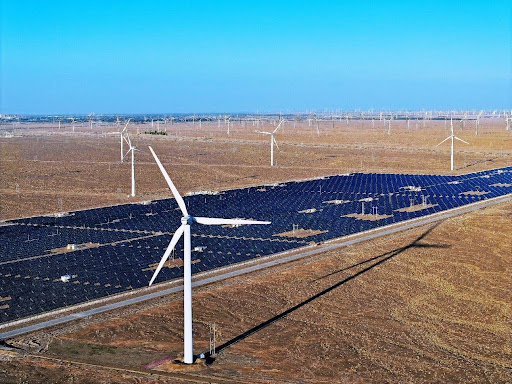
From a longer-term perspective, what is truly reshaping the logic of energy is the green transition now advancing in greater depth. According to the International Energy Agency, electric vehicles alone helped China displace the equivalent of 1.5 million barrels of crude oil per day in the second quarter of this year, far exceeding the market’s previous expectations. China’s rapid development of new energy is not only reshaping its own energy mix, but also quietly changing the underlying dynamics of the global energy market.
China has evolved from a passive recipient of global energy price fluctuations into a more proactive stabilizing force in the global market. Behind this transformation lies a consistent and prudent approach to energy development: keeping China’s energy supply firmly in its own hands and using the certainty of its own development to cope with uncertainties in the external environment.
That, in itself, is one of the most concrete and lasting contributions China can make to global market stability.
By Liu Quan, Zhu Jiaqi, Liang Nan, People’s Daily
The Pinglu Canal, the first major river-to-sea canal project planned and coordinated at the national level since the founding of the People’s Republic of China, is scheduled to open to navigation on September 16, 2026. Construction began on Aug. 28, 2022, with a total investment of about 72.7 billion yuan (about $10.83 billion).
Stretching 134.2 kilometers, the canal starts at the mouth of the Pingtang River in the Xijin Reservoir area of Hengzhou, Nanning, south China’s Guangxi Zhuang autonomous region. It runs south through Luwu town in Lingshan county, Qinzhou, before connecting with the Qinjiang River and flowing into the Beibu Gulf. Designed to Class I inland waterway standards, it is China’s highest-grade navigable canal, capable of accommodating vessels of up to 5,000 tonnes.
Once operational, the canal will shorten the inland waterway route for cargo from southwest China to the sea by more than 560 kilometers compared to traditional routes. It will also significantly reduce shipping distances to major ASEAN ports, lower overall logistics costs by 18 to 30 percent, and save more than 5 billion yuan in transportation costs each year.
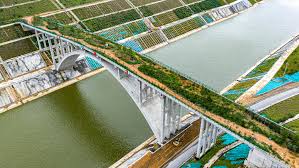
The Pinglu Canal features 104 bridges along its route, including 27 crossing the canal itself, as well as numerous supporting structures such as trestle bridges, temporary bridges, and pedestrian bridges that have been rebuilt or newly constructed. This extensive network has earned the project the nickname “Hundred-Bridge Project.” These bridges do more than connect the two banks of the canal; they also reflect the region’s cultural heritage, improve local livelihoods, and demonstrate a commitment to harmony between people and nature.
In Qinzhou, where the canal meets the sea, the Zicai Bridge officially opened to traffic on April 28.
“The original Zicai Bridge lacked the navigational clearance required for 5,000-tonne vessels on the canal and had to be removed,” said Yuan Mingyang, deputy director of the engineering management department at Guangxi Pinglu Canal Construction Co., Ltd., the builder of the canal under Pinglu Canal Group. “However, as a self-anchored suspension bridge with a complex load-bearing structure, improper demolition could have caused it to collapse.”
To dismantle the bridge safely, the project team invited experts to conduct simulations using digital twin and BIM (Building Information Modeling) technologies. They ultimately adopted a reverse dismantling method. “Taking the bridge apart in the reverse order of its construction. The demolition alone took more than half a year,” Yuan said.
Another notable structure, the Qinjiang Bridge on the G75 Lanhai Expressway, is the world’s largest-span and heaviest concrete-filled steel tube arch bridge to be lifted as a single unit. At peak times, it previously handled more than 100,000 vehicle trips per day. To minimize disruption, the construction team used the old bridge as a platform for transporting construction materials.
“Half of the bridge was enclosed with scaffolding and protective nets for construction, while the other half remained open to traffic — a rare approach in conventional bridge construction,” said Kuang Zhiqiang, a person in charge of the bridge’s construction. The team also employed an overall lifting technique: assembling bridge components on the ground before lifting them into place. Installation was completed in just 16 hours.
“The Pinglu Canal is a complex, integrated project involving multiple disciplines, including waterways, hubs, slopes, bridges, and ecology. The entire project was divided into more than 180 construction sections, with over 20,000 workers involved at peak periods. It posed major challenges in organization and coordination,” said Cheng Yaofei, chairman of Guangxi Pinglu Canal Construction Co., Ltd.
As China’s first smart canal featuring full life-cycle management, the Pinglu Canal’s digital twin platform integrates multidimensional data on weather, hydrology, construction schedules to simulate operations in advance and automatically generate optimal construction plans. For example, one side of the waterway is drained for earth excavation and foundation work. Once that side is completed, work shifts to the other. This carefully staggered approach, both in time and space, has helped minimize interference between construction activities.
The project stands as a testament to development driven by a deep commitment to people’s well-being.
The site of Qinjiang Bridge was once home to the Qinjiang No. 1 Bridge, built in 1958 as Qinzhou’s first urban bridge. Local residents had deep emotional ties to it. To preserve the city’s collective memory, the proposal to retain the old bridge piers was adopted. Today, the new bridge incorporates the preserved piers and provides space for public activities beneath it. A miniature replica of the old bridge has also been rebuilt upstream.
From Qinzhou Oyster Plaza, visitors can see a graceful white bridge spanning the Pinglu Canal: the Beibu Gulf Bridge, voted by the public as the “most beautiful bridge” along the canal. Traffic flows across the bridge, while mangroves thrive beneath it. As a vital coastal wetland ecosystem, mangroves serve as an important barrier for coastal ecological protection.
During construction, the project team adjusted the location of the temporary traffic bridge for the Beibu Gulf Bridge based on recommendations from forestry authorities, avoiding areas with concentrated mangrove growth. Protective measures, including the installation of barriers, were also taken to prevent industrial wastewater and construction waste from entering the mangrove areas, safeguarding the coastal ecosystem.
From the planning stage, the Pinglu Canal embraced the concept of a “green canal,” integrating environmental protection throughout the entire project. Efforts have been made to preserve ecosystems along the canal and protect biodiversity.
No asphalt, no road markings — just a thick layer of soil covering the bridge deck. This is the most distinctive bridge along the Pinglu Canal: an ecological corridor bridge. It is China’s first bridge built exclusively as a wildlife crossing over a canal.
The bridge deck recreates the original forest environment, providing shade, food and shelter for wildlife. It allows native species such as spotted linsangs, leopard cats and Pallas’s squirrels to move safely through the area, striking a balance between infrastructure development and ecological conservation.


Changsha brings millennia-old heritage into modern life

Gov AbdulRazaq Lauded Over Conferment Of Sadauna Of Ilorin Title

FG Commissions KWASU ICT Centre To Enhance Graduates Employability

-
 Uncategorized6 years ago
FG, states urged to harness flooding for ranching, others with technology – Agbaje
-
 Headlines11 years ago
Breaking: EFCC seals Borno House of Assembly, as Hon members take to their heels
-
 News12 years ago
Nigeria Security Operatives Stage Manhunt For Homosexual Perpetrator
-
 News10 years ago
How 21-year-old Girl fled community over accusation of lesbianism
-
 News11 years ago
Yobe Gov Moves Against Deputy
-
 Opinion7 years ago
7 signs she has friend zoned you
-
Technology5 years ago
Online job placement company headhunts women
-
 Headlines10 years ago
Borno Dep Gov Abducts Another Church Leader