
China
Innovation fuels China’s supercomputing rise


By Meng Fanzhe, People’s Daily
China’s domestically-developed LineShine supercomputer took the No. 1 spot on the 67th edition of the TOP500 list released at the International Supercomputing Conference High Performance 2026 in Hamburg, Germany. With sustained performance exceeding 2 EFLOPS, a self-developed LX2 central processing unit (CPU), and the world’s first fully liquid-cooled computing cabinets, these impressive specifications mark a new benchmark for China’s supercomputing capabilities.
A supercomputer is a high-performance computing system comprising thousands or even tens of thousands of processors, capable of tackling large-scale, complex computing tasks beyond the reach of conventional computers and servers.
In the 1970s, China managed to import a supercomputer through multiple channels, only to face stringent restrictions imposed by the supplier. The machine had to be housed in a transparent computer room, and the keys remained in foreign hands.
From relying on foreign technology to successive breakthroughs with the Yinhe, Tianhe, and Sunway series, and now to LineShine outperforming existing exascale supercomputers worldwide, generations of Chinese scientists have forged a path of independent innovation despite technological blockades and supply chain restrictions.
Today, most of the world’s leading supercomputers use a heterogeneous CPU-GPU (graphics processing unit) architecture, boosting performance primarily by adding more GPU accelerators.
LineShine, however, has taken a different path. It adopts a pure CPU architecture, integrating acceleration directly into the processor itself. By reducing the overhead of data movement between chips, it delivers greater performance with a leaner architecture. Few have attempted this approach, yet China has made it work.
Many of China’s recent technological breakthroughs stem from the courage to chart a different course. DeepSeek overcame computing constraints through algorithmic innovation, breaking away from the conventional “more computing power” mindset and capturing global attention.
BYD’s second-generation Blade Battery and megawatt flash charging technology have won acclaim for enabling a five-minute charge and a full charge in just nine minutes. Huawei’s proposed “Tau (τ) Law” replaces geometric scaling with “time scaling” to sustain advances in semiconductors and electronic systems. Original, disruptive innovation begins with rethinking problems at their source and opening up new paths. Relying solely on imitation makes it difficult to truly shape one’s own path of development.
Pioneering new paths requires boldness, while lasting progress depends on integration. Today, supercomputing is entering a new era where supercomputing and intelligent computing are converging. At the chip level, LineShine combines high-performance computing with AI acceleration, enabling a single system to handle both scientific computing and intelligent inference. It has provided a computing foundation for a new paradigm of AI-driven scientific research. The deeper the integration, the greater the potential for future innovation.
China has led the world in new energy vehicle production and sales for years, thanks in large part to collaborative iteration across the entire industrial chain. Likewise, the C919 large passenger aircraft reached commercial service by overcoming not just individual technical hurdles but also complex system-level challenges spanning materials, avionics, flight control, and other disciplines.
Sci-tech innovation requires coordinated planning across the entire industrial chain, broad-based development across sectors, and integrated progress in education, science and technology, and talent cultivation. When different fields and links work in concert, the results far exceed what isolated efforts can achieve.
Innovation ultimately proves its value through practical application. Since entering service, LineShine has supported research in atmospheric and ocean sciences, drug discovery, materials science, brain science, and many other fields, transforming computing power into the ability to solve real-world problems. The true value of supercomputing lies in empowering innovation across a wide range of industries.
The BeiDou Navigation Satellite System allows ocean-going fishermen to send emergency messages via short-message communication and allows farm machinery to operate autonomously with centimeter-level positioning.
Chinese-developed innovative medicines are being approved for cancer, autoimmune diseases, rare diseases, and other conditions, bringing new hope to patients. Powered by AI, the Internet of Things, and other next-generation digital technologies, cloud-based classrooms are giving children in remote mountain regions access to high-quality educational resources.
By targeting the frontiers of global science and technology, serving the real economy, meeting the country’s major strategic needs, and improving people’s health and well-being, China’s sci-tech innovation is advancing on an increasingly solid footing.
By Xu Jing, People’s Daily
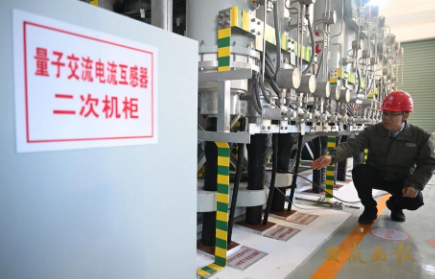
Quantum technology is beginning to transform the way China’s power grids operate. At the 220-kilovolt Houdian Quantum Application Demonstration Substation in Hefei, east China’s Anhui province, a suite of advanced quantum technologies is now in use. These include diamond-based quantum sensing materials to monitor current fluctuations, quantum-dot gas sensors to detect potential cable fire hazards and partial discharge faults inside switchgear, and other innovations that strengthen the intelligence, safety, and efficiency of grid operations.
Commissioned in November 2024, the facility is China’s first demonstration substation dedicated to the systematic application of quantum technologies. It has deployed 85 independently developed quantum devices across 18 categories, covering quantum sensing, quantum communication, and quantum computing.
The project represents a pioneering effort to integrate quantum technologies into power grid engineering, offering a new technological solution to the challenges faced by conventional power grids while supporting the development of a new-type power system.
The substation also represents a new generation of fully unattended intelligent substations.
“We have replaced many manual inspection tasks with high-precision quantum sensing equipment,” said Tian Teng, a young engineer at the digitalization institute of the electric power research institute under State Grid Anhui Electric Power Co., Ltd. “The new system can identify and diagnose equipment defects much faster, reducing both inspection costs and operating expenses.”
Inside the high-voltage switchgear hall, rows of power equipment operated steadily. Standing beside an out-of-service switchgear cabinet, Tian pointed to a small device mounted on its side.
“This is a quantum-dot multi-parameter sensor,” he explained. “It continuously monitors the cabinet’s internal environment and detects signals associated with partial electrical discharge, enabling us to assess the condition of the switchgear.”
He then pointed to another compact device attached to a cable beneath the cabinet.
“This is a distribution network current sensor. It monitors line loading in real time and can quickly and accurately locate faults along the transmission line.”
Quantum technologies are embedded throughout the facility — not just in these compact sensing devices.
Quantum technologies are embedded throughout the facility — not just in these compact sensing devices. A quantum lidar system installed on the rooftop monitors atmospheric particles and cloud conditions within a 15-kilometer radius, providing early warnings of weather-related risks. Quantum attitude sensors mounted on transmission towers can detect magnetic field changes as small as 1/10,000 of the Earth’s magnetic field, enabling highly accurate monitoring of tower alignment.
Besides, quantum encryption equipment supports both fiber-based quantum secure communications and “5G + quantum” encrypted communications, significantly enhancing cybersecurity across the power network.
The innovation extends beyond physical equipment. The substation has adopted a quantum computing-based approach for power flow analysis, which has been validated using the topology of a real-world power grid on Origin Wukong, China’s domestically developed quantum computer.
“This breakthrough provides an entirely new technical approach for large-scale power grid simulation,” Tian said. “It is expected to further improve the real-time analytical and computing capabilities of power systems.”
Why did China build this quantum-powered substation?
According to Tian, conventional power grids are increasingly facing three major challenges as renewable energy and power-electronics-based equipment become increasingly widespread: limited accuracy in equipment condition monitoring and delayed response; insufficient security for data transmission and control instructions; and the computational limitations of conventional computers when making rapid decisions for increasingly complex grid operations.
Developing a new-type power grid supported by quantum technologies has become an inevitable choice, he said.
Developing the necessary equipment, however, was far from straightforward.
There were no domestic precedents, no established standards and no mature technical solutions to follow, said Zhao Long, head of the power quantum sensing laboratory at the electric power research institute under State Grid Anhui Electric Power Co., Ltd.
“The biggest challenge came when supplies of high-quality diamond sensing materials were cut off by overseas suppliers, bringing the project close to a standstill,” he added.
The team eventually partnered with domestic materials researchers to develop customized alternatives. After repeated rounds of experimentation and testing, they achieved a breakthrough.
New engineering challenges soon emerged, including electromagnetic interference and adapting laboratory technologies to real operating conditions.
“For several consecutive months, we spent our days at the substation collecting data and tuning system parameters, and our nights back in the laboratory refining algorithms and improving packaging and shielding designs,” Zhao recalled.
“When the quantum current transformer finally displayed accurate readings on the monitoring screen, everyone on the team burst into applause. We had successfully bridged the ‘last mile’ from laboratory research to real-world engineering.”
According to project estimates, the application of quantum technologies enables the Houdian demonstration substation to reduce annual electricity measurement errors by more than 500,000 kilowatt-hours, while significantly improving the reliability and economic efficiency of grid operations.
Several quantum technologies first demonstrated at the substation have since been deployed elsewhere across Anhui province and are now being introduced to more regions across China.
By Ouyang Jie, Liu Junguo, People’s Daily
From factories and power plants to warehouses and emergency response sites, Chinese-made robots are increasingly being deployed across a wide range of applications worldwide.
This expansion reflects not only the rapid growth of China’s robotics industry but also the ability of Chinese companies to develop products tailored to diverse market needs, improve service capabilities, and build localized operations overseas.
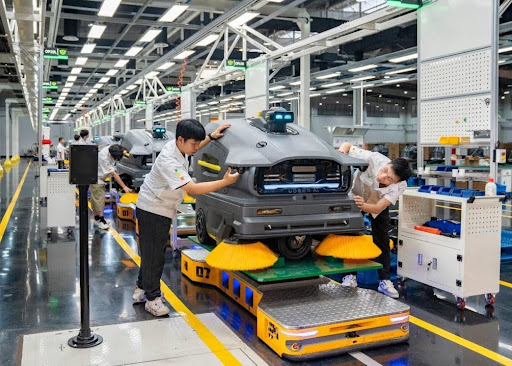
At the assembly workshop of Pudu Robotics, a Chinese service robotics manufacturer located in Jianhu county, east China’s Jiangsu province, five production lines were running at full capacity for 10 hours.
Workers at assembly stations were installing new batches of lidar modules into robot bodies. The company’s production schedule has already fully booked through 2027, with factory production plans significantly tighter than last year.
Founded in 2016, Pudu Robotics has focused on the global commercial service robot market. It has shipped more than 130,000 units and served over 50,000 end customers worldwide.
Since the beginning of this year, the company’s exports have already exceeded the total volume of the previous year, with products sold to 85 countries and regions. Its cleaning robots, in particular, have maintained year-on-year export growth of more than 100 percent for consecutive years, accounting for 29 percent of the global commercial cleaning robot market.
Pudu Robotics is just one example of Chinese intelligent robot companies expanding into overseas markets. According to customs data from Shenzhen, south China’s Guangdong province, exports of various types of robots from Shenzhen reached 6.94 billion yuan ($1.03 billion) in the first half of this year, representing a tenfold increase year-on-year. These products were shipped to more than 110 countries and regions.
Strong technological capabilities are at the core of the global competitiveness of Chinese manufacturing.
“Our quadruped robots have officially started operations at a nuclear power plant in Switzerland, carrying out frequent and routine autonomous inspections in high-risk areas,” said Yao Hengyan, assistant general manager of DEEP Robotics in Hangzhou, east China’s Zhejiang province.
The robot can climb slopes as steep as 45 degrees, navigate narrow spaces between equipment and access areas that are difficult for humans to reach. Equipped with thermal imaging and acoustic sensors, it can accurately detect potential hazards such as leaks, abnormal temperatures, and unusual equipment noises.
Inspection data is uploaded in real time to a digital management platform, which can automatically issue alerts and initiate responses once anomalies are detected.
Besides, the quadruped robots of the company are also used for factory security and underground pipeline inspection in Switzerland.
A diverse product portfolio has enabled Chinese robots to adapt to a broad range of global application scenarios.
Pudu Robotics has divided the market into 16 major industries and more than 800 categories of specific applications and tasks based on customer needs, said Zhang Tao, founder and CEO of the company. The company has continuously optimized the overall performance of its products to ensure they are “functional, user-friendly, and durable” in complex environments.
It has established four major product lines covering delivery, cleaning, industrial, and general-purpose embodied intelligence robots, with applications spanning multiple sectors, including manufacturing and warehousing logistics.
The successful deployment of DEEP Robotics’ quadruped robots at a Swiss nuclear power plant, where safety standards are extremely demanding, demonstrates the stability and reliability of China-made robots, Yao said.
The company has reached an agreement with its Swiss client to expand cooperation, and its robots, which can adapt to complex terrain and extreme weather conditions, have already been deployed in energy, industrial, and emergency response scenarios in various parts of the world.
As they continue to explore overseas markets, many Chinese robotics companies are shifting from simply exporting products to building localized brands and service networks.
Competition in China’s service robot sector has moved beyond price-performance advantages and entered a new stage where quality, brand recognition, and service capabilities are equally important, Zhang said. Customers are looking for not just a machine, but a comprehensive solution that can operate reliably over the long term.
To meet these needs, Pudu Robotics has established local offices and service centers in major global markets and built a cooperation network involving more than 1,000 distributors. The network provides partners with full-process support, including pre-sales consultation, sales assistance, deployment, after-sales maintenance, and rapid spare parts response, helping customers overcome concerns about adopting complex technologies.
The current penetration of robots remains relatively low, leaving broad room for future growth, Zhang said. As robots become increasingly integrated into various industries, different application scenarios will require different types of robots and capabilities. The company hopes to develop a unified “intelligent brain” for robots that can empower various products in fields such as delivery, cleaning, and industrial applications.
Pudu Robotics will continue expanding investment in technological innovation and product upgrades, making robots increasingly intelligent and capable of serving more industries worldwide, Zhang added.
By Yao Xueqing, People’s Daily
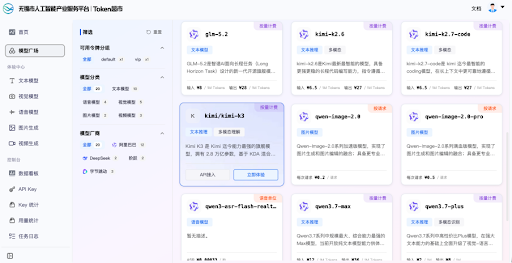
When Li Tao, the software department supervisor at Sevice — a security technology company based in Jiangsu — opened Wuxi’s AI industry service platform, he navigated straight to the “Token Supermarket” on the homepage. He logged into his account to check usage metrics and his remaining balance.
Li’s company specializes in intelligent security, with software development as its core business. “Since last year, AI has handled 85 percent of our software development workflows,” Li said. The company needs to purchase tokens from various large language model platforms, with fees calculated based on usage.
Initially, the company’s demand for tokens was limited, and the cost was almost negligible. But as computing needs grew rapidly, monthly expenses increased. Different large models have different capabilities and applications, Li said. Companies not only have to cope with rising costs, but also manage and maintain multiple accounts and switch between different models, he added.
In May this year, Wuxi rolled out this city-level “Token Supermarket.” Li Tao visited the platform the very day it went live. Lined up on its virtual “shelves” were over 20 mainstream large models, covering nearly all those widely adopted by enterprises.
Thanks to the platform’s centralized procurement, most offerings are available at favorable rates. Even more convenient, users need only a single registered account to call upon different large models on demand.
The company immediately decided to register with the “Token Supermarket” and top up its account. Li did the math: with a monthly recharge of 20,000 yuan ($2,963), more than 30 engineers can use 4 billion to 5 billion tokens. The complimentary concurrent-access benefit package has also enabled more than 30 employees to work efficiently in parallel.
As a result, the company has cut research and development costs by nearly 30 percent, shortened software development cycles from two weeks to less than one week, and increased efficiency by 50 percent.
Why did Wuxi launch such a “Token Supermarket,” and what makes it unique?
According to Zhu Yiqing, deputy general manager of Wuxi Digital New Infrastructure Co., Ltd., which operates the platform, token usage is growing rapidly, but companies still face challenges such as high costs, complicated management of multiple AI model accounts and difficulties in calculating expenses.The “Token Supermarket” was developed to provide a one-stop purchasing platform and has already served more than 50 enterprises.
Its customers include not only companies like Li’s that purchase tokens to assist with daily office work, but also many enterprises that buy tokens as “bulk raw materials” for further processing and development.
Dramasmaker, a startup developing AI-powered animated storytelling production tools, is one such customer. The company was founded in August last year and spent more than six months independently developing a one-stop animation production system, which entered the testing and production phase in May of this year, said general manager Wei Jianfei.
The company needs to purchase large amounts of tokens, resulting in high costs. During the early startup stage, this placed considerable pressure on its cash flow, Wei said.
Zhu noted that the “Token Supermarket” can also be connected with financial services, with financial products to be integrated into the platform’s payment system.
Notably, staff members of the “Token Supermarket” are currently sprucing up its virtual premises: alongside an existing “brand zone,” a new “local-source offerings zone” has been rolled out.
According to Zhu, Wuxi’s computing-power industry is developing rapidly, with 19 intelligent computing centers now up and running, most of which deliver computing power for immediate sale.
Tokens generated by these intelligent computing centers are listed on the “Token Supermarket,” bringing cost-competitive options for users. The platform also bolsters the local computing-power sector while serving small and medium-sized enterprises.


Stakeholders, Staff Benefit from NDPHC’s Procurement Training Initiative

Senator Saliu Mustapha formally dumps APC

Dantani Accuses EFCC of Overstepping Mandate, Urges AGF’s Intervention

-
 Uncategorized6 years ago
FG, states urged to harness flooding for ranching, others with technology – Agbaje
-
 Headlines11 years ago
Breaking: EFCC seals Borno House of Assembly, as Hon members take to their heels
-
 News12 years ago
Nigeria Security Operatives Stage Manhunt For Homosexual Perpetrator
-
 News10 years ago
How 21-year-old Girl fled community over accusation of lesbianism
-
 News10 years ago
Yobe Gov Moves Against Deputy
-
 Opinion7 years ago
7 signs she has friend zoned you
-
Technology5 years ago
Online job placement company headhunts women
-
 Headlines10 years ago
Borno Dep Gov Abducts Another Church Leader