
China
Digital and intelligent services shine at CIFTIS 2026

By Wang Donghui, Qi Zhiming, Xiao Fei, People’s Daily
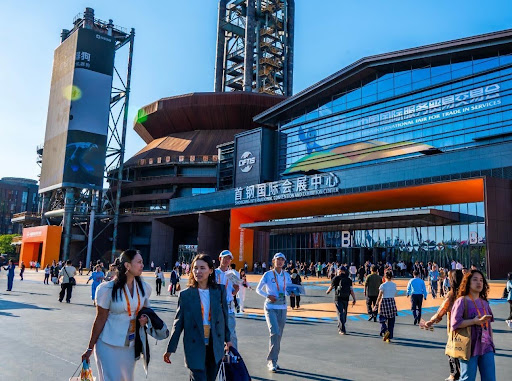
The 2026 China International Fair for Trade in Services (CIFTIS) officially opened on September 9 at Beijing’s Shougang Park. This year’s event brings together exhibitors from more than 90 countries and international organizations, with over 1,800 companies exhibiting on-site, including over 400 Fortune Global 500 firms and industry leaders. A prominent theme across all exhibition areas is the integration of digital and intelligent technologies.
AI makes services smarter
At the booth of Chinese online local services provider Meituan, visitors can see how large models and AI agents are being applied in consumption, merchant operations, and on-demand delivery.
“Help me choose a restaurant near Shougang Park with a rating of 4.5 or above and an average spending of around 100 yuan ($14.91) per person,” a People’s Daily reporter told Xiaotuan, an AI assistant in the Meituan app. Within two seconds, a detailed list featuring restaurant ratings and recommended dishes appeared on the screen.
According to a Meituan employee, the platform’s AI agent can account for factors such as time, location, budget, companions, and personal preferences. Combined with merchants’ service offerings, operating conditions, and reviews, it delivers personalized recommendations. Covering 12 categories of local services, the Xiaotuan AI assistant has responded to over 700 million user requests to date.
In the education services exhibition area, many visitors stopped to try out products from Feixiang Xingqiu, an education technology company and subsidiary of Beijing Yuanli Education Science and Technology Co., Ltd. The company showcased three foundational large models designed for basic education.
After a staff member described a teaching need aloud, “Feixiang Teacher 3.0” completed the task and instantly generated an educational application called “English Adventure Island,” complete with a course map and a series of challenges that allow students to learn independently in a gamified environment.
Technology makes industries smarter
Innovations in physical AI were among the highlights of the fair. The booth of Lightwheel.ai, a physical AI infrastructure company based in Beijing, drew a steady stream of technology enthusiasts.
Visitors put on first-person-view headbands, while their full-body movements were captured in real time and turned into “training material” for robots to learn from. Over the past three months, the company has provided services to more than 30 leading large-model companies.
“This is a ‘continuous learning system’ built for robots, helping them evolve from being able to ‘see and talk’ to being able to ‘do and act,'” a staff member said.
In the road freight sector, FOR-U Smart Freight, a Chinese technology-enabled platform specializing in truckload transportation, showcased an AI agent that assists dispatchers with order assignment, truck sourcing, and shipment tracking, enabling seamless human-machine collaboration.
Dispatchers simply describe their requirements by voice or text, and the AI agent analyzes them within milliseconds, generating standardized instructions for locating a truck. During transit, it can also provide round-the-clock route tracking and alerts for abnormalities.
Openness and cooperation broaden the horizons for innovation
“This model is so lifelike,” exclaimed a visitor upon seeing a 3D model of Lin Chong, a hero from the classic Chinese novel Water Margin, depicting the iconic scene “Lin Chong Takes Refuge in the Snowbound Mountain God Temple,” at the booth of Chinese network technology company Shumei Wanwu (Beijing) Network Technology Co., Ltd.
On a nearby computer, the company’s “Hi3D” AI-powered 3D creation platform was demonstrating how a 2D image of Lin Chong could be transformed into a 3D model. By entering text or an image, users can generate a high-definition 3D model in five to ten minutes. After fine-tuning details and adapting the model for printing, they can export it and produce a physical replica.
Ren Lifeng, the company’s founder and CEO, said the platform can generate 3D models from images and videos, significantly lowering the barrier to 3D modeling and improving efficiency.
The product is now used in a wide range of applications, including industrial design, cultural tourism, museums, trendy toys, creative products, gaming, and film and television production. It has also entered markets in the United States, the United Kingdom, South Korea and Germany, amassing more than 1 million users.
Innovation extends to quality consumption
Norway, this year’s guest of honor at CIFTIS, has set up a national pavilion covering about 260 square meters at Shougang Park. Inside, the signature glass bottles of Norwegian bottled water brand VOSS stand out under the lights, drawing many visitors.
By leveraging a digital supply chain and targeted marketing, VOSS has maintained double-digit growth in its business in China, providing a vivid example of China-Norway economic and trade cooperation and the upgrading of quality consumption.
At this year’s CIFTIS, more than 90 companies and institutions unveiled new achievements, while over 200 new products and solutions made their debuts. These new technologies, products and solutions are making life, study and work more convenient and efficient, while bringing greater digitalization and intelligence to the services sector.
An increasing number of “China services” are reaching global markets from CIFTIS, putting into practice the fair’s vision of “Global Services, Shared Prosperity.”
By Li Gang, People’s Daily
At a container terminal in Shekou, Shenzhen, south China’s Guangdong province, a vessel carrying about 300 tons of premium Monthong durians from Thailand slowly docked.
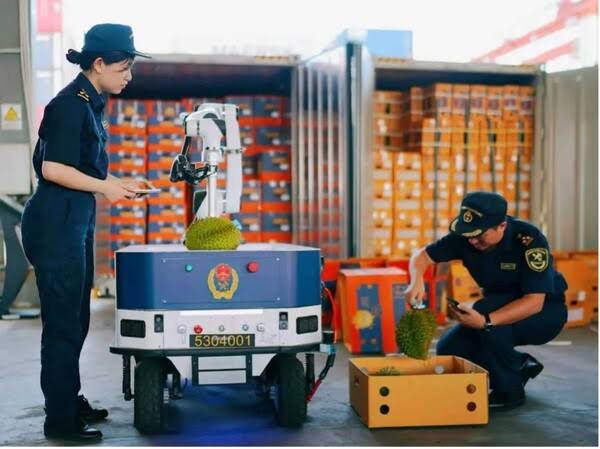
Customs officers were already in position. An intelligent fruit inspection robot scanned the labels on the outer cartons, instantly verifying information such as the product name and place of origin. Samples were sent directly to a laboratory for testing, with results returned promptly.
The fruits were soon transported to wholesale markets across the Guangdong-Hong Kong-Macao Greater Bay Area (GBA) and placed on supermarket shelves.
At a fruit shop in Tianhe district, Guangzhou, capital of Guangdong province, Monthong durian was priced at 17.8 yuan ($2.65) per 500 grams, while some varieties were available for as little as 13.8 yuan.
Local resident Zhang Xin picked up a durian weighing about 3 kilograms. “Durians used to cost at least 20 yuan per 500 grams, so buying one would cost around 200 yuan. Now, it costs about 100 yuan — quite a bit cheaper,” she said.
According to data from Shenzhen Customs, 26,200 tons of fresh durians worth 797 million yuan were imported through Shenzhen ports from April to July this year, up 40.86 percent and 22.62 percent year on year, respectively. Both figures hit record highs. Thailand, Malaysia, and other APEC economies are major sources of durian imports.
Benefiting from the continued efforts of APEC to promote trade and investment liberalization and facilitation, imported products such as cherries from Chile, cosmetics from South Korea, milk powder from New Zealand, and beef from Australia are becoming increasingly affordable in China, giving consumers more choices.
Late last year and early this year, special offers at many fruit shops across China brought the price of cherries down to as little as 99 yuan for 2.5 kilograms. Ten years ago, the same Chilean cherries could cost as much as 500 to 600 yuan per kilogram at some premium supermarkets.
During the 2025-2026 production season, Chile produced a record 655,000 tons of cherries, more than 90 percent of which were shipped to China.
Behind these numbers lies a complete “Asia-Pacific cooperation chain.” The China-Chile Free Trade Agreement has reduced tariffs to zero on about 98 percent of products. The number of dedicated sea-freight services for cherries has increased to 32, and transit time has been cut from 28 days to 23. At Guangzhou’s Nansha Port, fresh produce can be unloaded and cleared through customs in as little as two hours.
According to customs statistics, the combined import and export value between the nine non-coastal GBA cities and other APEC economies has increased by 46 percent over the past decade.
A small reduction in tariffs, a day saved in logistics, and an hour cut from customs clearance — all ultimately translate into real savings for consumers.
At the international arrivals hall of Terminal 2 at Guangzhou Baiyun International Airport, passengers crowded the immigration counters. A Singaporean businesswoman surnamed Lynn walked down the gangway and headed straight for the dedicated lane for holders of the APEC Business Travel Card. An immigration officer took her passport and the Card, checked her information, entered the relevant details and cleared her for entry. The entire process took less than a minute. Years ago, she used to wait in line here for more than 20 minutes.
“Traveling in and out of China with an APEC Business Travel Card is essentially like having a five-year, multiple-entry business visa for 16 APEC economies,” she said.
According to the Baiyun immigration inspection station, more than 3.16 million entries and exits by foreign nationals from APEC economies were recorded at Guangzhou Baiyun International Airport this year through the end of August, up 36.4 percent year on year. Of these, about 16,000 were made by holders of APEC Business Travel Cards.
“The fruits of APEC-driven regional cooperation have long been woven into daily life, benefiting millions of households and profoundly reshaping ordinary people’s food, clothing, accommodation and travel,” said Shen Minghao, vice president of Guangdong University of Foreign Studies and director of the Guangdong Academy of Greater Bay Area Studies.
On the one hand, the zero-tariff import list has been expanded, cold-chain logistics networks strengthened, and cross-border e-commerce costs lowered. On the other hand, “shopping in China” is gaining traction. Drones, smartwatches, and AI glasses have become new “souvenirs” in foreign tourists’ suitcases, while instant tax refunds upon departure are available nationwide.
By Cheng Yuanzhou, People’s Daily
Walking into the operations and control center of Shenzhen Customs, one can see on a large screen the bustling movement of vehicles and vessels at ports across the city. Meanwhile, the day’s customs clearance overview records in each declaration the trade links and industrial cooperation between Shenzhen, south China’s Guangdong province, and other Asia-Pacific economies.
At 11 a.m., at Shenzhen Bay Port, customs officers completed final inspections and cleared an export shipment of 144 mini personal computers. The goods were headed overseas via Hong Kong International Airport. Manufactured by CTOne Group, these compact smart computing terminals are no larger than a dictionary yet pack high-performance computing power. Capable of supporting local deployment of large AI models, they are designed for a broad range of applications — from industrial control and smart offices to home entertainment and edge computing.
“We used to compete on price; now we compete on computing power and user experience,” said Dai Yuanjun, president of the company. As artificial intelligence (AI) applications continue to develop rapidly worldwide, other Asia-Pacific economies are seeing strong demand for high-performance, portable smart terminals. The company’s proprietary brands, including CYX and ACEMAGIC, are gradually gaining recognition.
The company recently established a production base in Mexico, integrating further into the Asia-Pacific AI supply chain and now holding nearly 20 percent of the global mini PC market.
Many components used in these mini PCs are sourced from other Asia-Pacific economies. As a hub for processing trade, Shenzhen’s manufacturing sector draws on highly responsive supply chains to export processed products across the region, promoting deeper integration of industrial chains.
That afternoon, at DaChan Bay Terminal in Shenzhen, an ocean-going vessel loaded with lithium battery energy storage cabinets made by Chinese automaker BYD departed for Chile. The new equipment will support local photovoltaic power projects, contributing to the country’s green energy transition.
“Overseas orders for energy storage products are growing strongly, and exports are increasingly shifting toward long-term supply agreements,” said Liu Feng, manager of customs affairs at BYD. Chinese-made energy storage cabinets are seeing a surge in orders in overseas wind and photovoltaic power markets thanks to their competitive prices and high reliability, Liu said.
“We have made comprehensive use of trade facilitation measures, including advance declarations, direct loading upon arrival and 24/7 appointment-based inspections, significantly shortening customs clearance times,” said Yang Nan, a first-level administrative law enforcement officer with the terminal supervision section of DaChan Bay Customs, under Shenzhen Customs.
From January to July this year, DaChan Bay Customs handled 1,674 export shipments of the so-called “new trio” products, worth 5.385 billion yuan (about $803 million), up 31.71 percent and 33.82 percent year on year, respectively. The “New trio” refers to electric vehicles, lithium batteries, and solar products
According to Shenzhen Customs, the city’s exports to other Asia-Pacific economies are shifting rapidly toward emerging, high-value products. In the first half of this year, “new trio” products, AI-enabled products, medical instruments and equipment, and other such products accounted for 29.5 percent of Shenzhen’s exports to other Asia-Pacific economies.
At 6 p.m., at Shekou container terminal in Shenzhen, temperature-controlled containers carrying 36 tonnes of fresh apples from New Zealand were unloaded. This order from across the ocean was handled by Shenzhen Yuanxing Fruit Co., Ltd.
“Since mid-August, we have seen an increasingly diverse range of imported fruits, including dragon fruit from Vietnam, and fresh coconuts from Thailand,” said Zheng Jingsen, an executive at the company.
“Thanks to the tariff concessions and customs clearance facilitation brought by the Regional Comprehensive Economic Partnership (RCEP), high-quality fruits from across the Asia-Pacific are entering the Chinese market at a much faster pace,” Zheng said. He added that the company has long cooperated with countries such as ASEAN countries, Australia, New Zealand and Chile. It has also established a fruit and vegetable processing base in Vietnam, connecting Asia-Pacific orchards with China’s vast consumer market.
As night falls and the city lights up, Shenzhen’s customs clearance overview continues to update. Data from Shenzhen Customs show that the city’s imports and exports with other APEC economies rose from 267.5 billion yuan in 1996 to 3.13 trillion yuan in 2025, an average annual growth rate of 8.5 percent and an increase of more than tenfold. Through trade, China and other Asia-Pacific economies are jointly writing a new chapter of shared opportunities and mutual benefit.

By He Linping, People’s Daily
On Aug. 26, a truck carrying more than 10,000 cross-border e-commerce export shipments set off after a Guangdong-Macao “cross-border one-lock” customs seal was secured with a crisp click at the Nam Kwong (Hengqin) Logistics Center in the Guangdong-Macao In-Depth Cooperation Zone in Hengqin, Zhuhai, south China’s Guangdong province. The truck smoothly passed through the joint one-stop lane at Hengqin Port, cleared customs quickly, and headed straight to Macao International Airport, just 13 kilometers away, before flying onward to Kuala Lumpur, Malaysia.
This marked the first shipment and inaugural flight under a pilot program that pre-positions air cargo palletizing services at Macao International Airport’s Hengqin cargo terminal. For the first time, the airport’s services have been substantially extended to the mainland.
This development represents more than just an improvement in logistics efficiency; it marks an upgrade in urban functions. With strengthened logistics links between the two locations, “Macao+Hengqin” has gained a new foothold for integrating into the Asia-Pacific and connecting with global markets.
The Asia-Pacific is a major engine of global economic growth, and the Guangdong-Hong Kong-Macao Greater Bay Area is one of China’s most open and economically dynamic regions.
Historically, the area has been a bustling hub of maritime trade along the Maritime Silk Road. Today, Hong Kong and Macao serve as gateways and “super connectors” that facilitate trade and people-to-people exchanges with Asia-Pacific economies. Meanwhile, the three places continue to deepen the alignment of rules and coordination of mechanisms, enabling the Greater Bay Area to participate more closely in regional cooperation and development as an integrated whole.
“Leveraging its unique strengths, the Guangdong-Hong Kong-Macao Greater Bay Area is becoming an important engine for advancing regional cooperation in the Asia-Pacific,” said Li Xiaoying, associate dean at the Institute of Guangdong, Hong Kong and Macao Development Studies, Sun Yat-sen University.
Take Guangdong, for example. In 2025, its total foreign trade reached 9.49 trillion yuan (about $1.41 trillion), with ASEAN as its largest trading partner. Trade with emerging markets such as the five Central Asian countries and the Middle East grew by 23.6 percent and 8.5 percent, respectively.
The Greater Bay Area has become increasingly attractive to foreign investors. In 2025, actual foreign investment in the nine Pearl River Delta cities reached 105.73 billion yuan, up 14.6 percent. Investment from developed Asia-Pacific economies such as the United States, Japan, South Korea, and Singapore continued to flow into the region, injecting fresh momentum into high-quality development while creating new business opportunities.
Recently, the 2026 Hong Kong International Tea Fair was held at the Hong Kong Convention and Exhibition Center, filling the venue with the aroma of tea and a lively atmosphere. The Shenzhen International Business e-Station brought together seven quality tea companies from the mainland as an exhibition group, under a model designed to help them jointly explore global markets. The group showcased their products at the fair.
On the first day alone, the companies established contacts with dozens of buyers from Southeast Asia and other markets. As an integrated online and offline platform providing comprehensive services for companies going global, the center leverages Hong Kong and Macao as links to international markets and taps global resources. Since its launch in July 2024, it has served more than 2,000 companies expanding overseas and facilitated 224 overseas investment projects.
The Shenzhen-Hong Kong-Guangzhou innovation cluster in the Greater Bay Area is the world’s largest. Its full-chain innovation ecosystem, spanning basic research, technological breakthroughs, commercialization of research findings, technology finance and talent support, is powered by flexible institutions and a vibrant innovation environment. It is accelerating the transformation of research results from bookshelves to store shelves, turning them into new quality productive forces.
At Guangzhou Frontop Digital Creative Technology Co., Ltd., representatives from APEC economies lingered in the VR (virtual reality) experience zone, expressing interest in leveraging the Greater Bay Area’s digital technologies to showcase their countries’ tourism resources to the world. In Dongguan, the impressive results of intelligent transformation in traditional manufacturing are opening up broad new possibilities for the development of small and medium-sized enterprises across the Asia-Pacific.
“Many Asia-Pacific economies are currently facing common challenges, including industrial upgrading, the green transition and strengthening innovation capabilities. By closely linking production lines, research institutes, technology companies, logistics networks and platforms for opening up, the Greater Bay Area can help accelerate the application of new technologies and strengthen the region’s overall competitiveness,” said Kanokwan Kerdplanant, chief correspondent at Bangkok Business News.


APEC cooperation delivers tangible benefits to daily life

Shenzhen ports streamline customs clearance and boost free trade

Greater Bay Area development creates new opportunities for Asia-Pacific

-
 Uncategorized6 years ago
FG, states urged to harness flooding for ranching, others with technology – Agbaje
-
 Headlines11 years ago
Breaking: EFCC seals Borno House of Assembly, as Hon members take to their heels
-
 News12 years ago
Nigeria Security Operatives Stage Manhunt For Homosexual Perpetrator
-
 News10 years ago
How 21-year-old Girl fled community over accusation of lesbianism
-
 News11 years ago
Yobe Gov Moves Against Deputy
-
 Opinion7 years ago
7 signs she has friend zoned you
-
Technology5 years ago
Online job placement company headhunts women
-
 Headlines10 years ago
Borno Dep Gov Abducts Another Church Leader