
China
Greater Bay Area development creates new opportunities for Asia-Pacific

By He Linping, People’s Daily
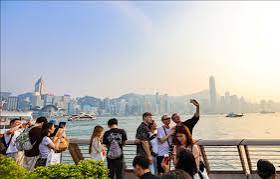
On Aug. 26, a truck carrying more than 10,000 cross-border e-commerce export shipments set off after a Guangdong-Macao “cross-border one-lock” customs seal was secured with a crisp click at the Nam Kwong (Hengqin) Logistics Center in the Guangdong-Macao In-Depth Cooperation Zone in Hengqin, Zhuhai, south China’s Guangdong province. The truck smoothly passed through the joint one-stop lane at Hengqin Port, cleared customs quickly, and headed straight to Macao International Airport, just 13 kilometers away, before flying onward to Kuala Lumpur, Malaysia.
This marked the first shipment and inaugural flight under a pilot program that pre-positions air cargo palletizing services at Macao International Airport’s Hengqin cargo terminal. For the first time, the airport’s services have been substantially extended to the mainland.
This development represents more than just an improvement in logistics efficiency; it marks an upgrade in urban functions. With strengthened logistics links between the two locations, “Macao+Hengqin” has gained a new foothold for integrating into the Asia-Pacific and connecting with global markets.
The Asia-Pacific is a major engine of global economic growth, and the Guangdong-Hong Kong-Macao Greater Bay Area is one of China’s most open and economically dynamic regions.
Historically, the area has been a bustling hub of maritime trade along the Maritime Silk Road. Today, Hong Kong and Macao serve as gateways and “super connectors” that facilitate trade and people-to-people exchanges with Asia-Pacific economies. Meanwhile, the three places continue to deepen the alignment of rules and coordination of mechanisms, enabling the Greater Bay Area to participate more closely in regional cooperation and development as an integrated whole.
“Leveraging its unique strengths, the Guangdong-Hong Kong-Macao Greater Bay Area is becoming an important engine for advancing regional cooperation in the Asia-Pacific,” said Li Xiaoying, associate dean at the Institute of Guangdong, Hong Kong and Macao Development Studies, Sun Yat-sen University.
Take Guangdong, for example. In 2025, its total foreign trade reached 9.49 trillion yuan (about $1.41 trillion), with ASEAN as its largest trading partner. Trade with emerging markets such as the five Central Asian countries and the Middle East grew by 23.6 percent and 8.5 percent, respectively.
The Greater Bay Area has become increasingly attractive to foreign investors. In 2025, actual foreign investment in the nine Pearl River Delta cities reached 105.73 billion yuan, up 14.6 percent. Investment from developed Asia-Pacific economies such as the United States, Japan, South Korea, and Singapore continued to flow into the region, injecting fresh momentum into high-quality development while creating new business opportunities.
Recently, the 2026 Hong Kong International Tea Fair was held at the Hong Kong Convention and Exhibition Center, filling the venue with the aroma of tea and a lively atmosphere. The Shenzhen International Business e-Station brought together seven quality tea companies from the mainland as an exhibition group, under a model designed to help them jointly explore global markets. The group showcased their products at the fair.
On the first day alone, the companies established contacts with dozens of buyers from Southeast Asia and other markets. As an integrated online and offline platform providing comprehensive services for companies going global, the center leverages Hong Kong and Macao as links to international markets and taps global resources. Since its launch in July 2024, it has served more than 2,000 companies expanding overseas and facilitated 224 overseas investment projects.
The Shenzhen-Hong Kong-Guangzhou innovation cluster in the Greater Bay Area is the world’s largest. Its full-chain innovation ecosystem, spanning basic research, technological breakthroughs, commercialization of research findings, technology finance and talent support, is powered by flexible institutions and a vibrant innovation environment. It is accelerating the transformation of research results from bookshelves to store shelves, turning them into new quality productive forces.
At Guangzhou Frontop Digital Creative Technology Co., Ltd., representatives from APEC economies lingered in the VR (virtual reality) experience zone, expressing interest in leveraging the Greater Bay Area’s digital technologies to showcase their countries’ tourism resources to the world. In Dongguan, the impressive results of intelligent transformation in traditional manufacturing are opening up broad new possibilities for the development of small and medium-sized enterprises across the Asia-Pacific.
“Many Asia-Pacific economies are currently facing common challenges, including industrial upgrading, the green transition and strengthening innovation capabilities. By closely linking production lines, research institutes, technology companies, logistics networks and platforms for opening up, the Greater Bay Area can help accelerate the application of new technologies and strengthen the region’s overall competitiveness,” said Kanokwan Kerdplanant, chief correspondent at Bangkok Business News.
By Han Xin, People’s Daily
At 8 a.m., in Beijing’s Chaoyang district, a resident surnamed Wang scanned a QR code to unlock a shared bicycle. He mounted his phone on the handlebars using a navigation app and began cycling the six kilometers to his pet shop.
“Cycling gets me to work while fitting in some exercise at the same time. It’s an efficient two-in-one solution,” Wang said.
His experience is far from unique. According to online local services provider Meituan, over the past five years, users of its shared bicycles and e-bikes have clocked up a total of 46.2 billion kilometers of rides, reducing carbon emissions by roughly 2.64 million tons. Shared two-wheelers have become deeply embedded in urban life and are now a preferred commuting option for millions.
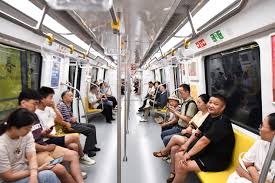
Subways, buses, and bicycles — these multi-modal travel combinations have quietly become a daily routine in many Chinese cities. In 2025, over 200 million trips across China were made via green mobility modes each day.
“Green mobility refers to an eco-friendly, low-carbon, high-capacity, and efficient transport system centered on urban public transport and non-motorized transport,” explained Chen Xumei, chief engineer at the China Urban Sustainable Transportation Research Center, China Academy of Transportation Sciences.
Transport accounts for roughly 10 percent of China’s total carbon emissions, with road transport being the dominant contributor. Promoting green mobility is therefore critical to easing traffic congestion and advancing energy conservation and emissions reduction.
In Chen’s view, green mobility in Chinese cities has evolved from a policy-driven initiative into a public preference.
The scale keeps expanding. At present, around 100 million people ride urban rail transit, another 100 million take ground buses, and 24 million use shared bicycles each day nationwide.
According to a 2024 report on green mobility development in typical Chinese cities, green mobility accounts for an average of 73.9 percent of all trips across 36 surveyed cities, rising to 75.4 percent in megacities. Urban commuting patterns are steadily becoming greener.
A large pool of potential users remains untapped. As metropolitan areas grow rapidly, cross-city commuter populations keep rising.
A 2025 report on commuting in major Chinese cities found that about 100 million people commute in China’s 22 megacities and super-large cities, with around 4 percent traveling across city boundaries.
Nearly 90 percent of people who currently rely on motorized transport but do not yet take urban public transit said they would consider reducing their use of private cars and taxis if public transport became more efficient and convenient.
What has driven the widespread adoption of green mobility? Behind this trend lies the continuous improvement of urban public transport infrastructure.
For example, Metro Line 11 in Guangzhou, south China’s Guangdong province, links five major downtown areas, with an average daily ridership exceeding 550,000. Custom shuttle buses serving the Beijing-Tianjin-Hebei region connect multiple districts around Beijing, delivering more than 5 million passenger trips in total. The ever-expanding, increasingly interconnected public transport network shrinks travel time between cities and extends the reach of green mobility.
After years of development, an efficient and eco-friendly urban public transport infrastructure system has taken shape. In 2025, 54 cities operated over 11,000 kilometers of urban rail lines. For urban buses, the total length of operating routes stood at 1.776 million kilometers, and new-energy buses made up 87.5 percent of the fleet.
Beyond hardware, public transport also offers a smoother riding experience. Chengdu in southwest China’s Sichuan province has rolled out “on-time bus” routes, using intelligent arrival-time forecasting and real-time electronic stop signs to help passengers plan their waits.
Hangzhou, in east China’s Zhejiang province, deploys a “public transport large model” for intelligent scheduling and passenger flow monitoring, enabling more precise arrival predictions in core districts.
Better transfer connections and smarter operations — digital upgrades have effectively boosted the competitiveness of green mobility across China.
Widespread public recognition for green mobility stems not only from robust hardware, but also from an enabling environment.
Riding a shared bike to the metro, taking the metro for three stops, and then walking 800 meters from the station to the office — that’s how Shanghai resident Wang Chen gets to work every day, and this trip earns Wang about 600 “carbon points” in his personal account in Amap, a popular navigation app in China.
“I only need 4,400 more points to redeem a transit pass,” Wang said. He once thought carbon reduction had little to do with him, but now contributes through his daily commute and finds it rewarding.
In 2020, Beijing pioneered a carbon inclusion mechanism: residents earn recorded and calculated carbon emission reductions for walking, cycling and riding buses or subways.
“In recent years, many regions have rolled out carbon accounts and carbon inclusion initiatives. The goal is to shift mindsets from ‘we ought to do this’ to ‘we want to do this’, making green mobility a voluntary choice,” said Li Yutao, researcher at the institute of comprehensive transportation of China’s National Development and Reform Commission.
When every travel choice can be tracked, quantified and rewarded, green mobility moves beyond an abstract concept and becomes a tangible lifestyle, Li added.
By Zhang Penghui, Ren Yan, People’s Daily
This year marks the 20th anniversary of the BRICS mechanism. Since its launch in 2006, the mechanism has evolved from foreign ministerial dialogues into regular summits of state leaders, and from a platform for economic dialogue into a comprehensive mechanism for strategic cooperation across a broad range of fields. It has become an important cooperation platform for Global South countries.
Since 2013, Chinese President Xi Jinping has put forward a series of important proposals and initiatives, including the pioneering “BRICS Plus” cooperation approach, helping BRICS cooperation achieve robust growth and deliver remarkable outcomes. He has played a pivotal role at every critical juncture in the development of the BRICS mechanism.
China has consistently worked to accelerate the evolution of the BRICS mechanism, driving it from the traditional dual-track framework of economic and political security cooperation toward an architecture featuring the three main pillars: economic and financial cooperation, political and security cooperation, and cultural and people-to-people exchange. Besides, China has promoted a vision for BRICS centered on peace, innovation, green development, justice, and closer people-to-people exchanges.
A new wave of technological revolution and industrial transformation is now accelerating. BRICS countries, following the trend of the times, have strengthened policy coordination, promoted mutual recognition of standards, and enhanced capacity building in smart manufacturing, artificial intelligence, green and low-carbon development, new industrialization, and digital infrastructure.
They are continuously expanding channels for industrial integration, releasing the potential of pragmatic cooperation, and jointly building new prospects for development featuring win-win outcomes and common prosperity.
In May 2026, the BRICS Forum on Partnership on New Industrial Revolution 2026 was held in Xiamen, southeast China’s Fujian province. Themed “Fostering an Intelligent Manufacturing Ecosystem to Accelerate the New Industrial Revolution,” the event was attended by representatives from 25 countries, including BRICS member countries, partner countries, and other developing countries, as well as relevant international organizations.
Since the launch of the BRICS Partnership on New Industrial Revolution in Xiamen, the initiative has hosted more than 40 exchange events, including the China Business Missions to BRICS and the BRICS Business to China. It has also launched over 90 online and in-person training programs and signed 138 cooperation projects, with investment totaling 62 million yuan ($9.24 million). These efforts are a testament to the potential of BRICS pragmatic cooperation.
China supports other BRICS countries in developing renewable-energy and low-carbon infrastructure projects, helping them pursue a new path of industrialization that is both efficient and sustainable.
At the Benban Solar Energy Park in Aswan, Egypt, rows of photovoltaic panels harness the abundant sunlight to generate electricity for local communities. In the suburbs of Joao Camara, Brazil, the Gameleira Wind Complex built by a Chinese company generates 360 million kilowatt-hours of electricity each year, equivalent to saving 129,600 tons of standard coal.
China not only shapes the strategic direction of BRICS but also ensures the mechanism’s long-term cooperation. Diaa Helmy, secretary-general of the Egyptian-Chinese Chamber of Commerce, noted that China has provided abundant opportunities of cooperation within the Global South by engaging in technological exchanges and sharing experiences with other BRICS countries in an open and inclusive manner.
As the world undergoes profound transformations unseen in a century, the “greater BRICS” cooperation is uniting the Global South and taking on deep historical significance. Over the past two decades, the BRICS mechanism has become an important force in safeguarding peace, promoting development, and upholding justice.
In 2027, China will once again assume the BRICS presidency. The international community generally believes that, through the joint efforts of China and its BRICS partners, the third “Golden Decade” of the mechanism will be of higher quality, and better promote the common values of the BRICS, safeguard their common interests and draw strength from unity. It will provide stronger impetus for building an equitable and orderly multipolar world and a universally beneficial and inclusive economic globalization.
By Li Gang, People’s Daily
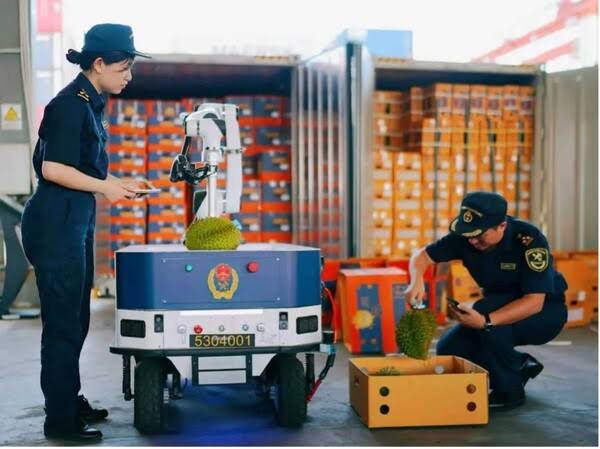
At a container terminal in Shekou, Shenzhen, south China’s Guangdong province, a vessel carrying about 300 tons of premium Monthong durians from Thailand slowly docked.
Customs officers were already in position. An intelligent fruit inspection robot scanned the labels on the outer cartons, instantly verifying information such as the product name and place of origin. Samples were sent directly to a laboratory for testing, with results returned promptly.
The fruits were soon transported to wholesale markets across the Guangdong-Hong Kong-Macao Greater Bay Area (GBA) and placed on supermarket shelves.
At a fruit shop in Tianhe district, Guangzhou, capital of Guangdong province, Monthong durian was priced at 17.8 yuan ($2.65) per 500 grams, while some varieties were available for as little as 13.8 yuan.
Local resident Zhang Xin picked up a durian weighing about 3 kilograms. “Durians used to cost at least 20 yuan per 500 grams, so buying one would cost around 200 yuan. Now, it costs about 100 yuan — quite a bit cheaper,” she said.
According to data from Shenzhen Customs, 26,200 tons of fresh durians worth 797 million yuan were imported through Shenzhen ports from April to July this year, up 40.86 percent and 22.62 percent year on year, respectively. Both figures hit record highs. Thailand, Malaysia, and other APEC economies are major sources of durian imports.
Benefiting from the continued efforts of APEC to promote trade and investment liberalization and facilitation, imported products such as cherries from Chile, cosmetics from South Korea, milk powder from New Zealand, and beef from Australia are becoming increasingly affordable in China, giving consumers more choices.
Late last year and early this year, special offers at many fruit shops across China brought the price of cherries down to as little as 99 yuan for 2.5 kilograms. Ten years ago, the same Chilean cherries could cost as much as 500 to 600 yuan per kilogram at some premium supermarkets.
During the 2025-2026 production season, Chile produced a record 655,000 tons of cherries, more than 90 percent of which were shipped to China.
Behind these numbers lies a complete “Asia-Pacific cooperation chain.” The China-Chile Free Trade Agreement has reduced tariffs to zero on about 98 percent of products. The number of dedicated sea-freight services for cherries has increased to 32, and transit time has been cut from 28 days to 23. At Guangzhou’s Nansha Port, fresh produce can be unloaded and cleared through customs in as little as two hours.
According to customs statistics, the combined import and export value between the nine non-coastal GBA cities and other APEC economies has increased by 46 percent over the past decade.
A small reduction in tariffs, a day saved in logistics, and an hour cut from customs clearance — all ultimately translate into real savings for consumers.
At the international arrivals hall of Terminal 2 at Guangzhou Baiyun International Airport, passengers crowded the immigration counters. A Singaporean businesswoman surnamed Lynn walked down the gangway and headed straight for the dedicated lane for holders of the APEC Business Travel Card. An immigration officer took her passport and the Card, checked her information, entered the relevant details and cleared her for entry. The entire process took less than a minute. Years ago, she used to wait in line here for more than 20 minutes.
“Traveling in and out of China with an APEC Business Travel Card is essentially like having a five-year, multiple-entry business visa for 16 APEC economies,” she said.
According to the Baiyun immigration inspection station, more than 3.16 million entries and exits by foreign nationals from APEC economies were recorded at Guangzhou Baiyun International Airport this year through the end of August, up 36.4 percent year on year. Of these, about 16,000 were made by holders of APEC Business Travel Cards.
“The fruits of APEC-driven regional cooperation have long been woven into daily life, benefiting millions of households and profoundly reshaping ordinary people’s food, clothing, accommodation and travel,” said Shen Minghao, vice president of Guangdong University of Foreign Studies and director of the Guangdong Academy of Greater Bay Area Studies.
On the one hand, the zero-tariff import list has been expanded, cold-chain logistics networks strengthened, and cross-border e-commerce costs lowered. On the other hand, “shopping in China” is gaining traction. Drones, smartwatches, and AI glasses have become new “souvenirs” in foreign tourists’ suitcases, while instant tax refunds upon departure are available nationwide.


KWSG Hails Foundation Over Skills Acquisition For Vulnerable People

ASOHON Disowns Illegal Orphanage Home In Kwara

Breaking: NSCDC probes dwath of 30 suspects in Commands custody in Niger.

-
 Uncategorized6 years ago
FG, states urged to harness flooding for ranching, others with technology – Agbaje
-
 Headlines11 years ago
Breaking: EFCC seals Borno House of Assembly, as Hon members take to their heels
-
 News12 years ago
Nigeria Security Operatives Stage Manhunt For Homosexual Perpetrator
-
 News10 years ago
How 21-year-old Girl fled community over accusation of lesbianism
-
 News11 years ago
Yobe Gov Moves Against Deputy
-
 Opinion7 years ago
7 signs she has friend zoned you
-
Technology5 years ago
Online job placement company headhunts women
-
 Headlines10 years ago
Borno Dep Gov Abducts Another Church Leader