
China
Taiyuan in North China takes on a new look

By Zheng Yangyang, People’s Daily
Taiyuan, the capital of north China’s Shanxi province, is a nationally designated historical and cultural city and the birthplace of Jin culture and the spirit of Shanxi merchants. Nestled against mountains to the east, west, and north, and bisected from north to south by the Fenhe River, the city has long been celebrated as a “city of splendid beauty.”
Today, Taiyuan stands as a modern city with a thriving ecosystem, vibrant energy, and a seamless blend of ancient heritage and contemporary progress. It embodies the qualities of a livable, business-friendly, and tourist-welcoming destination.
The clear waters of the Fenhe River reflect a remarkable ecological transformation
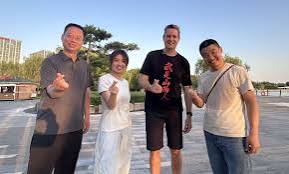
A healthy natural environment has become one of Taiyuan’s defining hallmarks. For Andy Edgren, an American who has maintained a deep connection with the city for more than four decades, the transformation of the Fenhe River is especially striking.
Once plagued by water shortages, shrinking ecological space, and pollution, the river now flows with clear water, lined by lush green banks. Its revival reflects not only improvements in Taiyuan’s environment but also signals a fundamental shift in the development philosophy and way of life of this historically industrial city.
“The city has changed so much. When my father and younger brother saw what the Fenhe River looks like today, they could hardly believe it!” Andy said.
Andy first came to Taiyuan with his father in the 1980s. Both worked as English teachers at Shanxi University and lived in the city for more than three years. Since then, he has returned to Taiyuan about 50 times, staying for several months on each visit.
As the second-largest tributary of the Yellow River and the mother river of Shanxi, the Fenhe River had fallen into dire straits by the end of the 20th century: flooding in the rainy season, near-dry conditions in the dry season, and polluted water at other times. To restore the river’s ecosystem and improve the urban living environment, Taiyuan has carried out comprehensive management of the Fenhe River for more than 20 years.
Today, the Taiyuan section of the Fenhe River features 12 cascade impoundment lakes and 6.67 million square meters of artificial wetlands. The river maintains a stable water surface of 11.5 square kilometers and remains clean year-round, with a storage capacity of 30 million cubic meters that helps reinforce its ecological defenses.
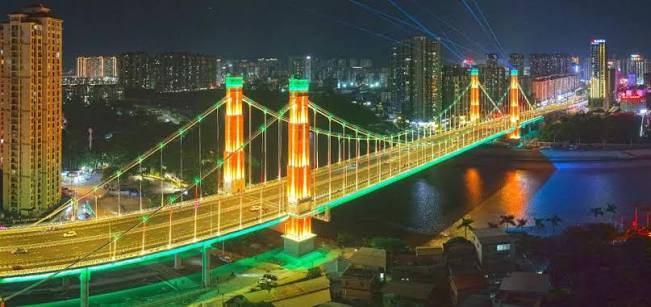
“One of my favorite things to do in Taiyuan is to take an evening walk along the Fenhe River with friends. When the lights on the buildings and bridges along the river come on, they keep changing colors, like a rainbow,” Andy said. “I like Taiyuan. It’s a very livable city.”
The spirit of Shanxi merchants fuels entrepreneurial vitality
Three years ago, Mexican entrepreneur Mauro Arturo Salazar Zavala, known locally as Maodou, settled in Taiyuan with his wife, Yang Miao. It marked the start of his connection with the city. As Taiyuan undergoes industrial transformation, expands cross-border e-commerce, and grows its digital economy, it is emerging as a new hub linking inland China with domestic and international markets.
During his research, Maodou discovered that Taiyuan has assembled suppliers and specialty goods from all over Shanxi. Iconic local offerings including mature Shanxi vinegar, millet and other coarse grains, and intangible cultural heritage handicrafts align closely with consumer tastes in Latin America, boasting unique advantages for export. This inspired him to reframe his entrepreneurial approach and pivot to exporting Shanxi’s distinctive products.
In his search for quality goods, Maodou also found a “key” to understanding Taiyuan and Shanxi — the spirit of Shanxi merchants.
During the Ming and Qing Dynasties (1368-1911), Shanxi merchants set out from Taiyuan and expanded their markets through integrity, cooperation, and mutual support. They sold Shanxi products across China and overseas, building a vast commercial network that connected far-flung markets. Their legacy helped shape Taiyuan’s open, inclusive, and outward-looking character.
Since the beginning of this year, Taiyuan has established a specialized cross-border digital industry park and promoted the integrated development of cross-border e-commerce and local specialty industrial clusters. The city continues to improve its foreign trade ecosystem and attract new talent to the sector.
“I can see Taiyuan’s e-commerce and trade ecosystem is becoming ever more vibrant, with a rising number of practitioners. We exchange experiences, share resources, and support one another, just as the ancient Shanxi merchants did,” Maodou remarked.
Rich cultural heritage connects the city’s past and present
For Andy and Maodou, Taiyuan’s enduring appeal also lies in its rich cultural heritage. They have visited ancient buildings, museums, and historical neighborhoods, recording the city’s transformation through their cameras while showing overseas audiences a more diverse and multifaceted Taiyuan.
At the Taiyuan Northern Qi Dynasty Mural Museum — China’s first mural museum built at the original site of the murals — Maodou put on a virtual reality headset and immersed himself in the process of archaeological excavation and mural conservation.
“Modern technology allows visitors to gain a more direct and clearer understanding of burial murals,” he said. “Technology has not diminished the weight of history. Instead, it has made this ancient civilization more tangible and accessible.”
The museum is one example of Taiyuan’s broader efforts to protect and make innovative use of its cultural heritage. The city currently has 2,237 above-ground cultural heritage sites and 541 sites under protection at various levels. It is also home to 108 museums.
Strolling along Bell Tower Street, visitors can see historical buildings alongside modern businesses, while traditional lanes have embraced new forms of commerce, including restaurants, live performances, and cultural and creative products.
“Today’s Taiyuan has both an ancient history and a vibrant modern side. I’m particularly drawn to the way the city brings together quiet charm and youthful energy,” Maodou said.
A city renewed
The ecological renewal along the Fenhe River, new opportunities created by cross-border e-commerce, and the fresh vitality brought to ancient buildings and historical streets by cultural development — all these changes are giving Taiyuan a new look.
For more than four decades, Andy has returned to Taiyuan time and again, sharing the city’s story with foreign friends around him on each visit.
“I tell them they really should come to China and see Taiyuan for themselves,” he said.
By Li Weijun, People’s Daily
The Pinglu Canal, China’s first major river-to-sea canal project that has been planned and coordinated at the national level since 1949, is set to open for navigation on Sept. 16, 2026.
What changes will this landmark project bring to the region? A closer look at the project from three dimensions — economy, livelihoods, and environment — offers a clear picture.
Economic benefits: injecting new vitality into regional development
Once operational, cargo vessels will enter the canal at the mouth of the Pingtang River after passing Hengzhou in south China’s Guangxi Zhuang autonomous region, then sail south to Qinzhou Port and out to sea. This will provide southwestern China with a more direct water route linking its inland regions to the ocean.
The reduction in distance is significant. Goods shipped from southwestern China via the Pinglu Canal will travel approximately 560 kilometers less along inland waterways to the sea than routes through Guangzhou Port in Guangdong province.
“Logistics costs are expected to fall by 18 to 30 percent, saving around 5.2 billion yuan ($774 million) in social transportation costs each year,” said Cheng Yaofei, commander of the Pinglu Canal project construction headquarters.
For an individual company, that means lower transportation costs. For an entire region, it creates opportunities for industrial relocation and reorganization.
In 2025, the Pinglu Canal Guigang Economic Development Zone signed contracts for ten new projects with a combined investment of approximately 13.3 billion yuan. In Qinzhou, Shanghai Huayi, a Chinese chemical enterprise group, is developing an integrated chemical and new materials industrial base with a planned total investment of around 100 billion yuan. The company intends to use the canal to expand its markets and connect upstream and downstream businesses. Guangxi Jingui Pulp & Paper Co., Ltd. is also planning to build a terminal along the canal so that raw materials such as timber and calcite can be transported directly to its factories by water.
Lower logistics costs are boosting the region’s appeal for industrial clustering and creating new momentum for development. At the Liujing Port Area of Nanning Port in Nanning, capital of Guangxi, berths have been upgraded from handling 2,000-ton vessels to 5,000-ton vessels. Eleven river-sea intermodal berths at Qinzhou Port have also been upgraded. Cross-border transport routes, including the China-Laos Railway, are expected to connect with the inland waterway network as well.
Wu Jian, director of the Institute of Regional Development at the Guangxi Academy of Social Sciences, noted that lower transportation costs are expected to attract industries, logistics, and producer services to cluster along the canal, while further strengthening industrial links between Guangxi and the Guangdong-Hong Kong-Macao Greater Bay Area, and ASEAN.
Benefits for people — enabling residents along the river to live and work in greater comfort
The Pinglu Canal is not only changing the flow of goods; it is reshaping the lives of people living along its route.
At a resettlement site in Shaping township, Lingshan county, Qinzhou, rows of neat townhouses stand alongside well-equipped public facilities, including a recreational square, a farmers’ market, a kindergarten and a supermarket.
A total of 13 centralized resettlement sites have been planned and built across Luwu, Jiuzhou, and Shaping townships in Lingshan county. So far, 1,498 households, representing 6,156 people, have been relocated, and all resettlement homes have been handed over to the residents.
Chen Jidong, a relocated resident at the Shaping site, is very pleased with his new home.
“In the past, the market and school were scattered around the village and quite far away. Now everything is within a few minutes’ reach, making everyday life much more convenient,” Chen said.
His family has not only moved into a new home but also bought a truck. Chen previously made a living transporting materials at the Pinglu Canal construction site.
“With the canal opening, there will be greater demand for transportation, so we have more to look forward to,” he said.
More local job opportunities are reaching a growing number of residents. Thirty-four-year-old Huang Zhenjie has worked with the “Pinglu Employment” service program for over three years. He once helped a returned migrant worker secure a position as a steel bar worker at a canal construction site. After mastering the necessary skills, the worker now earns 12,000 yuan per month.
“We not only recommend jobs, but also organize trial work and training,” Huang said.
So far, construction of the Pinglu Canal has created more than 70,000 job opportunities for local residents, with more than 2.6 billion yuan in labor remuneration.
Environmental benefits: protecting lucid waters and lush mountains through meticulous measures
As the canal advances, environmental protection has kept pace every step of the way.
Near the Qingnian water control hub, a 480-meter-long composite fish passage and a smart monitoring and assessment system have been put into operation. The Qingnian water gate, built in 1959, once obstructed fish migration. Today, a vertical-slot fishway and an eel passage have reconnected the waters upstream and downstream.
Since the system began operating in 2025, its sonar monitoring system has recorded more than 76,000 fish swimming upstream and more than 115,000 swimming downstream, with over 10 species successfully completing their migration.
Fish now have a passage for migration, and terrestrial animals have safe routes to cross the canal as well. Near the Madao water control hub, a 240-meter-long, 20-meter-wide wildlife overpass spans the canal. The bridge is covered with soil and planted with native vegetation, with rocks and water-collection points added to create a habitat that allows wildlife to cross in surroundings as familiar as possible.
Mangroves, too, have found a “new home.” According to project officials, 19.8 kilometers of disturbed areas outside the project boundary are being protected in situ. For mangroves within the project boundary that could not be preserved, 9,572 trees were transplanted to nearby locations, while 275,000 trees were restored elsewhere across an area three times the original size, covering 32.3 hectares. During construction, 966 hectares of mangroves were cleaned and 156 hectares treated for pests and diseases.
Today, the number of bird species in the mangrove reserve has risen from 28 to 34, and an ecological corridor is largely in place.
From a shorter shipping route to the clustering of industries, from new homes to improved livelihoods, and from a restored fish passage to the renewal of mangrove forests, these three dimensions together show the Pinglu Canal’s broader benefits.
The canal connects rivers with the sea, but more importantly, it connects development, people’s livelihoods and ecological conservation.
By Fang Jinglun
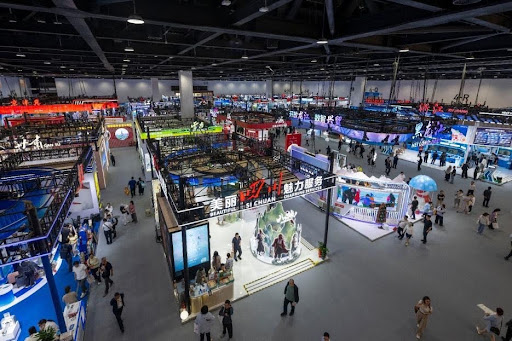
At the recently concluded 2026 China International Fair for Trade in Services (CIFTIS), a new cross-border service model captured widespread attention. Unlike physical goods shipped in containers, token exports represent a new form of trade in services, delivering computing power and AI intelligence to overseas users measured by AI tokens.
A token is the smallest unit of information processed by a large AI model. For context, generating an 800-character Chinese-language article using an AI tool consumes around 1,500 to 2,000 tokens.
As AI evolves from an “auxiliary tool” into a primary agent of productivity, China’s token exports are unlocking fresh opportunities on the global stage.
According to International Data Corporation, global daily token consumption surged nearly 300-fold in 2025. Meanwhile, figures published by OpenRouter, a global AI model aggregation platform, show that as of early August 2026, Chinese large language models have held the top position in call volume on leading platforms catering primarily to overseas users for 15 consecutive weeks.
What is driving the rapid growth of Chinese AI token exports? Several exhibitors at CIFTIS offered the same answer: coordination across the entire industrial chain. This synergy gives the sector advantages in large-model technology, computing costs, application scenarios, and data transmission, making the overseas expansion of AI services increasingly viable.
Adapting supply to demand to enter new markets.
“There is strong demand for technology and data in Southeast Asia’s AI-generated short-drama market,” said Jiang Linfeng, general manager of FZ Entertainment, a culture and communication company based in Nanning, south China’s Guangxi Zhuang autonomous region.
The company uses its self-developed generative AI platform to create customized video datasets for businesses in several Southeast Asian countries, tailoring content to local cultures and ensuring relevance to regional markets and preferences.
Cutting costs through technology to win new customers.
“Our computing infrastructure products and services help clients reduce costs and improve efficiency through open-source technologies. Over the past year, the number of clients seeking consultations on these products has increased several times over,” said Ran Hao, head of overseas technology at EasyStack, a Beijing-based provider of open-source cloud computing solutions.
Building infrastructure to support new business models.
“We have 256 network nodes overseas, including 15 self-operated internet data centers (IDCs) and more than 300 partner IDCs. We leverage these resources to provide the necessary support,” said Kang Yuanji, a solution manager at China Telecom Global, a Chinese internet access provider.
The full industrial chain synergy forged by China’s “East Data, West Computing” initiative, combined with direct green power access models and peak-shaving computing allocation mechanism, is driving marked reductions in the overall costs of the AI industry.
For example, thanks to the availability of green electricity, an “East Data, West Computing” industrial park in Qingyang, northwest China’s Gansu province has reduced the electricity price paid by end users to no more than 0.4 yuan ($0.06) per kilowatt-hour.
In June 2026, China’s National Data Administration issued an implementation plan promoting the development of high-quality datasets across industries. The plan calls for establishing and improving mechanisms for the secure and orderly cross-border flow of datasets and promoting mutual recognition of rules governing cross-border data flows. This regulatory support provides a foundation of rules and standards, paving the way for companies to participate in the global data ecosystem.
“Since the second quarter of this year, we have seen a marked increase in inquiries from technology companies about overseas expansion strategies,” said Li Ying, general manager of markets at Incorp International, a professional services provider for corporations and high-net-worth individuals.
The firm has built full-lifecycle compliance consulting services for emerging business models including large language model exports and computing power exports.
Technologies go global, application scenarios get validated overseas, and capabilities keep iterating. This is exactly what token exports embody — a vivid epitome of “Chinese services” reaching the world.
Looking ahead, Chinese AI companies will continue integrating into the global division of labor in diverse ways, delivering high-quality and affordable intelligent services to more overseas users.
By People’s Daily reporters
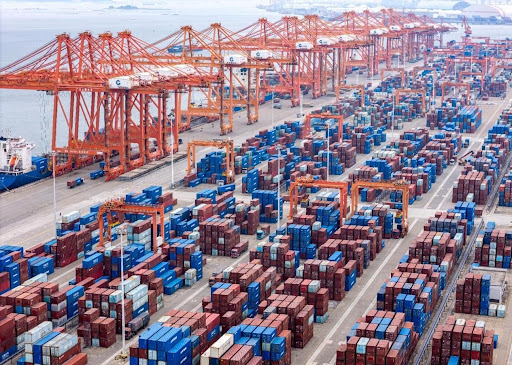
The Pinglu Canal officially opened to navigation on Sept. 16. As a landmark infrastructure linking the Belt and Road Initiative and the New International Land-Sea Trade Corridor, it is China’s first major canal constructed since 1949 to directly connect inland waterways to the sea.
Stretching 134.2 kilometers, this waterway offers southwest China its shortest, most cost-effective, and most convenient outlet to the sea, carving a new landmark into China’s extensive inland river network.
The Xijiang River, a major inland waterway in southern China, and the Beibu Gulf, an inlet of the South China Sea, were once separated by rolling mountain ranges. In the past, exports shipped by water from southwest China had to take a detour via Guangzhou Port in Guangdong province, adding more than 500 kilometers to the journey. With the completion of the Pinglu Canal, the river and sea, once divided by mountain barriers, are now connected for the very first time.
In Baise, located in southern China’s Guangxi Zhuang autonomous region, Su Yonghui, head of the logistics management department of leading aluminum producer Geely Material, did the math.
“In the past, imported raw materials had to be transported from Qinzhou Port in the Beibu Gulf using both rail and road. Shipment volumes were limited, and freight costs were high. Now, with waterway transport, our overall logistics costs have fallen by 30 percent, saving us more than 10 million yuan ($1.49 million) a year,” he said.
In Nanning, the capital of Guangxi Zhuang autonomous region, a cross-border industrial and supply chain for new energy batteries has drawn industry chain leaders BYD and Do-Fluoride, alongside over 50 upstream and downstream enterprises. The full industrial chain generates an output value exceeding 60 billion yuan.
“With the canal open, logistics costs will drop, market response will quicken, and the competitiveness of enterprises will further rise,” said Bi Guochu, director of the Nanning municipal bureau of industry and information technology.
The figures tell a clear story of lower costs and greater efficiency.
“Logistics costs are expected to fall by 18 to 30 percent, and in the longer term, the canal is expected to save the regions along its route more than 5 billion yuan in freight costs every year,” said Li Yuntao, deputy director of the investment and development department of the Pinglu Canal Group.
Two major markets highlight the potential for mutual benefit.
On one side is China, home to over 1.4 billion people; on the other is ASEAN, with a population of nearly 700 million.
“A new major corridor for mutual benefit has been added between these two huge markets,” said a diplomatic envoy in China from an ASEAN country after an inspection tour of the Pinglu Canal.
“The marine-oriented economy is rooted in industry. An ‘artery-and-branch’ layout of marine-oriented industries is precisely suited to Guangxi’s interconnected network of land, sea, rivers and canals,” said Huang Lanxi, director of the policy research office of the Communist Party of China Guangxi Zhuang Autonomous Regional Committee.
He noted that the Pinglu Canal Economic Belt serves as an artery, concentrating industries that handle large volumes of cargo and are well suited to port and waterway transport. Other parts of the region form the “branch veins,” with numerous industrial parks and enterprises serving as “fine veins” deeply integrated into the division of labor across industrial chains.
But the network supporting this “artery-and-branch” layout extends far beyond the Pinglu Canal.
Across Guangxi, 65 major land corridors connect the region with other parts of China, sea access points, and border ports. The autonomous region also operates 50 ASEAN-bound container shipping routes, air links to ASEAN nations, and 12 international terrestrial fiber-optic cables for cross-border digital communications.
With coordinated development across land, sea, air, and digital connectivity, Guangxi is positioning itself as a hub facilitating market operations for both domestic and international dual circulation.
Large vessels now berth at the docks, and cranes swing into action. The Dalanping first operating area of Qinzhou Port, part of the Beibu Gulf Port, is a hive of activity.
In May 2026, 122 loaders and other pieces of equipment manufactured by Liugong Group, a Chinese multinational construction machinery company based in Liuzhou, Guangxi Zhuang autonomous region, were shipped to Jakarta, Indonesia.
In July, a new shipping route to Aqaba Port in Jordan began operations, sending more than 2,600 new energy vehicles from Chongqing and other parts of China directly to the Middle Eastern market.
“After the canal opens, inland waterway transport will be connected with the ocean shipping network, further enhancing the capacity and efficiency of the port,” said Chen Shengchang, general manager of the operating area.
The physical canal is now open, while an invisible network of connectivity is also becoming increasingly seamless.
The Guangxi Maritime Safety Administration has helped establish China’s first waterway designated as equivalent to an A-class navigation area. Inland vessels meeting the required qualifications can, under specified conditions, sail directly to deep-water berths at Beibu Gulf Port, solving the “last mile” problem between river and sea. Meanwhile, the Pinglu Canal Group has developed a smart canal sensing system that enables comprehensive monitoring across land, water, air, and space.
Technology is not only making canal operations more efficient but also providing new support for ecological conservation.
At the point where the river meets the sea, engineer Chen Zhu monitored the smart fishway at the Qingnian water control hub.
Two barbel chubs were swimming upstream against the current. Their swimming speed, body length, and body width were captured by the system in real time.
The Qingnian water gate, built in 1959, has long provided water resources for local communities but also blocked fish migration. As the old gate was replaced with a new structure, an innovative composite fishway, the first of its kind in China, was built alongside the Qingnian water control hub.
“Fish from both the sea and the river can find their way home here,” Chen said.
He added that the difference in water level between the upstream and downstream sides of the hub is nearly 10 meters. To allow fish to move gradually between the different levels, the fishway was carefully designed with a winding, three-loop vertical-slot structure.
So far, 78,474 fish have been recorded swimming upstream and 119,987 swimming downstream, with more than 10 species successfully completing their migration.
The canal excavation involved moving 315 million cubic meters of earth and rock. With such a massive volume of material, where could it all go?
Professor Xiao Jianzhuang, president of Guangxi University, led a team specializing in the resource utilization of solid waste. The team visited the project site more than 90 times and explored a range of ways to reuse the excavated material, including land formation, green building materials, mine-pit restoration, and land reclamation.
Through seven disposal and utilization technologies, more than 98 percent of the excavated soil and rock was put to productive use rather than treated as waste.
At an open stretch of land along the canal, Tang Xiaofu, an associate professor at Guangxi University, stepped into a greenhouse and picked a plump winter melon.
The land was formed using soil excavated during the canal construction to fill valleys, then improved and fertilized using scientific methods.
“We grow tomatoes in winter and melons in spring. The annual output value can reach 50,000 yuan per mu (about 667 square meters),” Tang said.
More than 10,000 mu of such farmland has now been developed along the canal.
“Building the Pinglu Canal to high standards and with high quality means respecting and protecting nature,” said Hu Ya’an, an academician of the Chinese Academy of Engineering who has been deeply involved in the canal’s construction.
In his view, the Pinglu Canal not only is a new example of ecological conservation in major engineering projects around the world, but also sets a new benchmark for quality in canal construction worldwide.


Three dimensions reveal what the Pinglu Canal brings to development

CIFTIS highlights the global potential of AI token exports

Pinglu Canal connects rivers, sea, and new opportunities

-
 Uncategorized6 years ago
FG, states urged to harness flooding for ranching, others with technology – Agbaje
-
 Headlines11 years ago
Breaking: EFCC seals Borno House of Assembly, as Hon members take to their heels
-
 News12 years ago
Nigeria Security Operatives Stage Manhunt For Homosexual Perpetrator
-
 News10 years ago
How 21-year-old Girl fled community over accusation of lesbianism
-
 News11 years ago
Yobe Gov Moves Against Deputy
-
 Opinion7 years ago
7 signs she has friend zoned you
-
Technology5 years ago
Online job placement company headhunts women
-
 Headlines10 years ago
Borno Dep Gov Abducts Another Church Leader