
News
NANS Seeks Students’ Inclusion in NCDC’s 20-Year Development Plan

…Commends Commission, Urges Quarterly Engagements
The National Association of Nigerian Students (NANS), Zone C, has called for sustained inclusion of students and young people in the North Central Development Commission’s (NCDC) 20-year development agenda.
The association made the call while commending the NCDC for convening a broad stakeholders’ engagement to shape a long-term development direction for the region.
The Coordinator of NANS Zone C, Comrade Abiola Azeez Babatunde, said students and young people must not be treated merely as beneficiaries of development, but as active partners in shaping the future of the North Central.
According to him, the region’s large youth population represents a significant pool of energy, skills, ideas and innovation that can contribute to economic and social transformation if properly harnessed.
“Students and young people are not only beneficiaries of development; we are also partners in building the future we desire,” he said.
Babatunde said any 20-year development plan for the region should give serious attention to education, skills development, employment, entrepreneurship, technology and youth participation.
He described the NCDC stakeholders’ engagement as timely and forward-looking, saying it provided an important platform for different interests across the region to contribute to the development conversation.
Also in attendance was Comrade Anzaku Shedrack CNS, Head of Emergency and Disaster Management, NANS, who represented the NANS President, Comrade Akinteye Babatunde GCNS.
Shedrack commended the Commission for the initiative and urged it to sustain similar engagements quarterly.
He also assured the NCDC that NANS was pleased with the 20-year development roadmap and would continue to support the Commission in advancing initiatives aimed at developing the region.
NANS Zone C further pledged to work with the Commission and other stakeholders to promote initiatives capable of creating opportunities for students and young Nigerians across the North Central.
The association called for continuous engagement with the student constituency, stressing that their experiences, concerns and ideas should form part of the region’s long-term development agenda.
It expressed optimism that sustained collaboration among the NCDC, governments, educational institutions, organised youth bodies, traditional institutions, the private sector and other stakeholders would help unlock the region’s potential and promote inclusive growth.
Aluta Continua, Victoria Ascerta.
…Commend NCDC, 20-Year North Central Development Plan
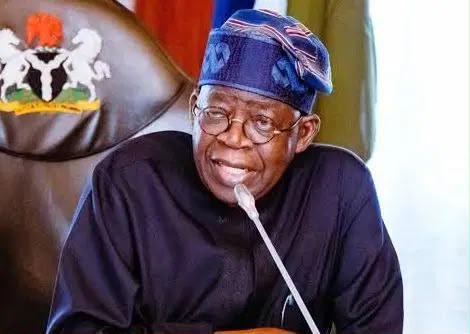
Youth groups have hailed President Bola Ahmed Tinubu’s vision for regional development following the establishment of the North Central Development Commission (NCDC) and other regional development commissions.
The groups made the commendation in separate statements on the sidelines of a stakeholders’ engagement organised by the NCDC in Abuja.
The President of the Nigerian Youth Congress, Jethro Annum, and the NYCN State Chairman of Niger State, Ambassador Abdullahi Muhammed Ishaq, who spoke on behalf of the NYCN North Central Chairmen, described the NCDC as a catalyst for development.
They said the Commission’s 20-year development plan reflects the need for long-term planning and aligns with the broader development vision of President Tinubu for the country.
Similarly, the Empowerment for Unemployed Youth Initiative (EUYI), in a statement signed by its National Coordinator, Danesi Momoh, and the North Central Youth Mobilization and Sensitization (NOCYMS), led by Hon. Iorwuese Ayo Fidelis, commended the NCDC for convening a broad stakeholders’ engagement aimed at developing a clear and sustainable development direction for the region over the next 20 years.
The engagement, which brought together key stakeholders and voices from across the North Central region, was described as a significant step towards developing a plan that reflects the aspirations, realities and potential of the people.
The youth leaders described the initiative as timely and forward-looking, stressing that young people and students must remain an integral part of conversations about the future of the region.
They noted that the North Central is home to millions of young Nigerians whose energy, skills, ideas and innovation can contribute significantly to the region’s economic and social transformation when provided with the right opportunities.
“Students and young people are not only beneficiaries of development; we are also partners in building the future we desire. Any 20-year development plan for the North Central must therefore give serious attention to education, skills development, employment, entrepreneurship, technology and youth participation,” they said.
The youth representatives further assured the NCDC of their readiness to work closely with the Commission and other relevant stakeholders to advance initiatives that will create meaningful opportunities for students and young people across the region.
They expressed confidence that sustained collaboration among the Commission, governments, educational institutions, organised youth bodies, traditional institutions, the private sector and other stakeholders could help translate the region’s enormous potential into measurable and sustainable development.
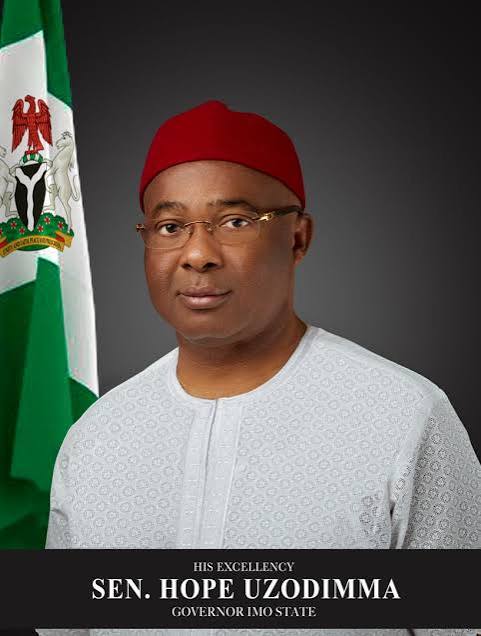
Imo Lawyers for the Defence of Democracy have called on the Minister of the Federal Capital Territory, Nyesom Wike, to stop what it termed public attacks on Imo State Governor, Senator Hope Uzodinma, saying political disagreements should be resolved through democratic dialogue and constitutional means.The group made the call in a statement signed by its Secretary, Ifeoma Chukwunyere on Friday, September 18, 2026, amid what it described as increasingly personal exchanges between Wike and Uzodinma over political developments within the All Progressives Congress.The lawyers said the APC Governors’ Forum had rejected what they described as Wike’s “Rainbow Coalition” political arrangement, arguing that the disagreement should be addressed with the forum rather than through personal attacks on Uzodinma.According to the group, the forum’s position was based on concerns that the political arrangement could weaken the APC or create divided loyalty within the party.“We recognise the constitutional right of every Nigerian, including public officials and political actors, to express political opinions, criticise policies and participate in political activities,” the group said.“However, that freedom must not become a licence for personal attacks, intimidation or unnecessary escalation.”The lawyers said Uzodinma, as the governor of Imo State, should be allowed to discharge his responsibilities without political exchanges creating tension capable of affecting the peace and stability of the state.They urged Wike to desist from further public comments concerning the governor, insisting that political disagreements should focus on policies, programmes, political positions and verifiable facts rather than personal exchanges.The group also warned political actors against turning Imo State into a battleground for political supremacy.“Imo State is not a battlefield for political supremacy. Its people have the constitutional right to choose their leaders and determine their political future without undue interference, intimidation or external pressure,” it said.The lawyers further called on political parties, leaders, supporters and media platforms to avoid inflammatory language that could provoke confrontation.They urged Uzodinma to continue to operate within the Constitution and the laws of the country, while allowing relevant political and legal institutions to handle legitimate disagreements.The group also appealed to President Bola Tinubu to encourage restraint among political actors, particularly in relation to the dispute between Wike and Uzodinma.Addressing Wike directly, the lawyers said: “Mr. Minister, Imo State belongs to its people. You are not from Imo, so stay off Imo.”They stressed that disagreements over political strategies, elections, alliances and political actors in the state should be settled through democratic debate and constitutional processes.The group said it would continue to monitor developments affecting constitutional governance, democratic participation, political freedom and peace in Imo State.“Our position is simple: Democracy must prevail. The Constitution must prevail. The rule of law must prevail,” the statement added.
By Sunday Johnson
“The true test of a man’s character is what he does when no one is watching.” This observation, widely attributed to American basketball coach, John Wooden, captures something important about leadership; that the character of a leader is often revealed not by the speech he makes, but by the things he chooses to do when applause is absent.
In General Olufemi Olatubosun Oluyede, Nigeria appears to have a military leader whose understanding of service goes beyond rank, uniform and command. Since assuming office as Chief of Defence Staff, he has continued to demonstrate that leadership in the Armed Forces is ultimately about responsibility, sacrifice and the welfare of the men and women entrusted with defending the nation.
Oluyede’s journey to the highest professional position in Nigeria’s military establishment did not happen overnight. Born in Ikere, Ekiti State, in 1968, he joined the Nigerian Defence Academy in 1987 and was commissioned into the Nigerian Army in 1992. His career took him through some of the country’s most demanding theatres, including Liberia, Bakassi and the North-East, where he commanded troops under Operation HADIN KAI. Before becoming CDS, he served as Chief of Army Staff, bringing with him decades of operational and command experience.
Perhaps the clearest window into the man Oluyede is, can be found in an interview he granted as Army Chief in 2025. Asked about the security situation across the theatres of operation, he did not pretend that the country had overcome all its difficulties. Instead, he acknowledged the challenges while pointing to measurable progress, observing that, despite the threats that remained, “by and large, things are getting better.” That mixture of realism and confidence says something about his approach. He does not need to exaggerate success to demonstrate leadership, nor does he deny the difficulties confronting the Armed Forces.
For Oluyede, a soldier is not merely another instrument of war, he is a human being who must be trained, fed, housed and properly prepared for the dangers of the battlefield. That philosophy was evident when he disclosed that the Army had increased the daily ration cash allowance for troops from N1,500 to N3,000. He also spoke about affordable housing and other welfare initiatives designed to help personnel secure homes before retirement. These are not glamorous aspects of military command, but they matter greatly to the morale of a force whose personnel routinely place their lives between danger and the civilian population.
What makes the welfare question even more significant is Oluyede’s understanding that taking care of soldiers does not end with putting food on their tables. In that same interview, he described training as the “best form of welfare” for a soldier because an inadequately trained soldier is vulnerable both to the enemy and to the demands of modern warfare. His efforts to expand and improve training capacity, including plans to reduce pressure on the Zaria training depot, reflected an attempt to build a force that is not simply larger in numbers but better prepared for the responsibilities placed upon it.
His concern for the troops has also been matched by an appreciation of what the future battlefield looks like. Oluyede has consistently spoken about technology, intelligence, innovation and the need to anticipate emerging threats rather than merely react to them. As CDS, he has placed considerable emphasis on intelligence driven operations and stronger cooperation among the Army, Navy, Air Force and other security agencies. At his assumption of office, he made clear that Nigeria’s evolving threats demanded greater vigilance, innovation and unity across the security architecture.
That emphasis on joint operations is particularly important at a time when Nigeria’s security challenges cut across traditional boundaries. Terrorism, banditry, kidnapping, oil theft, maritime threats and other criminal activities cannot be effectively confronted by one service working in isolation. The early operational record under Oluyede’s tenure has provided evidence of the importance of this approach. Defence Headquarters figures for May 2026 showed that troops across the country neutralised 317 terrorists and other criminal elements, arrested 314 suspects and rescued 221 kidnapped or vulnerable civilians, while recovering 93 assorted arms.
But numbers alone do not explain Oluyede’s appeal as a commander. There is also something deliberately human in the way he speaks about the people under his command. In his earlier interview, he repeatedly returned to the question of morale, stressing that his concern was to ensure that soldiers were “well-trained and well-catered for.” He discussed special allowances, affordable housing and zero-interest loan arrangements, showing that he understands that a soldier’s commitment to duty is strengthened when the institution demonstrates that it values his sacrifice.
There is, too, a broader philosophy behind his leadership. Oluyede has argued that security is everybody’s business and that the military cannot defeat violent extremism without the cooperation of communities, intelligence agencies, the police, international partners and ordinary citizens. His comments about intelligence gathering in the North-East showed an understanding that contemporary insurgency is not fought solely with guns; it is also a contest for information, community trust and freedom of action. That recognition has encouraged a more integrated approach to national security, one that sees the Armed Forces as part of a wider national effort rather than an institution operating by itself.
His vision also extends beyond the immediate battlefields to the question of Nigeria’s strategic independence. Oluyede has advocated greater local production of military equipment, arguing that a country facing its own security problems cannot indefinitely depend on imported solutions. During his Senate screening, he identified the development of Nigeria’s military-industrial capacity as one of the priorities of his tenure and called for greater investment in indigenous defence production.
It is therefore easy to understand why the description of Oluyede as a “good man” resonates beyond the ordinary language of military commendation. Goodness in public service is not softness, nor is it the absence of firmness. It is the ability to exercise authority without losing sight of the human beings affected by that authority.
Oluyede has shown the firmness expected of a commander while repeatedly drawing attention to the welfare, training and dignity of the personnel who carry out the Armed Forces’ most dangerous assignments. His record as CDS is still being written, but the emphasis on professionalism, jointness, innovation, accountability and troop welfare has already become a recognisable feature of his leadership.
Ultimately, the worth of a military leader is measured not only by the orders issued from headquarters but by the confidence those orders inspire in the men and women who execute them. General Olufemi Oluyede came to the Defence Headquarters with decades of experience behind him and an enormous national responsibility ahead of him. His challenge is formidable, and the country’s security problems remain real.
Yet his conduct so far offers a compelling reminder that when a good man leads, authority can be accompanied by empathy, discipline by compassion, and military strength by a genuine concern for those who bear its weight. That is the kind of leadership Nigeria’s Armed Forces deserve, and the kind of standard by which Oluyede’s tenure will ultimately be remembered.


Youth Groups Hail Tinubu’s Vision for Regional Development

NANS Seeks Students’ Inclusion in NCDC’s 20-Year Development Plan

2027: Stay Off Imo State, Lawyers Warn Wike

-
 Uncategorized6 years ago
FG, states urged to harness flooding for ranching, others with technology – Agbaje
-
 Headlines11 years ago
Breaking: EFCC seals Borno House of Assembly, as Hon members take to their heels
-
 News12 years ago
Nigeria Security Operatives Stage Manhunt For Homosexual Perpetrator
-
 News10 years ago
How 21-year-old Girl fled community over accusation of lesbianism
-
 News11 years ago
Yobe Gov Moves Against Deputy
-
 Opinion7 years ago
7 signs she has friend zoned you
-
Technology5 years ago
Online job placement company headhunts women
-
 Headlines10 years ago
Borno Dep Gov Abducts Another Church Leader