
China
Investment in China’s new-type power grids expected to exceed 5 trillion yuan: What makes them different?

By Wang Yunshan, People’s Daily
China has built the world’s largest power supply system. In the first nine months of this year, the country’s total electricity consumption surpassed 8.07 trillion kilowatt-hours, up 3.9 percent year on year.
Meanwhile, China’s power system is undergoing a series of changes on both the supply and demand sides.
Renewable energy now plays an increasingly dominant role in China’s power mix, but it also brings greater volatility and uncertainty to the power grid. At the same time, the continued growth of emerging industries is creating higher demands for power quality.
A meeting of the Political Bureau of the Communist Party of China (CPC) Central Committee held on April 28, 2026, called for efforts to step up the planning and construction of water networks, new-type power grids, computing infrastructure, new-generation communications networks, urban underground pipelines, and logistics systems. The development of new-type power grids has thus been incorporated into the country’s top-level planning.
A robust power grid is essential to ensuring an adequate, safe, and reliable electricity supply. How is China advancing the rollout of these systems?
“Compared with traditional power grids, building new-type power grids demands greater systems thinking. It should be rooted in regional resource endowments, industrial structures, load characteristics and distribution, while aligning with territorial spatial layouts over time and across space. This will enable the optimal allocation of energy resources across regions on a larger scale,” said Yan Xiaoqing, director of the energy strategy research office of the energy institute under the State Grid Energy Research Institute Co., Ltd.
A power grid consists of a backbone transmission network, distribution networks, and smart microgrids, forming a three-tier network similar to a three-tier road network comprising expressways, local roads, and neighborhood streets, Yan explained. The key to developing new-type power grids is to optimize this new grid architecture, Yan said, noting that the effective coordination among the transmission, distribution and microgrid levels provides reliable electricity support for the energy transition and high-quality development.
“During the 15th Five-Year Plan period (2026-2030), investment in China’s new-type power grids is expected to exceed 5 trillion yuan (about $749.87 billion). Another 15 ultra-high-voltage direct-current (UHVDC) transmission links are expected to be put into operation. Efforts will also be made to upgrade distribution networks through digital and intelligent technologies and accelerate the development of smart microgrids,” said Yang Zhengang, senior manager of the planning management division of China Southern Power Grid’s planning department.
If the new architecture provides the framework, new technologies serve as its supporting tools.
New energy storage systems: A “stabilizer” for power grids
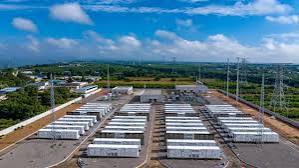
In Huangjiabu township, Yuyao, Ningbo, east China’s Zhejiang province, 49 white energy storage containers stand in rows across the site of a 50-megawatt/100-megawatt-hour independent energy storage power station operated by a new energy company based in Ningbo.
Inside the containers, different battery technologies serve distinct purposes. Lithium iron phosphate batteries on the eastern side offer large storage capacity and are used for peak shaving and valley filling, while lithium titanate batteries in the northwest respond more rapidly and are designed to address fluctuations in grid frequency. When the grid experiences fluctuations, the latter can adjust their power output within tens of milliseconds, compared with about 30 seconds for conventional thermal power units.
Ningbo was the first city in China to surpass 10 million kilowatts of installed distributed photovoltaic (PV) capacity. But PV power generation depends on weather conditions: even a passing cloud can cause sharp fluctuations in output.
From peak shaving and valley filling to rapid power response, new energy storage systems help ensure that fluctuating green electricity can not only be generated but also used reliably. They effectively serve as a readily available “power bank” and “stabilizer” for the urban grid.
Artificial intelligence: Turning fluctuations into predictability
This year, the summer peak in electricity consumption arrived more than a month earlier than usual.
In late May, “Tianxiang,” an artificial intelligence (AI) large model developed by China Southern Power Grid for meteorological forecasting, accurately identified the extreme heat expected in the second half of the month a week in advance.
Another AI-powered load forecasting agent, “Tianyan,” predicted electricity demand under high-temperature conditions 14 days ahead. It identified the prospect of high evening peak loads in south China’s Guangdong province and a sharp decline in renewable energy output in southwest China’s Yunnan province, helping power dispatch authorities prepare for the challenges posed by extreme heat.
From forecasting and simulation to planning and inspection, AI is increasingly being integrated into every aspect of power grid operations.
AI represents one of the most important technological directions for new-type power grids, said Xiao Liang, a technical expert at the dispatching and control center of China Southern Power Grid. AI helps optimize the allocation of grid resources and ensure the security of electricity supply, according to Xiao.
New services: Making power supply more flexible
Ultimately, upgrades to grid architecture and technology are aimed at improving services.
In Shenzhen, Guangdong province, a virtual power plant — operating without a physical facility — is providing a new form of electricity service to the city.
“As a new model in the power sector, the virtual power plant creates a pool of resources that can be flexibly coordinated. It brings together distributed and adjustable resources, including charging piles, building air-conditioning systems, and distributed energy storage facilities, and deeply integrates them with AI technologies to participate in power grid regulation,” said Li Jiangnan, senior manager of the virtual power plant’s management center.
The center’s management platform has connected 61 operators and more than 14,000 users, aggregating over 1.4 million kilowatts of real-time adjustable load capacity, equivalent to that of a medium-sized coal-fired power plant, Li said.
The development of new-type power grids represents a profound transformation in grid architecture, technologies, and services, requiring coordinated planning and systematic measures.
Tan Hongjiang, deputy director of the electricity department of China’s National Energy Administration, said the administration would continue to advance the development of new-type power grids by optimizing new grid architecture, making breakthroughs in key new technologies, upgrading new power grid services, and stepping up efforts to advance the implementation of major tasks and projects.
By Hai Sheng
China’s homegrown supercomputer LineShine has retained its title as the world’s most powerful supercomputer in the latest TOP500 ranking, following its debut at No. 1 in June 2026.
The repeat win further underscores the leading edge of Chinese supercomputing, with LineShine outperforming the U.S. runner-up, El Capitan, by roughly 21 percent in sustained double-precision performance.
Hailed as the “crown jewel” of computing and an “engine” of sci-tech breakthroughs, supercomputing is widely applied in weather forecasting, engineering simulation, materials science, and drug discovery, among other fields. As a result, it has consequently become one of the fiercest arenas of international technological competition.
In the 1980s, high-performance computers imported into China had to be housed inside transparent glass rooms, with foreign personnel holding the keys and vetting all computing data. This episode has long served as a driving force behind China’s homegrown supercomputing sector.
Over the following decades, China’s homegrown supercomputers made rapid strides.
With the successive debut of the Sugon, Tianhe, and Sunway series, China joined the small group of nations capable of developing high-end computing systems.
Supercomputers such as Tianhe-2 and Sunway TaihuLight have repeatedly topped the TOP500 ranking. Yet as the external environment changed, China’s supercomputing sector was hit with severe technological blockades, becoming one of the most heavily restricted fields.
Despite these challenges, China’s progress in supercomputing never stalled.
Lu Yutong, chief designer of LineShine, said in an article that the team rebuilt an independent, controllable, secure, reliable, and sustainably evolving technological roadmap for supercomputing through long-term investment and sustained breakthroughs.
LineShine’s systemic innovation spans the entire chain, including chips, networking, storage, system software, and the application ecosystem.
By integrating matrix acceleration units directly into the CPU, the architecture gives processors built-in acceleration capabilities. The design achieved a leapfrog breakthrough without using a single GPU, while offering a new paradigm for next-generation platforms that integrate supercomputing with intelligent computing.
In addition, by combining homegrown high-bandwidth memory, proprietary high-speed networking, and a fully self-developed software system, LineShine has moved beyond isolated breakthroughs into a complete, self-reliant system. Retaining its global No. 1 title once again proves the machine’s real-world performance and stability.
Beyond retaining its title as the world’s most powerful supercomputer, LineShine stands out in other ways.
A homegrown supercomputer’s true strength lies not just in its performance, but also in practical use. LineShine has supported 22 large-scale applications involving more than 10 million processor cores each and has been adapted to run more than 220 specialized software applications.
Looking ahead, efforts will focus on extending the industrial chain, weaving digital technology more deeply into the real economy, and steadily turning the computing strengths into development advantages.

By Han Shuo, People’s Daily
China launched the Shenzhou-24 crewed spaceship on Nov. 25, sending three astronauts, including a Pakistani payload specialist, to its orbiting Tiangong space station.
The joint flight has drawn global attention. As the first foreign astronaut in China’s manned space program, Pakistani astronaut Muhammad Zeeshan Ali served as a payload specialist on the mission. This flight represents a major milestone in China’s efforts to build a community with a shared future in outer space and writes a new chapter in space exploration.
The mission also marks a long-cherished dream finally coming true for 250 million Pakistanis. It represents another step forward for China’s manned space program and a monumental first step in Pakistan’s space history. Pakistani Prime Minister Shehbaz Sharif described the mission as a defining moment in Pakistan’s journey toward space exploration.
In space cooperation, polar expeditions, and deep-sea scientific research, should humanity choose competition or cooperation? The precious ticket to space for the Pakistani astronaut offers China’s answer to the world.
China’s space station opens its doors to the entire world. It is hoped that more international astronauts will follow suit, join the cause of space exploration, and work together for the well-being of all humanity, Ali said.
Since the Soviet cosmonaut ushered in the era of human spaceflight in 1961, astronauts from dozens of countries have traveled to space, yet only a handful of nations possess the full capability to independently conduct manned launches. For the vast majority of developing countries, constraints in technology, funding, and infrastructure create a nearly insurmountable gap on the path to space.
China-Pakistan cooperation in manned spaceflight has forged a model that the international community can draw upon. The two countries have already successfully launched nine satellites together, completing missions in communications, Earth observation, remote sensing, and lunar exploration, laying a solid foundation in the aerospace sector.
Pakistan-China space cooperation fully shows that cutting-edge technology can indeed become a shared asset benefiting all of humanity. It sets a replicable benchmark for the Global South to participate in frontier scientific exploration, said Sultan M. Hali, a Pakistani political and strategic analyst.
The vast universe knows no borders and outer space is the common domain of humankind. Exploring the cosmos is a dream shared by all people. Advancing the aerospace cause is not a race to see who can go faster, but a test of whether we can go further together.
Breaking down barriers to cooperation requires vision and magnanimity. As the ancient Chinese saying goes, “Looking up, I see the immensity of the cosmos; bowing my head, I look at the multitude of the world.”
As crewed spaceflight and deep-space exploration accelerate, growing emphasis must be placed on ensuring equitable access to scientific and technological advancements for developing nations.
China welcomes its international counterparts to join in the flight missions of the country’s space station. This stance reflects the responsibility of a major country.
Expanding the boundaries of cooperation requires capability. China’s space station is open to all United Nations members, with scientific research projects from 17 countries already selected. The BeiDou Navigation Satellite System serves more than 140 countries and regions worldwide.
Meanwhile, China’s lunar research samples are open and shared with global scientific institutions. The country has jointly developed Earth-resource satellites with Brazil, using the data to protect the Amazon rainforest ecosystem. China has assisted Egypt in building capabilities for satellite assembly, integration, and testing.
As China’s space resources and technological capabilities continue to grow, it consistently shares the fruits of its development with other nations.
The stars and the sea are the common wealth of all humanity. Humanity’s march toward scientific and technological progress is, ultimately, a long journey taken hand in hand. As humankind enters an era of more advanced technology, ensuring that public technological goods benefit more developing countries is a pressing imperative in global governance.
Space exploration is for a better future for all humanity and represents a vivid practice of building a community with a shared future for mankind, Ali said, adding that he looks forward to gazing down at Earth from space, searching for the lights of his homeland, and recording the experience to share with everyone.
By Gu Yekai, People’s Daily
Recently, Chinese artificial intelligence (AI) startup Moonshot AI released the full model weights of Kimi K3.1 Pro. This open-source model, the largest in the world by parameter scale, has sparked widespread discussion across the tech community.
Since the beginning of this year, a growing number of Chinese technology companies have launched open-source AI models, achieving continuous breakthroughs in both parameter count and technical depth.
Unlike in traditional software, “open source” in the context of AI models primarily refers to “open weights.” Simply put, if an AI model is a brain holding vast stores of information, “weights” are the hundreds of billions of parameter values wired inside it. These parameters encode the linguistic patterns, reasoning abilities, and knowledge the model acquires through training.
Open-weight models allow users to download the model, run inference on their own computers or servers, and even fine-tune it for specific tasks.
For businesses and developers, this means they can obtain a highly intelligent base model without spending vast sums of money to train one from scratch.
Open-weight models also allow deployment on local servers or private cloud platforms, which is crucial for users with stringent data privacy requirements. Furthermore, an increasingly rich array of open-source models enables developing countries to access frontier capabilities at low cost.
Embracing open source does not mean sacrificing commercial returns. Through cloud-based inference services, AI agent platforms, and model fine-tuning, enterprises can still build sustainable business models.
At present, China’s daily token usage has surpassed 500 trillion. Domestic e-commerce platforms have launched token top-up centers. During livestreaming sessions on the “Double 11” shopping festival, tokens became a hot commodity.
“The measurable, priceable, and tradable attributes of tokens are gradually being tapped. Token usage is becoming a key indicator for observing AI activity, the depth of industrial penetration, and the level of intelligent development,” said Wang Jingtao, deputy director of the Cyberspace Administration of China.
On highly market-oriented model aggregation platforms, the performance of Chinese open-source models is equally prominent.
From Nov. 9 to 15, weekly usage of Chinese AI models on the global open-source model aggregation platform OpenRouter reached 119.1 trillion tokens, holding the No. 1 spot globally for 29 consecutive weeks.
Data from China’s Ministry of Industry and Information Technology shows that Chinese open-source large models have been downloaded more than 10 billion times globally.
The growing competitiveness of homegrown open-source models stems not only from their wide-ranging applications, but also from rapid architectural innovation and continuous technological breakthroughs.
Early last year, Chinese AI tech firm DeepSeek released a series of models that not only achieved performance breakthroughs, but also introduced innovations in the Mixture-of-Experts (MoE) architecture, drastically cutting inference costs and computing demands. This architecture subsequently became a shared focus of exploration across the global AI community.
Kimi K3, released by Moonshot AI this year, introduced innovations such as a proprietary hybrid linear attention mechanism, making ultra-long text processing more economical and ultra-large model training more stable.
Yang Zhilin, founder and CEO of Moonshot AI, noted that Chinese open-source models are becoming evaluation benchmarks for global developers and important research samples for overseas institutions.
Driven by continuous technological advances, homegrown open-source models are finding their way into a growing range of real-world applications.
Late at night on a production line at BOE Technology Group Co., Ltd., display panels move smoothly through successive manufacturing stages. An AI system detects a microscopic defect in real time, immediately generates a repair plan, and coordinates with equipment to complete the fix. This creates a closed-loop quality management system that automates the entire workflow, from defect detection and analysis to execution.
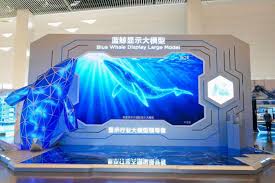
“We independently developed the BOE Blue Whale Display Large Model on top of domestic open-source models, integrating industrial manufacturing expertise with production-line data. Spanning R&D, design, manufacturing, and quality management, it is driving the rollout of multiple AI applications across BOE factories nationwide,” said Jiang Xingqun, senior vice president at BOE.
Chinese open-source models are also transforming workflows for international users and cost structures for overseas enterprises.
Late last year, a multilingual large model named Qwen-SEA-LION-v4 was released in Singapore. Built on Alibaba’s open-source Qwen foundation model, it focuses on Southeast Asia’s complex linguistic environment and has been well received by local users. Leveraging the Qwen open-source model’s support for 119 languages, it was pre-trained on 36 trillion tokens.
According to Leslie Teo, senior director of AI Products at AI Singapore, the collaboration with Alibaba on Qwen-SEA-LION-v4 is an important milestone in advancing AI inclusivity and making it more representative of Southeast Asia.
“The vision of inclusive AI must be built on a solid open-source foundation,” said Zhang Yunquan, a researcher at the Institute of Computing Technology, Chinese Academy of Sciences. Through advances in technology, standards, and public goods, China is translating the vision of inclusivity into tangible action, Zhang added.

LineShine’s repeat TOP500 win highlights China’s homegrown tech strength

First foreign astronaut in China’s manned space program flies to Tiangong space station

China’s homegrown large models power the global open-source ecosystem

-
 Uncategorized6 years ago
FG, states urged to harness flooding for ranching, others with technology – Agbaje
-
 Headlines11 years ago
Breaking: EFCC seals Borno House of Assembly, as Hon members take to their heels
-
 News12 years ago
Nigeria Security Operatives Stage Manhunt For Homosexual Perpetrator
-
 News10 years ago
How 21-year-old Girl fled community over accusation of lesbianism
-
 News11 years ago
Yobe Gov Moves Against Deputy
-
 Opinion8 years ago
7 signs she has friend zoned you
-
Technology5 years ago
Online job placement company headhunts women
-
 Headlines11 years ago
Borno Dep Gov Abducts Another Church Leader