
Opinion
Abuja’s Metro Rail To Nowhere!

By Austin Maho PhD
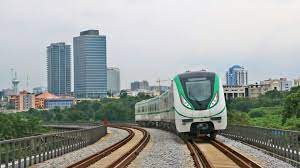
Nothing typifies the inherent corruption, waste and bare faced duplicity in government than the recent award of a five billion naira contract for the rehabilitation of vandalized sections of Abuja mass transit rail system by the Federal Capital Territory Administration.
The humongous allocation is been made without asking why a project that was commissioned in 2018 which was never really put to use requires such huge allocation for rehabilitation. Besides why was the Metro line shutdown under the guise of observing Covid-19 protocol? and what has been the benefit of the almost 200 million dollars loan procured by the federal government for the project to warrant the allocation of another 5 billion naira for rehabilitation?.
What really is the Abuja light rail project? The, Abuja light rail system Phase 1 comprises Lots 1 and 3 made up of 77.775 km out of the six Lots designated by the transportation masterplan was awarded in 2007. However, only Lots 1 A and 3made up of 45.245 km to date have been completed as at 2017. The completed lot was inaugurated-in 2018, and followed by a trial operation which was eventually suspended and if truth be told, as a result of its commercial non viability. It was a commercial failure for two primary reasons reasons, one because of the route it was designed to serve and secondly, the citing of the station in an isolated difficult to reach location. Consequently, the train service ran mostly empty for the brief period it was operational.
For God’s sake how can a Metro rail with a station in an isolated part of the city centre that traverses through an uninhabited forest and terminates at the Abuja international airport be described as a mass rail project? Who or where are the masses it is meant to serve along this route? Why was the first phase of the rail service in conception and execution not first extended to the suffering masses in satellite towns of Abuja who truly needs it?
The FCT permanent secretary, Mr. Olusade Adesola, said when he flagged off the restoration of the transportation infrastructure on August 5, 2023 that the project would be delivered in 12 months. Adesola described the light rail as the lifeblood of Abuja, noting that it would play a crucial role in easing transportation challenges of residents, and described vandalism of the equipment as a serious
setback to the administration while assuring that the FCT would soon witness the return of a more efficient and reliable transportation system. According to him:“The revitalisation of the Abuja Rail Mass Transit System is not just about repairing physical infrastructure; it is a testament to the resilience of our city and its people and a demonstration of our government’s dedication to creating an enabling environment for economic growth and social well-being,”
High sounding words designed to inspire and give fillip to his desire to expend 5 billion naira on an elitist project but means nothing to the suffering masses and civil servants who resides in Gwagwalada, Suleja, Karu, Nyanaya, Maraba, Masaka and daily have to traverse terrible traffic to make it to the city, seating on overloaded buses, open trucks risking their lives yet paying hefty fares, just to get to the city centre and to work.
The FCTA it would seems have no plans for these class of people but yet throws words around as if it is working for their interest. The minister of the FCT Nyesom Wike who visited the metro line station should ask his civil servants the right questions before committing N5 billion to the restoration of the rail service. All over the world metro light rail are designed to ease transportation for the less privilege, while the well heeled can afford alternative and more expensive form of transportation the poor mostly rely on metro rail to ease movement.
The truth is that the magnificent 200 million USD Abuja Metro railway is an elitist white elephant project. Most Abuja residents are not even aware of the train service. Those that are aware of the service consider using the service to commute to the airport a waste of time. It offers no compensation as an alternative to taking the road., which is about 25 minutes from the City Centre. Why go to a train station to wait for several minutes before boarding a train to the airport and risk missing your flight when in less than 25 minutes you can take a car to your destination hassle free?. This is the real dilemma of the Abuja Metro rail.
How can you be running empty coaches and insist on expending another 5 billion naira to reinforce failure. The abruptly termination of the service in March 2020 has nothing to do with COVID- 19 pandemic. The plan rehabilitation, and completion of the metro line services will not bring any succor to residents of the Territory.
The Abuja Metro rail line should be called what it truly: an elitist, white elephant project, designed for optics and to massage the ego of the elite who ironically would not use the service. That the FCTA is ready to spend additional 5billion naira to rehabilitate this ill conceived project and spend an addition amount of money to provide constant security on the line shows the mind bugling idiocy that guides decision making process in government circles.
Opinion
Femi Otedola, the Alleged serial business hijacker, using First Bank loans to steal other people’s businesses

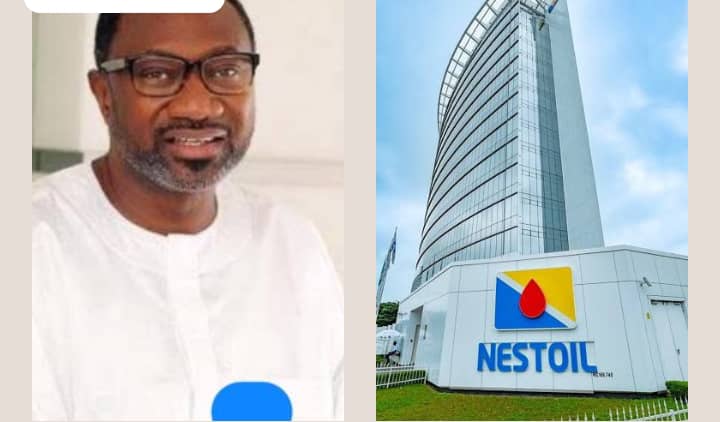
The Chairman of First Bank, Mr. Femi Otedola is presently facing huge criticism over his alleged usual ways to use bank loans to take over businesses of other people.
This is coming just as perceived hidden interests of a prominent lawyer, Mr. Koku whose dual roles in the Nestoil and FBNQuest case, which now threatens the integrity of the Nigeria Oil sector, have been unmasked by this newspaper.
During an exclusive investigation by Our correspondent over the alleged conflict of interest and potential
Regulatory capture of the NUPRC, in Nestoil and Neconde’s Legal
Battle with FBN Quest and First Trustees, it was gathered that in the corridors of Nigeria’s petroleum industry, a storm that could reshape perceptions of justice, transparency, and regulatory independence at the apex of the upstream sector is brewing.
Through months of document review and interviews with industry insiders,
told Our correspondent in its investigation uncovered troubling evidence that a top legal practitioner is at the heart of a clash between public interest and private gain, raising fresh questions about conflicts of interest and the spectre of regulatory capture.
Findings showed that the wrangle between Neconde Energy Limited, Nestoil Limited, and a consortium of financial institutions represented by FBN Quest Merchant Bank Limited and
First Trustees Limited, resembles a typical high-value debt dispute but, dig deeper and a more intricate web emerged.
This investigation revealed that Babajide Koku SAN, a personal lawyer to Mr. Femi Otedola, the chairman of First Bank, has simultaneously served as legal counsel for both the FBN Parties and the Nigerian Upstream Petroleum Regulatory Commission (NUPRC) in lawsuits
that could determine the fate of critical national oil assets.
This dual representation, spanning Suit No: FHC/L/CS/2127/2025 in Lagos and Suit No: FHC/ABJ/CS/2369/2025 in Abuja, goes far beyond a mere procedural oversight as legal documents obtained by this newspaper confirmed that Koku’s name appears on court filings for
multiple parties with directly competing interests, fuelling allegations that regulatory impartiality may be at risk.
According to legal experts who spoke with Our correspondent, the implications echo far beyond the courtroom—potentially shaking the very foundations of the sector’s governance
Meanwhile, our investigation reconstructed the timeline of this controversy, beginning on 20 October
2025, when FBN Parties, represented by Koku, SAN, sued Nestoil and Neconde over an alleged $1billion debt. But even before the gavel fell, FBN Trustees had petitioned the NUPRC on 9 September 2025, seeking consent to register a second charge over Oil Mining Lease (OML) 42, an asset in which Neconde holds a substantial stake.
It was also gathered that the NUPRC signalled its readiness
to approve the charge, prompting Neconde, wary of a hostile takeover, to launch its own legal offensive on 6 November 2025.
“When the NUPRC responded to Neconde’s lawsuit, challenging the validity of the very consent it had given, it too appeared in court represented by Koku” a document at the disposal of this newspaper stated..
Meanwhile, multiple sources confirmed to Our correspondent that Koku, SAN was present for both the FBN Parties and the regulator, a move that has left industry players and legal watchdogs questioning whether the independence of
Nigeria’s upstream regulator may have been fatally compromised.
Experts that were interviewed by Our correspondent warned that such brazen dual representation is more than a
technical breach of legal ethics, it is a flashing red light for regulatory capture, where public agencies risk being co-opted by the very entities they are meant to police.
One concerned stakeholder who spoke under the condition of anonymity described this as “akin to letting the fox guard the henhouse”, noting that the
same lawyer advancing private creditors’ interests is now shaping the regulator’s legal defence.
“The stakes are monumental: should NUPRC’s consent to FBN Trustees be upheld, it could set a perilous precedent, enabling further encroachment by powerful financiers at the expense of due process and fair regulatory oversight” he added.
Also, critics alleged that Koku’s close
affiliations with major stakeholders in the FBN entities call into question the motives behind the legal manoeuvring, stoking speculation about a well-orchestrated asset grab under the
veneer of judicial process.
Another expert told this newspaper state that lawyers must not act for conflicting interests without full, informed consent. He queried: “Assuming that all necessary disclosures have been made, is it appropriate for the NUPRC to appoint legal representatives who are currently acting on behalf of an interested party in the dispute.
“Furthermore, is it advisable for FBN Trustees to permit its retained counsel to also represent the NUPRC in litigation where FBN Trustees has a financial interest in the outcome”
Senior Nigeria legal analysts who offered to grant interviews on this issue cautioned that Koku’s actions could trigger motions for disqualification and expose both NUPRC and the FBN Parties to damaging reputational
fallout.
Meanwhile, some of the legal experts have called for an urgent review of how regulators appoint external counsel,
warning that public trust in Nigeria’s oil industry hangs in the balance.
One of them added that: “For Koku, the risks are professional as well as reputational, with the possibility of regulatory scrutiny or even sanctions if formal complaints are lodged, particularly where formal disclosures were not made and subsequent consent of the NUPRC obtained.
“For NUPRC, the crisis raises uncomfortable questions about its commitment to unbiased oversight and
whether it can withstand the corrosive influence of well-connected private interests”
Speaking on investor confidence which they said is already on the Line, legal experts noted that the fallout is already being felt beyond the courtroom.
However, Oil Industry veterans who spoke with Our correspondent noted that
uncertainty and perceptions of impropriety could scare off much-needed investment from
an already fragile upstream sector.
“Without transparency and clear ethical boundaries, you can’t have a credible investment climate,” one executive told Our correspondent, calling for sweeping reforms and tougher frameworks to safeguard regulatory processes from undue interference.
Legal experts are urging the government to overhaul consent procedures and demand full transparency in all dealings between regulators and their outside advisers.
Our correspondent gathered further that as the lawsuits wind their way through Nigeria’s federal courts, the spotlight remains fixed on Babajide Koku SAN, the NUPRC, and the banks pulling the strings behind the scenes.
It was also gathered that the case has become a litmus test for transparency, legal ethics, and the resilience of Nigeria’s regulatory institutions, and the final outcome may not only decide who controls a lucrative oil
lease but could also set a lasting benchmark for the country’s commitment to fairness and
the rule of law.
“In a sector too often shrouded in secrecy, only genuine accountability and unwavering ethical standards can restore faith in those entrusted with Nigeria’s most precious resources” another industry expert noted.
In a related development, Chairman of First Bank Holding, Mr. Femi Otedola has been accused of taking over businesses of First bank customers under the guise of debt default with the help of some corrupt judges.
According to finding, Otedola, as a result of his greed and love for other people’s business and properties would hide under the guise of giving loans to business owners to develop their businesses, inflate the loans, hide their loan documents and use the court to take over such businesses.
Apart from Nestoil/Neconde which would have been his latest victim if not for the vigilance of the legal team of Dr. Ernest Azudialu-Obiejesi, the chairman of First Bank had used the FBNQuest Merchant Bank Limited to fraudulently hijack several firms from their original owners.
However, officials of Neconde have lamented that for over three years, First bank has refused to release bank statements to the company.
The company alleged in several reports that First Bank has refused to provide bank statements, reconciliation documents, or loan records Nestoil which they need to use to verify whether any debt actually exists.
There are instances of Sahara Group and General Hydrocarbon which Otedola wickedly and cunningly used the loans which his bank gave to those two companies to hijack their lucrative businesses with the help of some corrupt judges.
Our correspondent’s independent investigation showed that Mr. Femi Otedola had earlier this year approached Neconde requesting to buy some 16 percent stake in the juicy Oml42 oil block.
For fears of what he has done to Sahara Group and General Hydrocarbon in the past, Otedola’s request was bluntly rejected by Neconde, and this led to First bank to drag Nestoil and Neconde in aggressive move to take over OML 42, citing an alleged $1billion dollar unverified debt.
“How can we owe what we cannot see?”
We cannot verify any debt because First Bank will not release the very documents that would confirm or disprove their claim.” one of the officials of Nestoil told this newspaper, insisting that without those statements, the bank’s attempts to enforce debt recovery actions amount to economic ambush and economic gangsterism.
Meanwhile, an expert in the Nigerian Petroleum business told Our correspondent that: “At the centre of the conflict is OML 42—one of the most promising onshore blocks in the Niger Delta Basin. Industry analysts estimate that the licence could generate hundreds of millions of dollars in revenue over its lifespan. At present OML42 accounts for approximately 5% of Nigeria’s crude oil production.
“There are claims that the subsidiaries of First Bank Holding under the Chairmanship of Mr Femi Otedola has shown “unusual, excessive interest” in taking over the OML42 through court orders, ex parte motions, and aggressive debt-recovery procedures that the company says lack documentary justification.
“It has become clear that the bank’s objective is not repayment—it is acquisition,”
Also, a legal expert who spoke with Our correspondent during our investigation said that the refusal of First bank to release bank statements, if true, raises serious questions about transparency and the integrity of the bank’s claims, saying that a creditor refusing to provide account statements is highly irregular.
He added that any enforcement action without documentary clarity could be challenged as predatory or abusive.


During the launch of an endowment fund to mark the Arewa Consultative Forum’s (ACF) silver jubilee, General T. Y. Danjuma donated a hefty sum of one billion naira. The gesture by the Takum-born general has rekindled what could be described as a “T.Y. phenomenon,” and signals renewed prospects for unity in the North and, indeed, Nigeria. T.Y., as he is fondly called, represents different things to different people: a consummate general, business titan, opinion leader, and large-hearted philanthropist.
To others, he remains an enigma — a recluse of few but weighty words, a patriot who took enormous risks in shaping Nigeria. Above all, he is viewed as a man of uncommon balance, especially in the delicate realm of Nigeria’s military politics. He was the one who allegedly relinquished an opportunity to become Head of State in the aftermath of the 1976 coup d’état — all in the interest of fairness and national balance.
After Murtala Muhammed’s assassination, Olusegun Obasanjo, then second-in-command, was to take over. Danjuma felt it proper and just to retain that arrangement. He also ceded the position of Chief of Staff, Supreme Headquarters, to a junior colleague, Shehu Musa Yar’Adua, who was then a Lt.Colonel, to ensure the top hierarchy reflected the country’s ethno-religious diversity. He maintained his role as Chief of Army Staff until the regime exited in 1979. It was during this period that he delivered his now-famous terse instruction to Ibrahim Babangida during the Dimka-led coup attempt: “Go and flush him out. I didn’t ask you to negotiate.” This came when IBB attempted to explain certain issues to him.
He was also alleged to have exhibited similar decisiveness during the counter-coup by northern officers — the so-called “rematch” — that toppled the Balewa government in July 1966. T.Y.’s last major public service role was as Minister of Defence under President Olusegun Obasanjo between 1999 and 2003 — a government he helped bring about as part of national healing after the annulment of the June 12 election believed to be won by M. K. O. Abiola.
Afterwards, T.Y. transitioned fully into private business and excelled. Today, he ranks among the biggest players in Nigeria’s oil and gas industry and has consistently featured among Forbes’ wealthiest Nigerians. His NAL-Comet Group, a shipping enterprise, and South Atlantic Petroleum Limited remain influential in the private sector. As part of his corporate social responsibility and personal philosophy of giving back, the T.Y. Danjuma Foundation was established. It has since become a major philanthropic force, providing grants and assistance to thousands of less privileged Nigerians.
At 86 (born in 1938), T.Y. has seen it all — veni, vidi, vici: he came, he saw, and he conquered. After a tumultuous military career, he entered the business world seamlessly. Today, he stands as an elder statesman whose voice carries enormous weight. His periodic interventions on national issues — especially security — are blunt, prophetic, and often vindicated by unfolding events.
As far back as 2012, he described the activities of Boko Haram, then mainly restricted to Borno and Yobe, as “war.” Authorities in those states refuted him. Younger voices mocked him. The revered General Mamman Shuwa — his contemporary — was even persuaded to publicly rebut Danjuma’s claims. Ironically, it was Boko Haram that later assassinated Shuwa on 2 November 2012 in Maiduguri.
A few years later, T.Y. assessed the escalating armed herder–farmer conflict in Taraba and the wider Middle Belt and warned communities to defend themselves, including by procuring arms — just as terrorists were doing. He alleged collusion within the security forces and warned of an unfolding anarchy. That was in 2018. The government and military high command issued strong rebuttals. Yet, his predictions have materialised almost exactly as he feared.
Today, several states in the Northwest — including Sokoto, Zamfara, Kebbi, Katsina, and parts of Kaduna and Niger — are forming and equipping vigilante volunteers to fight terrorists. The Federal Government has directed states to establish “forest rangers.” Results have been mixed. Some communities have even entered “peace agreements” with bandits to survive — with limited success. It is believed that in Katsina, about 20 of the 34 LGAs remain under severe threat. Numerous states have been forced to shut schools owing to renewed abductions. Again, T.Y.’s warnings stand vindicated.
Ordinarily, the General should be held in the highest esteem across the North — and he is, to a large extent. Yet he has not been spared the region’s ethno-religious tensions. The relationship between followers of Islam and Christianity in Northern Nigeria has long been fraught. As a Christian, T.Y. has been accused by some of not playing the unifying role that destiny appears to have placed upon him, especially in his later years.
He is suspected by some of quietly supporting certain divisive positions of the Christian Association of Nigeria (CAN) — much in the same way some Muslim elites support their own sectarian groups. Others point to his alleged closeness to aspects of the Middle Belt Forum’s agenda that may be perceived as unfavourable to northern cohesion. For some sections of the North, these stances fall below his towering national stature.
The “disappointment” many express arises from reverence. To them, his perceived tilt toward ethno-religious politics diminishes the prestige of his ancient Kwararrafah heritage. The Kwararrafah Confederacy was one of the great indigenous polities of the Nigerian savannah — rivalling the Hausa city-states and Kanem-Bornu in the 14th century.
In modern Nigeria, no ethnic group is more broadly Nigerian — or more inherently northern — than the Kwararrafah and its famous son, Danjumma. Naturally, the North should have been T.Y.’s cultural and historical home, ahead of many others. His one-billion-naira gesture to the ACF would not only dispels many of the suspicions once cast upon him but to re-cement his place as one of the profound and bonafide Northern voices.
Many others may have made similar donations and even more, but the General’s own carries greater symbolism and significance.It affirms that he has both the North, a region currently under serious stress, and Nigeria, at heart. The T.Y. phenomenon is back — and in grand style. May the General live long.
A. G. Abubakar
agbarewa@gmail.com
By Charles Nnaebuka, PhD
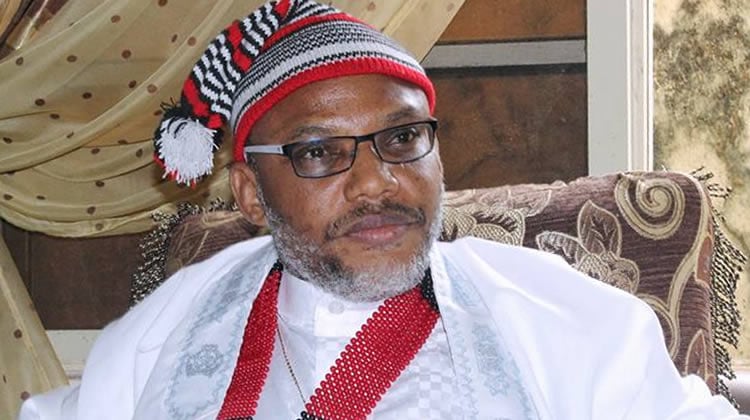
Nnamdi Kanu’s conviction and sentencing to life in prison marks not just the end of a chapter in Nigeria’s uneasy secessionist saga but a vindication of the view that his brand of defiance was not freedom-fighting but a toxic mix of arrogance, recklessness and a willful courting of violence. He is, in the starkest sense, a good riddance to bad rubbish.
To those who really know him, Nnamdi Kanu was never just a dissident. He was a swaggering provocateur whose rise was built on historical grievance, his own myth-making and a kind of hubris that finally destroyed him.
Born in 1967 in Nigeria’s southeast, Kanu came of age in a region haunted by the spectre of Biafra, the short-lived secessionist state that sparked a civil war. That war killed more than one million people and its memory became the fuel for Kanu’s long, volatile evolution. For years, Kanu wrapped his separatist ambitions in the language of self-determination, historical injustice and opportunism. He spoke of Biafra not merely as a lost dream but as a moral imperative.
In that regard, he launched Radio Biafra around 2009 from London broadcasting not just a separatist message, but a combative, almost messianic call: the Igbo people would no longer tolerate their status at the mercy of a Nigerian state they saw supposedly as corrupt, oppressive and irredeemable.
Riding on that faulty illusion, he formed the Indigenous People of Biafra (IPOB) (which would later be proscribed a terrorist group by the courts due to violent activities), turning a radio station into a movement.
Over time he hardened his message, daring to turn resistance into an existential fight. By exploiting the ignorance of many in the Southeast, he mobilised thousands via Radio Biafra, calling on his followers to sit at home, to resist, to hate the Nigerian state. But that lofty narrative belied something more brittle: a man intoxicated by his own importance, certain that his convictions placed him above accountability. His antecedents, both real and self-styled laid the groundwork: Kanu tapped into deep-seated Igbo frustration, historical trauma and a longing for self-determination.
But rather than moderate or negotiate, he doubled down and saw himself not just as a leader, but as the voice of a people allegedly long wronged and his role rapidly grew into something grandiose. He did not just agitate for change, he believed he was indispensable to it.
When he was first arrested in 2015 on treason charges, he seemed to relish the spotlight. But after a dramatic military raid on his home in 2017, he fled while on bail and his disappearance only elevated his status among his followers. In 2021, he was re-arrested in Kenya and controversially extradited back to Nigeria, moves he would later decry as illegitimate and part of an alleged broader conspiracy against him.
However, when the court finally delivered its judgment, Justice James Omotosho did not mince words. He described Kanu’s behavior during the trial as “arrogant, cocky, and full of himself,” a man who refused to recognize the limits of his power. Kanu’s pride was not just in his speech, it was in his refusal to engage with the court’s processes. As self style activist and freedom fighter ala Obafemi Awolowo, Nelson Mandela and Martin Lurther King, he dismissed legal representation, challenged the court’s jurisdiction and eventually refused to mount any defense. That obstinacy amounts to more than ideological posturing but a strategic miscalculation, a self-inflicted wound.
Kanu’s charges were serious. The court found him guilty on seven counts related to terrorism. Prosecutors presented evidence that his broadcasts on Radio Biafra were not mere political speech, but calls to violence, that he incited attacks, gave instructions related to bomb-making and directed “sit-at-home” orders in the Southeast that paralysed movement and threatened and ended innocent lives of those who defied his orders. His orders and style infringed on the rights of citizens. Kanu’s violent nature is not a footnote but a raging reality: media reports tie his sit-at-home orders to almost a thousand deaths in the Southeast between 2021 and 2025, as armed actors enforcing those orders killed civilians and clashed with security forces. In court, a key witness testified that Kanu’s broadcasts directed his followers to “deal decisively” with security operatives, estimating 170 to 200 killed in attacks allegedly tied to his Eastern Security Network (ESN). Another prosecution witness accused ESN fighters of grotesque acts, claiming they desired to bury a dead member with “2,000 human heads” and used human flesh in ritualistic practices. This is not mere agitation, it is the architecture of terror.
Notably, the judge pointed out that by ordering people to stay home, Kanu violated their freedom of movement and that he lacked any constitutional basis to demand a people’s shutdown the way he did.
Even more stark, during the trial, the court admitted a video recorded statement by Kanu from 2015, in which he denied any link to violence, yet security operatives testified they had evidence to the contrary. There were suitcases seized at his arrest containing broadcasting equipment, suggesting his “struggle” was anchored in real world operations, not just rhetoric.
During sentencing, the judge could have imposed the death penalty, but opted for life imprisonment, citing global opposition to capital punishment and invoking mercy. That mercy came despite what the judge described as Kanu’s ongoing “tendency of violence” even in court. In fact, at one point, he was ejected for unruly behaviour.
What finally brought Kanu down was not just the state or the weight of the charges; it was his own hubris which made him a tragic hero. He became a man consumed by own unbridled pride and error of judgment. As typical, he was a man who thundered at crowds, who believed his cause justified every excess, but who could not or would not respect the formal structures of law when they turned against him. He may have projected an image of invincibility, but in reality, he built his power on a foundation of confrontation without compromise.
Kanu’s downfall is human, not mythic. He was not a martyr with clean hands; he was a provocateur who toyed with fire until it burned him. He refused to repent, refused to adapt, refused to play by any rules but his own. And now, at the end, justice has caught up. His conviction is more than a legal outcome. It is a warning: no matter how righteous a cause, defiance without discipline, conviction without humility, arrogance without accountability, that’s a recipe for ruin. A man who cast himself as a liberator became undone by his own arrogance. His cause may have been rooted in historical injustice, but the method, the refusal to bend or compromise, the constant drama, all of it built a tower whose base was too narrow. And in this case, the ruin is complete. He became the provebial grasshopper that went to the grave with the corpse simply because he lacked tact, wisdom and discernment. Kanu is indeed a good riddance to bad rubbish.


TAU reaffirms commitment to globally competitive learning

photo

JUST IN: Even Tinubu moves with too many police escorts – Senator Ndume

-
 Uncategorized5 years ago
FG, states urged to harness flooding for ranching, others with technology – Agbaje
-
 Headlines10 years ago
Breaking: EFCC seals Borno House of Assembly, as Hon members take to their heels
-
 News11 years ago
Nigeria Security Operatives Stage Manhunt For Homosexual Perpetrator
-
 News9 years ago
How 21-year-old Girl fled community over accusation of lesbianism
-
 News10 years ago
Yobe Gov Moves Against Deputy
-
 Opinion7 years ago
7 signs she has friend zoned you
-
Technology4 years ago
Online job placement company headhunts women
-
 Headlines10 years ago
Borno Dep Gov Abducts Another Church Leader