
Business
Banking Industry Recorded Decline In Frauds, Forgeries – NDIC


Justice Daniel Osiagor of a Federal High Court, Lagos, has granted an interim orders restraining Nigeria’s former Attorney-General of the Federation/Minister of Justice, Mr. Michael Kaase Aondoakaa (SAN) and his company, Mikap Nigeria Limited, from tampering, dealing with the company’s properties and funds over an alleged unpaid N2 billion debt.
Others affected by the interim orders include:
Samuel Iorhen Aondoakaa; Professor Godwin Abu; Nguvan Susanna Aondoaka; Engr. John Tsav; Innocent Igbalagh Aondoakaa; Venda Joseph and Lausa Samuel, listed as former AGF’s codefendants in the debt recovery suit marked FHC/L/CS/06/2026, instituted by Keystone Bank Limited, through its lawyer, Adekunle Babatunde Ogunba (SAN).
Justice Osiagor made the restraining order while granting an Exparte Motion filed by the bank through Ogunba (SAN)
Other orders made by the Justice Osiagor include: “that an order of interim injunction is granted restraining the defendants/respondents, the Defendants’ Directors, Staff, Employees, Officers, Agents. Privies or any other person or group of persons whatsoever under the defendants/respondents’ authority or any other authority (however derived or sourced) from interfering with, obstructing or otherwise disturbing the Receiver/Manager appointed by the Plaintiff/Applicant over the affair and endeavours of the 1st defendant/respondent, in the execution of his statutory duties or tasks ancillary there to pending the hearing and final determination of the Motion on Notice for Interlocutory Injunction.
“That an interim order is granted authorising the plaintiff/applicant herein and/or its duly appointed Receiver/Manager to take over and preserve all the assets, funds, shares, etc. of the 1st defendant, pending the hearing and final determination of the Motion on Notice; particularly the under-listed pledged properties/assets:
“That an order is granted directing all companies dealing with the 1st defendant (Mikap Nigeria Limited) “to recognize and only deal with the duly appointed Receiver/Manager appointed by the plaintiff/applicant as the only one vested with the requisite powers to act on behalf of the 1st Defendant forthwith pending the hearing “a and final determination of the Motion on Notice.
“That an order of interim injunction is granted restraining Mikap Nigeria Limited RC-160854 (the 1st Defendant) with their funds in any bank and financial institution within the jurisdiction.
“That an order is granted directing all the banks and/or financial institution in Nigeria and other company contractually obligated to the 1st defendant, Mikap Nigeria Limited, to furnish the Receiver/Manager and /or office the details of any sums outstanding to the credit of the 1st defendant, Mikap Nigeria Limited within seven (7) days of being furnished/availed the Interim order of court in this suit.
“That an order of interim injunction is granted restraining the 1st to 9th defendants/respondents, their agents, servants, cronies, assigns and/or privies by whatsoever name called from disposing of, selling, mortgaging, pledging or otherwise transferring, appropriating or dealing with the pledged assets of the 1st to 9th defendants/respondents and properties/assets or any other assets/funds of the 1st to 9th defendants, without regard to the vested tight of the plaintiff/applicant, the Appointor of the duly appointed Receiver/Manager over the pledged Assets of the 1st to 9th defendants/respondents pending the hearing and final determination of the he Motion on Notice.
“That an order is granted directing the Assistant Inspector General of Police Zone 2, Lagos, Commissioner of Police, Lagos State, Commandants, Nigerian Civil Defence Corps Lagos of State Command, their Deputies, Assistants and all other officers under them or other Law Enforcement officers/Personnel as may be deemed appropriate by the Receiver/Manager, to assist the said Receiver/Manager in his Lawful duties, function, responsibilities and performance of his lawful duties as Receiver/Manager over the pledged Assets of the 1st to 9th defendants/respondents in accordance with the tenure of the subsisting instruments pending the hearing and final determination of the Motion on Notice filed along herewith.
“That an order for leave is granted to the Plaintiff/Applicant to effect service of the following to wit; (1) the Order of this Honourable Court, (2) the Originating Summons, (3) Motion on Notice, and ali other subsequent processes to be filed in this suit on the 2nd-9th Defendants by posting same at their last known address being KM 5, gboko Road, Makurdi, Benue State.
“That an order is granted deeming the service of the processes listed in prayer 8 above, and all other subsequent processes to be filed in this suit on the 1st- 9th Defendants as good and proper service aforesaid processes.”
Hearing of the substantive suit has been adjourned to March 5, 2026.
Meanwhile, counsel to the defendants, Mr. M. S. Diri (SAN), has petitioned the Chief Judge of the Federal High Court, seeking a transfer of the case from Lagos to the Makurdi Judicial Division.
The defendants argue that all parties reside and conduct their businesses in Makurdi, Benue State, and that the alleged debt arose from transactions at the bank’s Makurdi branch. While further contend that related suits are already pending before the Benue State High Court and the Federal High Court in Makurdi.
However, the plaintiff, Keystone Bank, through its counsel, Adekunle B. Ogunba (SAN) opposed the transfer request, describing it as procedurally defective for being made via correspondence rather than a formal application.
Ogunba (SAN) insists that the loan facility originated from its Lagos Head Office under a Central Bank of Nigeria scheme and that the Receiver/Manager operates principally from Lagos.
Ogunba SAN also cited constitutional and statutory provisions, stating that the Federal High Court is a single court with nationwide jurisdiction, rendering the choice of division largely administrative.


A legal dispute has emerged between Mikap Nigeria Limited and Keystone Bank over claims of indebtedness and alleged abuse of court process.
The company has accused the bank of initiating receivership proceedings despite allegedly being indebted to Mikap Nigeria Limited. According to sources familiar with the matter, the action filed in Lagos State has been described as malicious and an abuse of court process.
A source close to the company questioned the bank’s decision to file a suit in Lagos instead of Makurdi, where Mikap Nigeria Limited is based. “How can Keystone Bank leave Makurdi, where the company operates, to institute an action in Lagos against the same company? It clearly raises concerns about abuse of court process,” the source said.
Court documents reviewed by this newspaper indicate that in Suit No. MHC/119/2024, the bank did not state that Mikap Nigeria Limited was indebted to it during its defence.
Further findings show that the Federal High Court sitting in Makurdi, in Suit No. FHC/CS/M/117/2025, restrained Keystone Bank from tampering with the bank accounts of the directors of Mikap Nigeria Limited. The Makurdi suit reportedly predates the fresh action subsequently filed by the bank in Lagos.
Investigations also reveal that Mikap Nigeria Limited has maintained a strong credit standing in Benue State since commencing operations in 2011. The company is said to have repaid facilities previously obtained from Access Bank and the Bank of Industry.
Sources further claim that the facility at the centre of the dispute remains active and that the company has not been declared in default.
Efforts to obtain official comments from Keystone Bank were unsuccessful as of the time of filing this report.
Business
Senate Committee Commends Tinubu on Launch of National Halal Economy Strategy to Tap $7.7trn Global Market*

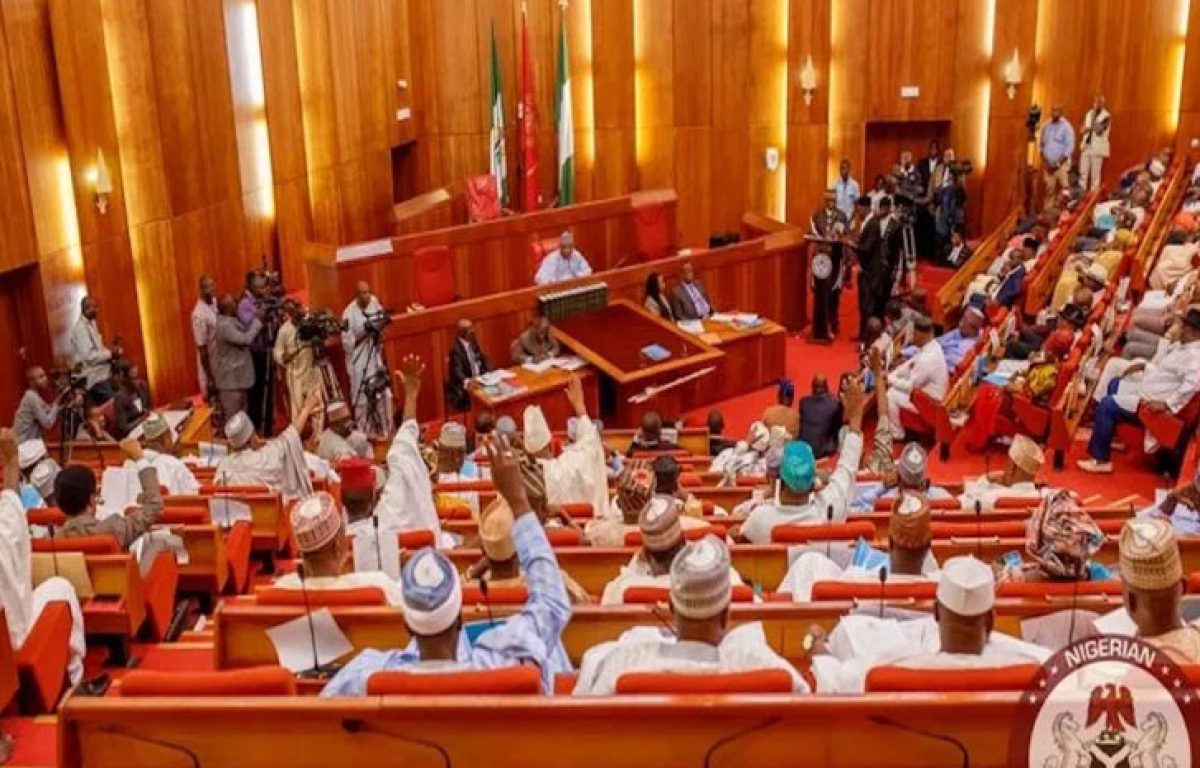
The Senate Committee on Finance has commended President Bola Ahmed Tinubu for launching Nigeria’s National Halal Economy Strategy, describing it as a bold and strategic move to position the country within the lucrative global halal market, estimated at $7.7 trillion.
In a statement signed by its Chairman, the committee praised the initiative as timely and aligned with international best practices. Several countries—including the United Kingdom, Canada, Australia, Malaysia, Indonesia, Saudi Arabia, the United Arab Emirates, Turkey, Brazil, Thailand, and Singapore—have successfully used halal frameworks to boost manufacturing, agricultural exports, financial markets, and foreign investment.
The committee highlighted Nigeria’s strong advantages for success in this space, including its vast agricultural resources, large domestic market, youthful population, growing manufacturing sector, and expanding services industry.
It noted that the strategy fits seamlessly into the Tinubu administration’s broader economic reforms, such as boosting non-oil revenue, diversifying exports, creating jobs, supporting small and medium enterprises (SMEs), and increasing foreign exchange earnings.
President Tinubu, represented by Vice President Kashim Shettima, officially unveiled the strategy on Thursday, February 6, 2026, at the Presidential Villa in Abuja.
The framework, developed in collaboration with Saudi Arabia’s Halal Products Development Company (HPDC) following a bilateral agreement signed in February 2025 at the Makkah Halal Forum, aims to enhance quality standards, certification processes, and competitiveness across sectors like food, pharmaceuticals, cosmetics, tourism, and ethical finance.
The committee described the strategy as inclusive, market-driven, and globally oriented, while fully respecting Nigeria’s diverse and pluralistic society.
It is projected to contribute significantly to the economy, with estimates suggesting it could add around $1.5 billion to Nigeria’s GDP by 2027 and unlock billions more in domestic value over the coming decade through expanded exports and investment.
The Senate Committee on Finance pledged its full legislative support, oversight, and cooperation to ensure smooth implementation, regulatory clarity, and long-term fiscal sustainability in the national interest.
“This decisive step reinforces Nigeria’s readiness to adopt proven international models, unlock new economic frontiers, and establish itself as a competitive player in the evolving global economy,” the statement concluded.

Odua People’s Assembly defends NSA Ribadu, criticizes Ishola Williams’ call for removal

75 ISWAP Fighters Killed in Borno Town.

SAN urges collective efforts to tackle societal vices

-
 Uncategorized5 years ago
FG, states urged to harness flooding for ranching, others with technology – Agbaje
-
 Headlines10 years ago
Breaking: EFCC seals Borno House of Assembly, as Hon members take to their heels
-
 News12 years ago
Nigeria Security Operatives Stage Manhunt For Homosexual Perpetrator
-
 News9 years ago
How 21-year-old Girl fled community over accusation of lesbianism
-
 News10 years ago
Yobe Gov Moves Against Deputy
-
 Opinion7 years ago
7 signs she has friend zoned you
-
Technology4 years ago
Online job placement company headhunts women
-
 Headlines10 years ago
Borno Dep Gov Abducts Another Church Leader