
News
Borno’s journey in two years

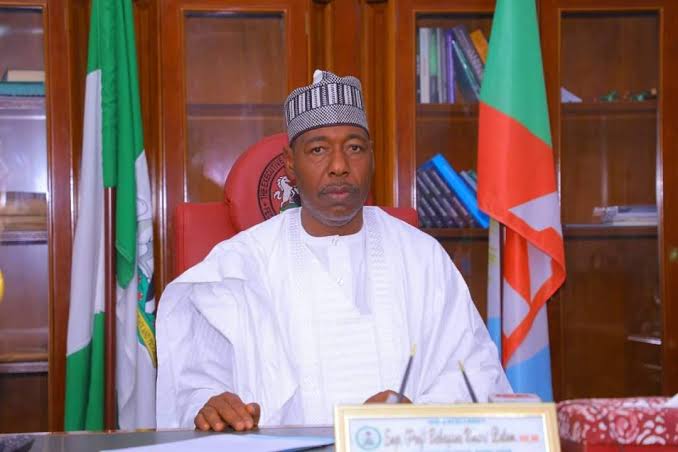
By Prof. Babagana Umara Zulum
Fellow citizens,
It has been two years since we took the oath of office, following the overwhelming mandate you, the good people of Borno State, entrusted in us during the 2019 democratic transition.
In these two years, we have together, witnessed continued turbulence even though in the midst of shared hope, shared optimism, shared faith, shared resilience and communal determination to ceaselessly devote ourselves to freeing our Borno from 12 years of vicious insurgency.
As part of that commitment, we, from our first day in office, made security our number one priority. This is in recognition of the fact that the fundamental duty of any Government is to ensure the safety of citizens to such a level that citizens themselves feel they are safe.
My first activity as Governor of Borno State was to interface with head of the military involved in the fight against insurgents.
In our first week in office, we interfaced with thousands of our volunteers from the civilian JTF, hunters and vigilantes, and we increased their monthly allowances, in addition to allocating to them more patrol vehicles and other logistics needed to enhance their operational roles of complementing armed forces in fighting Boko Haram.
In our combined approach, we took aggressive steps of recruiting thousands of hunters from different parts of northern Nigeria, mobilized and deployed them to accelerate our support for the military.
We made it a policy that in all our 27 local government areas, volunteers were strengthened with additional recruitment, surveillance vehicles and other gadgets.
We extended tremendous support to the military, the Nigeria Police Force and other armed forces, through the allocation of vehicles, Armoured Personnel Carriers and other logistics. We gave far reaching support to families of fallen soldiers, other security personnel and volunteers. We made the government house 100% accessible to commanders of all armed forces in Borno and ensured we gave serious considerations to all security based requests.
On regular basis, we held several high level collaborative consultations with Mr President, Commander in chief, former and incumbent service chiefs, the Inspector General of Police and Commanders of all paramilitary organizations, the Director Generals of the DSS and the NIA as well as heads of the military and security agencies resident in Borno State, with several efforts on the fight against insurgency.
I was at headquarters of the multinational Joint Task Force in N’Djamena, and I even held meeting with late President of Chad, as well as governors of provinces in Niger and Cameroon, all towards increased security collaboration.
From our first week in office back in 2019, we began tour of all the 27 local government areas to identify their priority needs; and we interfaced with critical stakeholders in these local governments to select areas requiring immediate, short and long term interventions.
Findings from these assessment visits to 27 local government areas provided the guide to the policies, programmes and capital projects we have embarked upon from our first 100 days to our first year in office. In our second year, we have, with the full participation of all stakeholders, developed, launched and adopted a 25-year development plan for Borno, with initial 10-year phase of implementation.
We however recognized that no plan of ours could succeed when hundreds of thousands of fellow citizens, especially those displaced by insurgents, live with hunger and indignity.
From day one, we were faced with acute humanitarian crisis particularly in northern and some parts of the central senatorial zones. As such, we made it a policy, that as Governor, I assume the role of chief humanitarian officer for different reasons. On one hand, it was our duty to deliver help to our fellow citizens that were either internally displaced or taking refuge in neighbouring countries. On the other, there was the risk that insurgents could, after making IDPs socially and economically vulnerable, also explore that vulnerability by offering food and cash incentives to recruit fighters who could even serve as their spies in communities. From records, we have experienced instances when insurgents offered as low as between 5,000 and 10,000 Naira to recruit some spies and smugglers of weapons. We therefore needed to take steps ahead by making sure we regularly visit IDPs in all parts of Borno, including remote locations, to efficiently and sufficiently deliver food, cash support, and clothing. We needed to ensure that our good citizens had the support they needed, and they were not exposed to potential attractions for the incentives of insurgents.
Fellow citizens, our socio-economic interventions did not stop with IDPs.
For instance, we took measures to curtail and hopefully, put an end to street begging. To achieve this, we began conditional cash support to physically challenged persons while working on empowering them with means to rely on themselves through vocational skills peculiar to their individual and group conditions. We took a bolder step towards reforming the almajiri school system which we call sangaya here in Borno. Consequently, a bill to establish Sangaya and Islamiya Board was sent to the state assembly.
Meanwhile, we have in our reforms, banned political thuggery amongst our youths across the state. We have with their full cooperation, converted the energies they used for political thuggery into productive uses that improve our environment, while we paid them monthly stipends for livelihoods. Government will soon come up with more plans to support these youths.
Fellow citizens, in our social protection and economic drive, we took far reaching steps to stimulate businesses in local economies by giving start-up capital to small scale entrepreneurs and increasing the investments of medium scale entrepreneurs in major towns of our three senatorial zones.
Recognizing the critical importance of the local government system, we organized elections to put in place democratic leadership. In doing so, we raised the bar of leadership by encouraging University Professors and their likes to aspire to become chairmen so they could mix with our experienced grassroots politicians in other to stimulate comparative and competitive progress.
We also encouraged and even compelled our royal fathers to remain in their domains because their presence inspires public confidence and resilience.
We undertook several impromptu visits to local government areas in order to instill discipline in our civil and public service system at the grassroots.
During these visits, we applied reward and sanctions to ensure our hospitals had doctors, nurses and other medical staff; our schools had teachers and school administrators, and our royal fathers were gloriously on ground to inspire all of us.
In our supervisory approach, we made it a habit of showing up at late night, early mornings or at any odd time, to hospitals, schools, IDP camps, water service areas, ministries and other government establishments. I even established an office annex at the Musa Usman workers secretariat, in order to keep civil servants, particularly those at the top levels, on their toes. I made my appearance to the secretariat continually unpredictable to even my security and other personal aides.
Our approach have steadily yielded dividends as we can see from gradual pick up of increased commitment in hospitals, schools, other government institutions and in our local government areas.
With shared commitments and with the strong goodwill, support and prayers from you, the people of Borno State, we are delivering 556 capital projects with 70% of the total already completed while 30% are at various completion levels.
Our projects, done with your support, include 194 capital projects on education, which encompass rehabilitation, completion and fresh construction of Mega-size government technical colleges and primary schools in different communities. We have 63 capital projects on governance, and another 63 capital projects on roads, transport, rural and urban development. 59 capital projects are being delivered on water and environment; while on health, we are delivering 58 capital projects that include establishment of 74 primary healthcare centres across local government areas, rehabilitation of 8 General and specialist hospitals in MMC, Biu, Damboa, Monguno and Magumeri.
We have undertaken 53 capital projects on Reconstruction Rehabilitation and Resettlement which involve estates combining over 6,000 resettlement houses for IDPs and Refugees in 15 towns. I am happy to once again, acknowledge, that His Excellency, Mr President, Muhammadu Buhari, GCFR, has since approved 10,000 resettlement houses in Borno State. I am also happy to note substantial number of these houses have been completed with more ongoing.
There are 28 capital projects on Jobs creation, Youths Empowerment and Humanitarian support which include an all-inclusive vocational training centre with 14 workshops for capacity development of 1,500 persons per annum.
I am happy to recall, that with your support, we have worked towards the academic take-off of the Borno State University, which was established in 2016. The senate has since been inaugurated with students enrolled and academic activities ongoing. We have continued all projects met on ground and started newer infrastructures. We have even commenced the construction of teaching hospital and a medical college, to prepare the University for the award of degrees in medicine and other medical programmes. We have successfully lobbied for the approval and take-off of a federal polytechnic in Borno State and hopefully, we will soon have a federal college of education. Hitherto, Borno had remained one of the few states in Nigeria, which had no federal polytechnic and college of education.
Fellow citizens, as your Governor, I am however aware that in the midst of all that what we have been able to achieve, there are indeed concerns about some of our policies and actions in the last two years.
Top of these are issues relating to taxes of KEKE NAPEP, on commercial goods in markets, on shops, on consumption and entertainment and other issues. I am also aware of issue relating to ongoing reforms in land administration by the Borno State Geographic Information System, BOGIS, which deals with and also enforces some aspect of urban planning and environmental protection. There are concerns on enforcing clearance on rampant roadside trading. These concerns and many others I did not list are largely genuine and citizens have fundamental rights to be worried and to even be unhappy with these policies.
Fellow citizens, of all Nigeria’s 36 states, none is faced with the level of Borno’s security and by extension, social and economic challenges.
Borno has thousands of volunteers who are being paid monthly allowances, provided with kits and vehicles to complement the military in the fight against Boko Haram.
Fellow citizens, for every unfortunate incident of attack that occurs, more attacks would have been prevented through combined efforts that cost money.
Also related to security, we continually support IDPs and vulnerable citizens with cash to strengthen their resilience to Boko Haram manipulations, and this also costs money.
We are undertaking other social protection interventions which cost money and yet we are amongst states that are the most constant in paying monthly salaries and pensions.
As we may have seen in some states, downsizing is taking place in order to cope with payment of salaries and pensions of workers. In Borno State, we cannot afford mass retrenchment of workers because we know the potential social implications of such actions. While many persons may argue that workers are in fewer thousands, we recognize that these numbers have multiplying effects not only in terms of bigger number of dependents, but also on the effect of salaries and pensions in our local economy. Thousands of traders, both small and medium, rely on sales from the funds pumped into the local economy, for their survival.
We therefore cannot afford a mass sack to cope with wages, rather, we are even employing more and more persons. For instance, we have in January this year, employed and trained 800 teachers, just as we employed more doctors, nurses, midwives and other support staff.
To create more rooms for employment, we are reviving industries and putting the good ones to productivity. We are also preparing grounds for our youths to become more employable, and we do this by ceaselessly awarding scholarships to hundreds for specialized courses abroad and for all programmes across Nigeria.
We are subsidizing access to education by paying annual scholarship to over 20,000 students in tertiary schools within and outside Borno. We even paid tuition fees for over 3,000 pioneer students of our state university, yet, we have been supporting parents and guardians by paying for Senior Secondary Certificate Examination fees for our citizens.
Fellow citizens, Borno State is shouldering these responsibilities because we recognize that they impact on the generality of our citizens. However, we cannot sustain all these subsidies in primary, secondary and tertiary education, in healthcare, in consistency of salaries and pensions, and creating new jobs and giving out start up capitals to small and medium scale business persons, unless we create means of increasing our internally generated revenue through some of the tax measures we took, the blocking of leakages and the strengthening of our revenue generating establishments with bold targets.
The Borno State Geographic Information System, BOGIS, has in less than two years of its existence generated close to one billion naira while we were only able to generate around 100 million from 2017 to end of 2019. Of course, affected citizens, in few hundreds, were happy with not paying land levies in previous years, but then, nearly one billion naira generated by BOGIS, has been used on public services that include subsidizing education and healthcare to benefit the generality of Borno people. The same applies to whatever we generate through other taxes. We are prudently deploying these IGR for the benefit of all citizens through the execution of impactful programmes and projects.
Fellow citizens, given my background, I know the pains of struggles, but I also know, that it is better for us to make these sacrifices that will enable government sustain the subsidies on basic, secondary and tertiary education, on healthcare, on jobs creation, on salaries and pensions, on creating jobs and supporting traders, on supporting displaced persons and on supporting volunteers and our armed forces in the fight against Boko Haram and lots more.
As your Governor, I assure you that all resources are judiciously put to uses that are either benefiting all citizens or will benefit all citizens in the long run.
We are determined to remain on the track of finding enduring peace in Borno State. We are determined to continue our massive construction of thousands of homes for the relentless and safe resettlement of displaced persons and refugees.
We have been able to return our citizens from refugee camps in Niger and Cameroon to safe and dignified resettlement in parts of Borno State. We will continue in this regard the same way we will continue in safely resettling IDPs.
As we have started our third year in office, we plan to build on what we already achieved with your support, goodwill and prayers. We plan to soon commission series of more projects, accelerate others particularly thousands of ongoing houses for safe and dignified resettlement of our IDPs and refugees.
Fellow citizens, in Nigeria’s democratic journey, the challenges before the Borno state government are enormous. Even as I address you, we are battling with power disruption caused by repeated attacks on power installations supplying Maiduguri and other parts of the state. We are working round the clock with relevant authorities to restore power supply, while we are making frantic efforts to actualize an intervention coming from the NPPC, which will hopefully put an end to power disruptions. I kindly call for more patience and tolerance.
We are resolutely committed to doing anything lawful and meaningful, towards making Borno safer and with greater opportunities for you the people, as we resiliently match towards our recovery, our growth, our sustained development and our shared prosperity.
Borno is ours, and Borno’s success is our success.
Happy Democracy Day, and May God bless Borno State and the Federal Republic of Nigeria.
Being text of Governor Zulum’s statewide broadcast to commemorate today’s democracy day (June 12, 2021) and his two years anniversary.
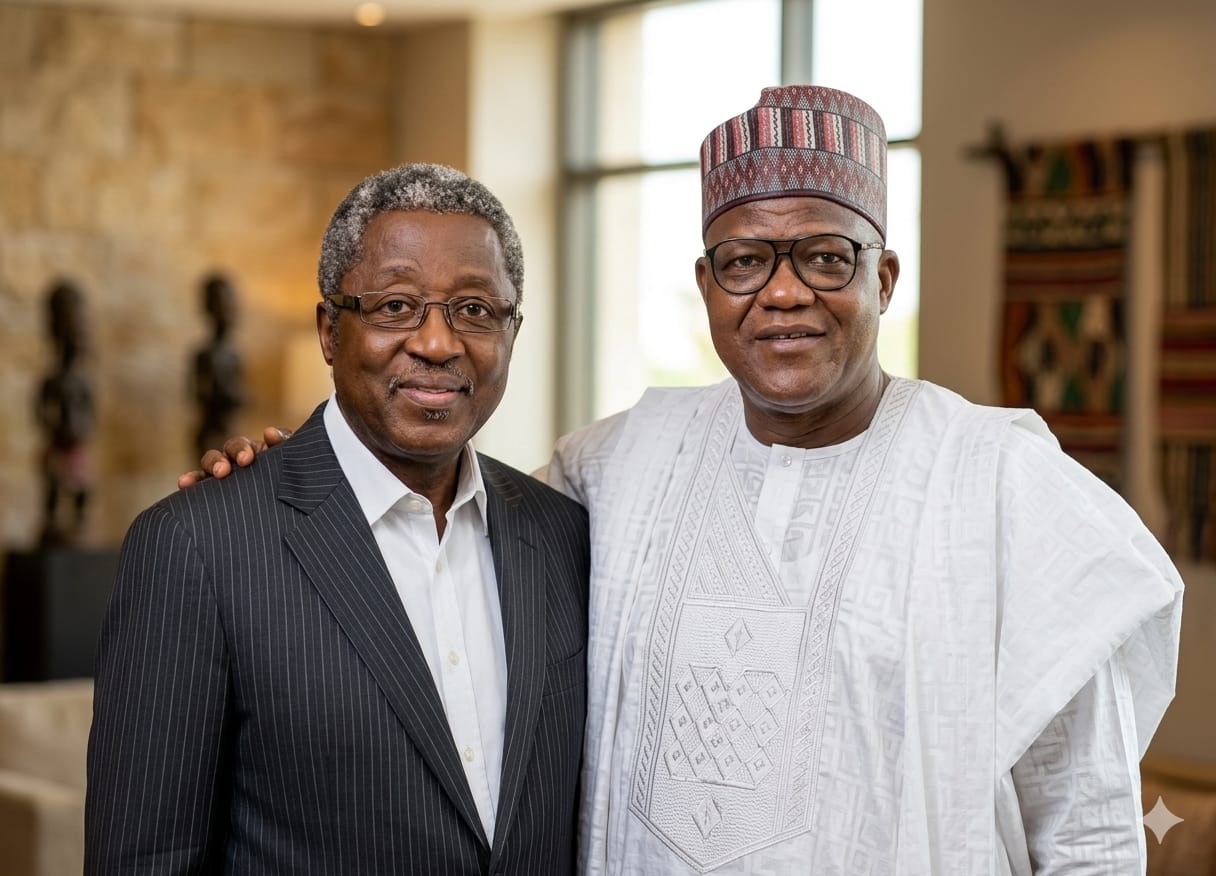
Former Speaker of the House of Representatives and Chairman, Board of Trustees of the National Credit Guarantee Company Limited (NCGC), Rt. Hon. Yakubu Dogara, has joined Nigerians in celebrating Former Governor Jonah Jang, fondly called Baba Jang, as he clocks 82 years.
In a glowing tribute, Dogara described Baba Jang as a visionary leader whose life and service remain a beacon of hope for generations. He noted that Jang’s tenure as Governor of Plateau State was marked by courage, foresight, and an unwavering commitment to peace, unity, and development.
“Baba Jang’s life is a testimony of service and sacrifice. He invested in infrastructure, strengthened institutions, and worked tirelessly to foster unity in Plateau State. His leadership was never about personal gain but about building lasting foundations for progress,” Dogara said.
He further emphasized that Jang’s integrity, resilience, and mentorship have shaped leaders across Nigeria, adding that his legacy continues to inspire beyond the boundaries of Plateau State.
“As he celebrates 82 years, we honor him not just for the offices he has held, but for the enduring impact he has made on countless lives. Baba Jang remains a statesman, a father figure, and a model of quality leadership,” Dogara added.
The tribute underscores Baba Jang’s enduring influence in Nigerian politics and governance, highlighting his role as a leader whose footprints on the sands of time cannot be erased.

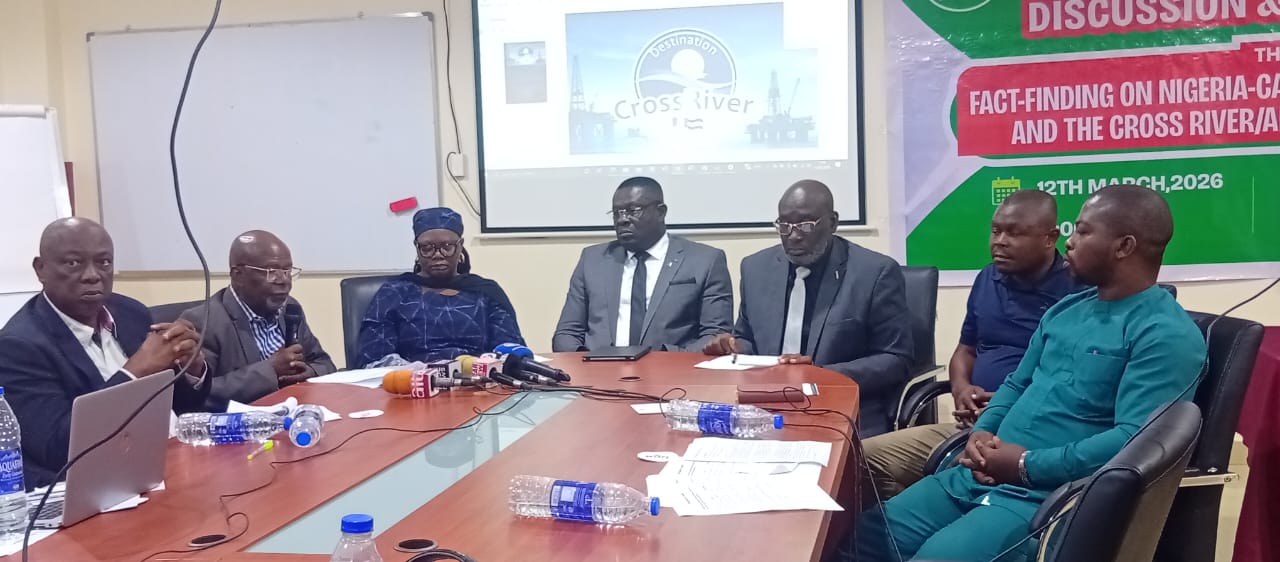
A coalition of Civil Society Organizations (CSOs), maritime experts and policy advocates has raised serious concerns over Nigeria’s maritime boundary management and the allocation of offshore oil wells, calling for urgent intervention by the Federal Government.
The concerns were presented on Thursday in Abuja during a civil society roundtable where the coalition leader, Dr. Gabriel Nwambu, addressed stakeholders and unveiled the communiqué issued after a recent verification mission to Nigeria’s offshore maritime corridor bordering Cameroon and Equatorial Guinea.
The communiqué followed a technical fact-finding and verification exercise conducted at sea on February 28, 2026, focusing on Nigeria’s offshore hydrocarbon blocks OML 114, OML 115 and OML 123 as well as the maritime boundary areas involving Nigeria, Cameroon and Equatorial Guinea.
Dr. Nwambu explained that the mission involved maritime governance stakeholders, mapping professionals and public policy experts who undertook physical observation of the maritime corridor, technical mapping verification and consultations with relevant authorities.
According to the coalition, the mission sought to independently verify the status of Nigeria’s maritime boundaries, offshore hydrocarbon entitlements and the implications of administrative and regulatory decisions affecting the Cross River maritime corridor.
ICJ Judgment Clarified
Presenting the findings, the coalition noted that the 2002 judgment of the International Court of Justice (ICJ) between Nigeria and Cameroon ceded only specific settlements in the southern Bakassi Peninsula — Atabong, Akwabana and Archibong Town — to Cameroon.
The coalition stressed that several areas often assumed to have been ceded were not included in the ruling.
“The Cross River Estuary and the western Bakassi peninsular islands of Dayspring I and II, Abana and Kwa Island were not ceded under the ICJ judgment,” the communiqué stated.
The group further emphasized that Nigeria still maintains maritime boundary continuity between the Cross River Estuary and the Akwayefe River Estuary based on the ICJ cartographic evidence and the physical geography of the region.
Dr. Nwambu also clarified that the Cross River Estuary remains Nigeria’s natural maritime gateway to the Atlantic Ocean and provides Cross River State with direct offshore access.
Questions Over Boundary Management
A major concern raised by the coalition relates to the actions of the National Boundary Commission (NBC) in implementing the Offshore/Onshore Dichotomy Abrogation Act using what it described as a temporary implementation map.
According to the communiqué, the baseline drawn from Tom Shot into the Cross River Estuary effectively closed the estuary’s mouth to the sea, thereby rendering Cross River State non-littoral.
The coalition warned that this development raises serious constitutional, economic and national security concerns.
It further criticized the NBC for failing to demarcate the Nigeria–Cameroon maritime boundary more than two decades after the ICJ ruling, stating that continued reliance on the temporary map could jeopardize Nigeria’s territorial integrity.
The report also alleged that the situation has effectively resulted in the ceding of about 780 hectares of maritime waters within the Cross River Estuary toward the Akwayefe River Estuary to Cameroon.
Oil Wells and Revenue Concerns
Beyond boundary issues, the civil society coalition raised alarm over oil revenue allocation and the management of transboundary oil fields.
According to the findings, the failure of relevant institutions to brief the President on key inter-agency reports could prevent Nigeria from exploiting 49 identified transboundary oil wells located within OML 114 in the Cross River Estuary.
The coalition also raised concerns over alleged financial irregularities relating to the Ekanga and Zafiro transboundary oil fields jointly developed by Nigeria and Equatorial Guinea.
It alleged that more than ₦33 billion may have been approved from the Federation Account in favour of Akwa Ibom State without clear presidential authorization.
The group further questioned whether revenues from the Ekanga and Zafiro fields — estimated at over $8 billion — had been properly remitted into the Federation Account.
Call for Presidential Intervention
To address the concerns, the coalition recommended several urgent measures, including a presidential review of the 2024 and 2025 inter-agency oil verification reports affecting Cross River and Akwa Ibom states.
It also called for the proper demarcation of the Nigeria–Cameroon maritime boundary in line with the ICJ judgment and the establishment of a Presidential Special Investigation Panel to probe the alleged loss of Nigerian maritime waters.
Other recommendations include a forensic audit of revenues from the Ekanga and Zafiro oil fields, investigation into the alleged ₦33 billion payment approvals, and diplomatic engagement with Cameroon to develop transboundary reservoir agreements.
The coalition also urged the Federal Government to restore and recognize Cross River State’s littoral status based on the geographic and legal status of the Cross River Estuary.
National Security Implications
In its concluding remarks, the coalition warned that the issues uncovered during the verification mission have far-reaching implications for Nigeria’s territorial integrity, maritime sovereignty, national security and oil revenue accountability.
Dr. Nwambu called on the President to treat the matter with urgency, stressing that transparent management of maritime boundaries and offshore resources remains critical to Nigeria’s economic stability and geopolitical standing.
The communiqué was jointly signed by representatives of the coalition of civil society organizations, maritime policy experts, technical observers and economic governance accountability groups.
News
Nigerian Youth Storm National Assembly Demands Access to Present Dishonourable Award to Senator

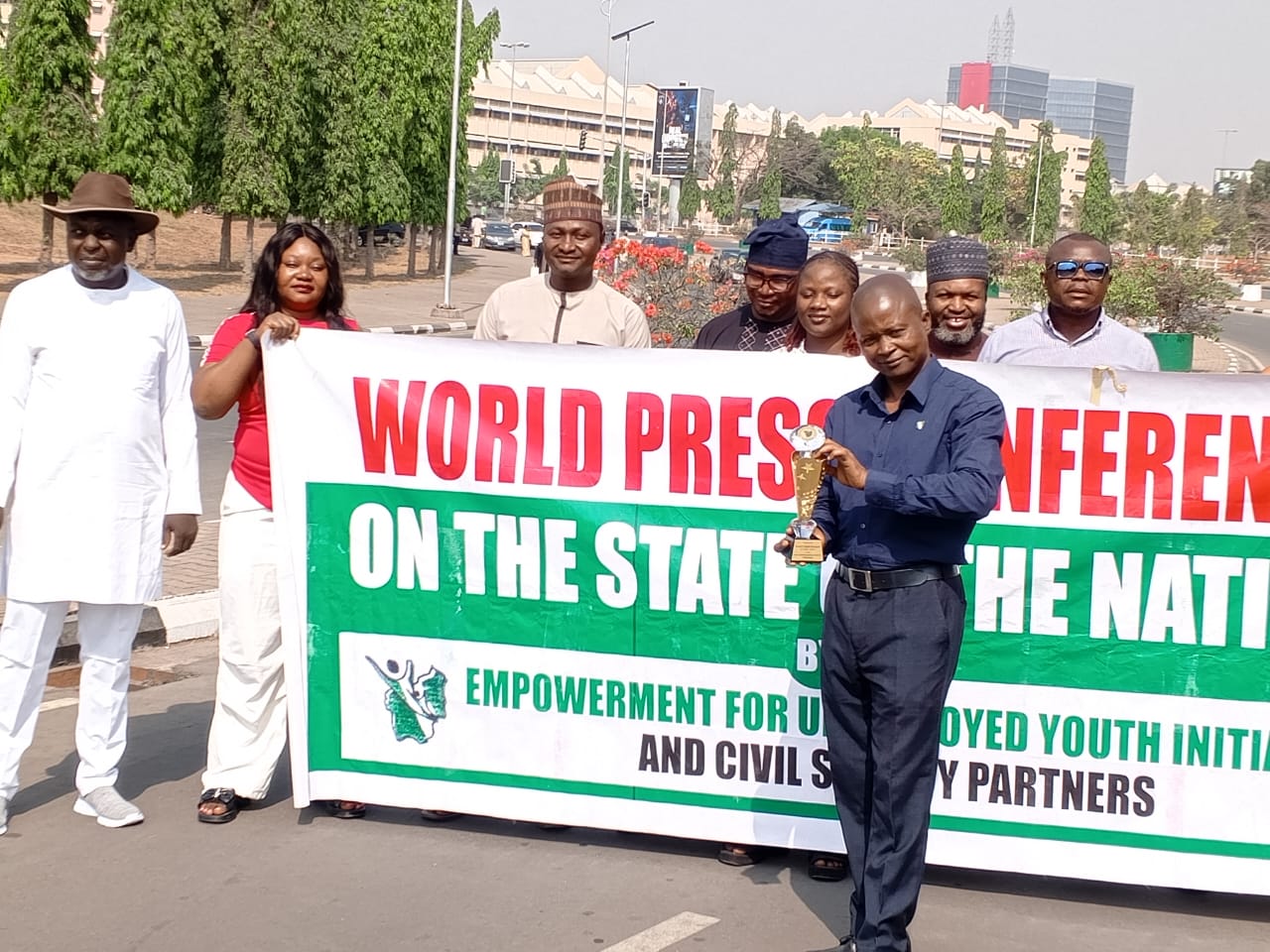
Nigerian Youth under the leadership of Empowerment for Unemployed Youth Initiative (EUYI) on Tuesday stormed the National Assembly to present Senator Olajide Ipinsagba with the Most Dishonourable Senator of the year award.
EUYI previously threatened to present the Senator with the award, citing a plethora infractions and unwholesome dealings especially with his legislative aids and associates.
The group urged the Senate President to grant them access to the hallowed chambers to make the presentation as wake up call to other public servants.
Addressing the press at the National Assembly complex, Comrade Danesi Momoh Prince disclosed that they had gathered as early as 7 am at the National Assembly gate only to discover that the Senate is not sitting and that the embattled Senator was absent despite prior information.
“We’re angry that Senator Olajide Ipinsagba has refused to show up and collect his award for his dishonourable conduct especially as it pertains the exploitation and underemployment of Nigeria youth under his office
“How can a Senator be paying his legislative aid 30,000 naira when the national minimum wage is 70,000 Naira? Is he the only one that needs money? Is it not wickedness to treat unemployed Nigerian youth like that?”, he queried.
The group vowed to go ahead and present the award to the Senator in person, be it in the Senate Chambers or his house. We shall however not give the award to anybody but the senator due to the “seriousness of his offense”


Dogara Celebrates Baba Jang at 82, Hails Him as a Visionary Statesman

I’ ll contest for Nasarawa Governor in 2027, says Ombugadu

Oborevwori Hails Traditional Rulers as Pillars of Peace, Development

-
 Uncategorized5 years ago
FG, states urged to harness flooding for ranching, others with technology – Agbaje
-
 Headlines10 years ago
Breaking: EFCC seals Borno House of Assembly, as Hon members take to their heels
-
 News12 years ago
Nigeria Security Operatives Stage Manhunt For Homosexual Perpetrator
-
 News9 years ago
How 21-year-old Girl fled community over accusation of lesbianism
-
 News10 years ago
Yobe Gov Moves Against Deputy
-
 Opinion7 years ago
7 signs she has friend zoned you
-
Technology4 years ago
Online job placement company headhunts women
-
 Headlines10 years ago
Borno Dep Gov Abducts Another Church Leader