
Foreign
China makes pursuing common good for world its mission and undertaking

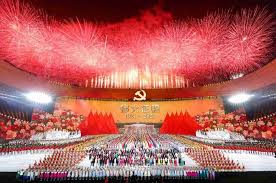
In celebration of the 100th anniversary of the founding of the Communist Party of China (CPC), the country held an art performance titled “The Great Journey” at the National Stadium in Beijing on the evening of June 28, during which a show under the theme of “shared future” was staged, embodying China’s idea of building a community with a shared future for mankind and reflecting the CPC’s sense of responsibility in striving for humankind’s progress.
“Over the last century, the CPC has striven forward against all odds in a relentless pursuit of happiness for the Chinese people, rejuvenation for the Chinese nation, and the common good for the world. As a result, the Chinese nation has achieved a great transformation from standing up to growing rich, and to becoming stronger, and has thus made a notable contribution to human civilization and progress,” said Chinese President Xi Jinping in a keynote speech at the Boao Forum for Asia Annual Conference 2021, who stressed the CPC’s mission and undertaking of pursuing the common good for the world.
As July 1 this year marks the centenary of the CPC, many political party chiefs, government officials, and friendly personages in the world have sent wishes to the Chinese political party. They believe that the CPC is “an important driving force in building a balanced international order and maintaining peaceful coexistence of civilizations”, and that “the vision of a community with a shared future for mankind proposed by Xi has brought hope for building a free, just and beautiful world.”
The CPC has always aspired to make new and greater contributions to humankind. From “China should make a major contribution to mankind” to “The Chinese people not only pursue a good life for themselves, but also work for common interest and harmony of the world,” the CPC has become more determined to pursue the common good for the world and made the connotations of the vision increasingly rich with the development of the party itself and the country.
The CPC, the ruling party of China, has not only made a solemn oath of pursuing the common good for the world, but taken actions to put such an idea into practice.
China has proposed the Five Principles of Peaceful Coexistence, and incorporated adhering to the path of peaceful development into constitutions of the country and the CPC. Making opening-up a fundamental national policy, the country has joined in almost all universal intergovernmental organizations and acceded to over 500 international conventions. It suggests building a new type of international relations and a community with a shared future for mankind, and upholds the universal values of peace, development, fairness, justice, democracy and freedom. The country has joined hands with other countries in the construction of the Belt and Road, while actively participated in the reform and building of the global governance system. China has made major contributions to world peace and development with practical efforts.
On the international stage, the CPC always represents a rational voice and an anchor of stability, said Shahbaz Sharif, president of the Pakistan Muslim League-Nawaz, adding that Xi’s vision of building a community with a shared future for mankind has promoted world peace and development.
The CPC has led the Chinese people onto a path of socialism with Chinese characteristics, and diversified the routes to modernization for developing countries, laying a foundation for pushing world peace and development and building a community with a shared future for mankind.
“We must also see that China’s development will create more opportunities for the world. We will draw on our own practices to explore the law governing the evolution of human society, and share with other countries what we have learned. We do not want to “import” models from other countries, nor do we want to “export” the Chinese model, still less will we ask other countries to copy the Chinese practice,” said Xi while addressing the CPC in Dialogue with World Political Parties High-Level Meeting on December 1, 2017.
The CPC shares with the world its dividends in both economic development and ideas and philosophies, which is of use for all countries, especially developing countries, in exploring a development path that best suits their national conditions.
The path of socialism with Chinese characteristics provides a new route to modernization for developing countries, and this institutional innovation is a contribution to the diversity of human civilization, according to Victoria V. Panova, managing director of the National Committee of BRICS Research of Russia.
The CPC’s great struggle together with the Chinese people in the past century has shone through the annals of history, and its great contributions to the peace and development of mankind are obvious to all.
No matter how the international circumstances may change, China will continue to play its part in building world peace, promoting global development, and defending international order, and contribute even more to enhancing the common well-being of human beings and building a community with a shared future for mankind.
By He Yin, People’s Daily

By Liu Junguo, People’s Daily
At a sports equipment store near the Milan-Cortina Winter Olympics venues, shelves are filled with all kinds of winter sports gear. Among the items, a pair of beginner ski poles prominently displays its origin: “Made in China.”
These poles hail from Ninghai county in Ningbo, east China’s Zhejiang province. This region, a powerhouse in outdoor equipment manufacturing, exports over 15 million ski and trekking poles annually to global markets.
Today, Ninghai commands nearly 60 percent of the global trekking pole market, with an annual output value approaching 1 billion yuan (about $145 million). Starting from scratch, the county has spent over two decades cultivating the industry and building technical expertise. It now boasts a complete of Ninghai Better Outdoor Products Co., Ltd. (Better), visitors are greeted by a diverse array of trekking poles. One standout item is a training pole designed for novice alpine skiers. Made from aviation-grade aluminum alloy, the ski pole weighs less than 200 grams, offering both lightness and strength. Its handle, crafted from specialized materials, features an ergonomic design for trekking pole supply chain and is home to numerous well-known manufacturers and exporters.
Stepping into a showroomadded comfort.
“Overseas orders for this specific product for the 2025-2026 snow season alone have exceeded 800,000 units, a 30 percent increase year-on-year,” said Zhu Xuefeng, general manager of the company.
Better exemplifies the success story of Ninghai, but its origins trace back 26 years.
In 2000, Hu Jinxue from Ninghai came across aluminum alloy trekking poles from Germany at an overseas trade fair. He quickly recognized the potential of the outdoor equipment industry.
“At the time, Ninghai had a solid base in aluminum alloy forging, but its products carried low added value. Local enterprises were eager to upgrade, yet lacked a clear direction,” Hu recalled.
After returning to China, he founded his company Xingda, introduced advanced technologies, and began producing trekking poles.
Leveraging strong expertise in metal processing and sustained technological upgrades, Xingda has grown into a leading industry player over the past two decades.
Even in its early stages, Ninghai adopted a forward-looking approach by identifying trekking poles as one of its key industries. A series of targeted measures has since helped turn it into a sector with an annual output approaching 1 billion yuan.
Inside Xingda’s smart factory, robotic arms move with precision, nano-level ironing activates fiber properties, and intelligent winding systems from dense, layered structures. Remarkably, within just 15 seconds, a roll of carbon fiber fabric is transformed into the high-strength shaft of a premium ski pole
As a key raw material for outdoor equipment such as ski poles, carbon shafts have long been expensive and subject to lengthy procurement cycles. Five years ago, Xingda still relied heavily on imports.
At that time, China depended on foreign suppliers for more than 90 percent of its high-end carbon fiber products, leaving independent innovation as the only sustainable path forward. Xingda responded by investing 70 percent of its annual profits into building a carbon shaft production facility and assembling a research team led by PhDs in materials science. After three years of intensive research, the company overcame key technical bottlenecks and achieved self-sufficiency in this critical material.
This breakthrough not only ensured stable supply and reduced costs but also led to a substantial leap in quality: Xingda’s carbon shafts are now 20 percent stronger than those produced by leading international brands..
Innovation is gaining momentum across Ninghai. Local manufacturers have filed more than 90 domestic patents, including utility models and industrial designs.
“This is one of our newly developed ski poles, designed to deliver high performance with environmental sustainability,” said Zhu Zhenkun, general manager of Ningbo Eastdragon Hardware Co., Ltd. (Eastdragon), displaying a sample. The eco-conscious design has proven highly popular in overseas markets.
In recent years, Zhu and his team have expanded internationally, where increasingly stringent carbon certification standards in Europe and the United States pose new challenges. In response, Eastdragon has not only improved product quality but also embedded green principles throughout its manufacturing process.
During production, leftover aluminum is recycled and reused, while new materials and processes are continuously explored. “After extensive testing of different handle materials, our research and development (R&D) team selected a biodegradable seaweed-based material,” Zhu said. “Handles made from this material offer a more comfortable grip and help reduce water use and carbon emissions.”
From a single product to a thriving industry, trekking poles have become a driver of local growth. Today, Ninghai has developed a complete industrial chain covering R&D and design, materials processing, component manufacturing, final assembly, and brand operations. Today, the county hosts 34 leading enterprises and innovative small and medium-sized businesses within this specialized sector, solidifying its position as the world’s foremost center for trekking pole production.
By Zhong Sheng, People’s Daily
China’s Ministry of Commerce has announced the placement of 20 Japanese entities involved in enhancing military capabilities on its export control list. A further 20 Japanese entities, where the end-users and end-uses of dual-use items cannot be verified, have been added to a watch list.
These actions are taken to safeguard China’s national security and interests, fulfilling international non-proliferation obligations, and prevent Japan’s pursuit of remilitarization and nuclear armament.
The measures are fully justified, reasonable, and lawful, demonstrating China’s commitment to the rule of law and its responsibilities as a major country.
This follows China’s January 6th announcement of strengthened export controls on dual-use items to Japan. The latest move explicitly names specific companies, translates earlier restrictions into targeted, enforceable, entity-based controls designed to effectively safeguard national security and regional peace and stability.
According to international legal instruments such as the Cairo Declaration, the Potsdam Proclamation, and the Japanese Instrument of Surrender, Japan is required to be fully disarmed and must not maintain industries that would enable its rearmament.
However, a number of Japanese companies, including Mitsubishi Heavy Industries, IHI Corporation, and Kawasaki Heavy Industries, have long been active in the defense sector, producing equipment such as naval vessels, fighter aircraft, and missiles.
For instance, multiple subsidiaries of Mitsubishi Heavy Industries have participated in the development of Japan’s hypersonic weapon system, the Hyper-Velocity Gliding Projectile for remote island defense. Vessels built by Mitsubishi Shipbuilding have not only supported Japan’s maritime activities related to the Diaoyu Islands, but have also been supplied to the Philippine Coast Guard for use in the South China Sea, posing risks to regional peace and stability.
China’s measures represent a targeted response to curb Japan’s development of offensive military capabilities and to uphold international law and the post-war international order.
Japan’s push toward remilitarization is following a clear trajectory, with a new military-industrial complex rapidly taking shape.
In recent years, Japan has accelerated its military buildup, with defense spending rising for 14 consecutive years from fiscal 2012 through fiscal 2026, and effectively doubling within three years since 2022.
State-driven support has enabled Japanese defense contractors to reap substantial profits, even fueling what some describe as a “defense bubble” in capital markets. Data show that since November 2022, the stock price of Mitsubishi Heavy Industries has surged by more than 650 percent, IHI Corporation by over 480 percent, and Kawasaki Heavy Industries by more than 280 percent. In stark contrast, Japan’s manufacturing sector has recorded an average annual growth rate of less than 1 percent over the same period.
Since Sanae Takaichi assumed power, Japan’s remilitarization process has noticeably accelerated. War preparedness has been elevated to an overriding national priority, with further support extended to defense-related interest groups.
Reports indicate that the Japanese government plans to address defense funding gaps through large-scale bond issuance and a special income tax, while also preparing to establish a “national intelligence agency” this year.
In a recent policy speech in the House of Representatives, Takaichi asserted that Japan must fundamentally strengthen its defense capabilities and pledged to clearly communicate defense procurement needs to industry. These steps are likely to further bind Japan’s defense spending to specific industrial and corporate interests, creating a self-reinforcing cycle.
At the same time, right-wing forces in Japan have shown a growing ambition to pursue nuclear capabilities. In recent months, some Japanese politicians have openly advocated for nuclear armament and sought to revise the long-standing “Three Non-Nuclear Principles.”
It is widely recognized as a “nuclear-threshold state,” having long produced and stockpiled plutonium far exceeding civilian needs. By the end of 2024, Japan possessed as much as 44.4 tons of separated plutonium.
With a complete nuclear fuel cycle and advanced nuclear industry capabilities, Japan is technically capable of producing weapons-grade plutonium. Should right-wing political forces push Japan across the nuclear threshold, it would represent a severel breach of the global nuclear non-proliferation regime.
A recent commentary by Singapore’s Lianhe Zaobao noted that nuclear non-proliferation remains central to international politics, and that Japan’s pursuit of nuclear weapons runs counter to the interests of Southeast Asia, where reducing arms races and minimizing the risk of conflict are essential to regional stability.
Japan’s remilitarization and nuclear ambitions pose a serious threat to regional peace and stability. The lessons of history make clear that appeasement of militarism amounts to a betrayal of peace. Countering the rise of right-wing forces in Japan requires concrete actions.
China’s law-based control measures aimed to prevent dual-use items from feeding into Japan’s military expansion and firmly curb any resurgence of militarism. China will work together with all peace-loving countries to uphold the post-war international order and jointly maintain regional security and stability.
Japan’s right-wing forces should recognize that a return to militarism leads only to self-destruction. Any reckless attempt to challenge international justice and the global order is bound to meet firm resistance from the forces of justice around the world.
(Zhong Sheng is a pen name often used by People’s Daily to express its views on foreign policy and international affairs.)
By Zhang Tianpei, People’s Daily
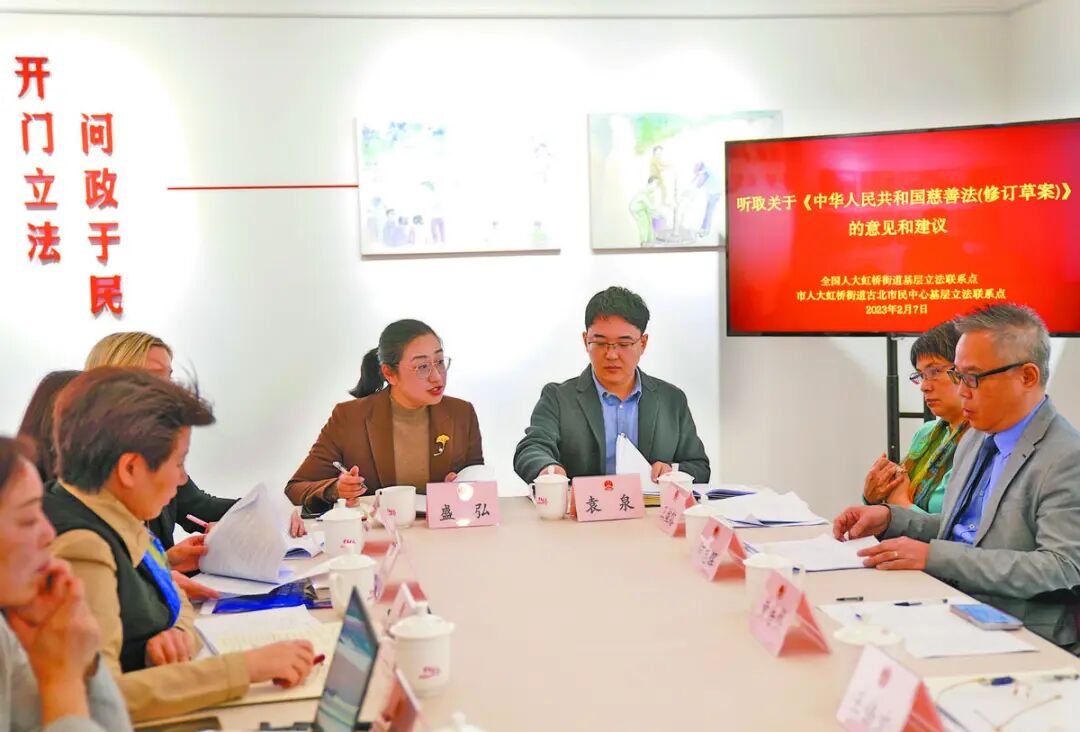
Shanghai recently hosted a legislative consultation meeting on the draft law on promoting ethnic unity and progress at the Gubei civic center in Changning district’s Hongqiao subdistrict.
The meeting fostered an engaged discussion, with attendees — including deputies to the National People’s Congress (NPC), academics, legal professionals, and members of non- Communist Party of China political parties — offering a wealth of valuable insights.
For Sheng Hong, an NPC deputy and Party branch secretary in the local Ronghua No. 4 Residents’ Community, this marked her 11th such consultation meeting within a year.
“Over the past year,” Sheng noted, “the scope of these legislative consultations have covered critical areas like ecological and environmental protection, urban governance, and public well-being. Participants contribute diverse perspectives and specific revision suggestions based on their professional expertise. This process effectively integrates grassroots voices and professional insights, ensuring draft laws are more grounded in reality.”
Sheng reflected on the evolution of public participation. Initially, residents visited grassroots legislative outreach offices primarily to understand how laws are made. Gradually, she observed, they evolved from passive recipients of legislative information into active advocates for legal awareness. Today, a robust network for gathering public opinion has taken shape, with participation expanding significantly.
A notable moment came in July 2025, Sheng recalled, when the State Council issued guidelines on gradually implementing free preschool education. Residents who had previously contributed to consultations on the draft preschool education law felt a profound sense of accomplishment. “They recognized that ideas debated at our grassroots offices were being reflected in national policy,” Sheng explained.
She emphasized the shifting public expectations: “The focus is no longer just on whether laws exist, but on their effectiveness, practicality, and ability to solve real-world problems.” During the legislative process of the preschool education law, factors such as demographic changes in school-age populations and household financial capacity were fully considered.
The resulting legislation aims to encourage increased government investment to reduce family burdens while simultaneously strengthening kindergarten teaching staff and improving facilities. “Beyond ensuring access,” Sheng stated, “the law actively addresses the public’s demand for high-quality early education, enhancing its relevance and timeliness.”
Promoting “public well-being” with “public voices,” a steady stream of practical, experience-based legislative suggestions is being conveyed from grassroots legislative outreach offices to the Great Hall of the People for legal adoption.
To date, the Legislative Affairs Commission of the NPC Standing Committee has set up 60 local legislative outreach offices nationwide. Additionally, provincial and city-level legislatures operate a network of over 7,800 such offices. In 2025 alone, opinions and suggestions were solicited from these offices on 26 draft laws, yielding more than 34,000 submissions, many of which have been adopted in legislation.
“Matters of the people should be discussed by the people themselves,” Sheng said. “As an NPC deputy from the primary level, I will continue to stay close to the people, listen to their voices, pool their wisdom, and bring more of their views to the Great Hall of the People, contributing to the practice of whole-process people’s democracy at the grassroots level and to improving the quality of legislation.”


Dogara Celebrates Baba Jang at 82, Hails Him as a Visionary Statesman

I’ ll contest for Nasarawa Governor in 2027, says Ombugadu

Oborevwori Hails Traditional Rulers as Pillars of Peace, Development

-
 Uncategorized5 years ago
FG, states urged to harness flooding for ranching, others with technology – Agbaje
-
 Headlines10 years ago
Breaking: EFCC seals Borno House of Assembly, as Hon members take to their heels
-
 News12 years ago
Nigeria Security Operatives Stage Manhunt For Homosexual Perpetrator
-
 News9 years ago
How 21-year-old Girl fled community over accusation of lesbianism
-
 News10 years ago
Yobe Gov Moves Against Deputy
-
 Opinion7 years ago
7 signs she has friend zoned you
-
Technology4 years ago
Online job placement company headhunts women
-
 Headlines10 years ago
Borno Dep Gov Abducts Another Church Leader