
Foreign
China releases first generative AI language model for meteorological services

By Li Hongmei, People’s Daily
China Meteorological Administration (CMA) has unveiled Fenghe, the nation’s first generative artificial intelligence language model dedicated to meteorological services. This innovative system enables users to input queries and receive responses and analytical reports covering diverse weather-related needs — from wind conditions and clothing recommendations to specialized suggestions for activities like snow viewing.
Fenghe is supported by a high-quality meteorological service corpus comprising 50 million linguistic units, along with 490,000 real-world meteorological Q&A scenarios. It is equipped with data interface tools and personalized applications spanning eight major categories and more than 60 specialized meteorological services.
The system operates through a dual architecture: the Fenghe base model performs intelligent task scheduling, while the meteorological service agent platform provides developers with tool invocation, data access, and agent development support. This integrated approach enables intelligent meteorological services for sectors such as energy and power, transportation, and tourism.
During the 15th National Games of China, Fenghe was integrated into a WeChat mini program of the Guangzhou meteorological department, providing tailored weather services for the major sports event. The system has been deployed and applied by meteorological departments in multiple regions.
Today, artificial intelligence is steadily reshaping people’s work and life. People are no longer satisfied with simply checking weather forecasts; instead, they expect more personalized and customized intelligent services.
In 2024, the CMA Public Meteorological Service Center and Xiong’an Meteorological Artificial Intelligence Innovation Research Institute, in collaboration with the Department of Computer Science and Technology at Tsinghua University, formed a research and development team to independently develop a generative AI language model for meteorological services.
According to the team, in order to achieve precise, professional, and in-depth understanding of users’ needs for meteorological services, they made breakthroughs in four key technologies: corpus construction; knowledge enhancement training and scenario-specific fine-tuning; deep reasoning; and multi-agent collaboration.
Corpus construction technology converts the CMA’s vast trove of high-quality meteorological data into dedicated formats and datasets that are “fed” into the Fenghe model for learning, thereby enhancing its professional competence.
Knowledge enhancement training and scenario fine-tuning strengthens the model’s fundamental meteorological capabilities and operational decision-making abilities, enabling it to better understand user needs and improve autonomous planning and execution for complex meteorological service tasks.
Deep reasoning enhances the model’s reasoning capacity, allowing it to follow logical inference and make decisions much like a meteorological expert. For diverse scenarios such as tourism, transportation, and energy, the team has developed various meteorological service agents. Through multi-agent collaboration, complex tasks are automatically decomposed and planned, with complementary capabilities among agents, enabling them to work in coordination and rapidly generate professional reports.
“Tackling key technologies was never easy. Challenges once stood in the way of our improvement, but we never gave up–We tried over and over, making changes each time, and every step brought something new.” said Wang Muhua, senior engineer at the CMA Public Meteorological Service Center.
Today, the application of AI in the meteorological field is becoming increasingly widespread. New applications and scenarios continue to emerge, giving rise to a growing number of AI models that continuously empower the development of the meteorological sector.
Before Fenghe, the CMA had already introduced AI models such as Fenglei, Fengqing, Fengshun, and Fengyu. While distinct from Fenghe, these models are all applied within meteorological forecasting. Fenglei focuses on nowcasting for imminent thunderstorms and heavy rainfall; Fengqing is a global short- to medium-range forecasting system; Fengshun provides global subseasonal-to-seasonal predictions; and Fengyu is a chain-based space weather forecasting model. The integration of AI, combined with established forecasting technologies and forecasters’ extensive experience, has made weather forecasts more accurate.
In addition, many AI models have emerged in areas such as extreme precipitation prediction, severe convective weather warnings, meteorological data assimilation and analysis, meteorological observation and data processing, as well as meteorological services and decision support.
These advances have strongly promoted the digitalization, informatization, and intelligent upgrading of meteorological operations, providing important support for people’s work and life.
By Wei Kai
A recent report jointly released by the Massachusetts Institute of Technology and the open-source platform Hugging Face showed that Chinese-developed open-source large language models account for 17.1 percent of global downloads over the past year. This marks the first time China’s share has surpassed that of the United States for the first time, reflecting a strategic advancement in the overall strength of China’s AI industry.
According to the latest estimates by the China Academy of Information and Communications Technology, China’s AI industry reached a scale exceeded 900 billion yuan ($128.87 billion) in 2024, representing a year-on-year increase of 24 percent. By September 2025, the number of AI enterprises in China had surpassed 5,300, accounting for 15 percent of the global total.
On this basis, the international impact of China’s AI technology is evolving. It is transitioning from primarily leading through open-source contributions to driving global expansion practical applications. Meanwhile, its product offerings are shifting beyond standalone tool-based apps toward an integrated technological ecosystem that spans algorithms, platforms, and industry-specific solutions.
This transformation is closely linked to the in-depth implementation of China’s “AI Plus” initiative. Driven by both supportive policies and market demand, Chinese AI enterprises have gradually developed the capability to deeply integrate technology with application scenarios through long-term practice.
Early efforts in product globalization efforts, initially focused on internet applications, are now accelerating their expansion into core areas of the real economy. These include urban governance, smart energy, transportation and logistics, and advanced manufacturing. This trend reflects a deepening convergence with worldwide demands for industrial digital transformation.
In the Middle East, Chinese companies are integrating AI and Internet of Things technologies into national strategic projects such as Saudi Arabia’s NEOM and the United Arab Emirates’ Smart Dubai, helping build efficient resource management and urban security systems within challenging desert environments.
In Southeast Asia, industrial vision inspection and predictive maintenance solutions provided by Chinese AI enterprises have been deployed in electronics and auto parts factories in countries like Vietnam and Thailand.
The global expansion of Chinese AI companies has transcended mere product or service exports—they are now propelling the intelligent transformation of local industrial chains through technological empowerment.
The global reach of China’s AI technologies represents not only a broadening of application scenarios but also an effective response to practical challenges in production and daily life.
In regions with dispersed populations or complex terrain, such as southern Europe and Latin America, Chinese industrial drones equipped with AI vision systems have become an important force in forest fire prevention and power line inspection. They have reduced traditional response times from hours to minutes, providing safety guarantee for remote communities.
Across Africa and South Asia, lightweight AI applications enable smallholder farmers to receive crop pests and diseases via mobile devices, providing immediate diagnostic and treatment guidance.
These practices not only create commercial value but also elevate quality of life, enhance social resilience, and advance the global implementation of inclusive technological benefits.
China’s competitive advantages in AI extends beyond technological innovation and application promotion to encompass active participation in global governance frameworks.
In response to governance challenges such as cross-border data flows, algorithm compliance and ethical security, China has consistently upheld principles including people-centered approach, AI for good, fairness, inclusiveness and collaborative governance, and has integrated these concepts into international governance practices.
The resolution on strengthening international cooperation in AI capacity building, proposed by China and adopted by the 78th session of the United Nations General Assembly, reflects recognition of China’s approach by the international community and represents an important milestone in bridging the intelligence divide and promoting inclusive development.
Moving forward, Chinese AI enterprises will engage more deeply in global innovation networks through open collaboration and trustworthy practices. By contributing Chinese insights in areas such as rule-making, risk governance and capacity building, China will work with other countries to advance the building of a peaceful, secure, open, cooperative and orderly cyberspace.
(Wei Kai is the director of the Artificial Intelligence Research Institute of the China Academy of Information and Communications Technology.)
By Yuan Quan, Xu Yuyao, Chungda Drolkar, People’s Daily
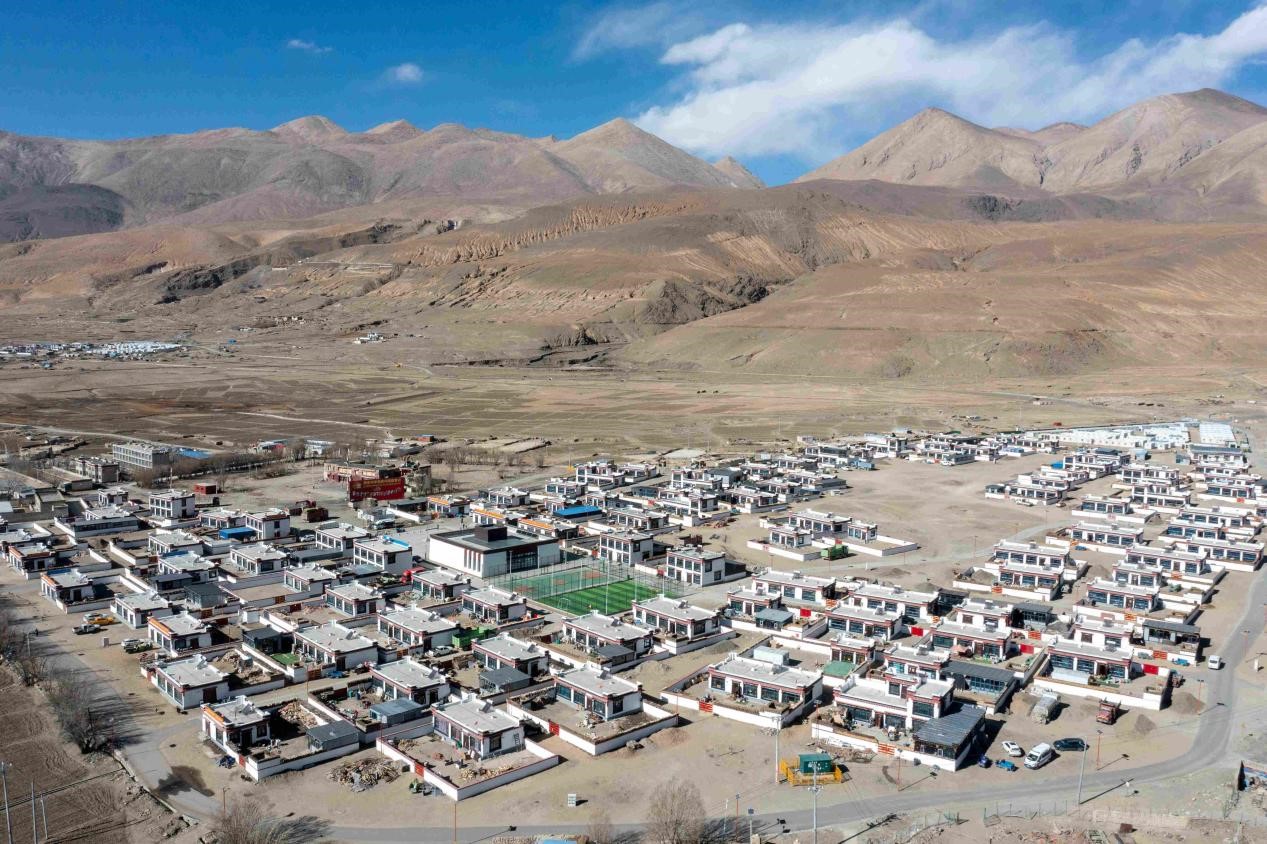
In Chajiang village, Chamco township, Dingri county Shigatse, southwest China’s Xizang autonomous region, 14-year-old Sonam Dorje now lives in a newly constructed traditional two-toned dwelling. a newly built red-and-white Tibetan-style house is home to Sonam Dorje. Despite sub-zero temperatures outside dipping to minus 20 degrees Celsius, warmth fills the home, accompanied by the comforting aroma of freshly brewed butter tea.
Sonam Dorje, who suffered leg fractures when trapped beneath rubble during the devastating Dingri earthquake a year ago, now moves freely around his new house. The memory of being rescued remains vivid. “I want to become a firefighter to help others when I grow up,” he declared.
Following the magnitude 6.8 earthquake that struck Dingri on Jan. 7, 2025, Xizang has undertaken a massive reconstruction effort. Over the past year, more than 22,000 homes have been rebuilt, covering an area of 3.1 million square meters, while another 10,500 homes have undergone repair and structural reinforcement.
Newly paved roads connect clusters of rebuilt homes, children play on football fields, and villages like Zingkar in Chamco now boast complete supporting facilities.
“It was friends from Shanghai who helped us build our new homes,” said villager Norbu. During the reconstruction, he forged deep friendships with construction workers, lending a hand on site and even volunteering as an interpreter between the construction teams and local residents.
Zingkar was among the hardest hit in the Dingri earthquake, and its reconstruction was assisted by Shanghai. “Our focus extended beyond seismic safety,” said Zhuang Yinong, engineering director of the general contracting department of Shanghai Construction Group. “We aimed to create a green, livable, modern village.”
The rebuilding effort exemplified nationwide solidarity. Central government departments like the National Development and Reform Commission and the Ministry of Housing and Urban-Rural Development provided guidance and support. Over 1,000 professionals from institutions including Tongji University contributed to design. Nationally, 134 enterprises, more than 2,600 management staff, and over 61,000 workers labored around the clock, completing tasks across 1,032 sites in 47 townships.
Reconstruction proceeded hand-in-hand with restoring livelihoods and revitalizing industry.
In Tongra village, Dinggye county, Shigatse, a cooperative feed plant hums with activity during winter, processing and baling forage. Confident invested as shareholders. By the end of 2025, the cooperative achieved sales exceeding 650,000 yuan ($93,073), boosting incomes for dozens of households.
Shigatse has prioritized upgrading animal feed production in affected counties, strengthening local capacity for self-sustained development as industries thrive and livelihoods stabilize.
At the same time, Shigatse has vigorously promoted work-relief programs, employment assistance, and skills training. Residents in disaster-hit areas were widely mobilized to take part in debris removal, repairs, and reinforcement work. This has benefited 110,500 people and generated a total income of 1.16 billion yuan, significantly enhancing the sense of fulfillment among affected communities.
“We have always treated post-disaster reconstruction as a major political task and a critical project to improve people’s livelihoods,” said Wang Junzheng, secretary of the Communist Party of China Xizang Autonomous Regional Committee. “We achieved the goal of rebuilding and moving residents into new homes within the same year.”
By Li Xinping, People’s Daily
For many passengers, reliable internet connectivity has become an essential expectation of modern travel. However, maintaining stable mobile signals remains technically challenging on high-speed railways traversing mountainous terrain with extensive tunnel networks.
This makes passenger Wang Ying’s experience particularly noteworthy. While traveling on the Xi’an-Yan’an High-Speed Railway in northwest China’s Shaanxi province, she enjoyed uninterrupted high-definition videos streaming, video calls, and document transfers throughout her journey..Remarkably, despite over 55% of this railway crossing the Loess Plateau through tunnels, “the signal inside tunnels was even stronger than outside,” she observed.
The secret lies in integrated infrastructure development. During construction of the Xi’an-Yan’an High-Speed Railway, a 5G public network was simultaneously deployed,, achieving full coverage along the entire line. The exceptional tunnel connectivity results from embedding the necessary infrastructure directly into their walls.
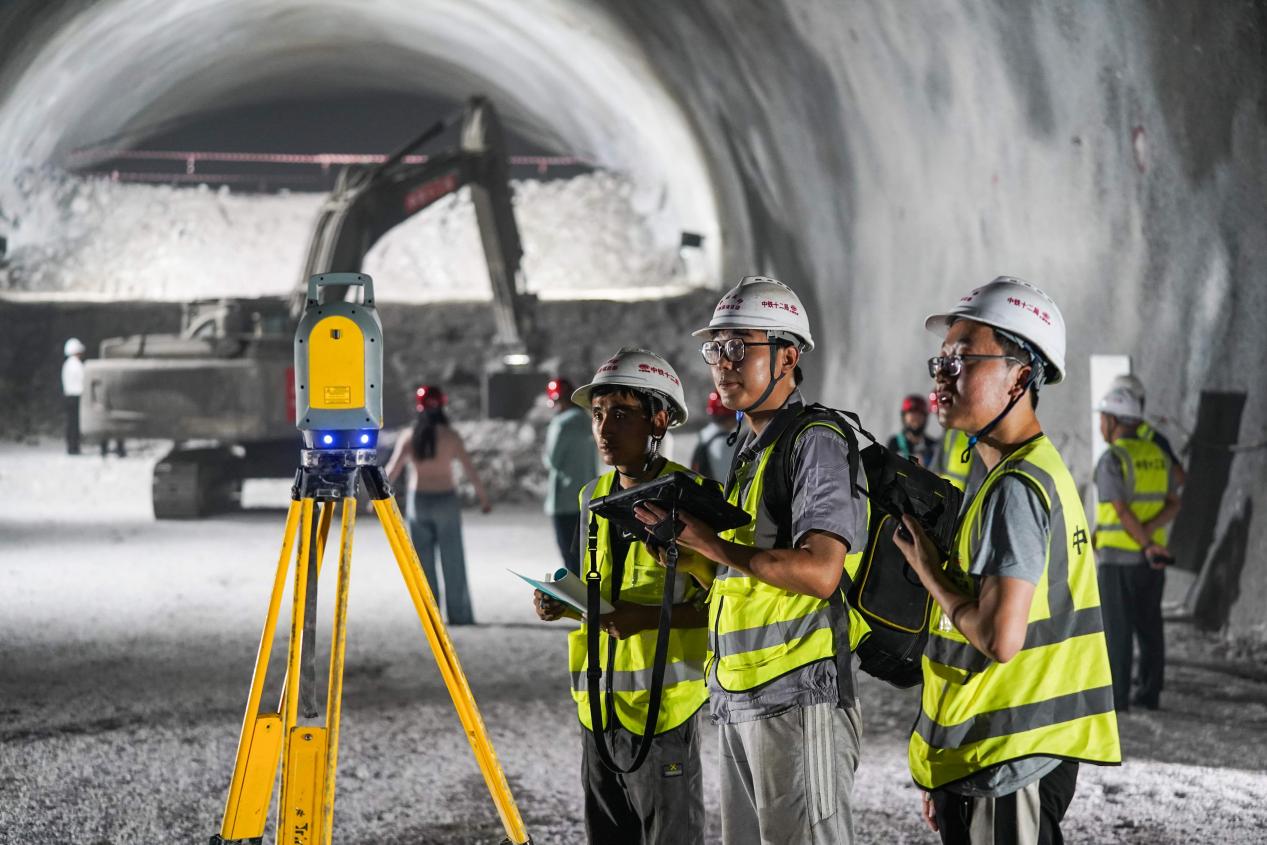
Take the New Yan’an Tunnel along the railway as an example. This 16-kilometer tunnel features more than 80 recessed chambers along both sides, with two cable troughs pre-installed for power supply and communication signaling. Of these chambers, 16 are used to house base stations, providing roughly one base station per kilometer throughout the tunnel.
Beyond base station density, uninterrupted signal transmission relies significantly on leaky coaxial cables (radiating cables).
These cables are designed with periodic slots in their outer conductor. As electromagnetic waves travel along the cables, signals are uniformly radiated through the slots into the tunnel space. The effect is similar to deploying a continuous series of wireless routers inside the tunnel, creating a stable, controllable “signal corridor.”
“All tunnels along the Xi’an-Yan’an High-Speed Railway are equipped with three leaky coaxial cables mounted on the tunnel walls, aligned with the roof of the trains and the upper and lower edges of the carriage windows,” explained Wang Fei, director of the high-speed railway office of the Xi’an communications section under China Railway Xi’an Bureau Group.
“The cables aligned with the window edges are dedicated to the 5G public network. This height configuration ensures comprehensive signal coverage throughout the passenger cabin,” Wang added.
Installing these cables presented significant engineering challenges.High-speed trains generate intense aerodynamic forces in tunnels, creating substantial wind pressure that tests cable mounting durability.
The design team leveraged wind tunnel data from Central South University’s National Engineering Laboratory for High-Speed Railway Construction Technology. Their simulations calculated transient aerodynamic loads on cable clamps, revealing that in standard 52m² tunnels, each clamp endures approximately 17 newtons of force. As Wang noted: “For a sub-100-gram clamp, this equals dozens of times its own weight — with over 100 daily occurrences.”
Conventional expansion bolts could not meet the installation and fixation requirements. After a nationwide search, the design team ultimately selected a new type of fastening product.
With a tensile bearing capacity of 15 kilonewtons — nearly 900 times the calculated aerodynamic load — the new fastening product offers ample safety margins. It had also successfully passed 2 million cycles of ultra-high-cycle fatigue testing, equivalent to withstanding decades of vibration impacts caused by high-speed train operations.
High-performance materials alone are not enough; precision construction is equally critical. The Xi’an communications section of China Railway Xi’an Group worked with design and construction partners to build a full-scale, 1:1 simulation communication equipment room.
This facility faithfully replicates the communication equipment configuration of a typical section of the Xi’an-Yan’an High-Speed Railway. Here, technicians conducted system testing and process verification under a range of extreme operating conditions.
Eventually, the design team developed a refined installation plan: drilling depth and diameter tolerances controlled at the millimeter level; hole cleaning performed with high-pressure air to ensure zero dust; adhesive injected using specialized syringes starting from the bottom of the hole to eliminate air bubbles. Every step was executed with surgical precision.
With the toughest challenge — ensuring tunnel signal coverag — successfully addressed, how was signal quality ensured along the rest of the route?
“In open bridge and embankment sections, we adopted conventional base station deployment,” Wang explained. For short tunnels under 200 meters or transition sections between bridges and tunnels, a “continuous leaky cable” strategy was applied. This ensures physical continuity of the radiating cables, preventing handover failures or signal attenuation that could cause call drops or data interruptions.
As a result, the Xi’an–Yan’an High-Speed Railway achieved full 5G signal coverage, enabling passengers to enjoy a smooth and uninterrupted online experience throughout their journey. The full-scale simulation communication facility has also delivered substantial results, generating more than 190 construction standards that have since been extended to multiple other high-speed railway projects currently under development.


Indigenous Contractors Salute Minister of State’s Swift Intervention On Oustanding Debts

From open source to global solutions: China’s expanding AI footprint
China releases first generative AI language model for meteorological services

-
 Uncategorized5 years ago
FG, states urged to harness flooding for ranching, others with technology – Agbaje
-
 Headlines10 years ago
Breaking: EFCC seals Borno House of Assembly, as Hon members take to their heels
-
 News12 years ago
Nigeria Security Operatives Stage Manhunt For Homosexual Perpetrator
-
 News9 years ago
How 21-year-old Girl fled community over accusation of lesbianism
-
 News10 years ago
Yobe Gov Moves Against Deputy
-
 Opinion7 years ago
7 signs she has friend zoned you
-
Technology4 years ago
Online job placement company headhunts women
-
 Headlines10 years ago
Borno Dep Gov Abducts Another Church Leader