
News
EXCLUSSIVE: NIGERIA/ NIGER IN NEW DIPLOMATIC ROMANCE.Security expert Zagazola Makama exclusively reports that Nigeria and Niger Republic have Renewed their Brotherhood Through Diplomacy and Shared Security Goals.He reports that in an era of shifting alliances and rising security concerns across the Sahel, the official visit of Nigeria’s Minister of Foreign Affairs, Ambassador Yusuf Maitama Tuggar, to Niamey, Niger Republic, was not just a diplomatic mission it was a reaffirmation of shared history, geography, and destiny.


The meeting, held on April 16, 2025, came at the initiative of both nations and offered a fresh opportunity for the two neighbours to recalibrate their longstanding ties in the face of mounting regional challenges.
Tuggar, who led Nigeria’s delegation, was received by his counterpart, Niger’s Minister of Foreign Affairs, Cooperation and Nigeriens Abroad, Mr. Bakary Yaou Sangaré, in what observers have described as a warm and brotherly atmosphere a demonstration to the enduring friendship between the two countries.
From energy to infrastructure, trade to security, the meeting covered a broad spectrum of strategic issues affecting both countries. The ministers held in-depth discussions on revitalising the Nigeria-Niger Joint Commission (NNJC), an important bilateral mechanism that has suffered setbacks in recent years due to political instability in the region.
A renewed push to operationalise regional infrastructure such as the Kano-Katsina-Jibiya-Maradi railway, the Trans-Saharan Gas Pipeline, and the Trans-Saharan Highway dominated the agenda, reflecting both countries’ desire to leverage economic connectivity for mutual prosperity.
Beyond the high-level infrastructure projects, the two leaders also examined people-centered sectors such as education, agriculture, livestock, migration, ICT, tourism, and environmental resilience especially in tackling desertification, a shared concern in both countries.
Security at the Heart of Cooperation
At the heart of the dialogue was a mutual concern about the rising threat of terrorism and cross-border banditry along the Nigeria-Niger border. Both ministers acknowledged the gravity of the situation and called for sustained collaboration between their respective defence ministries.
For the Sahel region, where insecurity has hindered development and displaced millions, such bilateral cooperation is no longer optional it is imperative.
The two sides agreed to create a Joint Consultative Forum, a new mechanism to bring together critical stakeholders from both nations to harmonise responses to security threats and promote regional stability.
What stood out most from the visit was the tone of mutual respect, partnership, and brotherhood that characterised the interactions. The joint communiqué issued at the end of the meeting described the relationship between Nigeria and Niger as one rooted in fraternity, friendship, and good neighbourliness.
This sense of solidarity was palpable as Ambassador Tuggar extended an invitation to his Nigerien counterpart for a reciprocal visit to Nigeria, an invitation that was warmly accepted, with the date to be agreed through diplomatic channels.
A Model for Regional Engagement
The Tuggar-Sangaré engagement sets a positive tone not only for Nigeria-Niger relations but for regional diplomacy across West Africa. At a time when ECOWAS faces questions about its relevance, bilateral initiatives such as this showcase the possibility of bottom-up, country-to-country engagement in solving regional problems.
For Nigeria, the visit aligns with President Bola Tinubu’s broader foreign policy objective of rebuilding trust and deepening integration in the West African sub-region, especially following recent political disruptions. And for Niger, facing economic and security pressures, the support of a powerful and stable neighbour like Nigeria is crucial to national survival and regional relevance.
In a region often marked by division and conflict, the April 16 visit stands as a symbol of what diplomacy can achieve when nations focus on shared values and mutual interests.
As both delegations departed the meeting room in Niamey, it became evident that Nigeria and Niger are not just neighbors they are partners bound by geography, challenges, and the unyielding hope for a more secure and prosperous future.
Zagazola Makama is a Counter Insurgency Expert and Security Analyst in the Lake Chad Region
News
The Most Shocking A/Court ‘Judgment’ in Nigerian History: An unfortunate precedent that should not be allowed to stand

The last is yet to be heard of wide ranging ex-parte orders as this time around, the charade has moved to the Court of Appeal, Lagos Division. In the case of FBN Quest & Another vs. Nestoil & Others, the Court of Appeal’s ex parte orders are not only egregious but a chilling sign of judicial capture, smacking of dirty practices at best and corruption at worst.
On Thursday, 27th November 2025, at exactly 2:00pm, Justice Yargata Nimpar delivered a ‘ruling ’ that appeared like a thief in the night, a ghost and unscheduled, the said decision came upon a Motion Ex-parte which was not heard not argued in open court, yet it surfaced, fully written, signed, stamped, and delivered as though it had lived a full life on the Court of Appeal docket.
For many Nigerians, the judiciary has again weathered the storms. Veterans of the legal system describe this episode as “a daylight heist… a judicial armed robbery without guns.”
The controversies over wide ranging ex-parte applications, it would seem, has found its way to the Court of appeal, an intermediate court with limited original jurisdiction as donated to it by statute.
In this instance, barely two weeks ago, we reported the ex-parte orders against NESTOIL and the other defendants listed in the suit before the Federal High Court which led to the transfer of the suit to another judge.
The said interim orders were vacated by effluxion of time, being that ex-parte orders last for only 14 days.
The court however ordered parties to maintain status quo and adjourned the Motion on Notice for hearing by the consent of the parties. That Motion is still pending before the Federal High Court.
It would seem that in order to frustrate that pending Motion, the Plaintiffs somehow filed a similar application to the Court of Appeal which was granted an order ex-parte directing the Lower Court not to take any further steps, including determining the pending application filed by Plaintiffs (now Appellants).
This magically resurrected, fast-tracked application seem to have been rubber-stamped at the fictional “Appeal Bench of Shadows,” as insiders have begun calling it.
A CASE THAT NEVER EXISTED — YET RECEIVED A JUDGMENT
Our Judiciary correspondent gathered that when the court’s official list for the day was released, nothing seemed amiss. No controversial cases. No unexpected hearings.
But somewhere inside the dusty chambers of bureaucracy, a secret file was already being prepared and by 2pm, a judgment carrying the signatures of an entire appeal panel had surfaced — even though none of them had appeared in open court and when the case itself had never been argued before any High Court, making an appellate ruling legally impossible.
By evening, whispers had turned into rumblings. Court workers who handled the mysterious document reported unusual instructions: No public sitting; No mention on the court list; No access to case filings; No digital record and No audio recording of proceedings. Yet an order was made retrospectively to undo a completed act! which is yet another impossibility in law, because the exparte order cannot restore what has been already executed.
“It was like dealing with a ghost file,” one clerk said. “It appeared from nowhere and disappeared into official archives as though it had always existed.”
This judgment, once delivered, spread like wildfire, with legal scholars calling it “a constitutional impossibility.” Veterans said they had never seen anything similar since the 1970s.
Enquiries from our judiciary correspondents indicate that an application can only be hinged upon a valid Notice of Appeal against a decision of a lower court before any application can be entertained at the Court of Appeal.
Further Investigations by our judiciary correspondent reveals that no such Notice of Appeal has been filed nor served on the respondents; no parties have been invited to Settle Records and no Records of Appeal have been transmitted.
One wonders the platform or upon which grounds the ex-parte order was made, observed one senior lawyer, especially as a similar pending application filed by the Appellants has been adjourned for Hearing by the Federal High Court.
Furthermore, the case at the trial court before Justice Osiagor has not been heard on its merits, which documents was placed before the appellate court and all applications before the judge has not been heard or is the court of appeal now a trial court.
A JUDICIARY AT A CROSSROADS
Public outrage rose quickly. Lawyers described the situation as “a hijacking of justice by shadowy interests.” Civil society groups demanded explanations.
A Judiciary where justice can be manufactured behind closed doors…a legal system where influence not merit, decides outcomes…and an institution tested by the weight of powerful external forces, et cetera should not be allowed to thrive.
AN ERA-DEFINING SCANDAL
This judgement will stand as one of the most dramatic challenges ever faced by Nigeria’s justice system. The shockwaves has rippled far beyond the courtroom — touching politics, business, security agencies, and public trust.
One thing is clear: This is the kind of judicial earthquake that rewrites history, shakes institutions, and forces a nation to confront the truths it fears the most. Our judicial correspondences were able to get an incline of the ex-parte orders made by the Court of Appeal as follows:
- AN ORDER of interim restorative injunction reversing all steps taken by the Respondents and/or persons purporting to act on the instructions of the Respondents and which steps or actions were taken pursuant to the order of the Federal High Court coram Osiagor, J made on the 20th day of November 2025 pending the hearing and determination of the Appellants’ Motion on Notice filed on the 26th day of November 2025.
- AN ORDER of interim injunction restraining the Respondents, their agents, servants, affiliates, and privies from interfering with and interrupting the Receiver/Manager in the performance of his duties pending the hearing and determination of the Appellants’ Motion on Notice filed on 26th November 2025.
- AN ORDER staying further proceedings at the lower court pending the hearing and determination of the Appellants’ Motion on Notice filed on the 26th November 2025.
A SHOCKING DEPARTURE FROM JUDICIAL NORMS
Therefore, the Lagos Court of Appeal’s decision to grant ex parte orders in FBN Quest & Another vs. Nestoil & Others stunned the legal community as ex-parte rulings are meant for rare emergencies and hardly exercised by appellate courts. By acting without hearing both sides, while the matter was already before the Federal High Court, the Court of Appeal has undermined the principle of natural justice and distorted its own role.
NIGERIAN IMAGE AT RISK
At a time when Nigeria is striving to reposition its global reputation, this case sends the wrong message. It portrays the country as one where courts can be hijacked by private interests, where fairness is discarded, and where corruption lurks behind judicial robes. For investors and international partners, it reinforces damaging stereotypes of weak institutions and compromised justice.
AN URGENT CALL FOR INVESTIGATION
These orders are not just irregular — they are evidence of judicial capture. They must be investigated urgently. The Chief Justice of Nigeria, the National Judicial Council, the President of the Court of Appeal and the Nigerian Bar Association cannot remain silent. If appellate courts become arenas for ex-parte adventures, Nigeria’s justice system risks collapse under the weight of manipulation.
CLOSING NOTE
The Court of Appeal’s conduct in FBN Quest & Another vs. Nestoil & Others is more than a misstep, it is a warning sign of judicial capture. If Nigeria is serious about restoring its image and strengthening democracy, this case must be investigated, accountability enforced, and reforms implemented. Anything less would be an abdication of the judiciary’s sacred duty to uphold justice. We must not allow that to happen.
A very Senior lawyer emphasize that the exparte order of the court of appeal lagos division in Nestoil has the possibility of eroding administrative control of Heads of superior Court from assigning or re assigning matters within their respective courts. Furthermore both the President of the Court of Appeal and the Chief Justice of Nigeria may not have the authority to disband a panel and re- constitute another panel over any matter in their respective courts. This decision is a total anarchy to the judiciary and urgent steps must be taken to vacate the strange Court of appeal exparte order.
The conduct of the court of appeal justices is not excusable anywhere in the world and it’s indeed has brought the court of Appeal justices who constituted the panel to ridicule
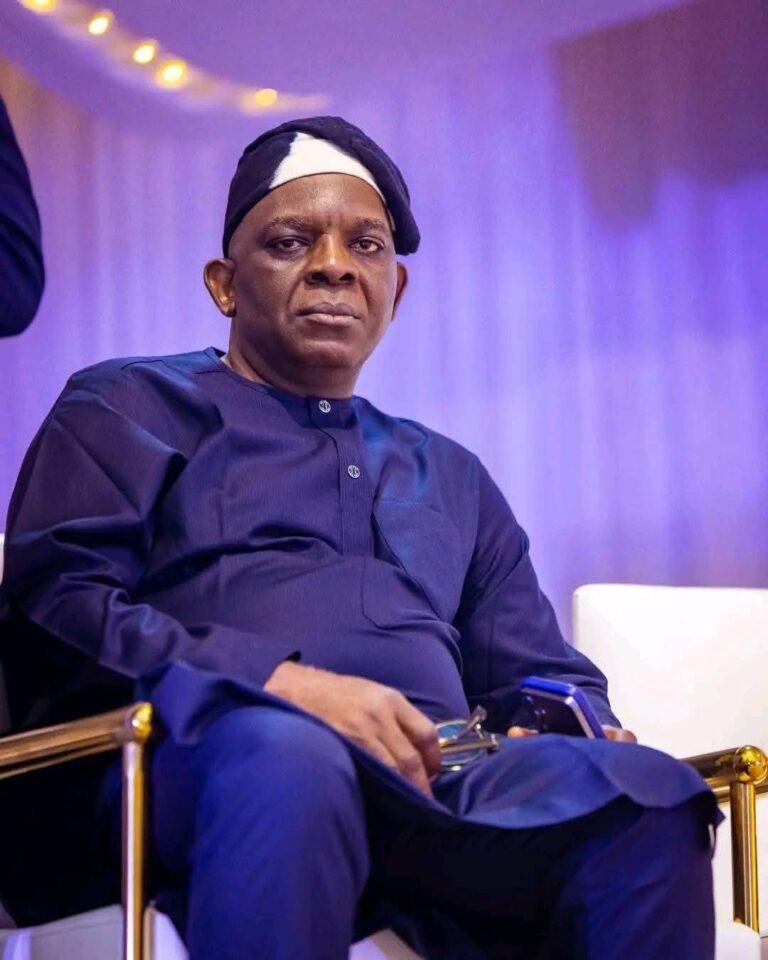
Investigations by Nigerian Concord Newspaper reveal that the Executive Secretary of the Nigerian Shippers Council, Mr. Pius Akutah, has allegedly misappropriated public funds for a lavish lifestyle.
According to our findings, within months of assuming office, Akutah allegedly purchased a bulletproof SUV valued at approximately N850 million. In addition, he is reported to have acquired over twenty exotic SUVs for use as a convoy.
Akutah is also said to have acquired multiple high-value properties, including three in Abuja’s Maitama and Asokoro districts worth over N2 billion, and two in Lagos’ Banana Island valued at N1.8 billion. These acquisitions appear far beyond the scope of his official salary and allowances.
Further investigation suggests that Akutah may be using public funds to support political ambitions, including allegedly grooming militants across 23 local government areas in Benue State for a potential 2027 gubernatorial bid.
Staff of the Shippers Council reportedly claim that Akutah frequently accesses the council’s treasury without proper authorization. Some insiders have indicated that a petition will soon be filed with the EFCC, ICPC, and the Presidency to report his alleged misconduct.
*
Investigations by Nigerian Concord Newspaper reveal that the Executive Secretary of the Nigerian Shippers Council, Mr. Pius Akutah, has allegedly misappropriated public funds for a lavish lifestyle.
According to our findings, within months of assuming office, Akutah allegedly purchased a bulletproof SUV valued at approximately N850 million. In addition, he is reported to have acquired over twenty exotic SUVs for use as a convoy.
Akutah is also said to have acquired multiple high-value properties, including three in Abuja’s Maitama and Asokoro districts worth over N2 billion, and two in Lagos’ Banana Island valued at N1.8 billion. These acquisitions appear far beyond the scope of his official salary and allowances.
Further investigation suggests that Akutah may be using public funds to support political ambitions, including allegedly grooming militants across 23 local government areas in Benue State for a potential 2027 gubernatorial bid.
Staff of the Shippers Council reportedly claim that Akutah frequently accesses the council’s treasury without proper authorization. Some insiders have indicated that a petition will soon be filed with the EFCC, ICPC, and the Presidency to report his alleged misconduct.
*


The Most Shocking A/Court ‘Judgment’ in Nigerian History: An unfortunate precedent that should not be allowed to stand

TAU reaffirms commitment to globally competitive learning

photo

-
 Uncategorized5 years ago
FG, states urged to harness flooding for ranching, others with technology – Agbaje
-
 Headlines10 years ago
Breaking: EFCC seals Borno House of Assembly, as Hon members take to their heels
-
 News11 years ago
Nigeria Security Operatives Stage Manhunt For Homosexual Perpetrator
-
 News9 years ago
How 21-year-old Girl fled community over accusation of lesbianism
-
 News10 years ago
Yobe Gov Moves Against Deputy
-
 Opinion7 years ago
7 signs she has friend zoned you
-
Technology4 years ago
Online job placement company headhunts women
-
 Headlines10 years ago
Borno Dep Gov Abducts Another Church Leader