
Uncategorized
Full text of Xi’s remarks at Session I of G20 summit in Bali

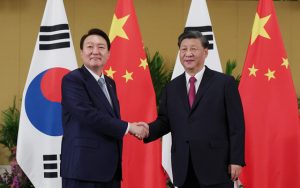
¾Ç¼öÇÏ´Â À±¼®¿ ´ëÅë·É°ú ½ÃÁøÇÎ Áß±¹ ±¹°¡ÁÖ¼®
(¹ß¸®=¿¬ÇÕ´º½º) ¾ÈÁ¤¿ø ±âÀÚ = À±¼®¿ ´ëÅë·É°ú ½ÃÁøÇÎ Áß±¹ ±¹°¡ÁÖ¼®ÀÌ 15ÀÏ(ÇöÁö½Ã°£) Àεµ³×½Ã¾Æ ¹ß¸® ÇÑ È£ÅÚ¿¡¼ ¿¸° ÇÑÁß Á¤»óȸ´ã¿¡¼ ¾Ç¼öÇÏ°í ÀÖ´Ù. 2022.11.15
jeong@yna.co.kr/2022-11-15 18:38:25/
Chinese President Xi Jinping delivered a speech titled “Working Together to Meet the Challenges of Our Times and Build a Better Future” here Tuesday at the first session of the 17th summit of the Group of 20 (G20).
The following is the full text of the speech:
Working Together to Meet the Challenges of Our Times and Build a Better Future
Remarks by H.E. Xi Jinping
President of the People’s Republic of China
At Session I of the 17th G20 Summit
Bali, 15 November 2022
Your Excellency President Joko Widodo,
Colleagues,
It gives me great pleasure to attend the G20 Bali Summit. At the outset, I wish to thank President Joko Widodo and the Indonesian government for making these thoughtful arrangements for the Summit. I also salute the Indonesian presidency for its important role in promoting G20 cooperation.
We meet at a time of momentous changes unseen in a century, changes that are consequential to the world, to our times, and to history. The COVID-19 pandemic still drags on with cases surging here and there. The world economy is getting more fragile. The geopolitical environment remains tense. Global governance is seriously inadequate. Food and energy crises are compounded with one another. All this poses formidable challenges to our development.
Faced with these challenges, it is imperative that all countries embrace the vision of a community with a shared future for mankind, and advocate peace, development, and win-win cooperation. All countries should replace division with unity, confrontation with cooperation, and exclusion with inclusiveness. All countries should join hands together to answer the question of our times — “what is wrong with this world, what we should do about it” — so as to tide over difficulties and create a better future together.
All G20 members should take the responsibility inherent in being major international and regional players, and should lead by example in promoting development of all nations, improving the well-being for the whole mankind, and advancing progress of the entire world.
— We should make global development more inclusive. Solidarity is strength, but division leads nowhere. Living in the same global village, we should stand with each other in the face of risks and challenges. Drawing ideological lines or promoting group politics and bloc confrontation will only divide the world, and hinder global development and human progress. With human civilization already in the 21st century, the Cold-War mentality has long been outdated. What we need to do is to join hands together and elevate our win-win cooperation to a new height.
Countries should respect each other, seek common grounds while reserving differences, live together in peace, and promote an open world economy. No one should engage in beggar-thy-neighbor practices, building “a small yard with high fences,” or creating closed and exclusive clubs.
I always believe that the G20 should stay committed to its founding purpose of unity and cooperation, carry forward the spirit of solidarity, and uphold the principle of consensus. “Sugarcane and lemongrass grow in dense clumps.” This Indonesian proverb well captures the value of solidarity. Division and confrontation serve no one’s interest. Only solidarity and common development is the right choice to make.
— We should make global development beneficial to all. Development is real only when all countries develop together. Prosperity and stability cannot be possible in a world where the rich become richer while the poor are made poorer. Every nation aspires for a better life, and modernization is not a privilege reserved for any single country. Frontrunners in development should sincerely help others develop, and provide more global public goods. All major countries should perform their due responsibilities, and do their best for the cause of global development.
The Global Development Initiative (GDI) that I proposed is aimed at meeting the long-term objective and immediate needs of common development of the world, fostering international consensus on promoting development, cultivating new drivers for global development, and facilitating common development and progress of all countries.
Within one year, more than 60 countries have joined the Group of Friends of the GDI. China has established the Global Development and South-South Cooperation Fund, and will increase its funding for the China-UN Peace and Development Fund. We will make a list of items for practical cooperation, set up an open-ended pool of GDI projects, and draw up a roadmap for GDI implementation. We are working with 100-plus countries and international organizations on the GDI, thus providing new impetus for the implementation of the 2030 Agenda for Sustainable Development. China has submitted 15 projects to the “G20 Action for Strong and Inclusive Recovery,” and has participated in five other projects within this framework. We will work with fellow G20 members to deliver on these projects.
— We should make global development more resilient. Economic globalization is encountering headwinds, and the world economy is at risk of recession. Everyone is having a hard time, but developing countries are bearing the brunt. It is therefore more imperative than ever for us to focus on the issue of development. The theme of the Bali Summit, “Recover Together, Recover Stronger,” sends a positive message of the G20’s commitment to supporting the growth of developing countries and preventing divergent and unbalanced global recovery. We need to build a global partnership for economic recovery, prioritize development and put the people at the center, always keep in mind the difficulties faced by developing countries, and accommodate their concerns. China supports the African Union in joining the G20.
All parties should continue to deepen international cooperation against COVID-19, and raise the accessibility and affordability of vaccines, medicines, and diagnostic and treatment methods in developing countries so as to create a sound environment for economic recovery. We should curb global inflation, and defuse systemic economic and financial risks. In particular, developed economies should mitigate the negative spillovers from their monetary policy adjustment, and keep their debts at sustainable levels. The IMF should speed up the on-lending of SDRs to low-income countries. International financial institutions and commercial creditors, which are the main creditors of developing countries, should take part in the debt reduction and suspension for developing countries. China is implementing the G20’s Debt Service Suspension Initiative (DSSI) in all respects, and has suspended the largest amount of debt service payment among all G20 members. Meanwhile, China is working with some G20 members on the debt treatment under the Common Framework for Debt Treatment beyond the DSSI, thus helping relevant developing countries navigate through the difficult time.
Global trade, digital economy, green transition and fighting corruption are key factors driving global development. We should continue to uphold the WTO-centered multilateral trading system, actively push forward WTO reform, enhance trade and investment liberalization and facilitation, and promote an open world economy. China has proposed the G20 Action on Digital Innovation and Cooperation. We look forward to working with all parties to foster an open, fair, and non-discriminatory environment for digital economy so as to narrow the North-South digital divide. In tackling climate change and transitioning toward green and low-carbon development, the principle of common but differentiated responsibilities must be upheld. It is also important to provide funding, technology and capacity-building support for developing countries and promote cooperation on green finance. International cooperation is very important for fighting corruption. G20 members must maintain zero tolerance for corruption, step up international cooperation on fugitive repatriation and asset recovery, and refuse to provide “safe havens” to corrupt individuals and assets.
Global development would be impossible without a peaceful and stable international environment. With this in mind, I have put forward the Global Security Initiative (GSI). Our goal is to work with all parties to champion the spirit of the UN Charter, act on the principle of indivisible security, uphold the vision of common, comprehensive, cooperative and sustainable security, advocate the resolution of conflicts through negotiation and settlement of disputes through consultation, and support all efforts conducive to the peaceful settlement of crises.
Colleagues,
Food and energy security is the most pressing challenge in global development. The root cause of the ongoing crises is not production or demand, but interrupted supply chains and international cooperation. The way out of this is for all countries to, with the coordination of the UN and other multilateral international organizations, enhance cooperation on market supervision and regulation, build partnerships on commodities, develop an open, stable and sustainable commodities market, and work together to unclog supply chains and stabilize market prices.
We must resolutely oppose the attempt to politicize food and energy issues or use them as tools and weapons. Unilateral sanctions must be removed, and restrictions on relevant scientific and technological cooperation must be lifted. In reducing the consumption of fossil fuel energy and transitioning toward clean energy, we need to give balanced consideration to various factors, and make sure that the transitional process does not hurt the economy or people’s livelihood. Developing countries face more acute risks in food and energy security. The G20 should keep this in mind, and provide necessary support in production, collection, storage, funding and technology. Since the UN has established the Global Crisis Response Group on Food, Energy and Finance, the G20 should voice its support for it.
Over the years, China has made major contribution to global food and energy security. This year, China has proposed, together with six partners including Indonesia and Serbia, the Initiative of International Cooperation on Resilient and Stable Industrial and Supply Chains, joined other countries in calling for the establishment of the Global Clean Energy Cooperation Partnership, and put forward the International Cooperation Initiative on Global Food Security in the G20. We look forward to deepening cooperation with all parties in these areas.
Colleagues,
The Communist Party of China has recently convened its 20th National Congress, laying out the goals, tasks and guiding policies for the cause of the Party and the country in the next five years and beyond. China will stay committed to the path of peaceful development, stay committed to deepening reform and opening-up, and stay committed to promoting national rejuvenation on all fronts through a Chinese path to modernization. A China marching toward modernization will bring more opportunities to the world, inject stronger momentum for international cooperation, and make greater contribution to human progress!
Thank you.
Fabian
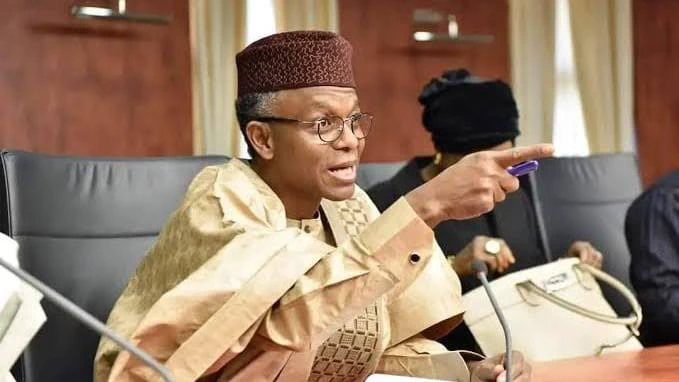
Former Kaduna State Governor and former Minister of the Federal Capital Territory, Mallam Nasir El-Rufai, has weighed in on the Senate’s decision to reject the inclusion of real-time electronic transmission of election results in the proposed electoral reforms.
Speaking in an interview with Trust TV, El-Rufai was asked to react to reports that some members of his party, the African Democratic Congress (ADC), including Peter Obi, staged a protest at the National Assembly on Monday over the issue. In his response, he stressed that electoral reforms must be approached transparently and without undue external influence.
El-Rufai expressed confidence that the Senate’s electoral committee would eventually recommend the reinstatement of the provision for real-time electronic transmission of results.
He noted that many senators are experienced public officials who have previously served as governors, ministers, and legislators, and are genuinely committed to strengthening Nigeria’s democracy. However, he argued that their efforts are being overshadowed by the actions of the Senate leadership, including Senate President Godswill Akpabio.
According to El-Rufai, the controversy should not be blamed on the Senate as an institution but on its leadership. He alleged that the presiding officer was acting under external pressure and not in line with the collective will of the majority of senators.
He further predicted that when the Senate reconvenes, lawmakers would be forced to unite, resist such pressure from the leadership, and ensure that the proposed reforms are not undermined.
In a strongly worded remark directed at Akpabio, El-Rufai said:
“I do not consider him distinguished. We have known each other since the 90s. He knows how far we’ve been through, and I think I am qualified to call him a scumbag—and he knows why.”
Uncategorized
Electronic Transmission: This Is Just a Warning Protest, We’ll Wait Till Tomorrow – Isaac Fayose

Fabian Apechihin
Businessman and activist Isaac Fayose has described Monday’s protest at the National Assembly complex as only a warning, insisting that more action may follow depending on the outcome of lawmakers’ deliberations.
A cross-section of Nigerians on Monday morning converged on the National Assembly to demand that electronic transmission of election results be made compulsory in Nigeria’s electoral laws.
Although the Senate has issued several clarifications amid reports that it rejected electronic transmission of results, protesters maintained that lawmakers must go further by explicitly inserting the phrase “real-time electronic transmission” into the proposed legislation.
In response to the public outcry, the Senate announced on Sunday that it would hold an emergency plenary session on Tuesday to address the concerns.
Speaking to journalists during the protest, Fayose said the decision taken at the emergency sitting would determine whether the demonstrations would continue.
“We all know what happens in a collation room,” he said. “A collation room is where you soak garri with water at night and by morning it has swollen and turned into eba.
“For Nigerians to be satisfied, what we need is electronic transmission of results. They are already trying to deny it. Let’s wait till tomorrow. This protest is just a warning.”
Fayose also questioned the logic of abandoning electronic transmission after huge investments had been made.
“Something we spent close to a trillion naira to achieve, you now want to throw it away? That’s like taking our money and dumping it in the gutter. It cannot happen,” he added.
Fabian Apechihin
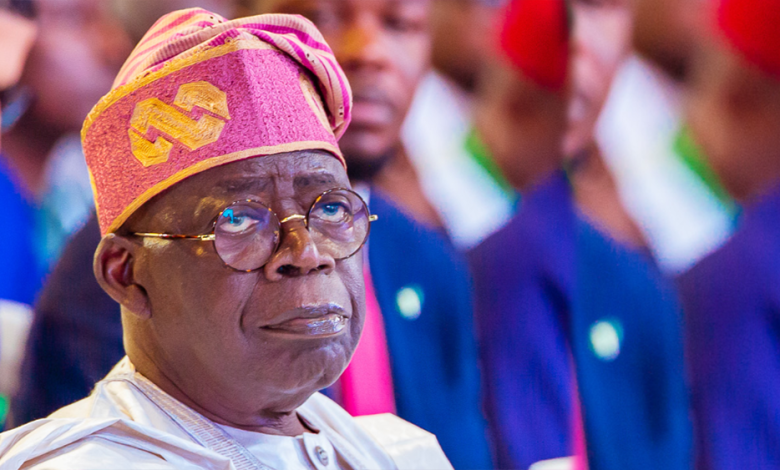
A United States federal judge, Beryl A. Howell, has sharply criticised the Federal Bureau of Investigation (FBI) and the Drug Enforcement Administration (DEA) over what she described as deliberate delays in releasing records related to Nigerian President Bola Tinubu.
The documents are being sought through a Freedom of Information Act (FOIA) request filed in 2022 by transparency advocate Aaron Greenspan, with backing from investigative journalist David Hundeyin. The records are expected to provide details on a narcotics-related case from the early 1990s that led to Tinubu forfeiting $460,000 to the U.S. government—allegations he has consistently denied.
In a ruling delivered on February 3, Judge Howell of the U.S. District Court for the District of Columbia rebuked both agencies for repeatedly missing court-ordered deadlines, noting that the case has dragged on for more than three years without substantial progress.
She subsequently imposed new deadlines, warning that further delays would no longer be tolerated.
Greenspan, the founder of transparency platform Plainsite, filed the FOIA request in June 2022. In 2023, the FBI announced it would release approximately 2,500 pages of Tinubu-related records in monthly batches of 500 pages. However, the process stalled after Tinubu opposed the disclosure, requesting a delay pending the outcome of a Nigerian Supreme Court case challenging his election victory. He argued at the time that releasing the records would “adversely affect” him.
Although Judge Howell approved the temporary pause and Tinubu’s election was later upheld, the FBI and DEA continued to seek extensions, further slowing the release of records linked to longstanding allegations of involvement in cocaine trafficking.
Court filings show that the FBI was expected to submit an updated status report in May 2025, but delayed until January 2026, when it sought yet another extension to February—prompting sharp criticism from the court.
“Defendant FBI has produced no records, despite initially anticipating completion of searches by August 1, 2025,” Howell stated, adding that deadlines had been repeatedly shifted with “minimal explanation.”
She further noted that, like the DEA, the FBI had failed to provide a credible timeline for completing the processing and release of the requested documents.
Judge Howell also dismissed the DEA’s justification for withholding documents for more than six months under the guise of inter-agency consultations.
“Defendant DEA has produced some documents … but has repeated the same explanation for six months and four joint status reports concerning twelve remaining pages not yet released,” she said.
The court ordered the DEA to provide Greenspan with a Vaughn index detailing the legal basis for redacting 50 pages and withholding 172 pages of the records. The agency was also directed to submit sworn affidavits explaining, page by page, when the remaining documents were sent for consultation, expected review timelines, and steps taken to expedite the process.
Similarly, the FBI was ordered to file sworn statements accounting for its repeated failure to meet court deadlines and to begin releasing all non-exempt Tinubu-related records. The bureau was instructed to deliver an initial batch within two weeks of January 30, 2026, submit a detailed schedule for releasing the second batch of 500 pages by March 13, and complete full disclosure by June 1, 2026.
Judge Howell further ordered both agencies to file joint status reports every 14 days, starting February 27, until all responsive records have been processed and released.


Audi: Trajectory of Success and Changing the Narrative

We’ve Known Each Other Since the 90s; I’m Qualified to Call Him a Scumbag – El-Rufai

Electronic Transmission: This Is Just a Warning Protest, We’ll Wait Till Tomorrow – Isaac Fayose

-
 Uncategorized5 years ago
FG, states urged to harness flooding for ranching, others with technology – Agbaje
-
 Headlines10 years ago
Breaking: EFCC seals Borno House of Assembly, as Hon members take to their heels
-
 News12 years ago
Nigeria Security Operatives Stage Manhunt For Homosexual Perpetrator
-
 News9 years ago
How 21-year-old Girl fled community over accusation of lesbianism
-
 News10 years ago
Yobe Gov Moves Against Deputy
-
 Opinion7 years ago
7 signs she has friend zoned you
-
Technology4 years ago
Online job placement company headhunts women
-
 Headlines10 years ago
Borno Dep Gov Abducts Another Church Leader